

Auto
Toyota, Mikano, CFAO, others win big at 2023 NAJA Awards (Full list + photos)
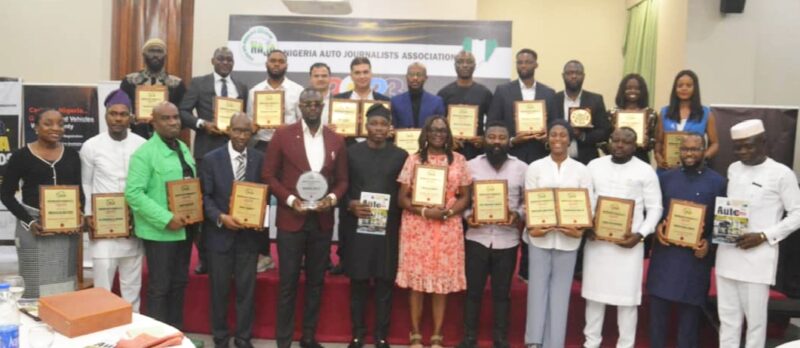
Toyota, Mikano, CFAO, others win big at 2023 NAJA Awards (Full list + photos)
Toyota Nigeria Limited (TNL), Mikano Motors and CFAO Motors are some of the auto companies that recorded big wins at the 2023 Nigerian Auto Journalists Association (NAJA).
The event held at Oriental Hotel, Victoria Island, Lagos State, on Thursday saw the three auto firms carting home the biggest number of awards, winning between three and four each.
Toyota Hilux and Hiace won the pickup of the year and minibus of the year respectively. Toyota Land Cruiser also clinched the Large SUV of the year.


Mikano showroom in Victoria Island Lagos was adjusted the best car showroom of the year.
Mikano Motors was also declared the most innovative auto company. Its Changan Uni-K and Changan CS35 received the most outstanding auto design and compact SUV awards respectively.

CFAO Group won four awards with the best customer service going to Massilia Motors; Suzuki S-Presso winning the Budget Car of the Year; Mitsubishi Outlander taking the best in E-Commercial Advert.
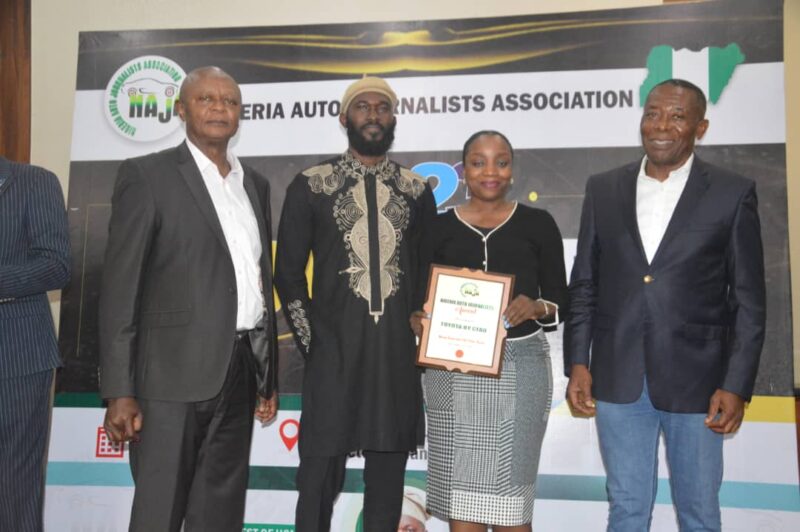
Aissatou Diof of Suzuki By CFAO was named the General Manager of the year.
Lanre Shittu Motors and Jet Systems won two awards each. While LSM got the Truck Plant of the Year and Heavy Duty Truck best (JAC), Jet Lander pickup and Jet Mover got the honours for Jet Systems.
Nord was recognised as the Enterprising Indigenous car company of the Year 2023.
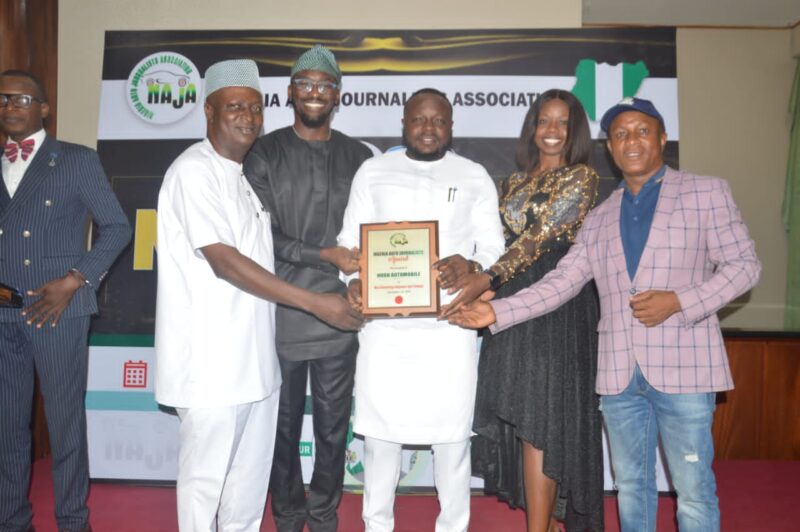
The awards were presented to the companies at a colourful ceremony attended by key stakeholders including the Director General of National Automotive Design and Development Council (NADDC), Mr Joseph Osanipin and Managing Director of TNL, Kunle Ade-Ojo.
At the award night, JAC by Lanre Shittu Motors also won the Heavy Duty Truck of the Year, while Innoson Vehicle Manufacturing won the Assembly Plant of the Year awards.
Weststar Associates Limited, authorised general distributor of Mercedes-Benz in Nigeria, won the Luxury Brand of the Year, while Auto Workshop of the Year went to RT Briscoe.
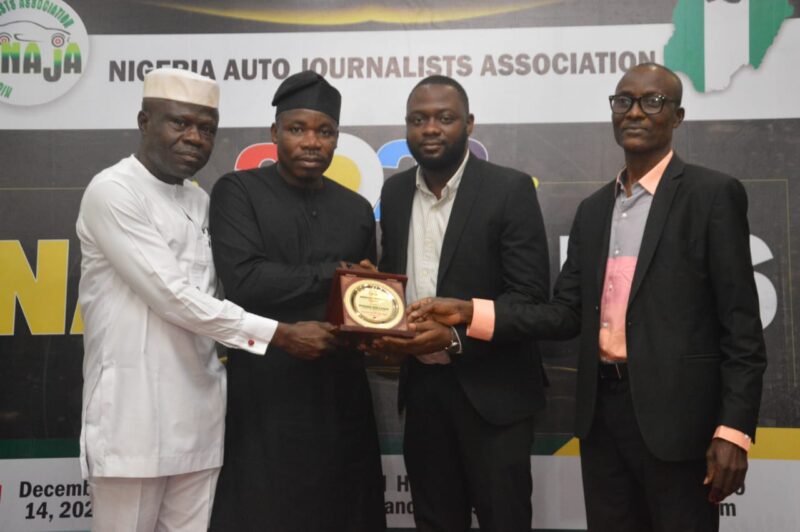
At the event, Osanipin challenged key players in the Nigerian automotive industry to think more about automotive components development and integration in assembly operations.
He said, “Today we are here to celebrate however we need to challenge ourselves with the future of the Nigeria automotive industry.
“We need to take the necessary steps to make these changes. It starts with us; we are the ones to determine where the automotive sector will be heading in Nigeria.”
Osanipin seized the opportunity to applaud NAJA for standing firm in promoting the local auto industry.
He however challenged the organisers to consider components manufacturers in future NAJA award projects.
Over 29 persons and companies who have distinguished themselves in the industry were specially recognised and honoured in different award categories.
See the list below:
2023 NAJA AWARD WINNERS
1) Budget Car of the Year
Winner: Suzuki S-Presso
2) Auto Design of the Year
Winner: Changan Uni-K
3. Heavy Duty Truck of the Year
Winner: JAC by Lanre Shittu Motors
4) Assembly Plant of the Year
Winner: Innoson
5) Luxury Brand of the Year: Mercedes-Benz
6) Auto Workshop of the Year
Winner: RT Briscoe
7) Large SUV Of The Year
Winner: Toyota Land Cruiser
8) Luxury SUV of the Year
Winner: Range Rover Autobiography)
9) Pick Up Of The Year
Winner: Toyota Hilux
10) Most Innovative Auto Company: Mikano
11) Truck Plant Of The Year: Lanre Shittu (JAC plant)
12) Online Auto Finance facilitator: Autochek
13) Minibus of the Year: Winner: Toyota Hiace
14) Most Resilient Auto Company – Recognition
A) Stallion Motors
B) Coscharis Motors
15) Transport Company of the Year: GUO
16) Auto Showroom of the Year: Mikano
17) Enterprising Indigenous car company of the Year
NORD
18) New Entrant Auto Company/Model
1) Jetour
2) Toyota By CFAO
3) Ford Territory
4) Jet Lander
19) Compact SUV of the Year
Joint winners are:
A) Changan CS35
B) Kia Sonet
20) Indigenous Passenger Bus of the Year
Jet Mover
21) Multi Brand Auto Workshop of the Year
Fixit 45
22) Outstanding E-Commercial Advert of the Year:
Mitsubishi Outlander
23) Outstanding Print Auto Advert of the Year:
JETOUR
24) Outstanding Auto Customer Service of the Year
Massilia Motors
25) Luxury Car of the Year
Mercedes-Benz S-Class
26. Outstanding Comeback if the Year
Chery By Carloha
PERSONALITY RECOGNITIONS
26) Outstanding GM of the Year Suzuki – Aissatou Diouf, GM Suzuki By CFAO
27) Autogas vehicle promoter of the year
NGEP Chairman Dr Mohammed Ibrahim
28) Auto Personality Of The Year
Chief Innocent Chukwuma (Founder/Chairman of Innoson Vehicle Manufacturing)
29) CAR OF THE YEAR
Honda HR-V






Auto
Electric Mobility: Spiro Unveils Expansion Plan, Names Nigeria New MD
Electric Mobility: Spiro Unveils Expansion Plan, Names Nigeria New MD
Spiro, Africa’s leading electric mobility company, is stepping up plans to expand its footprint in Nigeria, strengthen its battery-swapping infrastructure and deepen partnerships to make electric motorcycles more accessible and affordable to riders.
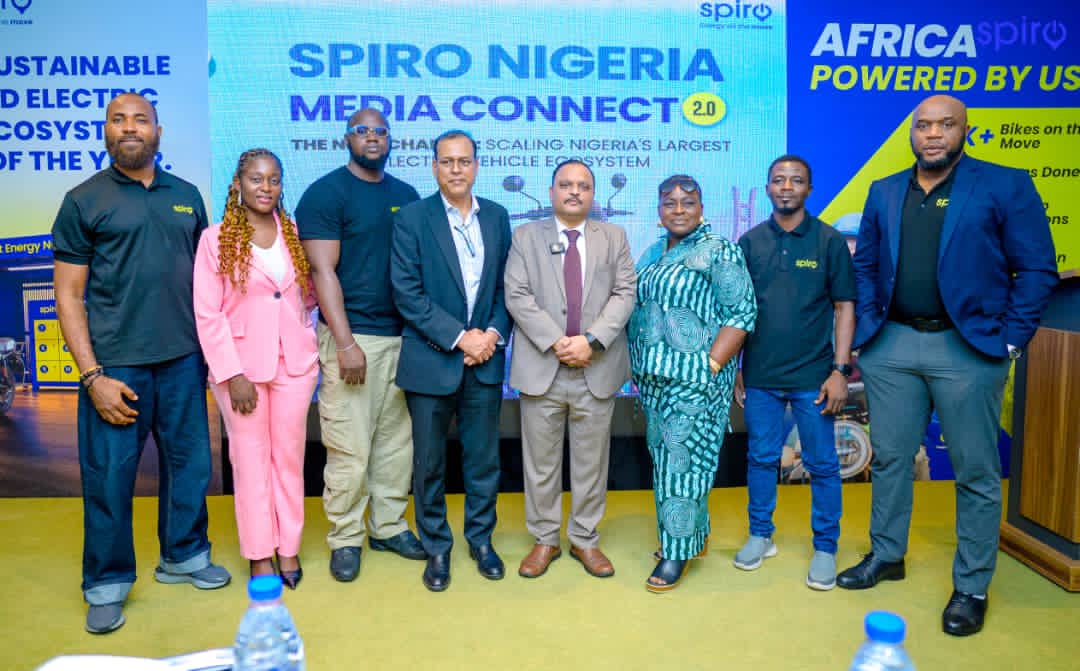
The company unveiled the growth strategy at the second edition of its Media Connect event in Lagos, where it formally introduced its new Country Head and Managing Director, Mr Prasad Sane, who will lead its operations and expansion drive in the country.
Sane said Spiro would consolidate its presence in Lagos, Ogun and Oyo states while exploring opportunities to extend its operations to additional markets, as it seeks to accelerate Nigeria’s transition to cleaner and more sustainable transportation.
The event brought together journalists covering business, technology, mobility and sustainability to discuss the company’s progress, infrastructure development and long-term ambitions for Nigeria’s electric mobility market.
Addressing the gathering, Sane said the company was moving beyond the deployment of electric motorcycles to building an integrated mobility ecosystem designed to improve riders’ earnings, reduce operating costs and create economic opportunities.
“Today is about progress, partnership and purpose. A year ago, we shared our vision for electric mobility in Nigeria. Today, we are demonstrating tangible results and a clear path forward,” he said.
He added that his mandate was to make Spiro one of the most trusted, affordable and accessible electric mobility solutions for Nigerians, beginning with its existing focus markets.
“My mandate is simple: to make Spiro the most trusted, affordable and accessible electric mobility solution for Nigerians, beginning with Lagos, Ogun and Oyo states.
“We are moving beyond electric bikes to build a complete ecosystem centred on our promise of ‘Energy on the Move’,” Sane stated.
A major pillar of the company’s strategy is its battery-swapping technology, which allows riders to exchange depleted batteries for fully charged ones in under a minute, reducing downtime and eliminating the need to wait for conventional recharging.
According to Sane, the model offers riders an alternative to rising fuel and maintenance costs while supporting efforts to reduce carbon emissions and improve the economics of commercial motorcycle operations.
“Electric mobility is no longer the future. It is the present, and Nigeria is poised to lead the transition,” he said.
Under its expansion plan, Spiro intends to accelerate the deployment of battery-swapping stations and service centres across Lagos, Ogun and Oyo states to improve accessibility, operational efficiency and customer support.
The company also plans to extend its geographical reach beyond the three states, bringing its electric motorcycles and related services to more Nigerian markets.
Another priority is strengthening partnerships with financial institutions, logistics companies and rider communities to improve access to electric motorcycles and its Battery-as-a-Service solutions.
The approach is expected to support wider adoption by riders who may face financial barriers to acquiring electric motorcycles outright, while helping businesses explore cleaner and potentially more cost-effective transportation options.
Spiro also plans to scale up local assembly operations, technical training and after-sales support, with a focus on creating employment opportunities, particularly for young Nigerians and women.
The company said the measures would help strengthen its operational capacity while developing local skills and supporting the growth of Nigeria’s electric mobility ecosystem.
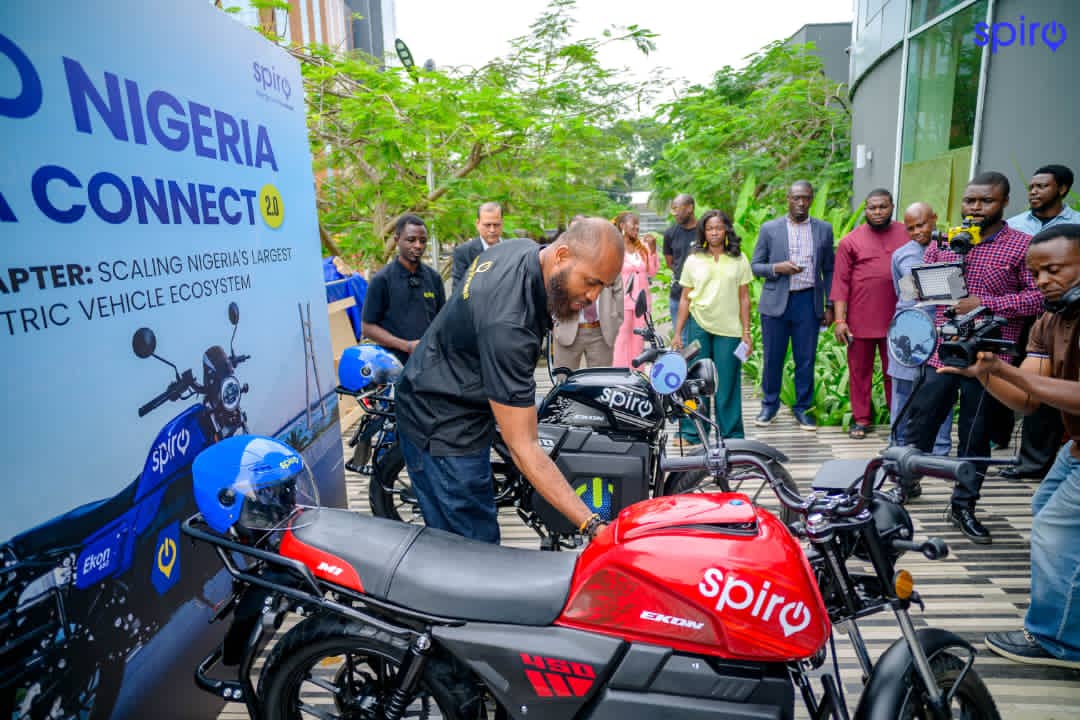
The Media Connect event featured live product demonstrations and operational showcases, alongside the unveiling of the Spiro Ekon M1 Version 3, highlighting the company’s efforts to develop its electric motorcycle offerings for the Nigerian market.
Spiro, which received the West Africa Sustainable Award (WASA), is positioning its expansion around electric motorcycles and battery-swapping infrastructure as it seeks to contribute to the growth of sustainable mobility across Nigeria.
Auto
Jetour W Motors Celebrates Customers, Unveils Nigeria Owners Club After Brazil Promo
Jetour W Motors Celebrates Customers, Unveils Nigeria Owners Club After Brazil Promo
Jetour W Motors Nigeria is stepping up efforts to strengthen customer loyalty and build a vibrant community of vehicle owners with the successful conclusion of its #WinYourWayToBrazil campaign and the official establishment of the Jetour Nigeria Club.
The twin initiatives mark a new phase in the Chinese automotive brand’s engagement with Nigerian customers, extending its relationship with vehicle owners beyond sales and after-sales services to include shared experiences, lifestyle activities, adventures and community-building programmes.
The campaign climaxed with a live raffle draw on Friday, September 25, 2026, at the Jetour W Motors showroom on Adeyemo Alakija Street, Victoria Island, Lagos, where eligible customers gathered for an evening of entertainment, refreshments, networking and the eagerly anticipated announcement of the winner.
The promotion offered customers who ordered and purchased any Jetour vehicle between August 18 and September 20, 2026, the opportunity to win a trip to Brazil for the Jetour Brazil Fan Festival.
The event also featured the distribution of branded Jetour Owners Club gifts, adding to the celebratory atmosphere as customers interacted with one another and members of the Jetour team.
Beyond the excitement surrounding the raffle draw, the occasion provided a platform for Jetour W Motors to unveil the Jetour Nigeria Club, an initiative designed to bring owners of the brand’s vehicles together through a structured calendar of activities and shared experiences.
The club, officially established for the first time in Nigeria, is expected to create opportunities for members to participate in organised adventures, social gatherings and other community initiatives while strengthening their connection with the brand.
Registration for membership will open soon, with all Jetour owners invited to join the emerging community.
The development reinforces Jetour W Motors Nigeria’s strategy of building lasting relationships with customers in a competitive automotive market where ownership experience, customer engagement and brand loyalty are becoming increasingly important.
The #WinYourWayToBrazil campaign follows the successful Jetour Africa Expedition — Nigeria Edition, which brought together Jetour owners, influencers, media professionals and members of the company’s team for a distinctive experience combining driving, adventure and Nigerian culture.
The expedition was the brand’s first major activation specifically designed to bring Jetour owners together in Nigeria, providing an opportunity for participants to connect beyond their individual vehicle ownership experiences.
With the Brazil campaign and the launch of the national owners’ club, Jetour W Motors is building on that foundation by creating more opportunities for customers to interact, participate in brand-led activities and develop relationships with fellow owners.
The approach reflects a broader effort to position vehicle ownership as an experience that extends beyond the showroom, encompassing lifestyle, recreation and a sense of belonging to a growing community.
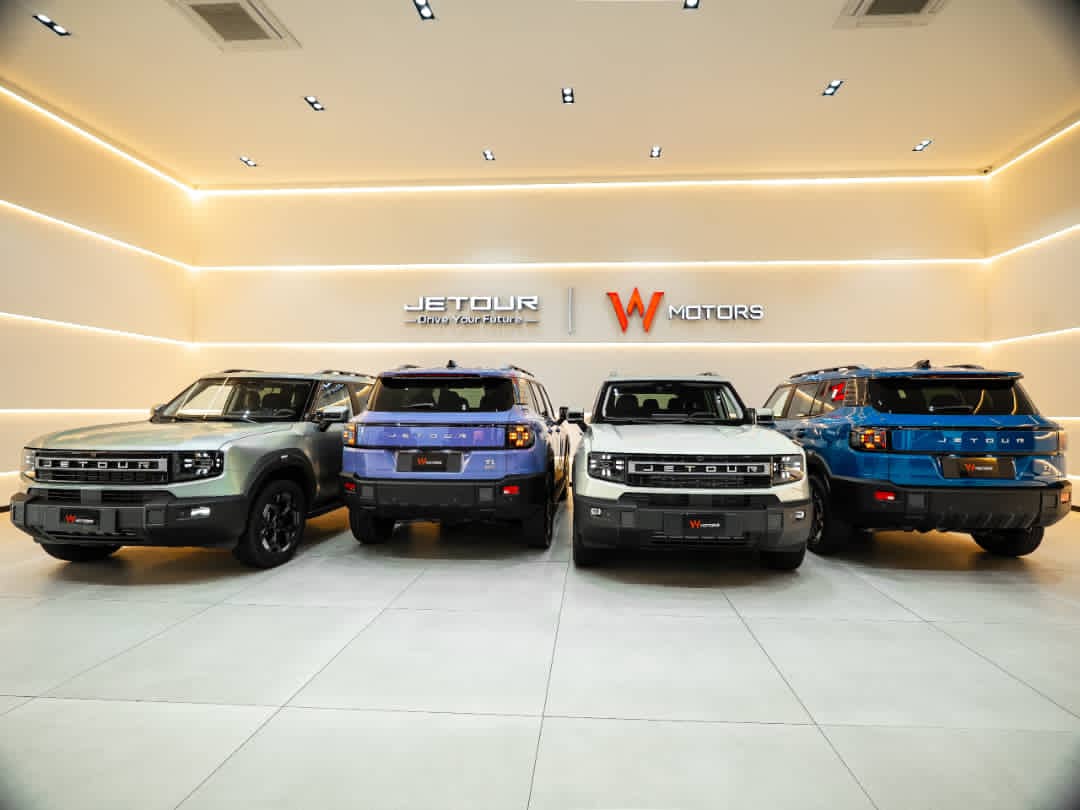
Jetour W Motors Nigeria is the authorised distributor of Jetour vehicles in the Nigerian market, where the brand continues to expand its presence through customer-focused initiatives and engagement programmes.
The planned opening of membership registration for the Jetour Nigeria Club is expected to provide the next opportunity for owners to become part of the community and participate in activities designed to deepen their connection with the brand.
Auto
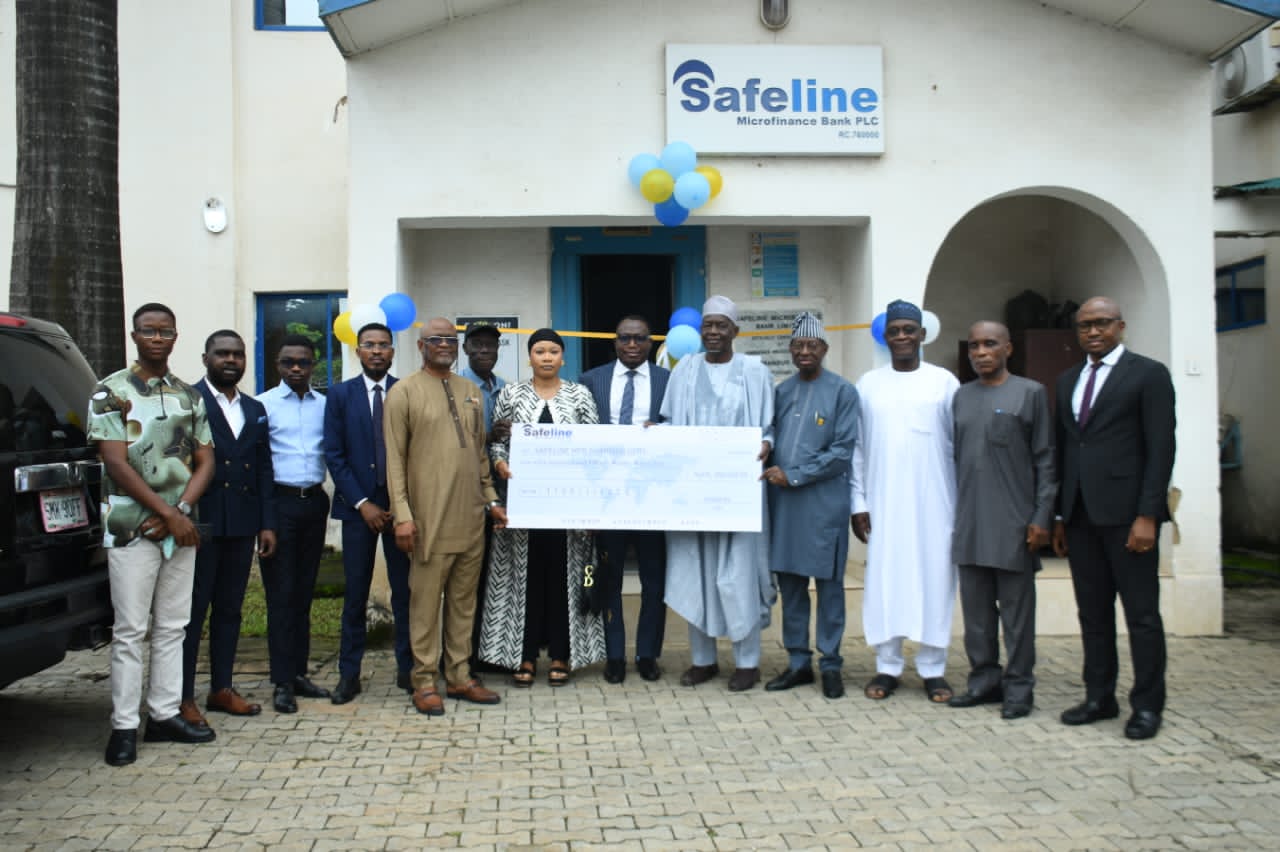
FRSC hands over Safeline Bank to ROBOPAY, targets digital financial transformation
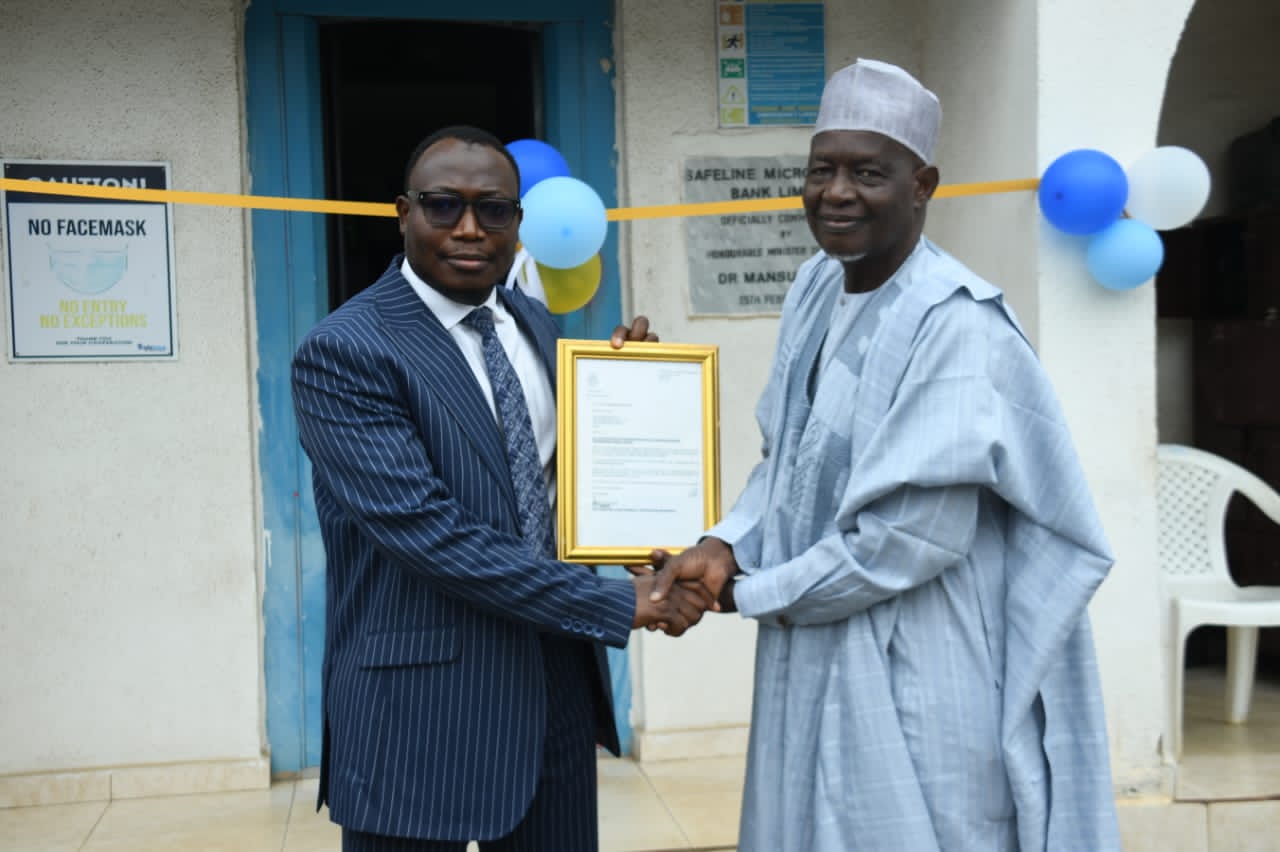
FRSC hands over Safeline Bank to ROBOPAY, targets digital financial transformation
The Federal Road Safety Corps (FRSC) has handed over ownership of Safeline Microfinance Bank to ROBOPAY NIG. LTD., paving the way for a major recapitalisation and technology-driven transformation of the financial institution.
The divestment, which took place on Monday, October 5, 2026, at the bank’s premises in Abuja, is expected to reposition Safeline Microfinance Bank for stronger competitiveness, improved service delivery and sustainable growth in Nigeria’s rapidly evolving financial services sector.
The development, according to a statement by the Corps Public Education Officer, Osondu Ohaeri, is part of the strategic efforts under the leadership of the Corps Marshal, Shehu Mohammed, to reposition the institution for greater efficiency and competitiveness.
Safeline Microfinance Bank was established by the FRSC to provide financial services and opportunities to members of the Corps and other stakeholders.
Speaking at the handover ceremony, Chairman of the Board of Safeline Microfinance Bank, Ibrahim Babagana, a Deputy Corps Marshal (Rtd.), said the decision to divest the bank followed a careful assessment of the prevailing regulatory environment and emerging government policies affecting the microfinance banking industry.
Babagana said sustaining the bank under the changing financial landscape would require substantial additional capital, greater investment in technology and enhanced human capital.
He explained that the Board therefore resolved to transfer ownership to an investor with the capacity, resources and commitment to make the required investments and place the bank on a sustainable growth trajectory.
The former FRSC chief expressed confidence in ROBOPAY, saying the company had demonstrated the competence, commitment and vision required to build on the foundation established by the Corps and take Safeline Microfinance Bank to a new level.
He identified strengthening the bank’s capital base, deploying modern technology and investing in human resources as critical priorities for its survival and competitiveness in the increasingly digital financial services market.
Responding on behalf of ROBOPAY NIG. LTD, Malam Aliyu Abiodun thanked the Board and management of Safeline Microfinance Bank for the confidence reposed in the company, describing the acquisition as a significant milestone and an opportunity to unlock the institution’s considerable potential.
Abiodun said the bank already had valuable assets, structures and an institutional foundation which the new owners would build upon through strategic investments in financial technology, capital and human resources.
He said ROBOPAY would deploy FinTech solutions to modernise the bank’s operations, improve customer experience, expand its service offerings and strengthen its competitive position within Nigeria’s financial services industry.
According to him, the new ownership would retain and leverage the institutional foundation created by the FRSC while introducing innovative technology-driven solutions capable of opening new growth opportunities for the bank.
The transaction thus signals more than a change in ownership, as it ushers Safeline Microfinance Bank into a new phase anchored on recapitalisation, digital innovation and professionalised financial services.
Both parties expressed commitment to ensuring a seamless transition, with the ultimate objective of building a stronger, more competitive and sustainable institution capable of delivering greater value to its customers and stakeholders.
-
 Africa3 days ago
FBI Raids Ghana Scam Centre, Detains Over 130 in $10m Fraud Probe
-
 metro2 days ago
How Parents Raised Millions to Free 20 Abducted NYSC Members
-
 metro2 days ago
[UPDATED] Lagos Train Crash: 55-Year-Old Motorist Survives as Honda Car Is Wrecked at PWD Crossing
-
 metro5 hours ago
Tension in Kano as Phone Traders Confront Chinese Sellers Over Cheaper Phones
-
 metro3 days ago
BREAKING: FG Unveils 10 Measures to Cushion Fuel Price, Inflation Pressures
-

 metro3 days ago
Man Allegedly Caught Using Old Tyres to Scam POS Operator
-

 Sports2 days ago
Ronaldo Breaks Silence on Portugal Row as Pelé, Maradona Comparison Sparks Meme Frenzy
-

 metro22 hours ago
Police Launch Manhunt After Fresh Attacks, Kidnappings Rock Four Nigerian States