

Auto
Auto industry biggest night returns as NAJA holds 2025 Int’l Awards Dec 16 in Lagos

Auto industry biggest night returns as NAJA holds 2025 Int’l Awards Dec 16 in Lagos
The Nigeria Auto Journalists Association (NAJA) has announced that the 2025 edition of its International Auto Awards—Nigeria’s most prestigious celebration of excellence and innovation in the motoring industry—will take place on Tuesday, December 16, 2025, at the Oriental Hotel, Victoria Island, Lagos, starting at 6:00 pm.
This annual event brings together top government officials, industry leaders, and media professionals to honour outstanding achievements that have shaped Nigeria’s automotive landscape.
According to Frank Kintum, Chairman of the Planning Committee, preparations are in top gear to ensure the 2025 edition sustains NAJA’s reputation as the most credible and unifying platform for recognizing excellence in the nation’s auto industry.
“The NAJA Awards have become the gold standard for honouring brands, organizations, and individuals who demonstrate innovation, integrity, and excellence in advancing Nigeria’s automotive ecosystem.
READ ALSO:
- Nigerian among five arrested in U.S. over massive German fraud network
- EKEDC urges customers to apply for free prepaid meters under federal initiative
- 31 US lawmakers praise Trump for reinstating Nigeria on religious freedom watchlist
“This year’s edition will spotlight progress in local manufacturing, green mobility, and industry policy development amongothers,” Kintum said.
Also speaking, Theodore Opara, Chairman of NAJA, highlighted the strategic importance of the awards to national development.
“As the automotive sector evolves, NAJA remains committed to supporting initiatives that align with the Federal Government’s vision for sustainable industrial growth.
“We are particularly delighted to have the National Automotive Design and Development Council (NADDC) as a central partner this year, given its pivotal role in policy formulation and innovation,” Opara stated.
Distinguished guests expected at the event include the Minister of State for Industry, Senator John Owan Enoh; Director-General of NADDC, Chief Joseph Osanipin; Chairmen of the National Assembly Committees on Industry; the Chinese Ambassador to Nigeria; and the Director of the African Association of Automotive Manufacturers (AAAM), among other top government officials and industry leaders.
Through strategic collaboration with partners and stakeholders, NAJA continues to champion excellence, transparency, and growth in Nigeria’s automotive sector.
Auto industry biggest night returns as NAJA holds 2025 Int’l Awards Dec 16 in Lagos










Auto
TCAN Honours Dangote Cement Transport for Safety, Logistics Excellence
TCAN Honours Dangote Cement Transport for Safety, Logistics Excellence
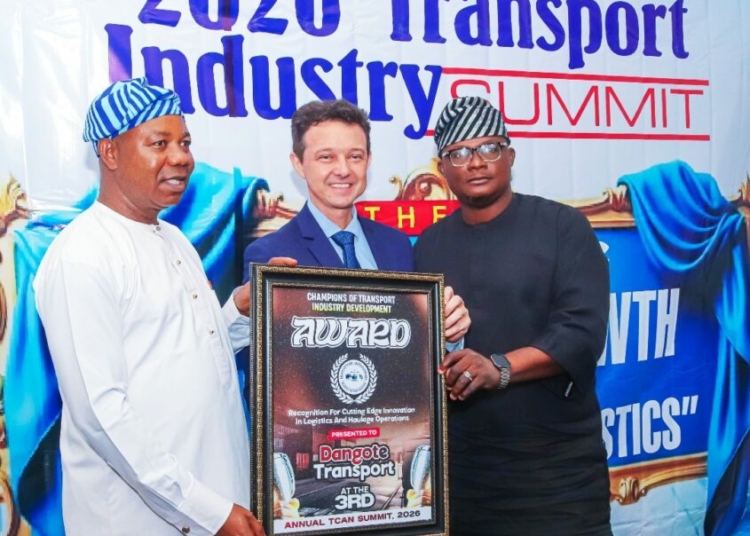
Dangote Cement Transport has been recognised for its contributions to the development of Nigeria’s transport industry, winning the “Champion of Transport Industry Development Award” presented by the Transport Correspondents Association of Nigeria (TCAN).
The award, presented at the third Transport Summit organised by TCAN in Lagos, recognised the company’s efforts in improving road transport operations, strengthening safety standards and deploying more efficient logistics solutions to support industrial activities across the country.
Receiving the award on behalf of the company’s management, the Head of Dangote Cement Transport, Mr Murilo Silva, said the recognition was a reflection of the commitment of the company’s transport workforce, drivers, safety professionals, engineers and operational partners.
Silva said Dangote Cement viewed transportation as a critical component of industrialisation and economic development, stressing that the efficient movement of goods was essential to sustaining production, trade and national economic activities.
“We are deeply honoured to receive this award from the Transport Correspondents Association of Nigeria. This recognition reflects Dangote Cement Transport’s unwavering commitment to developing a safe, efficient and sustainable transport system that supports economic growth and national development,” he said.
READ ALSO:
- Osogbo Food Bonanza Turns Nightmare as Discount Vendor Vanishes With Customers’ Millions
- Obi’s Debt Storm Deepens as Okonkwo Says: ‘I Was Misled’
- Lagos Club Robbery: Police Arrest Suspect After N5m Bounty
According to him, the company would continue to invest in technology, safety initiatives and operational improvements as part of efforts to raise standards across its transport operations.
“At Dangote Cement, we recognise that transportation is much more than moving goods from one point to another. It is a vital link in the nation’s economic ecosystem,” Silva said.
He added that the company would continue to deploy innovative solutions, strengthen its safety culture and collaborate with relevant stakeholders to improve road transport operations.
Silva dedicated the award to the thousands of drivers, transport professionals, engineers, safety personnel and logistics workers whose daily efforts support the movement of Dangote Cement products across its extensive distribution network.
“This award belongs to our drivers, our safety professionals and every member of our transport team who work tirelessly every day to ensure that our operations are safe, reliable and efficient,” he said.
The recognition underscores Dangote Cement Transport’s investments in fleet management, driver training, road safety programmes and technology-driven logistics solutions aimed at improving operational efficiency and reducing risks associated with road transportation.
The award was presented against the backdrop of growing calls for stronger collaboration between government and private-sector operators to tackle infrastructure and logistics challenges confronting the country’s transport industry.
The TCAN summit also featured discussions on port modernisation, rail integration and technology deployment, with stakeholders emphasising the need for coordinated action to improve freight movement, reduce logistics costs and accelerate innovation across Nigeria’s transport sector.
TCAN Honours Dangote Cement Transport for Safety, Logistics Excellence
Auto
Carloha Opens Wider Access to Chery Q as Smart EV Enters Nigeria’s Mainstream

Carloha Opens Wider Access to Chery Q as Smart EV Enters Nigeria’s Mainstream
Carloha Nigeria is taking the Chery Q to motorists across the country, widening access to an electric vehicle designed to combine affordability, practicality, intelligent technology and zero-emission motoring.
The move by the official franchise holder, assembler and authorised distributor of Chery vehicles in Nigeria is expected to give more Nigerian motorists an opportunity to experience the Chinese automaker’s latest generation of smart electric mobility.
Built around Chery’s global “Quest for Joy” philosophy, the Chery Q blends distinctive styling with intelligent technology, advanced safety features and efficient electric performance, while drawing inspiration from the heritage of the iconic Chery QQ family.
Carloha said the model is targeted at a broad spectrum of motorists, including young professionals, growing families, first-time electric vehicle buyers and urban commuters looking for a cleaner, smarter and more connected driving experience.
The Chery Q also brings a strong design proposition to the compact EV segment. Its award-winning exterior, recognised with both the Red Dot Design Award and iF Design Award, features expressive geometric styling, rounded LED lighting and a contemporary two-tone interior.
Despite its compact dimensions, the vehicle has been engineered to maximise interior space, achieving an 85 per cent space-efficiency ratio.
Measuring 4,195mm in length with a 2,700mm wheelbase, the Chery Q offers substantial passenger room while retaining the manoeuvrability expected of an urban vehicle.
Its practicality is further enhanced by luggage capacity that expands from 375 litres to 1,450 litres, alongside a 70-litre front trunk and 38 smart storage compartments.
According to the company, the combination makes the Chery Q suitable for a wide range of everyday applications, from city commuting and shopping to family outings and weekend journeys.
Beyond its styling and practicality, the electric vehicle has been developed around a rear-engine, rear-wheel-drive architecture, supported by independent suspension and balanced weight distribution to enhance handling and stability.
The model also features Electric Power Steering and a One-Box Brake-by-Wire system designed to provide smoother braking response, improved driving precision and greater control, while supporting regenerative energy recovery.
A key attraction for potential EV buyers is the Chery Q’s claimed driving range. The vehicle offers an estimated 420-kilometre NEDC range, giving users greater flexibility for daily commuting and longer journeys between charging sessions.
Charging downtime is also reduced through its fast-charging capability, with the battery able to move from 30 per cent to 80 per cent in about 16.5 minutes, according to the manufacturer.
With the nationwide rollout, Carloha is positioning the Chery Q as part of the growing transition towards cleaner and smarter mobility in Nigeria, as interest in electric vehicles continues to expand.
The company’s wider strategy of assembling and distributing Chery vehicles locally also places the Q within its broader effort to make the brand’s technology and vehicle range more accessible to Nigerian motorists.
Auto
NADDC Pushes Affordable Auto Loans to Boost Vehicle Ownership, More Jobs
NADDC Pushes Affordable Auto Loans to Boost Vehicle Ownership, More Job
The National Automotive Design and Development Council has called for far-reaching reforms in vehicle financing to make car ownership more affordable while boosting local vehicle assembly, job creation and industrial development.
The Council said a properly structured financing system could turn vehicle credit from a mere consumer lending product into a major economic tool for expanding productive mobility and strengthening Nigeria’s automotive value chain.
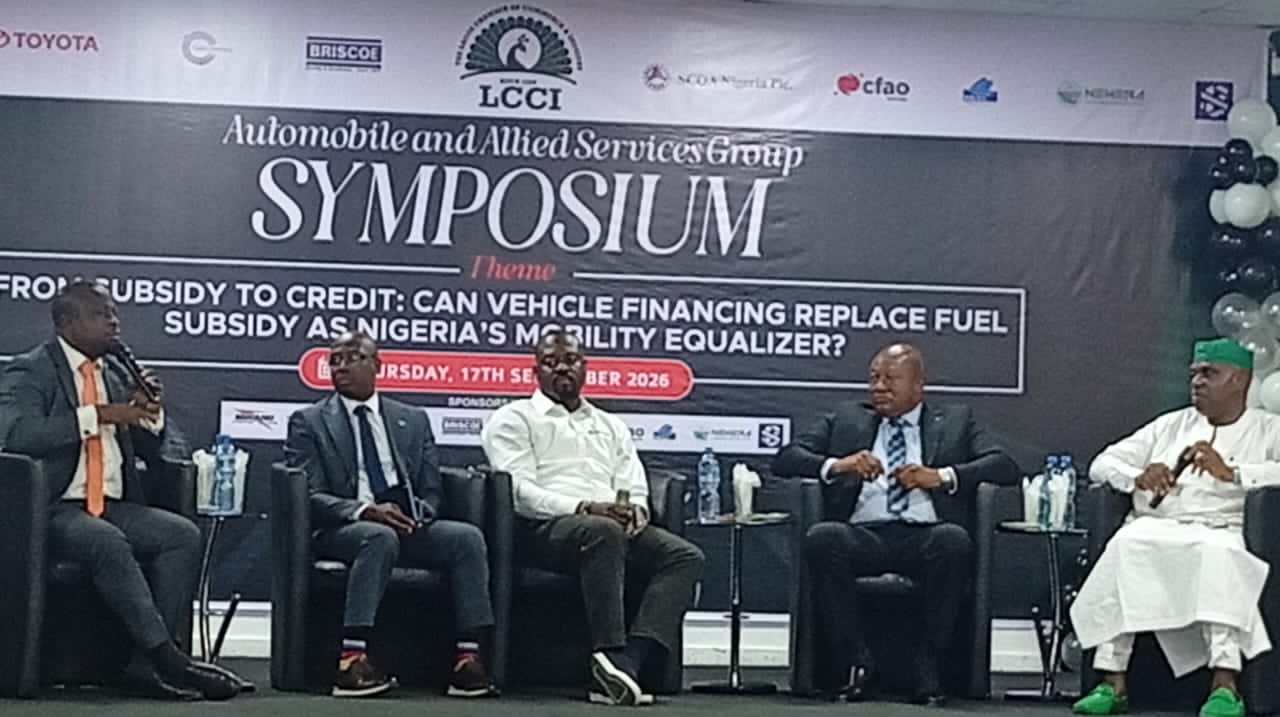
Director-General of NADDC, Otunba Joseph Oluwemimo Osanipin, stated this in an address delivered on his behalf by the Council’s Principal Information Officer, Tanko Kyumnom, at the Lagos Chamber of Commerce and Industry (LCCI) Auto Sectoral Group Symposium in Lagos.
The symposium, held on Thursday, September 17, 2026, at the Henry Fajemirokun Hall of LCCI, was themed: “From Subsidy to Credit: Can Vehicle Financing Replace Fuel Subsidy as Nigeria’s Mobility Equaliser?”
Osanipin said the growing cost of mobility had made it necessary to explore financing models that would enable individuals, businesses and transport operators to acquire vehicles without bearing the full cost of ownership upfront.
According to him, spreading vehicle payments over an agreed period could provide a more sustainable pathway to vehicle acquisition, provided that the financing products are affordable, accessible and structured around the economic realities of Nigerian consumers.
He, however, cautioned that simply making credit available would not be enough.
“Vehicle financing offers a more sustainable approach by enabling individuals, businesses and transport operators to acquire vehicles and pay for them over time,” Osanipin stated.
The NADDC DG said the bigger opportunity lies in linking vehicle financing with the growth of locally assembled and Nigerian-made vehicles.
He explained that increased access to credit for locally produced vehicles could generate wider economic benefits by stimulating demand for domestic assembly, supporting component manufacturers, creating jobs and strengthening local supply chains.
Osanipin therefore urged stronger collaboration among government institutions, financial institutions, vehicle manufacturers and other stakeholders in designing financing schemes capable of supporting both mobility access and automotive industrialisation.
The NADDC boss identified affordable vehicle loans, leasing arrangements, fleet financing, credit guarantees and appropriate interest-rate support as mechanisms that could broaden access to vehicle ownership and productive mobility.
lt also stressed the need for repayment structures that take into account the earning patterns and business realities of Nigerians, particularly transport operators and small businesses whose vehicles are directly linked to their income-generating activities.
Osanipin maintained that the objective should extend beyond increasing the number of vehicles on Nigerian roads.
“The goal is not simply to put more vehicles on Nigerian roads. It is to ensure that Nigerians can access productive mobility without placing an unsustainable burden on government finances or household incomes,” he said.
According to him, a properly structured automotive financing system could create a stronger connection between mobility, economic inclusion and domestic vehicle production.
“With the right policies and partnerships, vehicle financing can become a powerful instrument for mobility, economic inclusion and automotive industrial development,” Osanipin added.
The NADDC’s position places vehicle financing within the broader effort to build a sustainable automotive ecosystem in Nigeria—one in which access to credit supports vehicle users while also creating stronger demand for local assembly, components and associated automotive services.
-

 metro2 days ago
Osogbo Food Bonanza Turns Nightmare as Discount Vendor Vanishes With Customers’ Millions
-

 metro3 days ago
24 Hours in Darkness: Iju Ishaga Residents, Businesses Count Losses as Ikeja Electric Fails to Restore Power
-

 Education2 days ago
FG Releases 2026–2028 Approved Textbooks, Introduces QR Codes for Tracking
-

 News2 days ago
Breaking: Tinubu Ends Extended European Vacation, Departs Paris for Nigeria
-

 metro2 days ago
Hamzat Clarifies Lagos Traffic ‘Lifestyle’ Remark After Backlash
-

 Sports2 days ago
Nigeria XI vs Guinea-Bissau: Awoniyi, Lookman, Adams Lead Super Eagles Attack
-

 Auto3 days ago
Carloha Opens Wider Access to Chery Q as Smart EV Enters Nigeria’s Mainstream
-

 metro1 day ago
$2.1m Land Suit: Court Orders Wike’s Son to Produce American Passport