

News
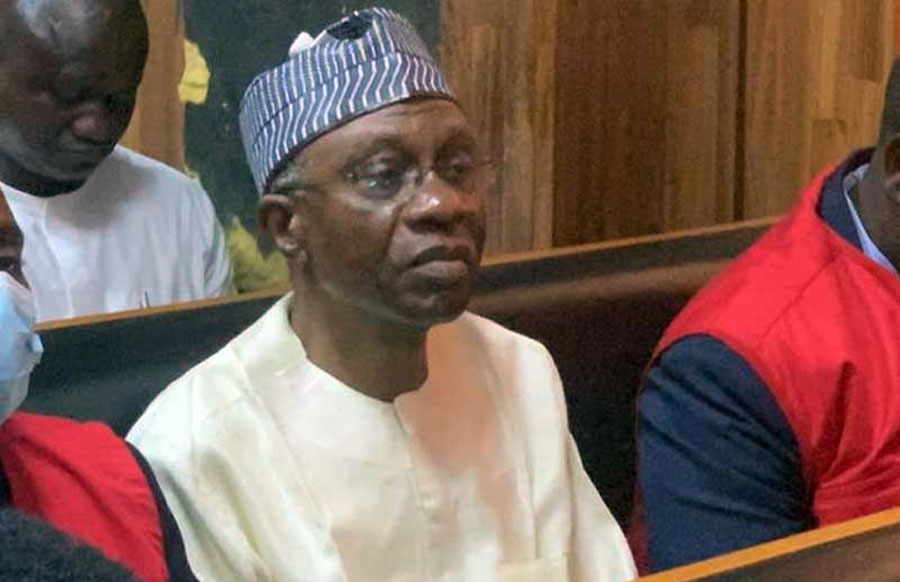
BREAKING: Emefiele in court, seeks variation of bail conditions
BREAKING: Emefiele in court, seeks variation of bail conditions
A former Governor of the Central Bank of Nigeria, Godwin Emefiele, is currently in court to seek variation of his bail conditions.
The former CBN governor is standing trial on six counts bordering on procurement fraud to the tune of N1.2bn.
This was the first time he would be making an appearance in court without stern-looking armed security personnel guiding him to the courtroom.
Emefiele was released from Kuje Custodial Centre on December 23, 2023, 34 days after the judge admitted him to bail.
He is asking the court to review some terms of his bail conditions.
Justice Hamza Muazu of the FCT High Court is currently listening to argument on the matter.
WITHIN NIGERIA reported that former President Muhammadu Buhari has stoutly defended the redesign of the Naira by the Central Bank of Nigeria ahead of the 2023 general elections, claiming that the policy gave the country what he calls ‘clean election’ but did not elaborate what it means.
Buhari’s position is contained in a new book: Working with Buhari: Reflections of a Special Adviser, Media and Publicity (2015-2023), which was unveiled in Abuja by President Bola Tinubu on Tuesday.
In the book, Buhari spoke on elaborately on the controversial Naira redesign and why he did not sack the former CBN Governor, Godwin Emefiele, when his posters for the presidency of Nigeria, hit the country physically and in the media.
READ ALSO:
- Rivers Assembly threatens to stop receiving correspondence from Fubara
- FG to regulate prices of medicine through executive order
- Stop paying ransom to kidnappers, bandits – Defence minister
Buhari said it would have been wrong for him to sack Emefiele since he did not inform him or any of his aides that he was contesting the 2023 Presidency.
The former President also made it clear that the Naira scarcity which has persisted till date, was not deliberately done to punish Nigerians, as wrongly insinuated by some persons.
Buhari said: “The scarcity of money was not deliberately done to punish Nigerians, Democracy allows people to express their will, and we did not attempt to confront them. People understood the implications of their choices, and we did not force them.
On why he did not sack Emefiele when he brandished campaign buses across the country as a presidential aspirant in 2023, Buhari said he could not do so because the former CBN Governor never told him he was running for the highest office in the country.
The former president said, “I met Emefiele in office when I came, and unless there was firm evidence against him, it would be unfair, and an act of injustice to remove him, acting on heresay”.
“If you punish a man unjustly, it could dog his footsteps throughout life, so if you would punish, you must have evidence. And you should know that yourself wouldn’t be there forever. You would leave one day.
READ ALSO:
- January take-off plans for student loan still intact – FG
- Troops kill more terrorists in Borno, clear 25 camps
- CBN initiates legal actions against forex defaulters
- Gunmen storm Kwara community, kidnap traditional chief, 3 others
“I am very conscious about the morale of people who serve with me. I also expect whoever succeeds me to be fair to me. I have family, friends, who will feel it. I’m very conscious of fairness.
When Emefiele was linked with campaign for the 2023 presidency, I did not ask him, because he told nobody he was getting involved. Otherwise, I would have removed him, and told the nation why.
“There is no denying that the Naira redesign policy gave us cleaner elections. It was people who had too much money that had problems with it. When it was said that the new notes were not available, over N260 million was found with one bank chairman. Did I take on the Supreme Court on the issue? No, I could not have.
“Some APC governors went to court. I refused to judge people by my own standards. I am not materialistic, but it will be too much to expect all Nigerians to be the same way. It is not fair to condemn anybody, but it is up to them and their conscience. I want to continue to conduct myself with clear conscience. I want to continue to conduct myself with clear conscience so that when I go to bed, I sleep off immediately,” the former President said in the book.
BREAKING: Emefiele in court, seeks variation of bail conditions




News
BREAKING: FG Announces 30-Day Petrol Discount, Gives NNPCL Fresh Directive

BREAKING: FG Announces 30-Day Petrol Discount, Gives NNPCL Fresh Directive
Public transporters to get priority as government moves to cushion impact of high fuel prices
The Federal Government has announced a 30-day discount on petrol sold through the Nigerian National Petroleum Company Limited (NNPCL), with public transport operators to receive priority under the arrangement.
The Minister of Finance and Coordinating Minister of the Economy, Taiwo Oyedele, announced the measure on Thursday, October 8, 2026, during a press briefing in Abuja on petrol prices and subsidy-related issues.
Oyedele said the intervention should not be interpreted as a return to petrol subsidy, explaining that the government would instead allow petrol to be sold at cost during the period.
“We are offering a discount on petrol dispensed by NNPC Limited for the next 30 days in the first instance with priority for public transporters nationwide.”
The minister added: “It’s not a subsidy; government is just saying we sell to you at cost.”
FG targets N1,350 petrol landing-cost ceiling
The announcement forms part of a broader package of measures being introduced by the Federal Government to moderate the impact of rising petrol and transportation costs.
Oyedele also disclosed that the government was negotiating a ₦1,350-per-litre ceiling on the ex-gantry or landing cost of petrol.
According to him, the proposed price-modulation arrangement is intended to prevent pump prices from immediately following every fluctuation in international crude oil prices and foreign exchange rates.
READ ALSO:
- Man Allegedly Caught Using Old Tyres to Scam POS Operator
- BREAKING: FG Unveils 10 Measures to Cushion Fuel Price, Inflation Pressures
- 2027: ADC Vows to Collate, Share Polling-Unit Results Despite INEC Warning
He said the ceiling would be reviewed monthly, with adjustments made when necessary.
Public transporters given priority
Under the 30-day arrangement, public transport operators nationwide are expected to receive priority in accessing the discounted petrol.
The measure is significant because fuel costs have a direct impact on transport fares and, consequently, the prices of food and other essential commodities.
The government is therefore seeking to provide immediate relief while working on longer-term measures aimed at reducing volatility in petrol prices.
No exact discount amount announced yet
However, the Federal Government has not, as of the announcement, disclosed the exact amount of the 30-day discount or stated a new uniform pump price that all NNPCL stations will charge.
Vanguard reported that NNPCL had separately announced a ₦66-per-litre discount for customers using the NNPC Fuel App at its stations nationwide.
The latest announcement appears to be a broader government intervention, but details of its implementation, including how eligible public transporters will access the discount, are still expected.
FG unveils wider relief measures
Oyedele also disclosed other measures aimed at easing the pressure of high fuel and transportation costs.
These include efforts to moderate taxes and levies that increase logistics costs, forward crude sales to domestic refiners, increased funding for cash transfers to vulnerable households and subsidised credit for small businesses and consumers.
The government is also working with state governments to accelerate the rollout of compressed natural gas (CNG) as an alternative fuel for transportation.
What Nigerians should know
The latest announcement does not amount to a formal restoration of the petrol subsidy, according to the Finance Minister.
Rather, the government says it intends to temporarily sell petrol through NNPCL at cost, with public transporters prioritised, while pursuing mechanisms to make fuel prices less vulnerable to sudden international market and exchange-rate movements.
The 30-day period is expected to provide some relief to transport operators and commuters, although the impact on pump prices and transport fares will depend on the details of the implementation.
Newstrends.ng will continue to monitor the Federal Government and NNPCL for the exact discount amount, effective pump prices and implementation guidelines.
BREAKING: FG Announces 30-Day Petrol Discount, Gives NNPCL Fresh Directive
News
World Bank Raises Nigeria Growth Forecast, Demands More Jobs, Poverty Reduction

World Bank Raises Nigeria Growth Forecast, Demands More Jobs, Poverty Reduction
The World Bank has upgraded its economic growth forecast for Nigeria, citing improving macroeconomic stability, stronger investor confidence and a gradual recovery in private investment under President Bola Ahmed Tinubu’s reforms.
In its latest Africa Economic Update, the bank raised Nigeria’s 2026 growth forecast to 4.3 per cent, up from an estimated 4.0 per cent growth in 2025.
It also projected that the Nigerian economy would expand by 4.4 per cent annually in 2027 and 2028, reflecting expectations of continued improvement in economic activity.
The World Bank said Nigeria was among nearly three-quarters of sub-Saharan African countries whose growth outlooks were upgraded, attributing the broader improvement to years of economic reforms and better macroeconomic management.
For Nigeria, the bank pointed to progress in restoring macroeconomic stability, stronger external balances, improved fiscal revenues, increased investor confidence and a gradual recovery in private investment.
Nigeria’s economy expanded by 4.43 per cent year-on-year in the second quarter of 2026, according to official data, with agriculture and services recording stronger performances.
However, the World Bank cautioned that faster economic growth alone would not be enough to significantly improve living standards.
READ ALSO:
- Flood Submerges Enugu Road, Strands School Children, Passengers
- US Proposes $70,000 OPT Fee for Nigerians, Other Foreign Students
- EFCC Re-Arraigns Two Over Alleged £110,000 Money Laundering, ₦500m Fraud
It said the country’s next major challenge was to translate economic growth into productive jobs, higher household incomes and lower poverty.
The bank estimates that about 3.5 million people enter Nigeria’s labour force every year, putting enormous pressure on the economy to generate sufficient and sustainable employment opportunities.
It warned that the significance of Nigeria’s improving growth outlook would increasingly depend on whether economic expansion results in increased investment, business growth, higher productivity and better-paying jobs.
The World Bank’s latest assessment also showed that poverty remains a major concern. It estimated that 69.6 per cent of Nigerians lived below the lower-middle-income poverty line of $4.20 a day in 2025, while about 123 million people, or 50.8 per cent of the population, lived in extreme poverty under the bank’s cited measure.
The lender said improving macroeconomic conditions had created an opportunity for Nigeria to move from economic stabilisation towards expanding productive capacity and improving living standards.
It, however, warned that rising government spending ahead of the 2027 elections could undermine the momentum of recent reforms if fiscal discipline weakens.
The bank also stressed the importance of greater private-sector investment, improved electricity supply, transport and logistics, digital infrastructure, access to finance, agricultural productivity and a better business environment.
It said investments in education, skills, healthcare and early-childhood development would also be critical to improving the productivity of Nigeria’s future workforce.
Beyond Nigeria, the World Bank raised its forecast for sub-Saharan Africa to 4.3 per cent growth in 2026, up from 4.1 per cent in 2025 and 0.3 percentage points above its April projection.
The bank said the region still faced significant risks from geopolitical tensions, climate shocks, tighter financial conditions, insecurity and declining development assistance.
It also urged African governments to invest in artificial intelligence and digital technologies, saying affordable AI applications in areas such as education, agriculture, healthcare, finance and small businesses could help boost productivity and create more jobs.
For Nigeria, the message is increasingly clear: maintaining macroeconomic stability is only the first stage of the recovery, while the bigger test will be whether the reforms deliver jobs, income growth and meaningful poverty reduction for households.
World Bank Raises Nigeria Growth Forecast, Demands More Jobs, Poverty Reduction
News
BREAKING: NLC Shuts Down Abuja Indefinitely Over FCT Teachers’ Promotion Dispute
BREAKING: NLC Shuts Down Abuja Indefinitely Over FCT Teachers’ Promotion Dispute
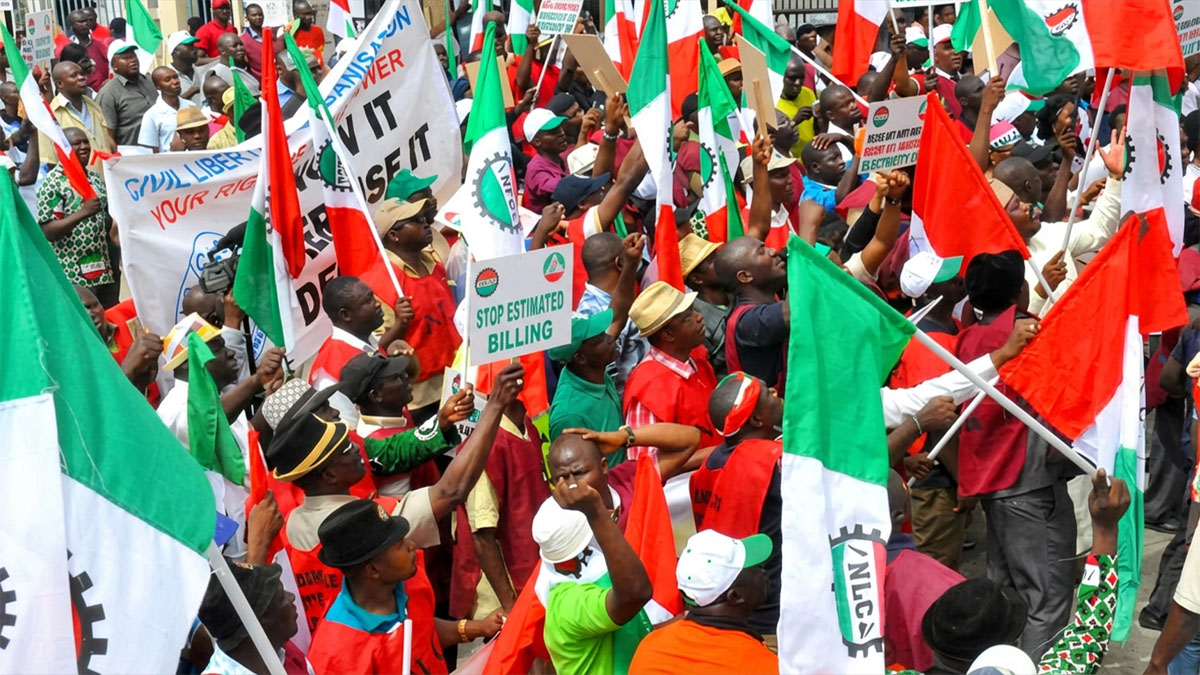
The Federal Capital Territory was thrown into an indefinite industrial crisis on Wednesday as the Nigeria Labour Congress, NLC, ordered workers across Abuja to withdraw their services over unresolved disputes surrounding the promotion and career progression of teachers.
The strike, which took effect on Wednesday, October 7, 2026, followed the expiration of a seven-day ultimatum issued to the Federal Capital Territory Administration, FCTA, after months of disagreements over teachers’ welfare, promotion procedures and the treatment of senior education officials.
The NLC FCT Council said it was compelled to resort to industrial action after rejecting the response of the FCTA to its demands, describing the administration’s position as “ambiguous, dismissive and totally unacceptable.”
The directive, issued in a communique signed by the NLC FCT Council Chairman, Comrade Knabayi S. Adalo, directed the congress’s affiliate unions to mobilise their members for the indefinite action until the outstanding issues are resolved.
At the heart of the dispute is the controversial “vacancy clause”, which makes the promotion of teachers subject to the availability of vacant positions.
The labour movement argues that the condition has resulted in career stagnation for qualified teachers who have met the requirements for advancement but are unable to move to the next cadre because of the absence of vacancies.
The NLC maintains that teachers, recruited specifically to teach under the FCT Universal Basic Education Board and FCT Secondary Education Board, should not be subjected to a promotion arrangement designed for core civil servants or pool officers.
The dispute has been building for months. In September, the NLC gave the FCTA a seven-day ultimatum to resolve the grievances, following earlier protests by teachers over the vacancy requirement and concerns surrounding the 2025 promotion examination.
Among the union’s demands is the removal of the vacancy requirement from the promotion process for teachers. It is also demanding that teachers who were eligible for promotion in 2025 but were unable to take the examination be allowed to sit for the exercise before or alongside the 2026 candidates.
The NLC is further demanding the reversal of redeployment and demotion letters issued to some directors in the education sector, citing the Harmonised Retirement Age for Teachers in Nigeria Act, 2022.
The union has also called for changes involving the management of the FCT education agencies, including the FCT Universal Basic Education Board and FCT Secondary Education Board.
The FCTA, however, has previously defended its administrative decisions, saying its policies on promotion, redeployment and other personnel matters are guided by existing civil service regulations and ongoing reforms in the education sector.
An FCTA official also defended the redeployment of senior education administrators, citing relevant federal guidelines.
The labour dispute has also exposed divisions within the organised labour movement in the territory. The Academic Staff Union of Secondary Schools, ASUSS, FCT Chapter, an affiliate of the Trade Union Congress, has reportedly distanced itself from the strike, maintaining that the FCTA has the authority to deploy personnel and that promotion should take account of established vacancies and available resources.
With the NLC now declaring the action indefinite, the dispute threatens to disrupt schools, government offices and other public services across the nation’s capital.
The union has urged parents, residents, civil society organisations and other stakeholders to press the FCTA to resolve the issues, insisting that the industrial action will continue until its demands are satisfactorily addressed.
The NLC’s latest position is unequivocal: without a resolution of what it considers the fundamental grievances affecting teachers, the strike will continue indefinitely.
-

 metro2 days ago
Ondo Air Tragedy: Soldiers, Families Among 32 Killed In NAF Crash
-
 News3 days ago
President Tinubu Mourns 32 NAF Personnel in Ondo Jet Crash, Orders Immediate Probe
-

 metro2 days ago
Gunmen Open Fire At Lagos Bus Stop, Kill NURTW Member, Injure Three
-
 metro3 days ago
No Survivors Found in Ondo NAF Plane Crash — Ondo Governor
-
![[UPDATED] 20 NYSC Prospective Corps Members Freed After Seven Days in Captivity](https://newstrends.ng/wp-content/uploads/2026/10/20-NYSC-Prospective-Corps-Members-Freed-After-Seven-Days-in-Captivity-400x240.jpg)
![[UPDATED] 20 NYSC Prospective Corps Members Freed After Seven Days in Captivity](https://newstrends.ng/wp-content/uploads/2026/10/20-NYSC-Prospective-Corps-Members-Freed-After-Seven-Days-in-Captivity-80x80.jpg) metro12 hours ago
metro12 hours ago[UPDATED] 20 NYSC Prospective Corps Members Freed After Seven Days in Captivity
-

 metro2 days ago
Ogun Crash: Nine Die As Bus Collides With Truck On Ijebu-Ode-Ore Road
-

 metro2 days ago
UCH CMD: After Decades Without Muslim, Agunbiade Demands Fair Chance
-

 International2 days ago
Kemi Badenoch: I Don’t Want Migrants Turning UK Into Nation Of ‘Little Ghettos’