

metro
NAFDAC busts fake Eva water factory, arrests suspect
NAFDAC busts fake Eva water factory, arrests suspect
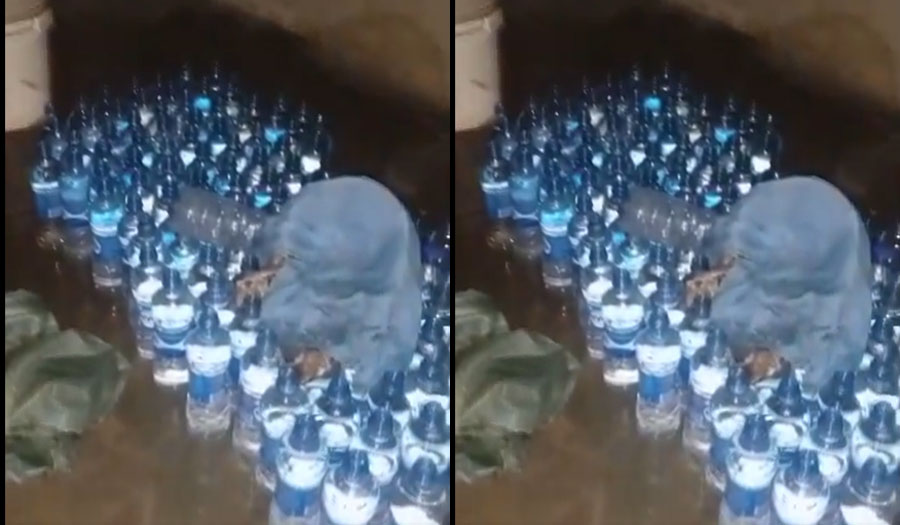
The National Agency for Food and Drug Administration and Control (NAFDAC) has exposed a counterfeit bottled water operation in Port Harcourt, specifically targeting the renowned brand Eva water.
Following a tipoff, NAFDAC officials conducted a raid on a derelict shop situated on Pipeline Road, Eneka.
The establishment disguised as a pool house and served as the hub for producing the fraudulent water.
During the operation, authorities discovered that used Eva plastic bottles were being refilled with contaminated water sourced from a paint bucket.
The water was then filtered through unhygienic rubber funnels covered with cloth.
Counterfeit Eva labels were affixed to the bottles, which were subsequently sealed with fake Eva corks.
READ ALSO:
- Slain soldiers : Wanted Delta traditional ruler surrenders self
- Third Mainland Bridge will be reopened in seven days – Minister
- CBN raises commercial banks’ capital base to N500bn
One suspect, identified as Chibunna James, was apprehended while in the process of loading the adulterated water for distribution. However, the mastermind behind the operation remains at large.
The confiscated products were promptly evacuated to the NAFDAC office for further investigation and analysis.
Cyril Monye, NAFDAC’s Public Relations Officer for Rivers State, disclosed that the scheme of the perpetrators involved repackaging contaminated water in used Eva bottles, employing makeshift filters made from unsanitary materials, and applying fake labels and corks to deceive consumers.
While efforts are underway to locate and apprehend the ringleader of the syndicate, NAFDAC urges the public to provide any relevant information that could aid in their apprehension.
Furthermore, Monye revealed that thirty packs of the counterfeit products were confiscated and transported to the NAFDAC office in Port Harcourt for thorough investigation. To prevent the circulation of the counterfeit water, the uncorked bottles were emptied and disposed of.
NAFDAC busts fake Eva water factory, arrests suspect






metro
Deputy Director’s Death: NLC Shuts Delta Secretariat, Begins Indefinite Strike
Deputy Director’s Death: NLC Shuts Delta Secretariat, Begins Indefinite Strike
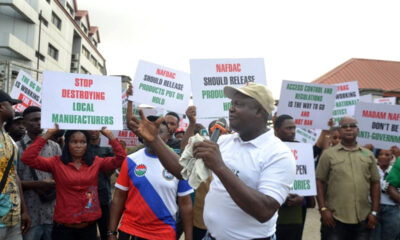
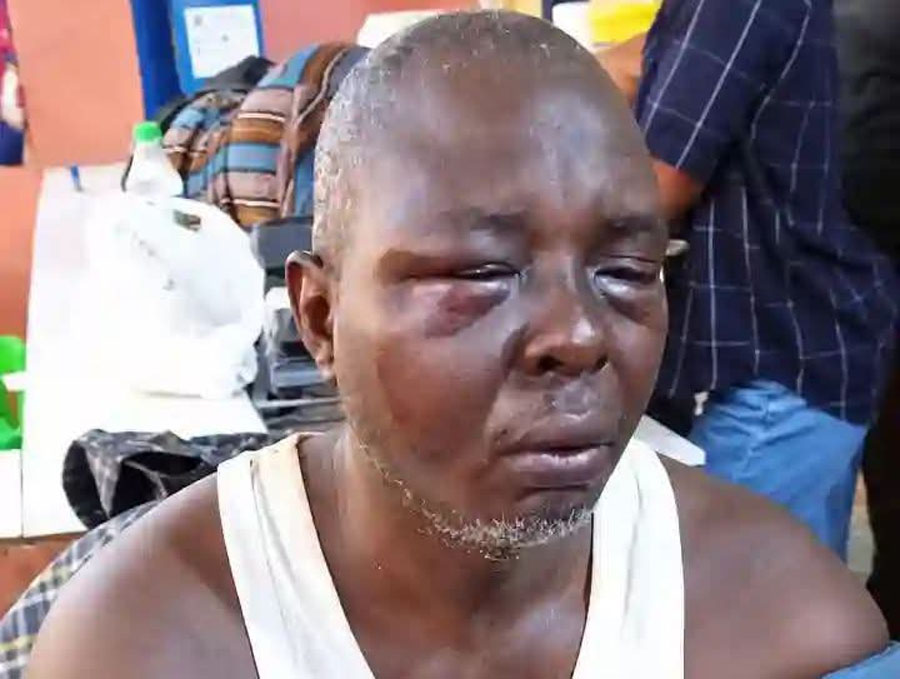
The Nigeria Labour Congress (NLC) has declared an indefinite strike in Delta State following the death of Unity Ekpevbughe Adeda, a Deputy Director in the state Ministry of Basic and Secondary Education.
The decision followed growing tension among workers over the circumstances surrounding Adeda’s death at the Prof. Chike Odozien Secretariat in Asaba, with organised labour demanding a thorough investigation and assurances over the safety of workers in government offices.
The Delta State NLC, led by Goodluck Ofobruku, directed workers to withdraw their services indefinitely as it protested the death and demanded accountability over what it described as an unacceptable incident involving a public servant.
The development led to the shutdown of the state secretariat, with workers staying away from their offices as the labour union escalated its response.
The circumstances surrounding Adeda’s death remain the subject of investigations, with different accounts emerging over what happened before the Deputy Director died.
READ ALSO:
Labour-linked accounts alleged that Adeda was assaulted during a confrontation at the secretariat. However, Delta State Commissioner for Basic and Secondary Education, Kingsley Ashibogwu, denied ordering anyone to attack the deceased.
READ ALSO:
- Abuja Police Arrest Woman, Two Hotel Workers Over Man’s Body Dumped Under Bridge
- Bauchi Police Arrest 26-Year-Old Man Over Rape Of 50-Year-Old Woman
- 2027: Lawal Challenges Wike To Clarify Allegiance Over Rainbow Coalition
Ashibogwu also gave a different account of the incident, alleging that Adeda physically confronted him.
The conflicting accounts have heightened calls for an impartial investigation to establish what happened and determine whether anyone bears responsibility for the Deputy Director’s death.
The Nigeria Police Force has commenced an investigation and arrested Lucky Adoh in connection with the incident.
Police also declared a manhunt for Enos Attah and Oputa Okestine, who were identified as persons allegedly connected to the incident.
Investigators are expected to examine available video recordings, eyewitness accounts and medical records as part of efforts to establish the sequence of events and circumstances surrounding Adeda’s death.
The Delta State Government has also established an eight-member Administrative Panel of Inquiry to investigate the incident.
The panel is chaired by Charity Ehimen, Permanent Secretary in the Office of the Head of Service, and includes representatives of the NLC, Trade Union Congress (TUC) and Joint Negotiating Council.
The panel has been given two weeks to submit its report and findings.
The government’s decision to constitute the panel followed the escalation of the dispute and the labour union’s declaration of an indefinite strike.
The investigation is expected to determine what happened before Adeda’s death, the circumstances surrounding the confrontation reportedly involving him and other individuals, and whether any action or omission contributed to his death.
As of the latest reports, there has been no conclusive official finding establishing the cause of Adeda’s death or confirming allegations of a fatal assault.
The police investigation and the administrative inquiry are therefore expected to provide separate but complementary findings on the incident.
The Delta NLC strike will remain in force pending further developments, while workers and organised labour await the outcome of the investigations into the death of the Deputy Director.
Deputy Director’s Death: NLC Shuts Delta Secretariat, Begins Indefinite Strike
metro
Woman Busted With Alleged Alcohol Hidden in Water Pack at Ogun Prison
Woman Busted With Alleged Alcohol Hidden in Water Pack at Ogun Prison
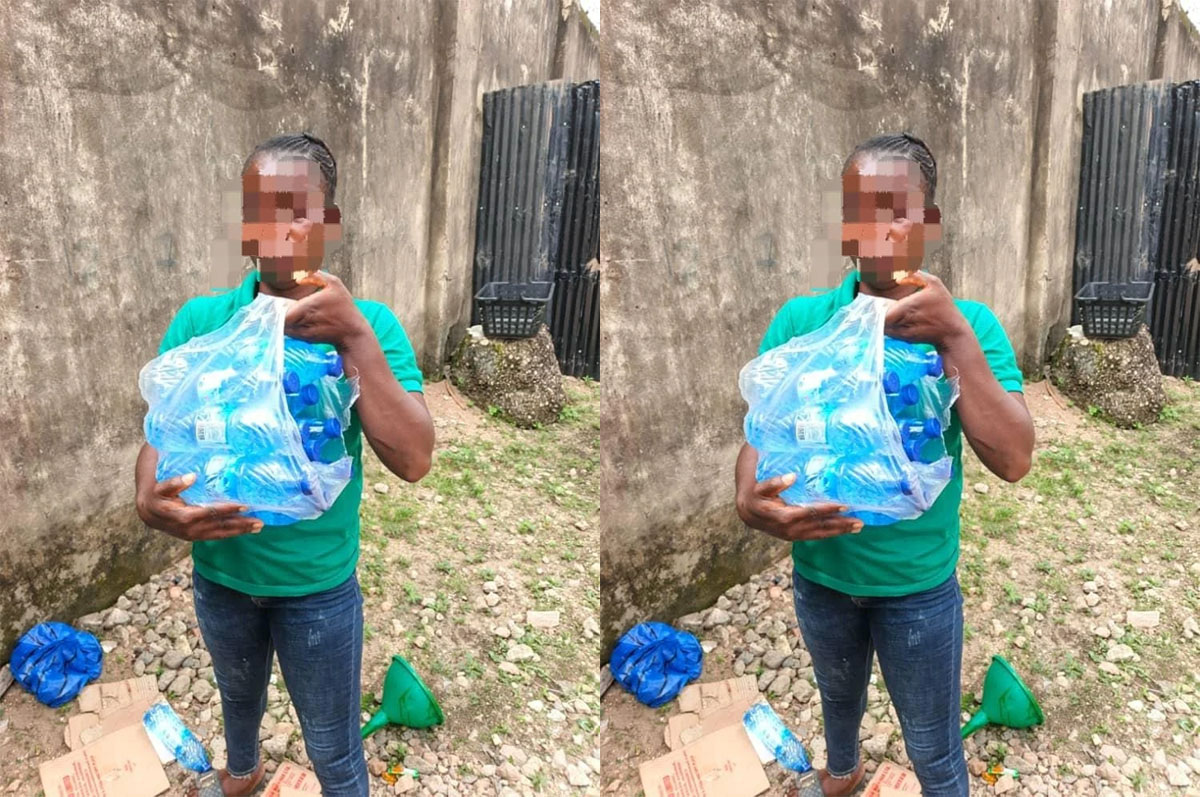
A woman identified as Shobowale Balikis has been arrested for allegedly attempting to smuggle alcohol into the Ibara Custodial Centre in Abeokuta, Ogun State, the Nigerian Correctional Service (NCoS) has said.
Balikis was reportedly arrested on Saturday, September 26, 2026, during routine screening at the custodial facility.
According to the Ogun State Command of the Nigerian Correctional Service, the incident occurred at about 3:50 p.m. when correctional officers subjected items brought into the facility to security checks.
During the screening, officers allegedly discovered a substance identified as ethanol concealed inside a bottled-water pack. The item was reportedly intended for an inmate at the facility.
The NCoS said the interception prevented the suspected contraband from getting into the custodial centre and reaching inmates.
Following the arrest, Balikis was handed over to the Nigeria Police Force for further investigation and possible prosecution.
The correctional service said the development underscored its commitment to preventing the introduction of prohibited substances and other unauthorised items into custodial facilities.
READ ALSO:
- Abuja Police Arrest Woman, Two Hotel Workers Over Man’s Body Dumped Under Bridge
- Bauchi Police Arrest 26-Year-Old Man Over Rape Of 50-Year-Old Woman
- 2027: Lawal Challenges Wike To Clarify Allegiance Over Rainbow Coalition
The command reiterated its zero-tolerance policy on contraband, stressing that visitors and other persons seeking access to custodial centres are subjected to screening procedures.
The latest incident comes weeks after another woman was arrested at the same Ibara Custodial Centre over an alleged attempt to smuggle a suspected psychoactive substance into the facility.
In that case, Iyabo Sowunmi was reportedly arrested during a screening exercise after officers allegedly found a substance suspected to be “Colos” concealed in a sachet of Milo beverage. She was subsequently handed over to the National Drug Law Enforcement Agency (NDLEA) for investigation.
The August incident reportedly involved a visit to an inmate identified as Dare Sowunmi, who was said to be on death row.
The two incidents highlight the continuing security checks being carried out at the Abeokuta custodial facility to prevent drugs, alcohol and other prohibited items from reaching inmates.
However, authorities have not indicated that the two cases are connected, and there is no official information suggesting that Balikis was acting with any accomplice or that the latest incident involved the inmate linked to the earlier case.
The police investigation into the latest arrest is expected to determine the circumstances surrounding the alleged attempted introduction of ethanol into the Ogun custodial centre, including who the substance was intended for and whether any other person was involved.
Woman Busted With Alleged Alcohol Hidden in Water Pack at Ogun Prison
metro
Lagos Task Force Denies Stopping Driver Over Toyota Tacoma Inscription

Lagos Task Force Denies Stopping Driver Over Toyota Tacoma Inscription
The Lagos State Environmental and Special Offences Enforcement Unit, popularly known as the Lagos State Task Force, has denied stopping a motorist or demanding a permit over an inscription displayed on his Toyota Tacoma.
The denial followed a viral social media video shared by Jay Scotch Automobile Ltd, in which the driver alleged that officials stopped him over the words “TRD 4×4 Sport Tacoma” displayed on his vehicle.
The motorist claimed the officials treated the inscription as an advertisement requiring a government permit. He further alleged that they threatened to damage the vehicle’s side mirror if he failed to produce the required permit.
He disputed the demand, explaining that the inscription was part of the vehicle when he purchased it in the United States and was not an advertisement subsequently placed on the vehicle in Lagos.
However, the Task Force distanced itself from the incident.
The agency’s Director of Press and Public Affairs, Raheem Gbadeyanka, said residents sometimes mistake personnel from different government agencies for Task Force operatives, particularly when officers are wearing similar uniforms.
READ ALSO:
- Abuja Police Arrest Woman, Two Hotel Workers Over Man’s Body Dumped Under Bridge
- Bauchi Police Arrest 26-Year-Old Man Over Rape Of 50-Year-Old Woman
- 2027: Lawal Challenges Wike To Clarify Allegiance Over Rainbow Coalition
Gbadeyanka said the Task Force was not involved in the encounter and maintained that demanding a permit for a vehicle inscription was outside the agency’s mandate.
The controversy has nevertheless drawn attention to Lagos regulations governing vehicle branding and mobile advertising.
The Lagos State Signage and Advertisement Agency (LASAA) is responsible for regulating signage and advertising in the state, including mobile advertising and branding on vehicles. Its regulatory framework covers various vehicle categories, including cars, pickups, SUVs, buses and trucks.
LASAA also operates systems for registering and verifying authorised vehicle branding, while its published fee structure contains different categories for mobile advertisements and vehicle branding.
The distinction means that the Task Force’s denial does not amount to a blanket exemption for vehicle advertising or commercial branding in Lagos. Rather, the agency is disputing responsibility for the particular encounter and says enforcement of such permits is not within its mandate.
The Task Force has continued to enforce other road, environmental and public-safety regulations across Lagos, including restrictions affecting commercial motorcycles, road obstructions, illegal roadside activities and unauthorised use of restricted traffic corridors.
The incident has therefore raised a separate question of agency jurisdiction, particularly over which government body is authorised to enforce regulations concerning inscriptions, branding or advertisements displayed on private vehicles.
For now, the motorist’s account and the Task Force’s denial remain the two publicly stated versions of the encounter. No independent evidence has been publicly presented to establish that Task Force officials stopped the driver specifically because of the inscription.
Lagos Task Force Denies Stopping Driver Over Toyota Tacoma Inscription
-

 News2 days ago
Anambra Releases ₦473m Salary Arrears Document as Obi’s Debt Claim Sparks Fresh Dispute
-

 News2 days ago
Keyamo: ₦70,000 Minimum Wage No Longer Enough as Cost of Living Soars
-
 metro2 days ago
EFCC Chairman Raises Alarm Over Alleged Theft of Nigeria’s Public Funds
-
 Business3 days ago
FG Seeks Private Capital, States’ Support to Transform Nigeria’s Ports
-

 News3 days ago
Jetour Nigeria displays hi-tech, luxury, art at Abuja Experience
-

 Sports1 day ago
AFCON 2027 Qualifier: Nigeria Fight Back to Beat Madagascar 2-1 in Uyo
-
 Politics2 days ago
2027: Otti Explains Why He Supports Tinubu Despite Remaining in Labour Party
-

 Entertainment2 days ago
Jetour Takes Adventure Beyond the Road, Brings Solar-powered Borehole to Ibeju-Lekki community