
News
SERAP gives Sani, Wike, others seven days to account for N5.9trn, $4.6bn loans
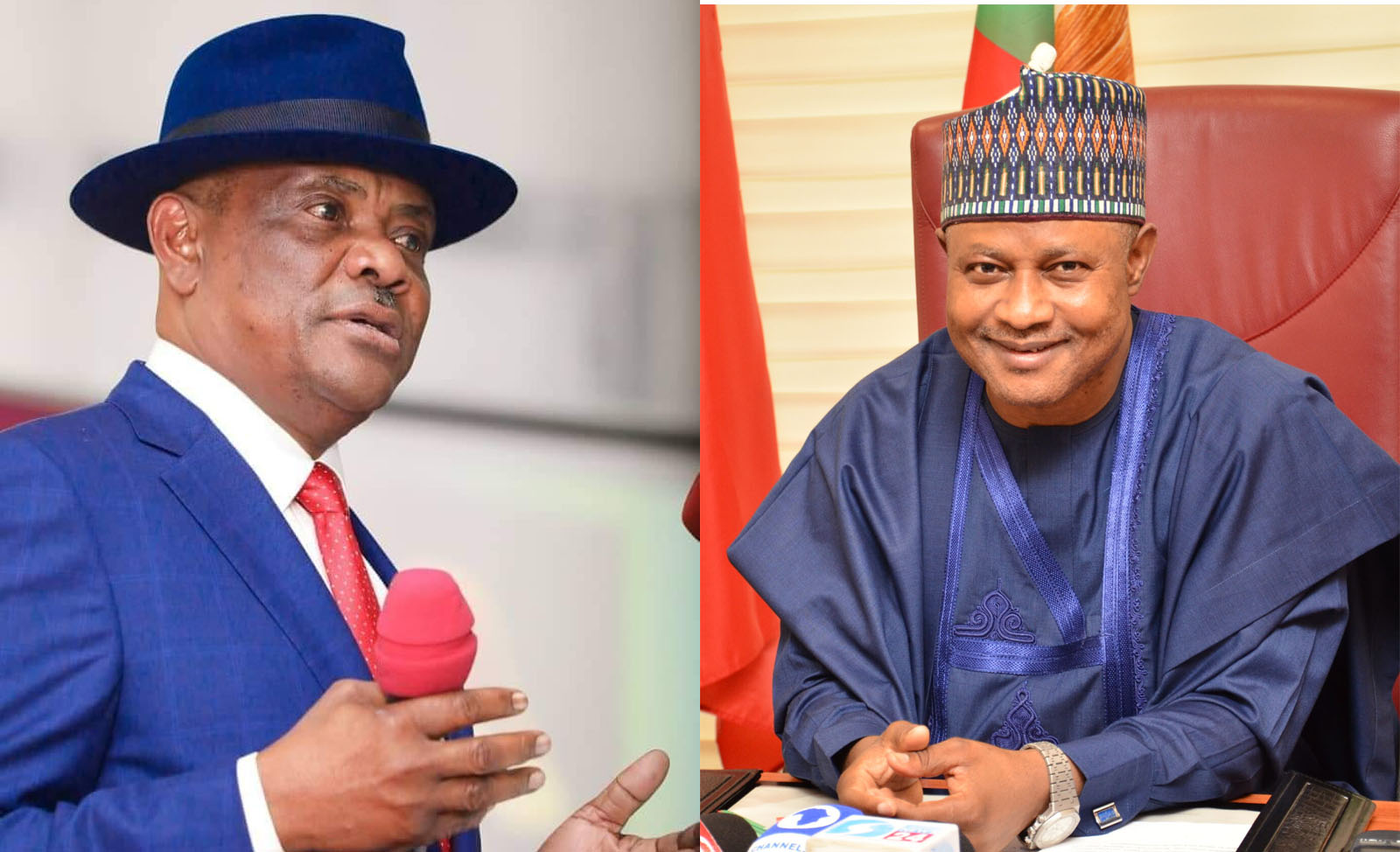
SERAP gives Sani, Wike, others seven days to account for N5.9trn, $4.6bn loans
Socio-Economic Rights and Accountability Project (SERAP) has urged Nigeria’s 36 state governors and the Minister of the Federal Capital Territory, Abuja, Mr Nyesom Wike to “widely publish copies of the loan agreements and spending details of some N5.9 trillion and $4.6 billion loans obtained by their states and the FCT, including details and locations of projects executed with the loans.”
SERAP also urged them to “promptly invite the Independent Corrupt Practices and Other Related Offences Commission (ICPC) and Economic and Financial Crimes Commission (EFCC) to investigate the spending of the domestic and external loans obtained by your state and the FCT.”
SERAP’s request followed the disclosure last week by Governor Uba Sani of Kaduna State that the immediate past administration of Nasir El-Rufai left $587m, N85bn debt and 115 contractual labilities, making it impossible for the state to pay salaries.
In the Freedom of Information requests dated 30 March 2024 and signed by SERAP deputy director Kolawole Oluwadare, the organisation said: “It is in the public interest to publish copies of the loan agreements and details of how the loans obtained are spent.”
SERAP said, “Nigerians have the right to know how their states are spending the domestic and external loans obtained by the governors.”
SERAP said, “Widely publishing copies of the loan agreements and spending details of the loans obtained would ensure that persons with public responsibilities are answerable to the people for the performance of their duties in the management of public funds.”
READ ALSO:
- JUST IN: Three children killed, four injured as explosion rocks Taraba
- Bashir el-Rufai tackles Uba Sani over ‘huge debt inherited’ claim
- Police arrest ‘cleric with human body parts’ in Ondo
The FoI requests, read in part: “We would be grateful if the recommended measures are taken within seven days of the receipt and/or publication of this letter. If we have not heard from you by then, SERAP shall take all appropriate legal actions to compel you and your state to comply with our request in the public interest.”
“SERAP is seriously concerned that many of the country’s 36 states and FCT are allegedly mismanaging public funds which may include domestic and external loans obtained from bilateral and multilateral institutions and agencies.”
“Transparency in the spending of the loans obtained by your state is fundamental to increase accountability, prevent corruption, and build trust in democratic institutions with the ultimate aim of strengthening the rule of law.”
“According to Nigeria’s Debt Management Office, the total public domestic debt portfolio for the country’s 36 states and the Federal Capital Territory is N5.9 trillion. The total public external debt portfolio is $4.6 billion.”
“Many states and the FCT reportedly owe civil servants’ salaries and pensions. Several states are borrowing to pay salaries. Millions of Nigerians resident in your state and the FCT continue to be denied access to basic public goods and services such as quality education and healthcare.”
“Several states including your state are also reportedly spending public funds which may include the domestic and external loans to fund unnecessary travels, buy exotic and bulletproof cars and generally fund the lavish lifestyles of politicians.”
“SERAP is seriously concerned that the domestic and external loans obtained by your state and the FCT are vulnerable to corruption and mismanagement. Your government has a responsibility to ensure transparency and accountability in how any loans obtained by your state are spent, to reduce vulnerability to corruption and mismanagement.”
“Publishing copies of the loan agreements obtained by your state and the FCT would allow Nigerians to scrutinise them, and promote transparency and accountability on the spending of public funds including the loans obtained.”
“SERAP believes that providing and widely publishing the details of the spending of the domestic and external loans obtained by your state and the FCT would enable Nigerians to effectively and meaningfully engage in the management of the loans.”
“SERAP believes that the constitutional principle of democracy also provides a foundation for Nigerians’ right to know the details of loan agreements and how the loans obtained are spent. Citizens’ right to know promotes openness, transparency, and accountability that is in turn crucial for the country’s democratic order.”
“The effective operation of representative democracy depends on the people being able to scrutinize, discuss and contribute to government decision making, including on the spending of loans obtained by your state and the FCT.”
“To do this, they need information to enable them to participate more effectively in the management of public funds by their state government and the FCT.”
READ ALSO:
- New $20 minimum wage for fast food workers in California set to start Monday
- Iran TV journalist stabbed in ‘murder plot’
- Newcastle beat West Ham in seven-goal thriller
“The public interest in obtaining information about expenditures relating to the loans obtained by your state outweighs any privacy or other interest. Moreover, the oversight afforded by public access to such details would serve as an important check on the activities of your state and help to prevent abuses of the public trust.”
“SERAP is concerned that there is a significant risk of mismanagement or diversion of funds linked to loans obtained by state governments including your state. The accounts of Nigeria’s 36 states and the FCT are generally not open to public scrutiny.”
“Your state has obligations under international anticorruption and human rights law, including a responsibility to promote transparency and accountability in the management of public funds, prevent mismanagement or diversion of public funds, and redress any abuse of public trust.”
“The Nigerian Constitution, human rights and anticorruption treaties to which Nigeria is a state party also impose obligations on your state to prevent mismanagement or diversion of public funds including the loans obtained.”
“SERAP is seriously concerned that years of allegations of corruption and mismanagement of public funds including the loans obtained by states have contributed to widespread poverty, underdevelopment and lack of access to public goods and services.”
“Opacity in the spending of loans obtained by states has continued to have negative impacts on the fundamental interests of the citizens and the public interest.”
“Transparency would ensure that these loans are not diverted into private pockets, and increase public trust that these loans are used and any future loans would be used to benefit Nigerians resident in your state.
“The Freedom of Information Act, Section 39 of the Nigerian Constitution, article 9 of the African Charter on Human and Peoples’ Rights and article 19 of the International Covenant on Civil and Political Rights guarantee to everyone the right to information, including about the loan agreements and how the loans obtained are spent.”
SERAP added “Your state cannot hide under the excuse that the Freedom of Information Act does not apply to your state to refuse to provide the details being sought, as your state also has clear legal obligations to provide the information as prescribed by provisions of the Nigerian Constitution 1999 [as amended], and the African Charter on Human and Peoples’ Rights (Ratification and. Enforcement) Act.
SERAP gives Sani, Wike, others seven days to account for N5.9trn, $4.6bn loans






News
FG Launches FreeTV, Offers Nigerians Over 100 Free Digital TV Channels

FG Launches FreeTV, Offers Nigerians Over 100 Free Digital TV Channels
The Federal Government formally launched Nigeria’s long-awaited Digital Switch Over (DSO) programme on Wednesday, unveiling a new hybrid digital broadcasting platform called FreeTV that offers Nigerians access to over 100 television channels without monthly subscription fees. The launch, held in Abuja, marks Nigeria’s formal transition from analogue to digital terrestrial television broadcasting, a project that has faced years of delays despite repeated commitments by successive administrations. The initiative is expected to reach 40 million homes, unlock over N600 billion in economic opportunities, create thousands of jobs, and expand access to quality broadcasting services across the country.
The Federal Government unveiled FreeTV as a digital television platform accessible through compatible decoders, satellite and terrestrial signals, as well as a mobile application. Nigerians can watch a wide range of content, including news, sports, movies, music, educational programmes, children’s shows, and indigenous language channels including Yoruba, Hausa, and Igbo at no cost. Households do not need to purchase new television sets to enjoy the service. Existing TVs can access the platform with compatible DVB-T2 or DVB-S2 decoders, while many households already using free-to-air decoders may be able to connect immediately. The service will also be available through the FreeTV mobile application on smartphones, enabling users in both urban and rural communities to access digital television services without the need for a decoder or satellite dish.
Speaking at the launch event, the Minister of Communications, Innovation and Digital Economy, Bosun Tijani, described the rollout as a major milestone in Nigeria’s digital transformation agenda and said it would support the administration’s broader ambition of building a $1 trillion economy. Tijani stated: “Today, Nigeria joins the ranks of nations that have embraced modern digital broadcasting infrastructure to serve their people. While this may appear to be a broadcasting milestone, its true significance lies in what it means for ordinary Nigerians. It means better access to information, broader access to educational and cultural content, an improved quality of service and the ability to ensure that no Nigerian is left behind simply because of where they live.” He linked the project to the Federal Government’s wider digital infrastructure strategy, noting that the government is rolling out 90,000 kilometres of fibre-optic open-access infrastructure across the country and has secured approval for two additional satellites to enhance communications services. He stated that Nigeria is the only country in West Africa with a communications satellite, and the fibre network would cover all national borders, allowing neighbouring countries to benefit from broadcasting and digital services.
READ ALSO:
- Kebbi Police Arrest School Guard for Alleged Defilement of 10-Year-Old Girl
- Nigerian Migrant Arrested for Alleged Murder of Libyan Boss
- UK Social Media Ban Could Increase Online Risks for Teens — Telegram CEO
The Director-General of the National Broadcasting Commission (NBC) , Charles Ebuebu, described the launch as the unveiling of a new national communications architecture and a critical step in Nigeria’s digital transformation journey. “Today, we are not merely launching a digital broadcasting platform; we are launching a new national communications architecture. The big picture represents our collective ambition to democratise access to information, unlock new opportunities for Nigerian content creators, stimulate investment across the broadcasting value chain, empower local manufacturers, strengthen media plurality, expand consumer choice and improve spectrum efficiency,” he said. Ebuebu also disclosed that broadcasters joining the FreeTV platform would enjoy an 18-month free carriage window, nationwide visibility, and access to audience data through the proposed audience measurement system. He noted that Nigeria’s DSO strategy had evolved from the previous Digital Terrestrial Television (DTT)-only model into a hybrid system integrating Direct-to-Home satellite broadcasting (DTH), Digital Terrestrial Television, and Internet Protocol (IP)-based streaming, ensuring that Nigerians in all parts of the country, regardless of their location or infrastructure, can access the new platform.
As part of the initiative, regional production centres have been established in Lagos, Abuja, Port Harcourt, Enugu, Kano, and Benin to drive content development and support jobs across the media industry. The centres are expected to create opportunities for producers, editors, camera operators, sound engineers, technicians, and other media professionals. The platform is expected to stimulate growth within Nigeria’s creative and media sectors by creating new opportunities for content creators and broadcast professionals. The Nigeria’s digital migration journey had suffered multiple delays, but stakeholders expressed optimism that a clearer implementation framework was emerging.
READ ALSO:
- Kingibe Denies Endorsing Akpoti-Uduaghan Suspension
- Witness Reveals How Sirika Approved Nigeria Air Consultancy Deal for Associate
- Police Arrest Boko Haram, Lakurawa Terror Suspects, Rescue Kidnap Victim
The Minister of Information and National Orientation, Mohammed Idris, described the launch as the culmination of years of efforts by stakeholders and government agencies to actualise the digital broadcasting project. “Today is not merely a broadcasting milestone. It is a more connected, more competitive and more prosperous Nigeria. The Digital Switch Over project is therefore not simply a technological transition. It is an investment in Nigeria’s future. The goal is simple: to make quality broadcasting available to more Nigerians than ever before,” Idris stated. He noted that the project aligns with President Bola Tinubu’s Renewed Hope Agenda, which places emphasis on digital transformation, innovation, economic growth, and critical national infrastructure. He said a fully implemented digital broadcasting ecosystem would create jobs, stimulate local manufacturing, expand audience reach, strengthen content production, increase advertising opportunities and unlock new revenue streams for broadcasters and content creators.
The Managing Director and Chief Executive Officer of NigComSat Limited, Jane Egerton-Idehen, described the DSO programme as a strategic investment in Nigeria’s digital future. “Beyond the N600bn opportunity it brings, beyond delivering broadcast services to 40 million homes, beyond creating jobs for the advertising sector and the wider nation, it is one of the most important steps we can take toward creating a more informed, connected, inclusive and empowered society. As Nigeria’s premier satellite communications company, our mission is to ensure that geography does not determine opportunity,” she said. According to her, the transition would deliver better picture quality, clearer sound, greater content diversity and improved viewing experiences while creating fresh opportunities for broadcasters, content creators, technology providers and investors. She added that the initiative would help bridge connectivity gaps, particularly in underserved and remote communities, ensuring that all Nigerians, regardless of where they live, can benefit from the digital revolution.
Deputy Speaker of the House of Representatives, Benjamin Kalu, delivered the keynote address and likened the digital switchover to transformative developments such as railways, electricity and the internet. He argued that digital infrastructure is now as essential to national competitiveness and economic advancement as roads, ports and power facilities. “What we are witnessing today may appear as a technical milestone, but history consistently shows that the most consequential transformations often begin precisely this way. The digital divide is therefore no longer a technical divide but a development divide,” Kalu said, emphasizing the transformative potential of the DSO project for Nigeria’s digital economy and its ability to drive inclusive growth across all sectors.
Despite the latest milestone, authorities say the country’s final analogue television switch-off remains scheduled for December 31, 2028. The government has encouraged Nigerians to check whether their decoders are compatible with the new platform and take advantage of the service as the country moves closer to a fully digital broadcasting ecosystem. The Federal Government reaffirmed its commitment to working closely with industry stakeholders to ensure the successful delivery of the DSO programme and the realisation of its full economic and social benefits for Nigerians.
FG Launches FreeTV, Offers Nigerians Over 100 Free Digital TV Channels
News
Kingibe Denies Endorsing Akpoti-Uduaghan Suspension

Kingibe Denies Endorsing Akpoti-Uduaghan Suspension
Senator Ireti Kingibe, representing the Federal Capital Territory (FCT) in the Senate, has firmly denied endorsing the committee report that recommended the suspension of Kogi Central Senator Natasha Akpoti-Uduaghan. The FCT senator insists she neither saw nor reviewed the document before it was submitted, raising questions about Senate procedures and the transparency of the disciplinary process. Kingibe made the disclosure on Wednesday during an interview on Arise Television’s Prime Time, where she addressed growing concerns surrounding the controversial suspension. According to the lawmaker, she was not present when the report was handled and had no opportunity to review its contents before the decision was taken, adding that she believes the entire process could have been handled differently.
Speaking during the interview, Kingibe explained that she attended the committee meeting briefly before leaving for a tax reform retreat, which she considered more important because of its direct impact on her constituents. “I did tell everybody that I was not there. I wasn’t there. I was in the retreat with him. He came to meet me there, and when I heard about the report, I said, ‘But we were here,'” she stated. According to the FCT senator, she and three or four other senators on the Committee of Petitions, Public Complaints and Petitions signed the attendance register, but she left to attend the tax reform retreat. “We attended the Committee on Petitions and Public Complaints, signed the attendance register, and I later left for the tax reform retreat, which I considered more important at the time. It affects my constituents much more than disciplining a senator, and I figured that the other people who were not part of that committee would take care of it,” she explained.
While acknowledging that a photocopy of her signature appeared on the document recommending Akpoti-Uduaghan’s suspension, Kingibe maintained that she did not sign the report itself. “I even complained to other senators, specifically Senator Barau; I complained to him very bitterly that I have not seen that report. I didn’t see it then; I have not seen it till now,” she said. She also mentioned that she complained to Senator Enyinnaya Abaribe over the matter. “I couldn’t have endorsed the committee report; I didn’t see it,” she insisted. The FCT senator clarified that she has never accused anyone of forging her signature, stating emphatically: “But I did not say anybody forged my signature.”
READ ALSO:
- Witness Reveals How Sirika Approved Nigeria Air Consultancy Deal for Associate
- Police Arrest Boko Haram, Lakurawa Terror Suspects, Rescue Kidnap Victim
- US-Iran MoU Details Emerge: $300bn Reconstruction Aid, Sanctions Relief in 14-Point Deal
The senator questioned the Senate’s procedural practices, arguing that lawmakers should be allowed to review committee reports thoroughly before signing them. “The truth of the matter is there are many, many things that I feel should not be the way they are. Number one, I feel that we should be given reports to read when they are ready, and then we sign them. Not that the reports are written and then they’re just… sometimes we’re just given to sign,” she explained. “It is unlikely that I signed without being aware that was what I was signing. We’re supposed to read the report to then sign it. A photocopy of my signature is on it,” she insisted, questioning how her signature could have appeared on a document she had never seen.
While discussing the broader controversy surrounding Akpoti-Uduaghan’s suspension, Kingibe noted that disciplinary issues within the Senate are often resolved through apologies, suggesting the dispute could have been settled much earlier. “It can definitely be improved on. And truly, before now, every senator that has had a problem has been suspended for three months. But by the same token, every time any senator is out of order, being out of order ends as soon as you say, ‘Distinguished colleagues, I apologize for being out of order,'” she said. Kingibe cited instances where she herself had apologized after throwing a “tantrum” and noted that Senator Ndume does the same regularly without facing suspension because they promptly apologize when they realize they have contravened Senate rules. “It took as long as it did because it was absolutely unnecessary. Senator Natasha could have apologised,” she added, suggesting that a simple apology could have averted the entire controversy.
The controversy deepened earlier when Senator Adams Oshiomhole alleged that the names of at least three senators were improperly included on the Senate Committee report that recommended Akpoti-Uduaghan’s suspension. Speaking during an interview on Africa Independent Television (AIT), Oshiomhole cited Senator Kingibe as one of the lawmakers whose name was allegedly misused. “The committee does a hearing; members are expected to sign the report to endorse it. If you don’t agree, you can abstain. But some said they didn’t sign, yet their names were published. People like Senator Ireti Kingibe. She told me, ‘But I didn’t sign that report. But my name was published,'” Oshiomhole said. However, Oshiomhole later backtracked on his forgery allegations, clarifying that his remarks were misrepresented. In a statement, he said: “The insinuation that I said signatures of senators were forged is a complete misrepresentation of what I actually said.” He explained that he never claimed any lawmaker’s signature was forged, but was merely referencing a comment made by a member of the committee.
In response to the allegations, Senate spokesperson Yemi Adaramodu dismissed Oshiomhole’s claims, insisting that no signatures were forged. Adaramodu, who was a member of the Ethics and Public Petitions Committee that investigated the matter, maintained that senators are mature and independent-minded individuals who would raise objections on the floor of the Senate if their rights were violated. “That is not true. Signatures forged, over what?” Adaramodu queried. He added that if Senator Kingibe had any concerns about procedure, she would have raised them on the floor of the Senate, not to an individual. “Nobody will say that he or she was coerced or somebody’s signature was forged; that has never happened in the Senate and it cannot happen. It has never happened,” he stated. Adaramodu confirmed that the Senate leadership would examine Oshiomhole’s comments and take an official position after reviewing the claims.
Senator Natasha Akpoti-Uduaghan was suspended in March 2025 for six months following allegations of gross misconduct and unruly behavior during a dispute with Senate President Godswill Akpabio regarding sitting arrangements in the chamber. The Senate Committee on Ethics, Code of Conduct, and Public Petitions recommended the suspension after Akpoti-Uduaghan protested the reallocation of her seat in the Senate chamber. The committee recommended that Akpoti-Uduaghan submit a written apology before the Senate could consider lifting or reducing her suspension. Her office was ordered locked, her salaries and allowances suspended, and her security details withdrawn for the duration of the suspension, marking one of the harshest disciplinary actions taken against a senator in recent years.
Kingibe Denies Endorsing Akpoti-Uduaghan Suspension
News
Former Minister Diezani Speaks on Emotional Toll of 11-Year Battle
Former Minister Diezani Speaks on Emotional Toll of 11-Year Battle
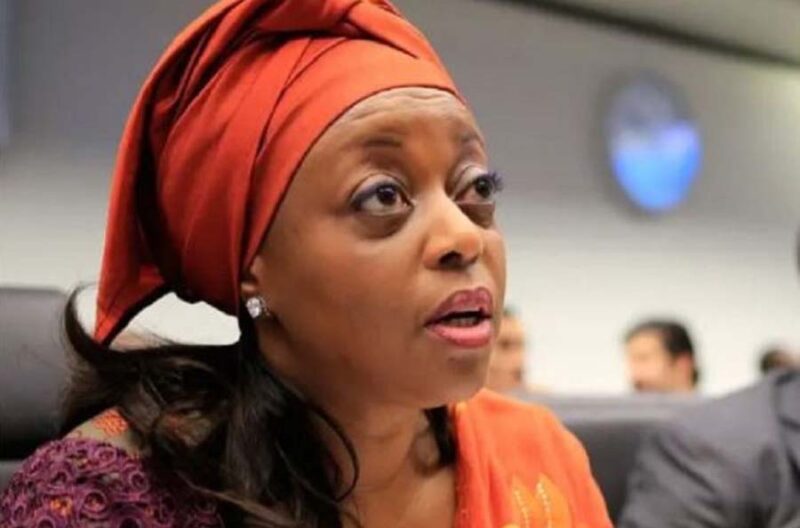
Former Minister of Petroleum Resources, Diezani Alison-Madueke, has described her nearly 11-year legal and personal ordeal as “arduous” and “traumatic,” saying her faith in God and family support have remained central to helping her endure the long-running experience.
In a video circulating online and first reported by Tribune Online, Alison-Madueke reflected on what she said has been almost 11 years of challenges linked to her time in public office, stating that the experience has affected not only her but also members of her immediate family.
She specifically referenced the emotional toll on her elderly mother in Port Harcourt and her son, noting that the prolonged period of uncertainty had placed significant strain on close relatives who continued to support her throughout the process.
The former minister expressed gratitude to friends and associates who stood by her during the years of legal scrutiny and public controversy, saying she had remained “surrounded by friends” despite the difficulties.
According to her, the support system around her played a crucial role in sustaining her through what she described as a prolonged period of hardship and emotional pressure.
READ ALSO:
- Iyabo Obasanjo Secures PDP Senate Ticket After Party Switch
- P-Square Feud: Peter Okoye’s Absence Delays Jude Okoye’s N1.3bn Fraud Trial
- 2027: I’ll Negotiate With Bandits Who Seek Peace, Fight Those Who Choose Violence — Peter Obi
Alison-Madueke, who served as Nigeria’s petroleum minister between 2010 and 2015, has faced multiple corruption-related allegations in Nigeria and abroad, including accusations linked to the management of oil revenues during her tenure. She has consistently denied wrongdoing.
Her legal challenges have included investigations and proceedings in the United Kingdom, where authorities previously sought to recover alleged proceeds of corruption, as well as ongoing scrutiny from Nigerian anti-corruption agencies over her time in office.
Despite the controversies, she reiterated her belief that her eventual vindication lies in divine judgment, maintaining a strong religious tone throughout her remarks.
“God will always do as God wills, and God will be God,” she said, adding that “God is not a man that He should lie.”
She further stated:
“It has been almost 11 years I’ve been here. I did my job to the best of my ability… God is not a man that He should lie. God is God, and we thank Him. Praise the Lord.”
Alison-Madueke’s comments add to ongoing public interest in her case, which remains one of the most high-profile corruption-related controversies involving a former Nigerian government official.
The video has continued to generate reactions online, with renewed discussion around accountability, due process, and the personal toll of prolonged legal battles involving former public office holders.
Former Minister Diezani Speaks on Emotional Toll of 11-Year Battle
-

 News3 days ago
Shot by Bandits, Saved by Soldiers: Dramatic Rescue of General’s Wife in Katsina
-

 metro3 days ago
Drugged, Beaten, Forced to Sleep with 60 Men Daily: Teenage Girl’s Harrowing Escape from Lagos Traffickers
-

 metro1 day ago
BREAKING: UK Court Clears Diezani Alison-Madueke of All Bribery Charges
-

 metro1 day ago
‘They Assigned One Girl to 3 or 4 Men Daily’: Survivor Recounts 20 Days of Rape, Torture in Bandits’ Den
-
 metro3 days ago
Abducted Kwara Monarch Dies in Captivity Despite N18m Ransom Payment
-

 Business2 days ago
Dangote Refinery Announces New Petrol Price as Crude Oil Eases
-

 News13 hours ago
FG Launches FreeTV, Offers Nigerians Over 100 Free Digital TV Channels
-
 metro1 day ago
Iyabo Obasanjo Secures PDP Senate Ticket After Party Switch