

News
NLC, TUC jointly propose N615,000 new minimum wage

NLC, TUC jointly propose N615,000 new minimum wage
Organised labour, comprising the Nigerian Labour Congress and Trade Union Congress, has demanded N615,000 as the new minimum wage for workers in the country.
An impeccable source, who is an executive of organised labour, who did not want to be named because he was not authorised to speak on the matter, told PUNCH that the new wage of N615,000 monthly was reached after consultations by the NLC and TUC.
The source, who was a member of one of the sub-committees set up by the government to work on getting a new minimum wage for the country, however, said the wage might still increase, following the recent hike in electricity tariff.
The source said, “We (NLC and TUC) have given our figures to the government (on the minimum wage), and it is N615,000. That is the position of the NLC and TUC on the matter. The government has been informed as well.”
President Bola Tinubu, through Vice President Kashim Shettima, had on January 30, set up a 37-member panel at the Council Chamber of the State House in Abuja.
With its membership cutting across federal and state governments, the private sector, and organised labour, the panel was tasked with recommending a new national minimum wage.
At the inaugural meeting of the panel, Shettima urged members to ‘speedily’ arrive at a resolution, and submit their reports early as the current N30,000 minimum wage expired at the end of March 2024.
Chairing the panel is a former Head of the Civil Service of the Federation, Bukar Aji, who, at the inauguration ceremony, affirmed that its members would come up with a ‘fair, practical, implementable and sustainable’ minimum wage.
The inauguration followed months of agitation from organised labour over the FG’s failure to inaugurate the new national minimum wage committee as promised during negotiations last October.
READ ALSO:
- Nigerian Activist, Fawaz Alabi, drowns at Ibeshe beach in Lagos
- Updated: Tension in Ibadan, Yoruba Nation agitators, security operatives engage in shoot-out, some arrested
- Man stabs six people to death at shopping mall
From the government’s side, members include the Minister of State for Labour and Employment, Nkeiruka Onyejeocha, representing the Minister of Labour and Employment; Minister of Finance and Coordinating Minister of the Economy, Wale Edun, who was represented by the ministry’s permanent secretary, Lydia Jafiya; the Minister of Budget and Economic Planning, Atiku Bagudu; Head of the Civil Service of the Federation, Dr Yemi Esan; and Permanent Secretary, GSO/OSGF, Dr Nnamdi Mbaeri, among others.
Representing the Nigeria Governors Forum are Mohammed Bago of Niger State, representing the North Central; Senator Bala Mohammed of Bauchi State, representing the North East; Umar Radda of Katsina State, representing the North West; Charles Soludo of Anambra State, representing the South East; Senator Ademola Adeleke of Osun State, for the South West; and Otu Bassey of Cross River State, on behalf of the South-South.
From the Nigeria Employers’ Consultative Association is the Director-General of the association, Adewale-Smatt Oyerinde; Chuma Nwankwo, Thompson Akpabio; as well as members from the Nigeria Association of Chambers of Commerce, Industry, Mines and Agriculture, including Michael Olawale-Cole, Ahmed Rabiu, and Humphrey Ngonadi.
From organised labour, the Nigeria Labour Congress is represented by its president, Joe Ajaero; as well as President of the TUC, Festus Osifo; and his deputy, Tommy Etim-Okon, among others.
Ajaero had announced N1m as the new minimum wage, owing to the rising inflation in the country which, according to him, had pushed many of his members into poverty.
This led to several controversies, with some experts stating that the wage was unrealisable or sustainable.
However, in an interview with one of our correspondents, another labour leader stated that the NLC and TUC had pegged the new wage at N615,000 tentatively.
Asked if the May 1 deadline was still on course, the labour leader said, “What I want you to know is that we are doing our best. Both the TUC and NLC have harmonised, and they have sent their position to the government.
“We are in the process. Be assured that once anything happens, I will, as usual, inform you. That is all I can tell you for now, because we have not met; even though we have submitted our unified positions to the Federal Government. We will be speaking with one voice.
“But, let me also hint you that with the removal of the electricity tariff subsidy, we are going to have another round of serious conversations with the government. Mind you, the tariff increase is also very good for us, because they (the government) did it when the new minimum wage process had not been concluded. So, it is going to be a good ground for us to ask for more.
“Our position will be defended based on the new price of N225 per kWh of electricity. Although we (the government and Labour) are not in agreement, we are waiting to meet and decide on the next point of action.”
The source added, “This is because if you look at the Electricity Act, it canvassed a position that before any increase at all, there must be stakeholders’ engagement. However, the Nigerian Electricity Regulation Commission unilaterally imposed the removal of the electricity tariff on the consumers, without recourse to stakeholders. That is in total defiance to the provisions of the Act.
“These are the issues that will be in the front burner of our next negotiation with the Federal Government.
“The new tariff will also give us another strategy to press the government on the need to move the minimum wage upward. This is because the government has not announced any new minimum wage yet, as we are still negotiating.
“As I said, the NLC and TUC have harmonised positions, which we have sent to the government. It is even now that the negotiation will start properly. All that we have done so far was to try to lay the foundation, and now that we have come up with our positions, the government will also come up with their own. We will then start a fresh negotiation.”
NLC, TUC jointly propose N615,000 new minimum wage
Punch










News
BREAKING: NLC Shuts Down Abuja Indefinitely Over FCT Teachers’ Promotion Dispute
BREAKING: NLC Shuts Down Abuja Indefinitely Over FCT Teachers’ Promotion Dispute
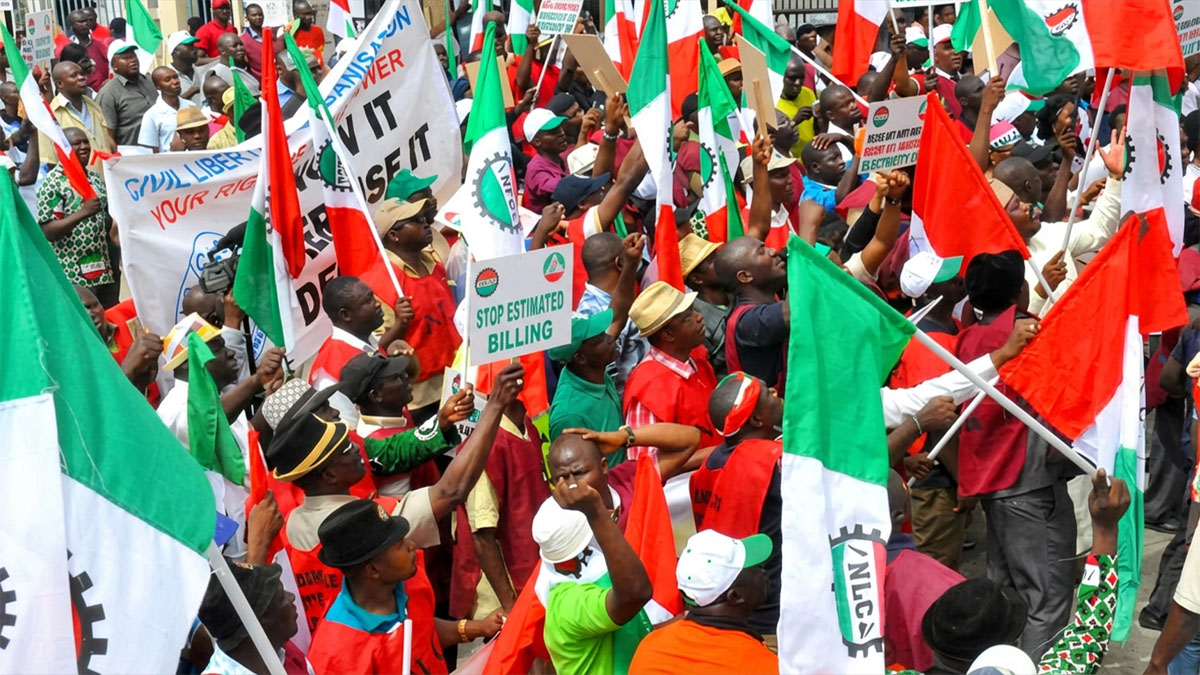
The Federal Capital Territory was thrown into an indefinite industrial crisis on Wednesday as the Nigeria Labour Congress, NLC, ordered workers across Abuja to withdraw their services over unresolved disputes surrounding the promotion and career progression of teachers.
The strike, which took effect on Wednesday, October 7, 2026, followed the expiration of a seven-day ultimatum issued to the Federal Capital Territory Administration, FCTA, after months of disagreements over teachers’ welfare, promotion procedures and the treatment of senior education officials.
The NLC FCT Council said it was compelled to resort to industrial action after rejecting the response of the FCTA to its demands, describing the administration’s position as “ambiguous, dismissive and totally unacceptable.”
The directive, issued in a communique signed by the NLC FCT Council Chairman, Comrade Knabayi S. Adalo, directed the congress’s affiliate unions to mobilise their members for the indefinite action until the outstanding issues are resolved.
At the heart of the dispute is the controversial “vacancy clause”, which makes the promotion of teachers subject to the availability of vacant positions.
The labour movement argues that the condition has resulted in career stagnation for qualified teachers who have met the requirements for advancement but are unable to move to the next cadre because of the absence of vacancies.
The NLC maintains that teachers, recruited specifically to teach under the FCT Universal Basic Education Board and FCT Secondary Education Board, should not be subjected to a promotion arrangement designed for core civil servants or pool officers.
The dispute has been building for months. In September, the NLC gave the FCTA a seven-day ultimatum to resolve the grievances, following earlier protests by teachers over the vacancy requirement and concerns surrounding the 2025 promotion examination.
Among the union’s demands is the removal of the vacancy requirement from the promotion process for teachers. It is also demanding that teachers who were eligible for promotion in 2025 but were unable to take the examination be allowed to sit for the exercise before or alongside the 2026 candidates.
The NLC is further demanding the reversal of redeployment and demotion letters issued to some directors in the education sector, citing the Harmonised Retirement Age for Teachers in Nigeria Act, 2022.
The union has also called for changes involving the management of the FCT education agencies, including the FCT Universal Basic Education Board and FCT Secondary Education Board.
The FCTA, however, has previously defended its administrative decisions, saying its policies on promotion, redeployment and other personnel matters are guided by existing civil service regulations and ongoing reforms in the education sector.
An FCTA official also defended the redeployment of senior education administrators, citing relevant federal guidelines.
The labour dispute has also exposed divisions within the organised labour movement in the territory. The Academic Staff Union of Secondary Schools, ASUSS, FCT Chapter, an affiliate of the Trade Union Congress, has reportedly distanced itself from the strike, maintaining that the FCTA has the authority to deploy personnel and that promotion should take account of established vacancies and available resources.
With the NLC now declaring the action indefinite, the dispute threatens to disrupt schools, government offices and other public services across the nation’s capital.
The union has urged parents, residents, civil society organisations and other stakeholders to press the FCTA to resolve the issues, insisting that the industrial action will continue until its demands are satisfactorily addressed.
The NLC’s latest position is unequivocal: without a resolution of what it considers the fundamental grievances affecting teachers, the strike will continue indefinitely.
News
20 Years After Father’s Death in Air Crash, NAF Officer Loses Husband in Another Crash
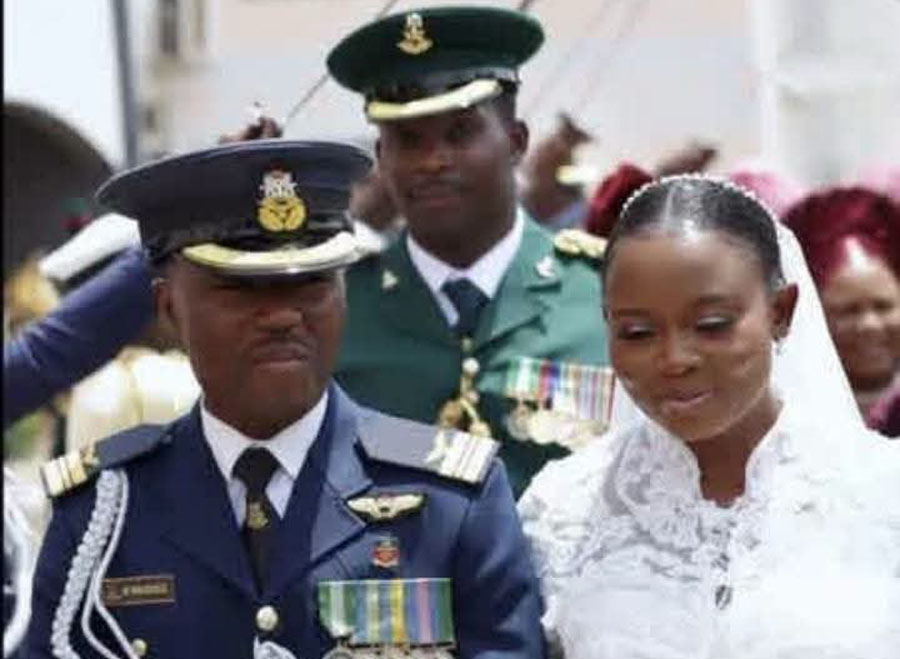
20 Years After Father’s Death in Air Crash, NAF Officer Loses Husband in Another Crash
A Nigerian Air Force family has been hit by another devastating tragedy, 20 years after the reported death of a senior officer in a military aircraft crash in Benue State.
Flight Lieutenant Damilola Adekunle is reportedly the daughter of the late Wing Commander E. O. Adekunle, who was among the Nigerian military personnel killed in an aircraft crash in Benue State in 2006.
The incident occurred on September 17, 2006, when a Nigerian Air Force Dornier 228 aircraft crashed in the Oko area of Vandeikya Local Government Area of Benue State.
The aircraft was carrying senior military officers reportedly travelling towards Cross River State. Thirteen military personnel were killed in the crash, including Wing Commander Adekunle, who was reported to have been serving as co-pilot.
Twenty years later, tragedy has reportedly struck the family again.
According to reports following the latest Nigerian Air Force aircraft crash, Flight Lieutenant Adekunle recently married Squadron Leader Ahamefule Aham Man-Ugwueje.
The marriage reportedly took place on September 19, 2026.
Barely three weeks later, Man-Ugwueje was among the Nigerian Air Force personnel killed in the crash involving NAF 931 at Igbokoda in Ondo State on October 5, 2026.
READ ALSO:
- Ondo High Chief Shot Dead During Colleague’s Burial, One Arrested
- ‘We Are Ignorant, We Don’t Read’ — NAFDAC DG Raises Food Safety Concerns
- 2027: Obi Makes U-Turn, Vows to Restore Fuel Subsidy If Elected
The Nigerian Air Force has identified Man-Ugwueje among the personnel who lost their lives in the incident. He was reportedly serving as the aircraft’s co-pilot.
The reported connection between Flight Lieutenant Adekunle and the late Wing Commander Adekunle has given the tragedy an especially painful dimension.
If the family relationship reported in accounts of the incident is confirmed, it would mean that Adekunle lost her father in a Nigerian Air Force aircraft crash in 2006 and, two decades later, lost her newly married husband, also a Nigerian Air Force pilot, in another crash.
The timing is particularly poignant, as Man-Ugwueje reportedly died just 16 days after his marriage to Flight Lieutenant Adekunle.
The latest crash has claimed the lives of several Nigerian Air Force personnel whose identities have been officially released by the Service, prompting condolences from across the country and renewed attention to the risks associated with military aviation.
For the family of Flight Lieutenant Adekunle, however, the tragedy carries a deeply personal history.
Twenty years after the loss of a father in a military aircraft accident, she is reportedly facing the loss of her husband in another.
While the Nigerian Air Force has officially identified the personnel who died in the latest crash, details of the reported family relationship between Flight Lieutenant Adekunle and the late Wing Commander Adekunle are being reported with caution pending independent confirmation.
The fallen officers will be remembered for their service to the nation.
Newstrends extends its condolences to the families, colleagues and loved ones of all the Nigerian Air Force personnel who lost their lives in the crash.
20 Years After Father’s Death in Air Crash, NAF Officer Loses Husband in Another Crash
News
Pastor Apologises to Wife, Women Over Past Affairs, Steps Back From Ministry

Pastor Apologises to Wife, Women Over Past Affairs, Steps Back From Ministry
Apostle Sam Adegoke, a newlywed pastor of Elijah Generation Church, Akure, Ondo State, has stepped back from public ministry after apologising over past sexual relationships and allegations surrounding his conduct with women.
Adegoke announced his decision in a statement, saying he had chosen to withdraw from public ministry and social media to reflect on his actions, seek counsel and take steps towards making amends.
The pastor acknowledged that he had been involved in sexual relationships with women before his marriage, describing his conduct as wrong and expressing regret over the consequences of his actions.
He said the fact that the relationships occurred before his marriage did not excuse his behaviour, adding that he was seeking spiritual guidance as well as pastoral and professional counselling.
Adegoke also apologised to the women involved, as well as his wife, family, church members, colleagues and others who had placed their trust in him as a spiritual leader.
He said stepping back from public ministry was necessary to allow him to confront his past, make appropriate changes and demonstrate genuine repentance through his actions.
READ ALSO:
- Troops Take Down Zamfara Bandit Kingpins Baban Love, Mai Zamani, Three Others
- FG Gives N250m To Families Of 37 Miners Who Died In NSCDC Custody
- Tompolo’s PBAT Movement Suspends Campaign Over Ondo Military Crash
The pastor further said he was willing to remain under appropriate spiritual, pastoral and professional accountability during the process.
His decision followed the emergence of leaked WhatsApp conversations in which several women allegedly accused him of having sexual relationships with female church members over several years.
Some of the allegations reportedly concerned relationships that allegedly occurred shortly before his wedding. Adegoke admitted to past sexual relationships but did not publicly address every allegation contained in the leaked conversations.
The women also reportedly raised concerns about the welfare of female members of the church and alleged that some women had left the congregation over the pastor’s conduct.
Adegoke, however, said his immediate focus was on accepting responsibility for his past actions and undergoing the process he considered necessary for genuine change.
He appealed for prayers and said he wanted to approach the situation with humility, integrity and accountability, while making amends where appropriate.
The controversy has drawn significant attention because of its timing, coming shortly after the pastor’s marriage and amid renewed scrutiny of the allegations concerning his past relationships.
The pastor and his wife have reportedly disabled comments on their respective Instagram accounts following the development.
Pastor Apologises to Wife, Women Over Past Affairs, Steps Back From Ministry
-

 metro3 days ago
Tragedy Strikes FMC: Medical Director Loses Two Daughters—A Doctor and a Pharmacist—Within 48 Hours
-

 metro3 days ago
Transporters Urge IGP Disu to Arrest Illegal Highway Tax Collectors
-

 Politics3 days ago
2027: Soludo Govt Accuses Peter Obi Of Plot To Destroy APGA
-

 metro3 days ago
Army, DSS, Amotekun Kill ISWAP Commander Planning Attacks in Southern Nigeria
-

 News3 days ago
BREAKING: Many Feared Dead as Helicopter Crashes in Ondo Community
-

 metro3 days ago
Grand Chief Imam of Oyoland Urges Rabitah 1964 to Regulate ‘Yorubaland’ Islamic Titles
-

 metro2 days ago
Ondo Air Tragedy: Soldiers, Families Among 32 Killed In NAF Crash
-

 metro3 days ago
27-Year-Old Woman Allegedly Kills Newborn Hours After Giving Birth in Abuja