

Education
JAMB begins 2021 UTME registration April 18, exam June 5
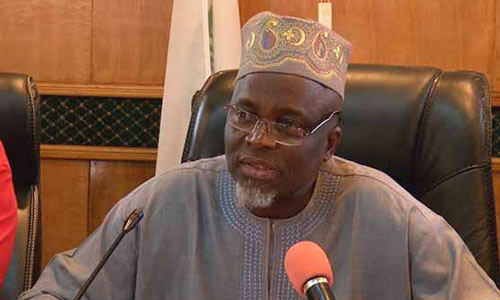
The Joint Admissions and Matriculation Board has announced April 18 to May as dates for candidates to register for the 2021 Unified Tertiary Matriculation Examination (UTME).
It has also fixed June 5 to June 19 for the examination proper.
JAMB spokesman, Fabian Benjamin, on Wednesday said all candidates must provide their National Identity Number (NIN) at the point of registration.
“This is mandatory for participation in the 2021 registration exercise,” he said.
“Registration will take place in 700 centres across the country; the list is available in all the state offices of JAMB and on its website at www.jamb.gov.ng.
“The approved schedule for registration and examination are that registration exercise will start on Thursday, April 8 and end on Saturday, May 15, 2021.
“Candidates are also to note that the registration for Direct Entry applicants will run concurrently with that of UTME candidates.
“There will be no extension of time for the sale of the UTME or DE application documents.
“Mock examination will be held on Friday, April 30 for those who indicate interest and are registered before April 24.
“UTME will hold from Saturday, June 5 to Saturday, June 19, 2021.”
The statement added that venues of the examination would be at any of the centres in the candidate’s chosen examination town.
It added that the registration fee for the 2021 application documents remained N3,500 and N500 for recommended reading text.





Education
World Teachers’ Day: Ogun Residents Demand Better Pay, Equipped Schools for Teachers

World Teachers’ Day: Ogun Residents Demand Better Pay, Equipped Schools for Teachers
As Nigeria marked the 2026 World Teachers’ Day, residents of Ogun State have called on the government to improve teachers’ welfare, increase remuneration and provide adequate facilities in public schools, insisting that celebrating educators must translate into tangible improvements in their working conditions.
The demand was made by callers on Eagle 102.5 FM’s Frontline programme on Monday, October 5, during a discussion on teachers’ welfare and their contributions to education and community development. The programme featured the Chairman of the Ogun State Teaching Service Commission (TESCOM), Apostle Abiodun Sanyaolu.
Contributors stressed that teachers remain central to the development of children and the nation’s human capital, arguing that their responsibilities deserve better financial rewards, improved working conditions and a more conducive teaching and learning environment.
A caller from Ilese-Ijebu described teachers as the foundation of society, noting that their influence extends beyond the classroom to shaping children’s character, knowledge and future prospects.
Describing teachers as “the pillar of everything in life,” the caller urged the government to prioritise their welfare, arguing that educators must be adequately supported to deliver on their responsibilities.
“The welfare of the teachers is very, very important. The government should look at it and make sure that teachers are given a good welfare system so that they will be proud of doing what they are doing,” she said.
She also called for increased investment in school facilities, warning that constructing classrooms without providing the necessary equipment and learning materials would leave schools ill-equipped to deliver quality education.
“It’s not just only the structure alone. They should put in the necessary things that are supposed to be in the school,” she added.
The caller’s remarks highlighted the need for a comprehensive approach to educational development, encompassing not only physical infrastructure but also the resources required by teachers and students for effective teaching and learning.
Another contributor, Olu Ogunike, called for better remuneration for teachers, arguing that their salaries and conditions of service should reflect the critical role they play in national development.
“Teaching should be one of the well-paying work in the country,” Ogunike said, stressing that teachers lay the foundation for virtually every other profession.
He argued that the quality of a country’s workforce depended significantly on the quality of its teachers, adding that improved financial rewards would help enhance the status and attractiveness of the profession.
The contributions reflected growing public expectations that governments should match their recognition of teachers with practical measures to improve their welfare and the quality of education.
Speaking on the programme, TESCOM Chairman Sanyaolu described teachers as important stakeholders in community development, noting that their influence extends beyond academic instruction to shaping the moral, social and intellectual development of children.
According to him, every child taught by an educator eventually becomes part of the wider community, making teachers indispensable to the social and economic advancement of Ogun State.
Sanyaolu acknowledged, however, that more work remained to be done in the state’s education sector, despite the reforms and interventions introduced by the government.
“We still have a lot to do. There is a lot that is still ongoing, and we will continue to work to ensure that the gains recorded in the education sector are sustained,” he said.
His remarks underscored the continuing challenge of consolidating improvements in education while addressing concerns about teachers’ welfare, school infrastructure and the resources available for effective learning.
The callers’ demands also highlighted the connection between teachers’ working conditions and students’ educational outcomes.
They argued that better remuneration could boost teachers’ morale, while well-equipped classrooms, adequate learning materials and modern teaching resources would strengthen their ability to deliver quality education.
Similarly, improved welfare could help make teaching more attractive to qualified professionals and encourage greater commitment to the profession, particularly at a time when schools require skilled and motivated educators to prepare young people for the demands of a changing economy.
The 2026 World Teachers’ Day celebration therefore provided an opportunity to reflect on both the contributions of educators and the challenges confronting the profession.
For the contributors on Eagle 102.5 FM’s Frontline programme, the message was clear: public recognition of teachers must go beyond annual celebrations to include improved pay, better welfare packages, adequate school facilities and sustained investment in professional development.
They maintained that supporting teachers was not merely a reward for their service but also a necessary investment in the future of Ogun State and the country at large.

Education
Madonna University expels final-year nursing student, suspends 14 over dance video
Madonna University expels final-year nursing student, suspends 14 over dance video
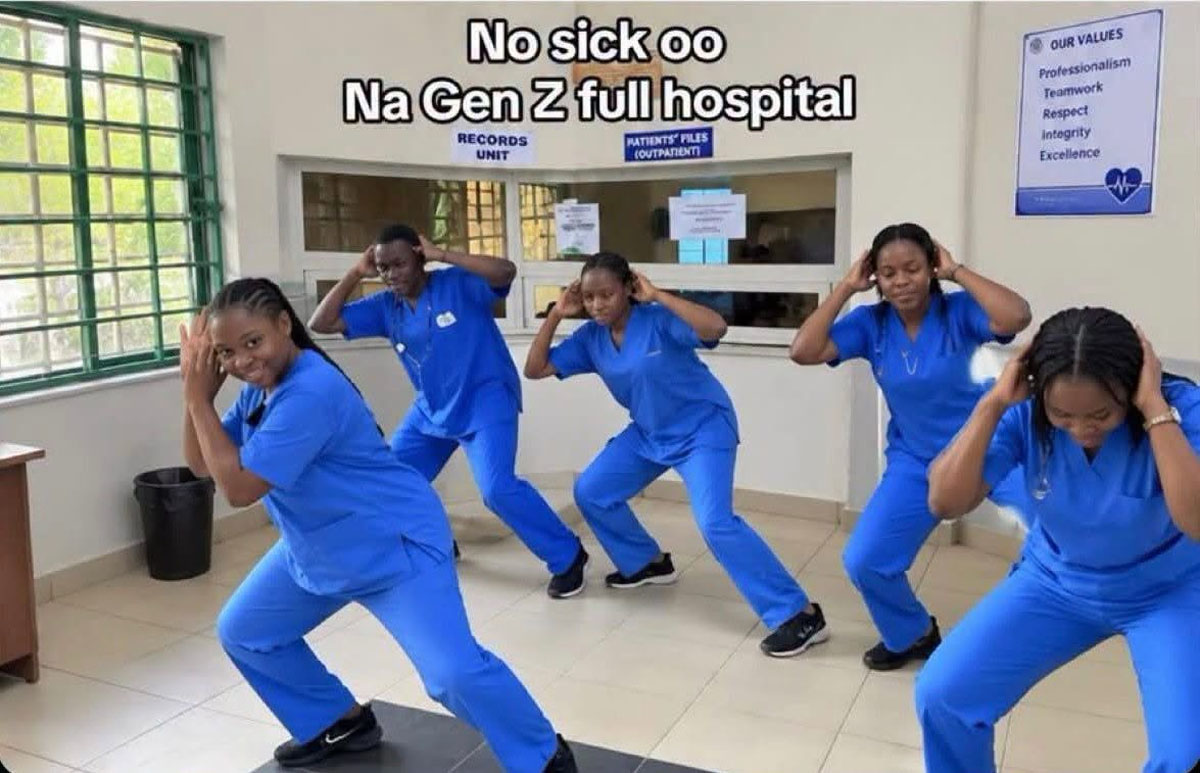
The National Association of Nigerian Students (NANS) has appealed to the management of Madonna University to reconsider the expulsion of a final-year nursing student and the suspension of 14 others over a viral dance video recorded within a hospital environment.
The controversy began after a video showing a group of nursing students dancing at different locations at Madonna University’s Elele campus in Rivers State surfaced online and attracted widespread attention.
The footage showed the students dancing in areas including a hospital waiting area, staircase and a university bus. It was reportedly linked to a social media trend involving young nurses and students.
The video generated criticism because some of the scenes were filmed within a healthcare environment, where students undergoing professional training are expected to observe standards relating to professional conduct, discipline and patient care.
Following the controversy, Madonna University took disciplinary action against the students involved. One final-year nursing student was expelled, while 14 others were suspended.

Madonna University expels final-year nursing student, suspends 14 over dance video
The university’s Director of Communications and Public Affairs, Chima Achu, confirmed that disciplinary measures had been imposed and indicated that the institution would provide further details on the matter.
READ ALSO:
- JUST IN: WAEC appoints Suleiman Kum as new Nigeria National Office head
- Ojudu Reveals How Tinubu, He Narrowly Escaped Death In Third Mainland Bridge Crash
- ‘I Thought I Was Dead’ — Hairstylist’s Daring Escape From Kidnappers After Benin-Ore Ambush
The sanctions have, however, attracted criticism from student groups, with NANS urging the university to reconsider the expulsion.
NANS National President, Akinteye Babatunde Afeez, appealed to the university to “temper justice with mercy”, arguing that the affected students had spent several years pursuing their education and professional training.
He called for the expelled student’s punishment to be reviewed and suggested that a stern warning, undertaking or other corrective disciplinary measure could be considered instead.
According to NANS, disciplinary action should correct inappropriate behaviour while giving students an opportunity to learn from their mistakes, rather than permanently ending their education where a less severe sanction may be appropriate.
The Nigerian Universities Nursing Students’ Association (NUNSA) has also reportedly intervened in the matter and is engaging relevant stakeholders over the sanctions imposed on the students.
The controversy has generated divided reactions. While some Nigerians have backed the university’s decision, arguing that students preparing for careers in healthcare must maintain high standards of professionalism, others have questioned whether expulsion was a proportionate response to the incident.
The case has also revived concerns about social media conduct among students, particularly when videos are recorded inside hospitals, clinics and other professional environments.
For healthcare students, such concerns extend beyond ordinary campus rules because their training involves responsibilities relating to patient privacy, dignity, safety and public trust.
At the same time, the NANS intervention has brought renewed attention to the question of whether university disciplinary measures should place greater emphasis on rehabilitation and corrective education.
The university has not indicated that the students were involved in any harm to patients, and the available reports do not establish such a claim.
The focus of the disciplinary action is the conduct displayed in the video and the circumstances in which it was recorded.
Madonna University is expected to provide further clarification on the disciplinary process, the specific regulations breached and the possibility, if any, of reviewing the sanctions.
Until then, the expulsion of the final-year student and suspension of the other 14 students remain the subject of an ongoing appeal by student representatives.
Madonna University expels final-year nursing student, suspends 14 over dance video
Education
JUST IN: WAEC appoints Suleiman Kum as new Nigeria National Office head

JUST IN: WAEC appoints Suleiman Kum as new Nigeria National Office head
The West African Examinations Council (WAEC) has appointed Suleiman Danlami Kum as the new Head of its Nigeria National Office (HNO), following the elevation of Dr Amos Josiah Dangut to Registrar and Chief Executive Officer of the examination body.
Kum’s appointment was announced on Sunday, October 4, 2026, by WAEC Nigeria’s Head of Public Affairs, Moyosola Adesina.
He takes over from Dangut, who served as Head of the WAEC Nigeria National Office from October 2023 before assuming the position of Registrar and CEO of WAEC on October 1, 2026.
Kum, 56, joined WAEC on July 17, 1998, as an Assistant Registrar II and has risen through several positions during his more than two decades with the organisation.
Before his appointment as HNO, he served as Deputy Registrar in the Nigeria National Office and as Senior Deputy Registrar and Head of Test Administration.
His career has included assignments in several WAEC offices across Nigeria, including Awka, Yola, Makurdi, Gusau, Kano, Port Harcourt and Ikeja. He has also served as Director of Administration and Head of the Security Printing Department.
WAEC said Kum has extensive experience in test development, examination administration, examination security, branch management and zonal operations.
The council also credited him with contributing to innovations aimed at improving examination security and administration. These include the introduction of Variable Data Printing, enhanced security codes in examination materials, facial-recognition biometric attendance systems and the use of computer-based examinations for Achievement Tests.
READ ALSO:
- Ojudu Reveals How Tinubu, He Narrowly Escaped Death In Third Mainland Bridge Crash
- ‘I Thought I Was Dead’ — Hairstylist’s Daring Escape From Kidnappers After Benin-Ore Ambush
- ‘We Can’t Raise N1bn’ — Parents of Abducted Corps Members Beg Olubadan
Kum is from Langtang North Local Government Area of Plateau State. He studied Agriculture, specialising in Animal Production, at the University of Agriculture, Makurdi, now Joseph Sarwuan Tarka University, where he graduated with Second Class Upper Division.
He later obtained a Postgraduate Diploma in Education from the National Open University of Nigeria and is pursuing a master’s degree in Educational Administration and Planning.
Before joining WAEC, Kum worked in the education sector and also completed his National Youth Service Corps programme at Ahmadu Bello University, Zaria.
His appointment comes as WAEC Nigeria continues to expand the use of technology in the conduct of secondary-school examinations.
The council has been gradually moving towards computer-based testing (CBT) while retaining paper-based examinations in centres without the infrastructure required for a full transition to digital testing.
The 2026 West African Senior School Certificate Examination (WASSCE) involved nearly two million candidates in Nigeria, with CBT introduced in selected centres as part of the council’s gradual digital transition.
Kum therefore assumes leadership of the Nigeria National Office at a time when examination security, digital testing, result processing and the protection of the integrity of WASSCE remain key priorities for the council.
Dangut, his predecessor, became WAEC’s 14th Registrar and CEO after his appointment was ratified by the council’s International Governing Board. He is expected to oversee the operations of the examination body across its member countries from the council’s headquarters in Accra, Ghana.
Under Dangut’s leadership in Nigeria, WAEC advanced initiatives including computer-based WASSCE, digital electronic marking, the Digital Certificate Portal and the WAEC E-Study Platform.
With Kum now taking charge of the Nigeria National Office, his immediate responsibilities will include overseeing the council’s examination administration in Nigeria and sustaining efforts to strengthen examination security, digital innovation and the credibility of WAEC results.
JUST IN: WAEC appoints Suleiman Kum as new Nigeria National Office head
-

 metro3 days ago
NYSC Kidnap: Abductors Demand N950m for 19 Prospective Corps Members in Imo
-

 metro3 days ago
Amaechi: Tinubu’s Policies Made My Mother’s Drugs Unaffordable
-

 metro3 days ago
Tension as Kidnappers Threaten to Kill Abducted Oyo Corps Members
-

 metro2 days ago
‘I Thought I Was Dead’ — Hairstylist’s Daring Escape From Kidnappers After Benin-Ore Ambush
-

 metro20 hours ago
Tragedy Strikes FMC: Medical Director Loses Two Daughters—A Doctor and a Pharmacist—Within 48 Hours
-

 Politics3 days ago
Wike to Amaechi: What Did You Bring to Rivers After 24 Years in Power?
-

 International3 days ago
Nigerian-Born Ex-Professor Jailed 78 Months Over $1.3m US Student Aid Fraud
-

 metro23 hours ago
Transporters Urge IGP Disu to Arrest Illegal Highway Tax Collectors