

Sports
Anthony Joshua shows off toned physique ahead of Tyson Fury fight

Anthony Joshua, the WBA, IBF and WBO heavyweight champion, has commenced preparation for his historic unification bout with WBC king Tyson Fury.
The 31-year-old started his training a couple of days ago and recently took to Instagram to show fans his toned physique.
“My inspiration is my determination,” AJ captioned the snap, where he could be seen standings in a black training short, with a pair of white boxing gloves in his hand.
Within a few hours, Anthony Joshua’s picture went viral on social media, with fans and fellow pros lauding the Brit’s physique. Among the commenters was ex-footballer Jamie Redknapp, who called AJ a “big inspiration” and the future undisputed heavyweight champion. “That’s why you’re King,” wrote a fan. “Simply the Best. A true champion,” added another.
A couple of weeks ago, AJ’s promoter, Eddie Hearn, confirmed that both the heavyweight champions have signed a two-fight contract, with the first fight scheduled for this summer. A date and venue are yet to be finalised, with late June or early July being the top options for the opening clash. The bout, which was earlier scheduled to take place in the UK, could happen somewhere in the Middle-East, with Saudi Arabia leading the conversations.
According to the reports, both parties are expecting to make around £200 million from the first fight which will be split 50-50. However, the winner of the summer clash will get a 60 per cent purse of the rematch, which is rumoured to happen in November or December. Anthony Joshua vs Tyson Fury is expected to break major PPV records as it is being hailed as the biggest bout in British boxing history.
Boxing legend Mike Tyson is among many who are excited to see the clash happen after months of discussions and years of back-and-forth. Earlier, while talking to Haute Living, Mike Tyson picked Fury to come out victorious against Joshua. “I f****** love Joshua, but I think Tyson is too elusive. He’s not going to be able to hit him. I like Joshua a lot, and maybe he punches harder than Wilder, but he doesn’t punch faster than Wilder,” Tyson said.

Source: Republicworld.com










Sports
Nigeria Shines in Commonwealth Games, Tops Africa with 10 Gold Medals
Nigeria Shines in Commonwealth Games, Tops Africa with 10 Gold Medals
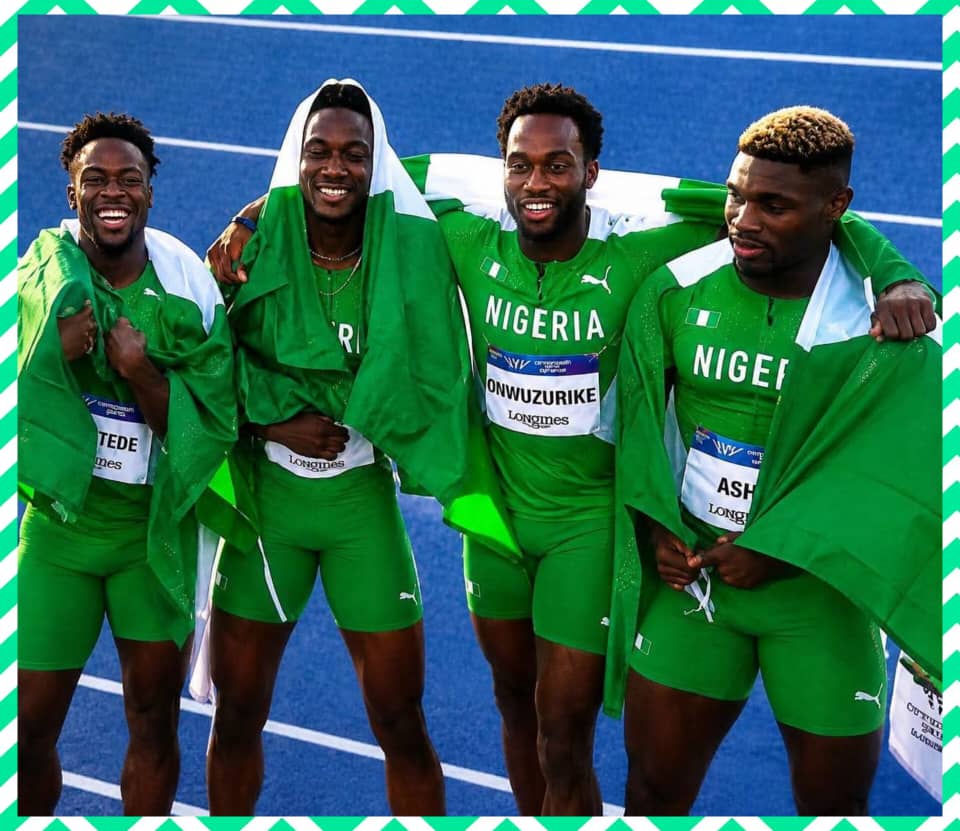
Nigeria delivered one of its finest outings in Commonwealth Games history, finishing as Africa’s undisputed sporting powerhouse after clinching 24 medals to place seventh overall at the 2026 Commonwealth Games in Glasgow, Scotland.
The Team Nigeria contingent returned home with 10 gold, seven silver and seven bronze medals, comfortably emerging as the highest-ranked African nation and securing a place among the world’s top seven teams at the Games.
The final medals standings, released on the official Glasgow 2026 Commonwealth Games X handle after the close of competition on Sunday, confirmed Nigeria’s remarkable performance behind only Australia, England, Canada, India, Scotland and New Zealand.
Nigeria’s campaign gathered momentum after Esther Nworgu won the country’s first gold medal in the women’s lightweight para-powerlifting event.
READ ALSO:
- DSS, Vigilantes Ambush, Kill Notorious Bandit Kingpin Idi Abasu Aiki, Over 60 Fighters in Katsina
- 475 Police Officers Recalled After Controversial Retirement, Ordered for Mandatory Induction
- Oloyede clears air on JAMB’s ₦36m ‘snake swallowed money’ controversy
The gold rush continued with Ezekiel Nathaniel’s victory in the men’s 400m hurdles, while Goodness Nwachukwu produced one of the defining moments of the Games by breaking her own world record to win the women’s F42 discus throw.
Idris Riluwan also struck gold in the men’s para-powerlifting event, while Chukwuebuka Enekwechi etched his name into history with a landmark triumph in the men’s shot put.
Despite battling injury, world record holder Tobi Amusan showed remarkable resilience to claim a bronze medal in the women’s 100m hurdles.
Australia dominated the Games with 171 medals, including 70 gold, 45 silver and 56 bronze medals.
England finished second with 110 medals (29 gold, 45 silver and 36 bronze), while Canada placed third with 62 medals made up of 19 gold, 20 silver and 23 bronze.
India and hosts Scotland completed the top five with 39 medals each, with India taking fourth place on the strength of a superior silver medal tally.
New Zealand finished sixth with 36 medals (10 gold, 14 silver and 12 bronze), narrowly ahead of Nigeria, whose 10 gold medals ensured it finished above every other African country.
Jamaica placed eighth, Wales finished ninth, while Malaysia completed the top 10.
South Africa ended 11th with 28 medals, ahead of Northern Ireland in 12th, while Kenya finished 13th.
Cyprus, Mauritius, Cameroon, Jersey, Samoa, Sri Lanka and Fiji also featured among the leading nations.
Among the remaining African countries, Uganda, Namibia, Ghana, Lesotho, Zambia and Gabon all finished on the medals table, underscoring Nigeria’s dominance on the continent.
Nigeria Shines in Commonwealth Games, Tops Africa with 10 Gold Medals
Sports
Super Falcons bounce back as Oshoala sinks Zambia despite red card

Super Falcons bounce back as Oshoala sinks Zambia despite red card
Nigeria’s Super Falcons returned to winning ways at the 2026 Women’s Africa Cup of Nations (WAFCON) after securing a hard-fought 1-0 victory over Zambia in their second Group C match in Rabat, Morocco.
The defending champions produced a determined response following their disappointing 3-2 defeat to Malawi in their opening fixture, with Asisat Oshoala scoring the only goal of the match in the eighth minute.
Nigeria were forced to defend their narrow advantage for more than half of the encounter after defender Oluwatosin Demehin was sent off in the 40th minute following a Video Assistant Referee (VAR) review of her challenge on Zambia captain Barbra Banda.
Despite playing the entire second half with 10 players, the Super Falcons remained disciplined and organised to secure three important points and revive their campaign. (Confédération Africaine de Football)
The victory was particularly significant for Nigeria, who entered the match under pressure after their unexpected opening defeat to Malawi.
The Super Falcons needed a positive result to strengthen their chances of progressing from Group C and keep their pursuit of a record-extending 11th WAFCON title on course.
Head coach Justine Madugu restored Oshoala to the starting line-up, and the experienced forward made an immediate impact.
Nigeria made a bright start and broke the deadlock in the eighth minute after Oshoala latched onto a long pass from midfield and used her pace to get ahead of the Zambian defence.
The forward broke into the penalty area and attempted to beat Zambia goalkeeper Hazel Nali. Although Nali stopped the initial effort, the rebound ricocheted off Oshoala and rolled into the net to give Nigeria an early lead.
READ ALSO:
- Peller, Jarvis’ Glamorous Lagos Wedding: N400m Mansion, $20,000 Gift, Over 50,000 Virtual Guests
- INEC publishes Tinubu, Shettima’s credentials for public scrutiny ahead of 2027 election
- Policy Bottlenecks Threaten Nigeria’s Clean Mobility Drive, LCCI Warns
The goal gave the Super Falcons confidence and provided the ideal response after their difficult start to the tournament.
Nigeria had beaten Zambia 5-0 in the quarter-finals of the previous WAFCON, but the latest meeting proved to be a much more demanding contest.
The Super Falcons’ task became significantly harder shortly before halftime when Demehin was shown a straight red card following a VAR review.
The referee ruled that the defender had committed a serious foul while challenging Zambia’s influential captain, Banda.
The dismissal left Nigeria with 10 players and forced the team to adjust its approach for the remainder of the match.
Zambia increased the pressure after the restart and enjoyed more possession as they searched for an equaliser.
The Copper Queens pushed forward through Banda and fellow attacking players, but Nigeria’s defence remained compact and continued to limit clear scoring opportunities.
Goalkeeper Chiamaka Nnadozie also delivered an important performance, making key saves and helping the Super Falcons preserve their slender lead.
Nnadozie had faced criticism following the defeat to Malawi, but her display against Zambia provided a strong response as Nigeria secured their first win of the competition.
The goalkeeper appeared emotional after the final whistle as the Super Falcons celebrated a result that could prove decisive in their bid to reach the knockout stage.
Madugu also made tactical adjustments during the second half, introducing fresh players, including Chinwendu Ihezuo, to strengthen Nigeria’s defensive shape and provide additional energy.
The Super Falcons showed resilience, tactical discipline and determination as they resisted sustained Zambian pressure until the final whistle.
The result breathed new life into Nigeria’s WAFCON title defence and left Group C open heading into the final round of group-stage matches.
Nigeria are the most successful team in the history of the Women’s Africa Cup of Nations, having won a record 10 titles. The Super Falcons are seeking an 11th continental crown at the 2026 tournament, which is being staged in Morocco from July 26 to August 16. (Confédération Africaine de Football)
The 2026 edition is the first WAFCON tournament to feature 16 teams. The competition also carries added importance because the four semi-finalists will qualify automatically for the 2027 FIFA Women’s World Cup, while the fifth-placed team will advance to an intercontinental play-off. (The NFF)
The Super Falcons will now turn their attention to their final Group C match against Egypt, with another positive result expected to strengthen their chances of qualifying for the knockout stage.
Nigeria will also have to prepare for the fixture without Demehin, who is expected to serve a suspension following her red card.
For the Super Falcons, the victory over Zambia was more than just three points. It was a statement of resilience after the disappointment against Malawi and a timely boost for their hopes of defending the WAFCON title.
Super Falcons bounce back as Oshoala sinks Zambia despite red card
Sports
Xabi Alonso backs UEFA, opposes FIFA World Cup investment plan

Xabi Alonso backs UEFA, opposes FIFA World Cup investment plan
Chelsea manager Xabi Alonso has joined growing opposition to FIFA’s proposed plan to sell minority stakes in the commercial operations of the FIFA World Cup, insisting that football should remain accessible to supporters and not be placed in private hands.
Alonso expressed support for UEFA’s opposition to the proposal while speaking in Sydney, where Chelsea are preparing for the new season during a pre-season tour.
The former Spain international and 2010 World Cup winner said football’s global appeal is built on its connection with supporters and the shared emotions created by major competitions.
“I think football has to be for the people, not in private hands,” Alonso said.
“That’s the way we love it. We have seen a great World Cup, and some things should stay the same way. So it’s good to defend the interests of other people.”
The debate centres on a proposal backed by FIFA President Gianni Infantino to establish a new commercial subsidiary that would oversee the business operations of FIFA’s major tournaments, including the men’s and women’s World Cups.
Under the proposed structure, FIFA would retain control of sporting and governance decisions while allowing private investors to acquire a minority, non-controlling stake in the commercial entity.
FIFA has argued that the investment could generate up to $4.2 billion in additional funding, which could be reinvested in football development across its 211 member associations.
The world football governing body has also maintained that the proposal would not transfer control of football or give private investors authority over competition rules, sporting decisions or FIFA’s governance.
However, the plan has generated strong opposition from UEFA, which has raised concerns about the commercialisation of football’s biggest tournament and the potential influence of investors on the future direction of the sport.
READ ALSO:
- Kuje Chairman Appoints Special Assistant on Dance, Clarifies Role Amid Public Debate
- Hamas Accepts US-Backed Disarmament Plan as Trump Unveils Gaza Peace Roadmap
- FG to phase out electricity subsidy from 2027 as power sector debts rise
UEFA has also questioned the consultation process surrounding the proposal and called for greater transparency on how the new commercial structure would operate.
The Asian Football Confederation (AFC) and CONCACAF have also expressed concerns, adding to pressure on FIFA to provide more details and address questions about the long-term impact of the proposal.
Some football stakeholders have argued that the World Cup should remain a global sporting competition managed primarily for the benefit of players, supporters, national associations and the wider football community.
Alonso echoed those concerns, saying he hoped football authorities would preserve the traditions and authenticity that have helped make the sport popular around the world.
“Hopefully it won’t happen,” he said.
“I think it’s the common feeling of football people that we want something that we keep in the hands of everyone, that it’s for all the people.”
The Chelsea manager said the emotional connection supporters have with football could be affected if commercial interests became more influential in the management of major competitions.
“Hopefully we’ll keep the game as attractive and as authentic as we like it, and that’s why it creates these emotions and these passions we’ve seen in the World Cup, in the Champions League and in the Premier League, because it’s for everyone,” Alonso added.
FIFA has defended the proposal, saying the planned commercial structure is intended to strengthen the financial sustainability of global football and increase funding for development programmes.
The governing body has also insisted that the investment plan does not amount to selling the World Cup or handing control of football to private companies.
The proposal is expected to require approval through FIFA’s governing structures and support from its member associations before it can be implemented.
The growing opposition from major football confederations could make it more difficult for FIFA to secure broad support, particularly because UEFA, CONCACAF and the AFC represent a significant part of the global football community.
The disagreement has also renewed debate over the increasing commercialisation of football and whether private investment could affect the independence, accessibility and traditions of major international competitions.
For now, FIFA has not withdrawn the proposal, while UEFA and other football bodies continue to seek greater clarity on the proposed structure, investor involvement and safeguards for the future of the game.
Xabi Alonso backs UEFA, opposes FIFA World Cup investment plan
-

 metro3 days ago
‘We’ll Marry Beautiful Ones, Kill the Rest’ – Terrorists Reject N155m Ransom for 176 Kwara Captives
-

 Auto3 days ago
Côte d’Ivoire woos Nigerian auto investors to regional mobility expo
-

 Education2 days ago
ICYMI: Court orders JAMB, CBT centre to pay ₦10m over forced removal of candidate’s hijab during UTME
-

 metro3 days ago
Ansar-Ud-Deen Society to Commission New National Headquarters Saturday, Tinubu Expected as Special Guest
-
 metro3 days ago
2027 Hajj: NAHCON Sets N5m Minimum Deposit, Opens Registration for 2028-2030 Seasons
-

 Education3 days ago
Segun Aina assumes office as JAMB registrar, vows to protect examination integrity
-
 News3 days ago
FG to phase out electricity subsidy from 2027 as power sector debts rise
-
 metro3 days ago
Police Release Osun SSG After Controversial Arrest Over Alleged Electoral Offences