

Business
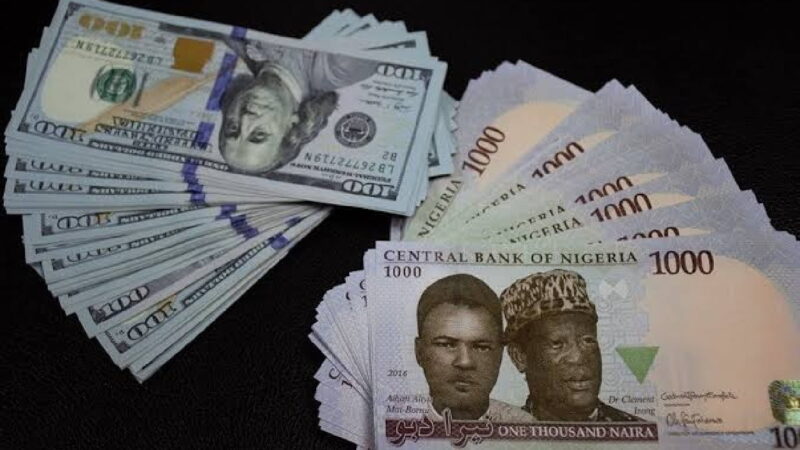
Naira drops further to N1,421.06 per dollar
Naira drops further to N1,421.06 per dollar
The declining fortunes of the Naira persisted yesterday with further depreciation in the parallel and official markets due to the re-emergence of speculation and hoarding, even as some Bureaux De Change, BDCs withdrew from the Central Bank of Nigeria, CBN’s, dollar sales program.
Vanguard also learnt that despite the sustained nationwide raids and arrest of street currency hawkers, the Naira further depreciated yesterday to N1,435 per dollar in the parallel market, from N1,415 per dollar on Tuesday, and also depreciated to N1,421.06 per dollar in the Nigerian Foreign Exchange Market, NAFEM.
Data from FMDQ showed that the indicative exchange rate for NAFEM fell to N1,421.06 per dollar from N1,416.57 per dollar on Tuesday, indicating N4.49 depreciation for the naira.
Consequently, the margin between the parallel market and NAFEM rates widened to N13.94 per dollar from N1.57 per dollar on Tuesday.
Dollar sales to BDCs
In a bid to intervene in the retail segment of the forex market, the CBN in February resumed dollar sales to BDCs. Since then the apex bank has held three editions of the dollar. At the last edition, the CBN offered to sell $10,000 per BDCs at directing them to sell at the maximum margin of 1.5 per cent.
READ ALSO:
- EFCC to arraign Sirika, daughter over fresh N2.7 billion contract scam
- Breaking: Fubara bars all LGA heads from appearing before Rivers Assembly
- Russia urges Israel to comply with international humanitarian law in Rafah
BDC operators however complained dollar disbursement from CBN is too slow that and takes three to four weeks between when they make payment and when the dollars are disbursed to them.
Vanguard reliably gathered that as a result of this delay and the uncertainty in the forex market, some BDCs, have asked the CBN to refund their Naira payment.
Top BDC operators who confirmed this development to Vanguard under the condition of anonymity said that some of the BDCs that asked for refunds have gotten their money.
Speaking to Vanguard on condition of anonymity, the Chief Executive of a BDC said, “I think the CBN is overwhelmed. You pay money and it takes one month for you to collect $10,000. It is over a month now since they intervened and they have not intervened again.






Business
Dangote Refinery Sets ₦525 Per Share for Landmark IPO
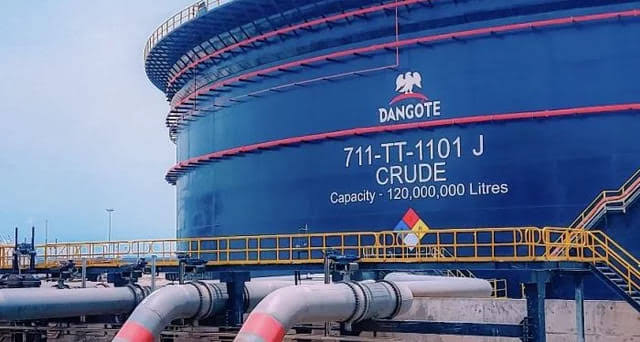
For ₦5,250, Nigerians could soon own a piece of the refinery that has reshaped the country’s fuel market.
Business
After two decades, Tinubu approves Cabotage fund for Nigerian shipowners
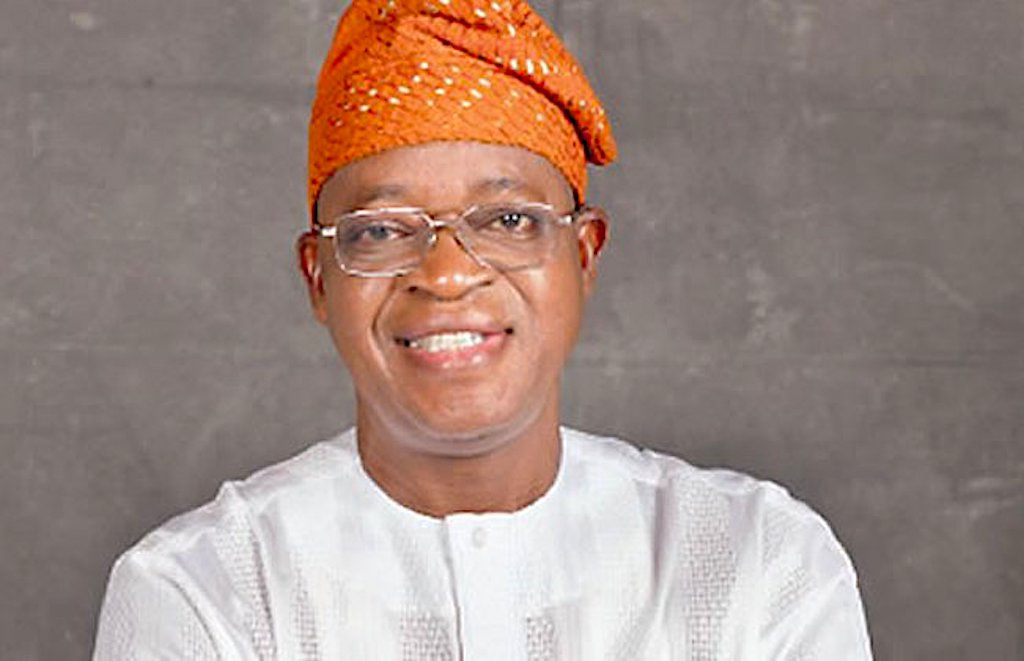
After two decades, Tinubu approves Cabotage fund for Nigerian shipowners
President Bola Tinubu has approved the disbursement of the Cabotage Vessel Financing Fund (CVFF) to qualified Nigerian shipowners, more than 20 years after the fund was established to promote indigenous participation in the country’s maritime industry.
The approval, announced on Sunday, September 6, 2026, is expected to end years of uncertainty surrounding the CVFF and provide Nigerian shipowners with access to long-term financing for the acquisition of vessels and expansion of their operations.
The Minister of Marine and Blue Economy, Adegboyega Oyetola, disclosed the development in a statement issued by his Special Adviser, Bolaji Akinola.
Oyetola directed the Nigerian Maritime Administration and Safety Agency (NIMASA) and the 12 approved Primary Lending Institutions (PLIs) to fast-track the processing and disbursement of the fund to eligible applicants.
According to the minister, the move is designed to unlock investment in Nigeria’s maritime sector, increase indigenous ship ownership, strengthen the country’s participation in coastal and offshore shipping and create thousands of employment opportunities.
NIMASA has so far received 92 applications from prospective beneficiaries seeking financing under the CVFF programme. Twenty applications have already been forwarded to the approved lending institutions, while one has been reviewed and sent forward for final approval.
The development marks the latest stage in the Federal Government’s efforts to transform the CVFF from a long-standing pool of accumulated funds into an operational financing facility for Nigeria’s indigenous shipping industry.
The CVFF was created under the Coastal and Inland Shipping (Cabotage) Act to provide financial support to qualified Nigerian operators for the acquisition of vessels and development of domestic shipping capacity.
The facility is particularly important because Nigeria’s maritime sector has historically relied heavily on foreign-owned vessels for several coastal and offshore operations, limiting the amount of revenue retained by indigenous operators.
Through the CVFF, the government seeks to enable qualified Nigerian shipowners to acquire modern vessels, expand their fleets and compete more effectively for contracts within the domestic maritime market.
READ ALSO:
- Hate Speech, Threats During Campaigns Attract ₦10m Fine, 12 Months Jail – INEC
- Market Fire in Indonesia Kills 11, Including Six Children
- Three Women Killed, 10 Injured in Multiple Crash on Lagos-Ibadan Expressway Bridge
- Socialite Igho ‘Tiny’ Ubiribo Dies After Penis Enlargement Surgery
The fund is structured to provide long-term financing at a relatively low interest rate, with the current framework designed to make vessel acquisition more accessible to indigenous operators.
NIMASA had previously disclosed that the financing arrangement would provide for a single-digit interest rate, a two-year moratorium and an eight-year repayment period.
Under the framework, NIMASA is expected to provide 50 per cent of the financing, while the participating lending institutions would contribute 35 per cent and beneficiaries would provide the remaining 15 per cent as equity.
The number of participating Primary Lending Institutions was increased from five to 12 to widen access to the facility, improve competition among lenders and reduce delays associated with loan processing.
The expansion is also expected to give applicants more options when seeking financing and strengthen the financial oversight of the programme.
Oyetola had earlier directed NIMASA in April 2025 to begin the process of operationalising the Cabotage Vessel Financing Fund, reviving efforts to disburse the facility after years of administrative stagnation.
The process received another boost in January 2026 with the launch of the CVFF Application Portal in Lagos.
The portal was designed to provide eligible shipowners with a more transparent and structured process for submitting applications and tracking their financing requests.
The latest presidential approval therefore builds on several reforms introduced by the Ministry of Marine and Blue Economy and NIMASA over the past two years.
The CVFF has a long history of delayed disbursement.
In December 2019, the Federal Government announced that then-President Muhammadu Buhari had approved the release of the fund to indigenous shipowners, with the accumulated amount at the time reportedly estimated at N44.64 billion.
Despite the announcement, the fund did not translate into sustained financing for Nigerian shipowners.
In 2023, the House of Representatives intervened over concerns surrounding the management and proposed disbursement of the fund.
The House investigated the amount accumulated under the scheme, the proposed financing arrangements and the process for selecting beneficiaries.
Following the investigation, lawmakers approved the disbursement of an estimated $360 million to qualified Nigerian shipowners.
However, the implementation of the disbursement continued to face delays.
By April 2025, NIMASA estimated the value of the fund at about $700 million and announced plans to commence disbursement under a revised financing structure.
The latest approval by President Tinubu is therefore another significant attempt to move the fund from years of accumulated resources and administrative delays to actual financing for indigenous operators.
The Federal Government expects the programme to have an impact beyond vessel ownership.
According to Oyetola, the initiative could generate more than 30,000 direct and indirect jobs across shipyards, marine engineering companies, maritime logistics firms and other businesses connected to the maritime value chain.
Greater indigenous ownership of vessels could also stimulate demand for shipbuilding, vessel repairs, marine engineering, maritime insurance, logistics and other specialised services.
The government believes this could help Nigeria retain a larger share of the economic value generated from activities within its territorial waters.
The CVFF disbursement is also coming as Nigeria seeks to improve its international maritime profile.
In August 2026, the United States Coast Guard lifted a 12-year Condition of Entry imposed on Nigerian vessels arriving at US ports.
The restriction, introduced in 2014 over concerns about maritime security standards, had subjected Nigerian vessels to additional requirements when entering US ports.
Its removal is expected to improve the operating environment for vessels trading between Nigeria and the United States, potentially reducing additional compliance costs and improving turnaround times.
The development has added momentum to Nigeria’s efforts to strengthen maritime safety, security and compliance with international standards.
For the Federal Government, strengthening indigenous shipping capacity remains a key component of its broader Blue Economy strategy.
The administration has identified the maritime sector as an area capable of attracting investment, creating jobs, expanding trade and increasing Nigeria’s revenue from its extensive coastal and offshore economic activities.
For Nigerian shipowners, however, the immediate focus will be on whether the latest approval translates into actual access to financing.
With 92 applications already received and 20 forwarded to lending institutions, the next stage will involve detailed assessment, approval and eventual release of funds to successful applicants.
The government’s challenge will be to ensure that the process remains transparent, commercially sustainable and accessible to genuinely qualified Nigerian operators.
After more than two decades of delays, investigations and repeated promises of disbursement, President Tinubu’s latest approval represents a major opportunity to finally make the Cabotage Vessel Financing Fund a functioning source of capital for Nigeria’s indigenous shipping industry.
After two decades, Tinubu approves Cabotage fund for Nigerian shipowners
Auto
Kaduna to Lead Govt Patronage of Local Vehicles as Sani Unveils Peugeot 5008
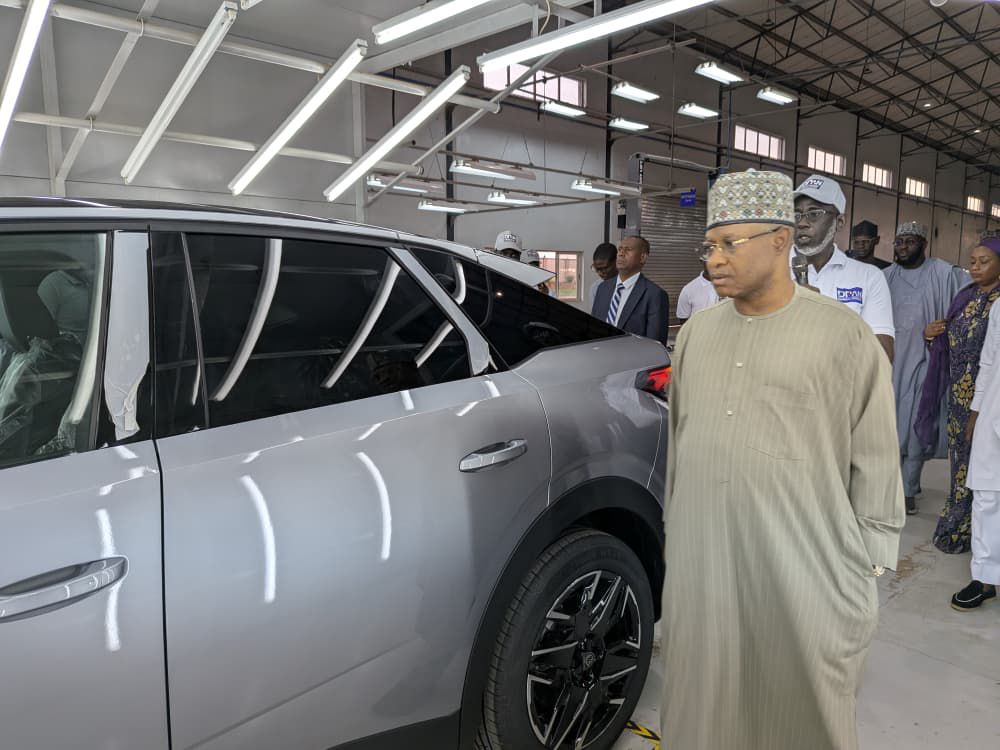
Kaduna to Lead Govt Patronage of Local Vehicles as Sani Unveils Peugeot 5008
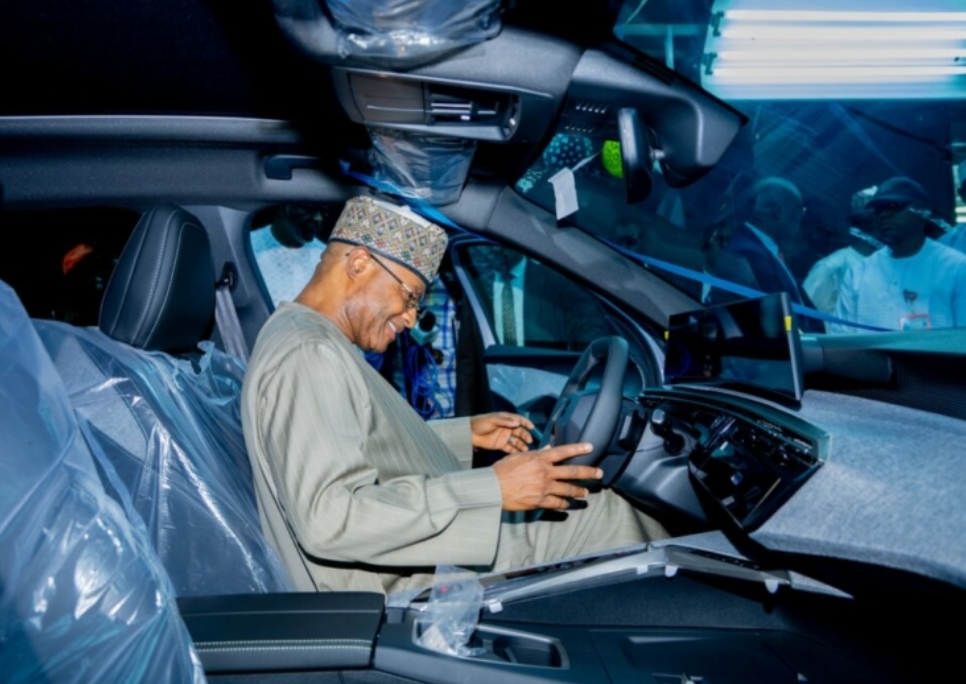
Kaduna State Governor, Uba Sani, has pledged to lead a fresh push for government patronage of vehicles assembled by Dangote Peugeot Automobile Nigeria (D-PAN), promising to make a strong case for the company at the National Economic Council (NEC).
Sani, who made the commitment while unveiling the new Peugeot 5008 2026 model at the D-PAN plant in Kaduna on Friday, said increased patronage by Federal and state government Ministries, Departments and Agencies (MDAs) was critical to sustaining local vehicle assembly, protecting jobs and strengthening Nigeria’s automotive value chain.
The governor’s intervention comes amid renewed efforts to revive Nigeria’s automotive manufacturing industry by increasing local vehicle production and reducing dependence on imported completely built units.
Industry stakeholders have consistently identified government fleet procurement as a major instrument for creating sustained demand for locally assembled vehicles and encouraging investment in assembly plants.
With government agencies operating large vehicle fleets nationwide, stronger preference for locally assembled automobiles could provide the market certainty required by assemblers to expand production, develop local suppliers and deepen technology and skills transfer. It could also support the broader objective of increasing local content in Nigeria’s automotive industry.
READ ALSO:
- Peter Obi, Others Challenging Tinubu Cannot Transform Nigeria — Datti Baba-Ahmed
- FG Opens N2.5bn Grant Window For 50 Student Innovators Under “Next Moonshot Initiative”
- Kneeling to Propose Is Why Western Marriages Fail — Pete Edochie Sparks Fresh Debate
Against this background, Sani said government patronage remained crucial to ensuring the sustainability of local assembly operations and encouraging further investment in the sector.
“I will make a strong presentation at the National Economic Council, urging both the Federal and state governments to patronise the products of this company because that is the only way they can survive,” Sani said.
He also announced that the Kaduna State Government would procure some vehicles from D-PAN, saying the state would lead by example and encourage other governments to patronise locally assembled automobiles.
“As a government, Kaduna State will order some of the vehicles, so that we can show the example for others to follow by patronising this very important company,” the governor added.
Sani pledged continued support and collaboration between the Kaduna State Government and D-PAN, stressing the importance of strengthening local manufacturing as part of efforts to grow Nigeria’s industrial base.
He said D-PAN had made significant contributions to Kaduna’s economy through job creation, skills development and business opportunities for communities within and around its operating environment.
The governor also urged the company to consider employing graduates of the Kaduna State Institute of Vocational and Skills Development, who, according to him, recently completed intensive training in partnership with the National Board for Technical Education (NBTE).
Sani commended D-PAN for its Corporate Social Responsibility (CSR) initiatives in communities around its plant, while urging the company to further expand its support for the host communities.
He said the peaceful relationship between D-PAN and its host community was important to the sustainability of the company’s operations, stressing that continued investment in the welfare and development of surrounding communities would help preserve the harmony.
Kaduna to Lead Govt Patronage of Local Vehicles as Sani Unveils Peugeot 5008
-

 Auto3 days ago
NAJA 19th Auto Awards: Industry’s best to battle for honours December 3
-

 Politics3 days ago
15 northern states may collapse if fuel subsidy returns, OAU professor warns Atiku
-

 metro2 days ago
APC rally: Suspected thugs attack journalists, smash Radio Nigeria vehicle in Kano
-
 metro3 days ago
Lagos-Ibadan Expressway: FG begins Kara Bridge repairs Tuesday, deploys traffic agencies
-

 Auto3 days ago
Jetour Takes Rely R8 Premium Pickup to Abuja in Major FCT Debut
-
 Education2 days ago
FG Opens N2.5bn Grant Window For 50 Student Innovators Under “Next Moonshot Initiative”
-
 Politics2 days ago
Kano Political Earthquake: Kwankwaso Loyalists Dump NDC, Defect to APC in Major 2027 Blow
-

 Politics2 days ago
Peter Obi, Others Challenging Tinubu Cannot Transform Nigeria — Datti Baba-Ahmed