

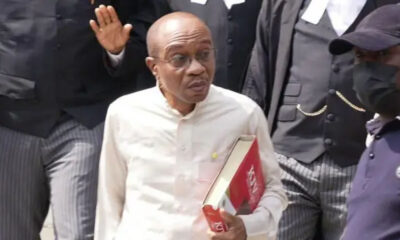
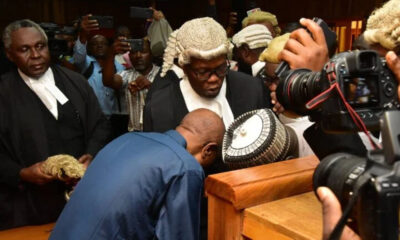
Emefiele awarded contracts to wife, brother-in-law, says witness
metro
Emefiele awarded contracts to wife, brother-in-law, says witness





metro
Expose Criminals Among You or Face Consequences, Bago Tells Fulani Leaders
Expose Criminals Among You or Face Consequences, Bago Tells Fulani Leaders
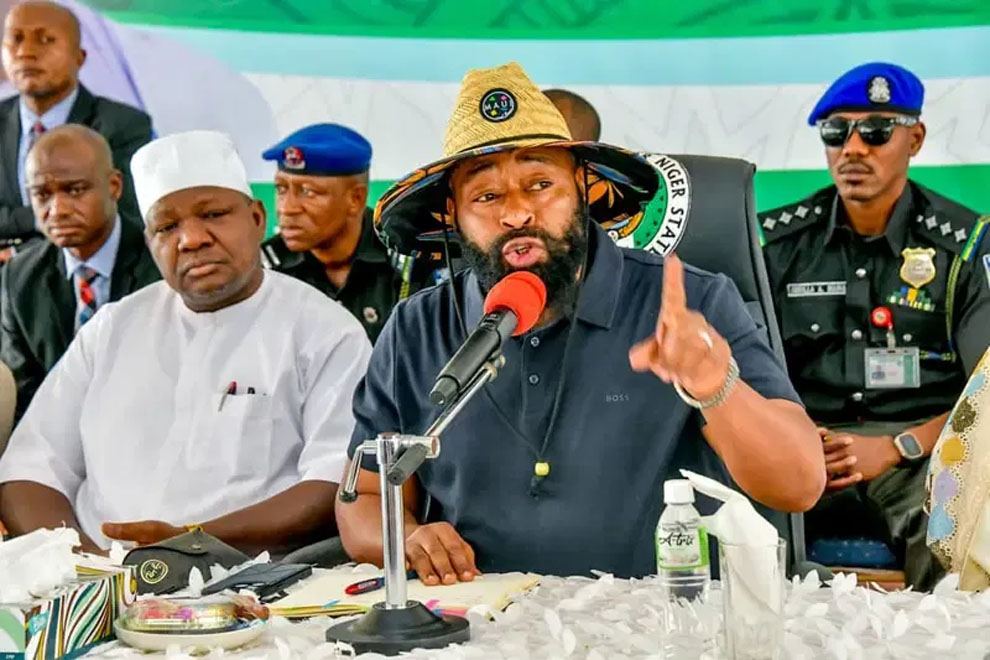
Niger State Governor Mohammed Umaru Bago has issued a strong appeal to leaders of Fulani communities across the state, urging them to partner with security agencies in identifying and exposing criminal elements responsible for kidnappings, banditry, and other violent crimes. The governor warned that continued silence over the activities of armed groups was fuelling public resentment against the ethnic group, with innocent members increasingly bearing the consequences of the actions of a few, making it imperative for community leaders to take decisive action before the situation spirals further out of control.
Speaking in Hausa during a meeting with community leaders, a video of which has since gone viral on social media, Bago delivered a blunt message to Fulani elders, urging them to advise those involved in criminal activities to abandon crime and return to their communities. He stressed that victims of kidnapping almost always blamed their abductors on the Fulani community, making it essential for leaders to intervene and separate the innocent from the guilty. “My relatives, I will not be afraid of you; I had better tell you this. Whoever gets kidnapped in the bush and is later released will say it was Fulanis who kidnapped him,” Bago said. “So, you should warn your children who are in the bush to return so that we can live peacefully. There is no way people can be kidnapped and made to pay ransom without expecting them to be angry with you.”
The governor noted that public frustration over worsening insecurity had reached a boiling point, alleging that some residents had failed to alert authorities about armed groups operating within their communities, including suspected criminals arriving from neighbouring Zamfara State, where banditry has long been a major challenge. He emphasised that while no one was stopping Fulani people from grazing their cattle, attending school, or living peacefully, the failure of community leaders to rein in criminal elements among them would ultimately lead to collective punishment. “People are angry with Fulanis. No one is stopping you from grazing, going to school, or staying peacefully, yet you know your children are doing bad things to people. Even if they are not caught, you will eventually face the consequences,” he warned, underscoring the urgency of the situation.
READ ALSO:
- INEC urges eligible Nigerians to complete Continuous Voter Registration as deadline ends Sunday
- Court grants Blessing CEO N20m bail in alleged N69.15m property fraud case
- UN calls for urgent evacuation of 6,000 sailors stranded in Strait of Hormuz
Bago challenged Fulani leaders to distance themselves from criminal elements by reporting them to security agencies instead of offering protection or remaining silent, emphasising that collaboration was essential to restoring peace across the state. He stressed that the government was committed to working with all stakeholders to address insecurity but that community leaders had a critical role to play in identifying and rooting out criminals, and that failure to do so would only deepen the distrust between communities and further endanger innocent lives caught in the crossfire.
Despite the governor’s remarks generating significant online attention, social media claims that Bago ordered the removal of all Fulani district heads in Niger State have been fact-checked and found to be false. Independent fact-checking organisations, including Daily Trust and Dubawa, reviewed the full transcript of the governor’s speech and confirmed that he made no such announcement, providing clarity amid the misinformation that had spread rapidly across platforms. According to the fact-check, the governor instead called for better representation of Fulani communities within the traditional emirate system, urging the Emir of Kagara to give Fulani people proper representation as district or ward heads so that everyone feels included, rather than calling for their removal. The governor’s Chief Press Secretary, Bolagi Ibrahim, also refuted the allegations, describing them as deceptive and stating that the governor maintains a leadership style centred on inclusivity and broad community engagement, contrary to the false narratives circulating online.
Bago also directed traditional rulers to monitor religious activities within their domains and take action against preachers whose messages promote division or threaten peaceful coexistence, declaring that anyone using religious sermons to sow discord among Muslims or create hostility between Muslims and Christians should be arrested. He specifically called out the activities of Lakurawa, a militant group that has been operating in parts of northern Nigeria, accusing them of causing trouble under the guise of preaching while actually spreading division. “Also, this Emirate should set boundaries for our preachers,” he said. “Lakurawa come and create trouble among you in the name of preaching, but they are just lying. When they were born, it was Salatul Fatih that was practiced. Shehu Usman Danfodio is the man who laid the foundation for Islam here, yet they are against him. Which books have they read, and where did they study?” He added, “Even if they come to the Jum’at mosque to preach, arrest them. His Royal Highness, I give permission, whoever preaches to divide Muslims, or to divide Muslims and Christians, should be arrested, and we will take them to prison,” signalling a zero-tolerance approach to religious incitement.
READ ALSO:
- Canada-Based Nigerian Woman Alleges Husband Broke Fidelity Oath Days After Viral ‘Cheat or Die’ Social Media Vow
- 166,000 Evacuated as Unprecedented Wildfires Rage Across France, Spain
- PFICP scandal: How ₦1.3bn ‘fake agency’ traced to Buhari’s government entered 2026 budget
The governor’s remarks came against the backdrop of communal clashes between Fulani herders and the Kamuku community in Rafi Local Government Area that reportedly claimed nearly 80 lives, a tragedy that has heightened tensions and underscored the urgent need for intervention. Bago attributed the violence to alleged land grabbing and political instigation, warning that those responsible would face the full weight of the law, and ordered an immediate halt to all land transactions across the Kagara Emirate unless approved by the state government through the Emirate Council. The governor also raised concerns about the activities of Lakurawa, a militant group that has been operating in parts of northern Nigeria, with the Defence Headquarters confirming that Lakurawa emerged as a new terrorist group in the North-West, particularly in Sokoto, Kebbi and northern parts of Niger State. The group is believed to have links to the Islamic State in the Greater Sahara (ISGS), raising fears of a potential alliance between Sahelian extremists and Nigerian actors that could further destabilise the region.
Bago further cautioned vigilante groups against exceeding their responsibilities, urging them to concentrate on protecting border communities and supporting security agencies rather than taking the law into their own hands, as unchecked vigilantism could create new security challenges. He emphasised that the state government was committed to working with all stakeholders to restore peace and stability across Niger State, and that all security operations must be conducted within the limits of the law to avoid further escalation of violence and ensure that justice is served fairly.
The governor also addressed the issue of farming along government road corridors, warning that the practice had been prohibited, and directed that any farmer caught planting crops between the main road and power poles should be arrested, with animals allowed to feed on such crops. “Between the main government road and the power poles, where no farmer is supposed to plant, I have given an order that if any farmer plants between the main road and the power poles, you should let the animals eat the crops and arrest the farmer,” he said. “You have your own designated land, planting close to the main road only shows you are looking for trouble.” Bago had previously made a similar call in July 2026, urging farmers to desist from farming on road shoulders to avoid clashes with herders, as competition for land and resources continues to drive conflict in the state. The governor’s tough stance on insecurity comes as Niger State continues to grapple with the twin challenges of banditry and farmer-herder conflicts, which have displaced thousands of residents and disrupted agricultural activities across the state, threatening food security and livelihoods in one of Nigeria’s largest states.
As of the time of this report, there has been no official response from Fulani community leaders to the governor’s appeal, but the viral video continues to generate widespread discussion on social media about the complex dynamics of insecurity in northern Nigeria. While some commentators have praised the governor’s direct approach, others have called for more nuanced interventions that address the root causes of banditry, including poverty, unemployment, and competition over natural resources, warning that punitive measures alone may not be sufficient to resolve the deeply entrenched conflict. The situation remains fluid, and all eyes are on Niger State as the government moves to implement its security strategy and restore peace to communities that have endured years of violence and uncertainty.
Expose Criminals Among You or Face Consequences, Bago Tells Fulani Leaders

metro
Canada-Based Nigerian Woman Alleges Husband Broke Fidelity Oath Days After Viral ‘Cheat or Die’ Social Media Vow

Canada-Based Nigerian Woman Alleges Husband Broke Fidelity Oath Days After Viral ‘Cheat or Die’ Social Media Vow
A Canada-based Nigerian woman, Mrs. Ezinne Nwanorue, has made a shocking allegation against her husband, Franklin Nwanorue, claiming he continued an extramarital affair despite publicly taking a fidelity oath on social media just days earlier. The couple, parents to three boys, initially went viral on Tuesday after sharing separate videos in which they swore to remain sexually faithful to each other, with the dramatic oaths invoking death as the penalty for infidelity. In his video, Mr. Nwanorue declared, “I confess and I promise that if I come to Canada and cheat on you, let me die in the name of Jesus,” a statement that quickly drew widespread attention across social media platforms.
The public declaration was reportedly a condition for Mrs. Nwanorue to sponsor her husband’s relocation from Nigeria to Canada, adding a layer of complexity to an already tense marital dynamic. Describing herself as a “prophetic intercessor” and certified marriage counsellor, she claimed the requirement was a divine instruction, posting on Facebook that her husband would only receive a Canadian visa if he made the public vow. In her words, “Before my husband can be given a visa to Canada, he must make a video confessing… This is the only way God can give him a visa to come to Canada, thus said the Lord!!!” This framing of the oath as both spiritual and practical made its breach all the more significant in her eyes.
Mr. Nwanorue, acknowledging his wife’s sacrifices of being alone in Canada for three years without him and their children, accepted the terms without hesitation, expressing his commitment to her happiness and the well-being of their family. He stated, “I want the best for you and my children. I keep my promise to you, my love. I want you to be happy and will do anything to make you happy,” reinforcing the seriousness with which he appeared to take the vow. In response, Mrs. Nwanorue also made a reciprocal vow, pledging, “I am confessing that I will remain faithful sexually to my husband and that if I become unfaithful, let me die,” thereby completing the mutual public declaration that had captivated online audiences.
READ ALSO:
- 166,000 Evacuated as Unprecedented Wildfires Rage Across France, Spain
- PFICP scandal: How ₦1.3bn ‘fake agency’ traced to Buhari’s government entered 2026 budget
- INEC urges eligible Nigerians to complete Continuous Voter Registration as deadline ends Sunday
However, the dramatic narrative took another turn on Thursday when Mrs. Nwanorue returned to Facebook to drop a bombshell allegation that her husband had already violated the spirit of their public oath. In a post on her page, Ezinne Frank Nwanorue, she shared a comment from a woman she identified as her husband’s “side chick” in Nigeria, who allegedly confessed that he had slept with her after making his public declaration of fidelity, effectively mocking the very vow he had made before thousands of online viewers. This revelation transformed the story from a viral romantic moment into a cautionary tale about performative promises and the fragile nature of trust in long-distance relationships.
Expressing her deep pain and frustration, Mrs. Nwanorue lamented, “I have suffered a lot at his hands,” indicating that this alleged infidelity was not an isolated incident but part of a broader pattern of betrayal she had endured over time. While she acknowledged that her husband funded her relocation abroad, she declared her commitment to helping him obtain a Canadian visa but expressed unwavering belief in divine consequences for his actions, writing, “My husband will not live to enjoy Canada if he cheats on me… I believe in God and I trust His judgment. My husband must surely die if he cheats on me.” This invocation of the original oath’s deadly penalty underscores the gravity with which she views the breach and her faith in supernatural retribution.
Adding a past trauma element to her social media posts, Mrs. Nwanorue also alleged that the Anglican reverend who officiated her wedding had taken advantage of her at age 18, an incident she claimed robbed her of her dream to marry as a virgin. This revelation surfaced in a Facebook post where she explained why God wanted a new wedding ceremony for her and her husband, suggesting that the spiritual and emotional wounds from her past had shaped her current expectations and demands within the marriage. The disclosure adds a deeper layer of complexity to the ongoing saga, hinting at unresolved issues that may have influenced the couple’s turbulent relationship dynamics.
As of the time of this report, Mr. Franklin Nwanorue had not publicly responded to the infidelity allegations, leaving his side of the story untold and fueling further speculation among social media users. The claims remain unverified, and the dramatic story continues to generate widespread discussions online about marriage, trust, and the complexities of long-distance relationships and migration, as netizens weigh in with opinions ranging from sympathy for Mrs. Nwanorue to skepticism about the public nature of the couple’s marital affairs. Whether this viral moment will lead to reconciliation, separation, or further revelations remains to be seen, but for now, the Nwanorue saga stands as a striking example of how social media has become both a stage for personal declarations and a courtroom for public judgment in modern relationships.
Canada-Based Nigerian Woman Alleges Husband Broke Fidelity Oath Days After Viral ‘Cheat or Die’ Social Media Vow
metro
PFICP scandal: How ₦1.3bn ‘fake agency’ traced to Buhari’s government entered 2026 budget
PFICP scandal: How ₦1.3bn ‘fake agency’ traced to Buhari’s government entered 2026 budget
The Budget Office of the Federation has disclosed that the controversial Presidential Foreign Intervention Promotion Council (PFIPC) — now declared fake and under investigation — originated from institutional records linked to the administration of the late former President Muhammadu Buhari. Director-General of the Budget Office, Tanimu Yakubu, made this known while appearing before the House of Representatives Ad-hoc Committee investigating the matter. He explained that although ₦1.302 billion was appropriated for the council in the 2026 budget, not a single kobo was released because statutory spending controls prevented the funds from ever being accessed.
Providing a detailed account of how the PFIPC found its way into the 2026 budget, Yakubu traced the council’s institutional origin to the Presidential Economic Advisory Council (PEAC), which President Buhari inaugurated on October 9, 2019. By the time the 2026 budget preparations began, official government instruments had already been issued by key institutions. The Office of the Accountant-General of the Federation had assigned an administrative budget code to the PFIPC, while the Office of the Head of the Civil Service of the Federation had approved an authorised establishment and a recruitment waiver. Yakubu emphasised that the Budget Office did not create the council or approve its establishment — it merely acted on official documents received from other government institutions. In his words, “The Budget Office did not create the Council. It did not assign its code. It did not approve its establishment. It did not grant its recruitment waiver. It received official instruments and did what the law required of it: it measured their fiscal effect.”
Giving a breakdown of how the ₦1.302 billion allocation was calculated, Yakubu disclosed that the PFIPC initially requested ₦3.85 billion for personnel costs, but the Budget Office independently calculated a reduced figure of ₦802,978,783. This amount, which represented 61.63 per cent of the total ₦1.302 billion appropriation, was based strictly on the authorised establishment, the approved recruitment waiver, the applicable public-service salary structure, and the extant costing methodology. The overhead component stood at ₦200 million, while capital expenditure was set at ₦300 million. Despite the full appropriation of ₦1.302 billion, not a single kobo was disbursed to the council.
READ ALSO:
- INEC urges eligible Nigerians to complete Continuous Voter Registration as deadline ends Sunday
- Court grants Blessing CEO N20m bail in alleged N69.15m property fraud case
- UN calls for urgent evacuation of 6,000 sailors stranded in Strait of Hormuz
Explaining why the money was never released, Yakubu stated that despite the appropriation, the council could not access the funds because the Budget Office withheld Financial Clearance — the mandatory approval required before recruitment, payroll enrolment, or salary payments can commence. He clarified that two conditions remained incomplete: first, the 2026 Appropriation Bill only became law on March 31, 2026, meaning final clearance could not be issued before presidential assent; second, the National Salaries, Incomes and Wages Commission had not confirmed that the proposed staffing and remuneration arrangements complied with the approved public-service compensation framework. Yakubu stressed that “There was no Financial Clearance. There was no lawful recruitment. There was no payroll enrollment. There was no salary payment. Not one kobo of the personnel provision could lawfully have been drawn. Not one kobo was drawn.” The overhead allocation of ₦200 million could not be released because it required treasury warrants and cash backing from the Federal Ministry of Finance, while the capital allocation of ₦300 million never progressed beyond appropriation because no procurement plan was initiated, no tenders board approved any project, and no Certificate of No Objection was issued by the Bureau of Public Procurement.
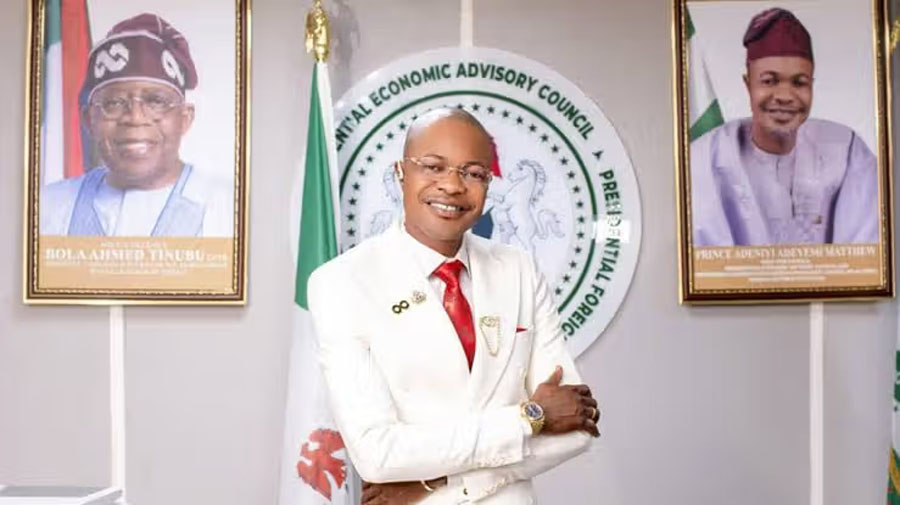
The scandal surrounding how a ‘fake agency’ gained official recognition became public on June 11, 2026, when the Chief of Staff to the President, Femi Gbajabiamila, declared the council fake and petitioned law enforcement agencies. Subsequent investigations revealed that the PFIPC had secured office space within the Federal Secretariat in Abuja, that the Central Bank of Nigeria opened two foreign currency accounts — one in US dollars and another in British pounds — on the directive of the Office of the Accountant-General, and that the agency was listed in the 2026 Appropriation Act with a budget of ₦1.302 billion. It was also discovered that the self-declared Director-General, Prince Adeniyi Adeyemi Matthew, presented forged appointment letters and falsely claimed to be a presidential appointee. On July 7, 2026, President Bola Tinubu directed the Independent Corrupt Practices and Other Related Offences Commission (ICPC) to conduct a thorough investigation and submit a report within 30 days.
In the midst of counterclaims and the ongoing investigation, before his arrest, Adeniyi Adeyemi alleged that Gbajabiamila received ₦400 million through a proxy and demanded an additional ₦200 million to secure his appointment. The Chief of Staff has denied the allegations and filed a defamation suit seeking ₦15 billion in damages. The ICPC investigation is now examining forged appointment letters and official documents, the use of false presidential claims to obtain official recognition and diplomatic support, the opening of multiple bank accounts using allegedly forged documents, the role of public officers, private individuals, and financial institutions that may have facilitated the scheme, as well as broader weaknesses in government procedures that may have been exploited. The Budget Office has maintained that the episode demonstrates the strength of Nigeria’s public financial management system, as the controls held firm and prevented any actual loss of public funds.
PFICP scandal: How ₦1.3bn ‘fake agency’ traced to Buhari’s government entered 2026 budget
-

 metro2 days ago
How to apply for FG’s YouthCred loan and qualify for up to ₦2 million
-

 News2 days ago
NACOMYO urges greater Muslim youth participation in politics at Lagos summit
-
 Politics2 days ago
Ondo Speaker given Sunday deadline to resign or face impeachment
-

 Opinion2 days ago
UI, UCH and the Question of Inclusive Leadership
-

 News2 days ago
Kalu denies ₦1bn church budget claim, says actual allocation is ₦780m
-

 Business2 days ago
Dangote Refinery resumes naira petrol sales, fixes gantry price at ₦1,215 per litre
-

 News2 days ago
Nigerian researcher develops AI system to transform marine conservation, fisheries management
-
 Politics1 day ago
Presidency, Obasanjo attack Atiku over US lobbying, reopen decades-old loyalty dispute