

Business
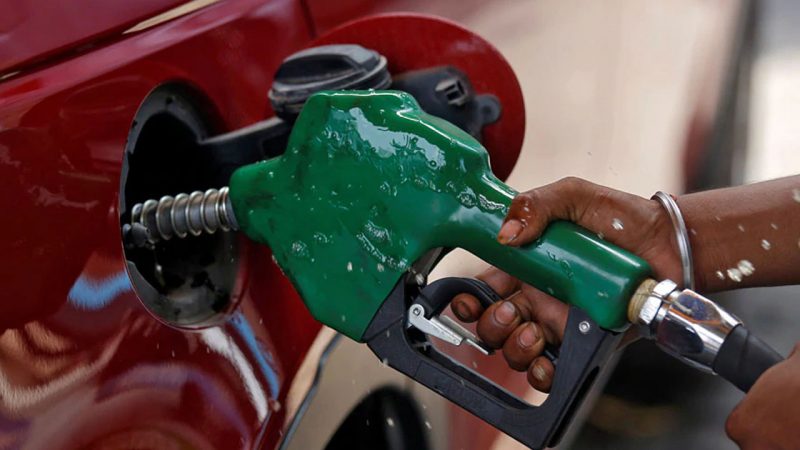
Petrol: Dangote pump price emerges as NNPC trucks begin loading
Petrol: Dangote pump price emerges as NNPC trucks begin loading
There are indications that petrol may be sold between N857 and N865 per litre at filling stations after the Nigerian National Petroleum Corporation Limited (NNPCL) starts lifting the product from Dangote Refinery today (Sunday).
The NNPCL, as the sole off-taker of petrol from the refinery, is projected to lift the product at N960/N980 per litre and sell to marketers at N840/N850 to enable Nigerians to get it at between N857 and N865 at the pump at filling stations.
Petrol as of Saturday was sold at N855 per litre at NNPCL retail stations in Lagos and it was the cheapest anyone could buy the product while major marketers sold around N920.
At independent marketers’ outlets, the price was over N1,000.
Elsewhere across the country, petrol sold for more than N1,200 per litre.
READ ALSO:
- FG begins CNG kits distribution, installation in three Ogun centres
- Nigerian who diverted UK firm’s funds to forfeit N342m, says EFCC
- UK govt okays fee waiver for bereaved foreign partners
Negotiations
Vanguard reports the new arrangement from the NNPCL and Dangote Refinery negotiations, spanning more than one week, would allow Nigerians to get petrol at between N857 and N865 per litre and represents an average under-recovery of about N130 to NNPCL.
President Bola Tinubu, according to a Presidency source, made it clear to the negotiating parties that “the price at which petrol would be sold to Nigerians should not place heavy financial burden on them while dealing with the new reality of the prevailing price”.
Minister of Finance and Coordinating Minister of the Economy, Mr Wale Edun, has expressed optimism that the deal would reduce the pressure on foreign exchange (FX) demands and shore up the value of the Naira – presently, between 30% and 40% of FX demands go into the importation of petrol.
Chief Corporate Communications Officer, NNPC Ltd., Olufemi Soneye, who confirmed the readiness of the company to start lifting petrol today, told Sunday Vanguard, yesterday: “NNPC Ltd has started deploying our trucks and vessels in the Dangote Refinery to lift PMS in preparation for the scheduled lifting date of September 15th, as set by the refinery.
“Our trucks and personnel are already on-site, ready to begin lifting. We expect more trucks, and the deployment will continue throughout the weekend so we can start loading as soon as the refinery begins operations on September 15, 2024.”
Petrol: Dangote pump price emerges as NNPC trucks begin loading






Business
ABC Transport Expands Hospitality Business, Secures Abia Approval for Aba City Transit Inn
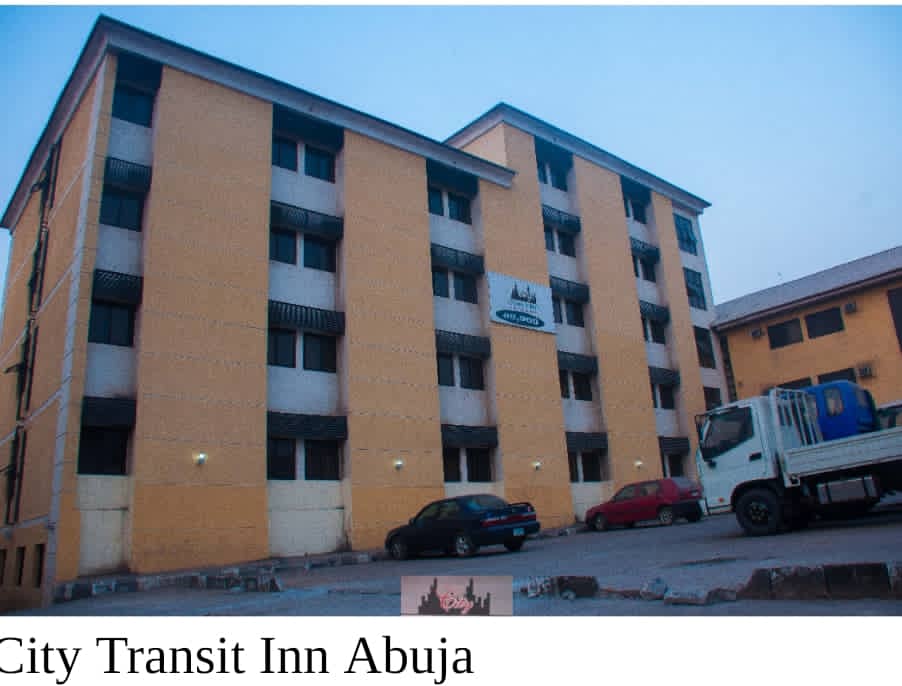
ABC Transport Expands Hospitality Business, Secures Abia Approval for Aba City Transit Inn
ABC Transport Plc is set to expand its hospitality business with plans to establish a new City Transit Inn (CTI) hotel in Aba, Abia State, following approval granted by the Abia State Government for the development.
According to the company, the Aba project represents the next phase of CTI’s growth strategy as the hospitality arm of ABC Transport seeks to strengthen its presence in key commercial centres across Nigeria and provide travellers, business visitors and other customers with affordable, safe and quality accommodation.
The planned facility is expected to feature air-conditioned rooms with private showers, uninterrupted power supply, complimentary internet access and a comfortable environment, reinforcing CTI’s commitment to providing decent and accessible accommodation while delivering value to customers.
ABC Transport Plc is one of Nigeria’s diversified transportation companies, with core operations spanning passenger transportation, haulage, cargo logistics, hospitality and driver training.
Through City Transit Inn, the Group has operated in the hospitality sector for more than two decades, with its Abuja property serving as the foundation for the brand’s planned expansion into other major Nigerian cities.
ABC Transport Plc is quoted on the Nigerian stock market under the ticker ABCTRANS
Why Aba?
The decision to establish the new facility in Aba reflects the city’s growing commercial and business activities, supported in recent years by improvements in infrastructure, including road connectivity and power supply.
As one of southeastern Nigeria’s major commercial centres, Aba is said to offer a strategic opportunity for City Transit Inn to serve an expanding population of business travellers, visitors and other customers while complementing ABC Transport’s existing transportation and logistics operations in the region.
The Aba project is part of a broader hospitality expansion programme, with Port Harcourt and Lagos also identified as potential locations for future CTI facilities.
Building on CTI’s Experience
The expansion into Aba builds on the experience of City Transit Inn Abuja, a 113-room budget-friendly hotel owned and operated by ABC Transport since 2001.
Located in the Federal Capital Territory, CTI Abuja has provided travellers and visitors with affordable, decent and safe accommodation, allowing guests to maximise their budgets for experiences, dining and other activities.
The experience gained from operating CTI Abuja provides a strong foundation for the brand’s expansion into other commercial centres, with the Aba project marking an important step in the next phase of its growth.
Part of ABC Transport’s Diversification Strategy
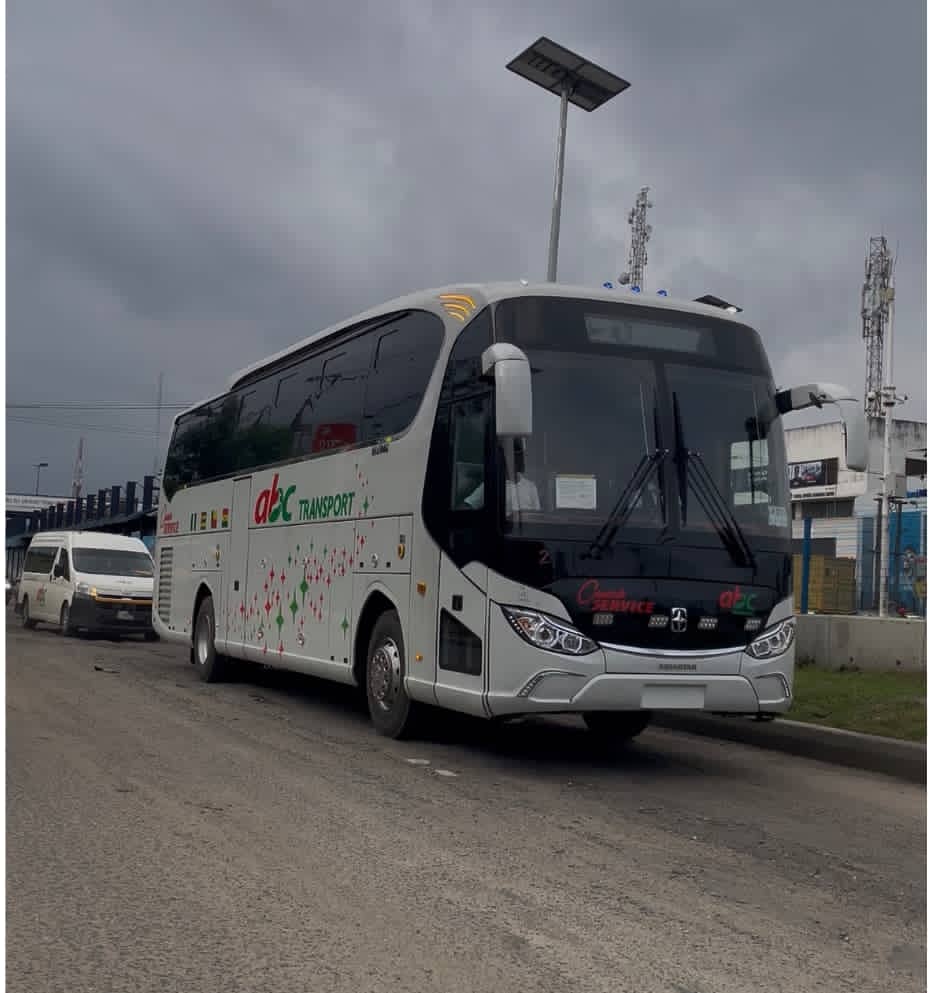
The expansion of City Transit Inn is also aligned with ABC Transport Plc’s broader strategy of strengthening its non-passenger businesses and developing multiple complementary revenue streams beyond traditional passenger transportation.
In recent years, the company has pursued growth in its haulage and cargo logistics operations, with the expansion of these businesses contributing to the Group’s overall growth and profitability.
ABC Transport’s diversification strategy also encompasses its driver training and hospitality businesses, positioning the Group to participate across multiple segments of Nigeria’s transportation and mobility ecosystem.
The development of the Aba hotel, therefore, represents more than an expansion of the hospitality business; it is part of ABC Transport’s broader strategy to build a more diversified and resilient business portfolio.

Aviation
Keyamo Issues One-Week Ultimatum to Airlines Over Debt Repayment Plans

Keyamo Issues One-Week Ultimatum to Airlines Over Debt Repayment Plans
The Minister of Aviation and Aerospace Development, Festus Keyamo, has given airlines operating in Nigeria one week to agree on realistic repayment plans with aviation agencies over their outstanding financial obligations. This directive was part of resolutions reached at an emergency stakeholders’ meeting convened by Keyamo on Thursday, August 13, 2026, to address the recent industrial dispute between aviation sector unions and some airlines. The meeting followed the temporary suspension of industrial action by aviation unions on Tuesday, August 11, 2026, which disrupted operations at some airports across the country, causing widespread concern among passengers and stakeholders. The emergency meeting was attended by representatives of airlines, aviation sector unions, and heads of aviation agencies, including the Nigeria Civil Aviation Authority (NCAA), the Federal Airports Authority of Nigeria (FAAN), and the Nigerian Airspace Management Agency (NAMA). The Minister emphasized that the era of impunity in the aviation sector is over and that airlines must take responsibility for their financial obligations while working with the government to resolve outstanding debts amicably.
According to a statement signed by the Permanent Secretary, Ministry of Aviation and Aerospace Development, Mahmud Adam Kambari, the NCAA and other aviation agencies were directed to obtain payment schedules from airlines, taking into consideration their operating costs and prevailing economic realities. The statement emphasized that the Directors of Finance and Accounts of all aviation agencies were to meet individually with the affected airlines and agree on realistic repayment plans within one week. The resolution is aimed at addressing financial obligations owed by airlines to aviation agencies while preventing the disputes from escalating into further industrial action and disruption of air travel. The Minister stressed that the repayment plans must be realistic and achievable, as the government is not interested in empty promises but in concrete actions that will restore financial sanity to the sector. Airlines that fail to comply within the stipulated timeframe would face drastic actions, including the possible grounding of aircraft and suspension of operating licenses.
READ ALSO:
- [ICYMI] How Nigerian Medical Doctor Was Promoted to Captain in US Army
- JAMB Aggregate Score 2026/2027: How Nigerian Universities Calculate Your Admission Chances
- Davido Halts London Concert, Threatens to Walk Off Stage Over Fan’s Disrespect to Staff
The emergency meeting was convened in response to a growing industrial dispute between aviation sector unions and some airlines. The unions had threatened industrial action over issues including the unionisation of airline workers and the alleged refusal of some airlines to allow their employees to join trade unions. The dispute escalated to the point where aviation unions temporarily suspended industrial action on Tuesday, August 11, 2026, which had disrupted flight operations at some Nigerian airports, causing significant inconvenience to passengers and raising concerns about the stability of the aviation sector. The disruption had heightened fears over possible widespread cancellations and delays, prompting the Minister to intervene swiftly to prevent a full-blown crisis that could have paralyzed air travel across the country.
The stakeholders also reached an agreement on the contentious issue of unionisation among airline workers. The Minister affirmed the right of workers to decide whether or not to belong to trade unions, stressing that such decisions should be made directly by the workers rather than through airline management. Consequently, the NCAA was directed to ensure that aviation unions have direct access to workers of all airlines solely for the purpose of distributing union forms to enable employees to indicate whether they wish to unionise. The ministry warned that any airline that prevents the unions from having such direct access would face sanctions from the NCAA, including possible fines or suspension of operating licenses. This resolution represents a significant victory for workers’ rights in the aviation sector and ensures that employees can exercise their freedom of association without interference from employers.
The stakeholders further resolved that another meeting would be convened in one month to review progress made in implementing the resolutions and assess the state of the aviation sector. The statement described the resolutions as collective decisions of all parties at the meeting, emphasizing the collaborative approach taken to resolve the disputes. The Minister, while assuring stakeholders of the Federal Government’s commitment to a safe and viable aviation sector, reiterated President Bola Tinubu’s commitment to maintaining a safe, efficient, peaceful, and sustainable aviation industry. This commitment aligns with the broader agenda of the current administration to reform critical sectors of the economy and ensure the welfare of workers and the public. The Minister also noted that the government would continue to engage with stakeholders to address other challenges facing the industry, including infrastructure decay, multiple taxation, and the high cost of aviation fuel.
The latest intervention comes after the aviation unions temporarily suspended their industrial action following the disruption of flight operations at some airports on Tuesday. The dispute had heightened concerns over possible disruptions to air travel and the financial pressures facing airlines operating in the country. Airlines now have until August 20, 2026, to agree on repayment plans with aviation agencies. The Ministry has set up a task force to review the submissions and ensure compliance. Airlines that fail to meet the deadline or fail to reach acceptable repayment agreements will face sanctions, which could include suspension of operating licenses, grounding of aircraft, prohibition from accessing government facilities, and legal action to recover outstanding debts. The Ministry has also directed the NCAA to ensure that aviation unions have direct access to airline workers to distribute unionisation forms, and any airline found obstructing this process will face sanctions. This development marks a significant step in the Minister’s broader efforts to reform the aviation sector, improve financial accountability, and ensure that airlines operate within the framework of the law.
Keyamo Issues One-Week Ultimatum to Airlines Over Debt Repayment Plans
Auto
Omoda, Jaecoo Shake Global Auto Market, Hit One Million Sales in Three Years

Omoda, Jaecoo Shake Global Auto Market, Hit One Million Sales in Three Years
Chinese automotive brands Omoda and Jaecoo are rapidly reshaping the global automobile industry, posting remarkable sales growth and displacing long-established competitors in key markets barely three years after their debut.
Owned by Chinese auto giant Chery, the sister brands have emerged as two of the world’s fastest-growing vehicle marques, recording more than one million cumulative sales across 64 countries by April 2026 while making significant inroads into mature markets traditionally dominated by legacy manufacturers.
Their most striking success has come in the United Kingdom, one of Europe’s most competitive and brand-conscious automotive markets. After entering the UK in 2024, the brands recorded 48,087 new vehicle registrations in 2025, accounting for 2.38 per cent of the market.
The performance placed Omoda and Jaecoo ahead of several long-established manufacturers that have spent decades building customer loyalty in the country.
Driving much of the momentum is the Jaecoo 7 SUV, which finished 2025 as the UK’s fourth most popular retail vehicle before going on to become the country’s best-selling new car in March 2026. It has also ranked as the UK’s third best-selling new car so far in 2026.
Within just 19 months of launching in Britain, the two brands had surpassed 80,000 cumulative vehicle sales, underlining their rapid acceptance among consumers.
Their success extends well beyond the UK.
In Europe, Omoda and Jaecoo sold more than 340,000 vehicles in less than two years by June 2026, earning recognition from industry observers as the continent’s fastest-growing automotive brands.
Australia has witnessed a similar trend. Barely a year after their launch in May 2025, the brands crossed the 10,000-unit sales mark, while the Jaecoo J5 emerged as the country’s best-selling small electric SUV in May 2026.
The brands have also recorded notable achievements in Asia and South America. In Thailand, the Jaecoo J5 topped the country’s electric vehicle sales rankings for six consecutive months, while in Brazil, the Jaecoo 7 Hybrid was named the country’s “Hybrid of the Year.”
Industry analysts attribute the brands’ rapid rise to a combination of striking design, advanced technology, generous standard features and competitive pricing that offers consumers strong value compared with many established rivals.
Safety credentials have also strengthened consumer confidence. Both the Jaecoo 7 and the Omoda 5 have earned five-star ratings from Euro NCAP, Europe’s independent vehicle safety assessment authority, helping to reassure buyers who may be unfamiliar with the brands.
Although many traditional manufacturers still enjoy stronger heritage and decades of brand recognition, industry observers say buying decisions are increasingly being driven by value, technology, design and safety rather than brand familiarity alone.
That shift has created opportunities for newer entrants such as Omoda and Jaecoo, whose rapid global expansion suggests that the automotive landscape is undergoing a significant transformation.
For emerging markets such as Nigeria, where Chinese automobile brands are steadily gaining acceptance, the performance of Omoda and Jaecoo offers another indication of the growing influence of Chinese manufacturers in the global automotive industry.

-

 International2 days ago
Iran Had Detailed Intel on Trump’s Location Before Secret Turkey Escape
-

 News2 days ago
FG to Attach 300 NYSC Corps Members to CNG Workshops for Skills Training
-

 metro3 days ago
Nigeria Needs Competent, Ethical Young Leaders, Says HAVEK Leadership Academy
-
 metro2 days ago
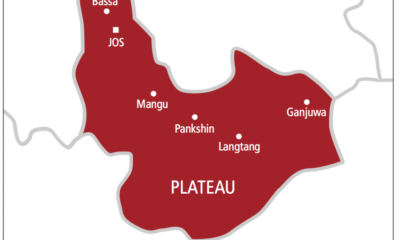
Seven Miners Killed in Plateau Mining Pit Collapse, Renewing Urgent Calls for Safety Reform
-
 Politics2 days ago
INEC reprints Osun ballot papers, result sheets, includes SDP candidate
-

 Politics2 days ago
Osun Governorship: Accord Party Faction Withdraws Support for Adeleke, Endorses APC’s Oyebamiji
-

 Sports2 days ago
WAFCON: Chawinga sisters fire Malawi into historic final
-

 Education1 day ago
JAMB Aggregate Score 2026/2027: How Nigerian Universities Calculate Your Admission Chances