

News
Tinubu govt inherited hardship from Buhari administration – Emir

Tinubu govt inherited hardship from Buhari administration – Emir
The Emir of Minna, Alhaji Umar Farouk Bahago, has stated that the economic challenges currently faced by Nigerians were inherited from the administration of former President Muhammadu Buhari. The Emir made these remarks during a sensitisation event on federal government intervention programmes, organized by the Office of the Minister of Information and National Orientation in Minna, Niger State.
Represented by Alhaji Maikudi Achaza, the Hadinin Minna, the Emir praised President Bola Tinubu for his efforts in addressing the issues caused by past corruption. He pointed out that many citizens remain unaware of Tinubu’s initiatives due to inadequate communication, particularly in local languages.
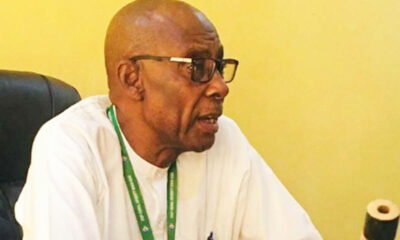
Former Head of State General Abdulsalami Abubakar also expressed concern about the worsening hardships faced by Nigerians. He urged the Tinubu administration to take urgent action to alleviate the suffering of the people. During a courtesy visit from the Campaign for Democracy and Human Rights, a Minna-based civil society group, Abdulsalami criticized the distribution of palliatives, stating they are not an effective solution to the rising cost of living.
READ ALSO:
- Edo poll: Set back for PDP as ex-deputy speaker dumps party
- FG worries over Abuja tremor, says it’s monitoring situation
- Fresh strike looms in varsities, SSANU, NASU, issue 3-week ultimatum
He emphasized that leaders need to connect with ordinary citizens and understand their struggles, noting that high transportation costs, increased fuel prices, rising school fees, and lack of financial resources are making life difficult for many.
Abdulsalami proposed that the government should sell essential food items at reduced prices to help citizens cope with inflation, rather than relying solely on palliatives. He also urged Nigerians to remain peaceful ahead of the planned #EndBadGovernance protests on October 1, 2024, and advised the government not to take citizens for granted.
The Minister of Information, Mohammed Idris, represented by Asabe Sule Garba, emphasized that the event aimed to raise awareness about the federal government’s efforts to improve the lives of citizens. He reiterated President Tinubu’s commitment to accountability and transparency and called for public support.
Tinubu govt inherited hardship from Buhari administration – Emir







News
I Believe God Has Answered My Prayer, Says Tinubu After Entering Holy Ka’abah
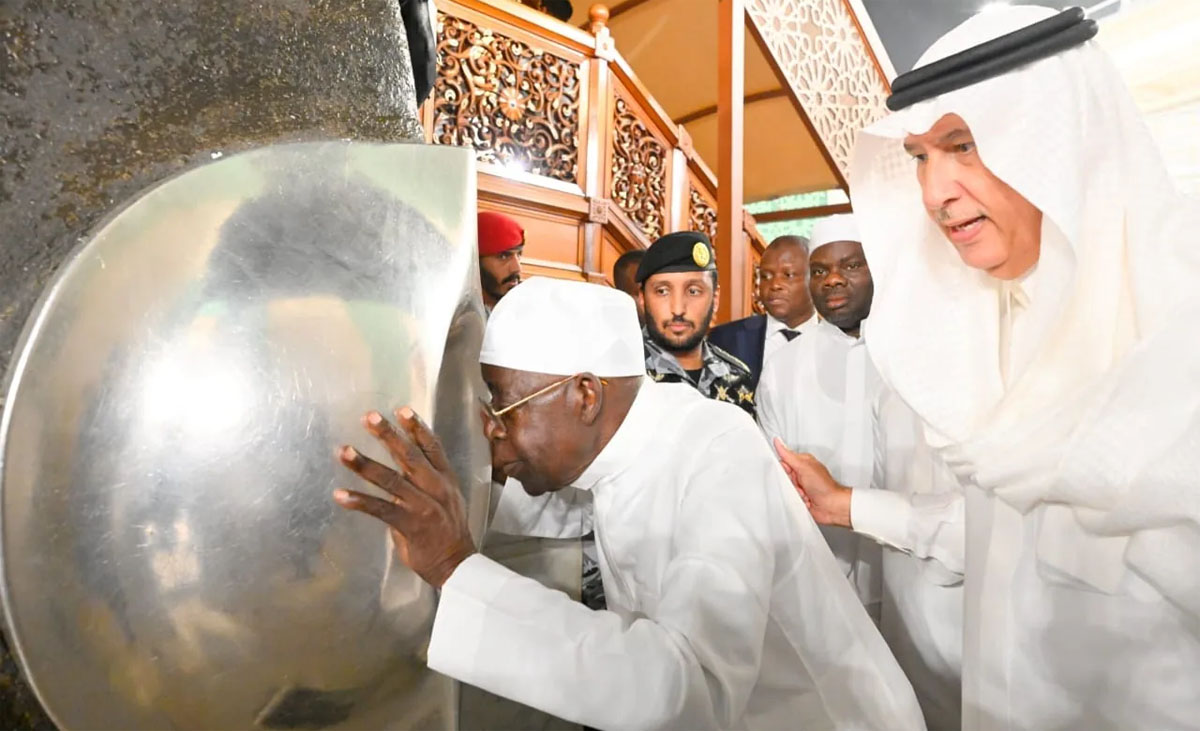
President Bola Ahmed Tinubu has expressed confidence that Almighty Allah has answered his prayers for wisdom and resilience to continue serving Nigerians, following his recent spiritual journey to Saudi Arabia, where he performed the lesser Hajj (Umrah) and was granted access to pray inside the Holy Ka’abah in Makkah.
The President made the disclosure on Monday, November 2, 2026, while reflecting on his spiritual experience and expressing appreciation to Saudi Arabia’s leadership for granting him and members of his Nigerian delegation the rare privilege of entering Islam’s most sacred structure.
Tinubu said he specifically prayed for divine wisdom and strength to discharge his responsibilities as Nigeria’s President, adding that he believed his request had been granted.
“Well, I asked for wisdom and resilience to continue to serve the people. I know that prayer has been granted. Before the 2023 election, I did the same thing. I asked Allah to bless my Umrah then, and He did. And I promised that I would come back to thank Him,” the President said.
According to a statement by his Special Adviser on Information and Strategy, Bayo Onanuga, Tinubu offered prayers of gratitude to Almighty Allah for the opportunity to serve as Nigeria’s President and Commander-in-Chief of the Armed Forces.
The President was led into the Ka’abah by Sheikh Dahlulah Muthawal of Masjid al-Haram.
He subsequently thanked the Custodian of the Two Holy Mosques, King Salman bin Abdulaziz Al Saud, and Saudi Crown Prince Mohammed bin Salman for granting him and members of the Nigerian delegation access to the sacred site.
READ ALSO:
- Footballer Dies as Trailer Rams Car Into Bus on Lagos-Ibadan Expressway
- Gunmen Intercept Family Car, Abduct Woman, Two Children, Release Husband in Abuja
- Dino Melaye Challenges Tinubu to Quranic Recitation Contest After Umrah Trip
Tinubu described the experience as historic and deeply cherished, saying the hospitality extended to him reflected the longstanding friendship and cooperation between Nigeria and Saudi Arabia.
“I want to say a big thank you for the faith, for the recognition. I can’t believe the fencing of the Ka’abah is in Green-White-Green, which reminds us of the Nigerian identity,” he said.
He also expressed gratitude to the Saudi authorities for recognising him as the leader of the Nigerian delegation and facilitating the spiritual exercise.
“We are all facing challenges and hostility around us. We will overcome them with faith in God Almighty. I’m grateful forever. I thank the King and the royal Crown Prince,” Tinubu added.
The President also spoke about the relationship between divine authority and political leadership, referring to Surah Aal-Imran, Verse 26 of the Holy Qur’an, which states that Allah grants sovereignty to whom He wills and takes it away from whom He wills.
According to Tinubu, political power is a trust that must be exercised responsibly, with humility and in the interest of the people.
“There is no other God but Almighty Allah. He is the giver and the taker. He owns power and authority. He says, ‘If I give you, use it well. If you don’t use it in accordance with my dictates, I can take it from you and give it to another person. I am the only One who has that authority,’” he said.
Tinubu maintained that his emergence as Nigeria’s leader was a special favour from God, considering the country’s large population and the number of people who could potentially occupy the position.
“I have faith in that, and I believe extremely well that He has done me and my country a great favour. Out of many millions of people, to be the President and Commander-in-Chief is a favour that only Almighty God can do to a human being,” he stated.
The President also used the occasion to reaffirm his commitment to Project Nigeria, promising to intensify efforts towards economic prosperity, national development and improved opportunities for young Nigerians.
“My commitment to Project Nigeria is higher. I am determined to usher in prosperity and fully develop the country, consistent with the wish of Allah and the support of the people,” he said.
He urged Nigerians to put Allah first, follow their consciences and pursue the right path towards national greatness.
On the economy, Tinubu expressed optimism about the country’s direction, insisting that the economic foundation was solid and that Nigeria had emerged from a difficult period.
“The foundation is solid, and the economy has come out of the dark tunnel. This is inspiring,” he said.
He stressed that sustained investment in young Nigerians was essential to the country’s future, warning that today’s leadership decisions would determine how future generations assess those currently in positions of authority.
“We need to build a future for our youth. If we don’t invest in their future, how do we want to be remembered as leaders 50 years from now? That’s the main thing. So this is a rare privilege to lead the country,” he added.
Among those who accompanied Tinubu during the spiritual exercise were Attorney-General of the Federation and Minister of Justice, Lateef Fagbemi; Coordinating Minister of Health and Social Welfare, Muhammad Ali Pate; and governors of Borno, Sokoto, Jigawa, Kaduna, Yobe and Kwara states.
Chairman of BUA Group, Abdul Samad Rabiu, and Oando Chief Executive Officer, Wale Tinubu, were also among the delegation.
The President’s reflections followed his recent Umrah pilgrimage, during which he offered prayers for Nigeria, its people and his continued service to the country.
I Believe God Has Answered My Prayer, Says Tinubu After Entering Holy Ka’abah
News
Electricity: ADC-PCC Says Tinubu Has Failed His Own Test, Challenges APC Over 2023 Promise
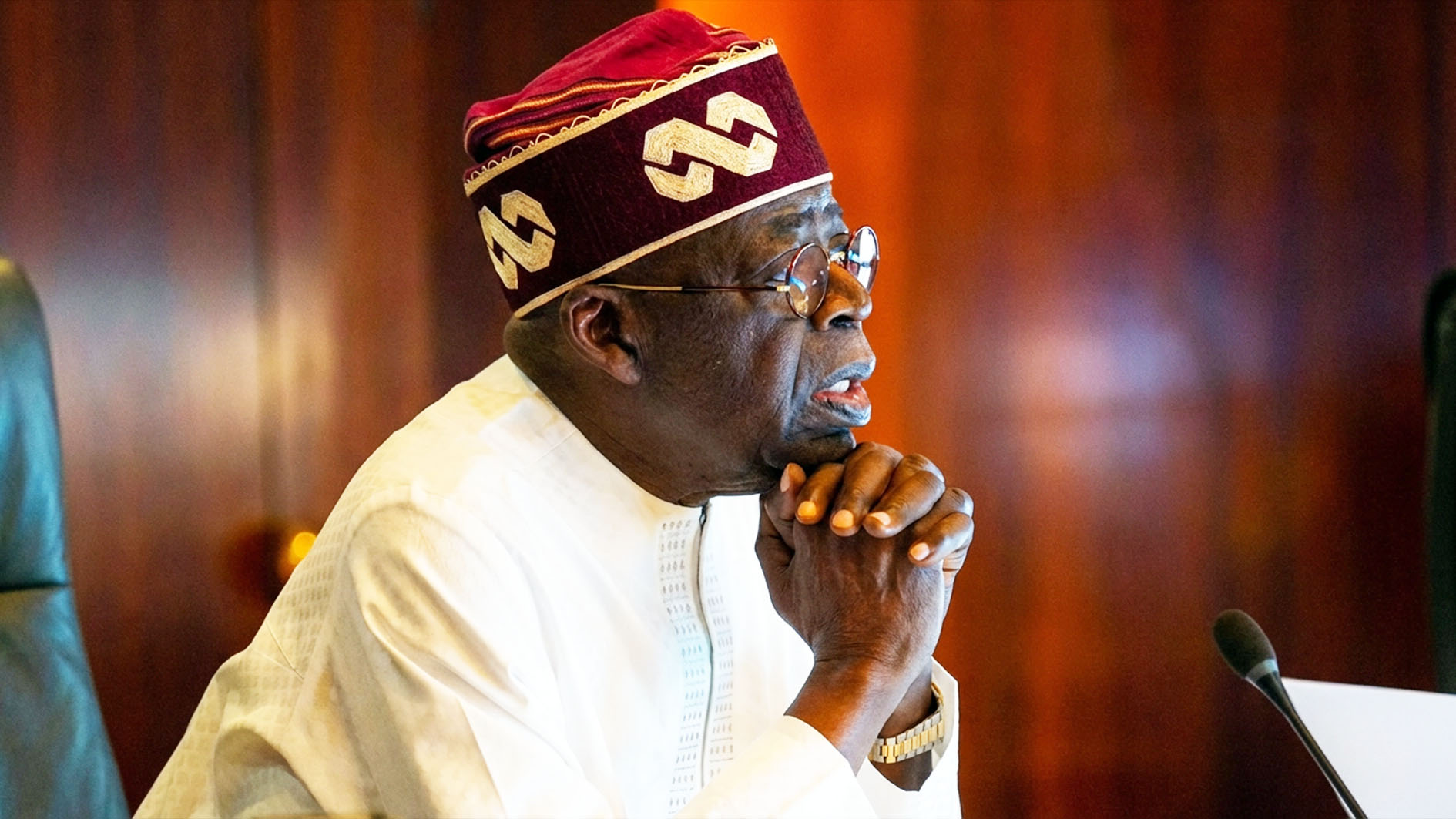
Electricity: ADC-PCC Says Tinubu Has Failed His Own Test, Challenges APC Over 2023 Promise
The African Democratic Congress Presidential Campaign Council (ADC-PCC) has accused President Bola Ahmed Tinubu of failing to fulfil his 2023 campaign promise to provide Nigerians with reliable electricity, challenging the All Progressives Congress (APC) to explain the administration’s performance in the power sector.
The opposition campaign council said the President should be held accountable for his declaration during the 2023 presidential campaign that Nigerians should not re-elect him if he failed to deliver adequate electricity.
The latest criticism followed comments by Dele Alake, spokesperson of the APC Presidential Campaign Council, who defended Tinubu’s electricity record and argued that the President’s original campaign promise had been taken out of context.
In a statement issued on Sunday, November 1, and signed by its Director of Media and Publicity, Kola Ologbondiyan, the ADC-PCC insisted that Tinubu’s commitment was clear and should not be reinterpreted to avoid accountability.
The council recalled the President’s statement: “Don’t vote for me for second term if I fail to deliver electricity.”
According to the ADC-PCC, Nigerians continue to experience persistent blackouts, repeated national grid collapses, inadequate power supply and rising electricity costs more than three years after the pledge.
The ADC-PCC argued that the administration had instead presided over higher electricity bills, continued estimated billing and unreliable power supply, leaving households and businesses struggling with the cost of running their daily activities.
It also criticised the Band A, B and C electricity tariff classifications, arguing that consumers were paying higher rates without receiving reliable electricity in return.
The council claimed that some businesses, particularly hotels and other hospitality establishments, had resorted to rationing electricity by switching off power for guests during daytime hours to reduce operating expenses.
It further questioned the effectiveness of the Presidential Metering Initiative, alleging that its implementation had fallen short of expectations while electricity distribution companies continued to issue estimated bills to customers.
READ ALSO:
- Nine Killed as Learjet Crashes Into Florida Residential Area, Erupts in Flames
- 2027 Election: Seun Okinbaloye Explains ‘Rigging’ Remark, Says Warning Was Not Against Any Party
- Christians Still Under Attack in Nigeria, US Lawmaker Tells Trump
Rejecting the APC’s reliance on legislative reforms and government financing arrangements to defend the administration, the opposition council said policies and financial interventions should be measured by their impact on electricity supply.
“An Act is not electricity. A bond prospectus does not power homes and factories. Nigerians cannot eat statutes. What Nigerians need is electricity that works, not another round of explanations and publicity,” the council stated.
The ADC-PCC maintained that Tinubu’s campaign commitment should be judged by whether Nigerians now enjoy stable and affordable electricity rather than announcements of government policies and projects.
It also challenged the APC to address the President’s original promise directly instead of attempting to explain away the commitment.
However, the APC Presidential Campaign Council rejected the suggestion that Tinubu had abandoned his electricity pledge, insisting that his 2023 statement must be considered in its full context.
In his response, Alake recalled that Tinubu had made the promise during an engagement with members of the Organised Private Sector in Lagos ahead of the 2023 general election.
According to him, the President had promised to provide electricity and end estimated billing, but also stated that Nigerians should not re-elect him if he failed to deliver unless he provided adequate reasons for the shortfall.
Alake argued that critics had deliberately omitted the concluding qualification when quoting the President’s remarks.
He maintained that Tinubu remained committed to improving electricity supply but acknowledged that resolving Nigeria’s longstanding power sector problems remained unfinished business.
The APC spokesman listed the Electricity Act 2023, the Presidential Metering Initiative, investments in transmission infrastructure and the settlement of outstanding debts in the electricity market among the administration’s interventions.
READ ALSO:
- Gunmen Abduct 100-Level Female Student, Shoot Another Person in Plateau
- Tinubu Approves SUVs for FCT Traditional Rulers, Four Buses for Youths, says Wike
- Two Europe-Bound Nigerians Excrete 200 Cocaine Wraps at Abuja Airport
He disclosed that more than 1.5 million electricity customers had been metered under the administration’s initiatives over the last three years.
Alake also cited the Federal Government’s N4 trillion bond programme designed to settle verified legacy debts owed to electricity generation and gas companies.
He said the administration had introduced reforms to improve the financial viability of electricity distribution companies while putting measures in place to protect low-income consumers.
The APC campaign council further maintained that the President would present his administration’s achievements and explain outstanding challenges to Nigerians as he seeks another term in office.
In a separate response to the APC’s defence, the ADC-PCC, through its Director of Strategic Communication, Phrank Shaibu, accused the ruling party of celebrating policy documents and financial interventions without addressing the everyday electricity challenges facing Nigerians.
Shaibu argued that paying legacy debts owed to power generation companies was not the same as investing in new infrastructure to increase electricity generation.
He also questioned the administration’s proposed plan to end electricity subsidies from 2027, asking what the policy would mean for household and business electricity bills.
The opposition campaign council cited Band A electricity tariffs of about ₦209.50 per kilowatt-hour, before VAT, as an example of the financial burden on consumers.
It called for a review of the existing electricity band system and proposed a framework that would make electricity more affordable while holding distribution companies accountable for the quality of service delivered.
The council also raised concerns about VAT on electricity and the proposed five per cent surcharge on certain fossil fuels, including petrol and diesel, under the Nigeria Tax Act.
The exchange has brought renewed attention to the performance of Nigeria’s electricity sector, which continues to face challenges involving inadequate generation capacity, transmission constraints, distribution inefficiencies, poor infrastructure and financial difficulties.
Although the Electricity Act 2023 introduced a framework allowing state governments to participate in electricity generation, transmission and distribution, consumers continue to demand improvements in the reliability and affordability of power supply.
The disagreement between the two campaign councils therefore centres on whether the reforms and financial interventions introduced by the Tinubu administration amount to sufficient progress towards fulfilling the President’s 202
Electricity: ADC-PCC Says Tinubu Has Failed His Own Test, Challenges APC Over 2023 Promise
News
2027 Election: Seun Okinbaloye Explains ‘Rigging’ Remark, Says Warning Was Not Against Any Party

2027 Election: Seun Okinbaloye Explains ‘Rigging’ Remark, Says Warning Was Not Against Any Party
Popular Channels Television journalist and broadcaster, Seun Okinbaloye, has defended his controversial warning that Nigeria’s 2027 general election was already being rigged, insisting that his remarks were not targeted at any political party, candidate or individual.
Okinbaloye made the clarification on Sunday during Channels Television’s Sunday Politics, following widespread reactions to his closing remarks on Friday’s edition of Politics Today.
The broadcaster explained that his warning was specifically about alleged irregularities in the voters’ register and the possibility of manipulating the electoral process before election day.
He said he neither mentioned any political party nor accused any presidential candidate or identified any individual as sponsoring the alleged manipulation.
“In my warning, I didn’t name any political party, accuse any candidate, and identify any sponsor. I only said 2027 election is already being rigged through fake voter register,” he said.
The clarification followed public debate over his earlier declaration that the 2027 election was already being rigged, with some Nigerians interpreting the statement as an accusation against the ruling All Progressives Congress (APC), while others believed it was directed at the Independent National Electoral Commission (INEC).
READ ALSO:
- Gunmen Abduct 100-Level Female Student, Shoot Another Person in Plateau
- Tinubu Approves SUVs for FCT Traditional Rulers, Four Buses for Youths, says Wike
- Two Europe-Bound Nigerians Excrete 200 Cocaine Wraps at Abuja Airport
Why Okinbaloye Raised the Alarm
During Friday’s Politics Today programme, Okinbaloye warned that electoral manipulation did not necessarily begin on election day, arguing that the process could be compromised much earlier through the manipulation of the voters’ register.
He urged INEC to urgently investigate suspected irregularities, including fake voter registrations, underage entries, duplicate records and other questionable information in the electoral database.
The journalist maintained that allowing an inaccurate voters’ register to remain unchecked could undermine the credibility of the 2027 general elections, regardless of the safeguards introduced on election day.
INEC’s Admission Fuels Electoral Concerns
The controversy comes against the backdrop of revelations by INEC‘s Director of Information and Communication Technology, Dr Lawrence Bayode, that some registration officials allegedly used their official login credentials to introduce questionable records into the commission’s preliminary voters’ register.
Bayode reportedly disclosed during an interview on Arise Television that the commission discovered suspicious entries, including photographs suspected to have been generated using artificial intelligence (AI).
He explained that the irregularities were detected through INEC’s Automated Biometric Identification System (ABIS), adding that some questionable records were also linked to poor registration procedures.
INEC had acknowledged that the preliminary voters’ register was undergoing verification and that the public display, claims and objections exercise was intended to enable Nigerians to identify and report inaccuracies.
The commission is expected to complete its verification and data-cleaning exercise before certifying the final Register of Voters.
Okinbaloye Calls for Urgent Action
Okinbaloye insisted that Nigerians should be more concerned about addressing the alleged irregularities than engaging in arguments over his choice of words.
He stressed that electoral credibility must be protected long before voting begins, warning that weaknesses in the registration process could create opportunities for electoral malpractice.
He also called for a comprehensive investigation into the suspicious entries, an independent audit of the voters’ register and accountability for anyone found to have deliberately manipulated the registration process.
According to him, the responsibility of protecting the integrity of the 2027 elections rests not only on INEC but also on political parties, security agencies and Nigerians generally.
He maintained that his warning was not intended to favour or attack any political interest but to draw attention to potential threats to the country’s electoral process.
The development has renewed conversations about the credibility of INEC’s voters’ register and the need for transparency ahead of the 2027 general elections.
2027 Election: Seun Okinbaloye Explains ‘Rigging’ Remark, Says Warning Was Not Against Any Party
-
 metro2 days ago
Ogun Murder: Suspect Reveals How He Strangled, Macheted Retired Civil Servant Over N3.45m
-
 metro2 days ago
₦50,000 Monthly Relief: FG Begins Cash Payments to Vulnerable Nigerians
-

 International2 days ago
Romance Scam: FBI Declares Nigerian Woman Wanted, Offers ₦6.7m Reward
-

 metro2 days ago
N100,000 Deposit: FG Opens Homeownership Window for Teachers, Nurses, Police Officers
-
 Politics2 days ago
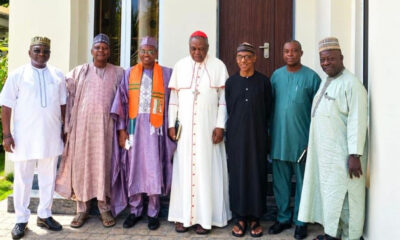
2027: G100 Coalition Moves to Unite Opposition as Leaders Meet Cardinal Onaiyekan
-
 Politics2 days ago
2027: INEC Rejects Adebutu, Gwarzo, Clears Pantami as Ogun, Kano Opposition Parties Face Setback
-
 metro2 days ago
Ghanaian Teen Chased, Shot Dead on Way to School in New York
-
 News2 days ago
Breaking: Two Fresh Ebola Cases Emerge in North-East, says NCDC, begins test