Business
Stop hidden charges, exploitative marketing Gbajabiamila tells banks
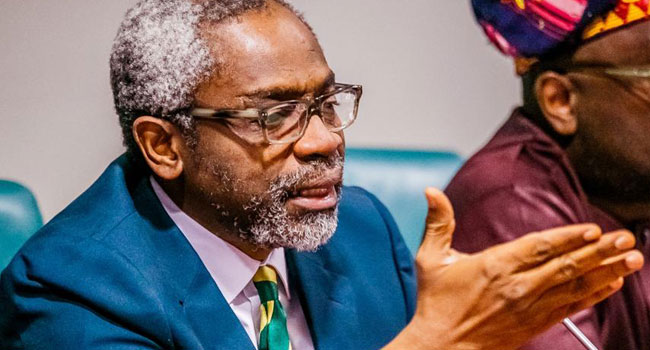
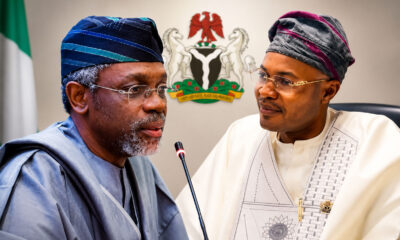
The Speaker of the House of Representatives, Femi Gbajabiamila, has expressed concern over Deposit Money Banks’ indiscriminate levying account holders.
He said that apart from known charges, there appeared to be other ‘hidden’ charges that banks imposed on their customers.
Gbajabiamila, who noted that the House was concerned that such a practice was making customers helpless, called on Nigerian banks to come up with ways to address high charges on loans and other facilities they offered.
The Speaker said this when the board and management of Standard Chartered Bank, led by the Chief Executive Officer, Mr Lamin Manjang, visited him, according to a statement issued on Monday by his Special Adviser on Media and Publicity, Lanre Lasisi.
The statement was titled ‘Gbajabiamila voices concern over banks’ ‘hidden’ charges, exploitative marketing in Nigeria’.
The speaker said, “We have issues that come up in your industry, so this visit is a welcome development. One of the issues at stake is the rate at which banks charge customers. There are claims that banks have hidden charges. This has come up a couple of times on the floor of the House. This is something that we should look into.”
He also expressed concern over the kind of ‘exploitative marketing’ some bank marketers were subjected to, asking if that was the practice all over the world.
Gbajabiamila asked, “You have corporations in the UK and other parts of the world. What obtains here in banking, in terms of marketing – sending people to go and knock at people’s offices and all that; does it obtain in those places? If it doesn’t obtain in those countries, it is not international best practice; why should it obtain here?”
The speaker recalled how he came up with a bill against corporate prostitution some years back but the legislation did not sail through.
He said, “We are here to support you. Whatever we need to do, we should do it to support you. We need to know the kind of marketing that takes place. Is it digital marketing?
“We also have to set realistic targets for the marketers. We have the responsibility to protect Nigerians, and we also have the responsibility not to kill your business. So, it is a delicate situation.”
The CEO of Standard Chartered Bank had earlier told the speaker that his bank was one of the oldest banks in Nigeria and that it had a strong presence in Asia, the Middle East and Africa.
Manjang, a Gambian, said having taken the position of CEO of the bank two years ago, it became necessary to visit the speaker to reiterate the bank’s commitment to Nigeria.
Responding to the issue of exploitative marketing, the CEO stated it was standard for banks to market their products to customers but added that it had to be ethical.
Manjang said, “It is not peculiar to Nigeria, but it has to be ethical. Teams usually go round, but the ethical conduct has to be there.
“You need to have marketing for people to know what you offer. If there are any abuses or conducts that are not ideal, they should be called out and addressed.”
Business
Shell workers shut Lagos office, allege pay discrimination
Workers of Shell Nigeria Exploration and Production Company Limited (SNEPCo) on Tuesday staged a protest at the company’s Broad Street office in Lagos, locking the main gate and temporarily restricting access to the premises.
The action, coordinated by the Petroleum and Natural Gas Senior Staff Association of Nigeria (PENGASSAN), caused traffic congestion in the area as protesting workers blocked vehicular entry into the building.
Eyewitnesses said although some staff members were initially allowed into the premises with their vehicles, protesters later reversed the decision and barred all cars — including those of top company officials — from gaining access.
In a flyer circulated during the protest, the workers accused SNEPCo’s leadership of practising “modern-day slavery,” alleging pay discrimination against Nigerian employees and bias in salary benchmarking.
They faulted the application of the company’s global pay structure in Nigeria without reflecting local economic realities, describing it as a “Best-in-Basin” cost-cutting model that has adversely affected staff welfare and operational engagement.
According to the workers, the cost-control policy has limited the company’s participation in key industry events.
They cited the 2026 Nigeria International Energy Summit in Abuja, where SNEPCo reportedly attended with a five-man delegation instead of participating as a sponsor — a role that typically accommodates about 40 delegates. Organisers were said to have been informed of the change barely a week to the event.
Other industry players, including Nigeria LNG Limited, TotalEnergies Nigeria and Chevron Nigeria Limited, were said to have participated fully.
The protesting staff also decried what they described as non-market-reflective allowances, citing car grants as an example. One worker claimed the N1 million car allowance offered by the company was grossly inadequate given current market prices.
The employees further alleged deteriorating working conditions, heavy workloads and what they described as a growing reliance on expatriates for roles traditionally handled by Nigerians.
They warned that mounting stress, debt burdens and frequent restructuring had negatively impacted staff morale.
A staff member said the decision to barricade the office followed what they described as management’s failure to address longstanding grievances.
They called on the Federal Government to intervene, alleging that the company’s leadership felt insulated from accountability.
The workers also claimed that hybrid work arrangements and internal controls had made it difficult to mobilise staff effectively or draw public attention to their concerns.
SNEPCo, a subsidiary of Shell with operations now largely concentrated in Lagos following its recent divestment activities, remains active in the energy financing space through affiliates such as All On and Daystar Power.
The company has yet to react to the development.
Railway
Historic, Rotary Club of Ota holds fellowship on moving NRC train
The Rotary Club of Ota has set a national precedent by hosting Nigeria’s first-ever Rotary fellowship aboard a moving train, marking a unique blend of innovation, service and strategic partnership with the Nigerian Railway Corporation (NRC).
The historic fellowship, held on February 28, 2026, brought together members of the club for leadership interaction, networking and discussions focused on humanitarian service, climate action and sustainable community development — all while in transit.
Leading the event was the President of the Rotary Club of Ota, Mr. Charles Umukoro, alongside members of the club’s executive and general membership.
Key officers present are Vice President Bisi Seleso, Pioneer President Olumide Adebiyi, Treasurer Olumide Omotola, President-Elect Fatai Wasi, and the club’s doyen and the oldest serving member, Dr. Kele Abolaji.
The unconventional setting underscored Rotary’s drive to reimagine fellowship and civic engagement.
Participants described the moving-train gathering as symbolic of progress and forward momentum — values closely aligned with the transformation agenda of the NRC.
A major highlight of the occasion was the visit of the Railway District Manager, Engr. Rasheed Adedeji, who welcomed the Rotarians on board.
His presence added institutional weight to the event and reinforced the growing collaboration between the railway management and the civic organisation.
In a symbolic gesture reflecting shared values of service and partnership, Engr. Adedeji was formally inducted as a member of the Rotary Club of Ota following his welcome address.
The induction was widely seen as a step toward deepening institutional cooperation between the club and the railway corporation.
Beyond its novelty, the fellowship also carried a strong environmental message. As part of its climate action agenda, the Rotary Club of Ota commenced a large-scale tree-planting exercise on the same day, aimed at contributing to climate change mitigation and environmental protection within its host communities.
Club leaders said the initiative aligns with Rotary International’s growing emphasis on environmental sustainability as a core area of focus.
By combining an innovative fellowship format with tangible environmental action, the club sought to demonstrate that civic organisations can creatively advance impact-driven programmes.
The Nigerian Railway Corporation, which hosted the event, reaffirmed its commitment to supporting initiatives that promote national development, environmental sustainability and community advancement.
The corporation also highlighted the railway system as a safe, modern and strategic platform for engagement and national integration.
The development was contained in a statement signed by Callistus Unyimadu, Chief Public Relations Officer, for the Management of the Nigerian Railway Corporation.
With the landmark moving-train fellowship and the launch of its environmental intervention, the Rotary Club of Ota has positioned itself as a trailblazer within Nigeria’s civic space — proving that service to humanity can, quite literally, remain on the move.
Business
Nigeria Fuel Prices May Rise as Middle East Crisis Deepens
Growing Middle East tensions triggered by ongoing military actions involving the United States and Israel against Iran may soon lead to higher fuel prices in Nigeria, following a surge in global crude oil prices to $72.87 per barrel.
The escalation followed a coordinated strike across multiple locations in Iran, including Tehran, significantly heightening geopolitical instability and fuelling fears of supply disruptions in global oil markets.
For Nigeria—where crude oil accounts for over 85 percent of export earnings and nearly half of government revenue—the implications are far-reaching. While higher oil prices could boost government income, analysts warn that Nigerians may soon face increased petrol (PMS) prices, especially in the current post-subsidy era.
Energy experts say the oil price surge presents a mixed outlook. Oil and gas analyst Ayodele Oni explained that while Nigeria could benefit from increased foreign exchange inflows, higher crude prices typically lead to higher landing costs for petrol, which are eventually passed on to consumers.
Similarly, energy expert Kelvin Emmanuel noted that Nigeria’s 2026 budget benchmark of $64.85 per barrel means the government stands to earn more revenue from rising oil prices. However, he warned that refineries will be forced to adjust fuel prices in line with market realities.
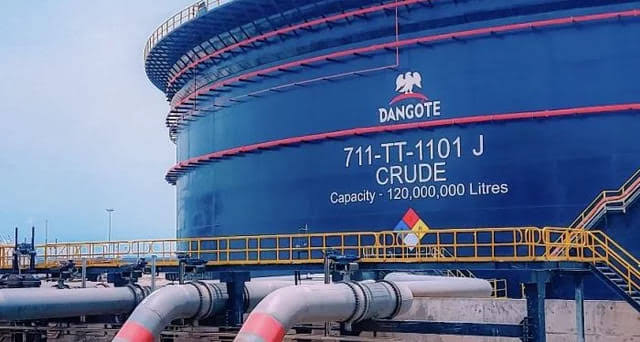
This includes domestic refiners such as the Dangote Refinery, which operates in a deregulated downstream environment where petrol prices are tied to crude oil costs, exchange rates, and operational expenses.
READ ALSO:
- ICPC Says It Found Wiretapping Devices in El-Rufai’s Abuja Residence
- Lagos Announces Traffic Diversions for Ogunnusi Road Reconstruction in Ikeja
- Global Crude Hits $73 as Middle East Tensions Escalate
Economic analyst Dr. Muda Yusuf, Chief Executive Officer of the Centre for the Promotion of Private Enterprise (CPPE), said geopolitical conflicts in the Middle East often trigger oil price spikes due to fears of supply disruptions—particularly around key shipping routes such as the Strait of Hormuz.
According to Yusuf, Nigeria could benefit from:
- Higher crude export earnings
- Improved foreign exchange inflows
- Stronger external reserves
- Increased FAAC allocations
However, he cautioned that Nigeria’s current oil production level of about 1.4–1.6 million barrels per day remains below capacity and is constrained by oil theft, pipeline vandalism, underinvestment, and infrastructure challenges. Without resolving these issues, the country may fail to fully capitalise on higher oil prices.
Yusuf also warned of inflationary pressures, noting that rising fuel costs could increase transport fares, food prices, manufacturing costs, and logistics expenses, worsening the cost-of-living crisis for Nigerian households.
Offering a more cautious outlook, energy economist Professor Wumi Iledare said the current oil rally may be temporary, explaining that modern oil markets operate on real-time data and rational expectations. He noted that unless the Middle East crisis leads to a sustained disruption in oil supply, prices may stabilise.
Energy law expert Professor Dayo Ayoade echoed this view, stating that many countries maintain strategic crude oil reserves, which could limit extreme price spikes. He added that even if prices approach $80 per barrel, Nigeria must remain cautious due to its debt obligations and oil-backed loans.
Ademola Henry Adigun, Chief Executive Officer of AHA Consultancies, said the crisis could further destabilise global energy markets, simultaneously boosting government revenue while raising petroleum product prices domestically.
Analysts stressed that to maximise potential benefits and minimise economic pain, Nigeria must:
- Strengthen anti-oil theft and pipeline protection measures
- Boost upstream oil production and investment
- Expand domestic refining capacity
- Save excess oil revenue during price surges
- Protect vulnerable households from inflation shocks
- Accelerate economic diversification beyond oil
Ultimately, experts describe the deepening Middle East crisis as a double-edged sword for Nigeria—offering short-term fiscal gains while posing serious risks of fuel price hikes, inflation, and economic hardship if not carefully managed.
Nigeria Fuel Prices May Rise as Middle East Crisis Deepens
-
International3 days agoAyatollah Ali Khamenei, Iran’s Supreme Leader, Dies After U.S.–Israeli Strikes
-
International3 days agoIran: US, Israel launch another strikes, Commander, Defence leader, five other top officials killed
-
International3 days agoKamala Harris Slams Trump for Dragging U.S. Into ‘Unwanted War’ in Iran Conflict
-
metro2 days agoHajj, Umrah Are for Muslims Only – Scholar Urges NAHCON to Tighten Screening
-
International1 day agoIran Retaliates: Gulf States Allied With US Hit by Missiles, Drones
-
International2 days agoSaudi Arabia Denies Lobbying US to Strike Iran as Gulf States Respond to Escalation
-
International3 days agoBREAKING: Iran Forms Three-Member Leadership Council to Steer Country After Khamenei’s Death
-
International1 day agoSeveral U.S. Warplanes Crash in Kuwait Amid Ongoing Iranian Strikes