

Business
Dangote Refinery announces petrol price for ships, trucks
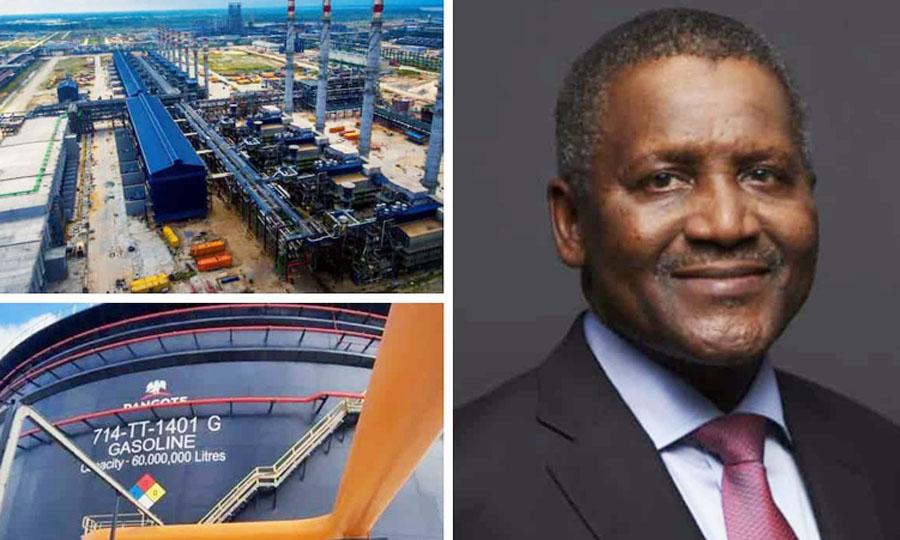
Dangote Refinery announces petrol price for ships, trucks
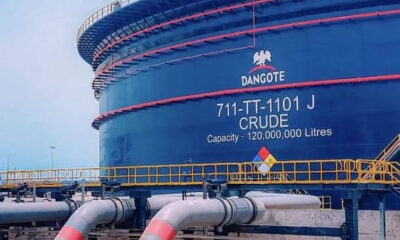
The Dangote Refinery has officially disclosed its petrol pricing, setting the rate at N960 per litre for ship deliveries and N990 per litre for truck deliveries.
Anthony Chiejina, spokesperson for the refinery, confirmed the pricing on Sunday, following recent tensions between Dangote and fuel marketers. The marketers alleged that imported petrol was being offered at a lower price compared to the refinery’s production.
In response, Chiejina explained that the 650,000 barrel-per-day (bpd) refinery’s pricing structure reflects adjustments following the deregulation introduced by the Nigerian National Petroleum Corporation (NNPC).
He pointed out that while the NNPC set its ship-based sales price at N971 and truck-based sales price at N990, Dangote Refinery chose to set its ship sales at N960 per litre while maintaining N990 per litre for truck distribution.
“We had lately refrained from engaging in media fights, but we are constrained to respond to the recent misinformation being circulated by IPMAN, PETROAN, and other associations,” Chiejina said. “Both organisations claim that they can import PMS at lower prices than what is being sold by the Dangote Refinery. We benchmark our prices against international prices, and we believe our prices are competitive relative to the price of imports.
“Post deregulation, NNPC set the pace by selling PMS to domestic marketers at N971 per litre for sale into ships and at N990 for sale into trucks. This set the benchmark for our pricing, and we have even gone lower to sell at N960 per litre for sale into ships while maintaining N990 per litre for sale into trucks.
“In good faith, and in the interest of the country, we commenced sales at these prices without clarity on the exchange rate that we will use to pay for the crude purchased,” the statement read.
READ ALSO:
- Lookman scores twice as Atalanta stun Napoli 3-0
- Drink water while standing, you risk arthritis, kidney strain, others
- NDLEA intercepts N4.4bn cocaine inside aircraft at Lagos airport
The refinery further emphasized that its pricing aligns with international standards, and suggested that cheaper imported petrol may be substandard.
Chiejina highlighted that Nigeria’s regulatory body, the Nigerian Midstream and Downstream Petroleum Regulatory Authority (NMDPRA), lacks the laboratory facilities necessary to thoroughly assess the quality of imported petrol.
He also criticized sellers of lower-quality fuel, stating they show disregard for consumers’ vehicles and machinery and fail to prioritize public welfare.
“If anyone claims they can land PMS at a price cheaper than what we are selling, then they are importing substandard products and conniving with international traders to dump low-quality products into the country, without concern for the health of Nigerians or the longevity of their vehicles.
“Unfortunately, the regulator (NMDPRA) does not even have laboratory facilities that can be used to detect substandard products when imported into the country.
“We should point out that it is not unusual for countries to protect their domestic industries in order to provide jobs and grow the economy. For example, the US and Europe have had to impose high tariffs on EVs and microchips in order to protect their domestic industries,” Chiejina added.
Dangote Refinery announces petrol price for ships, trucks






Auto
Replace Fuel Subsidy With Vehicle Credit to Drive Mobility, Jobs,LCCI, Ilekuba tell FG
Replace Fuel Subsidy With Vehicle Credit to Drive Mobility, Jobs,LCCI, Ilekuba tell FG
Nigeria’s automotive stakeholders have called for an urgent shift from fuel subsidy to affordable vehicle financing, saying the new model could make vehicle ownership accessible to more Nigerians while driving local production, creating jobs and reducing dependence on imported automobiles.
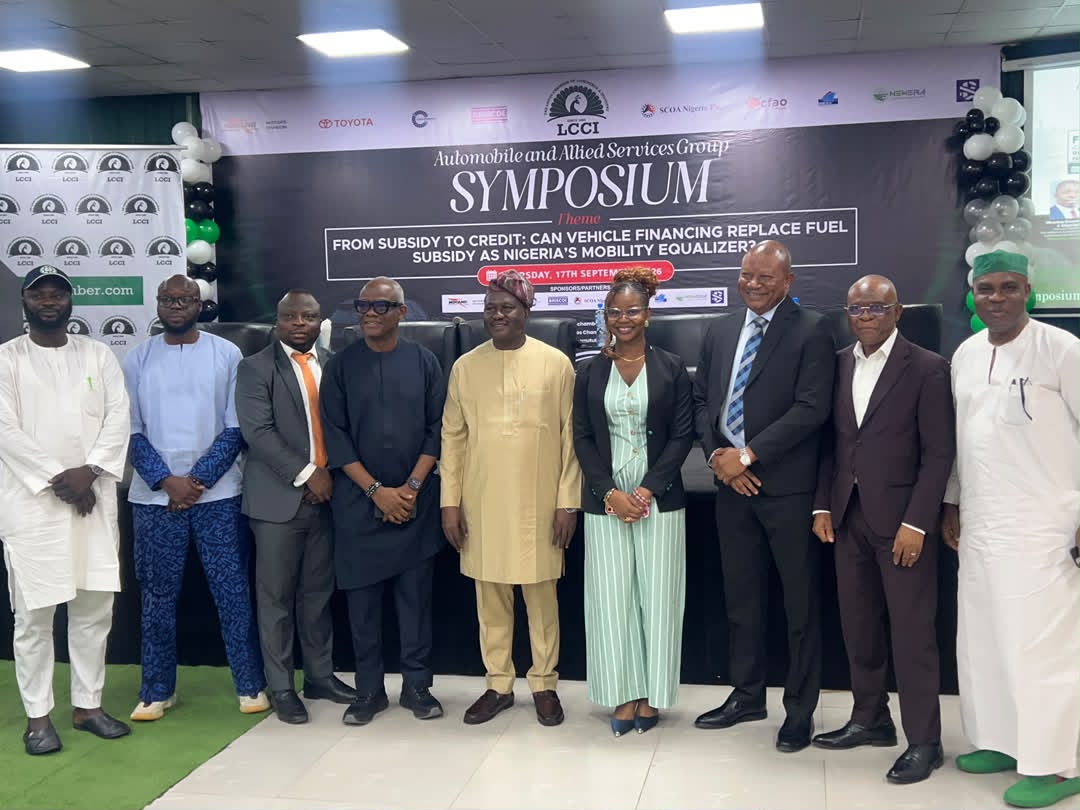
The call was made on Thursday at the LCCI/National Automotive Design and Development Council Automobile Symposium, themed, “From Subsidy to Credit: Can Vehicle Financing Replace Fuel Subsidy as Nigeria’s Mobility Equalizer?”
Chairman of the LCCI Auto and Allied Sector Group, Dr Femi Eguaikhide, said affordable vehicle credit could restore access to mobility, improve productivity and create a stronger market for Nigeria’s automotive industry.
He said fuel subsidy had for decades effectively functioned as Nigeria’s mobility policy by helping to keep transportation relatively affordable for millions of Nigerians, including commercial drivers, teachers and small-business operators.
However, following its removal in May 2023, Eguaikhide said mobility costs had risen sharply, resulting in higher transport fares and increased prices of goods and services, with knock-on effects on productivity.
“Subsidy made fuel cheap, but cars remained expensive. So only the rich owned productive assets,” he said, arguing that vehicle credit could enable more Nigerians to acquire income-generating vehicles and repay loans from the proceeds.
Eguaikhide called for affordable, preferably single-digit interest rates and longer-tenor lease-to-own schemes for commercial operators using buses, tricycles and motorcycles.
“Can we create a ₦50,000/month plan for a keke driver?” he asked, urging financial institutions to develop financing products around borrowers’ earning capacity rather than conventional lending models.
He also advocated the use of vehicle telematics, tracking systems and cash-flow data to develop “mobility credit scores” that could help lenders assess the repayment capacity of commercial transport operators.
But Eguaikhide warned that vehicle financing must not become a fresh channel for importing used vehicles.
“If we use credit to import more Tokunbo, we’ve solved nothing,” he said, advocating financing for CNG conversions, locally assembled electric and hybrid vehicles, as well as mass-transit buses.
He summed up the proposed policy shift: “Subsidy gave us consumption. Credit can give us production.”
In a special address, Chairman and Chief Executive Officer of Cedric Masters Group, Chief (Sir) Anselm Ilekuba, also canvassed a fundamental shift towards vehicle financing, stressing that such a policy must simultaneously promote Nigeria’s automotive industrialisation.
Ilekuba, who was represented at the event by his Chief Finance Officer and Head of Accounts and Strategy, Christabel Mmesoma Ilekuba, decried the impact of high financing costs, short repayment periods and pressure on household incomes on vehicle ownership, despite strong demand for automobiles.
He urged the Federal Government to seriously consider the proposed National Automotive Bank being championed by NADDC, describing it as a specialised financing institution that could support consumers, vehicle assemblers and component manufacturers.
Ilekuba proposed longer-tenor financing for qualifying locally assembled vehicles, alongside industrial credit for manufacturers and funding for machinery, technology, certification and capacity expansion by component producers.
He also called for stronger localisation of automotive components, citing the proposed National Automotive Components Parts Gateway being developed by ALCMAN with Chinese partners.
According to him, the Automotive Bank and Components Gateway could create a cycle in which increased vehicle purchases stimulate local assembly, boost demand for locally produced components, expand factories and generate jobs, while reducing Nigeria’s exposure to foreign-exchange pressures.
Ilekuba said the success of vehicle financing should therefore not be measured merely by the number of loans disbursed, but also by growth in local vehicle assembly, component production, factory expansion, employment and foreign exchange conserved or earned.
“The old subsidy helped Nigerians consume mobility. The new approach should help Nigerians own mobility—and help Nigeria produce it,” he said.
Auto
Jetour Set to Storm Abuja Show with Rugged Luxury T2

Jetour Set to Storm Abuja Show with Rugged Luxury T2
Abuja is set for a taste of rugged luxury as Jetour Nigeria puts its adventure-ready T2 SUV in the spotlight at the Jetour Experience Abuja from September 22 to 24, 2026, giving motorists in the Federal Capital Territory and neighbouring states an opportunity to test its blend of off-road capability, premium comfort and advanced technology.
The three-day showcase at Maha Event Centre, Area 8, Garki, will feature test drives, live demonstrations and direct interaction with Jetour product specialists, offering prospective buyers a closer look at the T2 and other models in the automaker’s growing Nigerian line-up.
Positioned as a premium SUV combining off-road capability with comfort and advanced technology, the Jetour T2 is designed for motorists seeking a vehicle capable of handling both city driving and challenging terrain.
Jetour Nigeria is distributing the T2 and other models via its seven accredited dealers — Elizade Nigeria Limited, New Era AutoVehicle Services Limited, Germaine Auto Centre, Kojo Motors, Mandilas Autos, R.T. Briscoe Motors and Tab Autos Limited.
The T 2 SUV is powered by a 2.0-litre turbocharged engine producing 254 horsepower and 390 Nm of torque. The engine is paired with a seven-speed dual-clutch transmission and BorgWarner sixth-generation intelligent four-wheel-drive system.
It also features five driving modes — Eco, Sport, Mud, Rock and X Smart — designed to provide improved adaptability across different road and terrain conditions.
Measuring 4,758mm in length, 2,006mm in width and 1,880mm in height, the SUV offers 220mm ground clearance and a 70-litre fuel tank, giving it the capability for extended journeys and off-road adventures.
Inside the cabin, the T2 combines rugged styling with modern comfort, featuring ergonomic seating and a 15.6-inch touchscreen infotainment system with Apple CarPlay, Android Auto and intelligent voice control.
Its safety and driver-assistance features include a 360-degree panoramic camera, rear parking sensors, Lane Departure Warning, Blind Spot Detection, Anti-lock Braking System and Emergency Brake Assist.
The SUV also comes with off-road crawl control as well as push-button and remote-start functions.
The Abuja experience follows Jetour Nigeria’s recent showcase in Lagos as the automaker continues to expand its presence and customer reach across the country.
With its combination of performance, technology, safety and luxury, the Jetour T2 is expected to attract motorists seeking an SUV capable of combining everyday urban mobility with adventure and off-road driving.
Business
NCAA Moves Against Airlines Over Rising Flight Delays

NCAA Moves Against Airlines Over Rising Flight Delays
Thousands of Nigerian air passengers faced delays in August as domestic airlines struggled to keep to their scheduled flight times.
Now, the Nigerian Civil Aviation Authority (NCAA) says it is taking regulatory steps that could lead to sanctions against airlines responsible for persistent delays.
The regulator’s August data showed that 4,765 of 7,961 scheduled domestic flights were delayed. In other words, nearly 60 per cent of the flights did not leave as scheduled.
Air Peace and United Nigeria Airlines recorded some of the highest delay rates, with 71 per cent and 76 per cent of their flights respectively affected.
NCAA Warns Airlines
NCAA Director of Public Affairs and Consumer Protection, Michael Achimugu, said that the regulator had already engaged some of the airlines involved.
According to him, the NCAA met with Air Peace, United Nigeria Airlines and Max Air and issued stern warnings over their operations.
The authority is now weighing further regulatory measures as the problem continues to affect passengers.
Achimugu also urged travellers to consider other airlines when repeated delays make a particular carrier unreliable.
“When one airline is continuously misbehaving, buy tickets on another airline and make your flight” he said.
READ ALSO:
- 2027: Sowore Rejects Utomi’s Coalition Talks, Says AAC Won’t Join Opposition Alliance
- Sani Abacha’s Son Emerges Kano PDP Governorship Candidate for 2027
- He Does Not Lose Elections”: Abdulmumin Jibrin Predicts 65% Landslide for Tinubu in 2027
Passenger Rights Put Enforcement Under Spotlight
However, aviation consultant Capt. John Ojikutu believes the recurring problem exposes a wider weakness in the sector.
Ojikutu said Nigeria has regulations intended to protect air travellers, but questioned how consistently those rules are enforced.
“The regulation is there to protect the customer. What is the enforcement?” he said.
He noted that passengers can report violations to the appropriate authorities. But, in his view, regulators must follow up on those complaints with meaningful action.
The aviation expert also recalled experiencing severe delays himself.
He said he once travelled to Abuja and passengers had to board an aircraft three times before another plane was brought in to complete the journey.
The disruption, he said, left him returning to Lagos considerably later than expected.
Are Airlines Planning Their Routes Properly?
Ojikutu also linked the industry’s problems to the way some airlines plan their operations.
He questioned the number of carriers competing on the Lagos-Abuja route, particularly when several airlines operate multiple flights each day.
His argument is that airlines should first establish the level of passenger demand before selecting routes, aircraft sizes and flight frequencies.
According to him, deploying aircraft capable of carrying more than 100 passengers without sufficient demand can put additional financial pressure on an airline.
He therefore advised carriers to consider routes with enough passengers but less competition.
Smaller Aircraft Could Serve Regional Routes
Ojikutu said the industry could also learn from the operational model used by the former Nigerian Airways.
He recalled that the airline used larger aircraft on major routes while smaller planes connected regional destinations to major airports.
He suggested that modern carriers could adopt a similar approach by connecting cities such as Sokoto, Kaduna, Jos and Minna to larger aviation hubs.
Rather than having every airline compete directly on major routes, he said carriers could develop regional networks that feed passengers into bigger airports.
He also called for more airlines to establish bases outside Lagos.
According to him, encouraging operations in other parts of the country could reduce the heavy concentration of airlines in Lagos and create stronger regional connections.
Concern Over Airline Survival
Ojikutu further questioned the short lifespan of many Nigerian airlines.
He attributed part of the problem to weak business planning and argued that airlines should present credible, sustainable plans before receiving regulatory approval to operate.
The latest development therefore puts both airlines and the aviation regulator under scrutiny, as passengers continue to deal with delays despite existing rules designed to protect them.
NCAA Moves Against Airlines Over Rising Flight Delays
-

 International2 days ago
Islamic Council Condemns Attempted Attack on Holy City of Mecca
-

 News2 days ago
Keep Politics Out of My Office — Ogbomoso Grand Chief Imam Warns Politicians, Bloggers
-

 metro3 days ago
Lagos Power Outage: Ikeja Electric Blames TCN as Businesses, Homes Groan
-

 metro2 days ago
Niger Mosque Abductions: Terrorists Execute 30 of 500 Captive Muslim Worshippers
-

 Entertainment2 days ago
BREAKING: Olu Jacobs Dies at 84, Atiku Mourns Cultural Icon
-

 International3 days ago
US Court Blocks Trump Visa Rule Limiting Stay of Foreign Students, Journalists
-
 metro3 days ago
Fatal NURTW Leadership Clash in Osun Leaves Two Dead; State Orders Park Shut Down
-
 Business1 day ago
Fuel Prices Climb to ₦1,500 per Litre Across Nigeria, Sparking Calls for Urgent Action