

metro
Osun man on death row for fowl theft shares how police subjected 17-year-old self to torture

Osun man on death row for fowl theft shares how police subjected 17-year-old self to torture
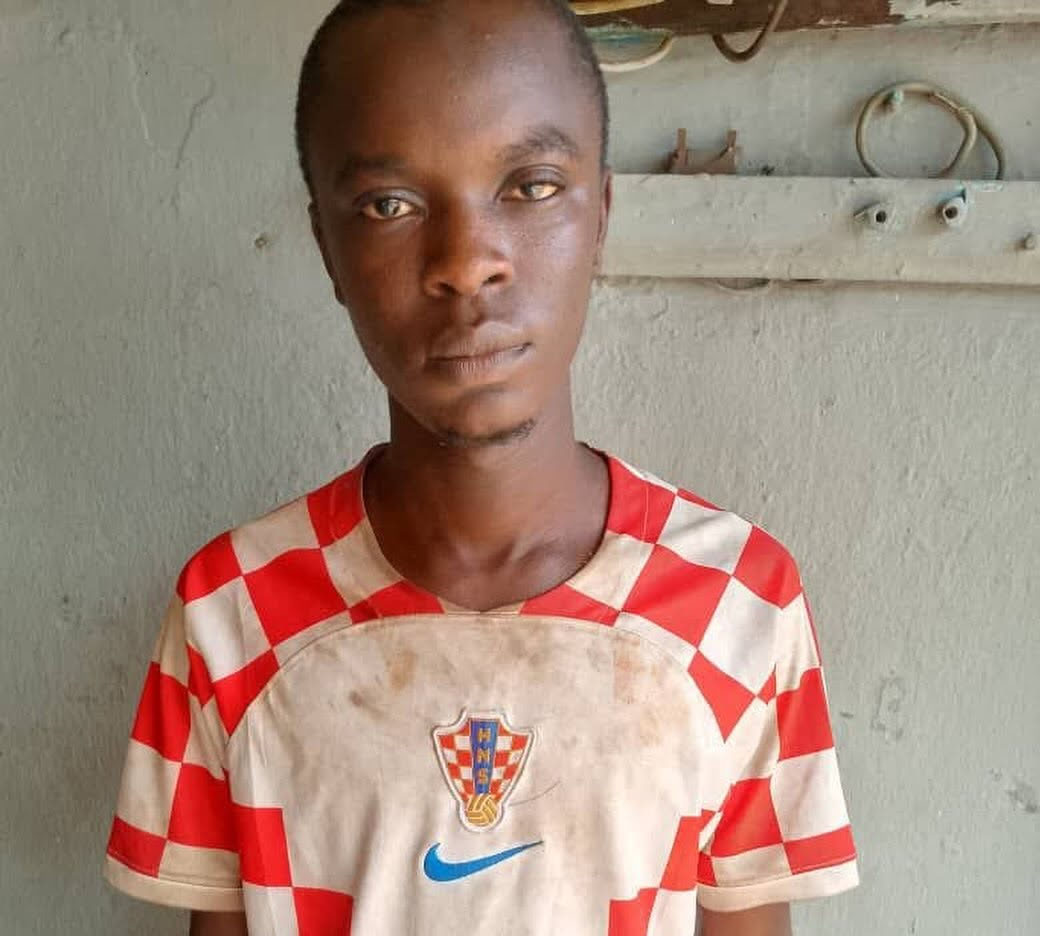
Segun Olowookere, a man who was sentenced to death for stealing fowls in Osun State when he was 17, has recounted how the police tortured and gave him a cutlass used as an exhibit against him as a minor in court.
FIJ had earlier reported that Governor Ademola Adeleke planned to pardon Olowookere after news of how Justice Sakariya Oyejide Falola sentenced Olowookere and Morakinyo Sunday to death in 2014 broke out.
Olowookere was charged in court with conspiracy, armed robbery and stealing. It was on these grounds that Falola delivered his judgment.
Olowookere and Sunday spent some days at a police station in Okuku before their arraignment and conviction. Olowookere said that the police gave them one cutlass each while at the station for weeding the premises.
However, the two of them were later transferred to Osogbo, the state capital, with the cutlasses. These cutlasses were later presented before the judge as exhibits of an armed robbery offence, Olowookere told The Punch in an interview on Sunday.
HOW HE WAS ARRESTED
Now in a custodial centre working with a medical team, Olowookere said he gave himself up for the arrest in November 2010.
“I was at my father’s shop in Oyan after returning from school. My dad and I were discussing my university admission and suddenly, we heard gunshots, and everybody ran away except my dad and a few others,” he narrated.
“My father was taken to a police van where there were some children. I was peeping out and could hear and see what was going on. The police asked my dad where I was and he asked them what my offence was. When they couldn’t give him a satisfactory response, my father shouted at the top of his voice that I should run away because the police wanted to arrest me.
READ ALSO:
- Why we displayed ‘Jesus Christ is not God’ banner at Lekki mosque -Imam
- Lagos-Calabar coastal road: Train track work begins 2025, says minister
- Three days to Christmas, food prices, transport fares hit the roof
“But I was wondering what my offence was. So, I came out and went to meet them. I was detained at the police post in Oyan and was taken to Okuku Divisional Police Headquarters the following day. I met the children who were in the police van when they came for me sitting on the ground and eating rice.”
THEY WERE GIVEN CUTLASSES
Olowookere recalled that the divisional police officer (DPO) heading the station at the time accused him of being a leader of an armed robbery gang consisting of teenage children.
Some days after his arrest, his parents were still making efforts to secure his bail. While this was ongoing, the police engaged them in labour, giving them a cutlass each to cut the grasses at the station.
“The DPO told me that one of the children confessed to stealing two broilers and some crates of eggs. I met the broilers and the eggs at the station,” he said.
“The children were eight in number. He told me the children said I was their gang leader, which I denied. The children he was talking about were around 12 and 13 years old, while I was 17 then. I told him I knew the children but I didn’t have anything to do with them other than greeting them in the community.
“I met Sunday Morakinyo at the station, and he told the police that he didn’t know me nor had anything to do with me. I don’t even know where he was arrested. All the children were released but Morakinyo and I were not.
“We were seriously tortured from the first day I got to the Okuku Police Station under the supervision of the DPO. The children who allegedly committed the crime were not beaten. He repeatedly asked me to admit and confess to a crime I didn’t commit.
READ ALSO:
- Three Ogun varsity students die auto crash
- Dangote, MRS agree to sell petrol at N935/litre nationwide
- How another Nigerian allegedly murdered by four South Africans
“After some days, we were given cutlasses to cut the grass at the police station premises despite having injuries on every part of our body as a result of the torture.”
BAIL SUM BEYOND HIS PARENTS
Olowookere’s father was asked to produce N30,000 for his bail, but his father could only raise N20,000, and the police would not cut down this financial bail demand.
His father then left the station, perhaps to gather the shortfall of N10,000. Before his father could return, the police had ferried them to Osogbo.
“My father could only raise N20,000 out of the N30,000 they demanded. The police rejected it and insisted on the N30,000,” Olowookere said.
“My dad left the station to look for the money. But before he returned the following day, we had been moved to the SARS office in Osogbo. The cutlasses that were given to me and Morakinyo to cut the grass were presented to SARS as exhibits and they were told we were armed robbers.
“After 17 days in the SARS cell, we were taken to a magistrate court and charged with robbery, and from there to the High Court, where we were sentenced to death.”
The poultry farm from which they were alleged to have stolen fowls belonged to one of his uncles.
Despite initially promising not to pursue the case against him, the uncle went on to testify in court against him.
“We are from the same Ajerotutu Compound in Oyan. He was summoned to a family meeting where he said I was not among those who stole the fowls, but my name was mentioned by the children who were arrested,” Olowookere explained.
“He told the family that he would discontinue the case. But he later came to court to testify against me.
“I never wrote any statement to the police. My parents never had a flat, not to mention a six-bedroom flat. I lived with my parents until I was arrested.”
READ ALSO:
- Copyright: Court orders Adele’s song removed from platforms
- Ibadan, Abuja, Anambra stampedes: IG orders probe, threatens prosecution of organisers
- Gabriel Jesus shines as Arsenal thrash Palace 5-1 in London derby
Asked why his lawyer didn’t object to the statement during the trial, Olowookere said, “I didn’t know anything, but I am sure I didn’t write any statement.”
SUNDAY SUFFERS MENTAL ILLNESS
As a result of the torture they received at the police station before arraignment, Sunday began to bleed from several parts of his body.
Eventually, this bleeding led to his becoming mentally ill, according to Olowookere.
“He is now a mad person. He is at Ibara Prison. He developed mental issues when we were tortured at the police station in Okuku and by the officers of the disbanded Special Anti-Robbery Squad. I am just lucky, and I believe God’s grace is over me,” he said.
“Morakinyo was bleeding from the anus, ears, nose and on the head. The police did not treat him despite that. I cleaned the cell every day because his blood stained the floor. He was bleeding for the entire six days we spent inside the Okuku police cell before we were transferred to the SARS cell in Osogbo.
“We spent 17 days with SARS and Morakinyo bled every day. Some of the SARS officers noticed that he was not mentally normal again but others thought he was pretending, and from there, he developed full mental issues.
“When we were remanded at Ilesa Custodial Centre, the warders tried to manage his mental health but they didn’t have the capacity. His condition then worsened. As I am talking to you, he doesn’t recognise anybody again. His mother has stopped checking up on him.”
Olowookere said he was hopeful that he would regain his freedom someday to pursue his academic studies and become useful to the world.
“I first enrolled in Yewa College of Education, Abeokuta, Ogun State, after my sentence. It is my dream to study medicine, but it is not available at a college of education. I was later transferred to a maximum prison in 2016. But due to financial constraints, I couldn’t study my dream course,” he explained.
“However, I was encouraged to train under the medical practitioners in the prison. So, I applied and I was accepted into the medical line in 2017. Since then, I have been working with the nurses, pharmacists and doctors inside the prison.
“I believe I will be free one day, and when I regain my freedom, I will definitely go for medicine. I pray to God to set me free because I am innocent.
“I don’t know anything about the crime I am convicted for. I pray to God to give me the opportunity to prove my innocence to the world and be useful to society. I am not a criminal; I have never stolen anything in my life, not to talk of robbing somebody.”
Osun man on death row for fowl theft shares how police subjected 17-year-old self to torture











metro
Death Sentence: Kogi Court Convicts 24-Year-Old of Killing Father
Death Sentence: Kogi Court Convicts 24-Year-Old of Killing Father
A Kogi State High Court sitting in Lokoja has sentenced 24-year-old Dahiru Yusuf Abbah to death by hanging for the killing of his father, Dahiru Yusuf.
Justice M.M. Gwatana handed down the sentence after finding that the prosecution had proved the case of culpable homicide against Abbah beyond reasonable doubt.
The court heard that the incident occurred on October 5, 2024, in the Sarkin-Noma area of Lokoja, when Abbah allegedly attacked his father and inflicted stab wounds on his chest and back.
The victim was taken to hospital for treatment but died on October 9, 2024, from injuries sustained during the attack.
Abbah was subsequently arrested and arraigned on charges of culpable homicide and criminal conspiracy under Sections 221 and 97(1) of the Kogi State Penal Code, 2019, as amended.
During the trial, the prosecution called nine witnesses, including the deceased’s wife, Hajia Jumai Dahiru, and two of the defendant’s siblings.
Several exhibits were also presented before the court, including a blood-stained shirt, blood samples, a knife, a digital forensic report and a compact disc analysis.
READ ALSO:
- Ondo High Chief Shot Dead During Colleague’s Burial, One Arrested
- ‘We Are Ignorant, We Don’t Read’ — NAFDAC DG Raises Food Safety Concerns
- 2027: Obi Makes U-Turn, Vows to Restore Fuel Subsidy If Elected
Although none of the prosecution witnesses testified that they directly saw Abbah stab his father, the court found that the circumstantial evidence presented by the prosecution was sufficient to establish his involvement in the killing.
Justice Gwatana said the evidence, including the defendant’s blood-stained clothing and testimonies from members of the deceased’s family, linked Abbah to the fatal attack.
The court also considered the defendant’s failure to call a witness in his defence, apart from an Islamic cleric whose testimony about an inheritance dispute was considered unrelated to the central issue before the court.
The judge said the case before the court was a matter of culpable homicide, not an inheritance dispute.
Justice Gwatana convicted Abbah of culpable homicide but discharged him on the separate criminal conspiracy charge, ruling that the prosecution had not established that count to the required standard.
The court subsequently sentenced him to death by hanging for the killing of his father.
However, the judgment is not necessarily the end of the legal process. Defence lawyers Mohammed S. Inuwa and Mohammed S. Maihaja indicated that their client would appeal the conviction and sentence.
The defence reportedly challenged aspects of the evidence relied upon by the court in reaching its decision.
Meanwhile, Yusuf Bala, head of the deceased’s family, welcomed the judgment and said the family had been seeking justice for the victim.
The case could now proceed to the appellate courts if the defendant files the proposed appeal.
Death Sentence: Kogi Court Convicts 24-Year-Old of Killing Father
metro
Ondo High Chief Shot Dead During Colleague’s Burial, One Arrested

Ondo High Chief Shot Dead During Colleague’s Burial, One Arrested
A traditional ruler in Ayeka, Okitipupa Local Government Area of Ondo State, High Chief Akinwalere Akinola, has been shot dead during the burial rites of a fellow traditional ruler.
The incident occurred on Tuesday as traditional rulers, community leaders and other mourners gathered for the funeral ceremony.
Akinola was reportedly struck in the head by a bullet during the proceedings and died from his injuries.
The shooting triggered panic among mourners and disrupted the burial ceremony as people scrambled for safety.
The circumstances surrounding the shooting remain unclear. Some accounts in the community have described it as an accidental discharge, but the police have not confirmed that explanation.
The Ondo State Police Command has, however, confirmed the death and announced the arrest of one suspect in connection with the incident.
The command’s spokesperson, DSP Abayomi Jimoh, said a thorough investigation had commenced.
“One suspect arrested. Meanwhile, thorough investigation has commenced,” Jimoh said.
The police have not publicly identified the suspect or disclosed the type of firearm involved.
READ ALSO:
- ‘We Are Ignorant, We Don’t Read’ — NAFDAC DG Raises Food Safety Concerns
- 2027: Obi Makes U-Turn, Vows to Restore Fuel Subsidy If Elected
- 2027: Galadima Alleges APC Offering N50m, N200m to Lawmakers to Step Aside
Investigators are expected to establish who was handling the weapon, how it was discharged and whether the shooting was accidental or deliberate.
A video reportedly showing part of the funeral gathering circulated online after the incident, although the full circumstances surrounding the footage and the shooting have not been independently established.
The death has thrown Ayeka community into mourning, coming at a ceremony intended to honour another traditional ruler who had died.
The incident has also renewed concerns about the presence and handling of firearms during public gatherings and traditional ceremonies.
For now, the police investigation remains ongoing, and no official conclusion has been reached on whether the shooting was accidental or intentional.
Ondo High Chief Shot Dead During Colleague’s Burial, One Arrested
metro
NSITF Exposes Fake Recruitment Scam, Warns Nigerians Against Fraudsters

NSITF Exposes Fake Recruitment Scam, Warns Nigerians Against Fraudsters
The Nigeria Social Insurance Trust Fund (NSITF) has warned Nigerians, particularly job seekers, against fake recruitment advertisements and forged appointment letters being circulated by fraudsters seeking to deceive members of the public.
The warning was contained in a public notice issued by the Fund and circulated to its Regional and Branch Managers through a memorandum dated October 5, 2026, signed by the Executive Director, Administration, Samaila Abdu.
NSITF said it is not currently recruiting for any position, describing employment advertisements circulating on social media, particularly Facebook, as fake.
The Fund said individuals and groups were falsely presenting themselves as representatives of NSITF and using purported employment opportunities to target unsuspecting members of the public.
It urged Nigerians to disregard such advertisements and not make payments to anyone in exchange for employment opportunities.
READ ALSO:
- Messi Reflects on Argentina Future: ‘I Would Like to Play Forever’
- Seven Years With Parkinson’s: Man Seeks N65m for Brain Surgery in Türkiye
- Trump Links French Protests To Islam ‘Taking Over’ France
NSITF stressed that it does not charge applicants any fee for employment and does not conduct recruitment through unofficial social media platforms or other unauthorised channels.
The Fund said genuine NSITF recruitment opportunities, whenever available, would be announced through its official communication channels.
“Stay alert, stay safe,” the Fund advised, urging anyone who encounters suspicious recruitment advertisements or requests to avoid responding and report them to the appropriate NSITF authorities.
The Fund has also directed all its Regional and Branch Managers to prominently display the warning at strategic locations within their offices.
The directive covers reception areas, main entrances and exits, notice boards, SERVICOM desks and other locations accessible to staff and members of the public.
NSITF said the notices should remain visible to help protect job seekers and other members of the public from fraudulent recruitment activities.
The Fund further urged Nigerians to verify recruitment claims through official NSITF channels before providing personal information, making payments or taking any other action.
The NSITF warning comes amid continued concerns over online recruitment scams in which fraudsters exploit job seekers by offering supposed government employment in exchange for money or personal information.
NSITF reiterated that legitimate employment opportunities would be communicated through its recognised channels and warned Nigerians to remain vigilant when responding to unsolicited job offers.
NSITF Exposes Fake Recruitment Scam, Warns Nigerians Against Fraudsters
-

 metro2 days ago
Tragedy Strikes FMC: Medical Director Loses Two Daughters—A Doctor and a Pharmacist—Within 48 Hours
-

 metro2 days ago
Transporters Urge IGP Disu to Arrest Illegal Highway Tax Collectors
-

 metro2 days ago
Army, DSS, Amotekun Kill ISWAP Commander Planning Attacks in Southern Nigeria
-

 Politics2 days ago
2027: Soludo Govt Accuses Peter Obi Of Plot To Destroy APGA
-

 News2 days ago
BREAKING: Many Feared Dead as Helicopter Crashes in Ondo Community
-

 metro2 days ago
Kidnappers torture abducted corps members, slash ransom to N100m
-

 metro2 days ago
Grand Chief Imam of Oyoland Urges Rabitah 1964 to Regulate ‘Yorubaland’ Islamic Titles
-

 metro1 day ago
Ondo Air Tragedy: Soldiers, Families Among 32 Killed In NAF Crash