
International
Accept Biden proposal, Israeli captive families tell govt
Accept Biden proposal, Israeli captive families tell govt
Family members of Israeli captives held in Gaza have called on their country’s government to accept a ceasefire plan presented by United States President Joe Biden, calling on the Israeli Prime Minister Benjamin Netanyahu to publicly support the proposal.
In a weekly press conference held on Saturday, the Hostage and Missing Families Forum said that it was calling for the “the citizens of Israel to take to the streets in order to ensure the completion of the deal”.
The forum believes that Netanyahu may be obstructing a deal, after Biden said in a news conference at the White House on Friday that Israel had put forward “a comprehensive new proposal” to end the war.
The three-phase plan described by Biden seeks to implement a permanent ceasefire in the Gaza Strip that involves the withdrawal of Israeli forces from all populated areas of Gaza and the release of all Israelis held captive in the strip.
Hamas has indicated that it is open to the proposal, raising hopes of a halt to Israel’s eight-month war.
In a statement, the group said it “reaffirms its readiness to positively engage and cooperate with any proposal based on the foundation of a permanent ceasefire, complete withdrawal from the Gaza Strip, reconstruction, the return of displaced people to their homes, and the completion of a genuine prisoner exchange deal, provided that the occupation announces its explicit commitment to this”.
And in a joint statement, the US, Qatar, and Egypt jointly called on Hamas and Israel to finalise an agreement.
But on Saturday, Netanyahu was adamant in declaring that for Israel’s war on Gaza to end, Hamas must be destroyed.
READ ALSO:
- Why we can’t return to parliamentary system – Fashola
- Nig Vs S’Africa: Nwabali, Ndidi, Chukwueze arrive camp
- DHQ, police, 22 other govt agencies face power disconnection over debt
“Israel’s conditions for ending the war have not changed: the destruction of Hamas’s military and governing capabilities, the freeing of all hostages and ensuring that Gaza no longer poses a threat to Israel,” his office said in a statement.
It said those conditions must be met, “before a permanent ceasefire is put in place”.
“The notion that Israel will agree to a permanent ceasefire before these conditions are fulfilled is a non-starter,” it added.
The Hostage and Missing Families Forum said that Netanyahu was under pressure from within his own government.
“There is a minority that is blackmailing Netanyahu and threatening the deal, and we must support the deal and not leave the arena to extremists,” a spokesperson said.
In a post on the social media platform X, American news publication Axios reported that Israel’s ultranationalist ministers Itamar Ben-Gvir and Bezalel Smotrich have told Netanyahu that they will leave the coalition and topple the government if the proposal for the hostage deal presented by Biden goes through.
Abdullah al-Arian, professor of history at Georgetown University in Qatar, pointed out a “major contradiction” in Israel’s demands, with both Israel and its staunch ally the US saying they do not want a future in Gaza in which Hamas has any kind of political role left.
“At the same time, this is an agreement that would have to be reached through negotiations with Hamas, so, how do you do that? How do you eliminate them as a political force and at the same time reach a negotiated solution that is agreed upon by all parties,” he told Al Jazeera.
Another “major sticking point” to an eventual deal would be Israel remaining as an occupying force in some parts of Gaza, which he said Palestinians have continuously rejected.
Alon Liel, former director of Israel’s foreign ministry, said Biden’s announcement was “music to the ears of the Israelis who want to end the war”.
READ ALSO:
- Majority of those seeking our support are Nigerian UK students – Food charity manager
- Killing of soldiers, enforcing sit-at-home orders treasonable – Tinubu
- Israeli ministers threaten to quit over ceasefire plan
But, there is a “mixed message again coming from Washington,” he told Al Jazeera. “The surprising thing was that [the ceasefire proposal] was described as an Israeli offer. This contradicts many things that Netanyahu said recently; it looks more like an American offer that is presented as an Israeli one,” Liel said.
The armed group Palestinian Islamic Jihad, meanwhile, expressed “suspicion” of the plan announced by Biden saying the “cessation of aggression” must involve “complete withdrawal” of Israeli forces from Gaza.
Blinken lobbies Middle East leaders
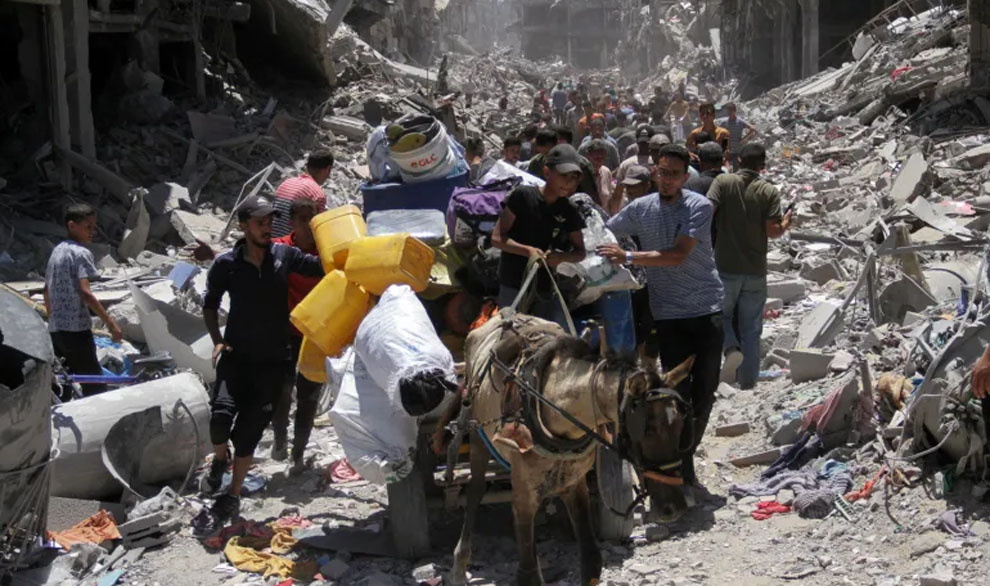
Even as Biden presented the new plan, Israel continued its deadly attacks in Gaza, with artillery fire hitting residential buildings in the northern neighbourhoods of Gaza City, killing several Palestinians.
Another early morning Israeli strike in Gaza City also killed a journalist, identified as Ola al-Dahdouh, according to the Palestinian TV channel Al-Aqsa.
Israeli forces also hammered Rafah in southern Gaza with tanks and artillery, while witnesses in the east and centre of Rafah described intense artillery shelling.
In the shadow of the continuous Israeli bombardment, US Secretary of State Antony Blinken held discussions with the top diplomats of Saudi Arabia, Jordan and Turkey amid efforts to gather support for the new Gaza ceasefire plan.
READ ALSO:
- Armed robbers take off, drop ammunition in Enugu after sighting police
- Violence breaks out in Rivers community, one killed [VIDEOS]
- Real Madrid rule European football again, triumph over Dortumond 2-0
Saudi Arabia’s Foreign Minister Prince Faisal bin Farhan Al Saud received a call from Blinken, during which they discussed the latest proposal, the Saudi state news agency said.
According to State Department spokesman Matthew Miller, Blinken “emphasised that Hamas should accept the deal without delay”, in those telephone calls from his plane as he returned from a NATO meeting in Prague.
“[Blinken] underscored that the proposal is in the interests of both Israelis and Palestinians, as well as the long-term security of the region,” Miller added.
In Israel, opposition leader Yair Lapid urged Netanyahu to agree to the deal, saying his party would support it even if right-wing factions in the governing coalition rebelled, meaning a deal would likely pass in parliament.
Families of the people held captive in Gaza also called on all parties to immediately back the proposal outlined by Biden, warning that time was running out with the onus on both Israel and Hamas to accept the deal.
Meanwhile, Indonesia’s president-elect, Prabowo Subianto, welcomed Biden’s ceasefire proposal as a step in the right direction. He said his country is willing to send peacekeeping troops to maintain a ceasefire in Gaza if required.
“When needed and when requested by the UN, we are prepared to contribute significant peacekeeping forces to maintain and monitor this prospective ceasefire as well as providing protection and security to all parties and to all sides,” he told a security conference in Singapore on Saturday.
Israeli attacks on Gaza since the start of the war have killed at least 36,379 people and wounded 82,407 others, with thousands more missing under the rubble and presumed dead. Israel launched its assault on the besieged territory after a Hamas-led attack in southern Israel killed about 1,140 people.
Accept Biden proposal, Israeli captive families tell govt









International
EU, UK Reject Trump’s Call for Military Action to Secure Strait of Hormuz
EU, UK Reject Trump’s Call for Military Action to Secure Strait of Hormuz
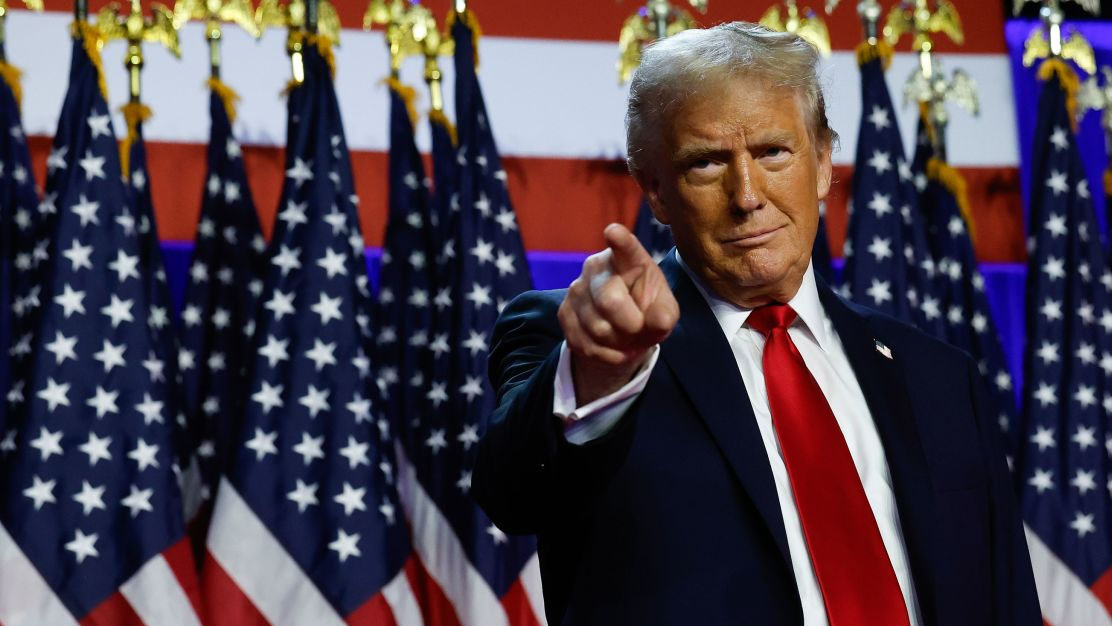
European and NATO allies have firmly rebuffed U.S. President Donald Trump’s demand for military assistance to secure the Strait of Hormuz, even as the strategic waterway remains effectively blocked amid the U.S.–Israeli war on Iran and global oil prices surge above $100 per barrel. The standoff highlights deep divisions among Western allies over how to respond to the crisis and underscores the challenges of securing international cooperation in the face of intensified regional tensions.
In a series of statements by European defence and foreign ministers, leaders made clear that military involvement in the Strait of Hormuz is not an option for most EU states, pointing instead to diplomatic engagement, strategic clarity, and wider de‑escalation as necessary prerequisites before any coordinated action can be considered.
“What does … Trump expect a handful or two handfuls of European frigates to do in the Strait of Hormuz that the powerful U.S. Navy cannot do?” German Defence Minister Boris Pistorius said in Berlin. “This is not our war. We have not started it.”
Similarly, Greek government spokesman Pavlos Marinakis stated that Greece would not participate in any military operations in the Strait of Hormuz, while Italian Foreign Minister Antonio Tajani confirmed that Italy would not extend its naval missions into the contentious waterway.
READ ALSO:
- Dangote, China’s GCL Sign $4.2bn Gas Deal to Power Ethiopia Fertiliser Megaproject
- Trump’s Claim of Former President Regret Over Iran Denied by Aides
- Oil Prices Jump as Strait of Hormuz Crisis Intensifies
Other European foreign ministers emphasised the need for more strategic clarity from Washington before any allied military support could be considered. Estonian Foreign Minister Margus Tsahkna said US allies wanted to understand Trump’s overall “strategic goals” and his plan for the wider conflict, while Polish Foreign Minister Radek Sikorski said that a formal NATO request would be required for his country’s participation.
“If there is a request via NATO, we will, of course, out of respect and sympathy for our American allies consider it very carefully,” Sikorski said, indicating that any European involvement would likely need to follow collective defence protocols.
In contrast, Danish Foreign Minister Lars Løkke Rasmussen urged EU member states to keep an open mind about helping ensure freedom of navigation through the strait, even if Europe does not endorse the US‑Israeli military campaign. “We must face the world as it is, not as we want it to be,” Rasmussen said, stressing that any engagement should prioritise de‑escalation.
The United Kingdom reiterated its commitment to working with allies to devise a collective strategy to reopen the Strait of Hormuz and restore freedom of navigation, but made clear it would not be drawn into a wider war. Prime Minister Keir Starmer said Britain was coordinating with partners on a plan aimed at securing maritime routes while avoiding expansion of the conflict.
Meanwhile, EU foreign policy chief Kaja Kallas told reporters in Brussels that EU leaders would focus on what member states are willing and able to contribute to efforts aimed at reopening the strait. “Of course, the need to open the Strait of Hormuz is there right now,” she said, noting that the closure — which has propelled oil prices above $100 per barrel — was inadvertently benefiting Russia’s war on Ukraine by boosting Moscow’s energy revenues.
Energy Market Response and IEA Actions
Amid political stalemate and pressure on oil markets, the International Energy Agency said it stands ready to release additional strategic oil reserves if needed, describing the current situation as “the largest supply disruption in the history of the global oil market.”
Last week, the IEA authorised a record release of 400 million barrels of oil to help cushion the immediate impact of the strait’s effective blockade. IEA Executive Director Fatih Birol noted that while recent decline in oil prices showed some relief, the release of reserves is not a lasting solution without assured access through the strait.
“The volume of oil supply offline is already higher than any previous disruption, including the oil crisis of 1973,” Birol said, while confirming that the agency still holds over 1.4 billion barrels in reserve, which could be deployed in future if necessary.
EU, UK Reject Trump’s Call for Military Action to Secure Strait of Hormuz
International
Israel to Extend Military Strikes on Iran for At Least Three More Weeks
Israel to Extend Military Strikes on Iran for At Least Three More Weeks
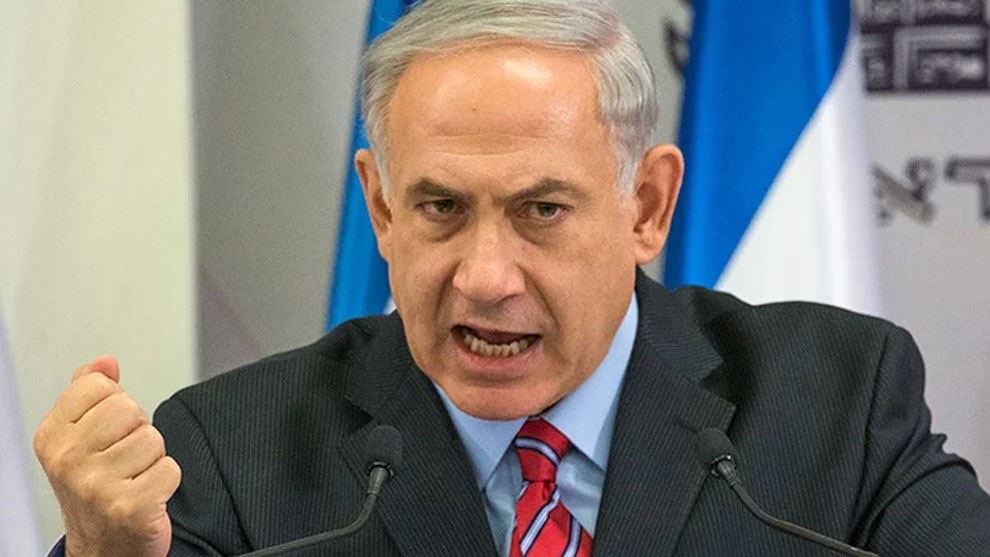
Israel has officially announced plans to continue its military campaign against Iran for at least three more weeks, as its forces sustain strikes on strategic Iranian targets. The announcement comes amid escalating tensions in the Middle East following Iranian drone attacks that temporarily shut Dubai International Airport and hit major oil facilities in the UAE, highlighting the conflict’s wider regional impact.
Lieutenant Colonel Nadav Shoshani, spokesperson for the Israel Defense Forces (IDF), confirmed that detailed operational plans have been drawn for the coming weeks, along with contingency strategies extending beyond that timeframe. The campaign is aimed at weakening Iran’s ability to threaten Israel, focusing on ballistic missile systems, nuclear infrastructure, and security apparatus, with thousands of targets reportedly still on the list.
Over 110,000 Israeli reservists have been mobilized to support the operations. The military emphasizes that its objectives are strictly defensive and strategic, targeting only facilities tied to Iran’s military and security network. Shoshani said, “We want to make sure that they are as weak as possible, this regime, and that we degrade all their capabilities, all parts and all wings of their security establishment.”
READ ALSO:
- Tinubu Swears in Taiwo Oyedele as Minister of State for Finance
- Nursery Worker Jailed 24 Years for Raping, Abusing Toddlers
- Court Screens Video Showing NDLEA Allegedly Helping Cocaine Smugglers at Enugu Airport
The conflict’s escalation has had serious repercussions for global energy markets, particularly at the Strait of Hormuz, through which roughly 20% of the world’s oil and liquefied natural gas passes. The Iranian strikes have disrupted key infrastructure, prompting fears of prolonged supply shortages and rising energy prices worldwide.
This ongoing crisis stems from a joint U.S.–Israel military operation launched on February 28, 2026, in response to Iran’s regional activities, including ballistic missile development and support for proxy groups. Airstrikes have targeted cities including Tehran, Shiraz, and Tabriz, while limited ground operations in southern Lebanon have also been reported, targeting Iran-backed Hezbollah positions.
Iran has retaliated with missile and drone attacks against U.S. and Israeli positions, with civilian infrastructure in Gulf countries affected. International observers warn that unless diplomatic measures are taken, regional instability may worsen, further impacting energy markets and global security.
Global responses remain mixed. The United States and allied nations have urged de-escalation and efforts to secure critical maritime routes. Meanwhile, humanitarian concerns rise as civilian casualties and infrastructure damage continue. Analysts say the ongoing military campaign could have lasting implications for Middle East stability, global energy security, and international relations.
Israel to Extend Military Strikes on Iran for At Least Three More Weeks
International
Nursery Worker Jailed 24 Years for Raping, Abusing Toddlers

Nursery Worker Jailed 24 Years for Raping, Abusing Toddlers
A nursery worker in Bristol, England, has been sentenced to 24 years in prison for raping and sexually abusing young children in his care, a case that has shocked families and renewed calls for stronger child safeguarding measures.
Nathan Bennett, 30, was convicted on multiple charges, including two counts of rape, four counts of sexual assault, and two counts of assault by penetration. The offences involved five boys aged two to three years at the Partou King Street Nursery, which closed in December 2025 following the revelations. Bennett had previously admitted 13 related sexual offences against four of the children.
The abuse came to light in February 2025 after CCTV footage showed Bennett putting his hands down a child’s trousers, prompting the nursery to alert police. Prosecutors described his actions as “every parent’s worst nightmare,” emphasizing that he betrayed the trust of parents and exploited his position of authority over vulnerable children.
During the trial, disturbing evidence emerged that Bennett behaved territorially with toddlers, often sitting them on his lap for long periods, and wore trousers with holes in the crotch area. Video interviews of two victims, identified as Child A and Child E, revealed the harrowing experiences of the children, including how they described the abuse to their parents.
READ ALSO:
- Court Screens Video Showing NDLEA Allegedly Helping Cocaine Smugglers at Enugu Airport
- Manchester United Confirms Casemiro Will Leave at Season’s End Despite Stellar Form
- Atiku Has Less Than 1% of Tinubu’s War Chest — Dele Momodu
Passing sentence, Judge William Hart called Bennett an “incorrigible and dangerous paedophile”, stating that it was impossible to predict if he would ever cease posing a risk to children. The judge said Bennett prioritized his sexual gratification over the safety and wellbeing of the toddlers and highlighted the long-lasting impact his crimes would have on the victims and their families.
Bennett will serve 24 years in prison with an additional six years on licence and will be placed on the Sex Offenders Register for life, alongside an indefinite Sexual Harm Prevention Order restricting contact with children and childcare settings.
Families affected described the profound psychological and emotional toll of the abuse. In victim impact statements, parents spoke of betrayal, guilt, and lasting trauma, while other families associated with the nursery said they were devastated by the horrific acts despite their children not being abused.
Child protection advocates emphasized the case highlights gaps in safeguarding within childcare settings and called for improved screening, supervision, and CCTV monitoring to prevent similar incidents in the future. Legal representatives for the families have indicated they may pursue civil action against the nursery group to hold it accountable.
The case has renewed discussions on the urgent need for stricter child protection policies, better training of childcare staff, and swift investigation of early warning signs to ensure the safety of vulnerable children.
Nursery Worker Jailed 24 Years for Raping, Abusing Toddlers

-

 Railway1 day ago
BREAKING: Several Passengers Injured as Abuja–Kaduna Train Derails After Collision
-

 metro1 day ago
Court Screens Video Showing NDLEA Allegedly Helping Cocaine Smugglers at Enugu Airport
-
 International2 days ago
Iran–Israel Conflict Escalates As IRGC Threatens To Kill Netanyahu
-

 International3 days ago
Old Dominion University Shooting: Terrorism Suspect Had Links to Nigeria-Based ISIS
-

 metro1 day ago
Tinubu Orders Nationwide Free Rice Distribution for Ramadan, Lent Support
-
 International2 days ago
Netanyahu dispels death rumours, appears in video from Coffee Shop
-

 Education2 days ago
Students expelled as police probe viral assault at Igbinedion School
-

 metro3 days ago
Lagos reintroduces monthly sanitation as waste, flood risks mount