

metro
Again, bandits raid Kaduna, Zamfara, kill 62, abduct 62, raze 70 houses
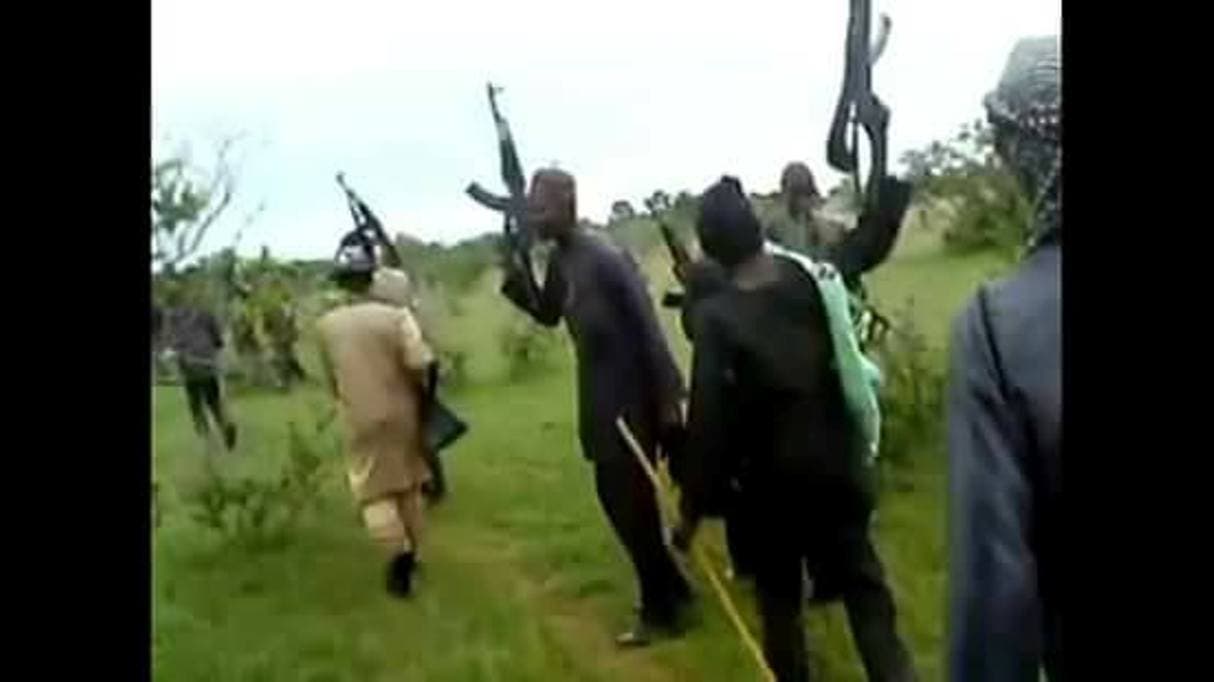
The orgy of violence in the northern part of the country has claimed 60 lives in Kaduna and Zamfara states.
Twenty-five persons, including two military personnel, were reportedly killed, while a riot policeman allegedly shot a passerby and no fewer than 70 houses were razed on Sunday following an attack by terrorists on Agban Kagoro in the Kaura Local Government Area of Kaduna State.
The two local governments are in the Southern Kaduna area of the state and share boundaries.
In Zamfara State, bandits killed 37 persons and kidnapped 62 others in Juyi and Doruwa villages in the Bungudu Local Government Area, while 20 others were killed in Ganar-Kiyawa village in the Bukkuyum Local Government Area on Saturday.
The Kaduna killings sparked protests on Monday as irate youths from the affected area blocked the road and attacked travellers.
It was learnt that a bus was set ablaze during the protest as riot policemen fired into the protesting youths, with a bullet allegedly hitting one of the protesters.
This forced the state government to impose a 24-hour curfew on the Jema’a and Kaura local government areas of the state.
The Commissioner for Internal Security and Home Affairs, Samuel Aruwan, who announced this in a statement, said the measure was to allow security agencies to save lives and property, and restore law and order in the areas.
The statement said the government appealed to residents of the local government areas to cooperate with security agencies to restore peace, law and order.
The commissioner quoted Governor Nasir El-Rufai to have condemned the violence that left many dead and property destroyed.
The statement titled, ‘KDSG declares 24-hour curfew in Jema’a and Kaura LGAs’, read, “Following advice from security agencies, the Kaduna State Government has declared a 24-hour curfew in Jema’a and Kaura local government areas with immediate effect. This is to assist the security agencies to stabilise the situation in the areas, save lives and property, and enable the restoration of law and order.
“A statement from the Ministry of Internal Security and Home Affairs said the security agencies had full authorisation to enforce the curfew. The government appeals to all residents of the Jema’a and Kaura local government areas to cooperate with the security agencies in the urgent task of restoring peace and upholding law and order.
“The government condemns the violence and all acts of lawlessness that have occurred in the area.”
The District Head, Kukum community in the Kagoro Chiefdom, Mr Jashua Kagoya, who narrowly escaped the attack, said the terrorists invaded the community in a military van with sophisticated weapons and took vantage positions.
According to him, the villagers retired home after their normal activities when they suddenly heard gunshots around 8pm and they had to flee the community.
Kagoya stated, “As you can see, my personal house is completely razed down, but I thank God that my family members and I were able to escape the attack.
“It is very sad that such carnage has been meted out on the peace loving people of Kagoro. We condemn this act in totality and we’re calling on the government to rise to its primary responsibility of protecting lives and property.”
The district head disclosed that 23 corpses had been recovered, while a search was on for others.
The Wakilin Yanmma of Kagoro Chiefdom, Mr Yanshen Sunday, said when he heard gunshots, he contacted the Commandant of the Operation Safe Haven, who promised to respond immediately, which he did.
Sunday said, “While we were trying to figure out what was happening, I saw two military vans and thought the military men came to defend our community, but to my greatest surprise, they were the attackers.
“Before we knew it, the whole place was on fire. We have recovered 23 dead bodies, but I cannot ascertain the number of houses burnt down.
“While some youths were reacting to the killings, a riot policeman was alleged to have shot dead a passerby, which escalated the tension in the Jema’a Local Government Area.”
A resident of the community, Mr Derek Christopher, said the terrorists came in large numbers in military vans, buses and motorbikes.
He stated, “Two military officers were killed by the attackers.
“Before now, a lot of locals could not access their farmlands for fear of being killed. We’re calling on the government to immediately deploy security in the Agban community to ensure that the people are safe.”
An indigene of the Bungudu Local Government Area of Zamfara State, Sani Ibrahim, told one of our correspondents that the terrorists, who rode on motorcycles, attacked Juyi and Dorawa villages of the Kekun Waje around 2pm on Saturday and killed 17 villagers and kidnapped 62 others.
Ibrahim said the terrorists, who were in large numbers, carried sophisticated weapons opened fire on anyone in sight immediately they got to the villages.
He stated, “They came to our village around 2pm on Saturday and immediately opened fire on anyone they came across.
Punch











metro
Atiku Offers Scholarship to Viral Niger Teen Miner After 37 Miners’ Deaths

Atiku Offers Scholarship to Viral Niger Teen Miner After 37 Miners’ Deaths
Former Vice President and African Democratic Congress (ADC) presidential candidate, Atiku Abubakar, has offered a scholarship to Yusuf Aliyu, the teenage artisanal miner from Niger State whose account of conditions at a gold-mining site went viral following the deaths of 37 suspected illegal miners in the state.
Atiku made the scholarship offer after a video of the teenager speaking about his experience at the mining site attracted widespread attention.
The offer means Atiku intends to provide the teenager with financial support for his education, although specific details such as the level of education covered, the duration of the scholarship and the institution where Yusuf would study were not immediately disclosed.
Atiku said the teenager should have the opportunity to pursue his education rather than remain dependent on mining to support himself and his family.
The teenager reportedly said that young people at the mining site engaged in the activity because of poverty and the need to support their families and pay school fees.
Yusuf also alleged that personnel of the Nigeria Security and Civil Defence Corps (NSCDC) had been shooting at miners at the site. He questioned the circumstances surrounding the deaths of the detained miners and disputed the initial explanation that the fatalities were linked to a disease outbreak.
The allegations made by the teenager have not been independently established and remain subject to investigation.
The teenager’s comments came after 37 suspected illegal miners died while in NSCDC custody in Niger State.
The victims were among people arrested during anti-illegal-mining operations in the M.I. Wushishi and Lukoto areas of the state on September 15 and 16.
The Niger State NSCDC Command initially said the detainees died following a suspected disease outbreak. However, accounts from survivors and families have raised questions about the conditions under which the detainees were held.
READ ALSO:
- NDLEA Seizes N3.4bn Drugs, Arrests Fake Police Officer in Nationwide Crackdown
- Oyo: Police Arrest Serving Air Force Personnel Over Alleged Robbery, Abduction
- Osun Police Warn Against Planned Cult-Linked Protest, Investigate Recent Killing
Reports have cited allegations of overcrowding, inadequate ventilation and difficult conditions inside the detention facility, while the actual cause of the deaths remains a matter for investigation.
The Federal Government has since ordered an independent investigation into the incident.
President Bola Ahmed Tinubu directed that the circumstances surrounding the deaths be thoroughly investigated, while Interior Minister Olubunmi Tunji-Ojo constituted a 10-member independent committee to examine the incident.
The government also suspended the Niger State NSCDC Commandant and 20 other NSCDC officers pending the outcome of the investigation. The committee was given two weeks to complete its work and submit its report.
The panel includes representatives of the Niger State Government and Minna Emirate Council, as well as a representative of the Miners Association of Nigeria, lawyer and human rights activist Deji Adeyanju, former Assistant Inspector-General of Police Hosea Hassan Karma and other members.
The deaths have generated public concern over the treatment of people arrested during illegal mining enforcement operations, particularly following reports that some of those detained were teenagers.
The controversy has also renewed attention on the difficult circumstances surrounding artisanal mining in Niger State, where some young people reportedly enter mining because of limited economic opportunities and the need to support their families.
Atiku, while announcing the scholarship, also questioned the continued poverty in communities with significant mineral deposits.
He called for greater attention to the welfare and education of children involved in mining and raised questions about the Federal Government’s handling of artisanal mining.
The former vice president also referred to the Presidential Artisanal Gold Mining Development Initiative (PAGMI) introduced under the Muhammadu Buhari administration and questioned what had become of the programme in Niger State.
His comments represent his political position on the incident and the Federal Government’s handling of artisanal mining. The independent committee is expected to establish the facts surrounding the deaths and determine whether any official or other person should be held responsible.
Meanwhile, Yusuf’s story has drawn attention to the wider challenge of keeping children out of hazardous work and ensuring access to education for vulnerable children in mining communities.
Atiku’s scholarship offer is specifically intended to help Yusuf continue his education and pursue opportunities outside artisanal mining. Details of how the scholarship will be administered have not been publicly provided.
The allegations against the NSCDC personnel and other claims surrounding the deaths remain under investigation.
Atiku Offers Scholarship to Viral Niger Teen Miner After 37 Miners’ Deaths
metro
NDLEA Seizes N3.4bn Drugs, Arrests Fake Police Officer in Nationwide Crackdown
NDLEA Seizes N3.4bn Drugs, Arrests Fake Police Officer in Nationwide Crackdown
The National Drug Law Enforcement Agency (NDLEA) has intercepted more than 1.3 million pills and capsules of tramadol and other opioids, alongside about 6,000kg of cannabis, in a series of operations across several states and the Federal Capital Territory.
The agency said the seizures had an estimated street value of more than N3.4 billion, while its operatives also arrested a man accused of impersonating a senior police officer while allegedly transporting illicit drugs.
The operations were conducted in Lagos, Edo, Niger, Delta, Ondo, Gombe and Imo states, as well as the Federal Capital Territory, according to a statement issued by NDLEA Director of Media and Advocacy, Femi Babafemi.
One of the biggest seizures occurred at the Tin-Can Island Port in Lagos, where NDLEA operatives intercepted 603.75kg of Canadian Loud, a potent strain of cannabis.
The consignment, according to the agency, was valued at about N1.811 billion.
The 40-foot container carrying the drugs reportedly originated from Montreal, Canada, and arrived in Nigeria on September 12.
Following intelligence received by the NDLEA, the container was placed under surveillance before a joint examination by NDLEA personnel, the Nigeria Customs Service and other agencies on September 16.
The Canadian Loud was allegedly concealed in 31 black jumbo bags loaded into two Toyota Sienna vehicles inside the container.
In Delta State, NDLEA operatives arrested 49-year-old Innocent Ekpe along the Benin-Onitsha Expressway in Asaba on September 16.
READ ALSO:
- Oyo: Police Arrest Serving Air Force Personnel Over Alleged Robbery, Abduction
- Osun Police Warn Against Planned Cult-Linked Protest, Investigate Recent Killing
- N8,000 Debt Dispute: Charge Sheet Raises Questions Over Oyo Police Account After Student’s Death
The agency said Ekpe was found with 292.48kg of skunk, allegedly concealed inside a silver Toyota Sienna bus.
According to the NDLEA, preliminary investigation indicated that Ekpe allegedly presented himself as Godwin Emeka, a Deputy Superintendent of Police, and used a forged police identification card to evade security checks while transporting illicit drugs.
A 39-year-old alleged accomplice, Nduka Joseph, was also arrested.
In Edo State, NDLEA operatives arrested 45-year-old Matthew Ossai at an auto-repair workshop along Agbor Road in Benin City.
The agency alleged that the workshop was being used as a cover for storing illicit drugs.
Officers recovered 48kg of Canadian Loud, 152 grammes of methamphetamine and a metal box allegedly used to store the substances.
Another major seizure was recorded in Niger State, where NDLEA operatives intercepted more than 1.1 million assorted tramadol tablets and capsules, in addition to codeine syrup, methamphetamine and Exol tablets.
The drugs were allegedly concealed in eight sacks being transported from Onitsha, Anambra State, to Mararaba, Nasarawa State.
Two suspects, Aminu Isyaku, 23, and Jamilu Habibu, 25, were arrested along the Abaji-Abuja Highway on September 18 in connection with the consignment.
The agency also reported an earlier interception on September 15 along the Abuja-Kaduna Expressway at Chachi, Tafa Local Government Area of Niger State.
Three suspects — Bashir Usman, 20; Abubakar Nuhu, 18; and Abdulrahman Abdulwahab, 18 — were arrested during the operation.
The NDLEA said officers recovered two locally fabricated AK-47 rifles and a magazine, a locally made pistol and magazine, and nine rounds of 9mm ammunition concealed in a black travel bag.
In Lagos, NDLEA operatives arrested Onyeka Ofor at his residence in Aguda, Surulere, on September 18 and recovered 48,900 tablets of tramadol 225mg.
The agency also intercepted seven cartons of cannabis weighing 59kg at a logistics company, leading to the arrest of a suspect identified as Luke Ugokwe.
Another suspect, Ibrahim Hudu, 43, was arrested at Apongbon, where NDLEA officers recovered 998.38kg of nitrous oxide gas.
In Gombe State, operatives recovered 154,480 capsules of tramadol from two suspects identified as 27-year-old Sabi’u Umar and 19-year-old Hassana Muhammad.
NDLEA personnel in Imo State also arrested 25-year-old Ifesinachi Godwin along the Owerri-Onitsha Road with 43.85kg of skunk, according to the agency.
Meanwhile, four suspects — Blessing Effiong, Saviour Peter, David Friday Sunday and Ability Peter Sunday — were arrested during an operation targeting a cannabis farm in Ita-Ogbolu forest, Ondo State.
The NDLEA said about 5,000kg of cannabis was destroyed on the two-hectare farm, while 48kg of dry and fresh cannabis was recovered as exhibits.
The agency said the latest operations demonstrate its continued efforts to disrupt the production, trafficking and distribution of illicit drugs across Nigeria.
NDLEA Chairman and Chief Executive Officer, Brig. Gen. Mohamed Buba Marwa (retd.), commended the officers involved in the operations and urged them to sustain intelligence-led enforcement activities.
The suspects remain under investigation, and the allegations against them have not been established by a court.
NDLEA Seizes N3.4bn Drugs, Arrests Fake Police Officer in Nationwide Crackdown
metro
Oyo: Police Arrest Serving Air Force Personnel Over Alleged Robbery, Abduction
Oyo: Police Arrest Serving Air Force Personnel Over Alleged Robbery, Abduction
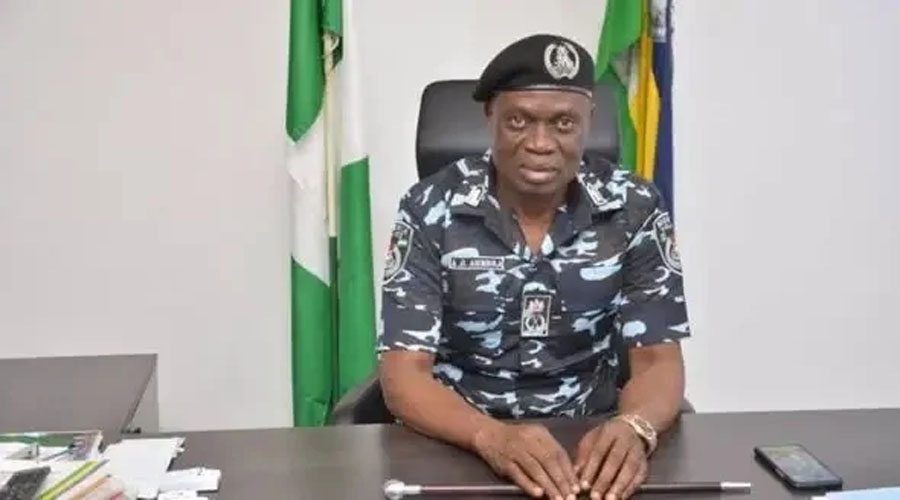
The Nigeria Police Force has arrested a serving Nigerian Air Force personnel over an alleged armed robbery and abduction in Ibadan, Oyo State.
The arrest was made on September 17, 2026, as police operatives investigated the reported incident, according to the Force’s latest operational update.
A blue Toyota Camry allegedly used during the operation was also recovered by the police and taken as an exhibit.
The police did not disclose the identity, rank or unit of the Air Force personnel, nor did they provide details about the alleged victim or explain the circumstances under which the robbery and abduction occurred.
The case has been transferred to the State Criminal Investigation Department (SCID), Ibadan, for further investigation.
The arrest was among several security operations recorded by the police in Oyo State and other parts of the country between September 17 and 20.
In a separate development in Oyo State, police operatives arrested three suspected members and associates of a kidnapping syndicate.
One of the suspects was arrested on September 18 at Kanbi Village in Atisbo Local Government Area following what the police described as credible intelligence.
Two other suspects were also arrested for allegedly concealing or facilitating the activities of the kidnapping group.
The police said the investigation into the three suspects was also being handled by the SCID in Ibadan.
The two Oyo cases are separate in the police operational summary, and there was no indication that the Air Force personnel arrested over the alleged robbery and abduction was among the three suspects linked to the kidnapping syndicate.
The latest arrests form part of wider police operations targeting kidnapping, armed robbery, cultism, sexual offences and other criminal activities across several states.
READ ALSO:
- Osun Police Warn Against Planned Cult-Linked Protest, Investigate Recent Killing
- N8,000 Debt Dispute: Charge Sheet Raises Questions Over Oyo Police Account After Student’s Death
- Men’s Health: Common Warning Signs, Conditions Men Should Not Ignore
The Force reported arrests and recoveries in Oyo, Kogi, Kano, Delta, Cross River, Nasarawa, Gombe and Bayelsa states during the period under review.
In Kogi State, police detectives arrested a suspect following a fatal shooting at Ohunene Community in Ajaokuta Local Government Area and recovered a barrel gun allegedly linked to the incident. Another suspect was arrested in Anyigba, Dekina Local Government Area, following a reported missing-person case.
In Kano State, a female suspect was arrested in connection with the death of her husband at Katsalle Quarters in Rogo Local Government Area.
Delta State police reported separate arrests involving alleged sexual offences, including cases involving minors. Officers also arrested three suspects during a raid on a suspected criminal black spot at Umusadege, Kwale, in Ndokwa West Local Government Area, where the suspects were allegedly linked to drug trafficking and cult-related activities.
In Cross River State, police operatives tracked and arrested a suspect following the circulation of a video allegedly showing a cult-related firearm discharge in Calabar.
In Nasarawa State, police recovered a white Toyota Camry allegedly involved in a fatal road traffic incident at Gudi, Akwanga Local Government Area.
Gombe State police also recovered a blood-stained machete from the scene of a suspected culpable homicide at Duggari Hills in Yamaltu-Deba Local Government Area.
In Bayelsa State, a murder suspect was moved to the SCID in Yenagoa for protective custody following unrest at Ebedebiri, Sagbama Local Government Area. Tactical teams were subsequently deployed to the community to restore law and order.
For the Oyo State Air Force personnel, the police investigation remains ongoing. The recovered Toyota Camry is being treated as an exhibit while detectives work to establish the circumstances surrounding the alleged robbery and abduction.
Similarly, the three suspects arrested in connection with the alleged kidnapping syndicate remain under investigation.
The allegations against all the suspects have not been established by a court, and the investigations are expected to determine whether they will face criminal charges.
Oyo: Police Arrest Serving Air Force Personnel Over Alleged Robbery, Abduction
-
 News3 days ago
ECOWAS Biometric Card Expands as Seven Countries Begin Rollout
-
 metro3 days ago
FG Suspends Niger NSCDC Commandant As 37 Suspected Illegal Miners Die In Custody
-

 International3 days ago
Ninth Body Discovered in South Africa: Nigeria Issues Urgent Safety Alert to Nationals
-

 Politics3 days ago
Toyin Abraham Rejects Lagos APC Campaign Council Inclusion
-

 Politics3 days ago
2027: Sowore Says He’d Rather Die Than Travel Abroad For Medical Treatment
-

 Politics3 days ago
2027: Tinubu May Mediate Wike-APC Governors Rift In France
-
 International2 days ago
BREAKING: Bloodbath at Pakistan Mosque as Suicide Blast Kills 21, Injures 103
-

 metro2 days ago
Niger Miners’ Deaths: Families Demand Compensation, Justice for Victims