

metro
Again, gunmen kill six, raze houses in Kogi community

No fewer than six persons were confirmed killed and houses razed in a sustained and coordinated attack by gunmen, in the early hours of Monday, in Bagana village, Omala Local Government Area of Kogi State.
DAILY POST recalls that a similar attack occurred barely a month ago leading to the death of about nine persons and property worth millions of naira destroyed.
The attack it was gathered forced hundreds of inhabitants to seek refuge in neighbouring communities.
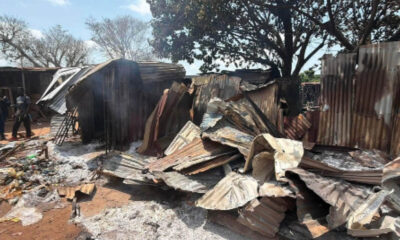
In the latest incident, DAILY POST gathered that the attackers went straight to the House of one Chief Salifu Anyebe and set it ablaze.
The attackers also shot three persons, including one Madam Achebe Alih, popularly known as Mama Teacher to death.
It was further gathered that Chief Salifu Anyebe is one of traditional rulers, whose stool was upgraded to third class a forth night ago by the present administration.
The early morning raid made the villagers, who were just returning to the village after a similar attack, to scamper for safety in the bushes.
It was gathered that, the attackers, linked to a clan opposed to his ascendancy, had planned to attack him during the proposed ceremony for the new title.
READ ALSO:
https://newstrends.ng/2021/10/27/gunmen-abduct-8-in-ekiti-demand-n50m-ransom/
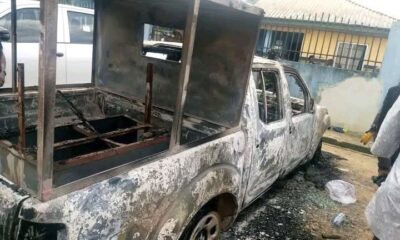
However, our correspondent reliably gathered that the information of the attack leaked to him, forcing the abrupt suspension of the ceremony, but the attackers burnt down his palace, his car and other valuables belonging to the chief and close families that lived in a cluster with him.
Our correspondent equally gathered that immediately the attackers left, some militias from nearby communities were allegedly mobilized, armed with sophisticated weapons and they started razing down houses belonging to the suspected opposing clans.
The reprisal led to the burning down of the palace of the Oga Onu Ife, a paramount ruler and the District Head of Bagana, Chief Alih Haruna. Other houses belonging to some notable inhabitants were also torched.
According to the locals, a house belonging to the Councillor representing the District, Hon. Alidu Usman Idakwo and those of other tribes were not spared.
A local, who could not hold back tears over the wanton destruction of lives and property, lamented the nonchalant attitude of the government.
He added that since 2013, no fewer than 300 persons have lost their lives and property worth millions of naira destroyed.
While speaking with our Correspondent, the Special Adviser on Security to the Omala Local Government Area, Hon. Steve Shaibu confirmed the death of six persons, while one person was critically injured and has been evacuated to undisclosed health facility in a nearby village.
The Special Adviser gave the names of the deceased as Suleiman Baba, Yusuf Lere, Mrs Achebe Alih, others are Abubakar Salifu, Danlami Yahaya and Ugbede Attah on admission.
However, the leader of Indigenous People of Bagana, Alhaji Umar Bagana lamented the recurring orgy of killings and destruction of properties, since 2014, and blamed the violence on the clanish jingoists contending for the soul of the town.
He called on Governor Yahaya Bello to enforce his directives on the Chiefs to relocate to their respective domain as a measure to tame the tide of violence being unleashed on the community.
Meanwhile, the Commissioner of Police, Idrisu Dauda Dabban in company of the Chairman of Omala Local Government Hon. Ibrahim Aboh had on Tuesday visited the area.
The Police Commissioner urged the people to return home, assuring that they had commenced discreet investigation to bring the perpetrators to book.
Daily Post










metro
IKEDC Blames National Grid for Two-Week Power Crisis in Ishaga, Oke-Ayo

IKEDC Blames National Grid for Two-Week Power Crisis in Ishaga, Oke-Ayo
Residents battle water scarcity, intense heat as electricity supply dwindles to minutes
Residents of Ishaga and Oke-Ayo communities in Iju-Ishaga, Lagos State, have endured about two weeks of erratic electricity supply, with the Ikeja Electric Distribution Company (IKEDC) attributing the situation to reduced power allocation from the national grid.
The prolonged power shortage has disrupted daily activities, leaving residents struggling to cope with the intense heat and difficulties accessing water, particularly in households that depend on electricity to pump water.
In response to a formal complaint by a journalist and resident of Oke-Ayo, Abdulfatai Ayobami Ibrahim, the manager of IKEDC’s Iju Undertaking said the reduction in electricity supply across the company’s network was caused by a shortfall in power allocated to it from the national grid.
The manager explained that electricity distribution companies could only distribute the volume of power made available to them through the transmission network, adding that any reduction at the generation or transmission stages directly affected electricity supply to consumers.
According to the manager, IKEDC is engaging relevant stakeholders, including the Transmission Company of Nigeria (TCN), to secure an improved allocation and restore normal electricity supply as soon as possible.
In a public notice issued by the company, IKEDC apologised for the inconvenience caused by the reduced supply hours, assuring customers that it was working with relevant stakeholders to improve power availability.
The company also said it remained committed to distributing the available electricity as efficiently and equitably as possible across its network, while promising to keep customers informed of significant developments.
However, residents of Ishaga and Oke-Ayo have continued to face the consequences of the erratic supply, which, according to Ibrahim, has become particularly distressing over the past two weeks.
In his complaint to the manager, Ibrahim said electricity sometimes returned for barely five to 10 minutes before going off again, while on other occasions, supply was restricted to between two and three hours in the early morning, usually between 1am and 5am.
He explained that the situation had become increasingly unbearable, with residents sometimes spending the entire day without electricity.
Giving an account of the immediate situation when he submitted the complaint, Ibrahim said the last electricity supply to his community had been in the early hours of the previous day, with power cut off shortly after 8am. He said supply had not returned since then.
The journalist noted that the problem extended beyond the absence of electricity, as many households relied on power to pump water for domestic use.
He said prolonged outages had consequently made access to water difficult for affected families, compounding the hardship associated with the prevailing heat.
Ibrahim expressed concern about the impact of the situation on families, children, elderly residents and other vulnerable members of the community, particularly in the absence of clear information about when electricity supply would improve.
Seeking clarification, he asked IKEDC to explain the cause of the persistent outages, whether they were connected to technical faults, load allocation, maintenance activities or other operational challenges.
He also requested details of the measures being taken to address the situation and when residents could reasonably expect an improvement in supply.
Responding, the manager reiterated that the current challenge was linked to reduced electricity allocation from the national grid rather than an issue the distribution company could resolve independently.
He explained that the electricity supply chain comprised generation, transmission and distribution, noting that distribution companies depended on the quantity of electricity supplied through the transmission network.
“Whenever there is a reduction in power supply from the generation or transmission level, it directly affects the quantity of electricity available for distribution to our customers,” the manager explained.
He added that the company was engaging relevant stakeholders to improve its allocation and ensure better electricity supply to customers.
IKEDC also appealed to customers to exercise patience and understanding, while expressing regret over the inconvenience caused by the development.
Despite the explanation, the responses did not provide a specific timeline for the restoration of improved electricity supply in Ishaga and Oke-Ayo or identify a date by which residents could expect relief.
Ibrahim urged the company to sustain communication with affected communities and take practical steps to ensure that available electricity was distributed in a manner that would ease the hardship being experienced by consumers.
He stressed that although electricity distribution could be affected by technical and operational challenges, prolonged outages without timely and adequate information often left consumers frustrated and uncertain.
The journalist said transparent communication between electricity distribution companies and the communities they serve was essential to building public trust and keeping consumers informed about developments affecting their daily lives.
The power crisis in the affected communities comes amid wider concerns over electricity availability, with IKEDC’s explanation pointing to constraints in the volume of power allocated to its network from the national grid.
For residents of Ishaga and Oke-Ayo, however, the immediate concern remains when electricity supply will become more stable and when households struggling with heat and water shortages will receive relief.
As of the time of the exchange, IKEDC had said it was engaging TCN and other relevant stakeholders to improve supply, but had not announced a definite timeline for a return to normal electricity distribution in the affected communities.
IKEDC Blames National Grid for Two-Week Power Crisis in Ishaga, Oke-Ayo
metro
School Bus Driver Turns Kidnapper, Collects ₦503,000 Ransom, Rapes 14-Year-Old Delta Student
School Bus Driver Turns Kidnapper, Collects ₦503,000 Ransom, Rapes 14-Year-Old Delta Student
SAPELE, DELTA STATE — The Delta State Police Command has arrested a 28-year-old school bus driver, Onome Lucky Ughagha, for the horrific kidnapping and sexual assault of a 14-year-old female student in Sapele, after extorting a ransom from her desperate father.
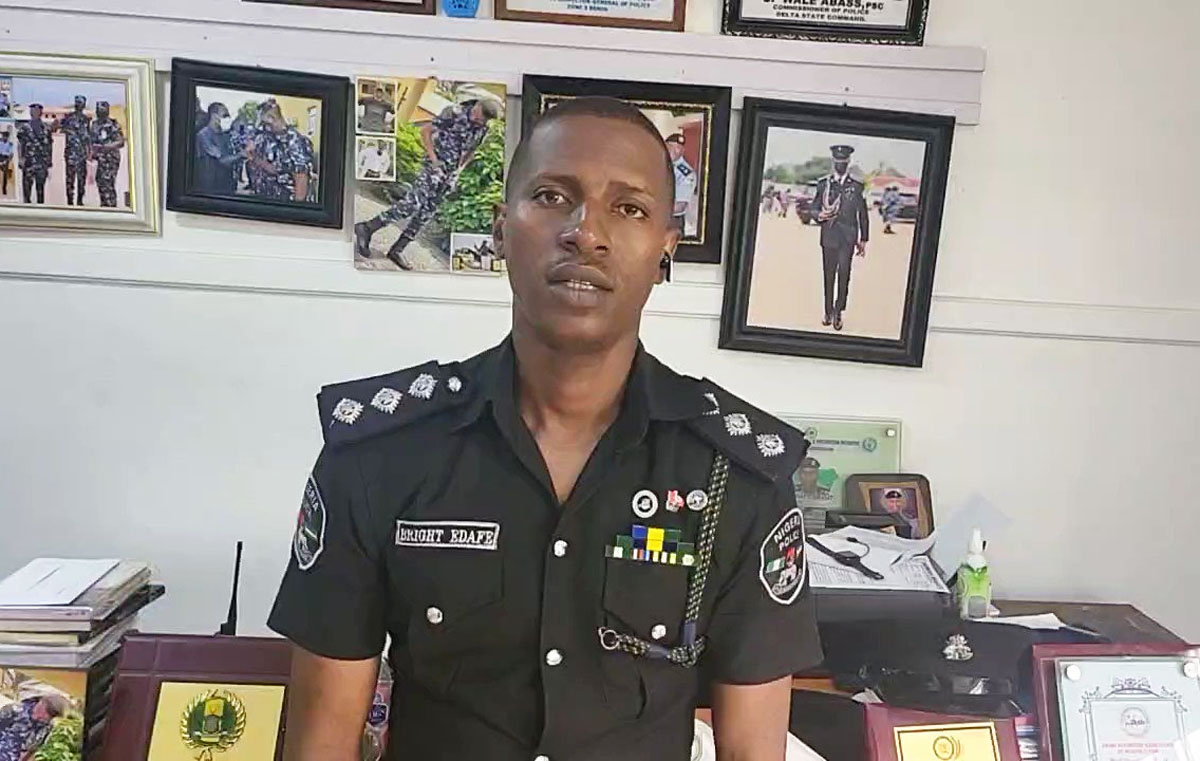
According to a statement by the Command’s Public Relations Officer, SP Bright Edafe, the nightmare unfolded on October 20, 2026, when the victim’s father reported that his daughter was abducted while preparing for school .
Police investigations revealed that Ughagha, who was entrusted with the safety of the minor, contacted the father and demanded a ransom of ₦503,000, threatening to kill the girl if the money was not paid . Following the payment, the suspect allegedly abandoned the traumatized teenager along Oton Road in Sapele, where she was reunited with her family .
Medical examinations later indicated that the minor had been sexually assaulted . The suspect had abandoned the school bus and fled the scene, prompting an intense manhunt by operatives of the Sapele Area Command .
Acting on credible intelligence, police traced Ughagha to his hideout in the Ajimele area of Sapele, where he was arrested on October 23, 2026 . During preliminary interrogation, the suspect reportedly confessed to his involvement in the crime .
The school’s principal and vice-principal have been invited for questioning as investigations continue . Ughagha is currently being transferred to the State Criminal Investigation Department (SCID) in Asaba for further investigation .
Delta State Commissioner of Police, Samuel Erale, condemned the incident, reaffirming the command’s commitment to protecting children from violence and exploitation . He assured the public that the investigation would be thorough and urged school authorities and transport operators to exercise greater vigilance in safeguarding children .
School Bus Driver Turns Kidnapper, Collects ₦503,000 Ransom, Rapes 14-Year-Old Delta Student
metro
Massacre in Taraba: Death Toll Soars to 48 as Fleeing Villagers Drown in Desperate Escape
Massacre in Taraba: Death Toll Soars to 48 as Fleeing Villagers Drown in Desperate Escape
JALINGO, Taraba State — A horrific wave of bloodletting has swept through Binnari village in Taraba State, leaving at least 48 people dead in its wake, police confirmed on Sunday. The grim discovery followed a terrifying four-hour rampage by gunmen that forced panicked residents into a nearby river, where dozens drowned in a desperate bid to escape the slaughter.
The death toll has continued to climb as search parties comb through the surrounding bushes and riverbanks, with rights group Amnesty International warning that as many as 52 people may have been killed in the attack on the Karim Lamido area community.
According to the Taraba State Police Command, the nightmare unfolded shortly after midday prayers on Friday when a heavily armed gang swooped into the remote village. The assailants—reportedly riding a convoy of about 50 motorcycles—unleashed terror, looting shops and setting homes ablaze during an orgy of violence that lasted up to four hours.
Taraba State Police spokesperson, Assistant Superintendent Victor Mshelizah, confirmed the escalating toll on Sunday. He revealed that while the initial recovery yielded 10 bodies bearing gunshot wounds, the weekend search uncovered a far more macabre scene. Mshelizah stated that several victims, including women and children, had drowned in a nearby river while frantically trying to outrun the attackers, while others were found executed in the surrounding undergrowth.
“The attackers were very familiar with the terrain, which made immediate pursuit difficult,” Mshelizah said, noting that police were only able to disperse the gunmen after they had already fled the scene.
However, the official police account conflicts sharply with the chilling testimonies of survivors and the findings of human rights organizations. Amnesty International’s Nigeria director, Isa Sanusi, stated that the organization had independently verified 52 deaths, adding that 37 victims had already been hurriedly buried in a mass funeral by grieving families.
Community leader Malam Abubakar Saifullahi described the sheer scale of the assault, revealing that the bandits, traveling two per motorcycle, methodically looted shops for cash and foodstuffs before seizing the motorcycles abandoned by fleeing residents.
The most harrowing accounts come from those who survived the chaos. Resident Bashir Mamuda Musa provided a devastating timeline of the recovery effort: “On Friday, we found seven bodies after the bandits attacked our community. The following day, Saturday, we discovered another 43 bodies in the river, bringing the total to 50.”
Survivor Isiyaku Musa recounted the sheer panic that drove villagers toward the water. “People were running in different directions to escape the attack. Nobody knew where it was safe to go,” he said. The mass drowning occurred as dozens of terrified residents fled toward the river, only to be mercilessly pursued into the water by the advancing gunmen.
The brutal massacre has drawn fierce condemnation from rights groups, who accuse authorities of systemic failure. In a blistering post on X, Amnesty International stated: “The consistent failure of the authorities to bring the suspected perpetrators to justice is clearly emboldening impunity.”
The Binnari bloodbath underscores the worsening security crisis plaguing Nigeria’s rural heartlands. Criminal gangs—locally known as bandits—continue to operate with devastating impunity across regions bordering the northeast and central zones, leaving a trail of death, abduction, and destruction.
As security forces continue to comb the grim landscape, authorities have warned that the final death toll may rise even further once all missing persons are accounted for.
Massacre in Taraba: Death Toll Soars to 48 as Fleeing Villagers Drown in Desperate Escape
-

 News2 days ago
EFCC Opens Recruitment for Nigerians, Sets Age Limits for Four Job Categories
-
 News2 days ago
41 Days in Bandits’ Den: Five Islamic Clerics Still Held After Tinubu Re-Election Prayer Trip
-

 Politics2 days ago
2027: Remi, Seyi Tinubu Reportedly Differ Over APC Youth Mobilisation
-
 Politics2 days ago
Igbo Presidency: Soludo Tells South-East to Back Tinubu for Future Power Shift
-

 Politics1 day ago
2027: APGA Chairman Says South-East Must Back Tinubu to Secure Igbo Presidency
-
 metro2 days ago
Police Arrest Suspect Eight Months After Retired Teacher’s Killing in Ogun
-

 Sports2 days ago
Kane Beats Yamal to Win Major Football Award Ahead of Ballon d’Or Ceremony
-
 metro1 day ago
Borno: Troops Kill 15 Terrorists in Midnight Air Strike