
News
AGF stops Rivers allocations, Appeal Court reserves judgement on matter
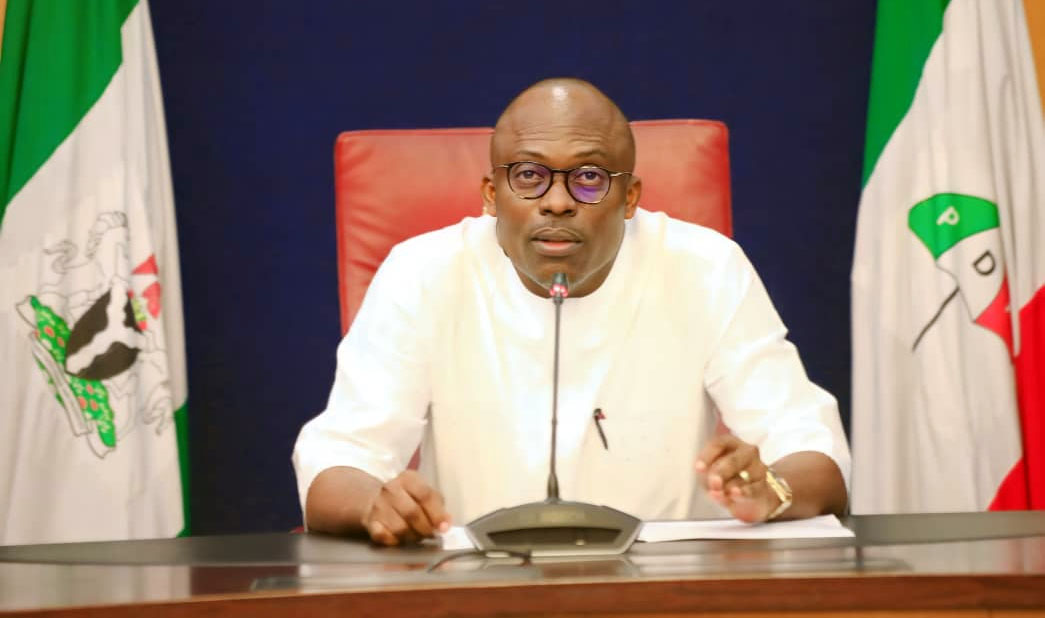
AGF stops Rivers allocations, Appeal Court reserves judgement on matter
The Office of the Accountant General of the Federation has stopped payment of federal allocations to the Rivers State Government in compliance with a court judgement.
This came as the Court of Appeal in Abuja heard the appeal challenging the verdict on Friday.
A three-member panel of the Court of Appeal led by Hamma Barka, on Friday, reserved judgement on the state government’s appeal against a lower court’s decision stopping the Central Bank of Nigeria (CBN) from releasing the South-South state’s monthly allocations.
Rivers State Governor Siminalayi Fubara and the state government had filed the appeal to challenge the 30 October judgement of the Federal High Court in Abuja.
In the now disputed verdict, the Federal High Court judge, Joyce AbdulMalik, described the disbursement of monthly allocations to the state since January as a clear constitutional breach that must not be tolerated.
The judge subsequently barred the CBN, the Accountant General of the Federation, the state’s bankers – Zenith Bank and Access Bank – from allowing the state government to access funds from the Consolidated Revenue and Federation Account.
Governor Fubara and the Rivers State Government had promptly appealed against the decision.
Other appellants are the Accountant-General of Rivers State and Zenith Bank Plc.
Appeal hearing
At the hearing of the appeal, on Friday, the governor, through his lawyer, Yusuf Ali, a Senior Advocate of Nigeria (SAN), prayed a three-member panel of the court led by Hamma Barka, to vacate the order issued by the Federal High Court in Abuja on 30 October.
Ali and lawyers to other appellants urged the court to allow his client’s appeal and nullify the lower court’s order.
But the Martin Amaewhule-led faction of the Rivers State House of Assembly, which obtained the Federal High Court judgement, asked the court to dismiss the appeal.
They made their submissions in court through their team of lawyers led by Joseph Daudu, a SAN too.
The factional members of the Rivers State House of Assembly, who are loyal to the immediate past governor of the state and current Minister of the Federal Capital Territory (FCT) Nyesom Wike, had persuaded the lower court to withhold all federal monthly allocations meant for Rivers State.
They predicated their case on the grounds that Governor Fubara refused to comply with an order of court that directed him to represent the 2024 Appropriation Bill of the state before them.
Governor Fubara had insisted that the Amaewhule-led group had since ceased to be lawmakers in the state.
He alleged that, having defected from the Peoples Democratic Party, PDP, which sponsored their election, to the All Progressives Congress (APC).
After the parties adopted their respective written addresses, the Court of Appeal panel said the date of judgement would be communicated to parties.
Before the postponement, the court merged a total of five appeals relating to the case into one on Friday.
Meanwhile, the Office of the Accountant General of the Federation (OAGF) announced on Friday that it halted the disbursement of October revenue payment to Rivers State, citing the Federal High Court judgement.
Bawa Mokwa, the spokesperson for the OAGF, who spoke to journalists, emphasised that the Federal Government would respect the court order with due diligence until a contrary order is issued.
“What I got is that the October 2024 FAAC has not been distributed yet. However, the federal government will obey the court order on the matter of Rivers State’s allocation,” he said.
The OAGF’s spokesperson further noted that due diligence would be followed “as long as there is no contrary order,” adding that “the process of disbursement of the October 2024 monthly allocation is going.”
The development comes amid ongoing the protracted political battle between Governor Fubara and the Minister of Federal Capital Territory (FCT), Nyesom Wike.
The Martin Amaewhule-led faction of the Rivers State House of Assembly is loyal to Mr Wike, a former Rivers State Governor.
(NAN)













News
FG Opens Application for Second Cohort of TVET Programme to Tackle Unemployment

FG Opens Application for Second Cohort of TVET Programme to Tackle Unemployment
The Federal Government has officially opened applications for the second cohort of the National Technical and Vocational Education and Training (TVET) programme, a nationwide skills development initiative designed to tackle unemployment, promote entrepreneurship, and strengthen Nigeria’s technical and vocational education system.
The announcement was made by the Minister of Education, Dr. Tunji Alausa, who confirmed that the application portal went live on Monday at 4:00 pm (WAT), urging Nigerians across all age groups to take advantage of the opportunity.
He described the initiative as a key component of the government’s broader human capital development strategy, aimed at equipping citizens with practical, industry-relevant skills that can drive job creation and economic productivity.
Alausa noted that the first phase of the programme recorded massive nationwide participation, with over 1.3 million applications, describing it as evidence of strong demand for vocational training and skills acquisition in Nigeria.
He added that the government remains committed to expanding access to hands-on technical education as part of efforts to reduce unemployment and encourage self-reliance.
TVET Programme Structure: Two Training Tracks
According to official details, the programme is divided into two major pathways:
The Short-Term Certificate Track runs for six months and is designed for beginners seeking foundational technical and vocational skills.
READ ALSO:
- Trump Claims 158 Iranian Ships Destroyed as US Enforces Naval Blockade in Gulf Region
- Wike Denies ADC Was Blocked From Using Eagle Square for Convention
- Judge Dismisses Trump’s $10bn Defamation Suit Against WSJ Over Epstein Report
The Vocational Education and Innovation Track runs for one year and targets individuals with prior informal experience or basic educational background, offering more advanced training in specialised fields.
Both tracks are fully funded and include practical learning delivered through accredited centres across Nigeria.
Eligibility Requirements and Application Process
Applicants are required to have a valid National Identification Number (NIN) and Bank Verification Number (BVN) to complete registration.
Candidates applying for the advanced track may also be required to provide proof of prior learning or relevant educational qualifications.
The application process is open to Nigerians nationwide, with training centres spread across federal and state technical colleges as well as accredited private institutions.
Benefits of the TVET Programme
Participants in the programme will enjoy several benefits, including:
- Fully funded free tuition under the Federal Government
- Monthly training stipends to support participants
- Practical, hands-on instruction in selected skill areas
- Nationally recognised certification upon completion
- Access to start-up support and small business financing opportunities
Skills and Training Areas Covered
The programme covers a wide range of high-demand sectors, including:
- Electrical installation and maintenance
- Welding and fabrication
- Automobile repair and mechanical services
- Digital and creative media production
- Fashion design and tailoring
- Agriculture and agribusiness development
- Renewable energy technologies
Officials say the curriculum is designed to align with Nigeria’s growing need for skilled manpower in both industrial and emerging sectors.
FG Push for Skills-Based Economy
The Federal Government says the TVET initiative is part of ongoing reforms aimed at transitioning Nigeria toward a more skills-driven and production-based economy.
It is also expected to reduce dependence on white-collar jobs by encouraging young Nigerians to embrace entrepreneurship, technical innovation, and self-employment.
With training centres located across all six geopolitical zones, the programme is positioned as one of the government’s largest national efforts to expand access to vocational and technical education in Nigeria.
FG Opens Application for Second Cohort of TVET Programme to Tackle Unemployment
News
INEC: Chairman Joash Amupitan Has No X Account, Warns Against Fake Posts
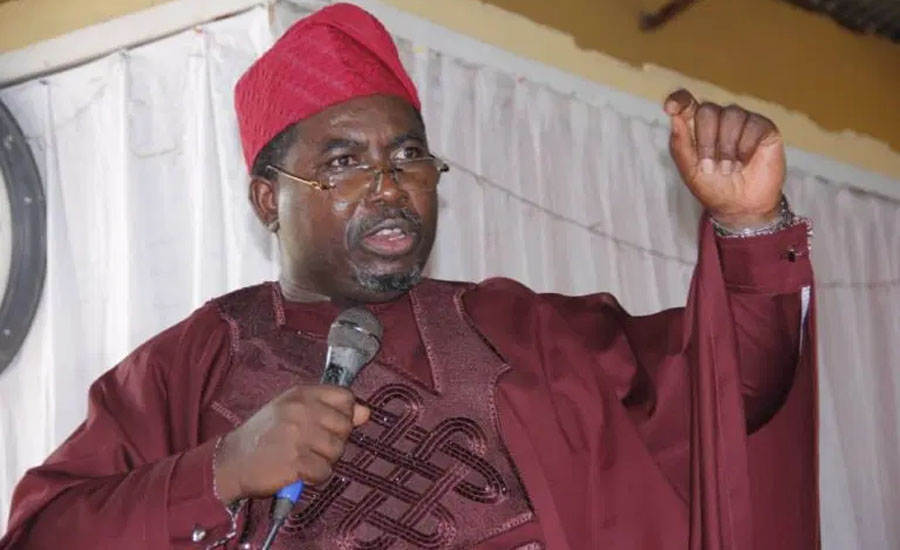
INEC: Chairman Joash Amupitan Has No X Account, Warns Against Fake Posts
The Independent National Electoral Commission (INEC) has clarified that its Chairman, Joash Amupitan, does not operate any personal account on X (formerly Twitter), distancing him from controversial posts circulating online and allegedly linked to an impersonation account.
INEC’s clarification was reinforced by its ICT Director, Lawrence Bayode, during an appearance on Channels Television’s Morning Brief, where he confirmed that the commission had already issued an official statement addressing the issue.
Bayode stated that any content circulating under accounts claiming to represent the INEC chairman should be disregarded, stressing that such accounts are not recognised by the commission.
“Based on the official statement issued by the commission, the chairman does not maintain any personal X account. Any content attributed to such an account is not recognised by the commission as originating from him,” he said.
He explained that the controversy highlights a broader challenge of digital impersonation and misinformation, warning that false online identities can easily be used to mislead the public and damage trust in national institutions, particularly during sensitive political periods.
READ ALSO:
- Trump Claims 158 Iranian Ships Destroyed as US Enforces Naval Blockade in Gulf Region
- Wike Denies ADC Was Blocked From Using Eagle Square for Convention
- Judge Dismisses Trump’s $10bn Defamation Suit Against WSJ Over Epstein Report
According to him, INEC’s priority is to safeguard electoral integrity by ensuring that only verified and official communication channels are used for public information.
“And for me, this is not about an individual; this is about how digital impersonation and misinformation can target public institutions,” he added, emphasising the need for vigilance among citizens and media organisations.
INEC reiterated that the chairman’s official communications are released strictly through institutional platforms, including verified press statements, official briefings, and the commission’s corporate social media handles.
The clarification comes amid controversy over resurfaced posts attributed to a now-disputed X account allegedly linked to the INEC chairman. The commission insists the account is fake and should not be associated with its leadership.
INEC also urged Nigerians to verify information before sharing, warning that the spread of fake accounts and false statements could undermine public confidence in the electoral process.
The commission further called on social media platforms to strengthen measures against impersonation accounts, particularly those targeting high-ranking public officials and sensitive democratic institutions.
As political discussions intensify ahead of future elections, INEC said it remains committed to transparency, neutrality, and protecting the integrity of electoral communication in Nigeria.
INEC: Chairman Joash Amupitan Has No X Account, Warns Against Fake Posts
News
Tinubu Aide Defends Early INEC Statement Release on Amupitan Controversy
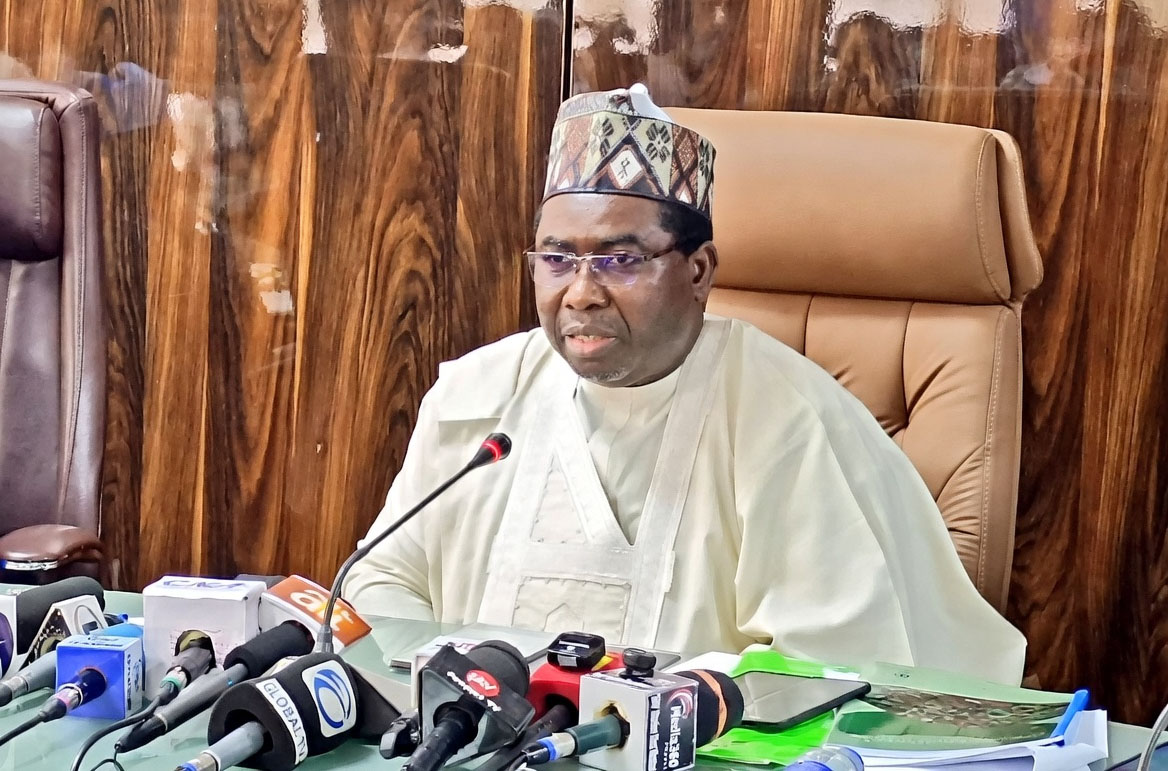
Tinubu Aide Defends Early INEC Statement Release on Amupitan Controversy
A presidential media aide, Dada Olusegun, has defended his decision to circulate a statement clearing the embattled Chairman of the Independent National Electoral Commission (INEC), Prof. Joash Amupitan, hours before it was officially released by the commission, saying his action falls within his responsibility to communicate government activities.
The controversy began after Olusegun posted on X (formerly Twitter) at about 8:12 pm on April 10, sharing a statement denying allegations that Amupitan had links to pro-government or pro-APC political activity during the 2023 general elections.
However, INEC reportedly published the same statement on its official platform the following day at about 6:16 pm on April 11, a timing gap that triggered public debate and questions about coordination between the presidency and the electoral body.
The development immediately sparked concerns online, with critics questioning why a presidential aide would publish a statement involving an independent institution before the commission itself, raising renewed discussions about the independence of INEC and institutional communication protocols.
Reacting to the backlash, Olusegun dismissed suggestions of wrongdoing, insisting that there was no conspiracy and that the similarity in messaging should not be misinterpreted.
READ ALSO:
- Nigeria-Kenya Comparison Won’t Solve Economic Crisis — Peter Obi Replies Tinubu
- Trump Sparks Global Outrage After Calling Pope Leo XIV “Weak, Terrible”
- INEC Chairman Under Pressure Over Alleged Pro-Tinubu X Account Link
“It is important to separate coincidence in messaging from conspiracy,” he wrote on X, adding that public institutions often respond to issues already in the public domain and that his post did not influence INEC’s official communication.
He further clarified that he did not author the statement and has no authority over INEC’s internal processes, stressing that his role is limited to communicating and defending the policies and image of President Bola Ahmed Tinubu’s administration.
“My role remains what it has always been: to communicate, clarify, and propagate the good works of President Tinubu’s administration responsibly,” he said.
Despite his explanation, the incident triggered widespread reactions on social media, with users questioning the timing of the publications and alleging possible coordination between the presidency and the electoral body.
Some commenters argued that the early release of the statement by a presidential aide could create public perception issues regarding electoral credibility in Nigeria, while others insisted it reflected deeper concerns about institutional independence.
The Independent National Electoral Commission has not issued any further clarification beyond its earlier denial of allegations linking its chairman to partisan political activity during the 2023 elections.
INEC has consistently maintained that its leadership remains neutral and that claims suggesting political bias are false and capable of undermining public trust in the electoral process.
The controversy has further fueled national debate over the boundaries between government communication, political messaging, and the independence of key democratic institutions in Nigeria, particularly ahead of future elections.
Observers say the incident highlights the increasing sensitivity of official communication in the digital era, where timing and perception can significantly shape public trust in institutions.
Tinubu Aide Defends Early INEC Statement Release on Amupitan Controversy

-
 metro2 days ago
JUST IN: FG Publishes List of 48 Individuals, Groups Linked to Terrorism Financing in Nigeria
-

 metro24 hours ago
BREAKING: Troops Arrest 15-Year-Old Linked to Killing of Gen Braimah in Borno
-

 metro2 days ago
42-Year-Old Married Woman Declared Missing Found in Hotel with Man
-
 Politics3 days ago
Did Faleke Just Reveal Lagos’ Next Governor? Party Moves Begin
-

 Politics2 days ago
2027: Oyo APC Governorship Aspirant Saheed Oladele Resigns From Party
-
 metro2 days ago
ADC Threatens Civil Disobedience To Force INEC Chairman To Resign
-

 metro1 day ago
Fayose Warns Makinde May Query Olubadan Over Absence at Ibadan Coronation Event
-

 Entertainment3 days ago
EFCC, Police Investigate Blessing CEO Over Alleged ₦300m Cancer Scam