

Opinion
Farooq Kperogi: In 2027, Tinubu won’t win; the opposition will lose
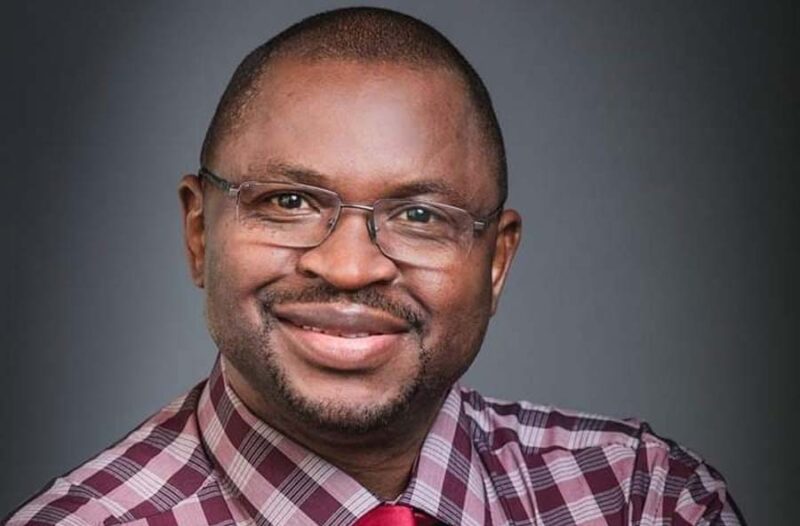
Farooq Kperogi: In 2027, Tinubu won’t win; the opposition will lose
If economic health, social vitality, and the raw pulse of public opinion were the only indicators relied upon to prognosticate the chances of President Bola Ahmed Tinubu’s reelection in 2027, I would say with cocksure certitude that he is condemned to be a one-term president.
Not even the most hopelessly unthinking defenders of the Tinubu presidency can deny that his reign so far has been defined by unrelieved economic hardship, staggering inflation, a collapsing naira, and a deepening sense of despair among Nigerians. In other words, the objective conditions for his political repudiation are overripe.
Nonetheless, elections, especially in Nigeria, are not won on the basis of public frustration alone. They are won — or lost — on the strength of political organization, elite consensus, strategic emotional manipulation, and the ability to convert popular anger into electoral mathematics. Call those the subjective conditions of electoral triumph, if you like. And this is where the tragedy of the opposition begins.
The opposition is undisciplined, hopelessly spineless, irredeemably fragmented, strategically bankrupt, and is falling cheaply into the trap set for it by Tinubu.
First, the opposition is shaping up to be disappointingly provincial. It is dominated by elements from a slice of the North that seems to be suffering from withdrawal symptoms from loss of political power. This is reminiscent of the narrow-minded opposition to former President Olusegun Obasanjo’s second term, which helped him to create a coalition of southern Nigerian, Christian northerners, along with portions of the North that felt excluded from the regional mainstream.
Perhaps the most egregious expression of naïve, historically inaccurate, self-sabotaging provincial self-importance from the region came five days ago from Dr. Hakeem Baba-Ahmed, a former appointee of the Tinubu administration who, before his sojourn in the administration, was a higher-up at the Northern Elders’ Forum.
READ ALSO:
- Zulum meets with Cameroonian troops after deadly Boko Haram attack in Wulgo
- Tribunal upholds Nigerian government $220m fine against Facebook, WhatsApp
- Troops capture wanted bandit, recover cache of ammunition
“In the next six months, the North will decide where it stands,” Dr. Baba-Ahmed said in a viral post. “If the rest of the country wants to join us, fine. If not, we will go our own way. One thing is clear: nobody can become president of Nigeria without northern support.”
Well, Olusegun Obasanjo was elected for a second term in 2003 without “northern” support. I inserted scare quotes around “northern” because, although Baba-Hakeem appeared to be ecumenical in his conception of the North (he referenced “Muslims, Christians, Fulani, Baju, Mangu” — the Baju and Mangu being ethnic groups from southern Kaduna and Plateau — indicating pan-Northernism), we all know that the North has never been a monolith and is often riven by religion.
When people like Baba-Ahmed talk of the “North” in such tyrannizing, self-aggrandizing terms, they often mean a particular part of the North.
Obasanjo deployed the perks of incumbency to mobilize the entire South, appeal to the Christian North, and to make offers to parts of the Muslim North that Muhammadu Buhari didn’t consider “northern” enough to deserve his electoral entreaties. Even if the election wasn’t rigged, Buhari didn’t stand a ghost of a chance of winning the 2003 election.
Former President Goodluck Jonathan used Obasanjo’s 2003 template in 2011 to defeat Muhammadu Buhari. But in 2015, Jonathan lost the Southwest to Buhari, which led to Jonathan’s loss and Buhari’s epochal, unexampled triumph.
This shows that no region can win a national election without the other, making Baba-Hakeem’s self-lionizing boast a rhetorical gift to Bola Tinubu. We’re already seeing its effect.
Several southerners who are wriggling in the torment of Tinubu’s economic policies have chosen to rather live with the sting of his policies than embrace the provincial arrogance of people like Baba-Ahmed who arrogate to themselves the exclusive power to determine who is president and who isn’t.
Similarly, in Nigeria’s informal power-sharing arrangement, the expectation is that after eight years of a northern presidency that ended in 2023, no northerner should be president again for the next eight years. But the northern opposition to Tinubu seems to be anchored on a desire for premature power grab back to the North.
READ ALSO:
- Police arrest two Kano men with N150m tramadol
- 2027: Ex-IGP Adamu eyes Nasarawa governorship
- Court urged to halt further release of LG allocations to Rivers State
Unless the northern politicians who have stuck out their necks to oppose Tinubu support another southerner with widespread appeal, their opposition will only strengthen Tinubu’s southern coalition and buy him sympathy from parts of the north that don’t enjoy regional political hegemony.
This is particularly so because since the start of the Fourth Republic, the South has never expressed opposition to northern presidencies by sponsoring southern candidates. The South supported Atiku Abubakar, a northerner, in 2019. Umar Musa Yar’adua’s main opponent in 2007 wasn’t a southerner. It was Muhammadu Buhari, a northerner.
But when it was the South’s turn to get presidential power in 2023, the North presented a formidable candidate in the PDP. In fact, the APC hierarchy, with the support of Muhammadu Buhari, settled on former Senate President Ahmad Lawan as the “consensus candidate.” That was embarrassing.
Already, there are insinuations that PDP governors who are defecting to APC are doing so not just because they are being bludgeoned into it through subtle EFCC prosecutorial threats but also because they fear that their party’s standard-bearer in 2027 will be a northerner.
I understand the dilemma of the northern politicians in opposition. Should they support a southern candidate to dislodge Tinubu, such a candidate would, as sure as tomorrow’s date, seek a second term. That would defer the presidential aspirations of the northern politicians by eight years instead of four.
If they sit by listlessly as Tinubu shoves them to the margins of the orbit of power, they will be like fish flailing out of water. They will be so disoriented and weakened that by the time presidential power drifts back to the North, they probably won’t even have the strength to fight for a place.
Northern opposition politicians like Nasir El-Rufai also don’t seem to realize that the Social Democratic Party (SDP) they have embraced as the vehicle to displace Tinubu is, in fact, Tinubu’s spare car.
It is fully fueled, tuned, and parked in his garage for contingencies. As early as April 2022, BusinessDay reported that Tinubu had opened backchannel talks with the SDP and explored it as a fallback platform in case his APC ambitions stalled.
In other words, the opposition is not commandeering an independent vehicle; they are clambering into a car whose engine hums to Tinubu’s touch and whose keys he can reclaim at will. They are, quite literally, riding shotgun in a machine built for their defeat. Unfortunately, he has also hijacked their car, the PDP!
Adewole Adebayo, SDP’s 2023 presidential candidate, unintentionally echoed this sentiment a few days ago when he used the metaphor of a car to send a not-so-subtle dig at El-Rufai.
“As for the coalition, we’re listening to them,” Adebayo said. “What we don’t want to be—we don’t want to be a get-away car for a conspiracy and robbery we did not plan. So, if you planned something somewhere and you want to use the SDP as a get-away car, that’s not available.”
Adebayo added another pointed dart to El-Rufai when he said, “if the coalition is a crying center for disappointed Tinubu followers, they should go back to Tinubu who gave the promise to them and resolve their differences there.”
In the end, Bola Ahmed Tinubu’s greatest electoral asset may not be the loyalty of the masses, the success of his policies, or even the cunning of his political machinery. It may well be the disarray, hubris, provincialism, and strategic myopia of his opposition.
They are too divided to form a coalition, too impatient to build trust across regions, and too blinded by immediate resentments to think in terms of long-term electoral triumph.
In 2027, Tinubu may stagger into a second term not because he inspires, but because he survives; not because he triumphs, but because those who should have dethroned him will, through a toxic mix of arrogance and amateurism, hand him victory on a silver platter.
It won’t be Tinubu who wins; it will be the opposition that loses. And Nigeria, trapped in the wreckage of broken possibilities, will pay the price.
Farooq Kperogi: In 2027, Tinubu won’t win; the opposition will lose
Farooq Kperogi is a renowned Nigerian columnist and United States-based Professor of Journalism.





Opinion
2027: Competence, Not Zoning, Should Decide Nigeria’s Next President — Imasuagbon
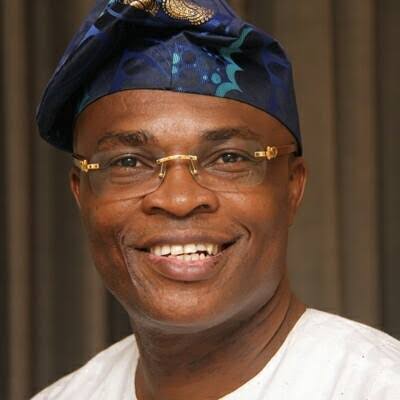
Nigerians should look beyond ethnicity, region and the longstanding debate over rotational presidency when choosing the country’s next leader, according to a chieftain of the African Democratic Congress (ADC), Kenneth Imasuagbon.
The former Edo State governorship aspirant said the priority ahead of the 2027 election should be finding a president with the ability to confront Nigeria’s economic, security and infrastructure challenges.
Speaking to journalists in Benin, Imasuagbon argued that presidential rotation is not a requirement of the Nigerian Constitution and should therefore not outweigh the question of competence.
He said voters should be more concerned about replacing poor schools with better ones, improving healthcare and addressing hardship than debating where the next president comes from.
Imasuagbon specifically appealed to voters in the South to support former Vice President Atiku Abubakar, who is contesting the 2027 presidency on the ADC platform.
According to him, Atiku has demonstrated the experience and determination needed to improve the country, describing the former vice president as someone capable of promoting national unity and fairness.
He also accused the Bola Tinubu administration of worsening economic pressure through policies including the removal of fuel subsidy, while expressing concern about the condition of roads, electricity and other infrastructure.
Imasuagbon argued that the next administration must focus on practical improvements in areas such as power, transportation, employment, security and public services.
The ADC chieftain also dismissed the idea that the ruling All Progressives Congress (APC) would automatically benefit from its incumbency advantage in 2027.
He maintained that the electorate ultimately determines the outcome of an election, arguing that voters could change the political direction of the country if they were determined to do so.
Imasuagbon further criticised what he described as regional and ethnic considerations in the distribution of political appointments and opportunities, insisting that the next president should give Nigerians across different parts of the country a sense of belonging.
His comments come as political parties and their candidates intensify preparations for the 2027 presidential election.
Opinion
Lesson from Dotun Oladipo’s Brave Daughters, by Bamidele Johnson
Lesson from Dotun Oladipo’s Brave Daughters, by Bamidele Johnson
I hope to grow old. I want to see my kids become real adults, find their own feet, make mistakes, recover from them, and perhaps one day complain that their own children are giving them grey hairs. I want that plainly stated before anything else, as everything that follows might read as a man agreeing to an early exit rather than a man simply being honest about the odds.
I want the decades. I want to become the grandfather who repeats the same stories until nobody bothers correcting him anymore. But wanting a thing and being granted are different things. The last year has made that difference harder to ignore than I would like. I have lost many friends recently to keep thinking that optimism is my natural resting state. Some of these men had better blood pressure than mine, better habits, better everything that is supposed to count. It did not save them.
There is no formula I know that reliably separates the men who make it to 70 from those who do not. Anyone who says he knows one is selling something. So, I do not assume that old age is an already booked destination. Even if I once did, which I doubt, the last three years have cured me of such an illusion. As such, I treat it as a hope rather than an expectation, and I have found that a more honest way to live.
It is exactly why I want something placed on record now, while I am still able to place things on record, rather than leave it for people to guess what my wishes were in the fog of a funeral week. If I do not make old bones, my children are not to be asked to read tributes at my funeral. Not one line, however short, however lovingly written.
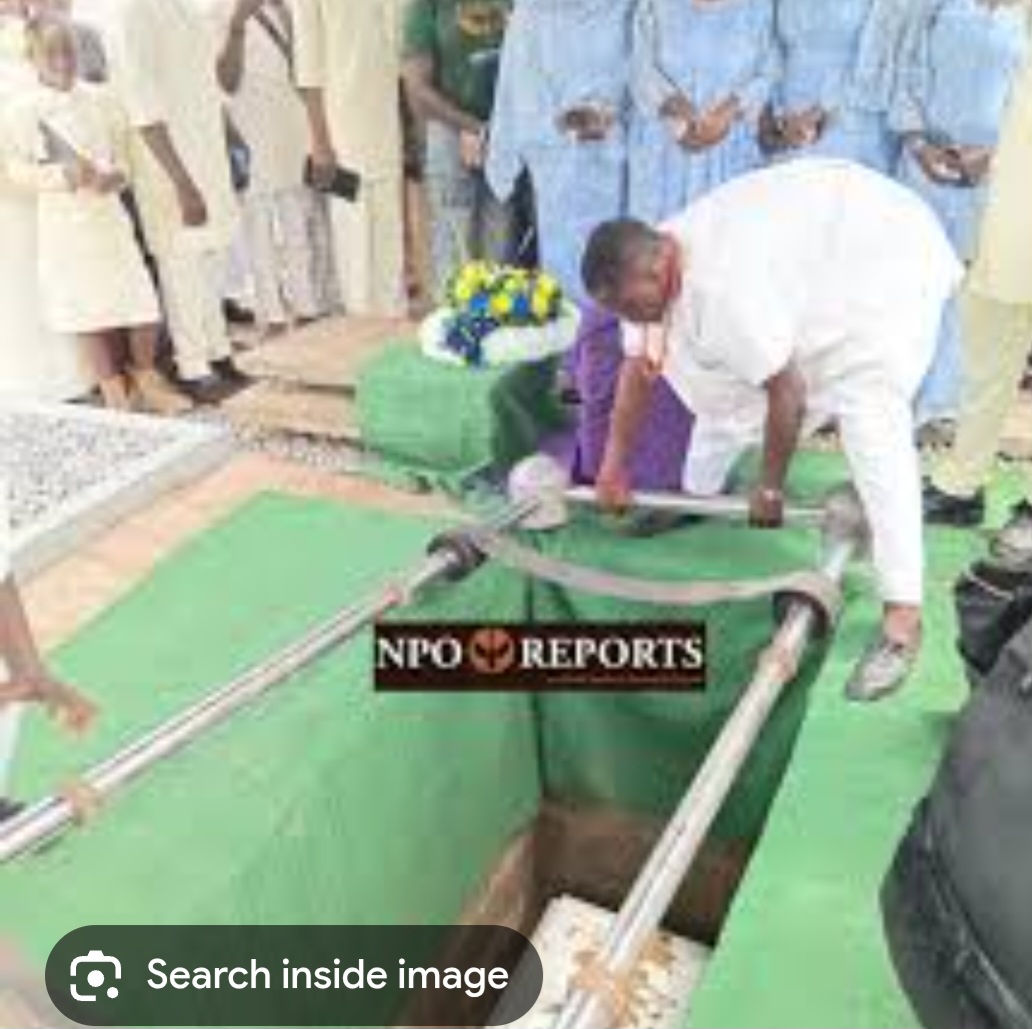
This, for me, was settled today rather than re-opened. At Dotun Oladipo’s funeral service, his three daughters took turns to read their tributes to their dad, and I found myself watching them with awe. There was a kind of strength in them that I do not possess. It is the strength needed to stand in front of a hall brimming with grieving adults and speak about a man they have just lost. Forever. Strength, however, is not the same as ease. I could see plainly what that strength was costing them as they read. Their voices caught. Their composure held and then did not hold and then held again through sheer will.
In front of them, in the pews, men and women considerably older than them came undone in ways the girls themselves were somehow managing to resist. I went mightily close. Some of the sobbing was quiet, the type people try to fold into a handkerchief. Some of it was not quiet at all, the kind that announces itself whether or not you want it.
Those young women honoured their father with a grace that is beyond me. What they did was astonishing. So, what I am attempting is an observation of a custom I have now watched wound people. This was not the first time I had watched this particular ritual extract more than it should from people already running on fumes. I saw an earlier and harder version of it at a friend’s wake back in 2015.
The first son was called forward to read his father’s tribute, and he could not do it. He tried, but the words would not come, and he stood there in front of a crowd of mourners, with his grief simply refusing to organise itself into sentences. The officiating minister, rather than releasing him from the task, urged him to continue. I sat fizzing with sorrow and ire. He could not go on and, eventually, the minister accepted, but not before insisting a while longer than it should have reasonably taken. His younger brother was called up next, presumably on the theory that if one grieving son could not manage it, maybe another one could. He flunked it in the same way. Grief does not distribute itself more conveniently among siblings just because a programme has been printed and needs to be followed.
I have turned that memory over many times since, trying to work out why this part of the rites is treated as mandatory in the first place. I have not found a satisfying answer. Maybe it comes from a belief that a child’s words carry more weight than anyone else’s, which may even be true, but weight is exactly the problem when those carrying it are struggling to hold themselves together with nothing but adrenaline and the fear of dissolving in public.
Maybe it is simply inertia, the reason we still do a hundred things at funerals that nobody can explain the original purpose of. Either way, I have stopped looking for the justification. I no longer think one exists that is good enough to weigh against what I watched happen to that boy in 2015.
So, let this stand as my instruction rather than my preference, the kind of thing I would rather state plainly now than leave for my children to infer later from how uncertain I sound when the subject comes up in passing. If I do not get the old age I am hoping for, my children will not be asked to read a single word over my body. Someone else can speak for me. A friend, a stranger with a steadier voice and a smaller stake in the loss, anyone whose grief will not be quite so total that standing upright becomes almost impossible.
My children, of course, will sit in front and fall apart if that is what the day requires of them, but without the microphone. That, at least, is one small mercy I intend to arrange for them while I am still here to arrange it.
Dotun deserved every bit of the send-off his daughters gave him today, and I suspect he would have been the first to tell them to sit down and let someone else carry the weight for a while. He did not get a say in that, as none of us ever do once we are the ones being spoken of rather than the ones speaking. Rest well, Dotun. You raised three young women whose strength I will not soon forget. That alone says everything worth saying about the man you were.
Opinion
‘Tinubu Will Win Again in 2027’ — Charismatic Bishops’ Secretary
‘Tinubu Will Win Again in 2027’ — Charismatic Bishops’ Secretary
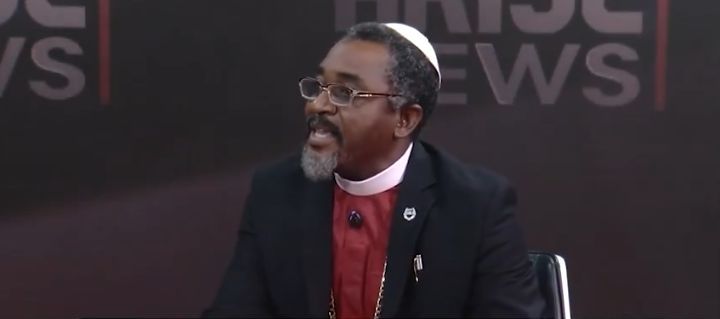
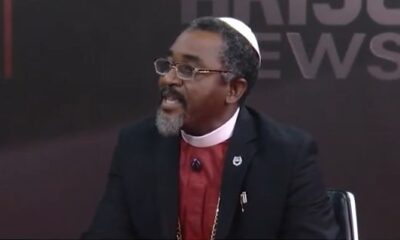
A senior Nigerian cleric, Archbishop Chivir Chianson, has declared that President Bola Tinubu will retain the presidency after the 2027 general election, attributing the prediction to a message he said came from God.
Chianson, who serves as Secretary General of the Charismatic Bishops’ Conference of Nigeria, made the statement while appearing on Arise Television on Saturday.
Rather than basing his prediction on political calculations, the archbishop said his confidence came from what he described as the prophetic role of bishops.
He maintained that the conference had previously spoken about Tinubu’s political future based on what he said was divine revelation and that the President would return for another term.
Chianson also predicted that Tinubu’s performance would improve if he wins the 2027 election.
READ ALSO:
- DSS warns Osun churches, mosques, markets over alleged terrorist attack plot ahead of 2027
- ‘Tinubu Will Win Again in 2027’ — Charismatic Bishops’ Secretary
- Fake miracles, bogus grants: How clerics allegedly fleece Nigerians of millions
Addressing the political opposition, the cleric said the bishops could not be blamed if rival parties failed to unite or organise themselves effectively ahead of the election.
He also sought to clarify the position of the bishops when dealing with government, saying their role in speaking truth to power did not mean they should approach political leaders with hostility or disrespect.
According to him, the Constitution, alongside their religious convictions, should guide how they engage the President and the country.
Chianson said he was sufficiently confident in his prediction to promise that he would return to the Arise TV studio after the 2027 election, when he expects the result to demonstrate that the bishops’ prophecy was correct.
His comments add a religious dimension to the increasingly active political conversation surrounding the 2027 presidential race.
‘Tinubu Will Win Again in 2027’ — Charismatic Bishops’ Secretary
-
 News2 days ago
SERAP Threatens Legal Action Over ₦126bn INEC Electoral Funds
-
 Politics2 days ago
Five Islamic Clerics Abducted After Tinubu Re-Election Prayer At Yari’s Zamfara Residence
-
 Opinion2 days ago
‘Tinubu Will Win Again in 2027’ — Charismatic Bishops’ Secretary
-
 Politics22 hours ago
2027: Northern Lecturers Back Tinubu, ASUU Disowns Endorsement
-

 metro2 days ago
Mother ‘sold daughter’s abuse videos for $300’: Nigeria child pornography case shocks nation
-

 Sports2 days ago
‘Unacceptable’ — Arteta Furious Over Sunderland Penalty in Arsenal Win
-
 News1 day ago
Nwifuru Dismisses Cubana Chief Priest as ‘Attention-Seeker’
-

 News2 days ago
Petrol Subsidy: Presidency Rejects Atiku’s Plan, Says No Going Back