

metro
Amotekun Recovers Ak-47 Rifles, Ammunition Hidden in Forest in Oyo State

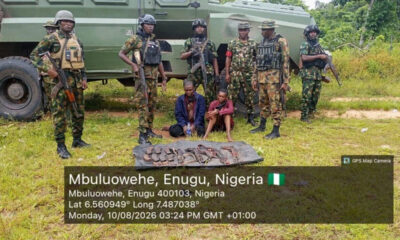
The Oyo State wing of the Southwest Security Network (Amotekun Corps) has recovered AK-47 rifles, military camouflage and other items hidden in a forest in the state by suspected kidnappers.
Commandant of the corps in Oyo State, retired Col. Olayinka Olayanju, told newsmen in Ibadan on Monday that the corps recovered four AK-47 rifles, four magazines and 50 rounds of 7.62mm live ammunition.
Also recovered were wraps of Indian hemp, raincoats, two Nigerian Army caps and a beret.
He said the items were recovered while operatives of the corps were combing forests following rising cases of kidnap on the Lagos-Ibadan Expressway.
READ ALSO:
- Osun Assembly rejects Adeleke’s decision to rename state
- Zamfara community pays N20m to avert terrorists attack
- ASUU Threatens Fresh Crisis Over ‘No Work No Pay’
- Thieves targets Nigerians in US, UK, Europe, rob them of passports, money, valuables
“Last weekend, efforts of our men were rewarded when the arms and ammunitions were found in one of the forests following a tip-off that some gunmen sighted in the area.
“The security network’s agents are still present in the forest to possibly apprehend the criminal elements,’’ he said.
In his remarks, Special Adviser to Gov. Seyi Makinde on Security Matters, retired Commissioner of Police, Mr Fatai Owoseni, said the governor had directed security personnel in the state to take proactive steps to stop abductions in the state.
Owoseni said collaboration with local hunters and vigilantes assisted greatly in recent successes recorded by the Amotekun corps in the state.
He assured that the state government would provide equipment needed for the smooth operation of the corps to enhance their performance.
NPO










metro
DSS warns Osun churches, mosques, markets over alleged terrorist attack plot ahead of 2027
DSS warns Osun churches, mosques, markets over alleged terrorist attack plot ahead of 2027
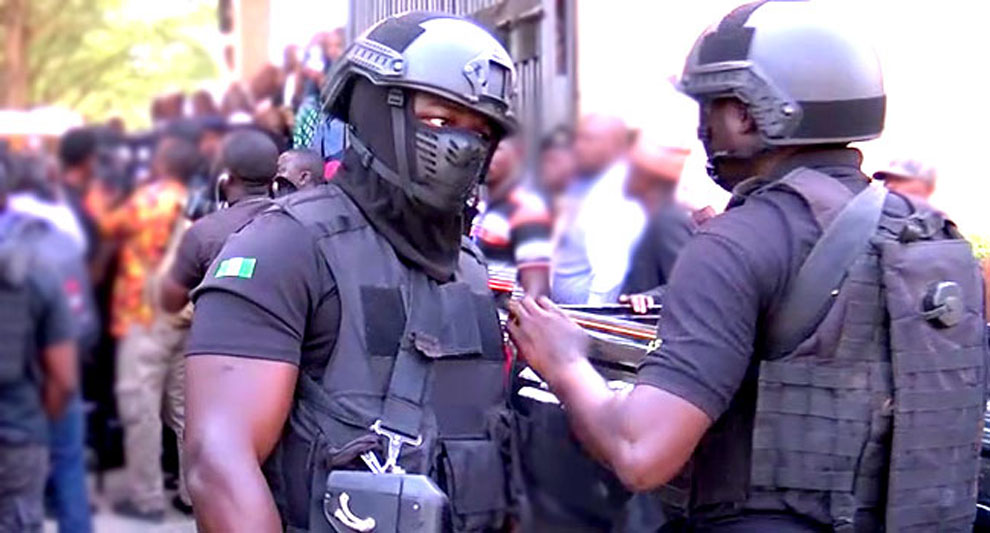
The Department of State Services (DSS) has raised a security alert in Osun State over an alleged plan by terrorist elements to attack churches, mosques, markets, schools and other crowded locations ahead of the 2027 general elections.
The warning was reportedly issued during separate security briefings held with leaders of the Muslim and Christian communities in Osogbo on Wednesday, September 9, 2026.
According to information presented at the meetings, the alleged attackers may attempt to extend their activities from northern Nigeria into the South-West, with Osun State reportedly identified as one of the areas of concern.
The alleged plan is said to be aimed at creating fear and insecurity among residents and potentially discouraging citizens from participating in the 2027 elections.
However, there is currently no public indication from the DSS that an attack is imminent, while the agency has not publicly identified the specific terrorist organisation allegedly behind the reported plan.
The alert has nevertheless prompted religious and community leaders to review security arrangements around places where large numbers of people gather.
The President of the Osun State Muslim Community, Mustapha Olawuyi, confirmed that Muslim leaders met with DSS officials in Osogbo and described the information provided during the meeting as serious.
Olawuyi urged Muslims across the state to remain vigilant and cooperate with security agencies.
According to him, the DSS warned that terrorist elements could attempt to mobilise towards the South-West to cause mayhem, spread fear and create an atmosphere that could discourage citizens from exercising their civic rights during the 2027 elections.
He also said security agencies had been monitoring the activities and movements of suspicious individuals in the state.
READ ALSO:
- ‘Tinubu Will Win Again in 2027’ — Charismatic Bishops’ Secretary
- Fake miracles, bogus grants: How clerics allegedly fleece Nigerians of millions
- ‘Unacceptable’ — Arteta Furious Over Sunderland Penalty in Arsenal Win
Olawuyi disclosed that the Muslim community had previously expressed concerns over the arrival of hundreds of unfamiliar persons in some parts of Osun.
He commended the DSS for sharing intelligence with community leaders before any possible attack occurs.
As part of the preventive measures discussed at the meeting, mosque leaders were reportedly advised to pay greater attention to security during Friday prayers and other large religious gatherings.
They were urged to watch out for suspicious vehicles parked around mosques and immediately report unusual activities or persons to security agencies.
Mosque authorities were also reportedly advised against allowing people to sleep within mosque premises and encouraged to provide security guards, particularly at night.
Religious leaders were further urged to exercise caution when dealing with unfamiliar commercial motorcycle operators and other persons whose identities or movements could not be adequately established.
The warning was also extended to the Christian community.
The Osun State Chairman of the Christian Association of Nigeria (CAN), Pastor John Adeleke, confirmed that DSS officials held a separate security meeting with Christian leaders.
Adeleke said Christian leaders were warned to strengthen security around churches and other public gathering centres.
He said the information was subsequently circulated to various CAN blocs and Christian groups across Osun State.
According to him, churches were advised against allowing unidentified vehicles to park close to worship centres because of the possibility that such vehicles could potentially be used to conceal explosives or other dangerous materials.
Church leaders were also encouraged to properly identify visitors and remain vigilant about unfamiliar people entering their premises.
Adeleke said churches were advised to exercise particular caution during night programmes, when darkness and reduced visibility could create security vulnerabilities.
He urged Christians to remain calm but security-conscious and to report suspicious persons, vehicles or activities to the appropriate authorities.
The warning also covers schools, markets, clubs, viewing centres and other public facilities where large numbers of people regularly gather.
According to Adeleke, school owners and managers of public facilities were advised to review their security arrangements and ensure adequate measures were in place to protect students, staff, worshippers, customers and other members of the public.
A report of the Christian leaders’ meeting, signed by Ajayi J.K., the State Assistant Secretary of Osun CAN, reportedly stated that the DSS informed the Christian leadership that terrorists had allegedly mapped out Osun as part of a wider plan to attack some states before the 2027 presidential election.
The report reportedly indicated that the alleged attackers could move through Kaduna and Jos before heading towards Osun.
READ ALSO:
- US Blockade Tightens As CENTCOM Redirects 100 Commercial Ships From Iranian Ports
- Five Islamic Clerics Abducted After Tinubu Re-Election Prayer At Yari’s Zamfara Residence
- Obafemi Martins Plans Six-Zone Football Tournament for Tinubu’s Re-election
It listed churches, mosques, markets, schools, clubs and viewing centres among the locations that could potentially be targeted.
The Christian leaders were subsequently urged to strengthen security around their premises and pay close attention to unusual activities.
The Osun alert comes against the background of broader concerns about possible retaliatory attacks by terrorist and criminal groups following intensified security operations across northern Nigeria.
The Office of the National Security Adviser (ONSA) had earlier warned Nigerians to remain vigilant, saying terrorist and criminal groups facing setbacks from military operations could resort to isolated attacks designed to create fear, attract public attention or demonstrate that they still possess the capacity to strike.
The national advisory followed reported security operations against terrorist and bandit groups in parts of the North-East, North-West and North-Central regions.
The ONSA said the operations had resulted in the elimination of several terrorist and bandit commanders and the disruption of camps and other criminal strongholds.
Among those reportedly killed was ISWAP commander Abubakar Mainok, also known as Abu Bilal Al-Minuki.
Although the ONSA advisory did not specifically identify Osun as a target, its warning about possible isolated attacks provides wider context for the latest DSS briefing in the state.
Security concerns have also prompted some institutions across Nigeria to strengthen their preventive measures.
Schools and churches in some parts of the country have reportedly introduced measures including improved surveillance, stronger perimeter controls, additional security personnel and emergency procedures in response to the wider security environment.
Osun authorities have also previously expressed concern about the movement and presence of unfamiliar individuals in some communities.
In July, the state government announced a mining community intelligence architecture following concerns over alleged infiltration of some communities by foreign nationals and other unidentified persons.
The government called on community leaders to work with the DSS, Nigeria Police Force, Nigeria Security and Civil Defence Corps (NSCDC), Amotekun Corps and other security agencies to improve intelligence gathering and community security.
READ ALSO:
- NANS Threatens ‘Mother of All Protests’ Over Ondo Varsity Strike
- Former PDP Chairman Bamanga Tukur Dies at 90
- Police Arrest Woman Over Alleged Drug Trafficking in Delta
The state has also recorded cases of kidnapping and other criminal threats, although there is no evidence that those incidents are connected to the alleged terrorist plot contained in the latest DSS warning.
The timing of the alert is significant as political activities gradually intensify ahead of the 2027 general elections.
Security concerns around elections in Nigeria have historically included political violence, communal tensions, attacks on campaign activities and threats against voters and election officials.
The latest DSS warning therefore places additional responsibility on security agencies and community leaders to ensure that legitimate political and civic activities can take place without intimidation.
At the same time, the warning presents a delicate challenge for authorities because excessive alarm or the circulation of unverified information could create unnecessary fear among residents.
The available information does not show that the DSS has publicly named a specific terrorist organisation behind the alleged Osun plot, nor has it announced that an attack is certain to occur.
The warning should therefore be understood as a preventive security alert based on reported intelligence, rather than confirmation that an attack is imminent.
Religious and community leaders have consequently been encouraged to remain vigilant without spreading unverified information.
Residents have also been urged to promptly report suspicious persons, abandoned or suspicious vehicles, unusual movements and other security concerns to law enforcement authorities.
For churches and mosques, practical measures such as controlled access, proper identification of visitors, adequate lighting, security personnel and vigilance around parked vehicles could help reduce vulnerabilities.
Schools, markets, entertainment centres and other facilities that attract large crowds are similarly expected to review their emergency response and security procedures.
The broader objective is to ensure that terrorist or criminal groups do not exploit crowded public places to cause mass casualties, spread fear or disrupt peaceful civic activities.
With Nigeria heading towards the 2027 elections, closer cooperation between security agencies, religious institutions, traditional leaders, schools, businesses and residents could be critical to preventing attacks and maintaining public confidence.
For residents of Osun, the immediate message from community leaders is vigilance without panic.
Citizens are expected to continue their normal activities while remaining alert and promptly providing credible information to security agencies that could help prevent any planned attack.
DSS warns Osun churches, mosques, markets over alleged terrorist attack plot ahead of 2027
metro
Fake miracles, bogus grants: How clerics allegedly fleece Nigerians of millions

Fake miracles, bogus grants: How clerics allegedly fleece Nigerians of millions
ABUJA/LAGOS — Nigerians seeking solutions to financial difficulties, health challenges, family problems and other personal troubles are increasingly falling victim to alleged religious scams, with some self-styled clerics accused of collecting millions of naira in exchange for miracle products, spiritual interventions, fake investments, grants and promises of overseas travel.
Accounts documented in an investigation by The PUNCH showed how some worshippers and religious followers allegedly surrendered substantial portions of their savings to clerics who promised divine breakthroughs, protection, healing or financial prosperity.
The cases cut across both Christian and Muslim religious settings, with law enforcement agencies prosecuting or investigating some of the alleged schemes.
One of the victims, identified as Oluremi Sokoya, a pseudonym, said she was drawn into the activities of a Pentecostal church in Ikorodu, Lagos, after joining in January 2022.
The 28-year-old entrepreneur said she became a member of the church and later worked on the pastor’s protocol team. According to her account, the pastor began paying particular attention to her because of her regular tithes and offerings.
She alleged that the cleric subsequently encouraged her to contribute to church projects and repeatedly used testimonies about people who supposedly received blessings after making “sacrificial” donations.
Sokoya claimed that the pastor eventually gained significant control over her finances, including allegedly taking her debit card to purchase items for himself and members of his family.
She estimated that she spent almost N500,000 on the pastor within a few months, while also buying groceries, clothing and shoes for him and his family.
READ ALSO:
- US Blockade Tightens As CENTCOM Redirects 100 Commercial Ships From Iranian Ports
- Five Islamic Clerics Abducted After Tinubu Re-Election Prayer At Yari’s Zamfara Residence
- Obafemi Martins Plans Six-Zone Football Tournament for Tinubu’s Re-election
She further alleged that the cleric sexually harassed her on several occasions, including an incident in which she said he attempted to touch her inappropriately inside his office.
The matter was reportedly reported to the police in May 2023, while about N400,000 was later refunded to her in instalments.
Sokoya said the experience eventually made her stop attending the church.
Another couple, identified as Sam and Mary Udofia, recounted an experience dating back to 2006, when they were introduced to a self-styled prophet during a period they described as a spiritual crisis.
The Ibadan-based couple alleged that the prophet gradually became deeply involved in their family affairs, dictating who they could associate with, where they could go and whom they should regard as enemies.
Sam said the cleric repeatedly collected money from the family while allegedly using fear and claims of spiritual attacks to maintain influence over them.
He said his doubts intensified in 2009 when he became seriously ill and the prophet did not visit him, despite being informed of his condition.
According to him, his wife eventually took him to another church, where prayers were offered without payment and he recovered.
The couple later became suspicious after learning that the prophet had built a house despite having no known conventional employment.
Mary said the family could not accurately calculate how much money they had given the cleric over the years.
She said they remained tenants for years while continuing to give money to the prophet, who allegedly claimed that people around them were spiritual agents.
The couple eventually stopped seeking spiritual solutions from self-styled prophets and focused on rebuilding their lives.
Beyond individual testimonies, the cases point to a wider pattern in which religious fraud allegedly takes several forms, including fake investment opportunities, non-existent grants, visa promises, miracle products and compulsory or heavily pressured “seed” offerings.
Some self-styled religious leaders allegedly promote fake real estate, forex and business ventures, asking followers to invest their savings with promises of extraordinary returns.
READ ALSO:
- NANS Threatens ‘Mother of All Protests’ Over Ondo Varsity Strike
- Former PDP Chairman Bamanga Tukur Dies at 90
- Police Arrest Woman Over Alleged Drug Trafficking in Delta
Others reportedly claim to operate international foundations or grant programmes, collecting registration or processing fees from desperate applicants.
There are also alleged visa and travel scams, in which clerics claim to have received divine revelations that particular worshippers will relocate abroad, before demanding money for supposedly guaranteed foreign visas.
The Economic and Financial Crimes Commission has prosecuted several cases involving religious figures.
In 2023, EFCC arrested Apostle Theophilus Ebonyi, the General Overseer of Faith on the Rock Ministry International, over an alleged N1.3bn fake grant scheme.
The commission alleged that Ebonyi demanded $1,300 from victims to access a supposed $20bn grant from the United States-based Ford Foundation.
The EFCC said the Ford Foundation had no relationship or grant arrangement with Ebonyi or his organisation and had publicly disclaimed any connection with them.
The commission also alleged that properties linked to Ebonyi were acquired from the proceeds of the scheme.
In April 2026, the Federal High Court in Lafia, Nasarawa State, ordered the final forfeiture of several landed properties linked to him to the Federal Government after the EFCC established them as proceeds of crime.
Another case involved Enugu-based self-styled prophet Godwin Cheya, popularly known as Prophet Sunday Koboko.
A woman, Jane Ngene, reportedly petitioned the EFCC, alleging that Cheya convinced her that he could raise her late husband from the dead.
She alleged that she paid N6.7m in connection with the purported resurrection and an investment scheme promoted by the ministry.
Another petitioner, Okey Uwakwe, alleged that the cleric promised to use spiritual means to influence his brother, who had lived outside Nigeria since 1997, to return home.
Uwakwe reportedly paid N6.2m for the alleged spiritual intervention.
Following petitions from several individuals, the EFCC investigated Cheya’s activities and found allegations involving the sale of various spiritual and material products.
Among the products allegedly sold to followers were “miracle stickers”, purportedly for financial breakthroughs, “spiritual dragons” for spiritual battles and “Holy Ghost thunder” for protection.
In July, the EFCC secured Cheya’s conviction before the Enugu State High Court.
He pleaded guilty to charges that included obtaining N136m from church members under the false claim that he had won N30bn in the Baba Ijebu lottery.
He had allegedly promised investors dividends based on the amount they contributed to the scheme.
Justice H. O. Eya sentenced him to one year in prison, with an option of a N500,000 fine.
READ ALSO:
- Dangote raises petrol price 6.7% to N1,350/litre
- Anambra Police Arrest Woman Over Alleged Sexual Abuse of Child, Rescue Four
- MURIC fires back at Peter Obi: Forget Sallah ceremony, free Nigerian Muslims
The court also ordered the forfeiture of his landed property to the Federal Government through the EFCC, directing that proceeds from its sale be used to compensate victims.
The alleged scams are not limited to Christian clerics.
In June last year, the Nigeria Police Force arraigned two self-styled Islamic clerics, Saheed Aremu and Tolani Osuolale, over an alleged N280m fraud involving a medical doctor.
The police alleged that the defendants convinced the victim that his money needed spiritual fortification before he could use it for a property investment.
They allegedly collected $200,000, said to be about N270m at the time, in three instalments.
The defendants faced charges including advance fee fraud, obtaining by false pretences, impersonation, conspiracy and stealing.
In another case, an Islamic cleric, Olaide Ajala, was charged before an Ibadan magistrates’ court over alleged N7.6m fraud.
The prosecution alleged that Ajala collected N7m from a complainant under the pretence of conducting prayers over his business problems.
Ajala pleaded not guilty and was granted bail of N1m with two sureties.
The growing number of cases has also attracted concern from the EFCC leadership.
EFCC Chairman Ola Olukoyede disclosed in April that several religious leaders were in the commission’s custody over alleged fraudulent activities.
He stressed that corruption and financial crimes were not restricted to any particular religion, noting that both Christian and Muslim religious institutions could be vulnerable to abuse.
Olukoyede also revealed that the EFCC had previously investigated Pastor Jerry Eze, founder of Streams of Joy International, over suspected money laundering after intelligence reports raised questions about substantial inflows into his accounts.
He said the investigation lasted six months and involved tracing foreign transactions from countries including the United States, Colombia, Sri Lanka and Togo.
However, Olukoyede said investigators found no evidence of wrongdoing against Eze.
He has also previously warned that some religious organisations could face serious accountability questions over the source and use of their funds.
The issue has prompted condemnation from religious leaders who argue that fraudulent individuals should not be allowed to use Christianity or Islam as cover for exploiting vulnerable people.
Pastor Daniel Okunoye of Multiply Christian Network described religious financial exploitation as an expression of greed and excessive love of money.
He said Christian leaders were expected to maintain high moral standards and urged worshippers to be discerning, particularly when clerics begin attaching monetary demands to miracles or divine blessings.
Muslim cleric Ismaila Bello also condemned Islamic leaders who allegedly exploit their positions of trust to obtain money through deception.
He argued that Islam does not permit people to take another person’s property through fraud or false pretences and said clerics demanding excessive amounts for supposed spiritual interventions were not representing the teachings of Islam.
For Professor Jacob Ayantayo, a University of Ibadan academic who specialises in the sociology and ethics of religion, the problem is partly driven by religious vulnerability, limited theological understanding, greed, impatience and economic hardship.
He argued that many Nigerians, including educated people, can be vulnerable to manipulation when they believe religious figures possess special access to spiritual mysteries.
Ayantayo also linked the phenomenon to the wider economic and social uncertainties facing Nigerians, saying the lack of confidence in the future encourages some people to seek instant solutions rather than pursue gradual economic progress.
He said the expectation of receiving sudden financial breakthroughs could make people susceptible to individuals promising “miracle” wealth.
The professor called for greater public education and stronger scrutiny of religious activities while urging the government to avoid politicising religion.
The cases underline the importance of distinguishing legitimate religious giving, worship and spiritual counselling from fraudulent financial schemes disguised as religious activities.
For victims, the consequences can extend beyond financial losses to broken families, emotional distress, loss of trust and, in some cases, withdrawal from religious communities.
Law enforcement authorities have continued to prosecute individuals accused of using religious influence to obtain money through false representations, but the persistence of such cases suggests that desperate Nigerians remain vulnerable to promises of instant wealth, healing, protection and supernatural intervention.
The growing concern, therefore, is not about legitimate religious practice but about individuals allegedly turning faith, fear and desperation into tools for financial exploitation.
Fake miracles, bogus grants: How clerics allegedly fleece Nigerians of millions
metro
Former PDP Chairman Bamanga Tukur Dies at 90
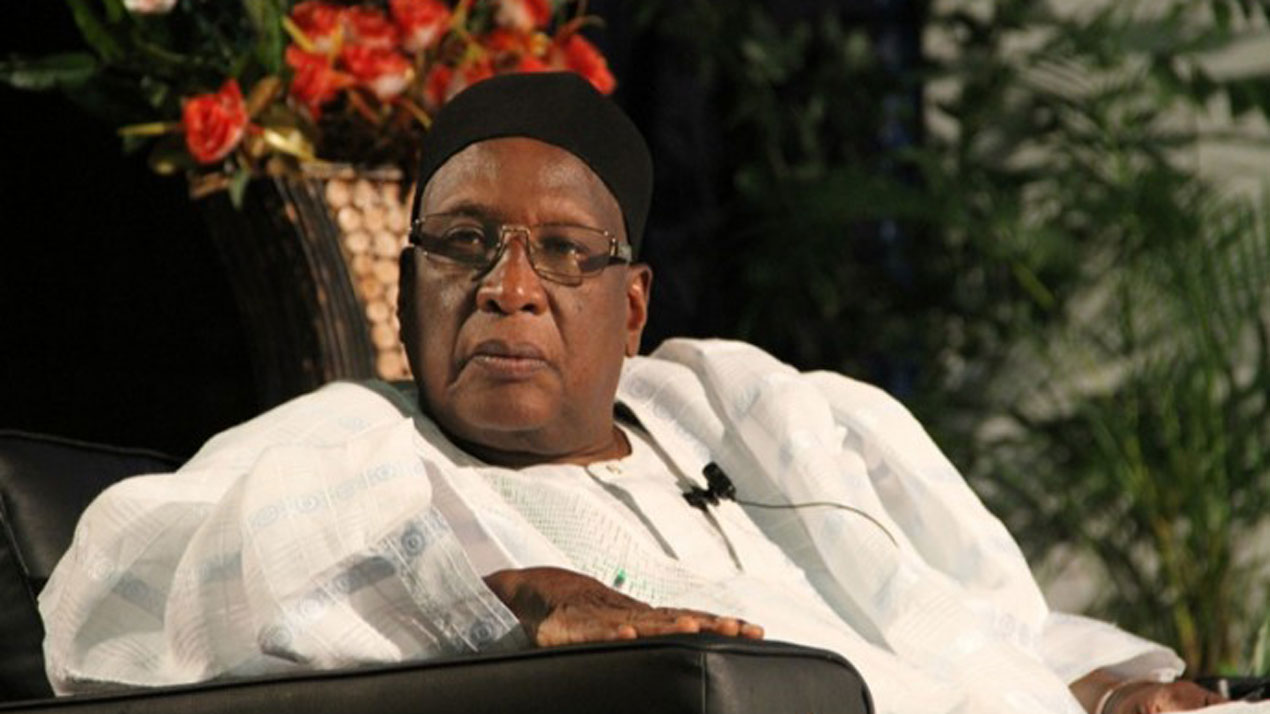
Former PDP Chairman Bamanga Tukur Dies at 90
Former governor of the old Gongola State and one-time National Chairman of the Peoples Democratic Party (PDP), Alhaji Bamanga Mohammed Tukur, has died at the age of 90.
Tukur died on Saturday, September 12, 2026, according to a statement issued by his family and signed by his son, Hon. Awwal D. Tukur.
The former governor died three days before his 91st birthday. He was born on September 15, 1935, and was one of the prominent figures whose career spanned politics, public administration, business and national development.
Announcing his death, the family said it was with “profound sadness and total submission to the will of Almighty Allah” that it announced the passing of its patriarch, describing him as a man whose life was dedicated to his family, community, Adamawa State and Nigeria.
The family said his wisdom, generosity and commitment to the development of the country touched many lives and that his legacy would endure for generations.
It thanked relatives, friends and well-wishers for their prayers and support, adding that details of the Janazah and other funeral arrangements would be announced subsequently.
Tukur was a major political and business figure from present-day Adamawa State whose public career extended from the Second Republic through successive military administrations and into Nigeria’s current democratic era.
He served as Governor of the old Gongola State in 1983 after emerging as the candidate of the National Party of Nigeria (NPN). His tenure was, however, cut short by the military coup of December 1983 that ended the Second Republic.
Gongola State was later divided into Adamawa and Taraba states in 1991, but Tukur continued to play an influential role in the political and social affairs of the region, particularly in Adamawa.
READ ALSO:
- Police Arrest Woman Over Alleged Drug Trafficking in Delta
- Dangote raises petrol price 6.7% to N1,350/litre
- Anambra Police Arrest Woman Over Alleged Sexual Abuse of Child, Rescue Four
Before becoming governor, Tukur had established a reputation in public administration. He served as General Manager and Chief Executive of the Nigerian Ports Authority (NPA) from 1975 to 1982, overseeing the agency during a significant period in Nigeria’s economic development.
He later served as Minister of Industries during the military administration of the late General Sani Abacha in the 1990s.
Beyond government, Tukur was active in business and continental economic affairs. He served as Executive President of the African Business Roundtable and participated in initiatives associated with the New Partnership for Africa’s Development (NEPAD), particularly efforts aimed at strengthening private-sector participation and investment across Africa.
His political career took another major turn in 2012 when he emerged as National Chairman of the PDP, the then-ruling political party at the federal level.
Tukur’s tenure as PDP chairman coincided with a period of deep internal disagreements within the party, involving governors, senior politicians and other influential members.
The crisis intensified in 2013 with the emergence of a breakaway faction popularly known as the New PDP, comprising prominent party figures who opposed the leadership of the mainstream PDP.
The internal divisions became an important feature of the political developments leading to the 2015 general election. Tukur eventually resigned as PDP national chairman in January 2014 and was succeeded by Adamu Mu’azu.
Despite the political controversies associated with his tenure as party chairman, Tukur remained an important elder statesman and continued to command respect in political, business and traditional circles.
He also held traditional responsibilities in Adamawa, including the title of Tafidan Adamawa, further cementing his position within the state’s traditional and political establishment.
President Bola Ahmed Tinubu had previously celebrated Tukur on his 88th birthday, recognising his contributions as a businessman, politician and public servant.
Tukur’s death marks the end of a long public career that traversed some of the most significant phases of Nigeria’s political history, including the Second Republic, military rule, the restoration of democratic government in 1999 and the subsequent evolution of the PDP.
His death is expected to generate tributes from political leaders, the PDP, the Adamawa State Government, business associates, traditional institutions and other Nigerians who worked with or interacted with him throughout his decades of public service.
The family has asked for prayers for the deceased and said further information concerning his burial arrangements would be communicated in due course.
It prayed that Almighty Allah would forgive Tukur’s shortcomings, accept his good deeds and grant him Aljannatul Firdaus.
“Inna lillahi wa inna ilayhi raji’un,” the family said.
Former PDP Chairman Bamanga Tukur Dies at 90
-

 metro2 days ago
Woman disguises as Muslim woman in Niqab to steal in Ado-Ekiti market, video sparks outrage
-

 metro1 day ago
Ondo Herbal Drink Tragedy: Survivor Vows Never to Drink Again as Death Toll Tops 30
-
 Business1 day ago
Dangote: ₦525 Refinery Shares Could Rise to ₦10,000
-

 metro1 day ago
Sokoto Cleric Stabbed Twice in Neck After Juma’at Prayer, Attacker Killed
-

 Africa2 days ago
Murder of Nigerian Bishop in South Africa Sparks Outcry Over Unsolved Killings
-

 News2 days ago
AI on the Roads: LASTMA Turns to China to Fix Lagos Traffic
-

 Community2 days ago
Kaduna Traditional Rulers Set for 100% Pay Rise as Zazzau Emir Backs Proposal
-

 International2 days ago
Iran’s President Seeks End to War as US Tightens Economic Pressure