

Sports
Arteta: Arsenal deserved their season-opening 2-0 loss to Brentford
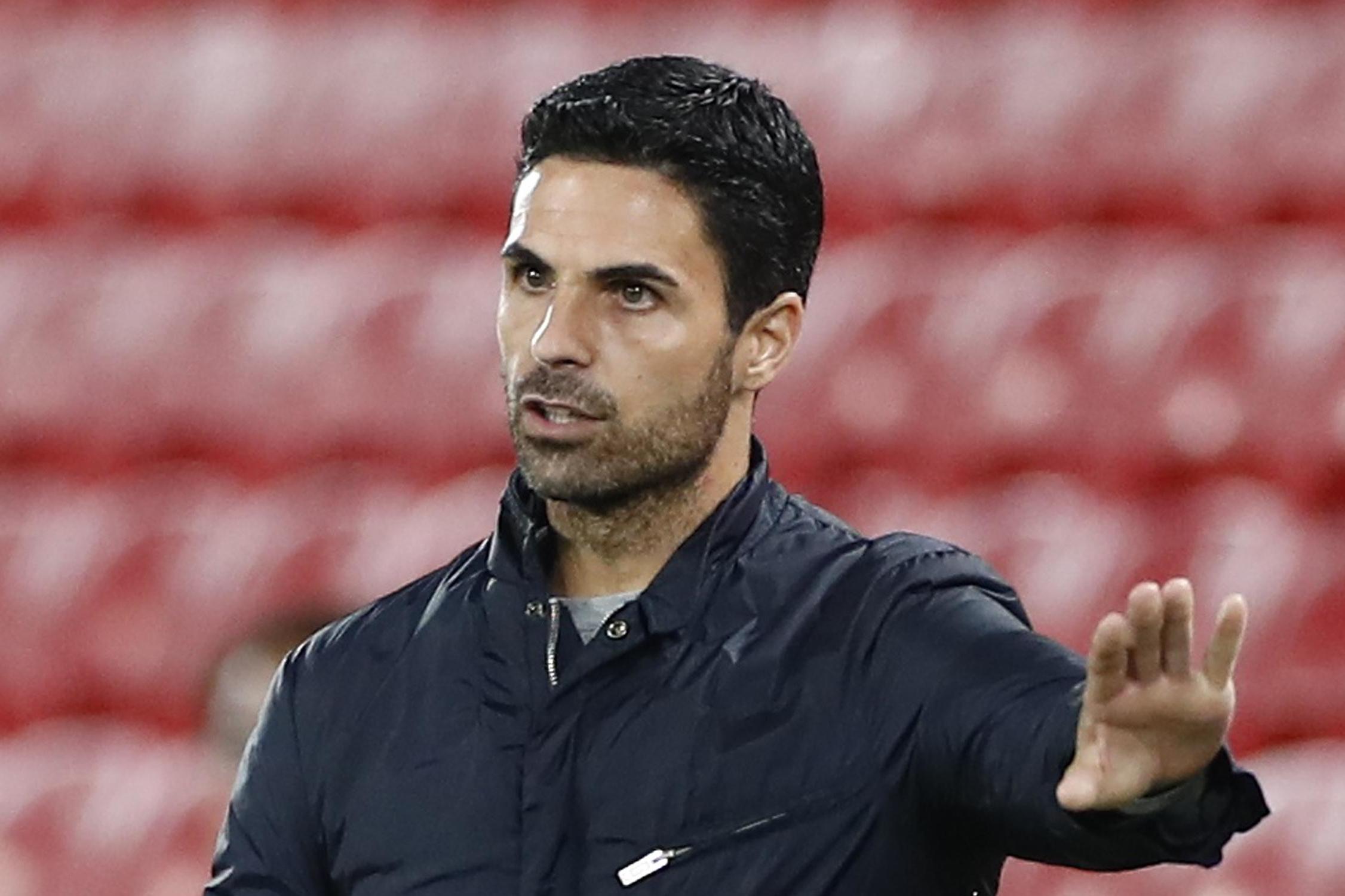
Arsenal boss Mikel Arteta admitted that the Gunners fully deserved their season-opening loss to Brentford as the manager was left “disappointed” by his team’s start to the new campaign.
The Gunners were outdone by their newly promoted opponents on Friday as Brentford cruised to a 2-0 win.
Despite outshooting and out-possessing the hosts on Friday, Arsenal left with nothing to show for it after struggling to truly test a team that played in the Championship last season.
“I’m disappointed,” Arteta told BT Sport. “We started the season against a good opponent. I don’t think we deserved anything different. They scored from a long throw-in and we didn’t have enough presence in the box.”
Arteta also weighed in on a bit of controversy stemming from Brentford’s second goal.
Brenford scored through a Christian Norgaard header from a long throw-in, one which may have seen Brend Leno fouled in the build-up.
But Arteta wasn’t as frustrated by the no-call as he was by Brenford’s first goal, a finish from Sergi Canos.
“It’s allowed in the Premier League,” he said of the second goal. “He cannot move. I can’t change it now.
“The first goal gave them some hope. We wanted to play better in the second half but we need many more shots on target, then we conceded on a set piece.
“A lot of young boys were doing everything they can. For some of them it was the first experience in the league – that says a lot.”
Important absences
Arteta was given a selection headache on Friday as he was without two of his biggest stars.
Arsenal were missing Pierre-Emerick Aubameyang and Alexandre Lacazette, whom Arteta said were “feeling unwell” before the match kicked off.
“I can’t change that,” he said of their absences. “We knew that before the game. I don’t know [if they’ll be available for the next game].
“What I can control and help, I’ll put all my enthusiasm and work into that.”









Sports
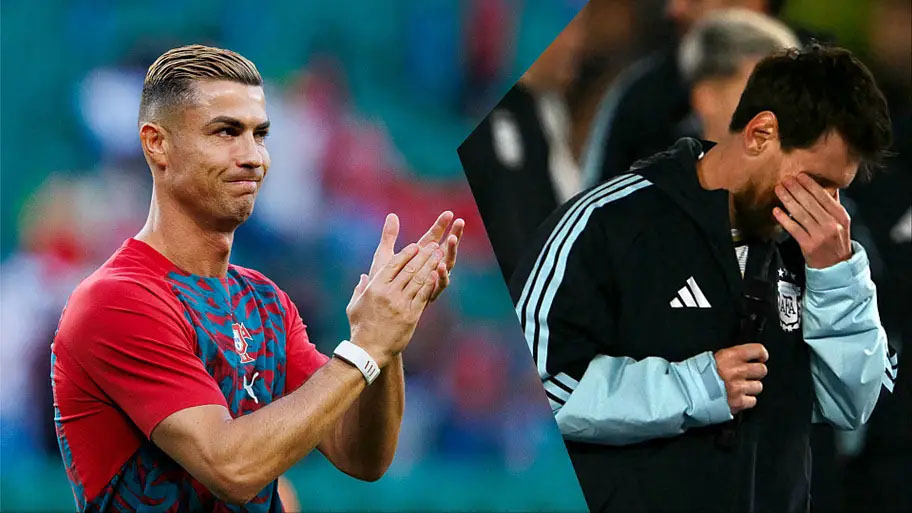
Ronaldo Pays Emotional Tribute to Messi After Argentina Farewell
Ronaldo Pays Emotional Tribute to Messi After Argentina Farewell
Cristiano Ronaldo has paid tribute to longtime rival Lionel Messi after the Argentine football icon brought his international career to an emotional end.
Messi, 39, played his final match for Argentina on Tuesday, scoring a goal and providing two assists as the world champions defeated Benin 3-0 before more than 85,000 fans at the Monumental Stadium in Buenos Aires. (Reuters)
The farewell marked the end of Messi’s remarkable 21-year international career, during which he became Argentina’s all-time leading scorer and made a record 208 appearances for the national team.
After the match, Messi reflected on his journey with Argentina, saying he already missed wearing the team’s famous blue-and-white shirt.
Ronaldo responded to Messi’s farewell message on Instagram, setting aside their long-running rivalry to acknowledge the Argentine’s achievements.
“Leo, so many years defending your country and a history that will last forever. All my respect for what you have achieved with Argentina. A hug,” Ronaldo wrote. (AA Mobile)
The message came from one of Messi’s greatest rivals during an era in which the two players dominated world football and were repeatedly compared for individual honours and records.
READ ALSO:
- US Set to Charge Maduro, Wife Over Alleged Torture of Americans
- NAF Crash: NYSC-Bound Graduate, Only Son, Among 25 Victims
- Killings, Hardship: Northern Islamic Clerics Tell Tinubu to Drop 2027 Ambition
Their rivalry was particularly intense during their years at Barcelona and Real Madrid, respectively, but the two superstars have frequently expressed mutual respect throughout their careers.
Messi leaves the Argentina national team with an extraordinary international record that includes 126 goals, two Copa América titles and the 2022 FIFA World Cup.
He also helped Argentina win the 2022 Finalissima, completing a remarkable transformation from a player once criticised by sections of his country’s supporters into a national icon.
His farewell at the Monumental was turned into a major celebration, with former players, teammates and thousands of supporters joining the occasion.
Messi scored from the penalty spot against Benin before helping create Argentina’s other two goals, ensuring that his final appearance ended with another influential performance. (Reuters)
Speaking after the game, Messi described saying goodbye to the national team as one of the most emotional moments of his career.
“I already miss wearing the blue and white,” the Inter Miami forward said in a farewell message.
Messi also thanked his family, teammates, coaches and the clubs that supported his commitment to Argentina throughout his career.
He specifically remembered late Argentina legend Diego Maradona, whom he credited as an important figure in the country’s football history.
For Ronaldo, now 41, the tribute came as he continues his own international career with Portugal.
The Portuguese forward has won five Ballon d’Or awards, while Messi has won eight, with their rivalry becoming one of the defining storylines of modern football.
Messi’s departure from Argentina marks the closing of a major chapter in international football, although he is expected to continue his club career with Inter Miami.
Ronaldo’s message underscored the mutual respect that has developed between two players whose careers have been intertwined for more than a decade.
Ronaldo Pays Emotional Tribute to Messi After Argentina Farewell
Sports
Kane’s Historic Night as England Thrash Czechia 3-0

Kane’s Historic Night as England Thrash Czechia 3-0
Harry Kane marked his record-equalling 125th England appearance with a brace as the Three Lions defeated Czechia 3-0 in their UEFA Nations League clash at Wembley on Tuesday night.
Kane scored twice after helping England take the lead through Vladimír Coufal’s own goal, producing another outstanding display as Thomas Tuchel’s side strengthened its position in Group A3.
The victory gave England their third consecutive Nations League win after earlier victories over Czechia and Croatia. They now have nine points from four matches, three behind group leaders Spain.
The night belonged to Kane, who made his 125th appearance for England, drawing level with former goalkeeper Peter Shilton as the country’s most-capped men’s player.
READ ALSO:
- ‘We Are Ignorant, We Don’t Read’ — NAFDAC DG Raises Food Safety Concerns
- 2027: Obi Makes U-Turn, Vows to Restore Fuel Subsidy If Elected
- 2027: Galadima Alleges APC Offering N50m, N200m to Lawmakers to Step Aside
The Bayern Munich striker also took his international goal tally to 91, further extending his record as England’s all-time leading goalscorer.
England broke the deadlock in the 27th minute when Kane delivered a low cross from the right that Coufal inadvertently turned into his own net.
Kane then doubled England’s advantage in the 40th minute.
Elliot Anderson released Morgan Rogers with a superb pass, and Rogers’ delivery found Kane in the box. The England captain made no mistake from close range to score his 90th international goal.
Kane completed his brace in the 57th minute, finishing another flowing England attack to put the result beyond doubt.
The Czech side struggled to contain England for long periods, with the hosts controlling possession and creating several opportunities before and after the goals.
Kane was substituted in the 82nd minute and received a warm reception from the Wembley crowd after another landmark performance for his country.
The result also continued England’s impressive response after their 3-2 defeat to Spain in their opening Nations League fixture.
Tuchel’s team has since recorded victories over Czechia, Croatia and Czechia again, scoring 12 unanswered goals across those three wins.
Kane’s latest milestone adds to an already remarkable international career. At 33, he is England’s record goalscorer and now shares the men’s appearance record with Shilton.
With the group stage continuing in November, England remain firmly in contention for a place in the Nations League Finals.
Kane’s Historic Night as England Thrash Czechia 3-0
Sports
Messi Reflects on Argentina Future: ‘I Would Like to Play Forever’

Messi Reflects on Argentina Future: ‘I Would Like to Play Forever’
Lionel Messi has admitted that he would love to play for Argentina forever, while acknowledging that time may eventually force him to step away from international football.
The Argentina captain made the emotional remarks after his country’s 3–0 victory over Benin at the Estadio Monumental in Buenos Aires.
Speaking to supporters after the match, Messi said he did not want to leave the national team and described representing Argentina in front of its passionate fans as an experience he wished could continue indefinitely.
“I don’t want to leave. I would like to play forever here, in front of you, wearing this shirt, but time passes for everyone, and it is simply not possible,” Messi said.
The comments have renewed attention on the 39-year-old forward’s international future, with Messi having previously acknowledged that he is approaching the final stages of his playing career.
Rather than confirming an immediate retirement from international football, Messi’s remarks reflected his deep attachment to the Argentina shirt and the supporters who have followed his journey.
READ ALSO:
- Trump Links French Protests To Islam ‘Taking Over’ France
- Court Denies Bail To Anambra Pastor Accused Of Marrying Mother, Daughter
- Nigeria Fight Back From 3-1 Down To Hold Russia To 3-3 Draw
His career with the national team has included periods of intense disappointment, particularly after defeats in major finals, before a remarkable run of success.
Messi helped Argentina win the 2021 Copa América, the 2022 Finalissima and the 2022 FIFA World Cup, with the World Cup triumph in Qatar representing the biggest achievement of his international career.
He also thanked his teammates and supporters for standing by him through the difficult years and stressed the importance of the collective effort behind Argentina’s success.
Messi said he would continue supporting the national team and the players who eventually take over from the current generation.
“I’m going to miss all of you so much, but I’ll always be on your side. I’ll be supporting these boys and everyone who comes after them,” he said.
The remarks underline the uncertainty surrounding the next phase of Messi’s Argentina career. While the veteran forward has not ruled out his continued involvement, his comments suggest he is increasingly conscious of the passage of time.
For Argentine supporters, Messi’s words offered an emotional reminder of the extraordinary journey that has taken him from years of international heartbreak to becoming a World Cup winner and one of the country’s most decorated footballers.
Whatever decision Messi eventually makes about his international future, his relationship with Argentina remains one of the defining stories of his career.
Messi Reflects on Argentina Future: ‘I Would Like to Play Forever’
-

 metro3 days ago
Ondo Air Tragedy: Soldiers, Families Among 32 Killed In NAF Crash
-

 metro3 days ago
Gunmen Open Fire At Lagos Bus Stop, Kill NURTW Member, Injure Three
-

 metro3 days ago
Ogun Crash: Nine Die As Bus Collides With Truck On Ijebu-Ode-Ore Road
-
 metro2 days ago
Supreme Council For Sharia Secretary-General Nafiu Baba-Ahmed Dies
-

 metro2 days ago
UCH CMD: After Decades Without Muslim, Agunbiade Demands Fair Chance
-
![[UPDATED] 20 NYSC Prospective Corps Members Freed After Seven Days in Captivity](https://newstrends.ng/wp-content/uploads/2026/10/20-NYSC-Prospective-Corps-Members-Freed-After-Seven-Days-in-Captivity-400x240.jpg)
![[UPDATED] 20 NYSC Prospective Corps Members Freed After Seven Days in Captivity](https://newstrends.ng/wp-content/uploads/2026/10/20-NYSC-Prospective-Corps-Members-Freed-After-Seven-Days-in-Captivity-80x80.jpg) metro16 hours ago
metro16 hours ago[UPDATED] 20 NYSC Prospective Corps Members Freed After Seven Days in Captivity
-

 International3 days ago
Kemi Badenoch: I Don’t Want Migrants Turning UK Into Nation Of ‘Little Ghettos’
-
 metro2 days ago
Seven Years With Parkinson’s: Man Seeks N65m for Brain Surgery in Türkiye