

Auto
Auto assemblers blame FG as more government-approved vehicle plants go down

Stakeholders are worried that majority of over 60 automobile assembly plants licensed by the Federal Government over a period of nine years since the introduction of a new auto policy in Nigeria have been forced to close shop.
Precisely, Deputy Managing Director of CFAO Motors, Mr Kunle Jaiyesimi, said recently that only six of the registered auto assemblers are still running, working haphazardly.
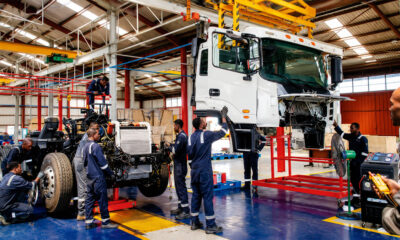
Indeed, he said his company, CFAO Motors, which invested heavily in setting up a world-class Mitsubishi assembly plant in Lagos to churn out the brand buses and trucks had today converted the edifice into after-sale service centre.
The hope was high that Nigeria was on the path of total transformation in 2013 when the auto policy was introduced under the Goodluck Jonathan administration. The target was that the country was about to become the hub of West and East African auto industry producing new vehicles not only for Nigeria’s teeming population and high need to supplying to all the West and East African countries.
Minister of Industry, Trade and Investment, Otunba Adeniyi Adebayo, said ahead of 2020 Argungu fishing festival and motor rally has that following the launch of the Nigeria Automotive Industry Development Plan ( NAIDP) in 2013, about 62 companies had been registered to assemble vehicles at both SKD and CKD levels, with a total installed capacity of 423,790 units.
But that enthusiasm, according to automakers, has thawed away and replaced with frustration and regrets.
Even Adeniyi gave the running plants could only boast of actual assemblage of 10, 343 units, a far cry from the target of 400,000 units annually.
Executive Director, Nigeria Automotive Manufacturers Association, Remi Olaofe, speaking in Abuja at a recent Auto CEOs Forum, said there was no way the local auto assemblers could break even without any serious support and patronage from the government.
“Nigerian auto operators are doing their best but they are not being encouraged at all. No single tyre is being manufacturer in the country since the exit of Dunlop and Michellin. How do we bring them back? What do we tell them? Nobody is in business to make losses. I do business to make money, not on sentiment.
“Many have invested billions in this auto business and we are not doing anything to support and keep them in business.”
Olaofe accused the Nigeria Customs Service of being “a pain in the neck of this business,” adding that they had practically ruined the business.
“Look at all the auto assembly lines of the plants in the country, they are virtually idle. People are allowed to cut corners and play the trick of winners take all and many are shut out. Nigeria ultimately loses. We don’t have correct industry data because of unhealthy rivalry in the business,” he said.
He also said, “The NADDC will not allow NAMA to function because NADDC is deriving pleasure in assemblers coming directly to it for aid. The Ministry of Finance will not allow NAMA to work because it wants operators to come to them individually with their problems so they could be ‘appreciated’.
“Look at Rwanda, they have overtaken us. What is the population of Ghana? It is now the toast of auto manufacturers and allied products’ investors. Every single auto assembler now is on its way to Ghana. “There is no need lying to one another. If we must develop the nation’s auto industry, we should do so genuinely.”
Chief Executive Officer, Nord Automobiles Limited, Oluwatobi Ajayi, maintained that the nation’s approved plants had the capacity to produce sufficient number of vehicles to cater for its immediate need only if there would be continuous patronage, duty rebate and tax holiday.
For instance, he said his assembly plant currently producing five vehicles per day could increase the number to 25 vehicles with the right support and raise it further to 50 per day with two shifts of operation.
The operators at the Abuja forum accused the Federal Government of failing to sign the enabling auto bill into law to support the business.
They also claimed that the Finance Act of 2020 introduced by the FG that reduced import duty on fully built vehicles to the same rate as Semi-Knocked Down components made it difficult for local assemblers to compete with FBU importers/dealers.
Jaiyesimi said, “There is no way we can compete with fully built vehicles that are coming into the country. Before, the import duty on FBU truck was 25% and suddenly they it was dropped to 10%, the same rate for SKD components of truck.”
He also berated some policymakers in government of jumping out of the country to hold crucial meetings with vehicle manufacturers without discussing with Nigeria’s representatives of those foreign companies.
He said, “We should not be thinking about estacode (travel allowance) in most cases. We should look at how things can work in this country.
“What is the fate of the auto policy now? When this initiative started in 2014, some of us raised concern then that it is not enough for some people to just wake up and put up a position paper about the industry without consulting widely the industry players and stakeholders.”
The current NADDC Director-General, Mr Jelani Aliyu, says the bill auto policy is undergoing some review and he is optimistic that it will be signed into law before the end of the year.
Since 2019, Aliyu had said the Automotive Industry Development Bill passed by the eighth National Assembly was awaiting the President’s.
Aliyu in an interview with the Punch then gave the names of nine firms assembling vehicles in the country as Peugeot Automobile Nigeria, Nissan Motors, Honda Motors, Innoson Vehicle Manufacturing Company, Hyundai Motor Company, Ford Motor Company, GIC Motor Companies Ltd, JAC Motors and Kia Motors.
Nissan, Honda and Hyundai are operating under Stallion Autos which took over the old VON plant in Lagos.
President Muhammadu Buhari failed to give assent to the bill when it was sent to him at the beginning of this year due to some reported discrepancies and had to send it back to the National Assembly for a rework.
A few weeks ago, Aliyu said a revised national auto legislation that would fully guarantee investments in vehicle assembly plants, leading to a halt in importation of new and used automobiles would be enacted.
He told journalists in Sokoto that the NADDC was in talks with companies such as Toyota and Volkswagen to come and directly set up their production plants in Nigeria.
“The council is working to effectively implement an automotive policy agenda, with a view to bringing these companies back to Nigeria. They want to have a guarantee that regardless of whichever government is in power their investments will be protected,” Aliyu said.
But a former acting DG of the NADDC, Mr Luqman Mamudu, said there was nothing wrong with the auto policy, adding that adequate consultations and visits to countries for model examples were made with stakeholders when the policy document was being put together.
He however accused some self-serving auto operators of fielding the policymakers under the Muhammadu Buhari administration with lies about the policy, leading to the back-and-forth approach on the President’s assent for the bill.
The Comptroller General of the Nigeria Customs Service, Col. Hameed Ali (retd.), represented at the CEOs Forum by Controller Musa Mba, said the agency only implemented the duty as directed by the finance ministry and the National Automotive Design and Development Council for industry with regard to vehicle imports.
He stressed the need for the genuine operators to be united and keep engaging the finance ministry on the duty issue.







Auto
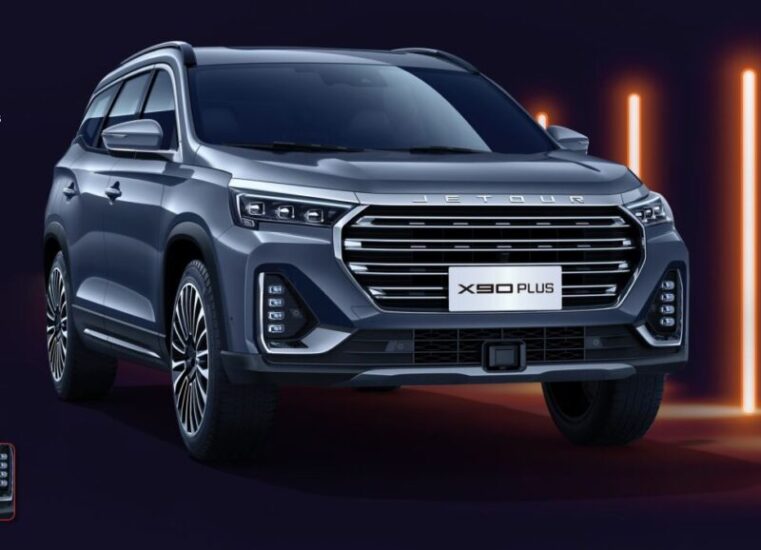
X90 Plus Leads Jetour’s Abuja Drive for Bigger SUV Market Share
X90 Plus Leads Jetour’s Abuja Drive for Bigger SUV Market Share
Jetour Nigeria is taking its premium SUV battle to Abuja, with the seven-seater X90 Plus set to headline the Jetour Experience Abuja from September 22 to 24, as the automaker moves to capture a larger share of Nigeria’s fast-growing high-end family SUV market.
The three-day motoring showcase will give prospective buyers, families and auto enthusiasts in the Federal Capital Territory and neighbouring states an opportunity to experience the X90 Plus and other models in the Jetour range through test drives and hands-on demonstrations.
The Abuja showcase follows the success of the brand’s earlier Jetour Experience in Lagos, where strong customer interest, inquiries and sales momentum reportedly encouraged the company to take the initiative to the Federal Capital Territory.
Jetour Nigeria said growing demand from customers in Abuja and neighbouring states was a major factor behind the decision to expand the experience to the northern market.
Positioned as a full-sized family SUV, the X90 Plus is designed for executives and families seeking a combination of space, technology, performance and comfort without the price tag associated with some luxury SUVs.
The model is offered with 1.6-litre and 2.0-litre turbocharged engines paired with a seven-speed dual-clutch transmission. The powertrain produces up to 254 horsepower and 390Nm of torque.
Inside the cabin, the X90 Plus features a 12.3-inch LCD touchscreen infotainment system, panoramic sunroof, Sony premium audio system and wireless charging.
Its safety and driver-assistance features include a 360-degree panoramic camera, Forward Collision Warning, Lane Departure Warning and electronic stability systems.
Jetour’s growing profile in Nigeria has also earned the brand recognition from the Nigeria Auto Journalists Association (NAJA), which named it Fastest Growing Auto Brand, while it was also recognised as Auto Brand of the Year at the Nigeria Transport Lecture.
To support its expanding customer base, Jetour Nigeria, the sole authorised distributor, operates through seven accredited dealer partners across the country: Elizade Nigeria Limited, Mandilas Autos, R.T. Briscoe Motors, Germaine Auto Centre, Kojo Motors, Tab Autos Limited and New Era Auto Vehicle Services Limited.
The Abuja Experience is expected to provide Jetour with another platform to engage potential customers and reinforce its position in Nigeria’s increasingly competitive SUV market.
Auto
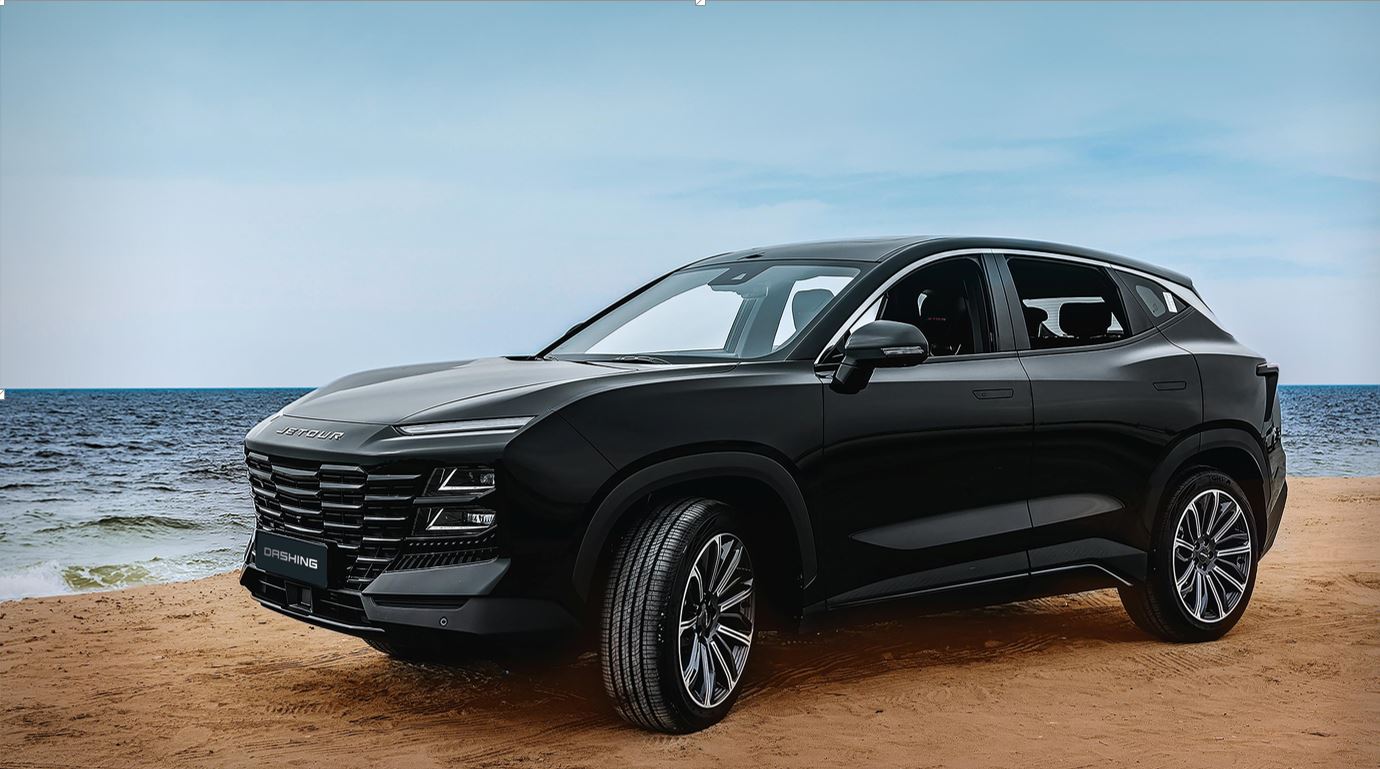
Jetour Takes Award-Winning Dashing, Other SUVs to Abuja
Jetour Takes Award-Winning Dashing, Other SUVs to Abuja
Motorists in Abuja are set for a close encounter with Jetour’s award-winning Dashing and other models as Jetour Nigeria moves to deepen its foothold in the nation’s capital with the Jetour Experience Abuja, beginning September 22.
The three-day motoring event, which runs until September 24, is expected to draw prospective buyers and automobile enthusiasts to a hands-on experience featuring test drives, product demonstrations and direct engagement with Jetour’s seven authorised dealers and product specialists.
The participating dealer network comprises Elizade Nigeria Limited, Kojo Motors, Mandilas Autos, Germaine Auto Centre, R.T. Briscoe, Tab Autos and New Era Auto Vehicle Services Limited.
READ ALSO:
- Police Arrest Woman Over Alleged Drug Trafficking in Delta
- Dangote raises petrol price 6.7% to N1,350/litre
- Anambra Police Arrest Woman Over Alleged Sexual Abuse of Child, Rescue Four
The Abuja Experience follows the success of the Lagos edition, which attracted thousands of visitors for test drives and direct engagement with product specialists. According to the organisers, strong demand and inquiries from motorists in Abuja and neighbouring states prompted the expansion of the event to the Federal Capital Territory.
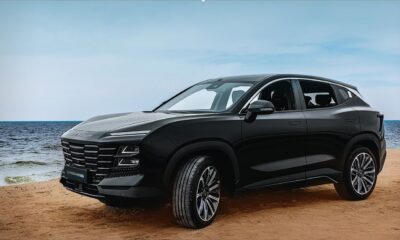
The Dashing has gained attention in Nigeria’s competitive compact SUV segment for its combination of modern styling, technology, performance and competitive pricing.
The SUV is available with 1.5-litre and 1.6-litre turbocharged engines, producing up to 145kW of power and 290Nm of torque, paired with six- or seven-speed dual-clutch transmissions.
Its features include a 15.6-inch central touchscreen infotainment system, panoramic sunroof, wireless charging and smartphone integration.
For safety, the vehicle comes with a 360-degree surround-view camera, automatic emergency braking, lane departure warning, blind-spot detection and multiple airbags.
Beyond vehicle sales, the authorised dealers provide warranty, genuine spare parts and after-sales support to Jetour customers across their respective locations.
The Abuja Experience is expected to strengthen customer engagement and give motorists in the FCT a closer look at Jetour’s growing range of vehicles, while further expanding the brand’s footprint in the northern market.
Jetour Takes Award-Winning Dashing, Other SUVs to Abuja
Auto
Jetour T2 PHEV Storms Abuja as Jetour Steps Up Nigeria Expansion

Jetour T2 PHEV Storms Abuja as Jetour Steps Up Nigeria Expansion
Abuja is set for a major dose of electrified motoring as Jetour Nigeria takes its technologically advanced T2 Plug-in Hybrid Electric Vehicle (PHEV) to the nation’s capital for an experiential showcase aimed at deepening the brand’s growing footprint in Nigeria.
The Jetour T2 PHEV will headline the Jetour Experience Abuja, scheduled for September 22 to 24, 2026, following the strong reception recorded at the brand’s Lagos edition earlier this year, where customer participation, test drives and sales enquiries reportedly surged.
The move to Abuja, according to Jetour Nigeria, was largely driven by growing demand from motorists in the Federal Capital Territory who have been seeking an opportunity to experience the brand’s latest vehicles, particularly the T2 PHEV.
The Abuja activation will feature test drives, product demonstrations and interactions with Jetour’s technical and sales teams, giving prospective buyers first-hand access to the SUV and its plug-in hybrid technology.
Jetour Nigeria, the sole authorised distributor of the brand in the country, is also leveraging an expanding nationwide dealer network comprising Elizade Nigeria Limited, New Era AutoVehicle Services Limited, Kojo Motors, Germaine Auto Centre, TAB Autos Limited, R.T. Briscoe Motors and Mandilas Autos to strengthen sales and after-sales support across key markets.
READ ALSO:
- Obi Explains Why He Won’t Step Down for Atiku in 2027
- ASUU Threatens Nationwide Strike Over Unpaid Salaries, Unimplemented Agreement
- FG to Give Students 100MB Free Data Daily From October 1
The company said the decision to stage the Abuja experience was also driven by requests from patrons and prospective customers in the capital who want an opportunity to experience Jetour’s latest products, including the technologically advanced T2 PHEV.
The Jetour T2 PHEV combines rugged SUV capability with hybrid efficiency, advanced technology and comprehensive safety features, positioning it as an attractive option for Nigerian motorists seeking performance, comfort and improved fuel economy.
Since its entry into the Nigerian market, Jetour has recorded growing acceptance, with its SUV range gaining popularity among families, professionals and adventure enthusiasts.
The brand’s expanding customer base has been supported by competitive pricing, after-sales service and vehicles engineered to cope with diverse road and driving conditions across Nigeria.
Jetour’s growing reputation has also been reinforced by a number of local and international recognitions spanning product quality, design, innovation and customer satisfaction.
Its vehicles have also earned strong global safety ratings, with the T2 achieving a 5-Star NCAP safety rating, placing it among vehicles meeting high benchmarks for occupant safety.
The Abuja event is expected to feature test drives, product demonstrations and direct interactions with Jetour’s technical and sales teams, giving visitors an opportunity to experience the brand’s products and understand the technology behind the T2 PHEV.
Beyond showcasing its expanding SUV lineup, Jetour said the Abuja activation reflects its commitment to bringing the brand’s ownership and customer experience closer to motorists across Nigeria.
With the Federal Capital Territory as its next destination, Jetour is looking to build on the momentum generated in Lagos while deepening its footprint in one of Nigeria’s most important automotive markets.
Jetour T2 PHEV Storms Abuja as Jetour Steps Up Nigeria Expansion
-
 Business3 days ago
Dangote: ₦525 Refinery Shares Could Rise to ₦10,000
-
 News2 days ago
SERAP Threatens Legal Action Over ₦126bn INEC Electoral Funds
-

 metro3 days ago
MURIC fires back at Peter Obi: Forget Sallah ceremony, free Nigerian Muslims
-

 metro3 days ago
Abia Police Arrest Father, Three Others Over Alleged Attempt to Sell 16-Month-Old Daughter
-
 International3 days ago
Trump Tells Supporters to ‘Cheat Like Hell’ Ahead of US Election
-
 Politics2 days ago
Five Islamic Clerics Abducted After Tinubu Re-Election Prayer At Yari’s Zamfara Residence
-
 metro3 days ago
FG Targets 2 Million Creative Jobs by 2030
-
 Auto3 days ago
Jetour Takes Award-Winning Dashing, Other SUVs to Abuja