

News
Avoid ASSU strike during your tenure, MSSN tells Tinubu
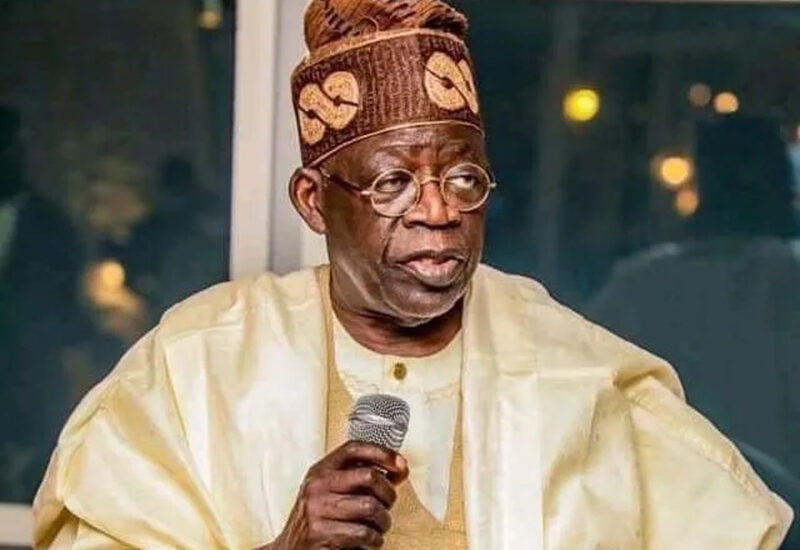
Avoid ASSU strike during your tenure, MSSN tells Tinubu
The Muslim Students Society of Nigeria (MSSN) has called on the administration of President Bola Tinubu to make as one of its priorities, a determination never to allow Academic Union of Universities (ASUU) and other education unions to embark on strike again.
Miftaudeen Thanni, immediate past Amir of MSSN, Lagos State Area Unit, made the call on Sunday during its Annual Conference, which was held on Sunday at the Main Auditorium of the University of Lagos.
According to him, investing in the education sector is not a luxury but a necessity.
“As we move into a new dispensation of ‘Renewed Hope’ in our national polity, we are urging the Federal Government to pay more attention and improve on the education investment.
“We don’t want strikes again and this can be achieved by investing more in education.
“It’s a way to invest in peace, as educated individuals are more likely to embrace dialogue, reject extremism, and work towards resolving conflicts through peaceful means.
“The government should realise that paying the utmost attention to education is as important as the economy, a well-educated population forms the backbone of a thriving economy.
READ ALSO:
- Abdullahi Adamu quits as APC national chairman
- Military alone can’t end North-East security crisis – Shettima
- Victory Gbakara wins N100m Nigerian Idol Season 8 prize
“We are reminding President Bola Ahmed Tinubu to prioritise education, youth empowerment, security of lives and property, economic and infrastructural development.
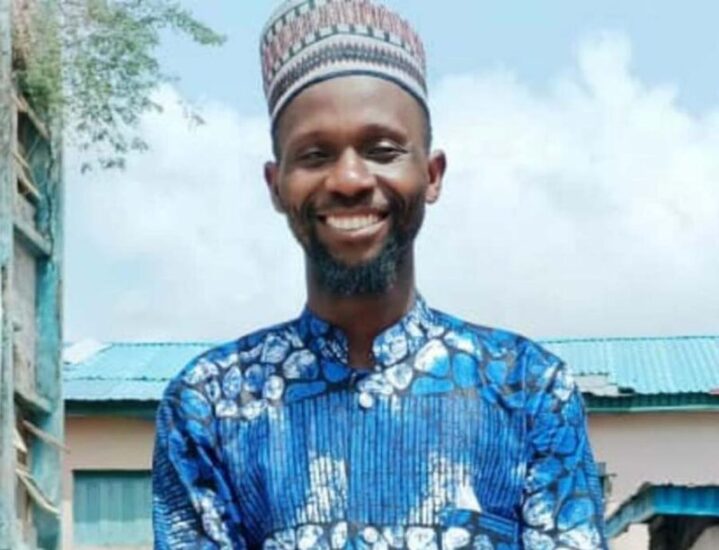
Kamaldeen Abiona, MSSNLagos Amir
” Effective synergy and fostering of unity across ethnoreligious lines, while we commend him on the students’ loan bill signed into law and await the fruits of other economic policies of the government.
“These measures will go a long way in fueling innovation, fosters entrepreneurship, and drives sustainable development,” he added.
Speaking, during the programme with the theme, “Renaissance“, Mr Niyi Yusuf, Chairman, Nigeria Economic Summit Group (NESG), explained Renaissance’ as revival, renewal or an attempt to bring something back that was very good in the past and make it active again.
Yusuf, who was the keynote speaker at the event, represented by Raji Abdulganiy, charged young Muslims to exploit their youthful age and make meaningful contributions in the society and seek to restore glorious days of Islam.
“As youths the time has come for us to stop taking the back sit in leadership positions because are still very young, some of our prophets were still very young when they stated contributing to Islam,” he added.
The chairman advised the MSS members to be united, pay serious attention to education as part of efforts to revive the good old days of Islam, referred them to read the ‘Golden Age of Islam’, which according to him, talked about when Muslims were the leaders of the world.
Earlier, Dr Zafaran Adeniyi, Director of Vanguard Academy, said there was the need for the youths to implement technology, to meet increasing challenges and maintain a balance to achieve spiritual, moral and academic progression.
According to him, the reasons for the call to renaissance is as a result of the decline in morals and to effectively calibrate.
“We need to have a sense of our history to get a headway.
“A major way to make changes is the massive enlightenment of Muslim youths on every aspect across the board.
“However, MSSN has the background to thrive everywhere as a result of the intensive training and exposure given to the members from the very beginning,” he added.
Sen. Shuaib Salisu, a former President of MSSN and Senator, representing Ogun Senatorial District, commended the Lagos Area Unit for the successful conduct of its annual conference, described the programme as a laudable event.
“When students organisation like this come together, they are renewing the hope of our country as well as the renewing the role they need to play in realising the real nation of our dream,” he added.
Salisu advised the members to have a good sense of history as a guide to where they were going.
He charged the Lagos State Area Unit to develop a data base of members in the State, said it has over 800 schools, over 40 Area Councils and 45 Central branches to knowledge purposes.
The News Agency of Nigeria (NAN) reports that the event, which recorded no fewer than 300 members of MSSN across the country, featured the swearing-in of the newly elected members of executive headed by Mallam Kamaldeen Abiona.
Avoid ASSU strike during your tenure, MSSN tells Tinubu
(NAN)











News
‘Jobs Must Not Be Based on Connections’ — Oyintiloye Tells FCC
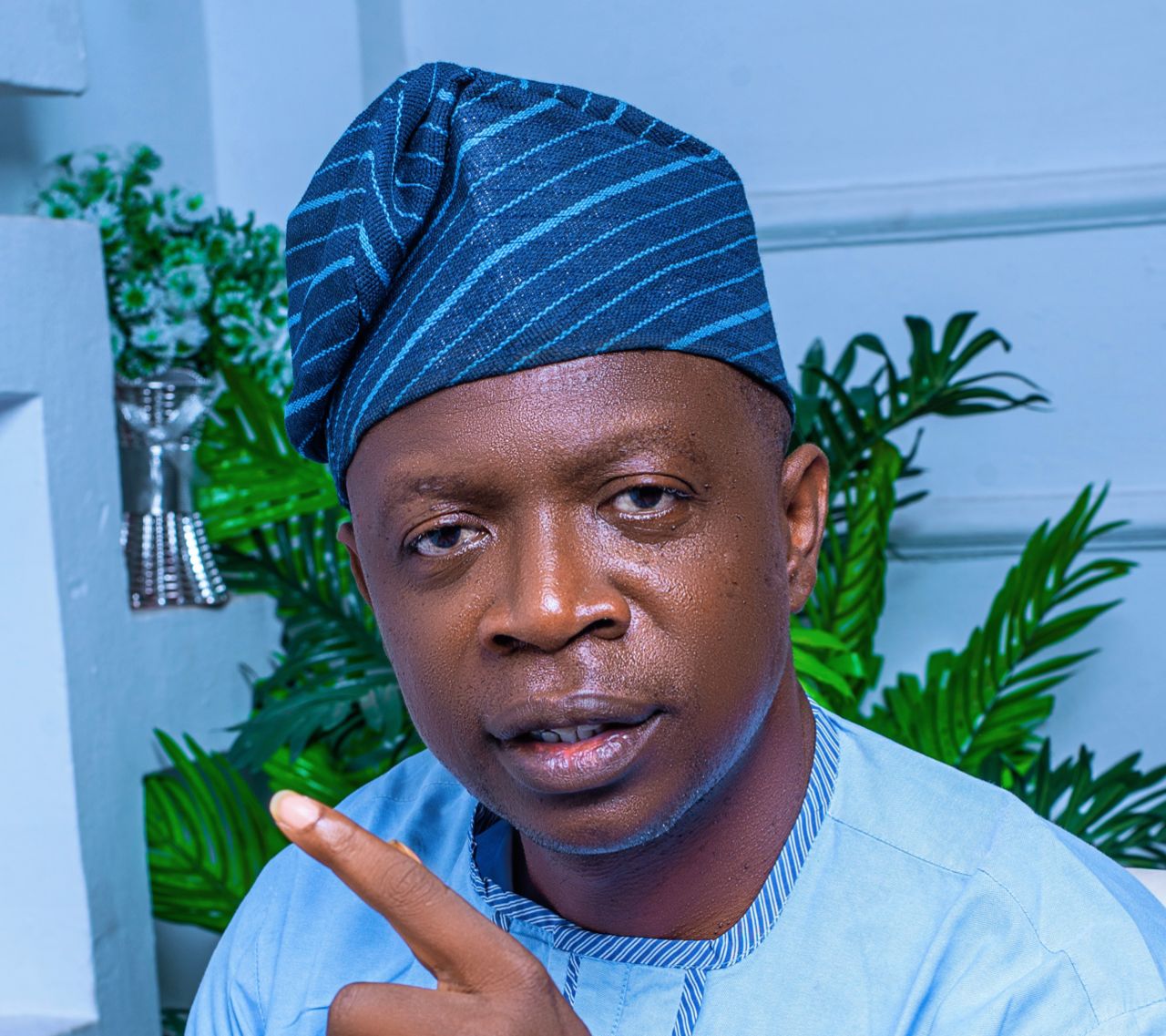
Calls for greater transparency in the distribution of federal employment opportunities have intensified, with APC chieftain Olatunbosun Oyintiloye urging the Federal Character Commission to ensure that recruitment is not influenced by powerful individuals.
Oyintiloye, speaking in Osogbo, Osun State, appealed to the commission’s Executive Chairman, Ayo Hulayat Omidiran, to stand firm against intimidation or pressure while carrying out her responsibilities.
According to him, the credibility of federal recruitment depends on giving qualified Nigerians a fair chance, regardless of their background or connections.
He said the FCC should strengthen its oversight of recruitment processes and prevent situations where applicants are disadvantaged through manipulation or other improper practices.
“The FCC must adopt a renewed commitment to building a commission where merit, fairness and the principles of federal character guide the management of employment opportunities across the public service” Oyintiloye said.
His appeal comes shortly after Omidiran publicly reiterated that federal government jobs were not for sale and that employment opportunities should be available to Nigerians regardless of social status.
Oyintiloye said the position of the FCC was particularly important because of its constitutional responsibility to promote equitable representation in federal institutions.
He also praised the commission for addressing concerns over fairness in recruitment and allegations of corrupt practices, saying greater openness could help rebuild public confidence.
The APC chieftain further urged the commission to ensure that recruitment opportunities are communicated clearly and that qualified applicants from all parts of the country are given an equitable chance.
He expressed confidence that reforms under Omidiran could strengthen the FCC’s credibility, while encouraging job seekers to rely on legitimate recruitment announcements rather than individuals claiming to have connections within the commission.
The FCC itself has warned Nigerians about people offering supposed shortcuts into federal employment, stressing that it does not sell jobs or select candidates for federal appointments.
News
Nwifuru Dismisses Cubana Chief Priest as ‘Attention-Seeker’
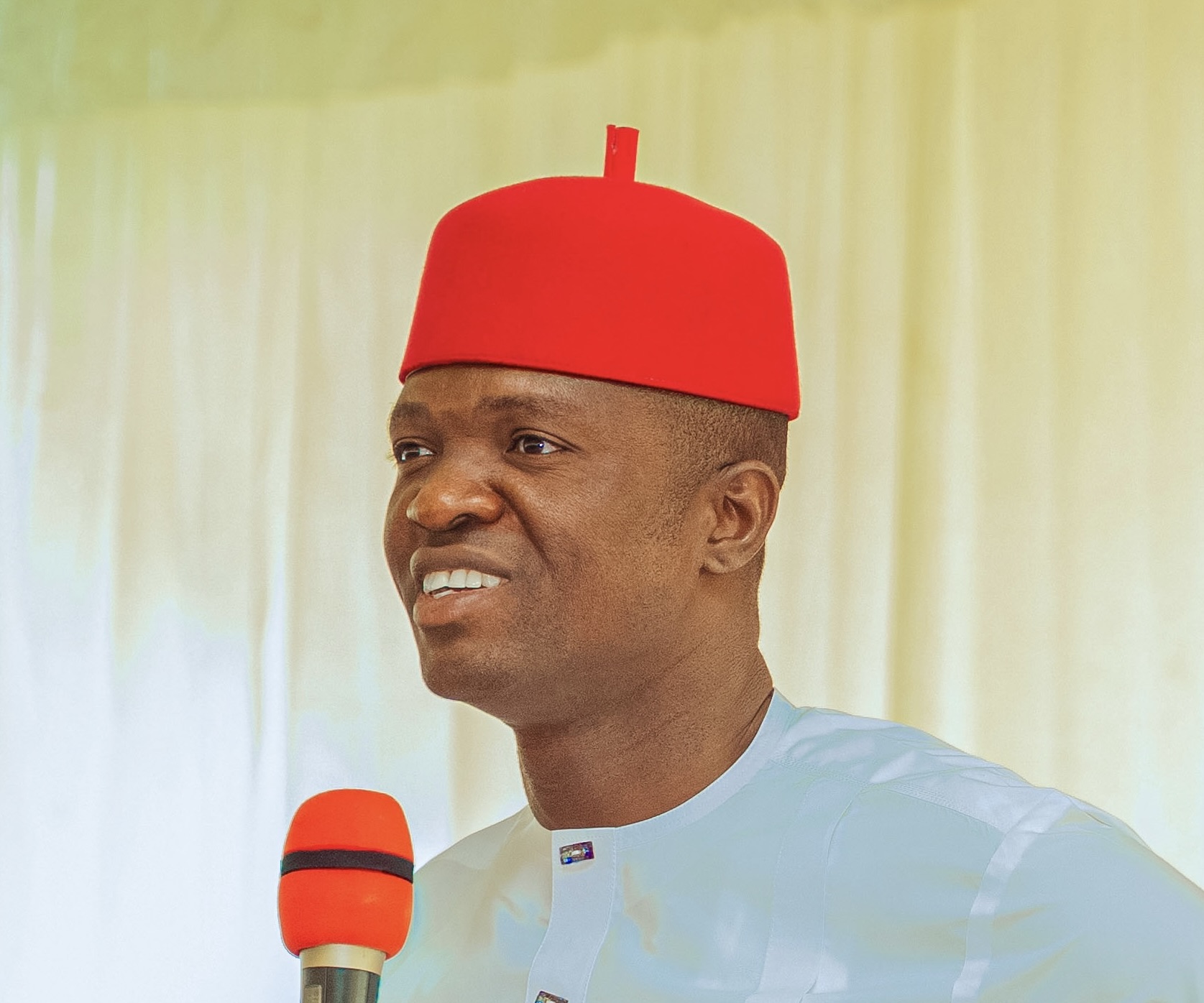
Ebonyi State Governor Francis Nwifuru has hit back at socialite and businessman Paschal Okechukwu, better known as Cubana Chief Priest, after the latter criticised his administration.
The governor dismissed the businessman’s comments while speaking at an event in Abakaliki, saying he had no interest in engaging with him.
“I don’t have time for Cubana Chief Priest. He’s a mere attention-seeker and an individual of no consequence” Nwifuru said.
He added, “However, if I remember him, I feel sorry for him.”
The exchange followed comments by Cubana Chief Priest questioning the governor’s performance in office. He reportedly challenged Nwifuru to explain how an administration could spend about three years in office without having major projects commissioned by the President or other state governors.
The remarks had earlier attracted criticism from Chinedu Ogah, the member representing Ikwo/Ezza South Federal Constituency in the House of Representatives.
Ogah condemned Cubana Chief Priest’s comments, defending the governor’s administration.
Nwifuru’s response now adds another layer to the controversy, although the governor did not provide a detailed response to the specific claims made about projects commissioned under his administration.
The disagreement has consequently shifted attention to the broader question of the Ebonyi government’s record on infrastructure and development projects since Nwifuru assumed office.
News
Four-Storey Building Collapses in Enugu, Workers Trapped Inside

An early-morning building collapse in Enugu has left one person dead and four others injured after a four-storey structure under construction suddenly gave way in the Independence Layout area of the state.
The incident occurred around 6 a.m. on Sunday on Ogbalu Street, where workers were reportedly sleeping inside the construction site when the building collapsed.
Four workers were pulled from the debris alive and taken to the Enugu State Teaching Hospital for medical treatment.

Authorities said six people had been sleeping at the site before the incident, but one of them had reportedly stepped out shortly before the structure came down. The body of another victim was recovered from the rubble.
The rescue operation has drawn the involvement of several emergency and security agencies, including the National Emergency Management Agency, Nigerian Red Cross Society, State Emergency Management Agency, Enugu State Capital Territory Development Authority and the Police.
Officials are still working at the scene to determine whether anyone else may be trapped beneath the debris.

The cause of the collapse remains unknown as of the time of reporting.
The incident has also renewed questions about compliance with construction standards, site safety and the effectiveness of regulatory monitoring in Enugu.
-

 metro2 days ago
Woman disguises as Muslim woman in Niqab to steal in Ado-Ekiti market, video sparks outrage
-

 metro2 days ago
Ondo Herbal Drink Tragedy: Survivor Vows Never to Drink Again as Death Toll Tops 30
-

 metro2 days ago
Sokoto Cleric Stabbed Twice in Neck After Juma’at Prayer, Attacker Killed
-
 Business2 days ago
Dangote: ₦525 Refinery Shares Could Rise to ₦10,000
-

 Africa3 days ago
Murder of Nigerian Bishop in South Africa Sparks Outcry Over Unsolved Killings
-

 News3 days ago
AI on the Roads: LASTMA Turns to China to Fix Lagos Traffic
-

 metro2 days ago
MURIC fires back at Peter Obi: Forget Sallah ceremony, free Nigerian Muslims
-

 Community3 days ago
Kaduna Traditional Rulers Set for 100% Pay Rise as Zazzau Emir Backs Proposal