

News
Bodija Blast: Oyo Govt Explains Why N30bn FG Fund Was Not Announced

Bodija Blast: Oyo Govt Explains Why N30bn FG Fund Was Not Announced
The Oyo State Government has explained why it did not publicly announce the N30 billion Federal Government intervention fund released after the January 2024 Bodija explosion in Ibadan, saying such funds are subject to budgetary procedures and do not require public disclosure upon receipt.
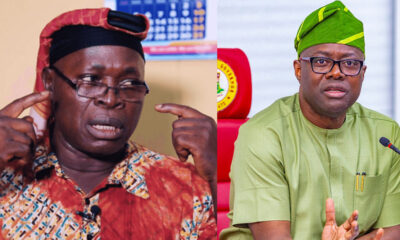
The clarification followed public backlash triggered by former Ekiti State Governor, Ayodele Fayose, who alleged that Governor Seyi Makinde failed to account for N50 billion approved by the Federal Government for victims of the deadly explosion.
Newstrends reports that the explosion, which occurred on January 16, 2024, claimed two lives, injured at least 77 people, and destroyed properties worth billions of naira in the Bodija area of Ibadan.
Speaking in a recent interview, Fayose challenged Makinde to explain how the intervention funds were spent, backing his claims with documents allegedly showing Federal Government approval of N50 billion.
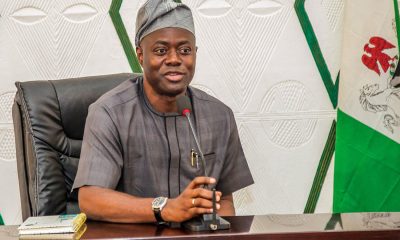
In response, Governor Makinde, through his media aide Sulaimon Olanrewaju, clarified that although N50 billion was approved, only N30 billion was actually released to the state.
Reaffirming this position in a statement on Thursday, the Oyo State Government said the N30 billion intervention fund has remained unused and intact since its release.
The statement was jointly signed by Commissioner for Budget and Economic Planning, Professor Musibau Babatunde, and Commissioner for Information, Prince Dotun Oyelade.
READ ALSO:
- US Congressman Moore Condemns ISWAP Threats Against Nigerian Christians
- Fayose Demands Makinde Return ₦30bn Bodija Explosion Fund to Federal Govt
- Liverpool Held to Goalless Draw by Leeds as Reds Miss Chance to Cement Top-Four Spot
According to the statement, the funds have been domiciled in the Oyo State Government Infrastructure Support Account with First Bank of Nigeria since 2024.
“As of December 31, 2025, the N30 billion remains untouched in the Oyo State infrastructure account with First Bank. Interested members of the public may verify this information with the bank,” the statement said.
The government explained that it deliberately refrained from spending the money because the outstanding N20 billion balance from the approved sum has not been released by relevant federal agencies, nearly two years after the disaster.
“The Oyo State Government has deliberately refrained from utilising the N30 billion already released, recognising that the remaining N20 billion has been withheld for reasons yet to be communicated to the state,” the statement added.
It further noted that recent controversies surrounding the approval process at the federal level justified the state’s decision to adopt a “wait-and-see” approach before deploying the funds.
On efforts already made, the Makinde administration disclosed that it had spent N24.6 billion from its own resources to address the impact of the explosion.
This includes N20.141 billion for reconstruction of infrastructure in Bodija and surrounding communities, and N4.085 billion paid as compensation and support to victims.
“These expenditures were fully borne by the Oyo State Government,” the statement stressed.
The government reiterated its commitment to transparency and accountability, insisting it had nothing to hide.
“Governor Seyi Makinde remains committed to serving the people of Oyo State faithfully and truthfully, with utmost respect for the social contract that binds government to the governed,” the statement said.
Bodija Blast: Oyo Govt Explains Why N30bn FG Fund Was Not Announced







News
2027: Rufai Oseni Tackles Segun Sowunmi Over Media Decorum, Press Freedom

2027: Rufai Oseni Tackles Segun Sowunmi Over Media Decorum, Press Freedom
A fresh war of words has erupted between Arise News presenter Rufai Oseni and Peoples Democratic Party (PDP) chieftain Segun Sowunmi over press freedom, journalistic independence and the conduct of media practitioners ahead of the 2027 general elections.
Oseni reportedly fired back at Sowunmi following comments concerning the need for journalists to maintain professional decorum while engaging political figures, accusing politicians of applying double standards when confronted with critical questions from the media.
The exchange, which has generated discussions in political and media circles, comes amid growing political activities and realignments ahead of the 2027 general elections.
According to reports published on Monday, November 16, 2026, Oseni questioned what he considered an inconsistency in Sowunmi’s position on media conduct, arguing that political actors should not demand restraint from journalists while expecting favourable treatment or seeking to limit critical scrutiny.
2027: Rufai Oseni Tackles Segun Sowunmi Over Media Decorum, Press Freedom
News
Tinubu Unveils 5-Year Plan to End Insecurity, Approves Recruitment of 78,000 Soldiers, Police Officers
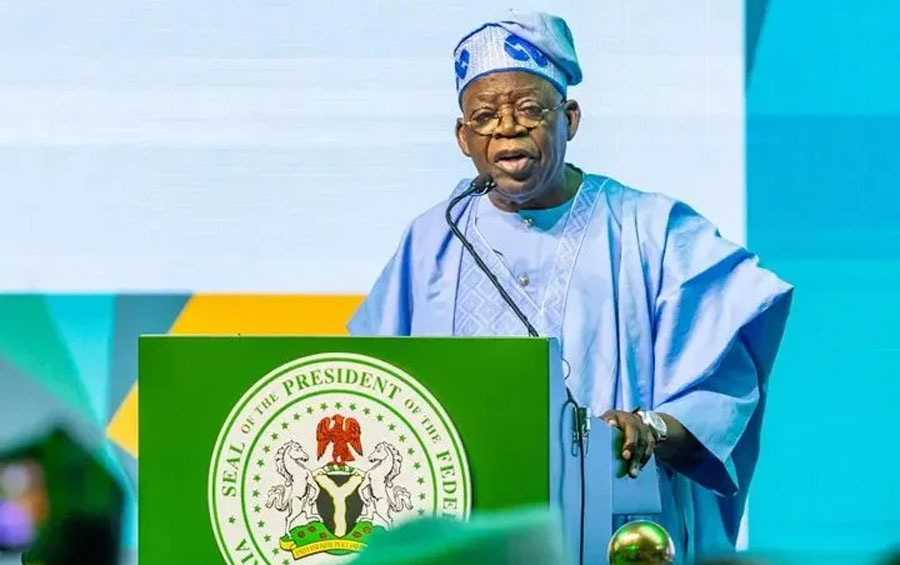
ABUJA – President Bola Ahmed Tinubu is preparing to implement a comprehensive five-year strategic defence operations plan aimed at tackling terrorism, banditry, kidnapping and other security threats across Nigeria.
The All Progressives Congress (APC) Presidential Campaign Council (PCC) announced on Sunday, November 15, 2026, that the Five-Year Strategic Defence Operations Plan was ready, describing it as a major component of the administration’s efforts to strengthen national security and improve the operational capacity of security agencies.
The council’s spokesperson, Dele Alake, disclosed this in a statement, explaining that the proposed framework would provide a long-term strategy for aligning defence priorities, military requirements, equipment acquisition, personnel development and government expenditure with Nigeria’s security challenges.
According to Alake, the plan is designed to promote a more coordinated, intelligence-led, technology-enabled and prevention-oriented approach to addressing insecurity.
He said the initiative would strengthen the country’s security architecture and improve the ability of the military and other security agencies to respond to emerging threats.
Alake also claimed that military operations conducted across the country over the past three years had resulted in the elimination of more than 15,000 Boko Haram terrorists and bandits.
He further claimed that over 130,000 Boko Haram fighters and their dependants had surrendered through Operation Safe Corridor, the Federal Government’s rehabilitation programme for former insurgents.
The figures, according to the campaign council, demonstrate the administration’s combination of military operations and non-military interventions in addressing insecurity.
Expansion of Army Divisions, Recruitment of 28,000 Soldiers
As part of efforts to strengthen military operations, Tinubu has approved the creation of four additional Nigerian Army divisions and the restructuring of existing military formations.
Alake said the reforms were intended to expand operational coverage, decentralise military activities and enable troops to respond more quickly to security threats in different parts of the country.
READ ALSO:
- 2027: How We’ll Defeat Tinubu — Amaechi Reveals ADC’s Strategy
- 2027: Suspected Thugs Attack Kwankwaso’s Convoy in Kano, Injure Supporters
- Eight Dead in New York Building Collapse as Nigerian Landlord’s Troubling Past Emerges
The President has also approved the establishment of two additional Army depots in Osogbo, Osun State, and Amasiri-Edda, Ebonyi State, to increase the military’s recruitment and training capacity.
Each facility is designed to accommodate 6,000 recruits at a time, giving the two depots a combined capacity of 12,000 trainees.
According to Alake, 5,210 recruits are already undergoing training at the Osogbo facility.
The council also disclosed that Tinubu had approved the recruitment of an additional 28,000 soldiers to increase the military’s manpower and strengthen its presence in areas facing security challenges.
The expansion is expected to address manpower shortages, improve deployment capacity and enable the military to respond more effectively to attacks by terrorists, bandits and other criminal groups.
50,000 Additional Police Officers Approved
Beyond the military, the administration is also planning a significant expansion of the Nigeria Police Force.
Alake disclosed that Tinubu had approved the recruitment of 50,000 additional police officers as part of broader efforts to strengthen internal security and improve policing across the country.
The proposed recruitment, alongside the additional soldiers, represents an intended expansion of 78,000 personnel across the military and police.
The campaign council said the initiative would improve security coverage, reinforce law enforcement and strengthen the country’s capacity to tackle kidnapping, armed robbery, terrorism and other criminal activities.
New Military Barracks, Improved Welfare
The five-year security strategy also places emphasis on military infrastructure, accommodation and personnel welfare.
One of the projects highlighted by the council is a proposed 700-unit military barracks in Ikere-Ekiti, Ekiti State.
The facility is designed to provide accommodation and operational support for military personnel, with the broader objective of improving their working and living conditions.
Alake said the administration recognises that investments in equipment and manpower must be supported by adequate infrastructure, training and welfare provisions to improve the effectiveness of security personnel.
He added that the expansion of military training facilities would help accelerate recruitment and ensure more soldiers are available for deployment.
Technology, Intelligence to Drive Security Operations
Another major component of the proposed five-year defence plan is the use of intelligence, surveillance and modern technology to improve security operations.
According to Alake, the administration intends to ensure that defence spending and operational decisions are guided by identified threats, national security priorities and clearly defined military requirements.
The approach is expected to strengthen intelligence gathering, improve coordination among security agencies, enhance combat readiness and address gaps in military capabilities.
The campaign council said the strategy would also promote better utilisation of available resources and reduce unnecessary expenditure in the defence sector.
The proposed framework is intended to address multiple security threats, including terrorism, banditry, kidnapping and other forms of organised criminality.
Tinubu Reaffirms Commitment to Defeating Insecurity
The announcement comes amid persistent security challenges in several parts of Nigeria, including attacks on rural communities, mass kidnappings, killings and displacement.
Tinubu had earlier reaffirmed his administration’s determination to overcome insecurity while addressing supporters at an APC political gathering in Dutse, Jigawa State, on November 10.
The President said his administration was strengthening the armed forces and police to improve their ability to protect lives and property.
He also promised to improve the welfare of security personnel, irrespective of their backgrounds or deployment locations.
“We will conquer insecurity. We’ve been through many wars. We will defeat our enemies. Enemies of unity, enemies of stability. Enemies of hope. I assure you that we are doing that,” Tinubu said.
The announcement of the five-year strategic defence plan provides further details of the administration’s proposed approach to tackling the country’s security challenges.
However, the success of the initiative will depend on effective implementation, adequate funding, improved intelligence coordination, accountability and the ability of security agencies to translate the proposed reforms into measurable improvements in public safety.
The APC Presidential Campaign Council said the plan would strengthen Nigeria’s defence architecture and provide a coordinated framework for responding to both existing and emerging security threats.
Tinubu Unveils 5-Year Plan to End Insecurity, Approves Recruitment of 78,000 Soldiers, Police Officers
News
Chatham House Protest: UK-Based Lawyer Alleges Anti-Amupitan Demonstrators Were Paid Actors
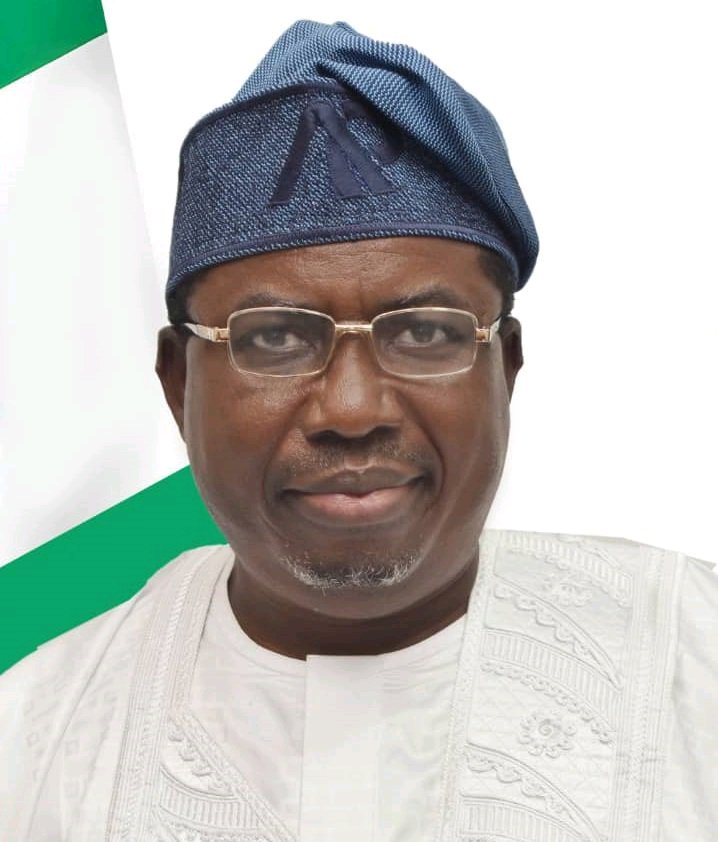
Chatham House Protest: UK-Based Lawyer Alleges Anti-Amupitan Demonstrators Were Paid Actors
LONDON — Fresh controversy has emerged over the protest against the Chairman of the Independent National Electoral Commission (INEC), Professor Joash Amupitan, outside Chatham House in London, following allegations by a United Kingdom-based Nigerian lawyer, Otunba Dayo Babalola, that the demonstrators were allegedly paid to stage the confrontation.
Babalola dismissed the demonstration as an attempt by a small group of individuals to create a misleading impression about the position of Nigerians living in the United Kingdom on the leadership of the electoral commission.
The controversy followed Amupitan’s engagement at Chatham House, where he reportedly discussed electoral reforms and measures being considered by INEC to strengthen the credibility and integrity of Nigeria’s electoral process ahead of the 2027 general elections.
However, shortly after the engagement, a group of protesters reportedly confronted the INEC chairman outside the venue, surrounding his vehicle, chanting slogans and demanding his resignation over allegations of compromised electoral integrity.
The demonstrators, estimated by eyewitnesses to number between 10 and 15, reportedly attempted to block the chairman’s movement as they expressed dissatisfaction with his leadership of the electoral commission.
Reacting to the incident, Babalola argued that the demonstration should not be presented as the collective position of Nigerians in the United Kingdom.
According to him, nearly 200 Nigerian stakeholders and members of the diaspora attended the formal engagement inside Chatham House, making it misleading to portray the actions of a relatively small group outside the venue as representative of the wider Nigerian community.
The lawyer further alleged that the protesters were not necessarily acting out of genuine civic concerns but had allegedly been mobilised and paid to disrupt the event and attract public attention.
He also reportedly drew attention to political memorabilia worn by some of the demonstrators, suggesting that their appearance raised questions about possible political affiliations and the motivation behind the protest.
Babalola maintained that the formal engagement inside Chatham House and the demonstration outside the building were two separate events which should not be conflated.
He warned against using the actions of a handful of protesters to suggest that the wider Nigerian diaspora had collectively rejected the INEC chairman.
The allegations, however, have not been independently established, and the protesters’ account of the circumstances surrounding the demonstration remains important to a complete understanding of the incident.
The confrontation comes amid growing political disagreements over the preparedness of INEC for the 2027 general elections, particularly concerning the credibility of the voters’ register, electoral transparency, institutional independence and the security of the voting process.
Opposition figures and other critics have continued to scrutinise the commission’s activities, while INEC and its supporters have maintained that the electoral body should be allowed to carry out its constitutional responsibilities without undue political interference.
The London protest has consequently added another dimension to the debate over public confidence in Nigeria’s electoral institutions.
As of the time of filing this report, no independent evidence had been presented to establish Babalola’s allegation that the demonstrators were paid, while no formal response from the protest organisers addressing the claim was available.
The incident has also generated renewed discussions about the role of Nigerians in the diaspora in holding public institutions accountable and the need to distinguish genuine civic protests from demonstrations allegedly organised for political purposes.
Chatham House Protest: UK-Based Lawyer Alleges Anti-Amupitan Demonstrators Were Paid Actors
-
 Politics2 days ago
Peter Obi, NDC in Fresh Storm as Keyamo Gives Dickson 48 Hours Over Old National Anthem, Raises Secession Alarm
-

 metro2 days ago
Kwankwaso’s Daughter, Kano Governor’s Wife, Files for Divorce, Offers to Refund Dowry
-

 metro2 days ago
“I Cheated Because I’m Human Too” — Divorced Restaurant Owner Accuses Ex-Husband of Sleeping With Over 16 Women
-

 Business2 days ago
OPay Faces ₦994m Regulatory Fines Over Money Laundering, Terrorism Financing Breaches
-

 metro1 day ago
Tragedy: “I Suffered With This Man When He Had Nothing” — Woman Who Begged Alleged Rival To Leave Her Family Dies At 39
-

 metro2 days ago
Pastor Remanded Over Viral Video of Toluwanisings’ Corpse After Failed Attempt to Raise Singer From Dead
-

 metro2 days ago
Zamfara Bloodbath: 53 Killed as Vigilantes Ambush Bandits After Kidnapping Spree
-
 metro1 day ago
Zamfara Attack: Bandits Kill Governor Dauda Lawal’s Aide While Observing Fajr Prayer