
International
Boycott of Russian gas and oil ‘could cause mass poverty in Germany’

Germany has warned that an immediate boycott of Russian gas and oil supplies could hurt its own population more than Vladimir Putin, bringing mass unemployment and poverty.
“If we flip a switch immediately, there will be supply shortages, even supply stops in Germany,” the economic and energy minister Robert Habeck told public broadcaster ARD on Sunday, as Europe’s largest economy intensely searches to diversify its energy supplies in the medium term.
The Green party politician predicted “mass unemployment, poverty, people who can’t heat their homes, people who run out of petrol” if his country stopped using Russian oil and gas.
Few other western economies are as dependent on Russian energy as Germany: 55% of the natural gas, 52% of the coal and 34% of mineral oil used in the country comes from Russia, for which it pays hundreds of thousands of euros daily, financially supporting the war machine currently devastating Ukraine.
Habeck said his government was working hard to ensure Germany would be in a position to give up Russian coal by the summer, and to phase out Russian oil by the end of the year, but that a short-term ban on Russian gas could leave his country exposed.
“With coal, oil and even gas we are step by step in the process of making ourselves independent”, the former Green party co-leader said. “But we can’t do it in an instant. That’s bitter, and it’s not a nice thing morally to confess to, but we can’t do it yet.”
READ ALSO:
- If Putin uses chemical weapons in Ukraine it’s a ‘game changer’ for NATO
- Scarcity of aviation fuel: We’ve only 3 days to shut down operations – Airlines
- 14-Year-Old Nanny Strangles Mistress’ Six-Month-Old Baby In Lagos
The US, which imported roughly 8% of its crude oil needs from Russia in 2021, announced a ban on Russian oil with immediate effect last week, while the UK announced it would phase out Russian oil imports by the end of the year.
Since the start of the war in Ukraine, the German chancellor, Olaf Scholz, has u-turned on a number of foreign policy red lines, consenting to deliver lethal weapons to Ukraine, supporting cutting Russia off from the Swift payment system, and freezing the completed but not yet functional Nord Stream 2 pipeline underneath the Baltic Sea.
But the centre-left leader has said his hands are tied when it comes to banning Russian energy. “Currently there is no other way to secure Europe’s supply with energy to generate heat, for mobility, for power supply and for industry,” Scholz said last week.
Depending on the predictions of various thinktanks and economic institutes, an immediate stop in Russian gas deliveries could shrink Germany’s GDP by as little as 0.1 or as much as 5.2 percentage points.
In an open letter, a number of prominent German scientists, writers and activists have urged the government to take the bold step of cutting itself loose from Russian energy. The Christian Democratic Union party of the former chancellor Angela Merkel has proposed shutting down the Nord Stream 1 pipeline while allowing gas imports via other routes.
Germany’s left-liberal government, meanwhile, is trying to buy time in order to fill up its gas reserves, which were undersupplied by Russian energy companies last year and are largely depleted at the end of the winter.
In its search for alternative sources of energy, short-term solutions are also hard to come by. Simplifying the process whereby new wind and solar farms are to be authorised was one of the promises of the “traffic light” government’s coalition deal, but construction alone will take time.
Building port terminals for liquefied natural gas (LNG), as Germany has now vowed to do in the towns of Brunsbüttel und Wilhelmshaven, usually takes at least five years.
“Can’t do is a highly problematic statement”, energy expert Claudia Kemfert told ARD. “Because the likely challenge we are facing is that we have no choice but to can do”.
THE GUARDIAN







International
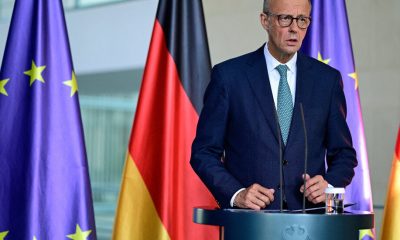
Russia Escalates Digital Control with Attempted WhatsApp Block

Russia Escalates Digital Control with Attempted WhatsApp Block
WhatsApp has accused the Russian government of trying to completely block its messaging service in the country, a move aimed at steering users toward the state-backed app MAX. The Meta-owned platform said the effort, reported on February 12, 2026, threatens over 100 million users and undermines private, encrypted communication in Russia.
In a statement, WhatsApp said: “Today the Russian government attempted to fully block WhatsApp in an effort to drive people to a state-owned surveillance app. Trying to isolate over 100 million users from private and secure communication … can only lead to less safety for people in Russia. We continue to do everything we can to keep users connected.”
READ ALSO:
- Tumbler Ridge Massacre: Canada Investigates Shooter’s Mental Health, Police History
- Ex-Acting AGF Nwabuoku Admits Diverting N868.4 Million to Private Firms
- Kwankwasiyya Urges US Congress to Drop Kwankwaso’s Name from Bill
The attempt is part of a broader crackdown on foreign tech platforms in Russia. Authorities have previously restricted access to Facebook, Instagram, and targeted other services like Telegram. Reports indicate that Roskomnadzor, Russia’s communications regulator, removed WhatsApp from its national internet directory, forcing users to rely on VPNs to access the platform. Critics warn that such measures are designed to expand state surveillance and control over digital communication.
The government is actively promoting MAX, a domestic “super-app” similar to China’s WeChat, which combines messaging with other services. Rights advocates caution that the push toward MAX could compromise privacy protections that platforms like WhatsApp provide. Meanwhile, Kremlin officials have indicated that WhatsApp and other restricted apps could be restored if Meta complies with local data storage and regulatory laws.
WhatsApp’s statement emphasizes that the company will continue to work to keep its service accessible where possible, but the attempted block highlights Russia’s ongoing effort to enforce digital sovereignty and shift users toward state-controlled technology platforms.
Russia Escalates Digital Control with Attempted WhatsApp Block
International
Tumbler Ridge Massacre: Canada Investigates Shooter’s Mental Health, Police History
Tumbler Ridge Massacre: Canada Investigates Shooter’s Mental Health, Police History
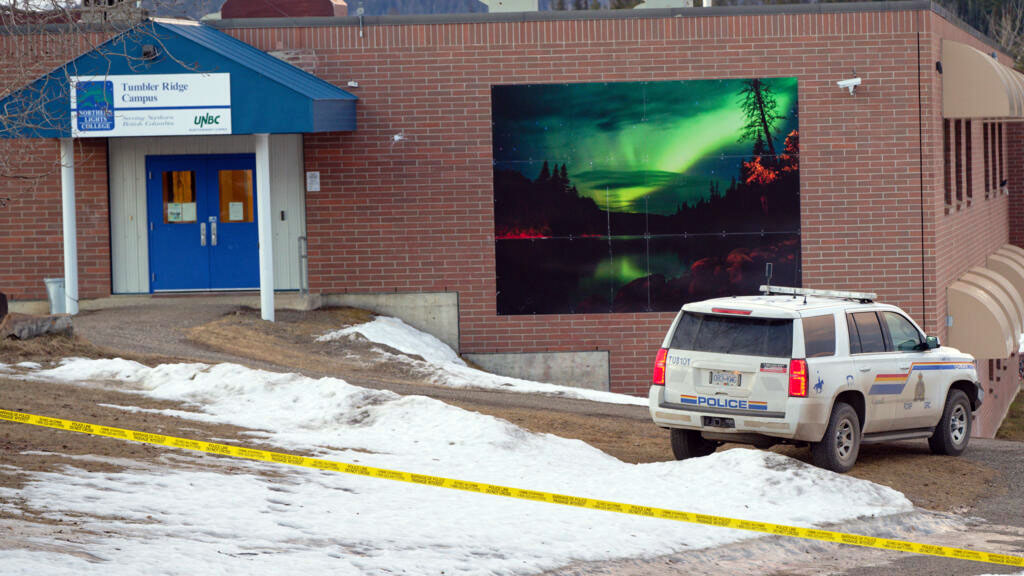
Canadian authorities are intensifying investigations into the mental health history and prior police interactions of Jesse Van Rootselaar, the 18-year-old who carried out a deadly mass shooting in the remote mining town of Tumbler Ridge, British Columbia, on February 10, 2026. The tragedy has left the small community in mourning and raised national questions about gun control, mental health support, and law enforcement interventions.
According to RCMP Deputy Commissioner Dwayne McDonald, authorities are still unclear on the motive behind the attack, which is one of the deadliest school shootings in Canadian history. Van Rootselaar, a transgender woman who had dropped out of Tumbler Ridge Secondary School four years ago, first killed her mother and stepbrother before opening fire at the school, where she shot six more victims. The shooter later took her own life at the scene.
Investigators have confirmed that Van Rootselaar was known to police and had previous interactions with the public health system due to mental health concerns. Authorities are reviewing prior incidents, including earlier firearms seizures and her lapsed gun licence, to understand how warning signs were addressed before the massacre. British Columbia Premier David Eby said officials are working with the health system to determine “what interactions may have taken place” in the past.
READ ALSO:
- Ex-Acting AGF Nwabuoku Admits Diverting N868.4 Million to Private Firms
- Kwankwasiyya Urges US Congress to Drop Kwankwaso’s Name from Bill
- Liverpool Edge Sunderland 1-0 to Halt Impressive Home Streak
The victims include a 39-year-old female teacher and five students aged 12 and 13, with one child, 12-year-old Maya Gebala, in critical condition after trying to lock herself and classmates in a library during the attack. First responders arrived within minutes, but the scale of the violence left the tight-knit community of about 2,700 residents reeling. Hundreds gathered for a candlelight vigil to honour those killed and injured.
Prime Minister Mark Carney addressed parliament, describing Tumbler Ridge as a resilient, compassionate community of miners, teachers, and construction workers, and emphasised the need to learn from the tragedy. Flags across Canada have been lowered to half-staff for seven days in remembrance of the victims. Britain’s King Charles and Queen Camilla also expressed shock and sorrow over the massacre.
Schools in the area will remain closed for the remainder of the week as authorities continue their investigation into Van Rootselaar’s mental health background, police interactions, and access to firearms, seeking to understand how similar tragedies can be prevented in the future.
Tumbler Ridge Massacre: Canada Investigates Shooter’s Mental Health, Police History
International
Canada Mass Shooting: Nine Dead in School, Residence Attack
Canada Mass Shooting: Nine Dead in School, Residence Attack
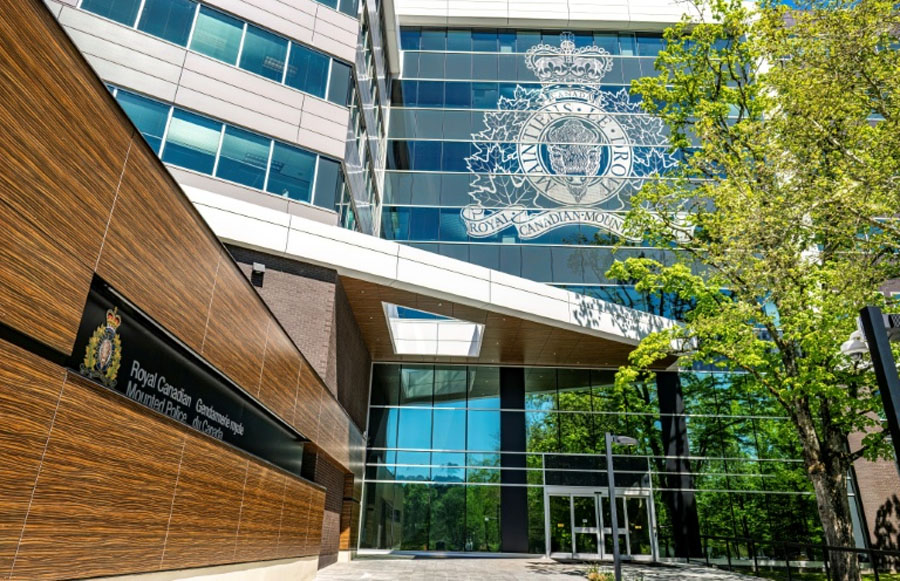
A mass shooting in Tumbler Ridge, British Columbia, Canada has left nine people dead and dozens injured after an attacker opened fire at a secondary school and a nearby residence on Tuesday, February 10, 2026.
According to the Royal Canadian Mounted Police (RCMP), seven victims were killed at Tumbler Ridge Secondary School, while two others died at a residence connected to the incident. At least 27 people were wounded, including two in critical condition, while the rest sustained non-life-threatening injuries.
The suspect was found deceased at the scene from an apparent self-inflicted injury. Authorities have not yet released the identity or motive behind the attack, which has shaken the small community of roughly 2,400 residents.
READ ALSO:
- Police Arrest Suspect as Youth Suffers Head Injury in Vigilante Custody
- Boko Haram Seizes Four Trailers, Rustles Over 100 Cows in Borno
- Wike Backs Tinubu’s Peace Efforts, Vows Stability in Rivers
Police responded rapidly, issuing an active shooter alert, placing schools on lockdown, and evacuating students safely. The RCMP and local officials continue to investigate the circumstances surrounding the attack and the suspect’s background.
Local leaders described the event as a devastating tragedy, expressing solidarity with victims’ families. The shooting has prompted national attention in Canada and renewed calls for enhanced school security and measures to prevent mass shootings.
Authorities have urged the public to remain vigilant and report any suspicious activity, emphasizing the importance of community cooperation in maintaining safety and preventing similar tragedies.
The attack is considered one of the deadliest school-related shootings in Canada in recent years, drawing widespread condemnation and grief across the country.
Canada Mass Shooting: Nine Dead in School, Residence Attack

-

 metro2 days ago
Leadership Crisis at NAHCON as Chairman Abdullahi Saleh Usman Resigns
-

 News2 days ago
Oyo Muslims Reaffirm Loyalty to Sultan on Islamic Matters — Grand Chief Imam
-

 News2 days ago
US Judge Orders FBI, DEA to Release Tinubu’s Criminal Records, Faults Delays
-

 International2 days ago
US to Deport 18 More Nigerians on ‘Worst-of-the-Worst’ Criminal List (Full Names)
-
metro2 days ago
Former NAHCON Chief Explains Why He Stepped Down, Denies Conflicts
-

 Business2 days ago
Naira Posts Strong Comeback, Breaking Two‑Year High Against Dollar
-

 Business3 days ago
CAC Deploys AI, Partners Google to Tackle Rising Business Registration Demand
-

 metro3 days ago
Court of Appeal Affirms Senate’s Power to Suspend Natasha Akpoti