

International
If Putin uses chemical weapons in Ukraine it’s a ‘game changer’ for NATO

-
Western officials and strategists say that there are good reasons to fear Moscow using unconventional and outlawed weapons.
-
President Joe Biden warned Friday that there would be a “severe price” to pay if Russia used chemical weapons in Ukraine.
-
NATO Secretary-General Jens Stoltenberg said Sunday that such a move would be a war crime.
There are increasing concerns that Russia could be prepared to use chemical weapons to attack Ukraine, with Western officials and strategists warning the threat posed by Moscow and Russian President Vladimir Putin in this regard is credible and serious.
In the last week, Russia itself has accused Ukraine of operating chemical and biological weapons laboratories backed by the U.S. The claims were roundly rebuffed by Ukrainian and Western officials, with the U.S. describing them as “outright lies.” But they have caused alarm nonetheless, with many officials seeing them as Russia inventing and building a false narrative and pretext for using its own chemical weapons against Ukraine, a prospect described as “horrific” by the U.S.
“Russia has a track record of accusing the West of the very crimes that Russia itself is perpetrating. These tactics are an obvious ploy by Russia to try to justify further premeditated, unprovoked, and unjustified attacks on Ukraine,” State Department Spokesperson Ned Price said in a statement last week.
“The United States does not own or operate any chemical or biological laboratories in Ukraine … It is Russia that has active chemical and biological weapons programs and is in violation of the Chemical Weapons Convention and Biological Weapons Convention,” he added.
President Joe Biden warned Friday that there would be a “severe price” to pay if Russia used chemical weapons in Ukraine and NATO Secretary-General Jens Stoltenberg said Sunday that such a move would be a war crime.
“Now that these false claims have been made, we must remain vigilant because it is possible that Russia itself could plan chemical weapons operations under this fabrication of lies,” Stoltenberg told the German newspaper Welt am Sonntag.
READ ALSO:
- Scarcity of aviation fuel: We’ve only 3 days to shut down operations – Airlines
- 14-Year-Old Nanny Strangles Mistress’ Six-Month-Old Baby In Lagos
- Kwara Hijab Crisis: 151 Students May Miss WAEC, Principal Tells Panel
CNBC has contacted Russia’s foreign ministry for a response to the U.S. and NATO’s comments.
‘Game changer’
While the West has been united in its condemnation of Russia’s invasion of Ukraine, with the U.K. describing Putin’s regime as “barbaric,” just how far the U.S. and its NATO allies are willing to go to support Ukraine, and stop Russia, is a moot point. NATO has repeatedly ruled out any kind of military support, such as a no-fly zone pleaded for by Ukraine, that could lead it into a direct confrontation with nuclear power Russia.
But Poland’s President Andrzej Duda said in an interview Sunday that the use of chemical weapons in Ukraine by Russia could change the West’s calculus over the conflict.
“Of course, everybody hopes that he would not dare do that but … if he uses any weapons of mass destruction then this will be a game changer in the whole thing,” he told the BBC’s Sophie Raworth Sunday, adding that NATO would have to “think seriously what to do because then it starts to be dangerous not only for Europe … but the whole world.”
With his almost internationally condemned invasion of Ukraine, which began on Feb. 24, Putin is seen as an increasingly unpredictable leader. With Russia facing far more resistance than it expected to face in Ukraine, and appearing to prepare to attack the capital Kyiv, there are fears that Putin could resort to using unconventional — and outlawed — weapons.
Duda said that Putin had already lost the war politically, and was losing it militarily, and that made the Russian leader dangerous: “If you’re asking me whether Putin can use chemical weapons, I think Putin can use anything right now, especially when he’s in this difficult situation,” he told the BBC.
While fears are heightened that Russia could resort to using chemical weapons in Ukraine, it’s important to remember that there is nothing to suggest their use is imminent.
On Friday, Reuters published a briefing by unnamed Western officials who noted that Russia might use chemical weapons in Ukraine in a “false flag” attack to provide a retrospective justification for its invasion, but there is nothing to suggest a broader use of such weapons in the war.
READ ALSO:
- Minister holds emergency meeting over power outage
- LCC to resume toll operations at Lekki-Ikoyi link bridge April 1
- Explosion: Nigeria’s oil production drops by 25,000 barrels daily
- Panic as DCP Abba Kyari’s wife slumps in court
In the Reuters report, the officials said that “clearly, whilst the Russians are highly likely to have a chemical weapons capability, there is nothing to suggest that they intend to use [them] at this point in a major escalation of the current conflict.”
Nonetheless, Russia has been accused of using chemical weapons before, both on individuals seen as outspoken critics of Putin, and on a wider level was allegedly complicit in their use in the Syrian civil war.
Russia’s reputation
A chemical weapon is defined by the Organisation for the Prohibition of Chemical Weapons as a chemical used to cause intentional death or harm through its toxic properties.
The OPCW’s mission is to implement the provisions of the Chemical Weapons Convention, an arms control treaty signed by 193 countries (including Russia) in 1997 which prohibits the production and use of chemical weapons. It also saw signatories commit to destroying chemical weapons production facilities and stockpiles of such weapons.
Putin said in late 2017 that Russia had completed the destruction of its last chemical weapons (and he chided the U.S. for not yet doing so) but the poisoning of former Russian spy (and double agent) Sergei Skripal and his daughter Yulia in the U.K. in 2018 with a Novichok nerve agent (developed by the Soviet Union) and the poisoning of Putin critic and opposition politician Alexei Navalny in 2020 have suggested Russia has maintained an illicit chemical weapons program.
Russia denied involvement in both incidents despite overwhelming evidence to the contrary.
There have been other cases of chemical weapons attacks in which Russia has been heavily suspected of involvement or at the very least, complicity in their use.
Incidents have included the poisoning in 2004 of Ukraine’s then pro-Western President Viktor Yushchenko with dioxin, and the fatal poisoning of Alexander Litvinenko, a former KGB officer and critic of Putin who died in London after drinking green tea laced with polonium-210, a rare and potent radioactive isotope. A 2016 inquiry found Putin probably approved the killing. The Kremlin denied any involvement in either incident.
Then, when Russian troops fought alongside Bashar Assad’s government forces in Syria’s civil war in which the nerve agent sarin was used against civilians, killing over 1,400 people, Russia was accused of helping Syria to cover up the crime. Russia and Syria denied any use of chemical weapons but the OPCW’s inspectors found undeclared toxins and munitions during site visits and in 2020, the chemical weapons watchdog condemned Syria’s use of banned sarin and chlorine bombs.
When it comes to Ukraine now, we cannot say for sure whether Putin could or will use any kind of chemical weapons. But with Russia’s reputation preceding it, close observers of Putin’s regime suspect that he could have few qualms to deploy the same tactics again, and say the threat is a credible one.
“Are they capable of using low-grade chemical weapons in some form in Ukraine? They are, they did it in Syria. Yes, in a sense, it was through the regime, but I think they could [do it again],” Ian Lesser, vice president of think tank the German Marshall Fund of the United States, told CNBC.
Meanwhile, Wojciech Lorenz, a senior analyst at the International Security Programme at The Polish Institute of International Affairs, told CNBC that “you can never know” what Russia will do, but when it comes to the threat of chemical weapons use, “you have to treat it seriously.”
“Russia has already used chemical weapons on the territory of NATO. They used chemical weapons in Britain, they used chemical weapons to poison and in their attempts to kill Navalny … and it clearly indicates that they have chemical weapons that they should not have because they signed the chemical weapons treaty,” he said.
READ ALSO:
- Child found with dispatch rider not stolen ― Police
- Obaseki replies Wike: We don’t accept political bullies in Edo
- NDLEA traces N4.2bn to Abba Kyari, co-accused’s accounts
Andrew Weber, former assistant secretary of defense for the Obama administration, and who now sits on the nonprofit Council on Strategic Risks, said this weekend that aside from the chemical weapons that have been associated with Russia in past incidents, some kind of biological weapon could be used instead.
“I think we need to take it very seriously, especially given the escalation of the disinformation campaign by Russia,” he told New Zealand Radio’s Morning Report on Saturday. As well as the possible use of chemical weapons, he said Russia could deploy biological weapons in Ukraine which the U.N. defines as disease-causing organisms or toxins disseminated with the intention to harm or kill humans, animals or plants.
“Biological weapons would be different. They might use something like anthrax, for example, which is not contagious and wouldn’t spread back to Russia. But the Russian illegal biological weapons program includes things like plague, tularemia [a rare infectious disease] and even smallpox,” he said.
Both chemical and biological weapons are used to terrorize the opponent, and to cause mass casualties, he said. But he expected a massive response from the West should Russia resort to using them, saying “all bets would be off, there would definitely be a very very strong, united international response to any use of chemical or biological weapons.”
Desperate measures
The danger in the Ukraine conflict, analysts point out, is that Putin might resort to ordering the use of chemical weapons if he feels that the armed forces are not making progress in seizing and occupying Ukraine, particularly as Ukraine’s forces and volunteer fighters mount a staunch resistance and vow to fight to the death.
“I believe strongly that if the Russian forces get bogged down, and they will from time to time, that Putin will authorize the use of chemical weapons. He’s done it before and he’s likely to do it again since he is focused single-mindedly on taking over all of Ukraine and anything that deters or detracts from his ability to do that then he’s going to react accordingly,” retired U.S. Army Colonel Jack Jacobs told CNBC’s Shepard Smith late Friday.
He noted that Russia’s indiscriminate bombing of hospitals and other civilian targets has shown its increasingly uninhibited approach to the war in Ukraine as it seeks to make strides into Ukraine’s territory.
“He’s capable of doing anything as he is single-mindedly focused on one thing and that is taking over Ukraine,” Jacobs said.
CNBC







International
US Allows Iran’s Core UN Delegation, Denies Visas to Some Officials
US Allows Iran’s Core UN Delegation, Denies Visas to Some Officials
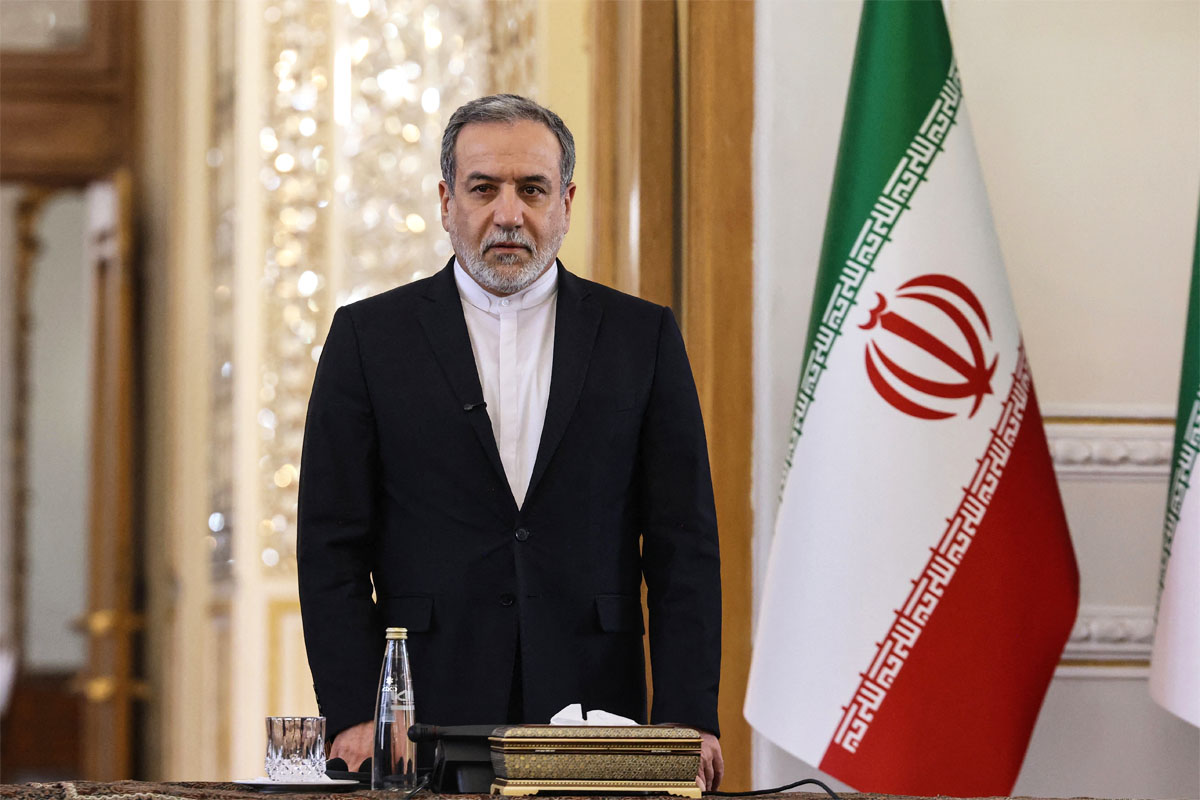
The United States has refused to issue visas to some members of Iranian President Masoud Pezeshkian’s delegation, including members of his communications team, ahead of his planned appearance at the United Nations General Assembly (UNGA) in New York.
Iranian state media reported the visa refusals on Monday, September 21, 2026, while confirming that the United States has authorised the core Iranian delegation to travel to New York for the high-level UN gathering.
Pezeshkian is expected to address the 81st UN General Assembly on Wednesday, making his planned visit the highest-level Iranian presence in the United States since the conflict involving Iran, Israel and the US escalated earlier this year.
Iran’s state news agency, IRNA, reported that the Trump administration had denied visas to certain members of Pezeshkian’s high-level delegation, including personnel responsible for communications.
The Mehr news agency also reported the visa denials, citing a spokesperson for the Iranian presidency.
The decision does not amount to a blanket refusal of entry to the Iranian delegation. The United States has authorised the core delegation, which includes President Pezeshkian and Foreign Minister Abbas Araghchi, to attend the UN General Assembly.
The distinction is significant because the annual UN gathering brings together representatives of member states at the headquarters of the United Nations in New York, which is hosted by the United States.
The current arrangement follows restrictions imposed by Washington on the Iranian delegation during last year’s General Assembly. UN records show that Iran previously raised concerns over visa delays and denials affecting members of its delegation and argued that such restrictions hindered its participation in UN activities.
For this year’s meeting, Washington has also imposed restrictions on the movement and activities of the Iranian delegation while it is in the United States.
READ ALSO:
- Jetour T1 Storms Abuja as Automaker Accelerates Nigeria Expansion
- Kidnapped Female Police Officer Found Dead in Ebonyi as Suspect Leads Police to Remains
- CNN, MS NOW, Politico Sue Trump Over White House Access Ban
The State Department has said the delegation will face restrictions on its movements and on the purchase of certain luxury goods and other items. The measures come amid the absence of normal diplomatic relations between Iran and the United States and the continuing conflict between the two countries.
Iranian Foreign Minister Abbas Araghchi left Iran on Sunday for the United States, travelling through Qatar.
The Iranian government has also used Qatar as an intermediary in communicating with Washington over the Strait of Hormuz, a crucial route for global oil and gas shipments.
Tehran has conveyed conditions for reopening the waterway, according to Iranian officials, while the United States has imposed measures against Iranian ports.
The Strait of Hormuz has become a major issue in the wider conflict because of its importance to international energy supplies.
Pezeshkian’s expected appearance at the UN General Assembly comes at a particularly sensitive moment in relations between Tehran and Washington.
The conflict has also become a major issue for this year’s UN gathering, with world leaders expected to discuss the Middle East, the war involving Iran, the conflict in Ukraine, the situation in Gaza and other international crises.
The Iranian president’s presence in New York could provide an opportunity for diplomatic contacts on the sidelines of the General Assembly, although the two governments remain sharply divided over the conflict and other issues.
US President Donald Trump is also attending the UN General Assembly this week and is expected to address the gathering.
Trump has indicated that he remains open to discussions involving Iran, while Tehran has continued to communicate through intermediaries.
The visa dispute therefore adds another layer to already strained US-Iran relations, but it has not prevented Iran’s president and foreign minister from attending the UN meeting.
For now, Pezeshkian’s scheduled appearance means Iran will have senior-level representation at the 81st UN General Assembly, despite Washington’s refusal to issue visas to some members of his wider delegation.
The immediate focus will be on Pezeshkian’s address, Iran’s position on the ongoing conflict and whether the UN gathering creates opportunities for further diplomatic engagement between Tehran and Washington.
US Allows Iran’s Core UN Delegation, Denies Visas to Some Officials
International
CNN, MS NOW, Politico Sue Trump Over White House Access Ban
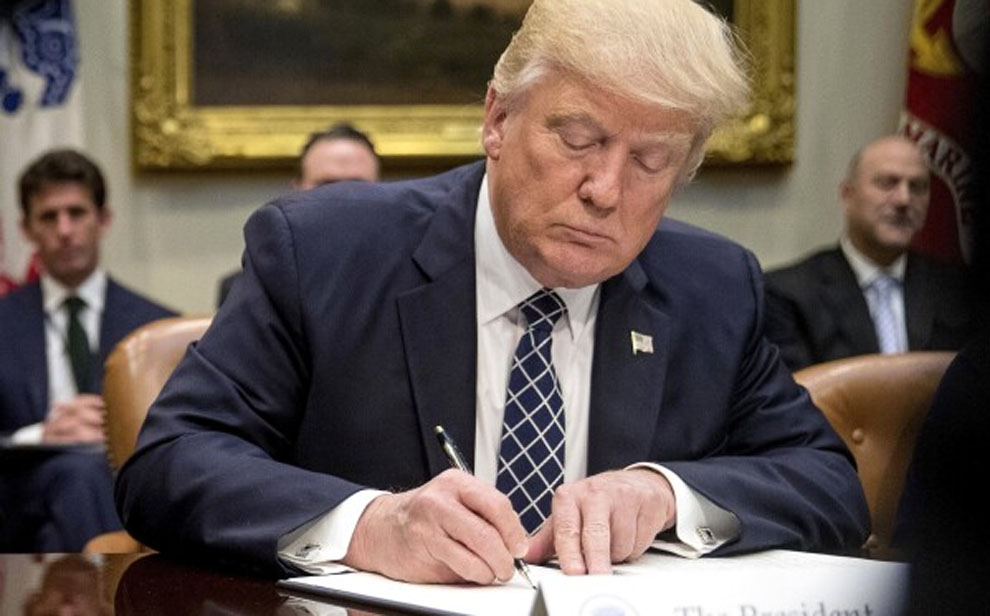
CNN, MS NOW, Politico Sue Trump Over White House Access Ban
CNN, MS NOW and Politico have filed a federal lawsuit against the administration of US President Donald Trump, challenging the decision to revoke their journalists’ access to the White House.
The three major news organisations are asking a federal court in Washington, DC, to intervene after the Trump administration barred their reporters from the White House grounds and deactivated or confiscated their press credentials.
The organisations argue that the administration’s action violated their First Amendment press rights and the Fifth Amendment’s due process protections, alleging that their access was withdrawn because of dissatisfaction with their reporting.
The case was filed in the US District Court for the District of Columbia, with the media organisations seeking expedited consideration of their challenge and an order restoring their access to the White House.
The lawsuit names President Donald Trump, White House Chief of Staff Susie Wiles, White House spokesperson Steven Cheung and Secret Service Director Sean Curran as defendants.
The legal action followed Trump’s decision to exclude the three organisations from the White House after he accused them of publishing what he described as “fake news” about his administration.
Trump has argued that journalists remain free to report on him but that the administration is not required to provide White House access to every news organisation.
The president also defended the decision on social media, where he characterised the affected outlets as a threat to national security. The reports on the lawsuit did not indicate that the administration had presented evidence publicly establishing such a threat.
The dispute escalated on Saturday, September 19, when reporters working for CNN, MS NOW and Politico were turned away from the White House complex.
Their press access was reportedly deactivated or their credentials confiscated, preventing them from covering activities inside the presidential complex in the usual manner.
The organisations subsequently warned that the White House decision raised broader questions about whether a presidential administration could deny access to journalists because of disagreement with their reporting.
READ ALSO:
- JAMB Allows Candidates to Change Lost SIM, Email Addresses
- How Nigerians Can Get Federal High Court Affidavit Online Without Visiting Court
- Plateau Violence: Several Killed as Fresh Attacks Trigger Mass Exodus
In their court challenge, the outlets are expected to argue that the government cannot use access to public officials and government facilities as a means of punishing or influencing the content of news coverage.
The case comes as the Trump administration has significantly changed the way White House press access is managed.
The administration has increasingly exercised greater control over which journalists attend certain presidential events, while also expanding access for reporters from organisations it considers more favourable or less represented in traditional White House press coverage.
The latest dispute, however, concerns the removal of access from three established national news organisations at the same time.
The White House Correspondents’ Association (WHCA) has criticised the exclusion of the outlets and raised concerns about the implications for press access and government transparency.
Other media organisations and press-freedom groups have also expressed concern over the decision, arguing that government officials should not determine access based on whether they approve of particular news coverage.
The White House, on the other hand, has maintained that the administration has authority to determine access to the White House and has repeatedly accused some mainstream news organisations of inaccurate or unfair reporting.
The legal battle also has implications beyond the three organisations involved because federal courts have previously considered disputes between the executive branch and news organisations over access to the president.
One prominent case involved CNN reporter Jim Acosta during Trump’s first administration.
In 2018, the White House revoked Acosta’s press credentials following a confrontation during a presidential news conference. CNN challenged the decision in court, and a federal judge ordered the temporary restoration of his access.
The Trump administration has also been involved in a more recent dispute with the Associated Press.
The administration restricted AP’s access after the news agency declined to adopt Trump’s preferred terminology for the Gulf of Mexico. A federal judge later ordered the administration to restore the AP’s access in certain circumstances, although subsequent litigation resulted in distinctions between generally accessible areas and more restricted presidential events.
The current lawsuit involving CNN, MS NOW and Politico raises related but distinct questions about the government’s authority to control press access.
A central issue is expected to be whether the administration can exclude news organisations from access that is otherwise made available to members of the White House press corps because of disagreement with their reporting.
Another issue is the extent to which the First Amendment limits government decisions affecting journalists’ access, particularly when the alleged reason for exclusion is connected to the content or viewpoint of their reporting.
The media organisations are also challenging the process used to revoke their access, arguing that they were not given adequate notice or an opportunity to contest the decision before their credentials were withdrawn.
The case has already affected White House media arrangements beyond routine presidential coverage.
CNN had been scheduled to provide the television pool feed for Trump’s Monday trip to New York for the United Nations General Assembly, but the assignment was removed from the White House press schedule following the access dispute.
The White House press pool is important because participating organisations provide shared coverage, photographs, video and other material that can be used by news organisations that cannot send their own journalists to every presidential event.
The lawsuit therefore places questions of press freedom, government transparency and presidential control over media access at the centre of another federal court dispute involving the Trump administration.
For the three organisations, the immediate objective is restoration of access to the White House and the ability of their journalists to resume reporting from the presidential complex.
For the administration, the dispute involves its stated authority to determine who receives access to the White House and how that access is organised.
The court’s handling of the case could provide further guidance on the constitutional limits surrounding White House press credentials, particularly where access decisions are alleged to be connected to the content of journalists’ reporting.
Until the court rules, the competing claims remain disputed. The lawsuit itself does not establish that the administration violated the Constitution, while the White House’s allegations against the news organisations remain the administration’s stated position rather than findings by a court.
CNN, MS NOW, Politico Sue Trump Over White House Access Ban
International
18 Suspects Transferred to US Over 2021 Killing of Haitian President Moïse
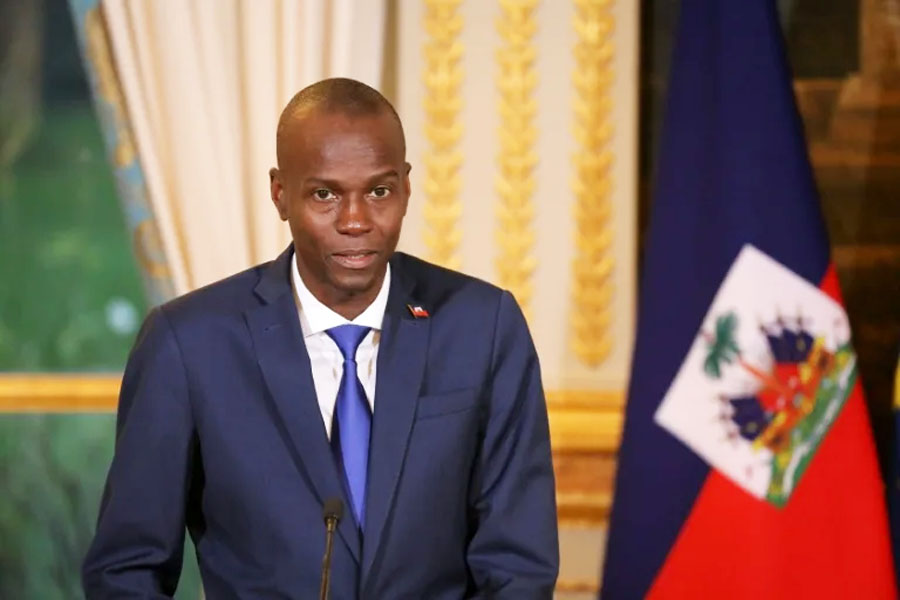
18 Suspects Transferred to US Over 2021 Killing of Haitian President Moïse
Eighteen suspects accused of involvement in the 2021 assassination of former Haitian President Jovenel Moise have been transferred from Haiti to the United States to face trial.
US officials said the suspects were transported to Florida on Sunday, as American authorities continue their prosecution of people allegedly connected to the plot.
Federal prosecutor Jason Reding Quinones said the suspects were flown from Haiti on a military aircraft to face proceedings in the Southern District of Florida.
He said US authorities had so far indicted 30 people in connection with the assassination and warned that the prosecutions were not over.
Among those transferred was Joseph Felix Badio, a former anti-corruption official with Haiti’s Ministry of Justice who has been identified as a major suspect in the investigation.
Haitian government and police sources said the other suspects included Colombian nationals who were allegedly part of the group involved in the operation.
READ ALSO:
- My Heart Has Always Been Home With You — Tinubu’s Powerful Message to Oluremi at 66
- Tinubu’s UNGA Absence Fuels Questions Over Planned Trump Meeting
- Messi Fires Stunning 75th Career Free-Kick to Reach 930 Goals in Inter Miami Draw
Colombian Nationals Among Suspects
Colombia’s Foreign Ministry confirmed that 17 of its citizens had been transferred from Haiti to the United States.
The ministry said the Colombian government was monitoring the development but had not participated in the decision or process that led to the transfer.
Moise was killed at his private residence in Port-au-Prince on July 7, 2021. Investigators said a group of about 20 Colombian military-trained mercenaries had been hired in connection with the operation.
The president’s security detail came under scrutiny after failing to prevent the attack.
In May, four men were convicted in a Miami federal court over charges connected to the plot, including conspiracy to kill or kidnap Moise and providing material support for the operation. They could face life imprisonment.
US prosecutors said the men were linked to CTU Security, a Florida-based private security company, and had allegedly been attracted by the prospect of lucrative contracts after Moise was removed from power.
The assassination plunged Haiti further into political and security turmoil. The country has since struggled with gang violence and remains without a president, while preparations continue for elections scheduled for December, subject to security conditions.
18 Suspects Transferred to US Over 2021 Killing of Haitian President Moïse
-

 Entertainment2 days ago
“She Wanted to Stay Single”: Rema Opens Up About Rejection That Inspired Hit Song ‘Oh No’
-

 metro2 days ago
Oyo Police: Student Who Died by Suicide Was Charged With Assault, Not ₦8,000 Debt
-

 metro3 days ago
Niger Miners’ Deaths: Families Demand Compensation, Justice for Victims
-

 metro3 days ago
Mambilla: ICC Raises Questions Over $500,000 Payment to Atiku’s Former Wife
-

 Auto2 days ago
Abuja Demand Rises as Jetour Brings X70 Plus Experience to FCT
-
 International14 hours ago
18 Suspects Transferred to US Over 2021 Killing of Haitian President Moïse
-
 Politics2 days ago
2027: NDC Predicts Wider Obi Victory Over Tinubu in Lagos
-

 metro2 days ago
Irreconcilable Developments: Wedding Cancelled 24 Hours Before Ceremony