

News
BREAKING: Presidency breaks silence over alleged plan by Tinubu to buy Presidential Yacht
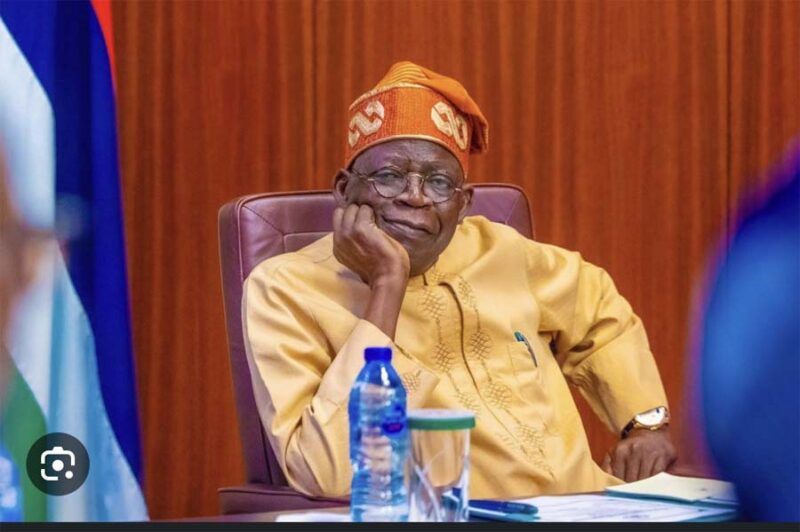
BREAKING: Presidency breaks silence over alleged plan by Tinubu to buy Presidential Yacht
The senior special assistant to President Bola Tinubu on media and publicity, Temitope Ajayi, has refuted reports that the president has requested a presidential yacht.
Nigerians’ reactions on social media to the N2.1 trillion supplemental budget Tinubu submitted to the National Assembly have generated debate, with some questioning some of the budget’s components.
According to the details of the budget, N5.09 billion was allocated for a ‘presidential’ yacht, N2.9 billion for sport utility vehicles for the Presidential Villa, and another N2.9 billion for the replacement of operational vehicles for the presidency.
The yacht was listed under the Nigerian Navy’s proposed capital expenditure of N42.3 billion.
Reacting to the criticisms that have followed the release of the budget details, Ajayi revealed that the president doesn’t need a yacht to perform the functions of his office.
He wrote: “It has become a pattern for some individuals, CSOs and a section of the media to pick one or two line items every budget cycle for sensational headlines, deliberately ignoring context in their reporting.
“The public that should benefit from good journalism, which should primarily educate and adequately inform, is left confused and miseducated due to the mischaracterisation of issues and misrepresentation of facts.
“The trending issues on social media since yesterday are two items in the 2023 supplementary budget. One is the provision for a presidential yacht in the supplementary budget by the Navy and the other is over N6 billion for vehicles to the State House.
“It is important to state clearly that President Bola Tinubu didn’t ask for a presidential yacht and I doubt he needs one to perform the functions of his office. From what I know, the request for a yacht, however named or couched in the budget is from the Navy and they must have operational reasons for why it is required.
READ ALSO:
-
FG to spend N28bn on presidential yacht, vehicles, others
-
FG needs N18.6tn to fix roads in four years – Umahi
-
Arsenal suffers a disappointing defeat by West Ham
“The budget office should be in a position to also explain to the public why such expenditure should be accommodated now, considering the country’s economic situation. I must readily admit that the one reason our budgeting system has been a subject of public attack is the very simplistic way some of the line items are described by civil servants, who prepare the budget. Examples abound. Sometimes in 2016, an Enterprise Resource Planning (ERP) project of the Ministry of Solid Minerals worth over N300m was captured in that year’s budget as a “website”. Naturally, it generated a massive controversy as people, rightly, asked to know the type of website that would be built with N300million.
“It is important to say that journalism should enrich public enlightenment and not create an atmosphere of siege. It is poor reporting to always reduce State House budgetary provisions to the President and Vice President. When the State House makes provision for vehicles, it is reported that the President will use all the vehicles or eat all the food when a provision is made for food and catering services. We have had such inaccurate reporting in the past.
“A President and Vice President cannot, for any reason, spend N20 million naira to eat in a year if it is about the food they will eat as first and second families. How much food can a person really eat? Yet, we will read headlines that Tinubu, Buhari, Jonathan or whoever the President is wants to spend N5billion on food and catering in a year when in actual fact such budgetary provisions are made to accommodate many state events, meetings, hosting of VIPs, foreign dignitaries, and even visits by other Heads of State, and bilateral and multilateral meetings that the State House will deal with in a given year.
He further stated: “It is worth stating that in August this year, President Tinubu as the Chairman of the Authority of Heads of State and Governments of ECOWAS hosted two extraordinary summits of the regional body over the political crisis in Niger Republic. The two summits required catering services for the ECOWAS leaders and their delegations. Just this past Sunday, German Chancellor Olaf Scholz was on a State Visit to Nigeria with a delegation of top businessmen and women from Germany. The President hosted the visiting Chancellor and his delegation to a state banquet. The State House budget for food and catering services is spent on such events. It is not spent essentially to feed the President and Vice President.
READ ALSO:
-
Naira sells N786.02/$ officially, N1170/$ parallel market
-
Coup: Gambia sentences soldier to 12 years jail term
-
LASEPA releases list of Churches, Mosques, others banned from operation due to noise pollution
“On matters of vehicles, the N6 billion budget provision is not to buy vehicles for the President and Vice President alone. President Tinubu and Vice President Shettima are not using any new vehicles in their fleet. They are using inherited vehicles. There are hundreds of civil servants and political aides working at the State House who need operational vehicles. I am a senior aide of the President. I am using my personal car and at my own expense since I resumed work more than five months ago. Like me, virtually all the appointees of the President are using personal vehicles at their own expense for official duties. Most of the vehicles in the pool for various departments are run down. Even members of the State House Press Corps do not have functional buses to ease their movement. I know for a fact that a request for a new bus for the State House Press Corps is captured in the supplementary budget for vehicles.
“It is necessary to add that none of the political appointees has drawn any benefit and perks from the public treasury. I must add that in 5 months, we have not even received a kobo as salary because of procedural issues involved in capturing new appointees on the payroll via IPPIS.
“The presidency is a huge Bureaucracy with hundreds of staff. Any budget head for the State House is to run the system, not for the epicurean fantasy of a sitting President and Vice President. In this pageview-centric and social media age, it is easy to provoke public rage. It is also tempting for bloggers and quack journalists to take the easy road of sensationalism to attract traffic to their blogs and news websites. But good journalism, I believe, should be about substance and nuanced reporting.”
BREAKING: Presidency breaks silence over alleged plan by Tinubu to buy Presidential Yacht
(Nation)







News
2027: Davido Says Nobody Can Force Presidential Candidate on Him, Claims He Defeated 17 Governors With Phone
2027: Davido Says Nobody Can Force Presidential Candidate on Him, Claims He Defeated 17 Governors With Phone
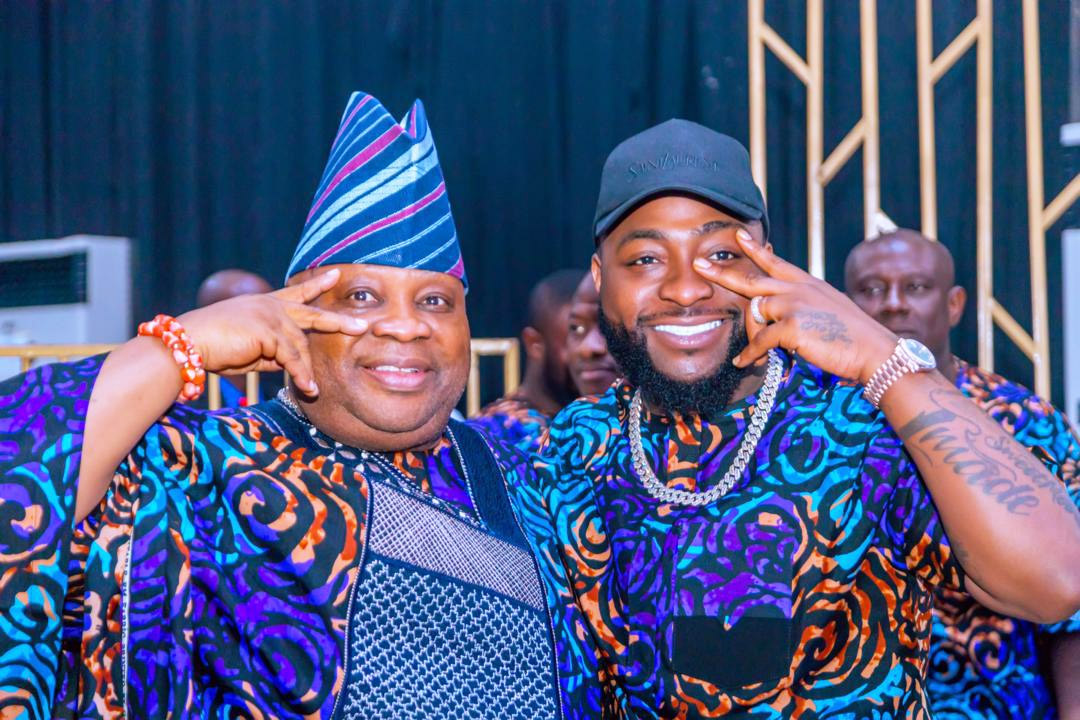
Nigerian Afrobeats star David Adeleke, popularly known as Davido, has declared that nobody can force him to support a presidential candidate in the 2027 general elections, insisting that his political choices remain personal despite his uncle’s endorsement of President Bola Ahmed Tinubu.
The singer made the remarks while reflecting on his involvement in the Osun State governorship election, where he campaigned for his uncle, Governor Ademola Adeleke, against the All Progressives Congress (APC).
Davido also claimed that he confronted the political influence and resources of 17 APC governors during the campaign, saying he relied largely on his mobile phone and social media presence to mobilise support.
“I defeated 17 governors with all their power, with all their immunity, with all their aides, with all their escort commanders, with all their DSS, with all their billions. I defeated them with my phone,” the singer said during an interview with News Central TV.
The remark referred to his role in the Osun governorship contest and was Davido’s personal assessment of the campaign, rather than an independently established account of the involvement of 17 governors.
The singer’s comments have drawn renewed attention amid discussions about the political influence of celebrities and expectations that he might support a presidential candidate in 2027 following his involvement in his uncle’s campaign.
Davido said he had received messages from people urging him to replicate his support for Governor Adeleke at the national level. However, he rejected the suggestion that his participation in the Osun election meant he had already chosen a presidential candidate.
READ ALSO:
- NRC Denies Ticket Racketeering, Says Abuja-Kaduna Rail Demand Exceeds Seats by 10-Fold
- FG Draws Red Line on Fuel Subsidy, Warns of Naira Crisis if Reforms Are Reversed
- NRC Denies Ticket Racketeering, Says Abuja-Kaduna Rail Demand Exceeds Seats by 10-Fold
“For now, I feel like I did what I had to do for the Osun people and my family. You can’t force me to have a presidential candidate,” he said.
He also made it clear that Governor Adeleke’s political decisions did not automatically determine his own position.
The Osun governor declared support for President Tinubu after his electoral victory, but Davido said his uncle might have personal or state-related reasons for the decision.
According to the singer, maintaining a cordial relationship with the Federal Government could be beneficial to a state administration seeking support and allocations. He stressed, however, that such considerations were for his uncle to make.
Davido further stated that he was not prepared to endorse any presidential candidate at the time of the interview and ruled out supporting the ruling APC, while leaving open the possibility that his position could change.
The singer recalled supporting political candidates in previous elections, including former Vice-President Atiku Abubakar when he was associated with the Peoples Democratic Party. He also referred to his involvement in earlier political campaigns linked to his late uncle, Isiaka Adeleke.
His latest position highlights the distinction between his support for Governor Adeleke in a state election and his personal decision about the next presidential contest.
Davido has also previously discussed the challenges facing Nigeria’s electoral process and questioned whether the country’s political system adequately protects voters’ choices. During the interview, he reflected on the difficulties of participating in politics and the responsibilities that come with seeking public office.
Despite his involvement in political campaigns, the award-winning musician has not announced a presidential candidate for 2027.
His comments come as political parties and prospective candidates prepare for the next general election, with public figures and entertainers likely to remain part of the wider debate over political participation and voter mobilisation.
For now, Davido says he intends to make his own decision rather than follow pressure from supporters or family members.
2027: Davido Says Nobody Can Force Presidential Candidate on Him, Claims He Defeated 17 Governors With Phone
News
FG Draws Red Line on Fuel Subsidy, Warns of Naira Crisis if Reforms Are Reversed
FG Draws Red Line on Fuel Subsidy, Warns of Naira Crisis if Reforms Are Reversed
The Federal Government has ruled out a return to petrol subsidy and multiple foreign exchange rates, warning that reversing the economic reforms introduced under President Bola Ahmed Tinubu could worsen Nigeria’s fiscal position, weaken the naira and increase the cost of living.
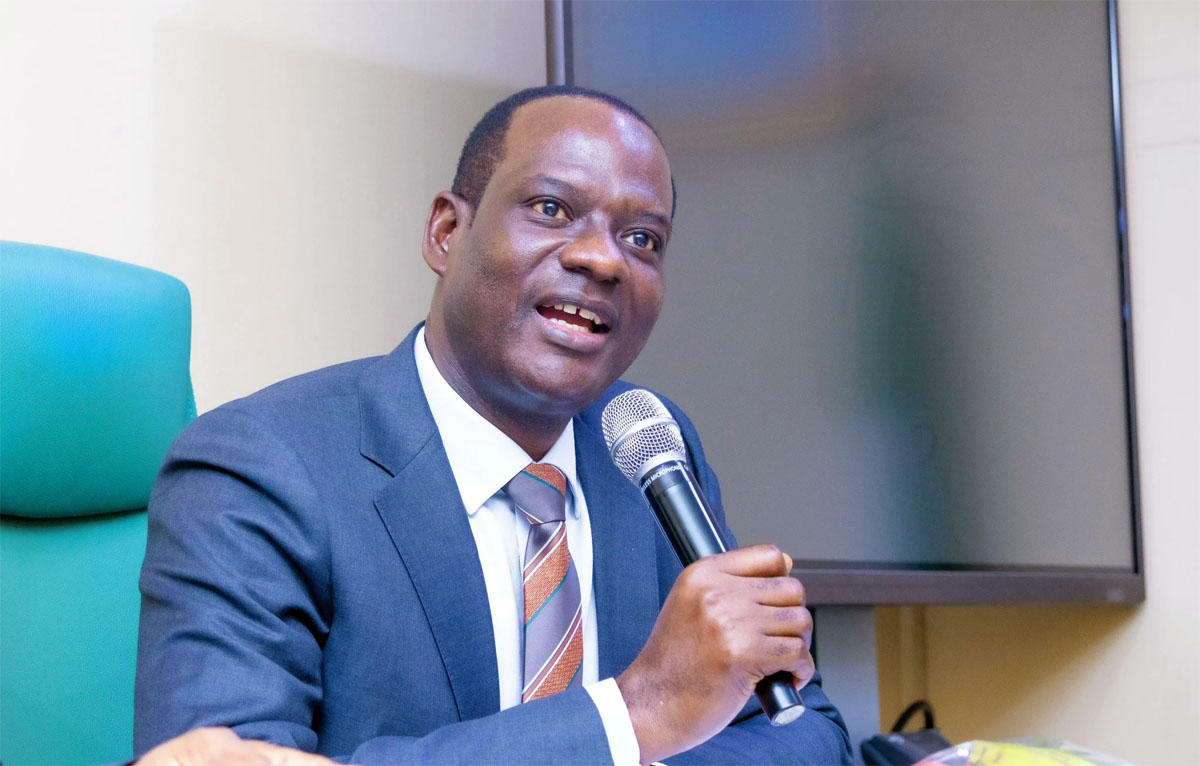
The Minister of Finance and Coordinating Minister of the Economy, Taiwo Oyedele, reiterated the government’s position on Saturday, October 17, 2026, amid renewed debate over fuel prices and economic policy ahead of the 2027 general elections.
Speaking on the sidelines of the World Bank and International Monetary Fund meetings in Bangkok, Thailand, Oyedele said the administration would not reverse its decisions to remove petrol subsidies and liberalise the foreign exchange market.
He maintained that the government’s priority was to preserve the reforms while pursuing measures to ease the pressure of high fuel prices on households and businesses.
The minister’s latest comments followed his October 8 briefing in Abuja, where he warned that restoring petrol subsidy could cost Nigeria more than ₦20 trillion annually if petrol prices were returned to their pre-reform levels.
According to Oyedele, even a proposal to sell petrol at ₦500 per litre could require more than ₦16 trillion annually, depending on consumption and other factors.
He argued that financing such expenditure would put significant pressure on public finances and potentially divert resources from essential responsibilities, including salaries, pensions, education, healthcare, infrastructure and security.
Oyedele also warned that reversing the reforms could undermine investor confidence, increase borrowing costs and put further pressure on the naira. He said the exchange rate could approach ₦3,000 to the dollar within months under the scenario he outlined, while subsidised petrol could still cost at least ₦2,000 per litre.
READ ALSO:
- NRC Denies Ticket Racketeering, Says Abuja-Kaduna Rail Demand Exceeds Seats by 10-Fold
- Tinubu Reappoints INEC Commissioner, Nominates Six Others Ahead of 2027 Elections
- Trump’s White House Press Secretary Quits After Just Five Days as Credentials Storm Erupts
These figures were presented as warnings about the possible consequences of restoring subsidy, rather than confirmed predictions of future exchange rates or petrol prices.
The minister argued that a subsidy does not eliminate the actual cost of petrol but transfers part of the bill from consumers to the government. Since crude oil, shipping and many refining inputs are priced in dollars, he said, keeping domestic petrol prices artificially low could expose public finances to additional foreign exchange costs.
He also warned that subsidised petrol could encourage cross-border smuggling if prices in Nigeria fell significantly below those in neighbouring countries, potentially leaving Nigerian taxpayers to finance fuel consumed elsewhere.
Oyedele further rejected calls to restore multiple foreign exchange rates, arguing that doing so would recreate distortions the government sought to eliminate through market liberalisation.
Under the previous system, different exchange rates operated across official and other market segments. The government argued that the arrangement encouraged arbitrage, reduced transparency and weakened confidence in the foreign exchange market.
The administration has maintained that a more unified, market-driven system would improve transparency and allow the naira’s value to respond more closely to market conditions, although exchange-rate volatility and the cost of living remain major concerns for Nigerians.
Despite ruling out a return to broad-based fuel subsidy, the government has announced temporary measures intended to moderate petrol prices.
One of the measures is a 30-day petrol discount at Nigerian National Petroleum Company Limited (NNPC) Retail stations, introduced in October. Under the arrangement, NNPC Retail agreed to forgo its retail profit margin and sell petrol at cost for the period, with priority intended for public transport operators.
Oyedele has insisted that the arrangement is not a return to fuel subsidy because the discount is borne by the company through reduced margins rather than payments from public funds. The distinction has nevertheless attracted debate, with critics questioning whether the intervention amounts to a form of subsidy in practice.
The government has also proposed a ₦1,350-per-litre ceiling on the ex-gantry or landing cost of petrol to moderate sudden price movements caused by changes in global crude oil prices and exchange rates.
The proposed ceiling is not a fixed pump price of ₦1,350 per litre. Under the mechanism outlined by the minister, refiners and importers would initially absorb costs above the ceiling and seek to recover the shortfall when market conditions improve. The arrangement is intended to smooth price fluctuations rather than permanently fix petrol prices.
Other measures highlighted by the government include support for local refining, the expansion of compressed natural gas (CNG) as an alternative transport fuel, tax and duty waivers on petroleum products, and targeted assistance for vulnerable households and businesses.
The government says such interventions can provide temporary relief without recreating the large and recurring liabilities associated with the former subsidy regime.
The fuel subsidy debate has intensified as Nigerians continue to face the effects of higher petrol prices on transport fares, food distribution, electricity generation and business operating costs.
The removal of petrol subsidy in May 2023 was one of Tinubu’s major economic policy decisions. The government has defended the reform as necessary to reduce fiscal pressure and redirect resources towards other priorities, while critics argue that the resulting rise in living costs has placed a heavy burden on households and businesses.
Calls for a return to subsidy have featured prominently in political discussions ahead of the 2027 elections, with proponents arguing that government intervention is needed to provide relief to consumers.
Oyedele said the government remained open to alternative proposals but insisted that anyone advocating a return to subsidy should explain its total cost, how it would be financed sustainably and the price consumers would ultimately pay at filling stations.
The administration’s challenge remains balancing its commitment to market-oriented reforms with demands for more immediate and meaningful relief for Nigerians struggling with the high cost of living.
FG Draws Red Line on Fuel Subsidy, Warns of Naira Crisis if Reforms Are Reversed
News
Tinubu Reappoints INEC Commissioner, Nominates Six Others Ahead of 2027 Elections
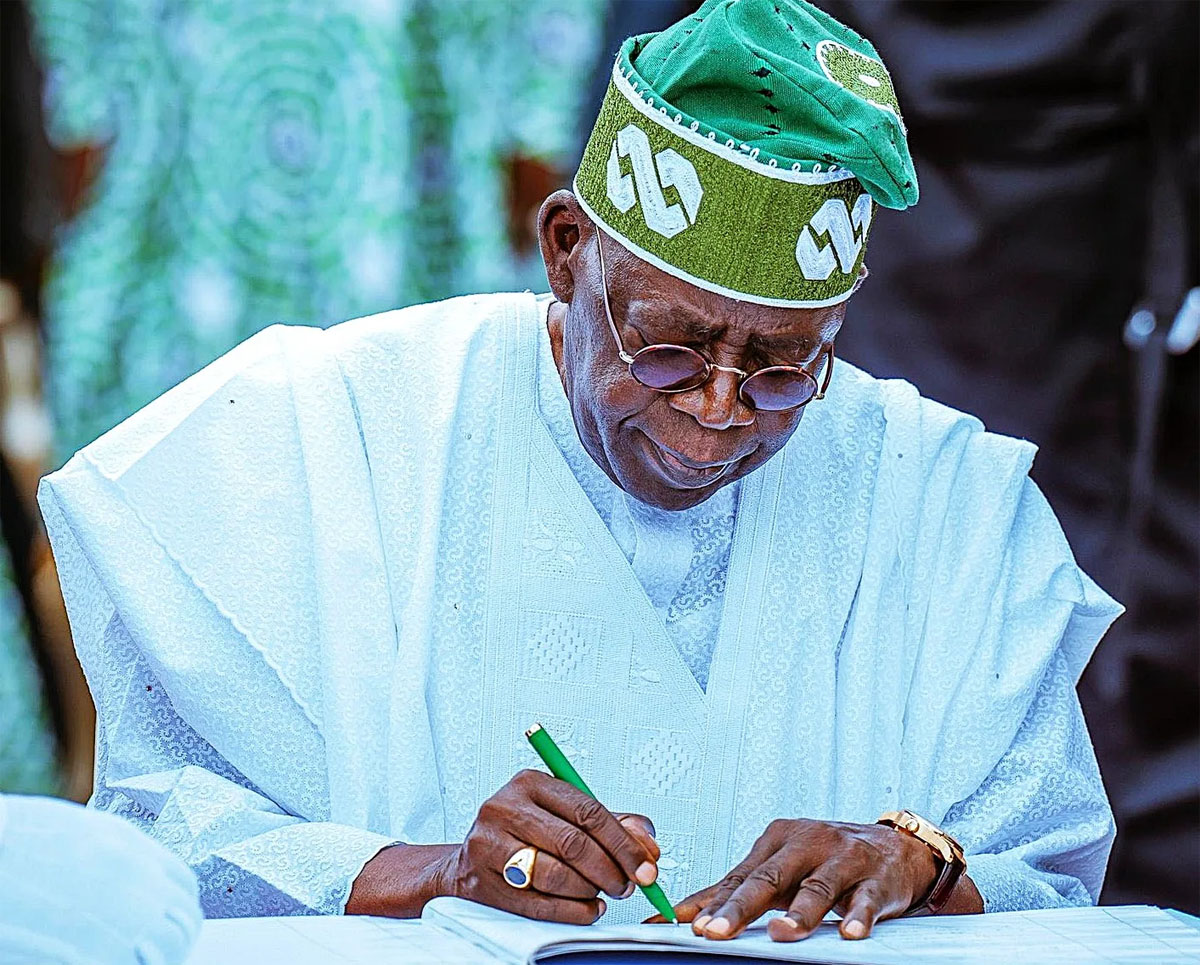
President Bola Ahmed Tinubu has reappointed Dr Bala Bila as a National Commissioner of the Independent National Electoral Commission (INEC) and nominated six other officials to fill vacancies in the electoral body ahead of the 2027 general elections.
The nominations cover four National Commissioner positions and two Resident Electoral Commissioner (REC) positions. All six nominees are expected to undergo screening and confirmation by the Senate before assuming their respective offices.
The Presidency announced the appointments in a statement issued on Friday, October 16, 2026, by Bayo Onanuga, Special Adviser to the President on Information and Strategy.
According to the statement, the nominations became necessary following the expiration of the tenures of serving officials, leaving vacancies within the electoral commission.
Among the nominees is Professor Mustapha Aliu, who has been nominated to replace Professor Abdullahi Zuru as the National Commissioner representing the North-West.
Bashir Muhammed Umar was nominated to replace Professor Muhammad Adamu as the National Commissioner representing the North-Central zone.
READ ALSO:
- Imodi-Ijebu Muslim Community Bets on 20 Chiefs to Drive Education, Economic Growth
- Imodi-Ijebu Muslim Community Bets on 20 Chiefs to Drive Education, Economic Growth
- Suspended Archbishop Ibezim Drags Anglican Primate to Court, Challenges Six-Month Leave
Tinubu also nominated Mrs Oluwatoyin Babalola, the current Resident Electoral Commissioner in Osun State, as the National Commissioner representing the South-West. She is expected to succeed Professor Cornelius Ajayi, whose tenure expires on October 24, 2026.
For the Resident Electoral Commissioner positions, the President nominated Dr Samuel Akinjide Akinleye, a retired permanent secretary, to represent Ekiti State.
Zahradden Basiru Sanusi, from Jigawa State, was nominated to replace Professor Saidu Ahmed Babura as a Resident Electoral Commissioner.
Meanwhile, Tinubu reappointed Bala Bila to continue serving as the National Commissioner representing the North-East.
The President urged the Senate to expedite the screening and confirmation process to enable INEC to fill the vacancies ahead of the forthcoming general elections, which the Presidency says are scheduled for January 2027.
The appointments come as INEC prepares for the next general elections, with the commission responsible for managing electoral activities, including voter registration, political party compliance, candidate nominations and the conduct of national elections.
The Senate’s consideration of the nominees will determine when the newly nominated officials can formally assume their respective positions.
With the 2027 elections approaching, the appointments are part of efforts to fill vacant positions within the electoral body and ensure that its leadership structure is in place ahead of the polls.
The nominations do not take effect as confirmed appointments until the required Senate screening and confirmation process has been completed.
Tinubu Reappoints INEC Commissioner, Nominates Six Others Ahead of 2027 Elections
-

 metro1 day ago
₦130m Toyota Tundra Wrecked: Lagos Dealer Questions Police Over Suspect’s Release
-

 News1 day ago
₦200m Fake Alcohol Packaging Uncovered as NAFDAC Raids Aba Market
-
 metro2 days ago
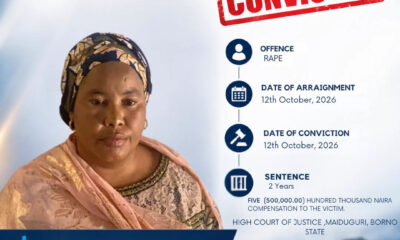
Borno Woman Jailed Two Years for Sexual Exploitation of 16-Year-Old Girl
-
 metro2 days ago
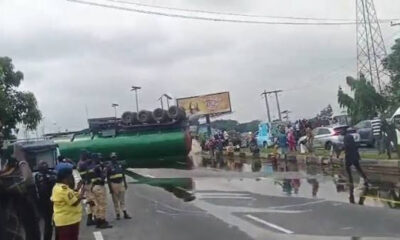
Outrage as Residents Scoop Groundnut Oil From Lagos Tanker Crash Scene
-
 Sports1 day ago
Real Madrid Demand Tebas’ Exit After Explosive Nazi Propaganda Row
-
 Politics2 days ago
Shettima Attacks Atiku Over Tinubu Remarks, Questions Subsidy Plan
-

 Politics2 days ago
2027: We Know How to Stop Tinubu From Getting Second Term – Momodu
-
 metro2 days ago
Former Senator Bello Mandiya Found Dead in Bathroom Three Days After Fall