
metro
BREAKING: ₦1m ransom paid for my release, says kidnapped corper
BREAKING: ₦1m ransom paid for my release, says kidnapped corper
A National Youth Service Corps member, Miss Esther Akande, with Call-up No.: NYSC/IFE/2023/201810 (Batch B stream 2), who was kidnapped on Wednesday, August 16, while on her way to the NYSC Permanent Orientation Camp, Magaji Dan Yanusa Keffi, Nasarawa State, and released on Saturday, August 19, has revealed that the sum of ₦1 million was paid to secure her freedom from her abductors.
Family sources had confirmed to The PUNCH on Saturday that the kidnappers demanded a ransom of ₦1million, adding that the police were nonchalant about the situation, while the NYSC urged the family to play along and pay the ransom.
However, Miss Esther in a telephone interview with one of our correspondents on Wednesday, gave the full details of her abduction and subsequent release.
Esther said, “I was on my way to camp there, because our bus, our car (driver), actually handed us over to another car (driver) at Lokoja. So, he dropped us off. So we entered another car and continued the journey from there. As we were about to enter, I think, Abaji, these people, we just met them on the road, asked us to stop.
“They started shooting the car, and before we knew it, the driver was shot. The person beside him was shot also. So I think the driver was shot in the head. The other person was shot and he died on that spot immediately. So we were tried to escape from the car because the car actually turned upside down and smoke was coming out of it.
READ ALSO:
-
Apostle Chibuzor Chinyere reacts after lady accused him of impregnating Her(+Video)
-
Lagos drug dealer escapes after crushing NDLEA official
-
Emefiele’s siblings withdraw case against DSS, AGF
“So we were trying to escape because we feared the car might catch fire. As we were about to escape, I was dragged out from the car by these men. And they dragged me into the bush and later I saw them drag another lady that was in the car too into the bush too. Then, the other two that were in the car, I don’t know how they managed to escape. I don’t know. So that was how it happened. We were in the bush for four days. They tortured us,” she said.
When asked about her release, Esther revealed, “I spent four days. From Wednesday, I was released on Saturday. The incident happened on Wednesday. They released me on Saturday after collecting money from my parents. So, they actually requested money. At first, they were requesting N300m. Later, it was reduced to N100 million. Then after begging, it was later reduced to ₦1million.
“They asked my dad to bring the money to Abaji. So, I don’t know how it happened there, because I know they delayed him, he was there since 12pm, but they attended to him by 9pm. So after they collected the money, they later released me.”
She further explained that she was taken to the NYSC camp from there and she received treatment. She further added that although her aunty informed the police, she wasn’t taken into custody after her release. The police weren’t involved in the transaction process as well.
However, when contacted, the NYSC Director, Press and Public Relations, Eddy Megwa, denied the payment of the ₦1million ransom to the kidnappers, claiming that she was released following pleas and the combined efforts of security agencies and the NYSC.
“The important thing is that she’s out of their hands now, and she’s not hurt. She’s in the orientation camp now with her colleagues. It took the combined efforts of security men and pleading for her to be released. We at the NYSC worked with security agencies to ensure that she was released. We’re not aware that any ransom was paid,” Megwa said.
READ ALSO:
- Eight Niger communities surrender to bandits warlord, Dogo Gede
-
BREAKING: Again, Emefiele, Yaro’s arraignment stalls
-
‘Calm down, forget about me’ – El-Rufai to Nigerians
Also, Esther’s father, Mr Akande, who is also a pastor, denied the payment of ransom to the kidnappers, despite contrary revelation by his daughter, the victim.
“No ransom was paid. We didn’t pay any ransom. They requested it (the ransom), but we begged them, we prayed, and at last, my daughter was released. The only thing I can say is that, the transport there and everything was done, but about the paying of this and that (ransom), I can’t say that was done,” Pastor Akande said.
Also, confirming Esther’s narration, a family source privy to the development told one of our correspondents that the victim was only released following the payment of the ₦1million ransom.
“She was released on Saturday night after the ransom was paid. Although the NYSC was duly informed, we only reached out to the police once, as we were later advised (by the kidnappers) not to involve the security agencies.
“It was later taken up by the school authority – the higher institution she graduated from – Adeyemi College of Education. Corps members, undergraduates and staff members from the school helped raise over half of the ₦1million ransom,” the source revealed.
Reacting to the denial by the NYSC, the source added, “The question should be, is it possible for the police and other security agencies to get a victim from kidnappers and not arrest the kidnappers?
“It is either they’re arrested, or they collect the money. So, how come she was released and they were not arrested? The family had to travel down from here to go give them the money. The kidnappers even gave an ultimatum. I don’t need to deny it, especially now that she has been released.”
BREAKING: ₦1m ransom paid for my release, says kidnapped corper
Punch












metro
Rufai Oseni Dismisses Suspension Rumour, Labels It ‘APC Propaganda

Rufai Oseni Dismisses Suspension Rumour, Labels It ‘APC Propaganda
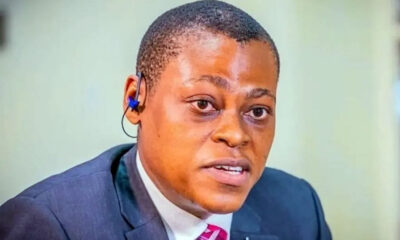
ARISE News Channel’s The Morning Show anchor, Rufai Oseni, has firmly dismissed reports alleging that he was suspended from the international broadcaster, describing the claims as false, misleading, and politically motivated.
The rumour, which gained traction across social media platforms, claimed that Oseni had been suspended from Arise News following an alleged disagreement with a senior colleague. However, the journalist debunked the claim in a post shared on his verified Facebook page on Wednesday, where he described the report as “APC propaganda.”
“Rufai Oseni suspended by ARISE News? Lies, APC Propaganda,” he wrote, rejecting the viral narrative.
Providing clarity on his absence from the popular breakfast programme, Oseni explained that he is currently in Berlin, Germany, attending a series of international conferences and professional engagements.
He further disclosed that he is scheduled to appear at the Bundestag, also known as the German Parliament, located in the historic Reichstag building, where he is expected to participate in discussions and engagements.
READ ALSO:
- PTDF Screens 243 PhD Applicants in Port Harcourt
- US Lawmaker Accuses Nigerian Security of Complicity in Attacks on Christian Communities
- Hajia Sofuratu Seghosime Emerges ICAN President-Elect
Oseni noted that his trip is aimed at gaining insights and experiences that could be beneficial to Nigeria, particularly in governance and institutional development.
The suspension rumour was reportedly linked to a social media post attributed to High Chief Lawrence Igbins Okoro, which alleged that the broadcaster had a confrontation at the station, including claims that he banged his fist on a table during a disagreement.
However, there has been no official statement from ARISE News confirming any disciplinary action against Oseni, further reinforcing his position that the report is unfounded.
Industry observers note that similar rumours have surfaced in the past, often coinciding with Oseni’s temporary absence from television broadcasts due to travel or official engagements.
Known for his fiery and assertive interviewing style, Oseni has built a reputation as one of Nigeria’s most outspoken television journalists, frequently engaging political figures and public office holders in robust debates.
His approach has earned him both praise and criticism, making him a prominent voice in Nigeria’s media and political discourse.
Despite the controversy, Oseni remains part of the core three-man anchor team of The Morning Show, one of the flagship programmes on ARISE News.
The latest clarification is expected to quell speculation, as the broadcaster continues his international engagements with plans to return to Nigeria after completing his scheduled appearances.
Rufai Oseni Dismisses Suspension Rumour, Labels It ‘APC Propaganda
metro
Tension in Osogbo as Protesters Demand Respect for Court Judgments in LG Dispute

Tension in Osogbo as Protesters Demand Respect for Court Judgments in LG Dispute
Tension erupted on Wednesday in Osogbo as protesters stormed the Osun State High Court over the ongoing dispute involving Osun State local government funds and alleged non-compliance with court rulings on the release and control of allocations.
The demonstrators, who marched from the Government House axis to the court premises at Lameco, demanded strict adherence to judicial pronouncements amid rising concerns over governance and legal authority in the Osun LG funds crisis.
The protest is linked to an ongoing legal battle involving allegations that a commercial bank released funds allegedly used in the reinstatement of All Progressives Congress (APC) local government chairmen. The Osun State Government had initiated proceedings at the Magistrate Court over the matter.
However, the Osun State High Court in Osogbo, presided over by Justice Matthias Agboola, had earlier issued an ex parte order quashing the criminal proceedings against United Bank for Africa (UBA) and its officials at the Magistrate Court level.
READ ALSO:
- Over 250 Feared Dead as Migrant Boat Capsizes En Route to Malaysia
- Obesere’s Wife Sekinat Adelakun-Akande Declares for 2027 Ibadan Reps Race
- Presidency Slams Aregbesola Over Tinubu Criticism, Takes Swipe at Buhari Era
Despite the High Court ruling, proceedings were reportedly allowed to continue at the Magistrate Court, a development that triggered fresh protests by reinstated local government officials and their supporters.
Carrying placards with inscriptions calling for respect for court judgments, adherence to the rule of law, and protection of judicial integrity, the protesters accused relevant actors of disregarding valid court decisions.
Security operatives were deployed across the court premises to maintain order and prevent any breakdown of law and order as the demonstration unfolded.
Speaking on behalf of the protesters, Hon. Maaroof Ogundipe, representing reinstated council executives, warned that continued legal actions against bank officials despite higher court rulings could escalate into a broader constitutional crisis.
He also disclosed that the group may petition the National Judicial Council (NJC), arguing that the situation raises serious concerns about judicial compliance and institutional integrity.
“It is worrisome when court decisions appear to be undermined,” he said.
Chairman of Ejigbo Local Council Development Area (LCDA), Olayanju Kolapo, also weighed in, stating that aspects of the dispute had already been addressed by earlier rulings, including a Supreme Court judgment delivered in December 2025.
He cautioned that continued disregard for court decisions could heighten political tensions and destabilise local government administration in Osun State.
The dispute over Osun local government allocations has continued to generate legal confrontations, competing interpretations of court orders, and political tension across council areas in the state.
Authorities are yet to issue an official response to Wednesday’s protest, but security presence around the High Court remained heavy throughout the demonstration.
Tension in Osogbo as Protesters Demand Respect for Court Judgments in LG Dispute
metro
Nigerian Air Force Releases BMTC 46/2025 Shortlist, Fixes Kaduna Interview Dates

Nigerian Air Force Releases BMTC 46/2025 Shortlist, Fixes Kaduna Interview Dates
The Nigerian Air Force (NAF) has released the list of successful candidates for the Basic Military Training Course (BMTC) 46/2025 selection board, marking the next phase of its ongoing NAF recruitment exercise for new airmen and airwomen.
According to a statement issued on Wednesday, April 15, by the Director of Public Relations and Information, Ehimen Ejodame, the shortlist comprises candidates who passed the Zonal General Aptitude Test conducted across 15 Nigerian Air Force bases on December 5, 2025.
The Air Force said only candidates whose names appear on the official recruitment portal have been selected to proceed to the next stage of the process.
Kaduna Selection Interview Begins April 27
NAF confirmed that all shortlisted candidates are invited for the Selection Board Interview for Trades and Non-Tradesmen/Women, scheduled to hold at the Nigerian Air Force Base, Kaduna.
READ ALSO:
- Over 250 Feared Dead as Migrant Boat Capsizes En Route to Malaysia
- Obesere’s Wife Sekinat Adelakun-Akande Declares for 2027 Ibadan Reps Race
- Presidency Slams Aregbesola Over Tinubu Criticism, Takes Swipe at Buhari Era
The interview will run from April 27 to June 13, 2026, and candidates must report strictly according to their assigned batch schedules as published on the official portal.
The Air Force warned that failure to report on the specified dates will result in automatic disqualification from the recruitment process.
How to Check NAF BMTC 46/2025 Shortlist
Candidates are advised to visit the official NAF recruitment portal at https://nafrecruitment.airforce.mil.ng/updates/ to:
- Confirm their inclusion on the BMTC 46/2025 shortlist
- Check their assigned interview batches
- Access official instructions for the next stage
NAF stressed that only information published on its official platform should be trusted.
NAF Warns Against Recruitment Fraud
The Nigerian Air Force reiterated that the entire NAF recruitment process is free of charge, warning applicants not to pay money to individuals or groups claiming to offer assistance.
It urged candidates to remain vigilant and report any suspicious activities linked to recruitment scams.
About BMTC Recruitment
The Basic Military Training Course (BMTC) is the entry-level training programme for recruits into the Nigerian Air Force, designed to prepare successful candidates for military service as airmen and airwomen.
The ongoing BMTC 46/2025 recruitment exercise follows a structured process including online application, aptitude testing, and final selection interviews before enlistment.
Final Phase of Screening Begins
With the release of the shortlist, the recruitment exercise has entered its final phase, where candidates will undergo verification and interviews before final selection into the Force.
NAF urged all applicants to strictly follow official guidelines to avoid disqualification and ensure smooth participation in the selection process.
Nigerian Air Force Releases BMTC 46/2025 Shortlist, Fixes Kaduna Interview Dates

-
 metro1 day ago
Arise News Yet to Confirm Reported Suspension of Rufai Oseni
-

 metro10 hours ago
Tension in Osogbo as Protesters Demand Respect for Court Judgments in LG Dispute
-

 metro2 days ago
Fresh Boko Haram Attack Leaves Colonel, Six Soldiers Dead in Borno
-

 International3 days ago
Trump Sparks Global Outrage After Calling Pope Leo XIV “Weak, Terrible”
-

 News2 days ago
FG Opens Application for Second Cohort of TVET Programme to Tackle Unemployment
-

 metro3 days ago
Fake Image of Governor Alia Bowing to Sultan Sparks Controversy, Palace Reacts
-
 Politics3 days ago
2027: Tinubu Knows Opposition Playbook, Always Ahead — Festus Keyamo
-

 International1 day ago
World Leaders Gather in Paris Over Strait of Hormuz Crisis