
International
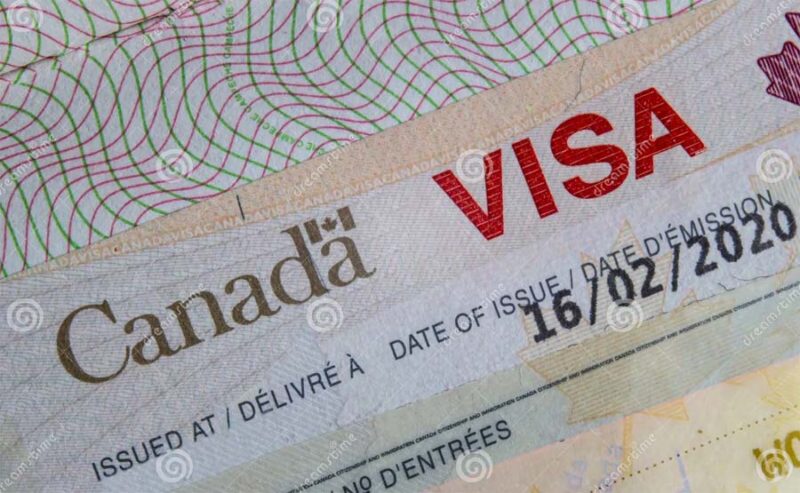
Canada opens door to family reunion, to accept 10,000 parents visa applications
Canada opens door to family reunion, to accept 10,000 parents visa applications
Canada has announced its plan to accept up to 10,000 complete visa applications for sponsorship under the Parents and Grandparents Program (PGP) in 2025.
This program allows Canadian citizens and permanent residents to sponsor their parents and grandparents for permanent residency.
To be eligible, sponsors must be at least 18 years old, meet the required income threshold, and sign an undertaking to support their parents or grandparents financially.
The Immigration, Refugees and Citizenship Canada (IRCC) oversees the program, which provides an opportunity for family reunification.
Super Visa: an alternative for extended family visits
For those who want to reunite with their parents and grandparents for extended stays without permanent residency, the Super Visa remains an option.
The Super Visa allows multiple entries to Canada over a 10-year period, with each visit lasting up to five years. IRCC has recently made the Super Visa more accessible by revising health insurance requirements.
READ ALSO:
- Two minors shot as SS3 students, community youths clash over girlfriend in Niger state
- I’m working on strong opposition to displace APC in 2027 – Atiku
- Police arrest key suspect in connection to killing of Army General in Abuja
Super Visa applicants must apply from outside Canada and meet temporary residence requirements. They also need to provide proof of valid health insurance from an approved provider. If coverage expires before departure, visa holders may need to renew their insurance to maintain eligibility.
Canada Parents Visa: Processing Times and Provincial Variations
As of February 5, 2025, processing times for PGP applications are approximately 24 months for applicants outside Quebec. Due to Quebec’s family class admission targets, processing times for those settling in the province are estimated at 48 months.
Super Visa applicants must have private health coverage, as they are not eligible for provincial or territorial health care plans. Previously, proof of health insurance was only accepted from Canadian providers, but IRCC now permits applicants to purchase policies from international insurance companies.
For those planning shorter stays of six months or less, a visitor visa remains an alternative option.
Canada opens door to family reunion, to accept 10,000 parents visa applications









International
US Revokes Green Cards of Iranian Family

US Revokes Green Cards of Iranian Family
U.S. Secretary of State Marco Rubio has revoked the lawful permanent resident status of family members of Masoumeh Ebtekar, the Iranian official who served as spokeswoman for militants during the Iran hostage crisis.
The affected individuals—Ebtekar’s son, daughter-in-law, and grandson—are currently in the custody of U.S. Immigration and Customs Enforcement (ICE) and are facing possible deportation proceedings.
In a statement posted on X, Rubio directly linked the action to Ebtekar’s role in the 1979 crisis, during which 52 Americans were held hostage for 444 days after militants seized the U.S. Embassy in Tehran.
“Masoumeh Ebtekar, also known as ‘Screaming Mary,’ was the spokeswoman for the Islamic terrorists who stormed the U.S. Embassy in Tehran in 1979,” Rubio said, accusing the hostage-takers of subjecting captives to severe abuse.
He disclosed that the family members—identified as Seyed Eissa Hashemi, Maryam Tahmasebi, and their son—entered the United States through the Diversity Immigrant Visa Programme during the administration of Barack Obama, receiving visas in 2014 and later obtaining permanent residency in 2016.
Rubio confirmed that their green cards had now been terminated.
READ ALSO:
- 16-Year-Old Alleges Repeated Rape by Pastor During ‘Deliverance’ in Anambra
- Zulum Donates N50m to Family of Slain Army Officer in Borno Attack
- INEC Denies Viral X Claim Alleging Amupitan Endorsed Partisan Post
“This week, I terminated their lawful permanent resident status, and today, Seyed Eissa Hashemi, Maryam Tahmasebi, and their son are now in ICE custody pending their removal from our country,” he said.
He added that individuals linked to what he described as anti-American actions should not benefit from U.S. residency, stressing that such policies are being reinforced under President Donald Trump.
The move is part of a broader crackdown by the current administration targeting relatives of senior Iranian figures residing in the United States. Rubio recently announced similar measures against individuals connected to slain Iranian military commander Qasem Soleimani, including his niece, Hamideh Soleimani Afshar, as well as the daughter of former Iranian official Ali Larijani. Those individuals have also reportedly been detained by ICE and are facing deportation.
Ebtekar, who later served as Iran’s vice president for women and family affairs, gained international attention for her televised defence of the hostage-takers during the crisis.
Her son, Seyed Eissa Hashemi, had reportedly been living in the Los Angeles area, where he worked as a psychology lecturer prior to his detention.
Immigration experts note that while lawful permanent residency—commonly known as a green card—grants the right to live and work in the United States, it can be revoked under certain conditions, including national security concerns or misrepresentation during the immigration process.
The decision has triggered mixed reactions online and among policy observers. Supporters argue it reflects long-overdue accountability tied to one of the most sensitive episodes in U.S.–Iran relations, while critics question whether family members with no direct involvement in the 1979 events should face punitive measures.
As of the time of reporting, no official response has been issued by the affected family members or the Iranian government.
US Revokes Green Cards of Iranian Family
International
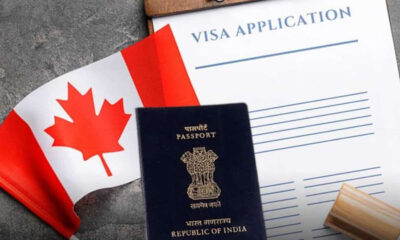
US Commences Visa Ban on Nigerians Linked to Alleged Religious Freedom Violations
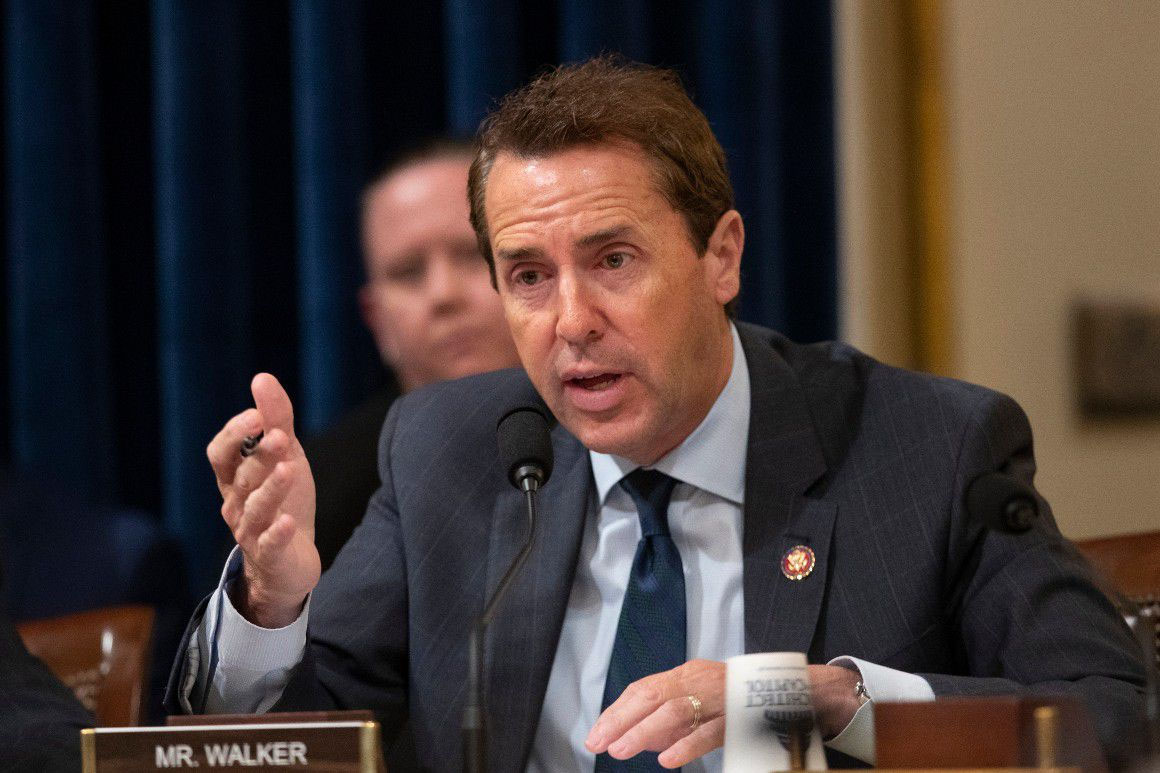
US Commences Visa Ban on Nigerians Linked to Alleged Religious Freedom Violations
US authorities have begun implementing a visa restriction policy targeting Nigerians linked to alleged violations of religious freedom, according to Mark Walker, the U.S. Principal Advisor for Global Religious Freedom.
Walker disclosed this in a post on X (formerly Twitter), referencing a statement from the U.S. Department of State confirming that the policy is being enforced under Section 212(a)(3)(C) of the Immigration and Nationality Act.
The provision empowers the United States government to deny or restrict visas to individuals accused of directing, funding, supporting, or carrying out violations of religious freedom, including, in some cases, their immediate family members.
According to Walker, the policy has already been activated, with U.S. authorities beginning to apply heightened scrutiny and restrictions to affected individuals.
“In December, Secretary Rubio announced that the State Department will restrict U.S. visas for those who have directed, authorised, funded, significantly supported, or carried out violations of religious freedom. We have already executed this policy and will continue to subject perpetrators to additional scrutiny,” Walker said.
However, he did not disclose the identities of Nigerians or groups directly affected by the sanctions.
The development comes amid renewed international attention on religious violence in Nigeria, with U.S. officials citing concerns over attacks linked to terrorist groups, armed bandits, and communal militias.
READ ALSO:
- Did Faleke Just Reveal Lagos’ Next Governor? Party Moves Begin
- Jigawa Ward Head Denies Viral Wedding Cancellation Over Tinubu Support
- Nigeria’s Tax Reform Laws Contain Errors, Tinubu Minister Oyedele Confirms
The U.S. government has previously redesignated Nigeria as a Country of Particular Concern (CPC) under its international religious freedom framework, a classification reserved for nations accused of severe violations of religious liberty.
Washington has also repeatedly expressed concern over killings and attacks in parts of Nigeria, particularly in the North, where insecurity involving extremist groups and armed banditry remains persistent.
In earlier statements, the U.S. State Department said it was taking what it described as “decisive action in response to mass killings and violence against Christians and other vulnerable communities”, noting that perpetrators of religiously motivated violence could face visa bans and other sanctions.
The policy also extends to individuals who “direct, authorize, significantly support, or participate in violations of religious freedom,” according to the department.
Analysts say the latest move signals a more assertive U.S. posture on human rights and religious freedom enforcement, which could affect diplomatic engagement with individuals linked to Nigeria’s internal security challenges.
However, the Nigerian government has consistently rejected allegations of religious genocide, insisting that insecurity in the country is driven by terrorism, criminality, and communal conflicts rather than targeted religious persecution.
Officials in Abuja maintain that security agencies are actively working to protect citizens of all faiths and that international narratives portraying the violence as religious genocide are inaccurate and misleading.
The latest visa restriction policy is expected to further shape diplomatic discussions between both countries, particularly on human rights, security cooperation, and counterterrorism efforts.
US Commences Visa Ban on Nigerians Linked to Alleged Religious Freedom Violations
International
Trump Says US Warships Being Reloaded With Weapons to Strike Iran If Pakistan Talks Fail

Trump Says US Warships Being Reloaded With Weapons to Strike Iran If Pakistan Talks Fail
United States President Donald Trump has said American warships are being rearmed with advanced weaponry and prepared for possible strikes against Iran if ongoing peace negotiations in Pakistan fail to produce an agreement.
In an interview with the New York Post, Trump said the United States is in what he described as a “reset” phase, insisting that military readiness is being strengthened while diplomatic talks continue.
“We have a reset going. We’re loading up the ships with the best ammunition, the best weapons ever made — even better than what we did previously and we blew them apart,” Trump was quoted as saying.
“And if we don’t have a deal, we will be using them, and we will be using them very effectively.”
His remarks come as Vice President JD Vance leads a high-level U.S. delegation to Islamabad, Pakistan, for crucial Iran peace talks in Pakistan aimed at preventing a renewed escalation in the Middle East.
READ ALSO:
- Gov Yusuf Accuses Former Deputy of Attempted Power Grab in Kano
- Police Debunk Viral Terror Attack Video in Abuja, Arrest Suspect
- Trump Orders JD Vance to Lead Iran War Exit Strategy Ahead of Pakistan Talks
Vance, who is known for his scepticism toward long-term military interventions, is expected to engage Iranian officials in discussions focused on stabilising a fragile ceasefire and preventing further military confrontation.
Before departing, Vance issued a warning to Tehran, telling Iranian authorities not to “play” the United States, signalling Washington’s firm stance ahead of the negotiations.
According to diplomatic sources, the talks will address key issues including nuclear compliance, maritime security in the Strait of Hormuz, and sanctions-related disputes that have fueled tensions between both countries.
President Trump also posted a cryptic message on his Truth Social platform, referring to what he called the “WORLD’S MOST POWERFUL RESET!!!”, further fueling speculation about Washington’s combined military and diplomatic strategy.
The Pakistan-hosted talks bring together senior U.S. officials, including special envoy Steve Witkoff and presidential adviser Jared Kushner, alongside Iranian representatives led by Foreign Minister Abbas Araghchi and parliamentary speaker Mohammad Bagher Ghalibaf.
Iran’s participation underscores ongoing efforts by both sides to prevent a full-scale collapse of the ceasefire, which has already been strained by mutual accusations of violations.
Analysts say the outcome of the Islamabad negotiations could determine whether the crisis moves toward a lasting settlement or escalates into renewed military confrontation with wider regional consequences.
Trump Says US Warships Being Reloaded With Weapons to Strike Iran If Pakistan Talks Fail

-
 Africa2 days ago
ECOWAS Recruitment 2026: Over 30 Job Vacancies Open for Nigerians (How to Apply)
-
 metro4 hours ago
JUST IN: FG Publishes List of 48 Individuals, Groups Linked to Terrorism Financing in Nigeria
-

 Health2 days ago
Sleeping Positions: How They Affect Your Health and Which Ones to Avoid
-

 Politics3 days ago
Court Stops ADC Congress, Orders Status Quo in Leadership Row
-
 metro2 days ago
Boko Haram Attack in Borno: Brigadier-General, Soldiers Killed as ISWAP Overruns Military Base
-
 Politics14 hours ago
Did Faleke Just Reveal Lagos’ Next Governor? Party Moves Begin
-
 metro3 days ago
US Evacuates Embassy Staff in Nigeria, Lists 23 States as ‘Do Not Travel’
-

 Education1 day ago
Germany Opens Fully Funded Scholarships for Nigerians, Africans