
Education
Canadian university offers funded national scholarship program for 2025

Canadian university offers funded national scholarship program for 2025
Western University has announced that applications are now open for the National Scholarship Program for the 2025-2026 academic year.
The opportunity offers funding to outstanding students with a proven track record of academic excellence, leadership, and community involvement.
According to Western University, the deadline for applications is February 14th, 2025.
Details of the program and eligibility
The National Scholarship Program is aimed at Canadian citizens and permanent residents, as well as international students meeting specific criteria. International students who are not Canadian citizens or permanent residents are eligible for the International President’s Entrance Scholarship.
Details inform that applicants must have an overall academic average of 90% or higher from their Grade 12 courses (or equivalent) and must apply for full-time studies at Western University’s main campus. Students must also be nominated by their high school.
Scholarship opportunities and amounts
The program offers various scholarship opportunities based on academic achievement and extracurricular involvement.
- The Neen Hodgins National Entrance Scholarship awards $80,000 over four years, while,
- President’s Entrance Scholarships range from $50,000 to $70,000, depending on the amount of funding available.
- For black students, the James Jenkins President’s Entrance Scholarship offers $50,000, and the Beryl Ivey Continuing Entrance Scholarship provides $92,000 over four years.
READ ALSO:
- Israeli strikes pound central Beirut, suburbs
- Robbers kill two members in shoot-out with Delta police
- French football star, Paul Pogba’s blackmail trial begin in Paris
International students have access to scholarships such as the Neen Hodgins President’s International Entrance Scholarship, valued at up to $80,000. Other awards include the Faculty Entrance Scholarships, valued at $30,000, and the National Merit Awards, which provide $2,000 for students who are interviewed but not selected for a National Scholarship or a Schulich Leader Scholarship.
Application requirements
Applicants must submit a variety of materials, including a completed online application, a transcript from their school, and a reference letter from a teacher or staff member who is familiar with their academic and extracurricular achievements.
Additionally, applicants are required to write a 1,000-1,250 word essay on an issue of public concern. The essay, along with other supporting documents, must be submitted by the February 14th, 2025, deadline.
Nomination and assessor process
The institution informs that in order to be considered for the National Scholarship Program, students must be nominated by their school. The application includes a “Nomination Request Form,” which is sent to the school administrator once completed.
Students are told to ensure that they follow up with their school to confirm that their nomination and transcript are submitted on time. Additionally, students must request one reference letter from a teacher or staff member who can assess their academic performance and involvement in extracurricular activities.
How to apply
To apply, students need to access the National Scholarship application through the online portal, using their OUAC reference number and date of birth.
- Western University advises that there may be a delay between submitting the admission application and being able to access the scholarship application, with a minimum wait time of five business days.
- Once available, students can complete the application and submit all required documents before the assigned deadline.
For further details on how to apply, visit the Western University National Scholarship application portal.
Canadian university offers funded national scholarship program for 2025










Education
JAMB Urges Candidates, Parents to Protest Admission Bias as CAPS Ensures Transparency
JAMB Urges Candidates, Parents to Protest Admission Bias as CAPS Ensures Transparency
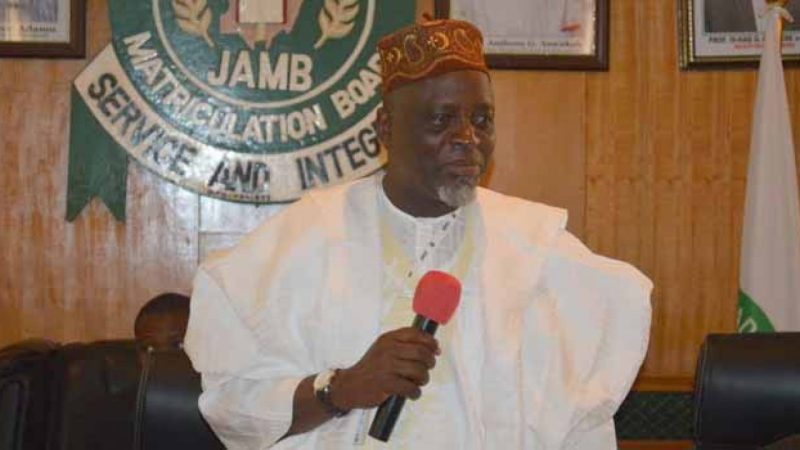
The Joint Admissions and Matriculation Board (JAMB) has urged candidates and parents to speak up against admission bias if they are confident in their UTME scores but are denied admission into their preferred institutions.
JAMB Registrar, Ishaq Oloyede, made this known during an interview on Good Morning Nigeria, a programme aired by the Nigerian Television Authority (NTA).
He stressed that the current admission system, powered by the Central Admission Processing System (CAPS), is designed to ensure transparency, fairness, and accountability across Nigeria’s tertiary institutions.
According to Oloyede, many parents still resort to illegal means because they believe admission cannot be secured without influence. He described this mindset as having “climbed the ladder to illegality,” warning that such actions are no longer necessary under the present system.
He explained that candidates who meet the required cut-off marks and admission criteria but are unfairly denied admission should formally protest through JAMB, as CAPS allows full visibility into the admission process.
READ ALSO:
- EFCC Arrests Maiduguri Woman for Cleaning Nose With N500 Note
- Court Stops ADC Congress, Orders Status Quo in Leadership Row
- US Evacuates Embassy Staff in Nigeria, Lists 23 States as ‘Do Not Travel’
The registrar highlighted that CAPS enables candidates to track their admission status in real time, accept or reject offers, and ensures institutions follow approved guidelines. He added that the platform prevents schools from secretly manipulating admission lists or replacing qualified candidates.
Oloyede further revealed that since the introduction of CAPS in 2017, cases of admission irregularities have significantly declined, with no major systemic failure recorded.
Addressing concerns about Direct Entry admissions, he noted that JAMB has strengthened its verification process to curb fraud. This includes stricter checks on qualifications such as JUPEB and IJMB certificates, making it increasingly difficult to forge results.
He disclosed that the board now verifies academic credentials directly with awarding institutions, including foreign universities. According to him, recent checks uncovered several fake degrees, with some foreign institutions confirming that such certificates were not issued by them.
The registrar added that JAMB has intensified collaboration with universities and other regulatory bodies to ensure proper screening of A-level results and early detection of fraudulent applications.
He emphasized that with improved digital tracking and verification systems, any attempt to bypass the admission process will be detected, urging candidates to rely on merit rather than shortcuts.
Ultimately, JAMB reiterated that qualified candidates must defend their rights through official channels, as the system now supports fairness and equal opportunity for all.
JAMB Urges Candidates, Parents to Protest Admission Bias as CAPS Ensures Transparency
Education
Jigawa Arrests Seven Teachers for Cheating During Competency Test

Jigawa Arrests Seven Teachers for Cheating During Competency Test
The Jigawa State Government has arrested seven teachers for allegedly engaging in examination malpractice during a large-scale teacher competency assessment involving over 8,400 educators. The arrests are part of the state’s ongoing efforts to improve accountability, professionalism, and learning outcomes in public schools.
The assessment, conducted by the Jigawa State Universal Basic Education Board (SUBEB), is described as a Teacher Training Needs Assessment, aimed at identifying gaps in teachers’ knowledge and skills to inform targeted training programs.
Chairman of SUBEB, Haruna Musa, confirmed that the affected teachers have been handed over to the police for investigation, emphasizing that the exercise is more than a routine test. “This assessment is not just about testing knowledge; it is about restoring integrity and professionalism in our schools,” he said.
READ ALSO:
- US-Iran Conflict: MAN Outlines Urgent Steps to Shield Nigerian Manufacturers
- Bandits Kill Two Abducted Women in Kaduna After Ransom Payment
- 2027: Atiku Signs $1.2m US Lobbying Deal to Engage Trump
Musa noted that examination malpractice, whether by teachers or students, undermines the credibility of the education sector and would not be tolerated. He also warned against absenteeism and involvement in partisan politics during school hours.
According to officials, the arrests are intended to serve as a deterrent to others and reinforce the government’s commitment to enforcing discipline and ethical conduct in schools. The arrested teachers are currently in police custody, and investigations are ongoing to determine whether additional personnel were involved.
Education experts have described the crackdown as a critical step toward safeguarding learning standards, emphasizing that teacher integrity directly impacts student achievement and the overall quality of education.
The Jigawa competency test reflects the state government’s determination to ensure that only qualified and competent personnel remain in the public education system, highlighting broader efforts to improve educational outcomes and accountability across Nigeria.
Jigawa Arrests Seven Teachers for Cheating During Competency Test
Education
JAMB Debunks 2026 UTME Postponement Rumour, Issues Fraud Warning
JAMB Debunks 2026 UTME Postponement Rumour, Issues Fraud Warning
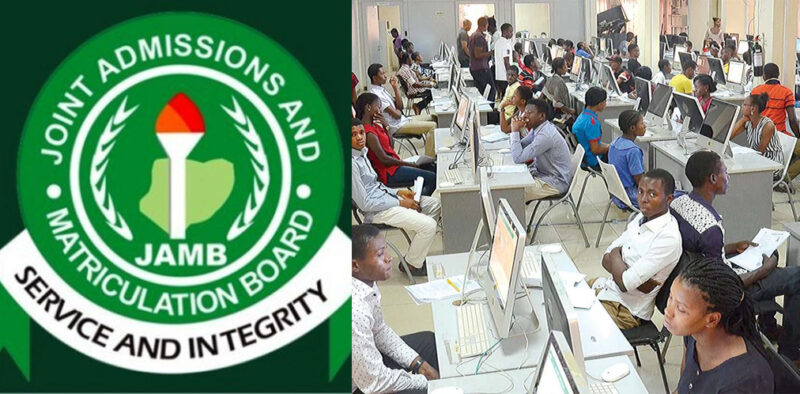
The Joint Admissions and Matriculation Board (JAMB) has dismissed reports claiming that the 2026 Unified Tertiary Matriculation Examination (UTME) has been postponed, describing the circulating notice as fake, malicious, and misleading.
In a statement released on Saturday, the board urged candidates to disregard the false information, stressing that it did not originate from JAMB and should not be taken seriously.
“Our attention has been drawn to the malicious press release stating that the 2026 UTME has been postponed. The general public, particularly candidates, are hereby informed that the press release is fake and did not emanate from us. Kindly disregard it. All activities on the 2026 UTME continue as scheduled,” the board stated.
READ ALSO:
- Gunmen Kill Three in Jos Community Hours After Tinubu Visit
- Amnesty International Condemns Wike Over ‘Violent Remark’ Against Journalist
- Pastor Found Dead in Guest House After Night Out With Married Female Church Member
JAMB reaffirmed that the 2026 UTME exam dates remain unchanged, with the nationwide examination set to hold from April 16 to April 25, 2026 at accredited Computer-Based Test (CBT) centres.
The clarification comes after the 2026 UTME mock examination held on March 28 experienced technical issues in several CBT centres, which led to confusion and speculation about a possible postponement. According to JAMB, 224,597 candidates registered for the mock exam, while 152,586 successfully sat for the test across 989 CBT centres nationwide. The board disclosed that over 20 CBT centres have been delisted due to technical failures, as part of efforts to ensure a smooth and credible main examination. JAMB assured candidates that lessons from the mock exercise would be used to improve system performance and prevent disruptions during the main UTME.
The board also raised concerns over fraudulent messages circulating online, especially on WhatsApp, where individuals falsely claim they can boost or manipulate UTME scores. JAMB warned that such claims are criminal and deceptive, stressing that any candidate found engaging in such activities risks disqualification, cancellation of registration, or withholding of results.
JAMB advised candidates to rely only on official updates from the board and avoid spreading or believing unverified information that could cause panic. The examination body reiterated its commitment to delivering a credible, transparent, and technology-driven UTME, urging candidates to remain focused as the examination approaches.
JAMB Debunks 2026 UTME Postponement Rumour, Issues Fraud Warning

-

 metro2 days ago
FG Deports US Missionary Alex Barbir Over Alleged Role in Nigeria Insecurity
-

 Entertainment2 days ago
Veteran Nollywood Actor Davis Ofor ‘Clarus’ of New Masquerade Dies at 85
-

 metro1 day ago
2026 NYSC Batch A Stream II: Registration, Swearing-In Dates Announced
-

 metro2 days ago
Lagos Announces Partial Road Closures for Project Commissioning
-

 Africa7 hours ago
ECOWAS Recruitment 2026: Over 30 Job Vacancies Open for Nigerians (How to Apply)
-

 Entertainment1 day ago
Saheed Osupa Defends Juju Use Amid Backlash From Islamic Clerics
-

 News2 days ago
Iran Lists Tough Conditions for Peace Talks with US
-

 Politics12 hours ago
Court Stops ADC Congress, Orders Status Quo in Leadership Row