

Auto
CBN Governor, NADDC DG to Lead LCCI Debate on Vehicle Financing as Alternative to Fuel Subsidy
CBN Governor, NADDC DG to Lead LCCI Debate on Vehicle Financing as Alternative to Fuel Subsidy
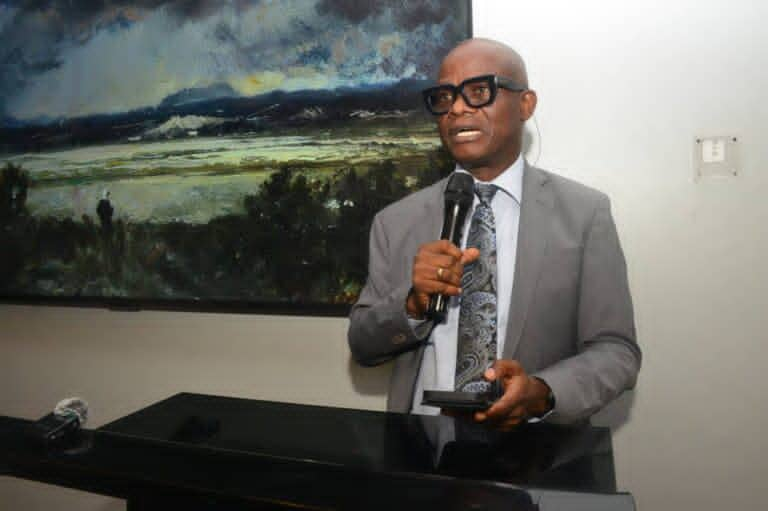
The Governor of the Central Bank of Nigeria (CBN), Olayemi Cardoso, and the Director-General of the National Automotive Design and Development Council (NADDC), Joseph Osanipin, are among key stakeholders expected at a high-level symposium examining whether vehicle financing can provide a sustainable alternative to fuel subsidy as a tool for improving mobility in Nigeria.
Organised by the Auto Sectoral and Allied Group of the Lagos Chamber of Commerce and Industry (LCCI), the one-day symposium is scheduled for September 17, 2026, at the Henry Fajemirokun Hall, LCCI, Victoria Island, Lagos.
Themed “From Subsidy to Credit: Can Vehicle Financing Replace Fuel Subsidy as Nigeria’s Mobility Equalizer?”, the event will bring together stakeholders across the automotive, financial and transport sectors to examine how affordable credit can expand vehicle ownership, support fleet renewal and reduce the burden of rising transportation costs.
The organisers said the removal of fuel subsidy and its impact on transport costs had made it imperative to rethink how mobility could be made more affordable and sustainable.
Rather than relying largely on interventions aimed at keeping fuel prices low, the symposium will examine whether a robust vehicle-financing ecosystem can enable individuals, transport operators and small businesses to acquire vehicles through affordable and sustainable credit arrangements.
Discussions will focus on automotive lending, leasing, fleet renewal and the role of banks, development finance institutions and other financial players in expanding access to vehicle ownership.
The symposium is also expected to interrogate major barriers to automotive financing, including high interest rates, short loan tenures, foreign exchange pressures, high vehicle prices, credit risks and the limited availability of financing products tailored to Nigeria’s automotive market.
Chairman of the LCCI Auto Sectoral and Allied Group and Deputy Managing Director of R.T. Briscoe Nigeria Plc, Dr Femi Eghuaikhide, said the symposium was coming at a critical time when Nigeria needed to rethink how mobility could be made accessible to a wider population.
“The question before us is no longer simply how to make fuel cheaper, but how to make mobility more affordable and sustainable for Nigerians. Vehicle financing has the potential to become a powerful mobility equalizer if we can develop the right credit structures, realistic repayment terms and strong collaboration between government, financial institutions and automotive industry stakeholders.”
Eghuaikhide said the symposium would provide a platform for stakeholders to move beyond identifying the challenges and develop practical financing solutions capable of supporting vehicle ownership, public transportation and the growth of Nigeria’s automotive industry.
Also speaking, Chairman of the Symposium Organising Committee and Chief Operating Officer of Bras Motors Limited, Austin Akpovili, said the event was designed to generate practical and actionable solutions.
“We are bringing the right stakeholders to one table because mobility is not only an automotive issue; it is an economic issue. Our objective is to examine how access to affordable vehicle credit can transform the lives of individuals, transport operators and businesses, while creating a stronger and more sustainable automotive ecosystem for Nigeria.”
Akpovili said participants would also have the opportunity to examine existing financing models and identify innovative approaches to make vehicle acquisition accessible to a broader segment of the population.
The event is expected to attract automobile manufacturers and dealers, commercial banks, development finance institutions, leasing and insurance companies, transport operators, government agencies, policymakers and other stakeholders across the automotive value chain.
Beyond vehicle ownership, experts will examine how affordable financing could accelerate the renewal of Nigeria’s ageing vehicle fleet, improve public transportation and stimulate demand for locally assembled vehicles and locally manufactured automotive components.
The LCCI Auto Sectoral and Allied Group has traditionally used its annual symposium to bring government, business leaders, financial institutions and automotive stakeholders together to address critical issues confronting the industry.
With this year’s theme shifting the conversation “from subsidy to credit,” the symposium is expected to examine whether Nigeria can move from short-term consumption support to a sustainable financing model that promotes asset ownership, productivity and economic empowerment.
The organisers said recommendations from the symposium would be presented as possible policy and industry solutions for making vehicle financing a stronger component of Nigeria’s broader mobility and economic development strategy.








Auto
Jetour Takes Full Vehicle Line-up to Ikeja Mall, Offers Test Drives, Discounts
Jetour Takes Full Vehicle Line-up to Ikeja Mall, Offers Test Drives, Discounts
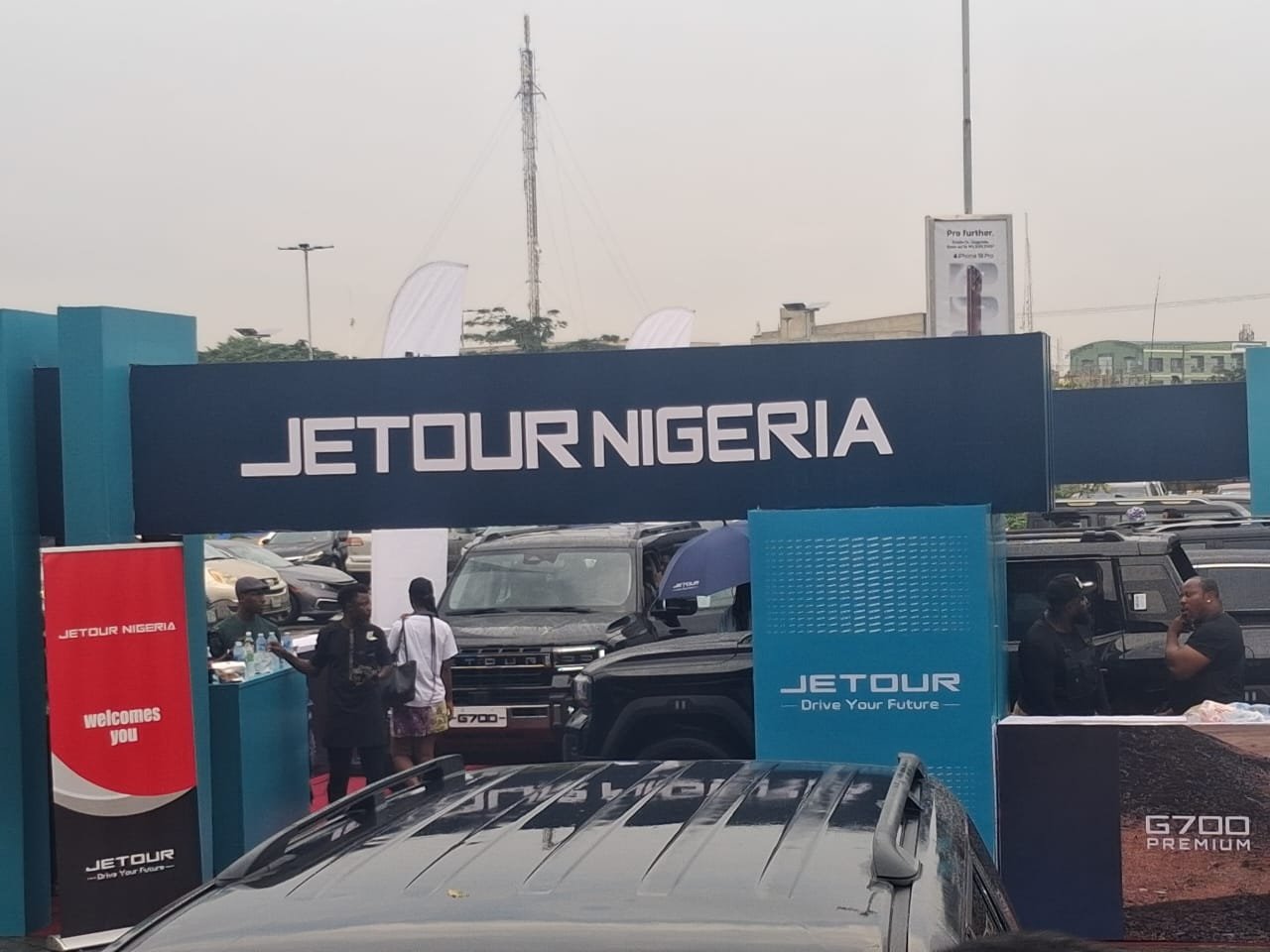
Automotive enthusiasts and prospective car buyers in Lagos have an opportunity to explore Jetour Nigeria’s expanding vehicle line-up, take selected models on test drives and enjoy special purchase discounts as the brand stages a week-long exhibition at Ikeja City Mall.
The exhibition, which brings together all seven authorised Jetour dealers in Nigeria, offers visitors an opportunity to experience the brand’s diverse range of SUVs and other vehicles, interact with company representatives and obtain first-hand information on vehicle features, pricing, purchase options and after-sales support.
The week-long exhibition, which commenced on Saturday, November 21, 2026, will run until Friday, November 27, offering visitors an opportunity to engage with the brand through vehicle displays, test drives and other customer-focused activities.
Vehicles on display include the Jetour X50, X70 Plus, X70 PHEV, X90 Plus, Dashing, T2, T2 PHEV, T1, F700, and G700.
The lineup highlights the brand’s diverse offerings across SUV segments, electrified powertrain technologies and different mobility requirements.
Speaking on the exhibition, Kemi Adeola of Jetour Nigeria said the initiative was designed to bring the brand closer to consumers by providing an accessible platform for prospective customers to interact with its vehicles, understand their features and obtain firsthand information from company representatives.
According to her, visitors to the exhibition stand are being treated to special gifts, attractive purchase discounts and opportunities to take selected models on test drives.
She added that the participation of all Jetour Nigeria’s authorised dealers at the exhibition would enable prospective buyers to obtain information on vehicle specifications, purchase arrangements and after-sales support directly from the dealerships.
The participating dealers include Elizade Nigeria Limited, New Era AutoVehicle Services Limited, Kojo Motors, Germaine Auto Centre, Tab Autos Limited, R.T. Briscoe Motors and Mandilas Motors.
The Ikeja exhibition forms part of Jetour Nigeria’s broader strategy to strengthen brand visibility, expand its customer base and deepen engagement with existing and prospective customers through experiential marketing initiatives in strategic locations.
Earlier in the year, the company hosted the maiden edition of its Jetour Experience in Lekki, Lagos, following which it staged the Abuja edition,which was well attended and successful.
The brand also recorded a notable presence at the 2026 Abuja International Motor Fair, held at the Eagle Square; further reinforcing its growing visibility in Nigeria’s automotive market.
Auto
Omoda and Jaecoo Enters Nigerian Market, Appoints HAP Autos as Official Dealer
Omoda and Jaecoo Enters Nigerian Market, Appoints HAP Autos as Official Dealer
- Five models unveiled as pre-sales begin, with petrol, hybrid and fully electric options
- Buyers get seven-year, 200,000-kilometre warranty
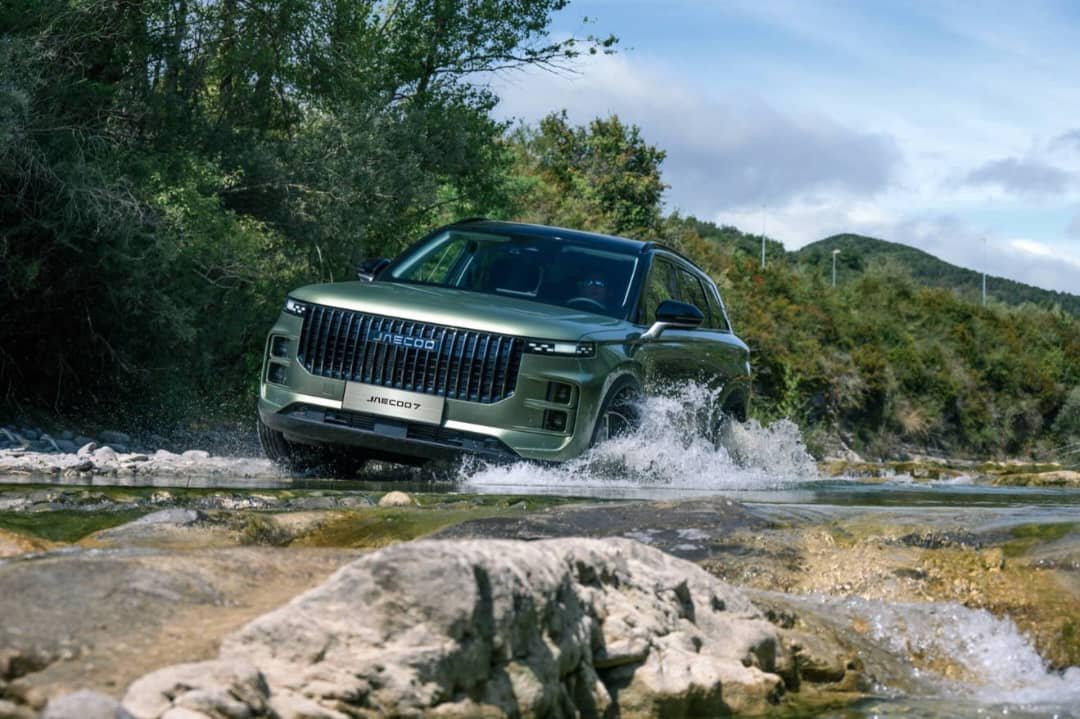
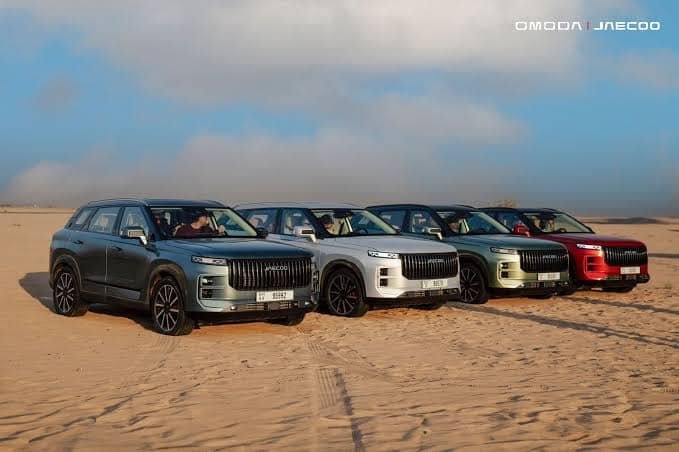
Nigeria’s automotive market is set for increased competition as global automotive brand OMODA&JAECOO makes its official entry into the country, appointing HAP Autos as its authorised dealer and opening pre-sales for five models spanning petrol, hybrid and fully electric powertrains.
The appointment marks the company’s formal arrival in Nigeria after months of anticipation, giving prospective buyers access to its vehicle portfolio through an officially recognised local dealership.
The Nigerian debut features five models: the JAECOO J5, JAECOO J7, flagship JAECOO J8 and the OMODA 5, which is available in both hybrid and fully electric versions.
The diverse line-up is designed to appeal to different categories of motorists, offering alternatives for buyers weighing fuel consumption, vehicle performance, charging infrastructure and long-term ownership costs.
One of the major attractions is the JAECOO J7, which has emerged as a strong performer in the United Kingdom’s new-car market.
The entire range is backed by a seven-year or 200,000-kilometre warranty, an ownership assurance aimed at boosting customer confidence in the brand’s Nigerian debut.
Although its entry into Nigeria is recent, OMODA&JAECOO has built a growing international presence. Its cumulative global sales have surpassed 1.4 million vehicles within three and a half years, spanning 80 markets.
Its expansion into the United Kingdom and other European markets has further strengthened its international profile, providing a platform for its latest push into Africa’s largest automotive market.
For HAP Autos, however, the partnership goes beyond introducing new vehicle models. The company says its priority is to establish an ownership experience built around reliable after-sales service, customer care and sustained support.
Its founders bring experience and interests spanning manufacturing, automotive operations, logistics and construction, which the company believes will help it understand and address the peculiar demands of vehicle ownership in Nigeria.
Speaking on the appointment and HAP Autos’ market strategy, its Managing Director, Ali Sharafeddine, said Nigerian motorists were looking beyond the vehicles themselves to the quality of support available after purchase.
“Nigerians are not short of options. The market is competitive, but what most people seek when buying a car is reassurance, knowing that throughout their ownership journey, there will be comprehensive support and a sense of belonging,” he said.
Sharafeddine explained that the decision to introduce OMODA&JAECOO was informed by the suitability of its engineering standards for the Nigerian market and HAP Autos’ determination to address customer concerns beyond the point of sale.
“We have brought in the OMODA and JAECOO brands because the engineering standards are ideal for this market, and we have built the entire structure of HAP Autos around what concerns our clients the most, which is everything that happens after the sale,” he added.
On the company’s warranty and customer service commitments, the managing director said the seven-year or 200,000-kilometre coverage reflected its determination to provide lasting value to customers.
“We want the confidence our customers feel at delivery to be reinforced by the service, attention and support they receive from us over time.
“We are determined to create a brand where clients can feel like they are part of a family, while also getting the utmost value, and we have made significant investments to ensure this,” Sharafeddine said.
Meanwhile, HAP Autos has introduced a limited-time introductory offer ahead of OMODA&JAECOO’s official launch event scheduled for later this month, giving prospective customers an early opportunity to explore the vehicles and place orders.
The brand also received an early introduction to an influential audience at the recently concluded 25th WIMBIZ Annual Conference.
As part of the engagement, an OMODA 5 EV was presented to WIMBIZ, alongside an engineering training initiative launched in collaboration with the brand’s affiliate company, Iron Products Industries (IPI).
The initiative is designed to provide training opportunities for eligible women within the WIMBIZ network, extending the partnership beyond vehicle sales to professional development and skills acquisition.
OMODA&JAECOO’s Nigerian operations will be anchored by HAP Autos’ flagship showroom at 31B Akin Adesola Street, Victoria Island, Lagos, where customers can inspect the vehicles and experience the models firsthand.
Prospective buyers can also book test drives through the company’s website, www.hapautos.com.
With five models spanning conventional and electrified powertrains, OMODA&JAECOO is positioning itself to compete in Nigeria’s evolving automotive market, while HAP Autos is betting that strong after-sales support and customer confidence will be central to building a sustainable presence.
Auto
Modern Vehicles, Smarter Technology: Why After-Sales Support Must Keep Pace

Modern Vehicles, Smarter Technology: Why After-Sales Support Must Keep Pace
As vehicles become increasingly sophisticated, the ability to maintain and repair them is emerging as a major test of automotive dealers’ capacity and commitment to customers. Beyond selling modern vehicles, dealers must invest in the technical expertise, diagnostic equipment and workshop infrastructure required to keep them running efficiently throughout their lifespan.
Today’s vehicles are equipped with electronic control units, advanced safety systems, digital instrument panels, sensors and increasingly complex powertrain technologies. While these innovations enhance performance, safety, comfort and convenience, they have also made vehicle maintenance more specialised and technically demanding.
Consequently, having experienced mechanics is no longer sufficient. Technicians must undergo continuous training to understand the specific technologies, electronic systems and mechanical configurations of the models they service.
Access to appropriate diagnostic equipment is equally critical. Modern diagnostic tools enable technicians to identify faults accurately, interpret vehicle system data and follow manufacturer-recommended repair procedures. Without the right equipment, troubleshooting can become time-consuming, less accurate and potentially more expensive for vehicle owners.
However, effective technical support goes beyond initial training and the provision of diagnostic tools. As vehicle models, electronic systems and software continue to evolve, technicians must have regular access to updated technical information, specialist guidance and opportunities to upgrade their skills.
This is particularly important in Nigeria, where the automotive market is gradually embracing increasingly sophisticated internal-combustion engine vehicles, hybrids and electric vehicles. The growing diversity of vehicle technologies presents fresh challenges for dealers, workshops and independent service providers.
For prospective buyers, assessing a dealer’s technical capacity should therefore form part of the vehicle purchasing decision.
Customers need to establish whether technicians are adequately trained to service their preferred models, whether manufacturer-approved diagnostic equipment is available and whether the workshop has the capacity to handle specialised electronic and mechanical repairs.
Dealers, on their part, must communicate their technical capabilities transparently, particularly where certain repairs require specialised facilities, manufacturer intervention or external technical support.
Ultimately, a comprehensive after-sales proposition must go beyond warranty coverage. It should encompass the human expertise, diagnostic technology, genuine spare parts and technical infrastructure required to support vehicles throughout their ownership lifecycle.
As automotive technology advances, investment in technical training and workshop capabilities must receive as much attention as the expansion of sales networks and the development of modern showrooms.
The future of automotive after-sales service in Nigeria will depend not merely on the sophistication of vehicles entering the market, but also on the industry’s ability to build the technical capacity and infrastructure needed to maintain them, ensure reliability and sustain customer confidence.
-

 metro3 days ago
Chibok Girl Escapes After Eight Years in Boko Haram Captivity, Reveals 20 Classmates Still Held
-

 metro2 days ago
‘I Paid My Ex-Husband Before He Slept With Me’ – Islamic Preacher Kaola Makes Shocking Revelation
-

 Politics2 days ago
Kwankwaso Made Me Swear on Qur’an to Join APC After Election Victory — Gov Yusuf Reveals Tinubu Deal
-
 Politics2 days ago
2027: Makinde Invokes 1966 Coup, Questions Obi-Kwankwaso Ticket
-

 Education2 days ago
South-West Leaders Challenged to Emulate Kwankwaso, Invest in Education of Poor Children
-

 News16 hours ago
Omokri Arrives in Mexico to Assume Duty as Nigerian Ambassador, Thanks Govt for Ministerial Reception
-
 Politics3 days ago
Shehu Sani Warns Northerners Against Celebrating Abuja Attack on Tinubu, Fears Ethnic Reprisals
-

 Politics1 day ago
Uduere Killings: Ughelli Chairman Accuses Omo-Agege’s Camp of Triggering Deadly Clash, Demands IGP Probe