

Business
CBN sells another N1.58 trillion in Treasury Bills, interest rate at 19% for 364-day bill

CBN sells another N1.58 trillion in Treasury Bills, interest rate at 19% for 364-day bill
The Central Bank of Nigeria (CBN) has sold an impressive N1.58 trillion in its latest Treasury Bills auction as the apex bank continues its ongoing effort to manage liquidity in the financial system.
The auction, held on the 21st of February, attracted substantial interest from investors, with the CBN setting stop rates as high as 19%.
The auction was broken down into three categories based on tenors: 91-day, 182-day, and 364-day bills.
The apex bank offered N11.96 trillion in 91-day bills, with a stop rate of 17.00%, which was a significant attraction for short-term investors.
The 182-day bills saw N10.21 trillion on offer at a 17.50% stop rate, while the 364-day bills had the highest rate at 19.00% on a N243.32 trillion offer.
Allotments
Subscription levels were robust across all tenors, reflecting heightened investor appetite amidst the current economic landscape.
- The 91-day bills received a subscription of N368.03 billion, far exceeding the offer amount, which resulted in an allotment ratio of 27.7x with N331 billion allotted.
- This indicates that for every unit offered, there were almost 28 units requested – a clear sign of the high demand for short-term government securities.
READ ALSO:
- Tight security as APC collates Edo governorship fresh primary results
- Demand pressures: Official exchange rate settles at N1571.31/$1 as intra-day hits N1851/$1
- Gombe State government unveils 523 ghost workers, saves N1.5 billion
- The 182-day bills had a subscription of N98.69 billion, with an allotment ratio of 6.5x, while the 364-day bills witnessed a whopping N1.77 trillion subscription, leading to an allotment ratio of 4.9x.
- A total of N66.2 billion and N1.19 billion were allotted for the 182-day and 364-day bills respectively.
Bids ranged from 11.4400% to 21.0000% for the 91-day bills, 13.0000% to 20.3399% for the 182-day bills, and 15.0000% to 26.0000% for the 364-day bills.
These ranges show the variability of investor expectations regarding yield, with some investors willing to accept lower rates, while others aimed for the higher end of the spectrum.
A total of N2.5 trillion sold in two weeks
This recent Treasury Bills auction mirrors the outcomes of the last auction where a total of N1 trillion was on offer but was oversubscribed as investors staked a whopping N2.3 trillion. The one-year bill also attracted a 19% interest rate.
- The CBN has now sold about N2.5 trillion in the last two weeks sucking out over N2.1 trillion in 364-day auctions likely to cost the apex bank around N398 billion in interest payments.
- The CBN’s strategy to tighten liquidity through these auctions is consistent with its monetary policy stance aimed at curbing inflation and stabilizing the currency.
- The increased interest rates on Treasury Bills are likely to influence borrowing costs across the economy.
The CBN’s moves are critical amidst the current global economic uncertainties, and their implications are sure to be a point of discussion in financial circles in the coming weeks.
CBN sells another N1.58 trillion in Treasury Bills, interest rate at 19% for 364-day bill




Business
Nigerians Pay N44 Extra Per Litre as Retailers Defy Falling Depot Prices – Full Report

Auto
Abuja Roars to Life as Jetour X50 Headlines Three-Day Motoring Experience

Abuja Roars to Life as Jetour X50 Headlines Three-Day Motoring Experience
Abuja is gearing up for a major motoring spectacle as Jetour Nigeria brings its fast-growing brand experience to the Federal Capital Territory, with the stylish Jetour X50 set to take centre stage in a three-day showcase of performance, technology and automotive innovation.
Scheduled for September 22 to 24, 2026, the Jetour Experience Abuja will move beyond the conventional vehicle exhibition, giving motorists and prospective buyers the opportunity to test-drive the X50, interact with automotive specialists and experience a range of entertainment and interactive activities.
The Abuja activation follows the strong reception recorded during Jetour Nigeria’s recent Lagos experience and forms part of the automaker’s strategy to deepen customer engagement while expanding its footprint across Nigeria.
Backed by an expanding authorised dealer network comprising Elizade Nigeria Limited, Mandilas Autos, Germaine Auto Centre, Kojo Motors, R.T. Briscoe, Tab Autos and New Era AutoVehicle Services, Jetour is also strengthening access to vehicle sales, after-sales support, genuine spare parts and certified technical services nationwide.
At the heart of the Abuja experience will be the Jetour X50, a compact SUV designed to combine contemporary styling, performance and a technology-rich driving environment.
Powered by a 1.5-litre turbocharged engine paired with a dual-clutch transmission, the X50 has positioned itself as a strong contender in Nigeria’s competitive compact SUV segment.
Jetour has equipped the model with a range of premium features, including a 360-degree camera, Blind Spot Detection, 10.5-inch infotainment system with Apple CarPlay and Android Auto, wireless charging and leather upholstery.
The combination of technology, comfort and performance is part of Jetour’s strategy of offering premium motoring features at competitive price points.
The Abuja event also highlights Jetour’s aggressive expansion strategy in Nigeria, following the brand’s recognition with industry accolades including Fastest Growing Auto Brand and Auto Brand of the Year.
With its expanding dealer network providing nationwide sales and after-sales support, Jetour is seeking to deepen customer engagement while making its vehicles and ownership services more accessible to motorists across the country.
As Abuja prepares to welcome the Jetour Experience, the three-day activation is expected to provide motorists with an opportunity to see, feel and drive the X50 while experiencing first-hand what is driving the brand’s growing appeal in Nigeria.
Business
Dangote Refinery Sets ₦525 Per Share for Landmark IPO
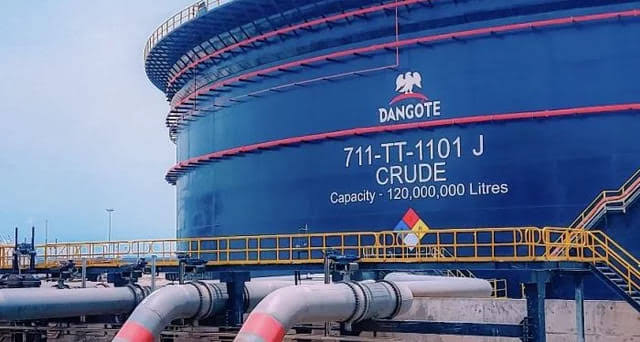
For ₦5,250, Nigerians could soon own a piece of the refinery that has reshaped the country’s fuel market.
-

 metro2 days ago
El-Rufai Demands ₦10bn from Defence Minister Over Southern Kaduna Killings Allegation
-

 Politics2 days ago
Why Did Peter Obi Attend Seyi Makinde’s Campaign Launch? Here’s What He Said
-

 News2 days ago
Lagos Moves to Slash Agency Fees, Curb Rent Hikes With New Tenancy Bill
-

 metro3 days ago
Oyoland Grand Chief Imam Celebrates Dr Sharafudeen Raji for Service to Islam
-

 metro2 days ago
Catholic priest leaves priesthood, weds Kenyan woman after 12 years in Kenya
-

 metro2 days ago
Osun Police Arrest Woman After Vigilante Member Dies During Sexual Encounter in Ile-Ife
-

 Politics2 days ago
JUST IN: Tension in Benue as Suspected Thugs Attack Peter Obi’s Convoy, Block Access
-

 metro2 days ago
No US Case Against Tinubu, Family Enjoy Unimpeded Transit for UNGA — Ambassador Ibrahim