
Business
CBN’s $1bn monthly diaspora inflow target faces immigration threat

CBN’s $1bn monthly diaspora inflow target faces immigration threat
With many countries recalibrating their immigration and international fund remittance frameworks to cement their protectionist posturing, the Central Bank of Nigeria’s (CBN) push to secure $1 billion in monthly diaspora remittances now faces fresh headwinds.
Offshore inflows, seen as a cornerstone of the apex bank’s foreign exchange strategy, are now in the midst of policy shifts especially as countries like the United States and the United Kingdom move to tighten immigration controls and remittance regulations.
Diaspora remittances have long served as a critical cushion for Nigeria’s economy.
In 2023 alone, remittances topped $21 billion, according to World Bank data, making Nigeria the largest recipient in Sub-Saharan Africa.
These inflows often exceed foreign direct investment and official development assistance combined and serve as vital source of income for millions of households, especially in rural areas.
Recognising this potential, the CBN prioritised boosting diaspora remittance inflows through a raft of financial and regulatory reforms.
This year, the apex bank in collaboration with the Nigeria Inter-Bank Settlement System (NIBSS) introduced the Non-Resident Bank Verification Number (NRBVN) framework to enable Nigerians abroad remotely open BVN-linked naira and domiciliary accounts.
The move, designed to capture more inflows through official channels, was widely praised by stakeholders and fintech operators alike.
Governor, CBN, Olayemi Cardoso, while fielding questions from newsmen at the last Monetary Policy Meeting (MPC), said the platform will be a game-changer in expanding access to financial services for Nigerians in the diaspora.
READ ALSO:
- Awujale graveyard ceremony: Gov Abiodun keeps dignitaries waiting for six hours
- NEMA confirms four dead, seven injured in Kano building collapse
- NiMet predicts 3-day rain, thunderstorms from Monday
Cardoso noted that the cost of repatriating funds from overseas to Nigeria and many other emerging markets which stands around 7 per cent is clearly unacceptable.
“One key solution, which we have now begun to pursue, is rooted in the volume business. As we drive up transaction volumes, the cost of remittances will inevitably decline and I must say, the recent bold steps taken in partnership with the Nigerian Regulatory Bank Verification Network (NRBVN) is truly game-changing. This is what our diaspora community has been waiting for, that is, the ability to transact from abroad seamlessly. Now, the opportunity to invest in the country of their birth is wide open. It could not have come at a better time”.
According to him, the apex bank sees itself as facilitators and catalysts clearing the path and letting the private sector take the lead. He noted that the key target of $1 billion a month in diaspora inflows might sound ambitious, but it is not unattainable.
The CBN’s strategy appeared to gain traction. By early 2025, remittances through formal channels had climbed to over $600 million monthly, with a target of hitting $1 billion by the third quarter (Q3) of the year.
“In fact, we have already made remarkable progress moving from just over $200 million to peaking at over $600 million in a single month. That is the Nigerian spirit in action and at work. There is nothing that would stop us from exceeding that. This shows what is possible when we get creative, stay committed, and work together. Other countries like Pakistan, India, and others have done this, so why can’t we? So, this is a reflection and effort that proves what can be achieved when the government steps back and allows the private sector to lead”, the CBN governor remarked.
However, that momentum is now at risk as the U.S President, Donald Trump, at the weekend signed the proposed “One Big Beautiful Bill”. The bill includes a provision to levy a 3.5 per cent surcharge on all outbound remittances by foreign nationals. The funds raised would reportedly go toward enhancing border security and immigration enforcement.
For Nigerian families that rely on modest monthly transfers from relatives abroad often between $100 and $500, a new fee structure could sharply reduce the value of those transfers or deter formal transactions altogether. Already, fintech operators say they are fielding concerns from customers about the potential costs and implications of the policy.
READ ALSO:
- Gunmen kill soldier, driver at construction site in Abia
- Actor Yemi Solade publicly apologises for slapping colleague Afeez Owo 20 years ago
- Police smash two human trafficking syndicates in Nigeria
Analysts at CardinalStone Partners in a recent brief seen by Daily Sun, warned that such a tax could push many Nigerians abroad to revert to informal and unregulated remittance channels, undermining efforts by the CBN to formalise inflows and improve transparency in the foreign exchange market.
Similarly, the U.S Department of State noted that effective July 8, 2025, most non-immigrant and non-diplomatic visas issued to Nigerians will now be valid for only three months and limited to a single entry.
Across Europe and Asia, governments are implementing tighter immigration controls, increased financial scrutiny, and stricter documentation requirements for money transfers. Specifically, in the UK, another major remittance source country for Nigeria, new rules around immigration process for Nigerians applying for study and work visas, proof of income and recipient verification have increased processing times and compliance burdens for remittance service providers.
The United Arab Emirates (UAE) has also imposed tougher entry conditions for Nigerian travelers, banning transit visa applications entirely. According to the UAE, Nigerians aged 18-45 will no longer be eligible for tourist visas unless accompanied while those aged 45 and above must provide a 6-month personal bank statement showing at least $10,000 monthly balance before they are granted visas.
These policy shifts are driven by a combination of factors: anti-money laundering efforts, populist politics, national security concerns, and a push to tax cross-border capital flows. But for developing economies like Nigeria, they represent a new layer of risk in already fragile FX ecosystems.
Economic implications
If diaspora remittances fall significantly, the consequences for Nigeria could be severe. First, it would tighten pressure on the naira, which has already experienced persistent volatility despite CBN interventions and rising oil prices.
The naira depreciated by 0.2 per cent to N1,531/$1 at the official market amid emerging demand pressures which outweighed supply from foreign portfolio investors (FPIs) looking to participate in the Open Market Operations (OMO) Primary Market Auction (PMA) despite $50 million intervention from the CBN.
Secondly, household consumption could suffer as remittances are often used to pay for food, school fees, medical bills, and housing. A drop in these flows could worsen poverty, reduce domestic demand, and strain public social services. Finally, Nigeria’s fiscal position could weaken further with the government already grappling with a high debt burden and limited revenue.
READ ALSO:
- 2027: Peter Obi urges ADC coalition to zone presidential ticket to South
- Your tenure was the worst in Osun history – Adeleke hits Aregbesola
- Super Eagles legend Kadiri Ikhana critically ill
Hence, reduced FX inflows could hinder its ability to service external debts or finance imports, especially for critical sectors like power and healthcare.
Experts’ views
This has led to several calls for Nigeria to engage in high-level diplomacy to advocate for policies that will not disproportionately hurt its diaspora.
They also called for a diversified strategy that goes beyond remittances. One such option is the issuance of diaspora bonds, which would allow Nigerians abroad to invest in infrastructure and development projects back home in exchange for returns in dollars or naira.
Governor Cardoso has hinted at such a possibility, noting in a recent interview that the CBN and Ministry of Finance are exploring instruments to channel diaspora savings into productive uses.
Founder, Cowry Asset Management Limited, Johnson Chukwu, speaking during a recent forum, noted that this could only work if there is a high level of transparency, security and impact.
“There is no doubt that there is appetite within the diaspora community for investment products but this can only work if there is a high-level of transparency, security, and impact”. Do we need to move beyond consumption driven inflows? The answer is yes. We need to move beyond consumption-driven remittances to investment-driven diaspora engagement”, Chukwu said.
Executive Director at Zenith Bank, Dr Temitope Fasoranti, said, “In the current environment, every dollar counts. Losing even $200–300 million a month in diaspora remittances would be a significant shock to Nigeria’s external balance. There have been calls to diversify our export base which is good but the government needs to also look at creating diaspora funds that will target housing, agriculture, or even renewable energy which can channel long term capital back home”
The CBN’s $1 billion monthly remittance target is not just a financial benchmark, it is a critical lifeline for the Nigerian economy at a time of macroeconomic fragility. But as global migration policies harden and remittance corridors become more expensive and complex, Nigeria faces a new set of external risks that require both nimble diplomacy and domestic resilience.
Whether the country can sustain and grow its diaspora inflows will depend on how effectively it can navigate these emerging global headwinds. For now, the road to $1 billion a month looks steeper than ever.
CBN’s $1bn monthly diaspora inflow target faces immigration threat
Sun






Business
Bottles of Death: SWAN rallies media to combat ₦472bn illicit alcohol crisis

Bottles of Death: SWAN rallies media to combat ₦472bn illicit alcohol crisis
The fight against Nigeria’s surging illicit alcohol trade took centre stage recently as Mr. Tony Okwoju, Director-General of the Spirits and Wine Association of Nigeria (SWAN), called on the media to help dismantle a criminal industry that is quite literally killing its customers.
Speaking at a Brand Journalists Association of Nigeria (BJAN) roundtable, Okwoju highlighted a grim reality: counterfeiters are no longer just cutting corners on quality; they are substituting ethanol with methanol—a toxic industrial chemical that causes permanent blindness, organ failure, and death.
The economic toll is equally devastating. Citing data from a Deloitte report, Okwoju revealed that Nigeria hemorrhages an estimated ₦472 billion annually to illicit trade.
This underground economy now commands a staggering 40% of the total market share, effectively starving the government of tax revenue and threatening billions of naira in legitimate private sector investments.
The SWAN boss described this as a “tripartite threat” that undermines public health, national security, and economic stability all at once.
One of the most insidious tactics used by these criminal syndicates, according to him, involves scavenging high-end bars and dumpsters for empty, branded glass bottles.
These authentic containers are then refilled with cheap, poisonous mixtures and resealed to look like the real thing.
To combat this, Okwoju noted that major manufacturers have been forced to adopt expensive countermeasures, including deploying specialized teams to nightclubs to retrieve and crush their own empty bottles.
By destroying the packaging, the industry hopes to starve counterfeiters of the primary tools they need to deceive the public.
Looking ahead, SWAN is preparing for a high-stakes stakeholder workshop scheduled for April 22, 2026.
The forum is designed to bring enforcement agencies and government regulators under one roof to forge a unified front against the counterfeiters.
Okwoju emphasized that without more stringent enforcement and a massive boost in public awareness, these dangerous commercial hubs will continue to thrive at the expense of Nigerian lives.
Supporting the call for action, BJAN Chairman Daniel Obi emphasized the media’s commitment to promoting responsibility within the beverage industry.
He noted that through collaborative storytelling and accurate reporting, journalists can amplify the dangers of illicit consumption and help protect consumers.
As the April stakeholder forum approaches, the message from the industry is clear: the era of silence regarding counterfeit spirits is over, as the cost of the trade is now being measured in both lost billions and lost lives.
Auto
Lagos NURTW Chairman Sego Distributes Exotic Cars, Luxury Items to Cabinet Members (Video)

Lagos NURTW Chairman Sego Distributes Exotic Cars, Luxury Items to Cabinet Members (Video)
The Chairman of the Lagos State chapter of the National Union of Road Transport Workers (NURTW), popularly known as Sego, has distributed exotic cars, luxury items, and other valuables to members of his cabinet.
The development, which took place on Tuesday, drew attention across Lagos as beneficiaries reportedly received high-end vehicles and other expensive gifts as part of what insiders described as a reward and appreciation gesture.
READ ALSO:
- Canada Raises Permanent Residence, Citizenship Fees for Nigerians, Others
- Plateau Palm Sunday Massacre: US Lawmaker Warns Nigeria
- Cars Torched as South Africans Protest Alleged Nigerian ‘Igbo King’ Coronation
Sources within the union disclosed that the items shared included luxury cars, household equipment, and other high-value materials, aimed at boosting morale among cabinet members and strengthening loyalty within the leadership structure of the union.
Observers say the move highlights the growing influence and financial strength of transport unions in Lagos, particularly the NURTW, which plays a key role in the state’s transport sector.
While supporters of the chairman have praised the gesture as a sign of generosity and leadership, critics argue that such displays of wealth raise questions about transparency and accountability within union operations.
As of the time of filing this report, there has been no official statement from Sego addressing the distribution, but the development has continued to generate reactions among stakeholders in the transport industry and the wider public.
The Chairman of the Lagos State chapter of the National Union of Road Transport Workers (NURTW), popularly known as Sego, has distributed exotic cars, luxury items, and other valuables to members of his cabinet
Tonto Dike | Blessing CEO | Kaduna | Pastors and Imams | Jerry Eze pic.twitter.com/YWGLjMiJyZ
— Newstrends.Ng (@Newstrends_ng) March 31, 2026
Lagos NURTW Chairman Sego Distributes Exotic Cars, Luxury Items to Cabinet Members (Video)
Business
Naira Slides to ₦1,415 per Dollar in Parallel Market as Official Rate Weakens
Naira Slides to ₦1,415 per Dollar in Parallel Market as Official Rate Weakens
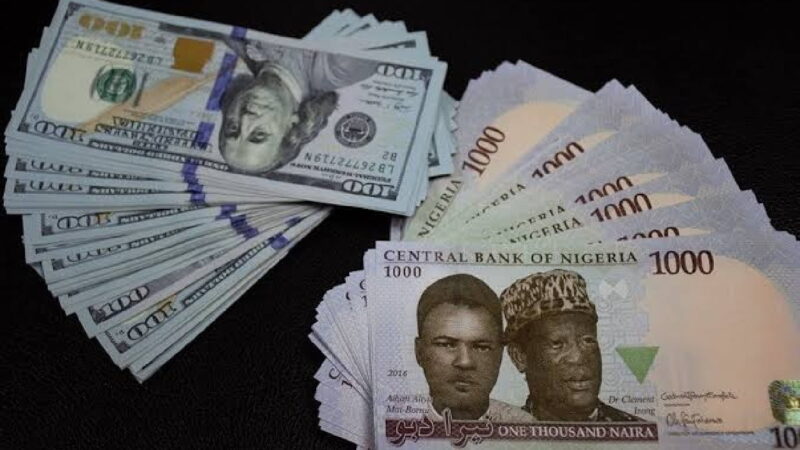
The Nigerian Naira continued its downward trend yesterday, trading at ₦1,415 per US dollar in the parallel (black) market, up from ₦1,405 per dollar last Friday. This latest depreciation underscores ongoing pressure on the currency amid high demand for foreign exchange and limited supply.
Data from the Central Bank of Nigeria (CBN) showed that the naira also weakened in the Nigerian Foreign Exchange Market (NFEM), trading at ₦1,386.75 per dollar, a drop from ₦1,384.25 recorded last week. This reflects a modest ₦2.50 decline at the official window.
READ ALSO:
- Plateau Attackers Spoke Fulfulde, Came on Motorbikes, Ex‑Rep Says
- US Lawmaker Urges King Charles to Meet Jeffrey Epstein Survivors During US Visit
- Spain Shuts Airspace to US Warplanes, Rejects Iran Conflict Involvement
The gap between the parallel and official rates widened further to ₦28.25 per dollar, compared with ₦20.75 over the weekend, highlighting persistent market distortions between formal and informal forex channels.
Analysts say the naira’s slide is largely driven by rising dollar demand from importers, investors, and corporate traders, while supply remains constrained despite CBN interventions aimed at stabilising the currency. Recent policy adjustments, including allowing oil exporters more flexibility to repatriate proceeds, have yet to significantly ease pressure on the naira.
The depreciation in both the parallel and official markets has direct implications for import costs, inflation, and the purchasing power of Nigerian households and businesses. Market watchers are closely monitoring the CBN’s next moves, with expectations that further policy actions may be needed to curb the naira’s decline.
Naira Slides to ₦1,415 per Dollar in Parallel Market as Official Rate Weakens

-

 Entertainment20 hours ago
Funke Akindele, Toyin Abraham Spark Reactions Over Alleged Snub at Iyabo Ojo’s Premiere
-

 metro1 day ago
Jos Attack: Plateau Govt Declares 48-Hour Curfew After Deadly Assault
-

 metro3 days ago
Tragedy in Aramoko: Trailer Rams Residential Building, Kills 300‑Level Student
-

 Entertainment3 days ago
Nollywood Actress Declares Love for Ibrahim Chatta, Offers to Pay Her Own Dowry
-

 Entertainment3 days ago
Streamer Peller Escorted Out of Alake of Egbaland’s Palace in Abeokuta
-
 metro3 days ago
ADC Chairman’s Daughter Joins Pro-Tinubu Campaign Organisation
-

 News21 hours ago
UK Raises Visa Costs, Tightens Immigration Rules From April 8
-

 Education5 hours ago
WAEC Releases 2026 WASSCE Timetable for School Candidates