

Politics
Coalitions settle for ADC, to adopt party Wednesday
Coalitions settle for ADC, to adopt party Wednesday
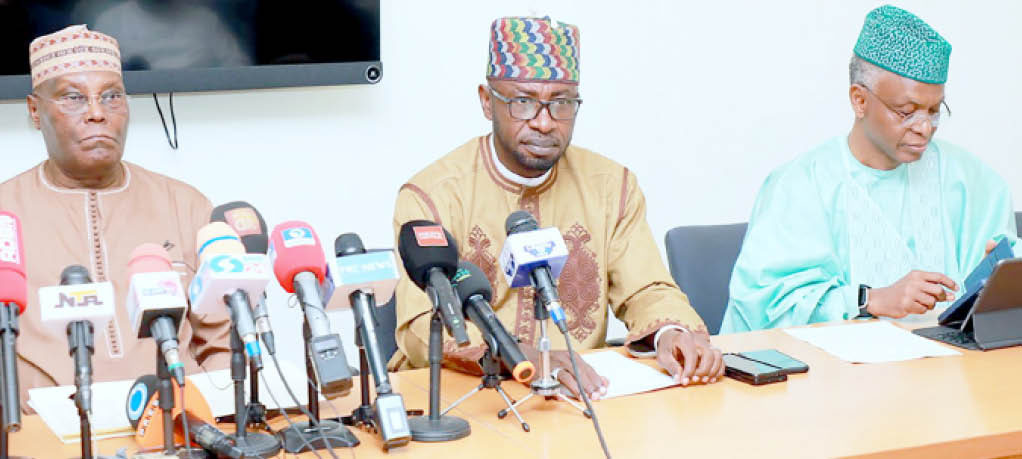
Barring any last-minute changes, the coalition of opposition forces is set to formally adopt the African Democratic Congress (ADC) on Wednesday as its platform to challenge President Bola Ahmed Tinubu’s re-election bid in 2027.
Sources familiar with the development told Daily Trust that most coalition leaders have settled on the ADC, following growing concerns that the coalition’s proposed political vehicle, the All Democratic Alliance (ADA), may not be registered in time by the Independent National Electoral Commission (INEC) to meet electoral deadlines.
In May, Daily Trust reported that a majority of coalition figures had agreed to join the ADC after talks with the Social Democratic Party (SDP) collapsed. Once a fringe actor in national politics, the ADC has since gained traction as the new political bride among opposition forces seeking to unseat the incumbent president.
The coalition, formally unveiled on March 20, includes key political figures such as former Vice President Atiku Abubakar; 2023 Labour Party’s presidential candidate, Peter Obi; and former Kaduna State governor, Nasir el-Rufai. However, the question of which political platform to adopt had lingered due to prolonged negotiations, particularly with the SDP.
A coalition member had disclosed to Daily Trust in May that the ADC had emerged as the preferred platform. “The party met all the coalition’s requirements. The leaders were clear about what they were looking for in a platform, and the ADC satisfied those expectations,” he said.
READ ALSO:
- Our ancestors traced to Nigeria – Saint Lucian Senate President
- Trump global aid cuts risk 14 million deaths in five years, report says
- US Senate holds marathon vote on Trump’s ‘big beautiful bill’
However, shortly after that disclosure, some coalition figures pushed back, insisting that the registration of a new party, the ADA, remained under consideration. By June, it emerged that the coalition had formally approached INEC to register ADA as an entirely new political entity.
Speaking with Daily Trust on Monday, Dr Umar Ardo, one of the coalition leaders, confirmed that while most leaders have indeed adopted the ADC, the coalition has also resolved to continue pursuing the registration of ADA.
“Most of the leaders have adopted ADC, and they will formally announce their position on Wednesday. But we’ve also agreed that both efforts (the ADC adoption and new party registration) can proceed simultaneously,” Ardo said.
He added that those in favour of registering a new party remain confident that INEC will act in line with the law. “The coalition secretariat is committed to doing everything right to meet the legal and procedural requirements,” he said.
Ardo, the convener of the Northern League of Democrats and a key promoter of the ADA, also commended INEC for acknowledging the coalition’s application.
In a letter dated 27 June, and signed by the commission’s Secretary, Rose Oriaran-Anthony, INEC confirmed receipt of the application and stated: “Your letter dated 19 June 2025 on the above subject is acknowledged. The commission is processing your application in line with the provisions of Part I, Clause 2(i) of our Regulations and Guidelines for Political Parties, 2022. Accept the assurances of the commission’s high regard.”
Addressing concerns that adopting the ADC while simultaneously pushing for ADA registration could lead to internal conflict or mixed messaging, Ardo argued that both efforts are complementary rather than contradictory.
“Registering a new party is a process—just like adopting an existing one. Both efforts involve grassroots mobilisation and membership drives. Ultimately, they converge at the same objective,” he said.
Ardo cited two major reasons for favouring the registration of a new party. First, he expressed fears of “external manipulations” if the coalition simply fuses into an existing party.
“One of our main concerns is undue influence. Those opposed to a new party fear government interference with INEC. But fusing into an existing party actually exposes us more to manipulation, as you must now contend with entrenched interests.
“Instead of facing the law in a transparent registration process, you engage in transactional politics with existing party owners. The ADC, for instance, has executives elected in December 2022 who insist they won’t step aside until their terms expire in December 2026—well after the primaries. That’s a legal landmine that could result in litigation, and a single court judgement could upend everything,” he said.
His second concern was the potential exclusion of committed coalition members from the process. “You may end up with many people feeling left out,” he warned.
Ardo also distanced himself from narratives suggesting the coalition’s primary aim is to oust President Tinubu. “If our sole goal is to remove Tinubu in 2027, then we’re no different from the political forces that removed Goodluck Jonathan in 2015. We must go beyond that. The coalition should spearhead a renaissance—to change how things are done in this country,” he said.
Coalitions settle for ADC, to adopt party Wednesday
Daily Trust







Politics
2027: Tompolo Unveils 57 Tinubu Campaign Vehicles, Warns Lagosians Against 2023 Repeat
2027: Tompolo Unveils 57 Tinubu Campaign Vehicles, Warns Lagosians Against 2023 Repeat
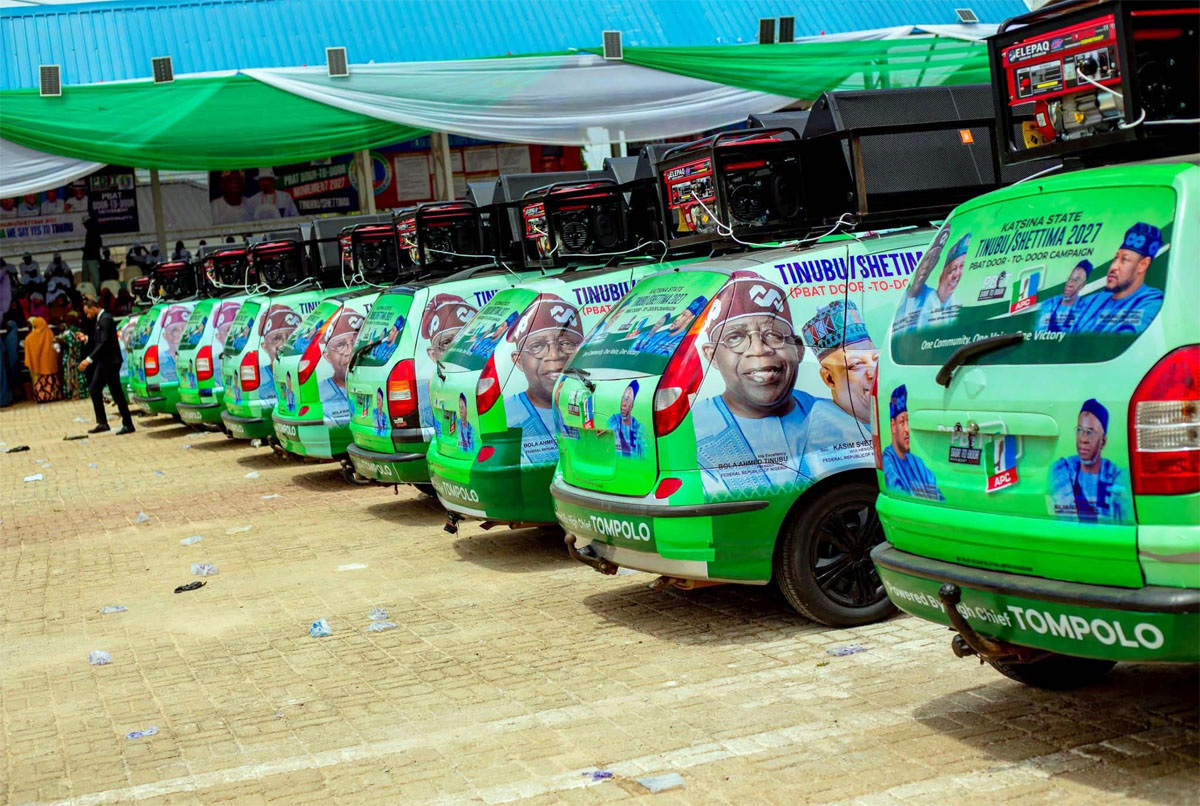
High Chief Government Ekpemupolo, popularly known as Tompolo, has urged Lagos residents to prevent a repeat of the 2023 presidential election outcome in the state, as his political support group unveiled 57 campaign vehicles for President Bola Ahmed Tinubu’s 2027 re-election bid.
Tompolo, grand patron of the PBAT Door-to-Door Movement, made the call on Tuesday, October 13, 2026, during a campaign event in Lagos. He was represented by Kestin Pondi, who presented the vehicles to the movement’s state coordinators for grassroots mobilisation.
Tompolo urged supporters to intensify efforts ahead of the 2027 presidential election, stressing the need for a stronger campaign structure across Lagos communities.
“What happened in 2023 must not repeat. He must win convincingly in 2027,” he said through his representative.
He also encouraged eligible residents to take advantage of the Independent National Electoral Commission (INEC) Continuous Voter Registration exercise and obtain their Permanent Voter Cards (PVCs) to participate in the election.
Tompolo argued that Tinubu’s experience as governor of Lagos State from 1999 to 2007 should inform residents’ assessment of his leadership. He urged voters to support the president’s re-election, describing the administration’s policies as reforms that require more time to consolidate.
READ ALSO:
- Shell Exits Nigeria’s Gas Distribution Business, Sells Stake to Vaaris Energy
- Delta Tragedy: Man Allegedly Kills Wife, Dies by Suicide After Land Dispute
- VIDEO: Outrage as Indian National Assaults Nigerian Truck Drivers in Lagos
The position reflects the campaign group’s support for Tinubu, although the effects of the administration’s economic and other policies remain subjects of public debate.
The unveiling of the 57 campaign vehicles is part of the movement’s strategy to expand its grassroots presence and take its message directly to households and communities ahead of the election.
The group has also organised campaign activities in other states. In Kano, it unveiled 50 vehicles in September, while its activities in Katsina and Taraba included the presentation of vehicles and the inauguration of state coordinators.
Lagos State Governor Babajide Sanwo-Olu, who spoke at the event, expressed support for the administration, saying Nigeria was moving towards economic stability under Tinubu’s leadership.
The campaign mobilisation comes as political parties and support groups begin strengthening their structures ahead of the 2027 general election.
In the 2023 presidential election, Peter Obi, then the Labour Party candidate, defeated Tinubu of the All Progressives Congress (APC) in Lagos State. Tinubu, however, won the national election and was declared president by INEC.
The PBAT Door-to-Door Movement’s latest initiative signals an effort by Tinubu’s supporters to strengthen their organisation in Lagos and secure a different result in the state in 2027. The vehicles are intended to support campaign activities and grassroots outreach as the political contest approaches.
2027: Tompolo Unveils 57 Tinubu Campaign Vehicles, Warns Lagosians Against 2023 Repeat
Politics
Oshiomhole Challenges Obi to Bible Oath Over Private Jet Controversy
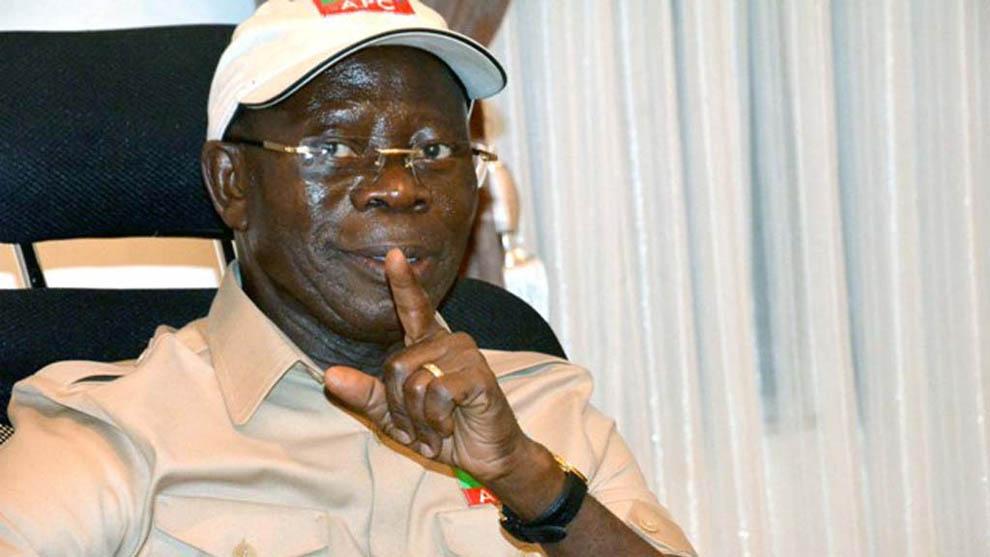
Oshiomhole Challenges Obi to Bible Oath Over Private Jet Controversy
Former Edo Governor insists he witnessed Obi’s private jet use, calls for religious test to settle dispute
BENIN CITY — A fresh political controversy has erupted following claims by former Edo State Governor, Senator Adams Oshiomhole, that Labour Party presidential candidate Peter Obi frequently uses private jets despite public claims to the contrary.
Speaking in a recent interview on SYMFONI TV, Oshiomhole challenged Obi to a public oath-taking, proposing that both men place their hands on a Bible to settle the dispute.
“Obi is a Christian; I’m a Christian. Please bring a priest, bring your Bible, and I’ll put my hand on it, and let Obi put his hand on it,” Oshiomhole said, emphasizing their shared faith as the basis for the challenge.
The former governor alleged that he personally encountered Obi at the Executive Jet Wing in Lagos on at least two occasions. According to him, on one instance Obi was alone, while on another he was accompanied by his wife. Oshiomhole further claimed that he himself had flown a private jet from Benin and landed at the same time as Obi.
The remarks come amid a broader political exchange regarding Obi’s travel arrangements, which have been a subject of public debate. Obi’s media adviser, Dr. Valentine Obienyem, has since disputed Oshiomhole’s claims, pointing to a long history between the two politicians, including instances where Oshiomhole had previously praised Obi and invited him to campaign in Edo State.
The proposal for a Bible oath has sparked mixed reactions among political observers, with some describing it as an unusual but telling escalation of the ongoing verbal duel between the two prominent figures.
As of press time, neither Peter Obi nor his media team had responded directly to the specific challenge issued by Oshiomhole.
Oshiomhole Challenges Obi to Bible Oath Over Private Jet Controversy
Politics
Obi Positioning for SGF Role Under Atiku’s ADC Ticket – Sowore
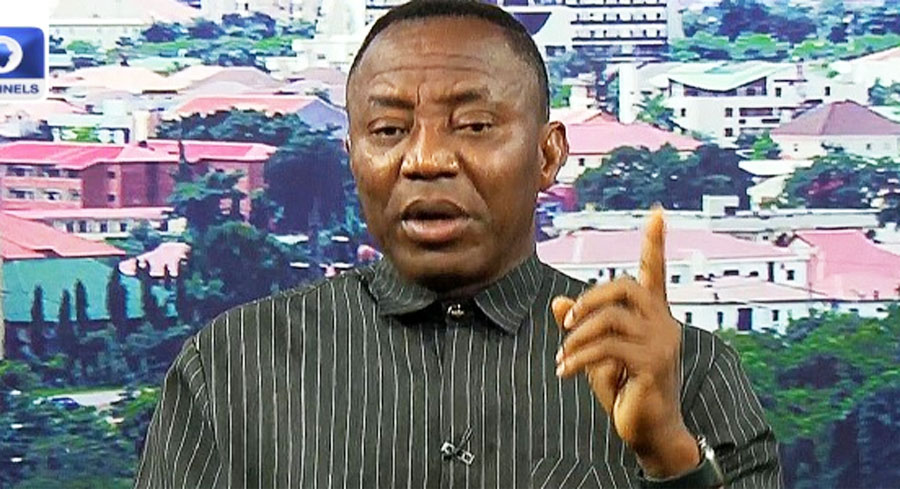
Obi Positioning for SGF Role Under Atiku’s ADC Ticket – Sowore
LAGOS — The political landscape ahead of the upcoming general elections was thrown into fresh turmoil yesterday following explosive allegations by the African Action Congress (AAC) presidential candidate, Omoyele Sowore, who claims that his Nigeria Democratic Congress (NDC) counterpart, Peter Obi, is secretly working to install Atiku Abubakar as president. In a statement made available to journalists, Sowore alleged that Obi is not genuinely pursuing the presidency but is instead positioning himself for the position of Secretary to the Government of the Federation (SGF) in an Atiku-led administration.
According to Sowore, the former Anambra State governor has been surreptitiously directing his teeming supporters to work for the African Democratic Congress (ADC) presidential candidate, Atiku Abubakar, rather than campaigning for his own party. “Obi is positioning himself to become Atiku’s SGF,” Sowore stated bluntly. “He is secretly directing his supporters to work for the ADC presidential candidate, Atiku. This is a betrayal of the movement that trusts him.” The allegation suggests a complex political realignment where the NDC and ADC are allegedly operating in a synergistic, if covert, manner. Sowore’s claims imply that the Obi movement is being used as a vehicle to siphon votes and energy toward Atiku’s bid, with the promise of a high-ranking position in the cabinet as the reward.
READ ALSO:
- How Bandits Demand ₦300m Ransom for Abducted Kaduna Couple, Baby in Viral Video
- 2027 Elections: Atiku Demands Names of INEC Ballot Printers, Questions Secret Contracts
- ₦8.7bn Erosion-Control Budget Gap Raises Questions as Anambra Gullies Expand
The accusation, if proven, could have significant implications for the opposition’s unity. Sowore, a vocal activist and former presidential candidate, has historically positioned himself as a critic of the political establishment, often accusing major party candidates of engaging in backroom deals that undermine the will of the electorate. The claim that Obi is eyeing the SGF role—typically the highest administrative office in the presidency—suggests that he may not be confident in winning the top seat, or that a consensus power-sharing arrangement has been struck behind closed doors.
The statement, however, raises questions about the current state of party coalitions. The article identifies Obi as the “NDC presidential candidate” and Atiku as the “ADC presidential candidate,” party labels that differ from their traditional political affiliations (Labour Party and PDP, respectively). This suggests a major realignment of political platforms in this election cycle. Neither the Obi campaign nor the Atiku campaign has issued an official response to Sowore’s allegations at the time of filing this report.
The news has sparked immediate debate on social media, with supporters of both camps expressing confusion and anger. Sowore’s supporters have praised him for “exposing the truth,” while Obi’s loyalists have dismissed the claims as a desperate attempt to remain relevant in a crowded political space. Political analysts suggest that if Sowore’s claims hold any weight, it could lead to a massive voter apathy among the youth demographic that has largely backed Obi’s previous bids.
As the election date approaches, the political arithmetic appears to be shifting rapidly, with accusations of secret pacts and strategic positioning becoming the order of the day. Sowore has vowed to continue exposing what he describes as the “unholy alliances” shaping the future of the nation.
Obi Positioning for SGF Role Under Atiku’s ADC Ticket – Sowore
-

 metro3 days ago
Tension in Kano as Phone Traders Confront Chinese Sellers Over Cheaper Phones
-

 metro2 days ago
₦8.7bn Erosion-Control Budget Gap Raises Questions as Anambra Gullies Expand
-

 Entertainment3 days ago
‘My Wife Fed Actresses I Was Dating Despite Knowing About Our Affairs’ – Yinka Quadri
-
 Politics1 day ago
Obi Positioning for SGF Role Under Atiku’s ADC Ticket – Sowore
-
 International2 days ago
US Names 24 More Nigerians in Fresh Fraud, Money Laundering Crackdown
-

 metro2 days ago
Child Soldiers, Baby Factories: US Raises Alarm Over Official Complicity in Nigeria
-

 Africa2 days ago
Djibouti Boat Disaster: 139 Migrants Dead, Dozens Missing
-

 Politics1 day ago
Okonkwo Alleges Return of Subsidy, Accuses NNPC of Plotting Trillions in ‘Lost Profit’