
Business
Cooking gas price to rise next week, say marketers

Cooking gas price to rise next week, say marketers
Tougher times are ahead of gas consumers, as marketers have hinted that prices will go up next week.
The President of the Nigerian Association of Liquefied Petroleum Gas Marketers, Olatunbosun Oladapo, said gas consumers should brace themselves for price hikes starting next week.
He cited rising international prices, high tax rates and prices of vessels, forex scarcity, and naira devaluation as some of the reasons for the intended price review.
“It is starting next week because international prices have gone up. The prices of vessels have gone up and taxes are high, but consumers are not earning more.
“Their purchasing power has gone down. Everybody is crying. Consumers, middlemen, and retailers are feeling the impact because business is now on the low side,” he said.
Olatunbosun described the imminent price increment as unfortunate.
“The situation is very unfortunate because prices are going higher. Nigerian consumers are passing through very difficult times because they can no longer afford gas,” he added.
According to him, consumers are now returning to firewood, charcoal, and sawdust for cooking.
READ ALSO:
-
Man who threatened President Biden shot dead in FBI raid – report
-
Sanusi briefs Tinubu after meeting with Niger coupists
-
I now eat dry rice, ousted Niger president laments hardship
“The government should come in and alleviate the suffering of the masses by providing palliatives, reducing taxes and levies.
“You can imagine that for every 1kg of gas priced at N700, tax would take way N3.50. How much is left in such a business?” he continued.
He urged the government to tax profit and not products because consumers were not buying gas anymore.
“Local taxes are worsening the problem,” he said, calling on marketers who had the opportunity to buy products locally to fix prices with “consumers’ sympathy” in mind.
His reaction came on the heels of findings by The PUNCH that vessel scarcity in the international market would push up local prices of Liquified Natural Gas, also known as cooking gas in the coming months.
Vessel scarcity in the international market has led to charter rate hikes, ahead of the 2023 winter, when demand for heating fuel peaks.
As of August 1, 2023, charter rates surged to $284,750 per day for November and $206,750/day for October, quadrupling the current price of $70,500/day, according to data from Spark Commodities quoted by Bloomberg.
“Tanker supplies are increasingly tight because traders are using the ships as floating storage in a bet that LNG prices will rise as the weather turns colder.
“Volatile shipping rates can eat up margin for an LNG trader looking to cash in on higher winter prices, and rising transportation costs ultimately can mean higher prices for buyers in Europe and Asia.”
The number of LNG vessels floating on the water for at least 20 days also rose in late July, with 42 vessels tracked, which is about 27 per cent higher than the same time a year earlier.
Nigerian LPG prices are internationally benchmarked based on Nigerian Liquefied Natural Gas Contract prices and are always influenced by international prices.
READ ALSO:
-
Gunmen set another ex-Lawmaker’s house ablaze in Imo
-
Discrepancies befall Niger coup plotters as former rebel leader forms anti-coup movement
-
Just in: Sanusi ex-Kano emir meets with Niger military leaders
And like other internationally traded commodities subjected to price fluctuations due to market dynamics, the NLNG CP is subject to changes and can be reviewed either upwards or downwards at least once to three times.
The devaluation of the local currency would also impact the domestic price of LPG.
The dollar exchanged for N749.62 on Wednesday, according to the Central Bank of Nigeria.
The Nigerian LNG usually sells the cooking gas it produces locally to off-takers based on the prevailing exchange rate.
The PUNCH checks showed that the prices of 20 metric tonnes of LPG at the major depots in Apapa, Lagos, between July 28 and August 7 had been between N10.7m and 11m.
Local consumers of cooking gas have for some months now enjoyed low prices due to a drop in international prices.
The price of LPG dropped from an average of N730 per kilogram in June to around N600/kg in July and increased to N750/kg in August due to the naira devaluation.
As of June, the price dropped by 76.1 per cent to 2.10 per one million British Thermal Units on May 31 from 8.78 per one million BTU, according to U.S. Energy Information Administration.
A report by the National Bureau of Statistics on retail gas prices said the average retail price for refilling a 5kg cylinder of cooking gas decreased by 6.71 per cent month-on-month from N4,360.69 recorded in May to N4,068.26 in June.
Cooking gas price to rise next week, say marketers









Auto
CFAO Mobility Open Day to offer special deals on new vehicles, parts, diagnostics

CFAO Mobility Open Day to offer special deals on new vehicles, parts, diagnostics

CFAO Mobility has announced plans to host the 2026 edition of its flagship CFAO Mobility Open Day, aimed at showcasing a wide range of innovative mobility solutions.
In a statement, the company said the event would take place on Thursday, April 30, 2026, at Harbour Point, Victoria Island, Lagos, from 9am to 6pm.
The Open Day is expected to bring together leading global automotive and equipment brands in a dynamic exhibition tailored to meet diverse mobility needs.
Participating brands are Toyota, BYD, Mitsubishi, Suzuki, Fuso, JCB, Howo, Sino Equipment, King Long, TechKing Tyres, Yamaha, Winpart and Auto Fast.
According to CFAO Mobility, attendees will experience an extensive display of products and services, ranging from brand-new vehicles and motorcycles to outboard engines, fleet management solutions, spare parts and aftermarket services.
The event, which is free and open to the public, will also feature test drives, professional vehicle diagnostics and exclusive spare-parts deals, offering participants a hands-on and engaging experience.
The company urged car enthusiasts, business owners and prospective buyers to take advantage of the Open Day to explore mobility solutions tailored to their personal and business needs.
With over 120 years of presence in Nigeria, CFAO Mobility remains a key player in the mobility and healthcare sectors.
It added that the Open Day reflects its continued commitment to delivering innovative, customer-focused mobility solutions.
Business
Naira Strengthens to ₦1,359.31/$ as CBN Data Shows Further Gain in Official Market
Naira Strengthens to ₦1,359.31/$ as CBN Data Shows Further Gain in Official Market
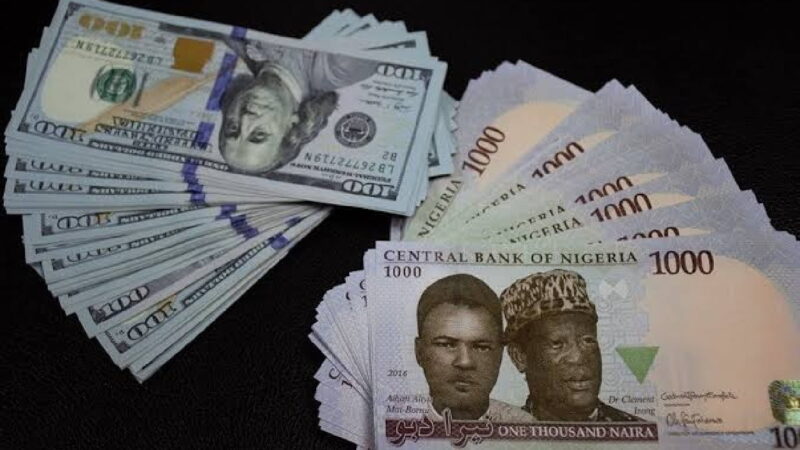
The Naira continued its positive performance on Thursday, appreciating further in the official foreign exchange market to close at ₦1,359.31 per US dollar, according to data published by the Central Bank of Nigeria (CBN).
The latest figure represents an improvement of ₦12.50 compared to the previous trading day, reflecting a 0.9 percent gain from Wednesday’s closing rate of ₦1,371.82/$.
The appreciation highlights continued stability in the official foreign exchange window, where recent policy measures have helped improve liquidity and reduce pressure on the local currency.
Market analysts attribute the naira’s relative strength to ongoing foreign exchange reforms by the CBN, increased dollar supply in official channels, and tighter regulation aimed at narrowing the gap between official and parallel market rates.
READ ALSO:
- Nigeria May Face ₦2,000 Petrol Price Without Intervention, TUC Warns FG
- US Embassy Suspends Abuja Visa Appointments Over Security Concerns
- ADC Crisis: Mark-Led Faction Sues INEC Over Party Leadership Removal
The CBN has in recent months intensified efforts to stabilise the currency through measures such as improved FX market transparency, better coordination with market participants, and steps to attract foreign portfolio inflows.
Despite the gains in the official market, traders note that the parallel market remains more volatile, with rates still influenced by strong demand for foreign currency from importers, travellers, and businesses outside official allocation channels.
Economists say the recent appreciation could help ease short-term inflationary pressure, particularly on imported goods, fuel pricing, and manufacturing inputs, although they caution that sustained stability will depend on broader macroeconomic fundamentals.
These include stronger foreign reserves, improved export earnings—especially from crude oil—and continued investor confidence in Nigeria’s economic policy direction.
The naira’s performance also comes amid renewed attention on Nigeria’s broader economic outlook, with stakeholders closely monitoring the impact of monetary tightening and ongoing fiscal reforms.
As of the latest trading sessions, market participants expect the CBN to maintain its current policy stance in the near term as it works to consolidate recent gains in the foreign exchange market in Nigeria.
Naira Strengthens to ₦1,359.31/$ as CBN Data Shows Further Gain in Official Market
Business
Nigeria May Face ₦2,000 Petrol Price Without Intervention, TUC Warns FG

TUC Warns Petrol May Hit ₦2,000/Litre, Proposes Crude Revenue Subsidy Plan to FG
DETAILS:
The Trade Union Congress of Nigeria (TUC) has warned that petrol prices in Nigeria could rise to as high as ₦2,000 per litre if urgent economic measures are not introduced to stabilise the country’s energy and currency markets.
TUC President, Festus Osifo, issued the warning during a press briefing in Abuja, citing the combined impact of rising global crude oil prices and continued depreciation of the naira as major drivers of worsening fuel costs.
Osifo said Nigerian workers are already under severe economic pressure, noting that in some parts of the country, fuel pump prices are already approaching the ₦2,000 threshold due to market volatility and transportation differentials.
He explained that the 2026 national budget benchmarked crude oil at about $64.85 per barrel, while current international prices hover around $100 per barrel, creating what he described as significant “excess revenue” for the government.
The TUC is proposing that the Federal Government allocate about 60% of this excess crude revenue to support local production by subsidising crude supply to domestic refineries, including the Dangote Refinery and other modular refineries.
According to Osifo, this approach would be more transparent and harder to manipulate than the previous fuel subsidy regime, while also helping to reduce the cost of petrol, diesel, and aviation fuel within a short period.
READ ALSO:
- US Embassy Suspends Abuja Visa Appointments Over Security Concerns
- ADC Crisis: Mark-Led Faction Sues INEC Over Party Leadership Removal
- Dangote Sugar Warns Staff Over Chewing Sugarcane, Threatens Arrest
He argued that targeted support at the refinery level could reduce pump prices within two weeks if implemented, stressing that the current cost structure is unsustainable for households and businesses.
The TUC president also criticised the slow expansion of Compressed Natural Gas (CNG) infrastructure, noting that although CNG adoption is being promoted as an alternative to petrol, the absence of refuelling stations along major highways limits its practicality for long-distance transport.
Beyond economic issues, Osifo also raised concerns over worsening insecurity in parts of the country, particularly recent killings in Plateau State, urging the government to strengthen military response capabilities with modern technology and intelligence tools.
He warned that failure to address rising fuel costs could reverse recent gains in inflation control, arguing that high petrol prices directly impact inflation, transport fares, and food costs across Nigeria.
Osifo further suggested that the naira’s fair value should ideally be within the ₦800–₦900 per dollar range to ease pressure on fuel pricing and broader economic stability.
The TUC stated that it will formally present its proposal to the Federal Government ahead of upcoming federation revenue distributions, insisting that urgent intervention is necessary to prevent further economic hardship.
As of the time of filing this report, the Federal Government has not issued an official response to the proposal or the ₦2,000-per-litre warning.
Nigeria May Face ₦2,000 Petrol Price Without Intervention, TUC Warns FG

-
 Africa2 days ago
ECOWAS Recruitment 2026: Over 30 Job Vacancies Open for Nigerians (How to Apply)
-

 metro3 days ago
2026 NYSC Batch A Stream II: Registration, Swearing-In Dates Announced
-

 Entertainment3 days ago
Saheed Osupa Defends Juju Use Amid Backlash From Islamic Clerics
-

 Politics2 days ago
Court Stops ADC Congress, Orders Status Quo in Leadership Row
-

 Health2 days ago
Sleeping Positions: How They Affect Your Health and Which Ones to Avoid
-

 metro2 days ago
Boko Haram Attack in Borno: Brigadier-General, Soldiers Killed as ISWAP Overruns Military Base
-
 metro2 days ago
US Evacuates Embassy Staff in Nigeria, Lists 23 States as ‘Do Not Travel’
-

 Entertainment3 days ago
Peller Sued for ₦400 Million by Former Tour Bouncer