
International
Crisis in the Church as Pope Francis fires anti-LGBTQ bishop

Crisis in the Church as Pope Francis fires anti-LGBTQ bishop who criticised his liberal policies on divorce abortion and same sex marriage
TEXAS Bishop Joseph Strickland, a prominent figure among traditionalist American Catholics and critic of Pope Francis for making the church more welcoming to the LGBTQ community, was removed from his post as bishop of Tyler, the Vatican has said.
In a statement released on Saturday, the Vatican confirmed that the decision followed “an apostolic visitation ordered by the Pope last June in the Diocese of Tyler,” but did not specify the reason.
“The Holy Father has removed Bishop Joseph E. Strickland from the pastoral governance of the diocese of Tyler, United States of America, and has appointed Bishop Joe Vásquez of Austin as apostolic administrator of the same diocese, rendering it sede vacante.”
atholic bishop Joseph Strickland of Tyler, Texas walks during a procession to protest the Los Angeles Dodgers honoring the pro-LGBTQ+ group Sisters of Perpetual Indulgence during LGBTQ+ Pride Night at Dodger Stadium in Los Angeles, California, U.S. June 16, 2023. Kirby Lee-USA TODAY Sports via REUTERS
READ ALSO:
-
Military troop neutralizes 3 terrorists in Kaduna
-
Kogi guber : INEC announces date for fresh elections in 9 polling units
-
5 US servicemen killed as plane crashes in Mediterranean
According to the statement, cited by the Vatican news, “as a result of visitation,” Bishop Strickland’s continuation in office was deemed “not feasible” and he was asked to resign on Thursday. Since the request was declined by the bishop, Pope Frances decided to remove him.
Strickland has repeatedly criticised the Pope’s liberal position on issues such as transgender rights and same-sex marriage, and accused the pope of “undermining the Deposit of Faith.”
Earlier this year, Pope Francis, whose papacy began in 2013, stated that “being homosexual isn’t a crime.” This was seen as a move by the leadership of the Catholic Church to take a firmer position of solidarity with the LGBTQ community, which was strongly opposed by conservative bishops and traditionalists.
Last August, Francis blasted the “backwardness” of these conservative bishops, accusing them of “replacing faith with ideology,” and saying that “a correct understanding of Catholic doctrine allows for change over time.”
The Catholic community was outraged by Strickland’s dismissal, with some calling the pope a “dictator.”
“Like a Soviet-era dictator, and in a raw exercise of power without provision of law, Pope Francis has removed Bp. Joseph Strickland as bishop of Tyler, TX,” the Lepanto Institute, a Virginia-based organization dedicated to the defense of the Catholic Church, wrote on X (formerly Twitter).
Others accused the church of “tyranny” and called Strickland’s removal ”a cowardly form of authoritarianism.”
Crisis in the Church as Pope Francis fires anti-LGBTQ bishop
Source Vatican News Agency/X/RT/Reuters









International
Iran Threatens US-Linked Universities in Middle East Amid Escalating Tensions
Iran Threatens US-Linked Universities in Middle East Amid Escalating Tensions
March 29, 2026
Iran has issued a stark warning that American-affiliated universities operating in the Middle East could become potential targets, as tensions between Iran and the United States continue to rise.
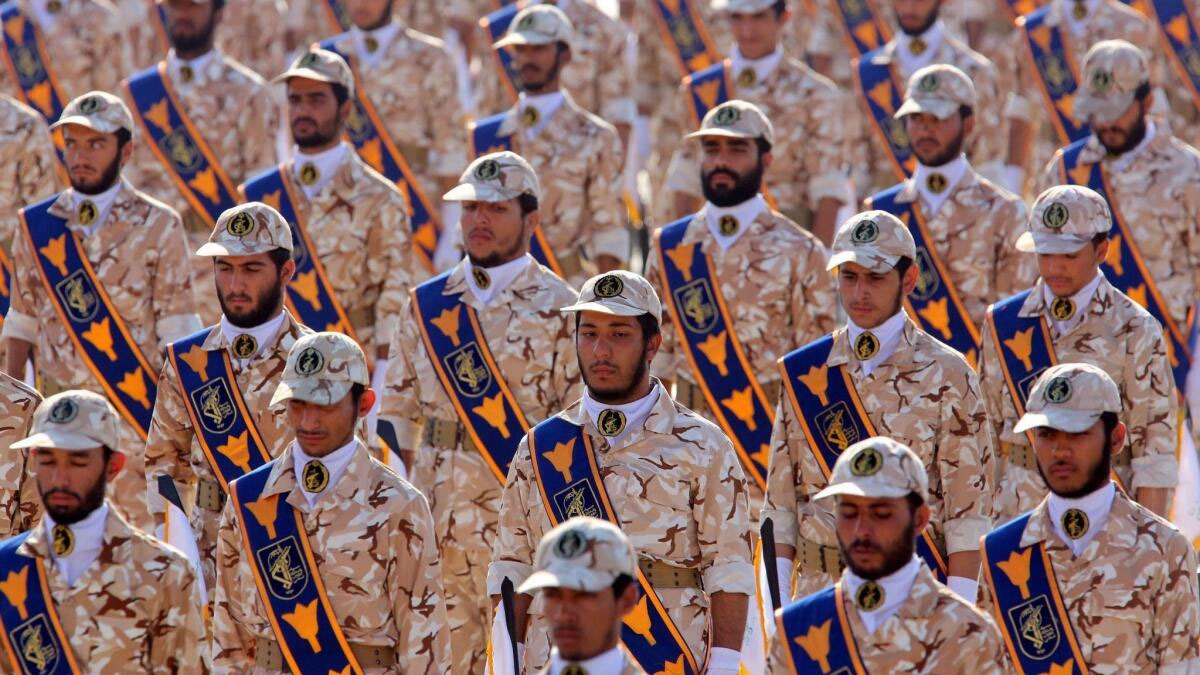
The threat, attributed to Iran’s powerful Islamic Revolutionary Guard Corps (IRGC), follows allegations that Iranian universities were damaged in recent strikes linked to the ongoing conflict. Iranian officials have not publicly provided detailed evidence of the alleged attacks but have condemned what they describe as violations of sovereignty and international norms.
In statements carried by international media, the IRGC warned that institutions with ties to the United States in the region could be considered “legitimate targets” if hostilities persist. Authorities also advised civilians to avoid such facilities, raising concerns about the safety of students, faculty, and staff across several countries in the Middle East.
While the rhetoric signals a dangerous expansion of potential targets beyond military installations, there has been no widely verified confirmation from major global outlets of a specific ultimatum or deadline tied to the warning. Analysts say the language used reflects an escalation in tone but stops short of confirming imminent attacks.
The development comes amid an increasingly volatile regional environment, with both nations exchanging accusations over recent incidents tied to the broader conflict. Diplomatic efforts to de-escalate tensions have so far yielded little progress, as global powers call for restraint.
Security experts warn that any attack on educational institutions would mark a significant shift in the conflict, potentially drawing widespread international condemnation and increasing the risk of further escalation.
Governments in the region are said to be reviewing security arrangements around foreign-linked institutions, while universities are reportedly monitoring the situation closely.
As of press time, officials from the United States had not issued a formal response specifically addressing the threat to universities, though Washington has repeatedly condemned attacks on civilian infrastructure and reiterated its commitment to protecting American interests abroad.
Iran Threatens US-Linked Universities in Middle East Amid Escalating Tensions
International
Trump Claims Iran Sent Oil Shipments Amid Backchannel Talks
Trump Claims Iran Sent Oil Shipments Amid Backchannel Talks
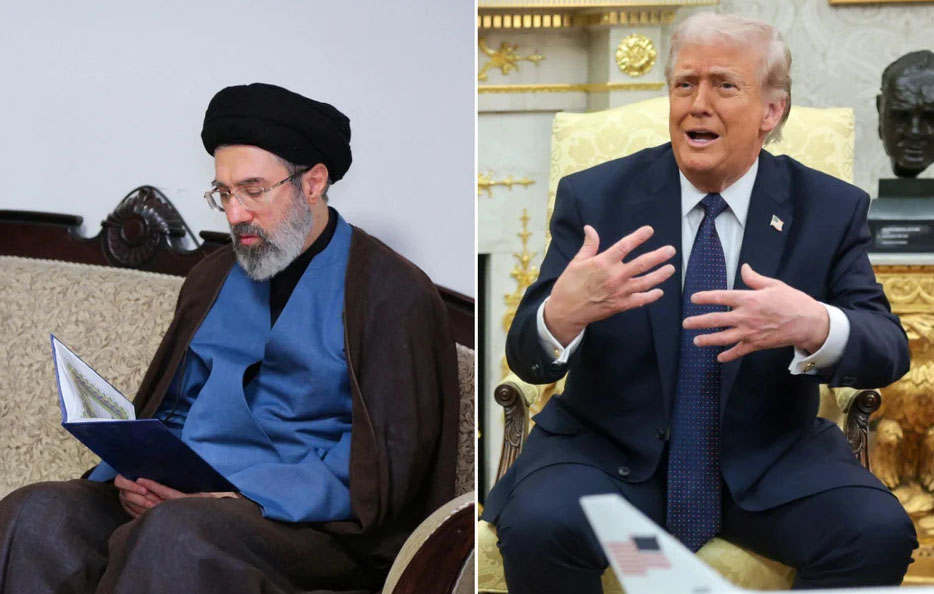
U.S. President Donald Trump has claimed that Iran dispatched ten oil tankers to the United States as part of indirect negotiations aimed at easing ongoing tensions between the two nations.
According to a report by Sky News on Friday, March 27, 2026, Trump made the assertion while speaking at the Future Investment Initiative in Miami. He suggested that the shipments were a gesture of goodwill, possibly intended as an acknowledgment of ongoing diplomatic engagements.
“It turned out I was right,” Trump said, referring to earlier claims that talks were underway between Washington and Tehran—claims initially denied by Iranian authorities. “They were negotiating, which they admitted two days later.”
Providing further details, Trump stated that Iran had first proposed sending eight oil ships before increasing the number to ten. “They said, ‘we’re going to send you eight ships of oil.’ They actually said, ‘we’re going to add an extra two,’ and they added an extra two,” he said. “So we had ten ships, and then people realized we were actually negotiating.”
Trump also struck a confident tone regarding developments in the Middle East, declaring that the region was “closer than ever” to being free from what he described as Iranian “terror, aggression and nuclear blackmail.”
However, Iranian officials have firmly rejected the claims of formal negotiations. Authorities in Iran insist that no direct talks are taking place with the United States, maintaining that any communication occurs strictly through third-party intermediaries, including Pakistan.
Tehran’s continued denial underscores the sensitive nature of any potential engagement with Washington, particularly amid domestic political pressures and broader regional dynamics.
The contrasting narratives highlight the uncertainty surrounding U.S.-Iran relations, with both sides presenting differing accounts of ongoing diplomatic efforts.
Trump Claims Iran Sent Oil Shipments Amid Backchannel Talks
International
Iranian Strike on Saudi Base Damages US Spy Plane, Injures 12 Troops
Iranian Strike on Saudi Base Damages US Spy Plane, Injures 12 Troops
Tensions in the Middle East have intensified following a major strike by Iranian forces on a United States military installation in Saudi Arabia, leaving several American personnel injured and damaging high-value military assets.
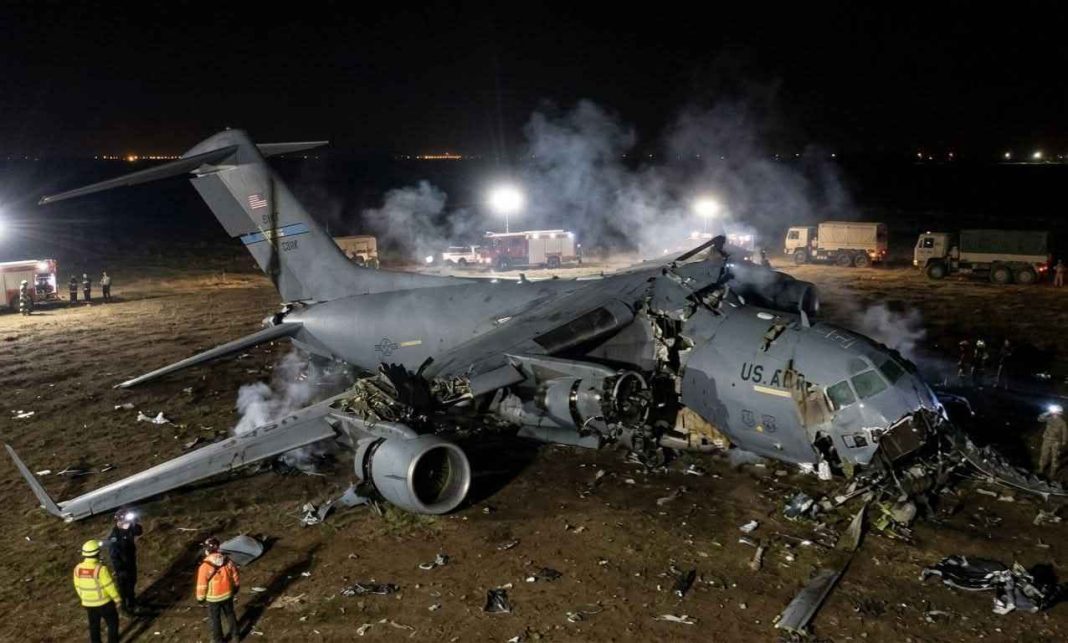
Iran reportedly launched a coordinated attack involving ballistic missiles and drones on the Prince Sultan Air Base on Saturday, targeting U.S. Air Force equipment stationed at the facility.
Initial reports from outlets including Daily Post Nigeria and Fox News indicated that a U.S. E-3 Airborne Warning and Control System (AWACS) aircraft—estimated to be worth about $700 million—was destroyed in the strike. The aircraft serves as a critical airborne radar and command center, capable of detecting threats and coordinating air operations over vast distances.
However, more recent and verified accounts suggest that the aircraft, identified as the Boeing E-3 Sentry, was damaged but not confirmed destroyed, raising questions about the accuracy of early claims surrounding the extent of the losses.
In addition to the AWACS aircraft, at least one KC-135 Stratotanker was reportedly struck during the ആക്രമation and caught fire, further compounding the scale of the incident.
U.S. officials confirmed that 12 American service members were injured in the attack. According to Fox News, two of the wounded personnel were listed in serious condition, while the remaining casualties sustained lighter injuries.
Military analysts note that the strike demonstrates Iran’s growing capability to conduct coordinated long-range attacks using a combination of drones and precision-guided missiles, posing a significant threat to U.S. assets in the region.
The latest escalation comes amid an ongoing conflict between the United States and Iran, which has persisted for approximately one month. The war has already led to significant casualties and heightened geopolitical tensions across the Middle East, particularly following reports of high-profile killings involving senior Iranian figures.
As of press time, there has been no official confirmation from the U.S. Department of Defense regarding the total extent of damage to the aircraft or whether any assets were completely destroyed.
Security experts warn that the attack could trigger further retaliation, raising fears of a broader regional confrontation involving key global powers and strategic allies in the Gulf.
Iranian Strike on Saudi Base Damages US Spy Plane, Injures 12 Troops

-

 Entertainment9 hours ago
Funke Akindele, Toyin Abraham Spark Reactions Over Alleged Snub at Iyabo Ojo’s Premiere
-

 metro2 days ago
Tragedy in Aramoko: Trailer Rams Residential Building, Kills 300‑Level Student
-

 metro18 hours ago
Jos Attack: Plateau Govt Declares 48-Hour Curfew After Deadly Assault
-

 News3 days ago
Final Notice: FG Orders Civil Servants to Complete PASGA Verification by March 31
-

 Entertainment2 days ago
Nollywood Actress Declares Love for Ibrahim Chatta, Offers to Pay Her Own Dowry
-

 Entertainment2 days ago
Streamer Peller Escorted Out of Alake of Egbaland’s Palace in Abeokuta
-
 International3 days ago
Iranian Missiles, Drones Strike US Air Base in Saudi Arabia
-
 metro2 days ago
ADC Chairman’s Daughter Joins Pro-Tinubu Campaign Organisation