
Business
Dangote set to reduce cooking gas price, marketers kick
Dangote set to reduce cooking gas price, marketers kick
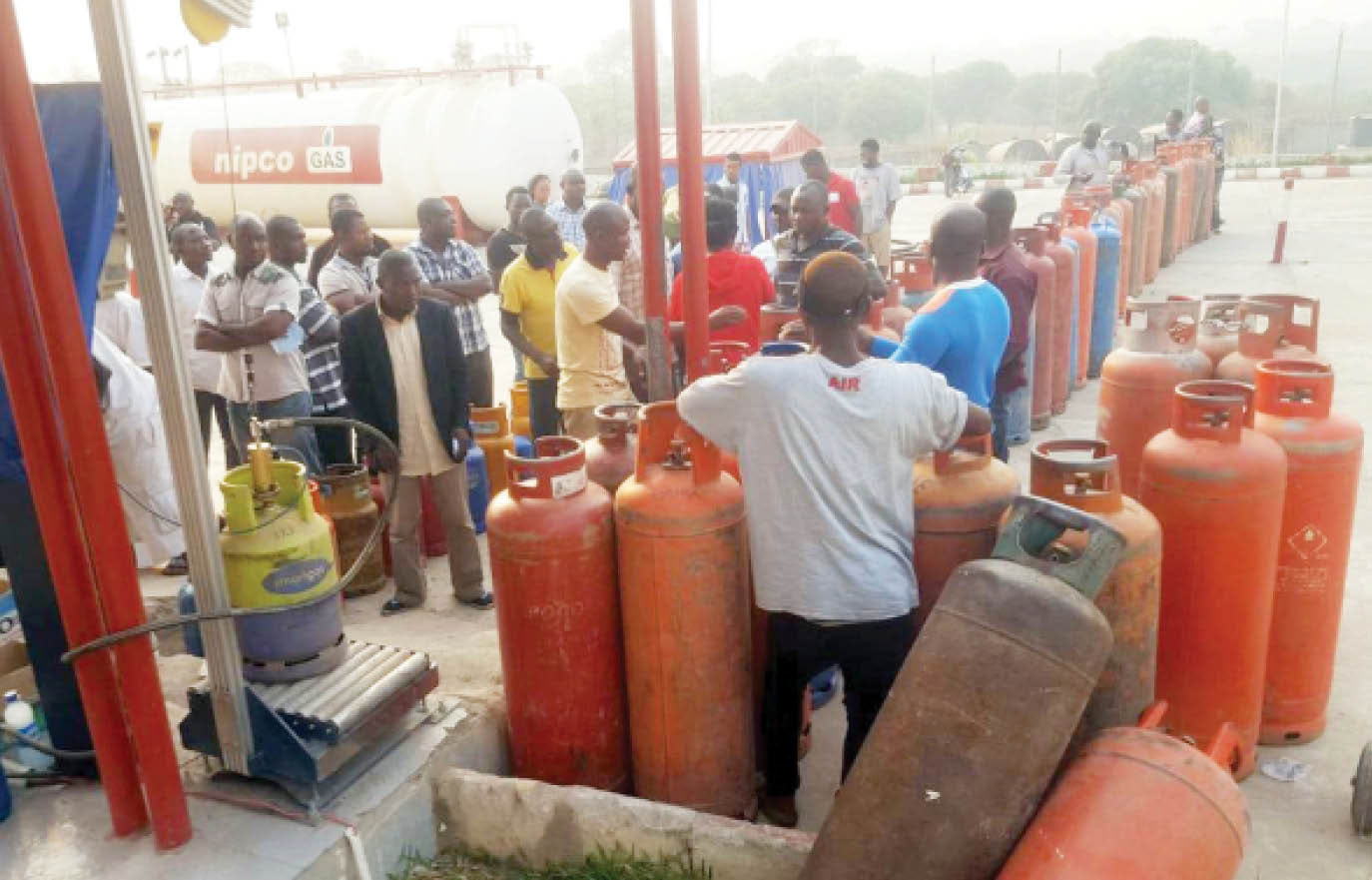
Alhaji Aliko Dangote, President of the Dangote Group, has announced plans to significantly reduce the price of Liquefied Petroleum Gas (LPG), commonly known as cooking gas, in a move aimed at easing the financial burden on ordinary Nigerians.
Dangote, who made the statement during a recent tour of his multi-billion-dollar refinery by both local and international guests, said the current price of cooking gas is too high and unaffordable for many Nigerians — especially low-income families who still rely on firewood for daily cooking.
He warned that if existing gas distributors fail to reflect the expected price crash, the Dangote Group will begin direct sales of LPG to consumers, bypassing the middlemen entirely.
He disclosed that the refinery now produces 22,000 tonnes of LPG daily and it is ramping up production for distribution into the Nigerian market, especially as Nigerians move towards the use of gas for cooking.
Speaking to members of the Lagos Business School CGEO Africa, at the refinery in Lekki, Dangote said, “The one that we didn’t write, which you must have seen, is LPG. Currently, we do LPG of about 2,000 tonnes per day. You know Nigeria is gradually moving to the usage of LPG. But I believe it is expensive, but right now we’re trying to bring down the price and make it cheaper.”
Dangote warned that “if the distributors are not trying to bring it down, we’ll go directly and sell to the consumers, so that people will now transit from firewood or kerosene to LPG for cooking.”
The PUNCH recalls that Dangote plans to start the direct distribution of petrol, diesel, and aviation fuel to marketers nationwide in August, with 4,000 CNG-powered buses procured for the exercise.
READ ALSO:
- Flashback: Why I championed rights of Obas to be buried according to their faith – Awujale
- Ministry confirm killing of 12 in Israeli attack on east Lebanon
- Terrorists strikes in Plateau again, kill 27 people
Currently, the price of cooking hovers around N1,000 and N1,300 per kilogramme. Dangote said this would be brought down to ensure affordability.
Operators kick
It appears operators in the LPG market are not pleased with Dangote’s plan to disrupt the sector.
Speaking in an interview with our correspondent, the former Chairman of the LPG and Natural Gas Downstream Group of the Lagos Chamber of Commerce and Industry, Godwin Okoduwa, described the plan as monopolistic.
Okoduwa expressed concern that the billionaire businessman should recognise the fact that some investors grew the market from 70,000 metric tonnes in 2007 to over 1 million metric tonnes in 2022, saying collaboration is the way to go.
“I think it’s monopolistic. I think a market should be protected to encourage growth. The LPG industry in Nigeria grew from 70,000 metric tonnes in 2007 to over 1.3 million tonnes in 2022. That was done by collaboration — collaboration with the Federal Government, the NLNG, and offtakers. Everything was done in collaboration. It grew from 70,000 to 250 to 800, and now over a million,” Okoduwa said.
He stressed that growth cannot be achieved through a monopoly but through collaboration. “Today, we are just under 5kg or 6kg per capita consumption in terms of LPG. Other countries are doing much more. South Africa is doing double digits, Morocco and Tunisia are doing double digits. We can do much more.
“So, we should, as an industry and as a country, focus on how to grow the LPG industry and not allow someone (to frustrate the players). Yes, he has invested; yes, it’s a capital economy, but he should not be allowed to frustrate the players.
READ ALSO:
- Uromi Chief Imam tackles police on rescue claims, insists ransom was paid
- Police arrest killers of Chinese national in Ogun
- Kidnapped Chief Imam of Uromi regains freedom
“There are people who have spent money, spent resources, even business and development, and someone just comes in to reap from the work that has been done. I’m sure he wouldn’t have built if there had not been an existing market. The work has been done, he should respect the market and let us grow. It shouldn’t be a zero-sum strategy. It should be collaborative,” he said.
In his recommendation, the gas expert said that though Dangote has the upper hand, he should embrace collaboration.
“My advice to him is that the pie can be bigger. The Nigerian market is about 1.3 million tonnes. The Nigerian LPG market can be 5 million tonnes. He should work towards collaboration rather than competition, because at the end of the day, everybody benefits,” he added.
Told that Dangote’s major concern is to bring the price of cooking gas to a rate where everybody can afford it and stop cooking with firewood, Okoduwa retorted, “I have news for him. He should go to the Northeast, where you have the least consumption of LPG. He should go to the Northeast and start developing the LPG infrastructure there. I think we will tell him thank you for that.”
Similarly, the Executive Secretary/Chief Executive Officer, Nigerian Association of Liquefied Petroleum Gas Marketers, Bassey Essien, doubted the possibility of Dangote selling gas directly to consumers or to crash the price.
“I am saying that it’s unrealistic. What is the position with PMS? Has the refinery been able to sell petrol directly to you and me into our cars at a very cheap rate?” Essien asked.
Dangote set to reduce cooking gas price, marketers kick
(Punch)






Business
Naira Slides to ₦1,415 per Dollar in Parallel Market as Official Rate Weakens
Naira Slides to ₦1,415 per Dollar in Parallel Market as Official Rate Weakens
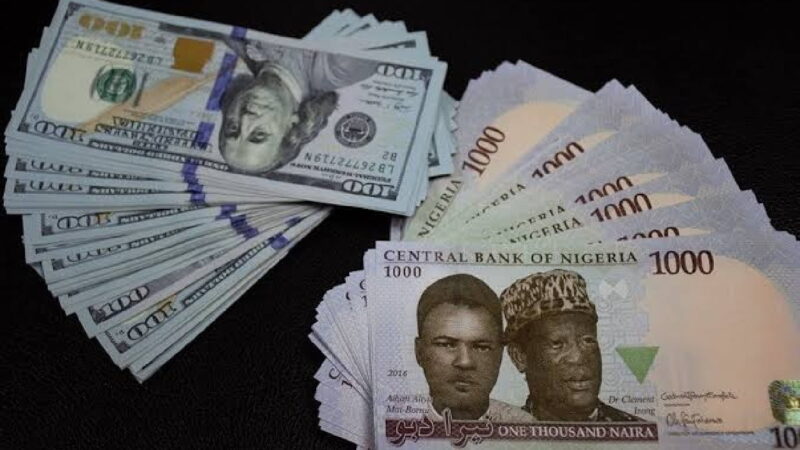
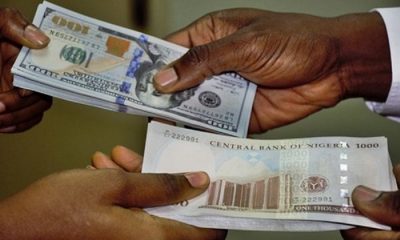
The Nigerian Naira continued its downward trend yesterday, trading at ₦1,415 per US dollar in the parallel (black) market, up from ₦1,405 per dollar last Friday. This latest depreciation underscores ongoing pressure on the currency amid high demand for foreign exchange and limited supply.
Data from the Central Bank of Nigeria (CBN) showed that the naira also weakened in the Nigerian Foreign Exchange Market (NFEM), trading at ₦1,386.75 per dollar, a drop from ₦1,384.25 recorded last week. This reflects a modest ₦2.50 decline at the official window.
READ ALSO:
- Plateau Attackers Spoke Fulfulde, Came on Motorbikes, Ex‑Rep Says
- US Lawmaker Urges King Charles to Meet Jeffrey Epstein Survivors During US Visit
- Spain Shuts Airspace to US Warplanes, Rejects Iran Conflict Involvement
The gap between the parallel and official rates widened further to ₦28.25 per dollar, compared with ₦20.75 over the weekend, highlighting persistent market distortions between formal and informal forex channels.
Analysts say the naira’s slide is largely driven by rising dollar demand from importers, investors, and corporate traders, while supply remains constrained despite CBN interventions aimed at stabilising the currency. Recent policy adjustments, including allowing oil exporters more flexibility to repatriate proceeds, have yet to significantly ease pressure on the naira.
The depreciation in both the parallel and official markets has direct implications for import costs, inflation, and the purchasing power of Nigerian households and businesses. Market watchers are closely monitoring the CBN’s next moves, with expectations that further policy actions may be needed to curb the naira’s decline.
Naira Slides to ₦1,415 per Dollar in Parallel Market as Official Rate Weakens
Business
NCC Orders MTN, Other Telcos to Compensate Subscribers for Poor Network Service

NCC Orders MTN, Other Telcos to Compensate Subscribers for Poor Network Service
The Nigerian Communications Commission (NCC) has directed major mobile network operators (MNOs), including MTN, Airtel, Glo, and 9mobile, to compensate subscribers affected by poor network quality in areas where performance falls below regulatory standards. The move is part of a broader shift toward a consumer-focused approach aimed at protecting users and strengthening accountability in Nigeria’s telecommunications sector.
In a statement on Sunday, Nnenna Ukoha, Head of Public Affairs at the NCC, emphasized that subscribers should not bear the full burden of service disruptions caused by operators’ failure to meet prescribed benchmarks. She explained that compensation will be provided in the form of airtime credits, calculated based on subscribers’ average spending patterns and the duration of service outages in affected areas.
READ ALSO:
- Abuja Convention: Wike PDP Faction Confirms Mohammed as Chairman, Anyanwu as Secretary
- Debate as OPM Pastor Marries Autistic Man to Older Woman
- Jos Attack: Plateau Govt Declares 48-Hour Curfew After Deadly Assault
“Erring operators will compensate affected users directly for breaches of quality of service key performance indicators within specified time frames,” Ukoha said. She added that while regulatory fines have traditionally served as a deterrent against poor service delivery, the commission is now adopting a more consumer-centric approach that ensures users directly benefit from enforcement actions.
Under the directive, tower companies and network providers are also required to reinvest fines and penalties into infrastructure upgrades, aimed at addressing coverage gaps and improving overall network quality. Subscribers are encouraged to report service interruptions to their operators and the NCC to ensure timely compensation.
Industry observers have welcomed the move, describing it as a significant step toward empowering telecom users, improving quality of service (QoS), and holding operators accountable for network performance failures. The NCC will monitor compliance closely and take further action against any operators that fail to meet the compensation and service standards.
NCC Orders MTN, Other Telcos to Compensate Subscribers for Poor Network Service
Auto
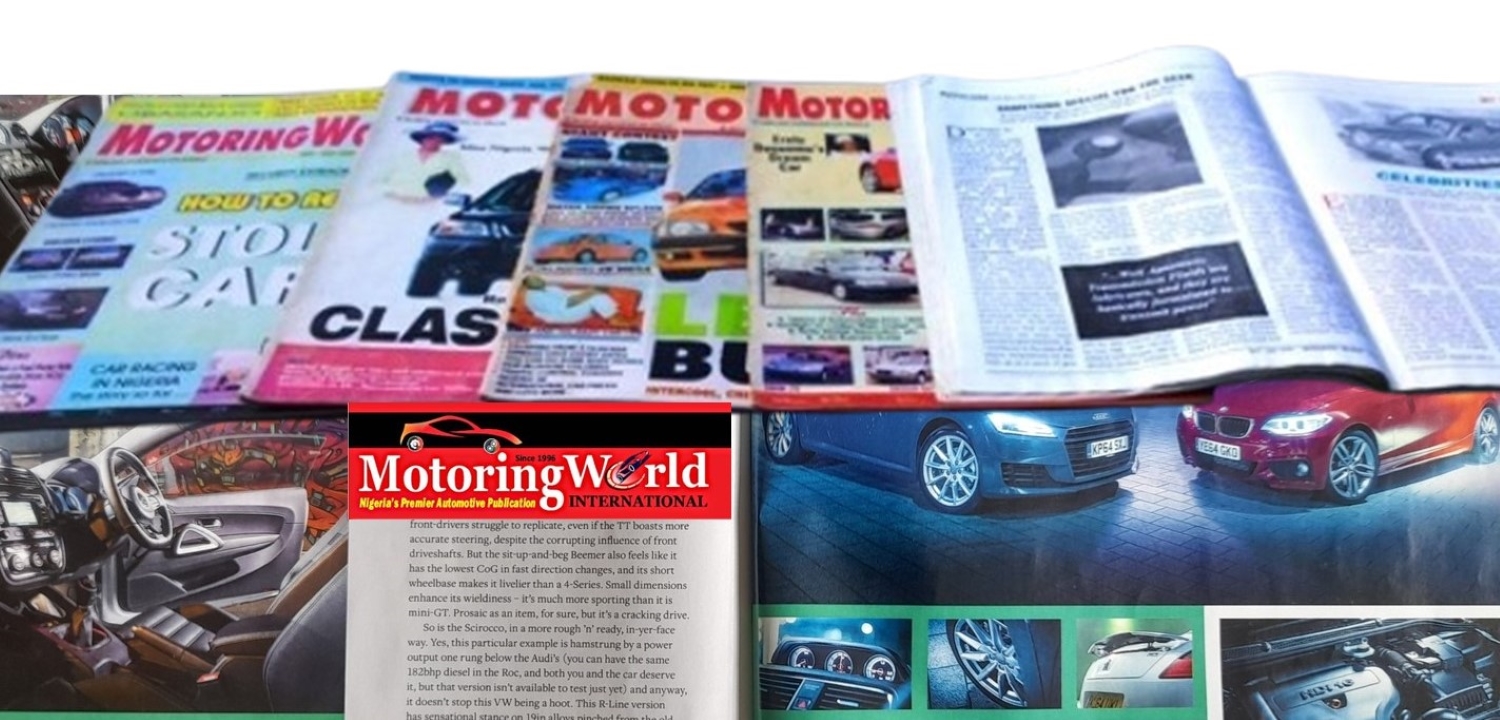
Motoring World marks 30 years, set to rally industry leaders in Lagos
Motoring World marks 30 years, set to rally industry leaders in Lagos
Motoring World, one of Nigeria’s foremost automotive publications, will celebrate its 30th anniversary on June 4, 2026, with a high-profile event at the MUSON Centre.
The milestone gathering is expected to draw policymakers, industry leaders, diplomats and innovators to commemorate three decades of impactful journalism, advocacy and contribution to the growth of Nigeria’s automotive sector.
Founded on June 12, 1996, as a syndicated radio magazine programme, Motoring World pioneered automotive broadcasting in Nigeria before expanding into print in 1998. It has since evolved into a multi-platform brand at the forefront of promoting industry development, modernization and policy reform.
Over the years, the publication has gone beyond news reporting to play an active role in shaping regulatory frameworks, encouraging local content development and promoting industry standards.
Publisher and Chief Executive Officer, Femi Owoeye, said the organisation was driven by a clear vision from inception.
READ ALSO:
- Nigeria Police Reform: 222,000 Officers May Move to State Commands
- Iran Threatens US-Linked Universities in Middle East Amid Escalating Tensions
- Iranian Strike on Saudi Base Damages US Spy Plane, Injures 12 Troops
“Motoring World started with a simple vision: to give voice and structure to Nigeria’s automotive industry. Over the years, we have gone beyond reporting to actively advocate policies that support industry growth, local production and a more structured ecosystem,” he said.
Activities lined up for the anniversary include the unveiling of a special 30th anniversary edition of Motoring World magazine, chronicling the evolution, milestones and future of the industry. Distinguished stakeholders with three decades of contributions to the sector will also be honoured.
A keynote lecture titled, “Reporting the Road Ahead: Automotive Journalism as a Catalyst for Nigeria’s Auto Industry Development,” will underscore the critical role of the media in shaping the nation’s automotive landscape.
Dignitaries expected at the event include the Minister of Industry, Trade and Investment, Jumoke Oduwole; the Director-General of the National Automotive Design and Development Council, Oluwemimo Joseph Osanipin; state governors, transport commissioners and members of the diplomatic corps.
Owoeye noted that the anniversary represents more than a celebration.
“This is a tribute to resilience, strong partnerships and the collective drive that has sustained the industry. As we honour key players and reflect on our journey, we are also setting the tone for the next phase of mobility in Nigeria,” he added.
The event promises a blend of reflection, recognition and renewed commitment to advancing Nigeria’s automotive industry.
Motoring World marks 30 years, set to rally industry leaders in Lagos

-

 Entertainment16 hours ago
Funke Akindele, Toyin Abraham Spark Reactions Over Alleged Snub at Iyabo Ojo’s Premiere
-
 metro1 day ago
Jos Attack: Plateau Govt Declares 48-Hour Curfew After Deadly Assault
-

 metro3 days ago
Tragedy in Aramoko: Trailer Rams Residential Building, Kills 300‑Level Student
-

 Entertainment3 days ago
Nollywood Actress Declares Love for Ibrahim Chatta, Offers to Pay Her Own Dowry
-

 Entertainment3 days ago
Streamer Peller Escorted Out of Alake of Egbaland’s Palace in Abeokuta
-
 metro3 days ago
ADC Chairman’s Daughter Joins Pro-Tinubu Campaign Organisation
-
 News16 hours ago
UK Raises Visa Costs, Tightens Immigration Rules From April 8
-
 Politics3 days ago
Naira Strengthens for Third Day Against US Dollar as Forex Reforms Take Effect