

News
DHQ Launches Fresh Offensive in Katsina to Hunt Killers of Retired General Rabe
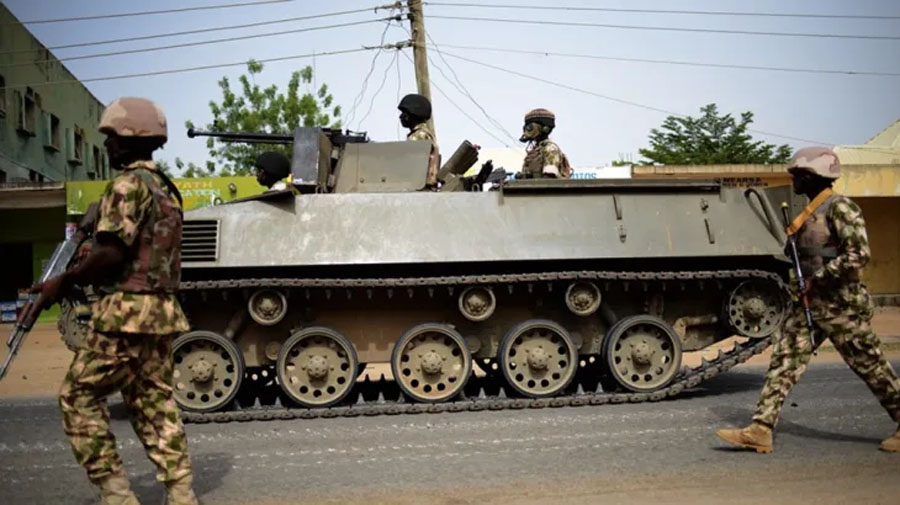
DHQ Launches Fresh Offensive in Katsina to Hunt Killers of Retired General Rabe
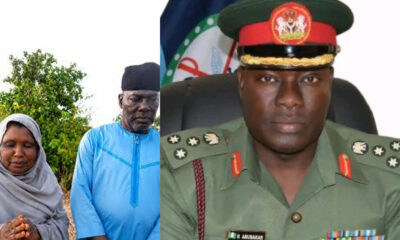
KATSINA, Nigeria — The Defence Headquarters Joint Task Force North West has launched a fresh military offensive code-named Operation Clean Sweep III in Katsina State, aimed at hunting down and eliminating the bandits and terrorists responsible for the abduction and subsequent death in captivity of the former Defence Spokesperson, retired Major General Rabe Abubakar.
A statement released on Monday by Media Information Officer of the Joint Task Force (North West) under Operation Fansan Yamma, Lieutenant Colonel Aliyu Danja, said the offensive, which kicked off on Sunday, June 14, 2026, focuses on the Matazu Local Government Area and adjoining communities where the criminal networks operate. The operation was launched in direct response to the incident that led to the retired general’s death, with the military stating that the offensive is aimed at locating and neutralizing the perpetrators of the “heinous act,” dismantling criminal networks, and restoring security within the affected communities.
General Rabe and his wife, Hajiya Amina Abubakar, were abducted by suspected terrorists on May 30, 2026, along the Marabar Musawa–Kafinsoli Road in Matazu LGA. The retired general was traveling with his driver and wife to Katsina for a wedding ceremony when the terrorists emerged near a village called Zakin Baure, blocked the road, and opened fire on his vehicle, a red-coloured Peugeot 406 car. The driver escaped with gunshot injuries and was later admitted to a hospital.
While the retired general died while being held in the kidnappers’ den and was buried on June 13, his wife is believed to still remain in the hands of the captors. The late senior military officer was laid to rest on Sunday at about 6:00 p.m. at the Gidan Dawa Cemetery, located opposite his residence in Katsina metropolis, following funeral prayers attended by a large crowd of mourners.
The military confirmed that troops have already recorded notable successes since the operations commenced. To crush the criminal syndicates, fighting patrols, intelligence-led raids, cordon-and-search operations, and thorough clearance missions have been deployed across all suspected terrorist enclaves within the Joint Operations Area.
READ ALSO:
- 9,000 European Sex Workers Plan 2026 World Cup Trip to US, Canada, Mexico
- Troops Arrest Dismissed Police Inspector Over Alleged Arms Trafficking in Plateau
- US, Iran Set to Sign Peace Deal June 19 in Switzerland as Hostilities Cease
The Defence Headquarters revealed that breakthroughs have already been achieved in the Dikkawa Hills general area, as well as surrounding communities including Adua, Nasarawa, and Karaduwa. During these intensive operations, troops successfully searched and combed several criminal enclaves, discovering and completely destroying the terrorists’ life-support structures, operational logistics bases, and camps. The JTF emphasized that the destruction of these hubs has severely degraded the criminals’ ability to launch attacks or operate freely within Katsina State.
The military said the offensive is being conducted in collaboration with sister services, other security agencies, and local stakeholders, whose support has contributed to ongoing efforts to improve security in the state. The Theatre Command reassured residents of Matazu and surrounding communities of its commitment to protecting law-abiding citizens and denying terrorists and bandits freedom of movement within the region.
The Theatre Command also urged members of the public to continue providing credible and timely information that could assist security agencies in tracking and apprehending criminal elements, assuring that all information received would be treated confidentially. The command added that troops would sustain pressure on terrorists and bandits until the objectives of Operation Clean Sweep III are fully achieved, with further updates to be provided as the operation progresses.
General Rabe, who served as the Director of Defence Information at Nigeria’s Defence Headquarters between 2015 and 2017, had a high-profile role as military spokesman. The military paid tribute to the major general, describing the loss as “tragic” and noting that he made “immense contributions to counter-insurgency operations.” According to local media reports, he was 61 when he died.
The abduction and death of Abubakar highlight the continuing security challenges facing parts of north-west Nigeria, where criminal gangs known locally as “bandits” frequently carry out kidnappings for ransom, as well as cattle rustling and attacks on rural communities. Katsina has been one of the states most affected by the violence.
READ ALSO:
- Police Foil Kidnap Attempt, Rescue Nine Victims on Katsina–Kankara Road
- Edo Gov Okpebholo Orders Probe Into Benin Vegetable Market Kidnapping
- Late Gen. Rabe’s Son Denies Claim Father Had Diabetes, Says Mother Still in Captivity
Some local government areas in Katsina, including Jibia, Batsari, Kurfi, Safana, Danmusa, Matazu, Musawa, Kankara, Faskari, Malumfashi, and Bakori, had previously agreed to establish peace accords with terrorists in their areas. However, while some of these areas have seen relative calm, the situation in Matazu, Bakori, Musawa, Kankia, and Malumfashi has only deteriorated. The Marabar Musawa–Musawa–Matazu–Kafin Soli road where the general was abducted became volatile after the peace deal broke.
Even before the May 30 abduction, there were several cases of abduction on the road as well as attacks on communities and towns in the area. According to reports, Muhammadu Fulani, the terrorists’ leader in the Matazu-Musawa area, accused the state government of arresting three of his men and seizing his livestock. The abductors had demanded the release of detained bandits and the return of confiscated livestock as conditions for his freedom.
On June 6, the terrorists released a video clip of the couple begging for the government to rescue them. The wife, who spoke, asked the government to facilitate the release of some three terrorists arrested by security agents in exchange for the couple’s freedom. On June 8, the terror group leader, Muhammadu Fulani, said he would not release the wife of the general as promised, after the government dispatched security agents to the area to fight him.
On June 12, a special prayer session was organised at the Sa’ad Bin Abi Waqqas Mosque in Barhim Estate, Katsina city, at 5 p.m. Several relatives and friends attended the prayer session, where the Imam called on the government to ensure the safe return of Rabe, his wife, and all abducted victims. On the morning of June 13, a WhatsApp message began circulating, especially in Katsina, saying the general had died Friday night, June 12.
On Saturday, the Katsina State Government confirmed Abubakar’s death, with Commissioner for Internal Security and Home Affairs Nasiru Mu’azu stating that he “died a natural death from complications of diabetes and hypertension.” However, family members and other sources countered the claim, saying the late major general had no history of diabetes. They maintained that he died after being bitten by a snake while being held captive by the kidnappers.
Speaking in an interview with Deutsche Welle (DW), Isyaku Rabe, the deceased’s son, described the government’s account as inaccurate, insisting that his father had no known history of either diabetes or high blood pressure before his abduction. “Our father was not diabetic or hypertensive,” he said. The family also dismissed reports circulating on social media suggesting that the late general’s wife had regained her freedom. According to Isyaku, his mother remains in captivity, contrary to some sources who claimed she was released alongside her husband’s remains.
Recounting the family’s ordeal, Khadija Rabe Abubakar, the general’s daughter, said they initially believed their parents would be rescued alive. “When we heard the news of our father’s death, we were shocked and heartbroken because we had hoped they would be rescued alive and unharmed, based on assurances from many quarters,” she said. “We buried our father without our mother by our side. That pain is indescribable. Every day she remains in captivity deepens our trauma.”
DHQ Launches Fresh Offensive in Katsina to Hunt Killers of Retired General Rabe






News
Peter Obi Rejects Anambra Debt Claims, Challenges Soludo Govt to Produce Evidence
Peter Obi Rejects Anambra Debt Claims, Challenges Soludo Government to Produce Evidence
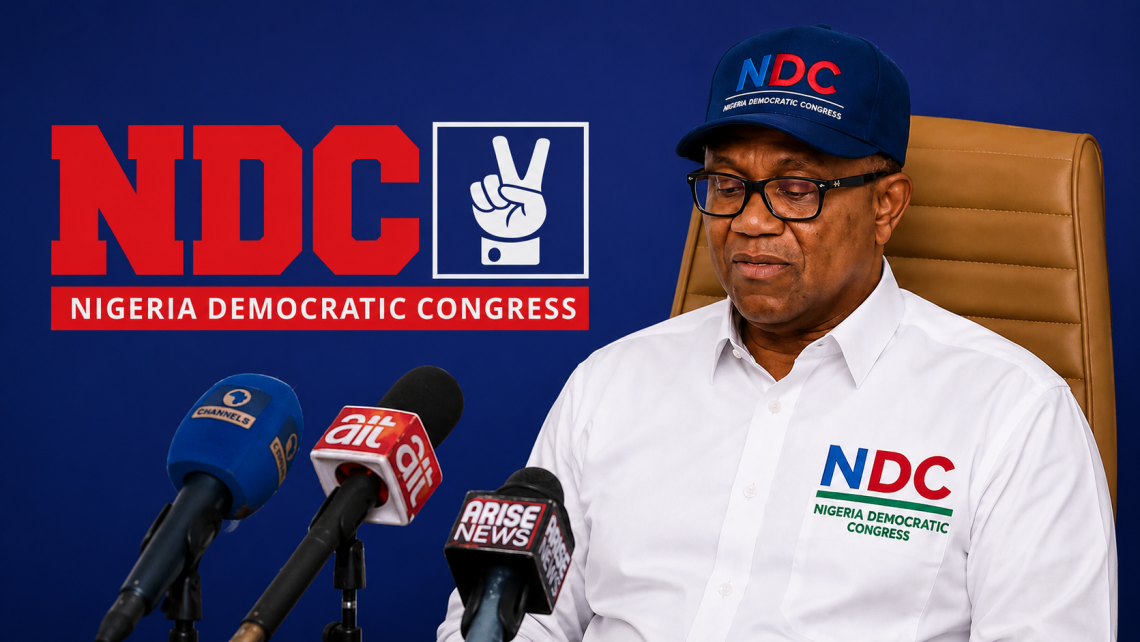
Former Anambra State Governor and 2027 presidential candidate Peter Obi has rejected claims that he left the state with unpaid financial obligations when he handed over power in 2014, challenging the Anambra State Government to identify any contractor, supplier, worker or pensioner who was owed money by his administration at the time.
Obi made the statement in response to renewed claims by the administration of Governor Chukwuma Soludo that the state is still servicing loans and other financial obligations inherited from previous administrations.
The dispute has opened a fresh political debate over Anambra’s debt profile, the financial obligations inherited by successive governments and the management of the state’s resources before and after Obi left office.
Obi, who governed Anambra between 2006 and 2013 before handing over to his successor in 2014, said he paid what was due during his tenure and left the state in a financially stable position.
He challenged the Soludo administration to provide evidence of any unpaid obligation incurred by his government that remained outstanding when he left office.
According to Obi, if the state government can identify any contractor, supplier, employee, pensioner or other beneficiary who was owed money by his administration at the time of the handover, he would be prepared to address the matter.
The former governor also said his administration left funds in government accounts, including an alleged ₦2.14 billion ecological fund balance, when he handed over power.
However, the claim regarding the ecological fund is from Obi’s camp and would require confirmation from the relevant official financial records.
READ ALSO:
- Peter Obi: Release My UNN Academic Records, I Have Nothing to Hide
- A Son Wouldn’t Have Done Better — Dangote Speaks on Daughters, Succession
- 2027: APC Governors Reject Wike’s Rainbow Coalition, Insist on Party Loyalty
The response followed comments by the Anambra Commissioner for Finance, Izuchukwu Okafor, who said the state was still repaying loans inherited from previous administrations.
Okafor said the Soludo administration had not obtained any commercial bank loan since it came into office in 2022, arguing that the government’s focus had been on reducing the state’s inherited financial obligations.
He said the state’s debt burden had been substantially reduced under Soludo and that the administration had also cleared inherited liabilities relating to contracts, gratuities and pensions.
The commissioner said some loans taken by previous administrations remain subject to repayment and deductions from the state’s federal allocations.
This distinction is at the centre of the current disagreement.
The Soludo administration is not necessarily claiming that Obi personally left unpaid bills to contractors or workers. Rather, the government is pointing to loans and other financial commitments inherited from successive administrations, some of which continue to be serviced.
Obi, on the other hand, is arguing that his administration settled the obligations that were due and payable when he left office and should not be held responsible for liabilities incurred by subsequent governments.
The issue has therefore raised questions about the difference between a state’s overall outstanding debt and debts that were specifically incurred by an individual administration.
Available public debt records have shown that Anambra had outstanding formal obligations around the period Obi left office. However, the political dispute centres on when particular obligations were incurred, which administration contracted them, when repayment became due and whether they should be described as unpaid debts inherited from Obi’s administration.
The Soludo administration has maintained that it inherited financial commitments from previous governments and has been working to reduce them.
The finance commissioner reportedly said the state’s domestic debt was now close to zero and that the government had reduced its overall debt burden significantly.
He also said the Soludo administration had not resorted to commercial bank borrowing since assuming office, presenting the reduction in liabilities as evidence of improved fiscal management.
The government has simultaneously highlighted investments in infrastructure and other projects while maintaining that debt reduction remains an important part of its financial strategy.
READ ALSO:
- Sanwo-Olu Joins Dangote as Historic N2.15tn Refinery IPO Opens on Nigerian Exchange
- Shehu Buba Submits Himself To DSS Over Banditry Allegations
- No Lives Lost as Responders Contain Dual Fire Outbreaks Across Lagos
Obi’s camp, however, has questioned the basis for attributing current financial obligations to his administration.
The former governor has repeatedly presented his tenure as one characterised by fiscal discipline, savings and investment in infrastructure, education, healthcare and other sectors.
His supporters have pointed to the savings and financial reserves accumulated during his tenure as evidence that the state was handed over in relatively strong financial condition.
Critics of the former governor, however, argue that the financial position of a state cannot be assessed solely by looking at cash balances or the absence of unpaid bills because governments can inherit long-term obligations whose repayment extends beyond the tenure of the administration that contracted them.
That distinction is particularly relevant in Anambra, where governments have succeeded one another while continuing to service financial commitments made over several administrations.
The latest exchange has consequently shifted the political conversation from whether Anambra has debt to the more specific question of which administration incurred particular liabilities and whether those obligations were outstanding at the time of each handover.
The dispute also comes at a politically sensitive period, with Obi preparing for the 2027 presidential election under the Nigerian Democratic Congress (NDC).
Questions about his record as Anambra governor are likely to remain part of the political debate as the election approaches, particularly because his administration’s economic management has been a central part of his political narrative.
For Soludo, who is serving as Anambra governor, the emphasis has been on the state’s current fiscal position and the steps his administration says it has taken to reduce inherited liabilities while funding development projects.
For Obi, the priority is to establish that he did not leave unpaid obligations to contractors, workers, pensioners or other beneficiaries when he left office.
The former governor has therefore challenged the state government to publish specific records showing any outstanding obligation attributable to his administration at the point of handover.
The competing claims have yet to be resolved by an independent audit or judicial determination.
What remains clear is that Anambra’s debt debate involves more than a simple disagreement over whether the state owes money. It encompasses loans contracted by successive administrations, repayment schedules, inherited liabilities, outstanding contracts and the question of how political leaders should be held accountable for financial commitments made during their tenure.
As the exchange continues, official debt records, audited financial statements and handover documents could provide the clearest basis for determining the extent of liabilities inherited by each administration.
Until such records are independently reviewed, claims that Obi either left the state completely debt-free or was solely responsible for all of its inherited obligations should be treated with caution.
The latest dispute therefore leaves two competing narratives: Obi’s insistence that he paid what was due before leaving office, and the Soludo administration’s position that Anambra continues to service financial obligations inherited from previous governments, including loans dating back to earlier administrations.
With the 2027 election approaching, the controversy is likely to remain part of the wider political contest over Obi’s record in Anambra and his claims of fiscal discipline in government.
Peter Obi Rejects Anambra Debt Claims, Challenges Soludo Government to Produce Evidence
News
We Must Build Beyond the Next Elections’ — Shettima

We Must Build Beyond the Next Elections’ — Shettima
Vice-President Kashim Shettima has called on political leaders to look beyond election cycles and leave behind institutions that can continue to benefit Nigerians.
His remarks came at the Abuja presentation of Brigadier Musa Usman (1940–1991): Service and Impact, a book documenting the life and public service of the late military governor of the former North-Eastern State.
Represented by Aliyu Modibbo Umar, Shettima said leadership should be measured by the value that remains after an administration has left office.
“We must recover the spirit of selflessness in public service,” he said, urging leaders to “build beyond the next elections and think beyond political boundaries.”
He listed reconstruction, agriculture, education, transport, energy, industrialisation, jobs, environmental restoration, peace and security among areas where leaders must take a long-term approach.
The Vice-President pointed to Musa Usman’s administration as an example of how development can outlive a political tenure. Usman governed the former North-Eastern State from 1967 to 1975, and the region he once administered now covers six states in the North-East.
Shettima said Usman played a major role in developing Maiduguri and establishing infrastructure and institutions that later administrations were able to build upon.
Governor Babagana Zulum, who spoke at the event, described Usman as a leader who combined effective governance with integrity, discipline and humility.
Zulum said the late governor’s contributions included investments in education, healthcare and infrastructure, as well as efforts to strengthen the region’s economy.
The book, written by journalists Mahmud Jega and Theophilus Abbah, also traces Usman’s military career and his rise to leadership at a young age. It was published to preserve his record and the history of the former North-Eastern State.
Shettima said preserving such history could help younger Nigerians understand that lasting public service is about strengthening institutions and improving lives, rather than simply holding office.
News
I Wanted to Disgrace Tinubu — Omokri Reveals What He Discovered at Chicago Varsity
I Wanted to Disgrace Tinubu — Omokri Reveals What He Discovered at Chicago Varsity
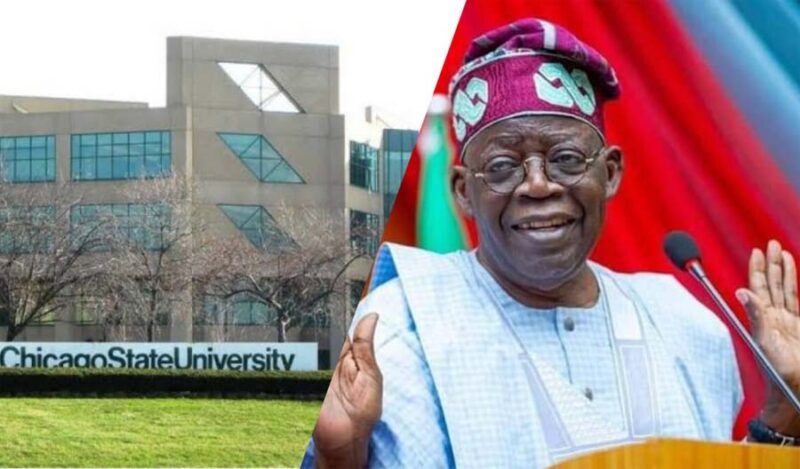
Nigeria’s ambassador-designate to Mexico, Reno Omokri, has recounted what he described as an unexpected twist during his visit to Chicago State University (CSU) in the United States, saying he initially travelled there with the intention of scrutinising President Bola Ahmed Tinubu’s academic history.
Omokri, a former aide to ex-President Goodluck Jonathan and now a diplomatic appointee of the Tinubu administration, reportedly made the disclosure while recounting his earlier position on the controversy surrounding the President’s academic credentials.
According to the account circulating online, Omokri said his original objective was to find information that could be used to discredit Tinubu, particularly amid years of controversy over the President’s educational background.
However, he said what he encountered at the university changed his understanding of the matter.
Omokri was quoted as saying that he went to Chicago State University with a predetermined objective—to investigate Tinubu and, if possible, expose inconsistencies that could damage the President politically.
But, according to his account, the findings did not produce the outcome he expected.
Instead, he said he became convinced that Tinubu had genuinely been admitted to and attended Chicago State University.
The development is significant because Tinubu’s educational history has remained one of the most contentious issues surrounding his political career, particularly since the 2023 presidential election.
READ ALSO:
- ‘I Was Never the Chosen One’ — Dembele Responds to Mbappe
- Plateau Attacks: Gunmen Kill Passengers, 13 Dead Across Three LGAs
- 2027: Northern Lecturers Back Tinubu, ASUU Disowns Endorsement
The controversy intensified in 2023 when former Vice-President Atiku Abubakar obtained a United States court order compelling Chicago State University to release documents relating to Tinubu’s academic records.
The records were subsequently released following the order of a US federal judge. Reports at the time said the university’s records confirmed that Tinubu attended the institution and graduated in 1979.
CSU Registrar Caleb Westberg also testified under oath that Tinubu had attended and graduated from the university.
However, the controversy did not completely disappear because questions were raised about the specific diploma submitted by Tinubu to Nigeria’s electoral authorities.
Reports of the US proceedings indicated that the university had Tinubu’s academic record but could not authenticate a particular diploma presented to Nigerian authorities because that exact document was not in the university’s possession.
Against that background, Omokri’s reported admission represents a striking change in tone, considering his earlier opposition to Tinubu.
His account suggests that his visit to Chicago State University was initially motivated by political scepticism but ultimately left him convinced that there was indeed a genuine academic connection between Tinubu and the institution.
The development has generated reactions on social media, with supporters of the President viewing Omokri’s account as further vindication of Tinubu’s claim that he attended the Chicago university.
Critics, however, are likely to maintain that the issue was never simply whether Tinubu attended Chicago State University, but also concerned questions surrounding documents, identity details and the certificate submitted to the Independent National Electoral Commission (INEC).
The available reporting from the 2023 legal proceedings provides an important distinction. There is substantial documentary evidence that Tinubu attended Chicago State University and graduated in 1979. CSU’s registrar testified to his attendance and graduation, while the university released academic records pursuant to a US court order.
At the same time, the controversy over the particular diploma submitted to INEC was not identical to the question of whether Tinubu attended the university.
That distinction has continued to fuel political arguments between supporters and opponents of the President.
Tinubu’s education has remained a recurring political issue since the 2023 election, with opponents repeatedly questioning aspects of his academic credentials, while his supporters argue that the available university records establish his attendance and graduation.
The latest account attributed to Omokri therefore adds another dramatic chapter to a controversy that has survived the election, court battles and the release of university records.
For Omokri, the story appears to have taken an unexpected turn: he said he went looking for ammunition against Tinubu but returned convinced that the President was, in fact, admitted to Chicago State University.
I Wanted to Disgrace Tinubu — Omokri Reveals What He Discovered at Chicago Varsity
-
 News2 days ago
SERAP Threatens Legal Action Over ₦126bn INEC Electoral Funds
-
 Politics2 days ago
Five Islamic Clerics Abducted After Tinubu Re-Election Prayer At Yari’s Zamfara Residence
-
 Opinion2 days ago
‘Tinubu Will Win Again in 2027’ — Charismatic Bishops’ Secretary
-

 Politics22 hours ago
2027: Northern Lecturers Back Tinubu, ASUU Disowns Endorsement
-

 metro2 days ago
Mother ‘sold daughter’s abuse videos for $300’: Nigeria child pornography case shocks nation
-

 Sports2 days ago
‘Unacceptable’ — Arteta Furious Over Sunderland Penalty in Arsenal Win
-
 News1 day ago
Nwifuru Dismisses Cubana Chief Priest as ‘Attention-Seeker’
-

 News2 days ago
Petrol Subsidy: Presidency Rejects Atiku’s Plan, Says No Going Back