
Opinion
Do Palestinian lives matter? – Femi Fani-Kayode
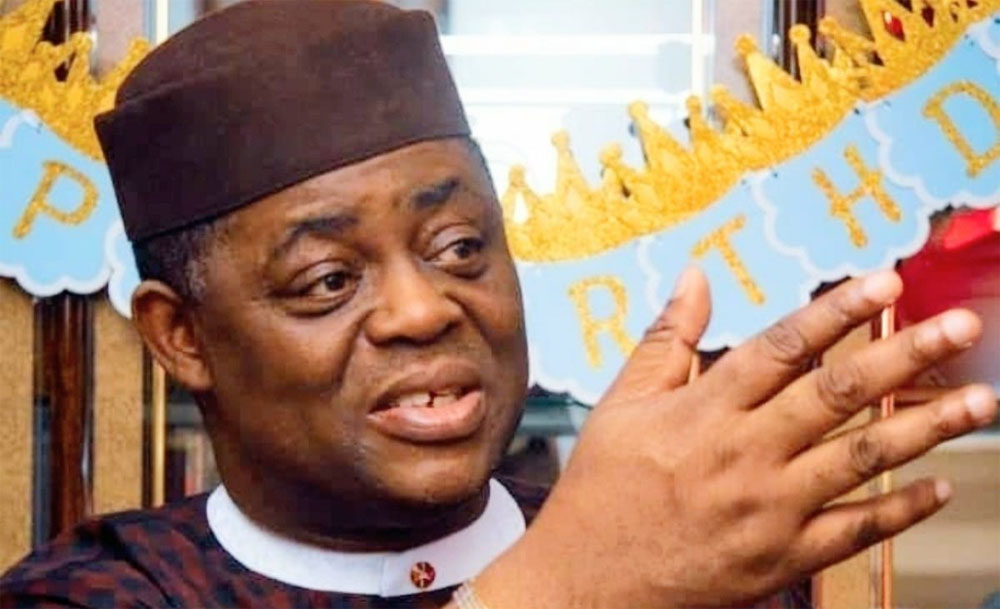
Do Palestinian lives matter? – Femi Fani-Kayode
35,000 innocent & defenceless Palestinians, including 15000 children, have been targetted & killed in #Gaza by Israel over the last 6 months yet it was only after 7 western aid workers of the #WorldCentralKitchen were tragically & callously targetted & murdered in cold blood by the @IDF last week that western Governments & the Western media are beginning to recognise the fact that the Jewish state has turned into a monstrous & uncontrollable beast.
This begs the following questions.
Does blood not flow through the veins of Arabs & Muslims in the same way that it flows through the veins of westerners & Christians?
Is the blood of westerners redder than the blood of #Arabs?
Do Palestinian lives not matter?
Are American, British, Australian & French lives more precious than the lives of Palestinian men, women & children?
How can one explain or wish away this glaring display of emotional selectivity, hypocrisy & double standards?
Is it not racism in its most glaring & ugly form?
Is this not a case of psychological apartheid in motion & have the leaders of the West not developed a classic sociopathic & psychopathic disposition when it comes to the suffering of the Palestinians.
Even after 75 years of barbarous servitude & occupation followed by the mass murder & genocide that we are witnessing in Gaza today few notable western leaders give a damn & most of them have not only turned a blind eye to it but are also willing partners & complicit in the most graphic & barbaric expression of man’s inhumanity to man & sheer wickedness since the Nazi holocaust of World War 11.
READ ALSO:
- Why Nigerians must stop paying tithes – Reno Omokri
- Fuel Scarcity: Marketers blame supply hitch as queues resurface in Lagos, Ogun
- Over 50,000 Nigerian pilgrims to perform 2024 Hajj – NAHCON
Given this all-embracing endorsement & unconditional support that they enjoy is it any wonder that the #Zionists believe that they have the divine right to give life & take it at will & at their pleasure?
Is it any wonder that the Jewish state believes that it can get away with mass murder & ethnic cleansing?
Is it any wonder that the Zionists believe that they are divine beings with a divine purpose, the master race, God’s chosen people?
Is it any wonder that they believe that they are totally & completely above the law & untouchable given the unconditional support & tacit approval that they enjoy from #NATO & the powers that be in the west?
Over the last six months western leaders have applauded Israel for slaughtering the Palestinians & destroying all their infrastructures yet they only started questioning their devilish collusion with what can only be decribed as unadulterated evil when seven of their own citizens who were doing charity work & helping to feed the starved & beleaguered children of Gaza were also butchered in a hail of precision rockets that brutally cut them down one after the other.
These same people did not shed a tear or say a word when Israeli jets mowed down hundreds of Palestinian civilians as they tried to grab food from aid trucks that came in from Egypt.
To them that did not matter & neither did they view it as an atrocity or describe it as a war crime or a crime against humanity because those that were murdered were “mainly Muslims & only Arabs”.
Is this fair? Can it be justified or defended?
Is it not a perfidious display of double speak, double standards & devilry?
Is it not a gratuitous insult to our collective humanity & a monumental shame?
Are Arabs, Africans, Asians & the people of the “global South” not human beings too?
Again for the last few months western leaders stuck to their oars & stubbornly refused to acknowledge the fact that Israeli Prime Minister @netanyahu is a wild & rabid dog that cannot be controlled & that no longer listens to its master.
They refused to accept the fact that he had become the proverbial falcon that was no longer prepared to listen to the falconer.
They refused to recognise the fact that the genocide in Gaza was not about religion but rather about the implementation of an insidious, sinister, religious & racist agenda & an unconciable attempt by a horrendous & deluded horde of callous, bitter & vengeful Zionist barbarians to decimate, displace & exterminate the #Palestinian people & steal their land.
So drunk are @netanyahu & those around him on the blood of Palestinian children that not even American President @JoeBiden, their biggest & greatest friend & ally, can control them.
Will the Zionists ever accept the fact that killing women, children, refugees, journalists, clerics, doctors, nurses, hospital workers, United Nations staff, the elderly, the disabled, the mentally challenged, the weak & other innocent & defenceless civilians in the name of world Jewry & the Israeli state is not only unacceptable but also an abomination & an affront to our collective humanity.
They say when a dog loses its mind & not only refuses to listen to its master but also turns on him & attempts to bite him one is constrained to put a bullet in its head & put it out of its misery.
READ ALSO:
- New electricity tariff: DisCos get April 11 deadline to refund wrongly billed customers
- Stay well-hydrated, wear sunshades, hats while going out, NiMet warns Nigerians over heat waves
- Ilorin General Overseer (GO) arrested over N3.9m fraud
Perhaps the same solution should be applied to the Zionist state.
And if calling out Israel for the atrocities they are committing in Gaza & insisting on an immediate & unconditional ceasefire makes me anti-semitic then so be it.
As a matter of fact it is a badge & label that I would wear proudly.
I do not believe that it is acceptable for the Jewish state to consistently break international humanitarian law & commit war crimes. If that makes me anti semitic then so be it.
I do not believe that aid workers & journalists should be targetted & killed. If that makes me anti-Semitic then so be it.
I do not believe that it is right for Bibi Netanyahu to smirk & grin on national television as he tells the world how the 7 western aid workers were targetted & murdered in Gaza by his army. If that makes me anti semitic then so be it.
I do not believe that it is right & proper for the #Iranian Embassy in #Damascus should be targetted & bombed by the Israeli Defence Force or that senior Iranian military commanders that were staying there should be murdered in cold blood. If that makes me anti-Semitic then so be it.
I do not think it is acceptable for Israel to bomb the city of #Allepo in Syria & kill 42 people including defenceless civilians. If that makes me anti semitic then so be it.
I do not believe that the Jews have a licence from God to kill innocent & defenceless civilians. If that makes me anti-semitic then so be it.
I do not believe that it is right for the western nations to continue to supply arms to #Israel & to be complicit in & enabler of genocide. If that makes me anti semitic then so be it.
I do not believe that the Jews are the master race that have been specially chosen above others by God. If that makes me anti-semitic then so be it.
I do not believe that Christians & Muslims will burn in hell or that the Prophet of Islam & our Lord & Saviour Jesus Christ were fake. If that makes me anti-semitic then so be it.
I do not believe that saying “Christ is King” is a crime. If that makes me anti semitic then so be it.
I do not believe that our Lord & Saviour #Jesus Christ was a liar & charlatan who is now boiling in human excrement in hell. If that makes me anti semitic then so be it.
I do not believe that demolishing the #AlAqsaMosque, sacrificing three red heifers where it presently stands & building the third Jewish Temple on exactly the same spot is just, right & proper. If that makes me anti-semitic then so be it.
I do not believe that Israel should exert so much influence over the affairs of America, the western democracies, International politics, world banking & finance & the Western media. If that makes me anti-semitic then so be it.
I do not believe that an attack on Israel, no matter how horrific, gives the Jewish state the right to wipe out, exterminate or drive into the desert or the sea the entire Palestinian race or kill every man, woman & child in Gaza. If that makes me anti semitic then so be it.
READ ALSO:
- Bribery allegation: Stop diverting attention from your failure, Ganduje tells Kano gov, Yusuf
- 14-year-old girl dies while in hotel room with lover
- Abuja metro rail 97% ready, says Wike after 30-minute ride
I do not believe that Zionism is of God & I consider the Zionists to be far worse & more insidious, cruel & unrelenting than Hitler’s Nazis. If that makes me anti-semitic then so be it.
I do not believe that @RealCandaceO should have been fired from the @realDailyWire for criticising Israel & I do not believe that @benshapiro Shapiro & @RabbiShmuley are human beings. If that makes me anti semitic then so be it.
I do not believe that Netanyahu is sane & I do not believe that he is acting in the best interest of the Jews or Israel. If that makes me anti semitic then so be it.
I do not believe that South Africa & Ireland have done anything wrong by taking Israel to the Intermational Court of Justice for crimes against humanity, war crimes, ethnic cleansing & genocide. If that makes me anti semitic then so be it.
I do not believe that it is right for Israel to prevent food supplies from going into Gaza & for starving the people to death. If that makes me anti semitic then so be it.
I do not believe that ALL MUSLIM countries should unite against Israel but rather I believe that ALL countries, whether Muslim, Christian, Hindu or anything else should unite against Israel. If that makes me anti semitic then so be it.
I do not believe in ethnic cleansing & the elimination & extermination of an entire race of people as a formula for the resolution of international disputes & I wholeheartedly condemn the holocaust that is being inflicted on the people of Gaza. If that makes me anti semitic so be it.
75 years ago God in His infinite mercy & wisdom gave the Jews a new beginning, a new country & restored them to their former glory.
This was a blessing but they squandered it by orchestrating the #Nakba, by refusing to share the land & live in peace with the Palestinians that they met there & by refusing to desist from treating them like animals, occupying their land & slaughtering them with impunity.
Sadly with their own hands they destroyed the great opportunity that God gave them & instead chose to visit the same unadulterated evil that the German #Nazis once visited on them on the Palestinians.
If the truth be told, contrary to popular opinion, Israel is not a democracy but rather a vicious, heartless, bloodthirsty, parasitic, vampiric & blood-lusting apartheid state that applies one set of laws to the European Jewish colonial settlers that own & run it & another to everyone else.
To be an Arab, a Muslim or a Christian in Israel is hell & to be any of the above living in either Gaza, the West Bank, Lebanon, Syria, Iraq or anywhere else in the Middle East means that you could well be subjected to genocide, ethnic cleansing or mass murder by the Jewish state whenever they deem it fit.
It is for this reason that the entire civilised world is enraged with Israel & that every right-thinking person expresses the following words from the inner recesses of their souls & with every fiber of their being.
They proudly proclaim, “FROM THE RIVER TO THE SEA, PALESTINE WILL BE FREE!”
And despite the double standards of the leaders of the western democracies, so it shall be to the glory of the Living God!
(FFK)
Do Palestinian lives matter? – Femi Fani-Kayode
Femi Fani-Kayode is a public affairs commentator and Nigeria’s former Minister of Aviation.









Opinion
How opposition Tinubu would treat President Tinubu, By Farooq Kperogi

How opposition Tinubu would treat President Tinubu, By Farooq Kperogi
How opposition Tinubu would treat President Tinubu, By Farooq Kperogi
Opinion
Adelabu’s Power Lines as Laundry Lines
Adelabu’s Power Lines as Laundry Lines
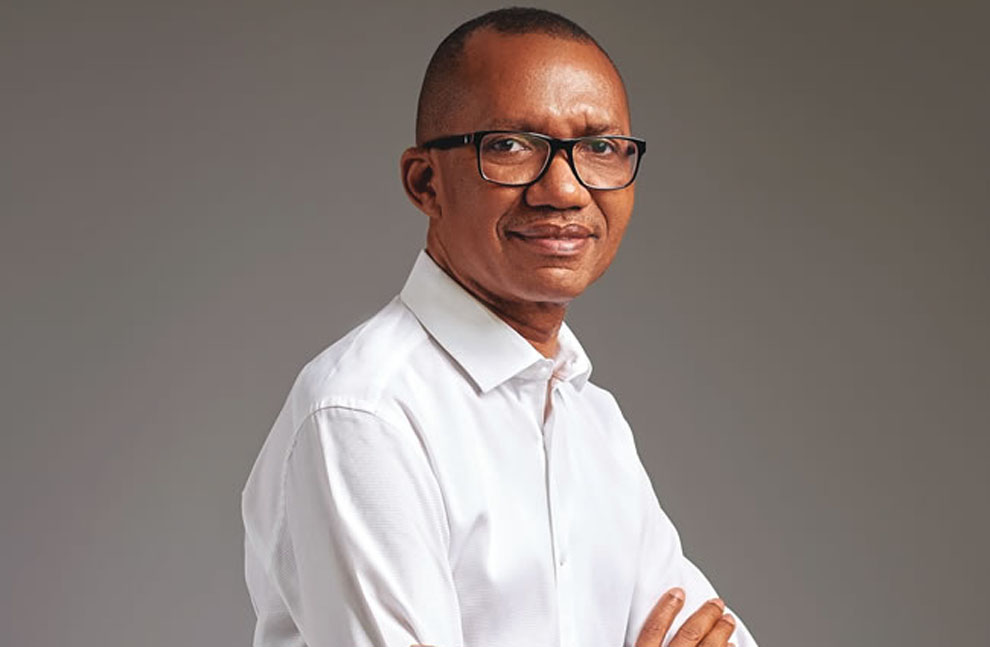
Azu Ishiekwene
In many parts of the country, the rains poured down earlier in the week, bringing much physical and psychological relief from the searing heat.
The absence of electricity from public supply channels made it worse. Average daytime temperatures throughout March ranged from 33 degrees to 38 degrees centigrade in Lagos and Abuja, respectively.
Nigeria’s public electricity grid must rank among the most intractable problems any developing country could face. There is hardly anything more constant than the announcement of grid collapse, which leaves businesses and homes seeking alternatives and incurring unplanned expenses while paying for electricity not supplied.
What Candidate Tinubu promised
During his 2023 campaign, President Bola Ahmed Tinubu said that if he didn’t fix the problem, he shouldn’t be voted in for a second term. He must be regretting that statement now. Since the beginning of his administration in May 2023, there have been multiple grid collapses, with the highest number recorded in 2024 at 12. Even when incidents were fewer, sporadic outages have continued. The failure, on face value, is attributed to a mix of technical, structural and administrative weaknesses in the system. But there is more to it in the sense in which it is said: “The more you see, the less you understand.”
So unreliable is the public electricity supply that the Presidential villa appropriated N10 billion in 2025, and an additional N7 billion in 2026 for the installation of a solar mini grid that will effectively disconnect Nigeria’s seat of power from the national grid, bedevilled by ageing transmission lines which collapse repeatedly from sabotage, poor maintenance, and frequency imbalances.
The joke is on us
Nigerians, ever ready to make a jest of their tragic maladies and long suffering, are beaten when it comes to power outages. They are shocked beyond humour. If the high-tension cables were not too high overhead, people in communities through which they run would not hesitate to hang their laundry on them – knowing from experience that the lines are just part of the landscape and are very likely to be without electricity.
READ ALSO:
- Ondo PDP Rejects Wike Faction, Affirms Loyalty to Turaki‑Led NWC
- Bandits Abduct Seven Family Members, Three Neighbors in Kaduna
- Festus Keyamo Urges ADC to Thank INEC Over Derecognition of Rival Factions
I have seen a video of a masquerade performing on a streetlight pole. Of course, the crowd applauded its invincibility; yet, both the crowd and the masquerade knew better. The lines had not been electrified for months and were unlikely to be for the spell of the circus.
Hope was rekindled at the beginning of the Tinubu administration when news filtered through that the currently embattled former governor of Kaduna State, Nasir El-Rufai, had not only produced a blueprint, but was going to be given the assignment of sorting out Nigeria’s notorious electricity sector. I learnt reliably that, as part of his plan, El-Rufai was discussing a $10 billion investment agreement with the Saudis before he ran into rough weather.
The coming of Adebayo
That was how Adebayo Adelabu took the job – a job at which he has performed so disastrously, saying he failed would be an honour. But it’s not his fault – it’s the fault of the President who appointed him and the Senate that cleared him for a job that he was clearly incompetent to perform, either based on his record or based on any hope of redemption. He is brilliant, but the power sector is littered with the remains of brilliant people, among whom he is now a fossil.
His better years were when he worked as an auditor at PWC. He was also the Executive Director/CFO at First Bank, and later a deputy governor at the Central Bank. He may not have been directly responsible for the misfortunes of these institutions at the time, but he doesn’t exactly smell of roses.
In the normal course of things, his banking career should have been a yellow flag. Still, Nigeria being Nigeria, the quota system and political connections ensured that he defied gravity.
Then, in 2023, Tinubu offered him the position of Minister of Power, after his failed attempt to become governor of Oyo State on the platform of the Accord Party. That only worsened our misery. Adelabu will be best remembered for splitting electricity consumers into parallel payment bands that do not necessarily reflect improved services.
The thing is not that Adelabu failed at his job. It’s the lack of evidence that he tried. Mr Dan Kunle, an energy expert familiar with the history of that sector, told me that, “No one is saying a power minister should provide the resources to fix the sector from thin air. It’s for him to provide a solid framework that would create the right environment and attract sovereign intervention.”
Adelabu, like many of his predecessors, is running the power ministry in 2026 with the 1950 operational manual of the Electricity Corporation of Nigeria (ECN). Yet, even then, when the country had a population of about 50 million, the British knew that electricity was an economic good. To provide meaningful and sustainable service, they had to prioritise not just the key administrative centres but also areas that could pay. That was why, for example, coal was shipped from Enugu to the Ijora Power Station in Lagos.
No roadmap
Adelabu has no roadmap, or if he has one for a population four times what it was under ECN, it’s a roadmap to nowhere. The same old problems persist: gas shortages, moribund plants, infrastructure deficits, massive debts, and frequent grid collapses, limiting supply to about 4,000 MW despite a capacity of 13,000 MW.
READ ALSO:
- INEC Warns ADC Against Holding Convention Without Supervision
- APC Rejects ADC Claims, Says Tinubu Not Responsible for Party’s Legal Troubles
- Fani‑Kayode Fires Back at Peter Obi, Defends NADECO’s Legacy
While Adelabu may wring his hands alongside Nigerians when the lights trip off, the sector has been drowning under the yoke of N6 trillion in debt as of late 2025, fuelled by non-cost-reflective tariffs and unpaid bills to both generating and distribution companies. Some of the problems predate Adelabu, but his incompetence has worsened them.
Yet, he still has ambition. Not to redeem himself after his disastrous three years as minister, but to become the governor of Oyo State. Obviously, he believes the reward for poor performance is a higher office. He is so shameless, it means nothing to him that he holds the Olympic record for national grid collapse. It means nothing to him that Nigerian businesses are powered by Indian generators and their homes by Chinese solar panels.
Examples from Africa
Egypt, with a population of 110 million, has 100 percent universal electricity access, supported by a heavy reliance on gas (81 percent) and growing low-carbon sources like hydropower. This ensures a stable supply amid population pressures.
South Africa serves 85-90 percent of its 62 million residents but faces severe shortages. Frequent load shedding persists due to Eskom’s debt, ageing infrastructure, and maintenance issues, despite high per-capita generation.
Ghana reaches 88-89 percent coverage for 34 million people, with hydro and thermal power dominating. Urban areas enjoy near-99 percent access, while rural areas still have gaps and occasional outages.
Kenya hits 76 percent for 56 million, excelling in urban (97 percent) and geothermal power. Rural expansion lags, though targets aim for full access by 2030.
Compared to the countries above, only 57 percent of Nigerians are grid-connected, with outages occurring 85 percent of the time, and poor metering and corruption that sustain estimated billing and inefficiencies.
After watching Adelabu perform so poorly over the last two years on the national stage, I was hoping he would go away quietly, under the shadow of the darkness he has fostered. But since he insists that he won’t leave quietly – or appears determined to stay on – I’m considering a self-appointed mission to drag him to Oyo State to see how he will turn their night into day.
Adelabu’s Power Lines as Laundry Lines
Ishiekwene is the Editor-In-Chief of LEADERSHIP and author of the book, Writing for Media and Monetising It.
Opinion
Super Bowl: Can Africa Spring Up anew?
Super Bowl: Can Africa Spring Up anew?
With a landmass of approximately 9.83 million km² and a population of 334–336 million as of 2025—making it the third-largest country in the world—the United States is massive. It is four times the size of Algeria, Africa’s largest country, and dwarfs Nigeria, the continent’s most populous nation.
The United States is a titan among nations. Who knows—perhaps neologists will coin a new term if the U.S. eventually purchases or forcefully takes Greenland from Denmark, further surging its landmass and population. When this massive scale fuses with unparalleled infrastructure, world-class venues, and a vast market, the USA becomes an ideal host for international sporting events with strong returns on investment.
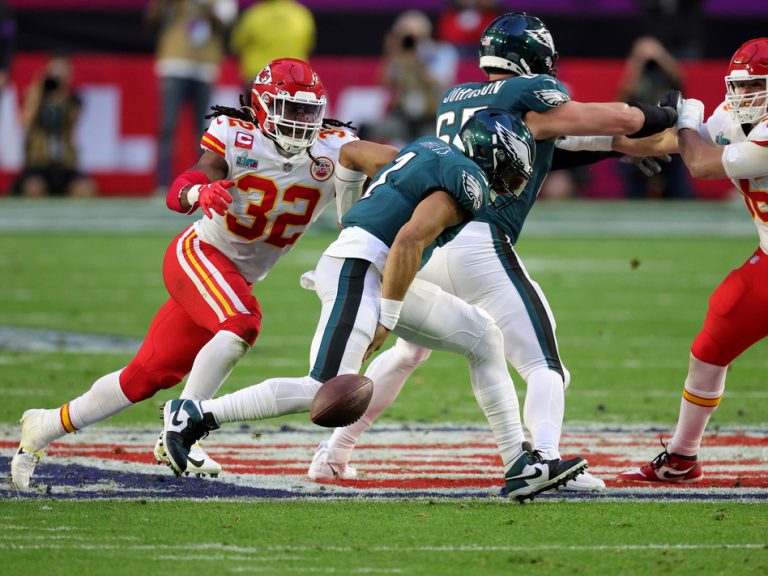
Between 1904 and 2025, the USA hosted one FIFA World Cup (with another to be co-hosted in 2026 with Mexico and Canada), four Summer Olympics, four Winter Olympics, and one FIBA Basketball World Cup. Unlike soccer, which is still finding its footing in the United States—even with Major League Soccer (MLS) having existed for 30 years—American football is the undisputed number-one sport. The Super Bowl—born from Lamar Hunt’s “light-bulb moment”—is the crown jewel. The Super Bowl has become what sociologists call a secular ritual, binding the social fabric of Americans together.
Beyond the Vince Lombardi Trophy, the Super Bowl has evolved into a global marketing masterpiece. From the famous 1984 Apple commercial introducing the Macintosh, which is studied in MBA classes worldwide, to the 1979 Mean Joe Greene Coca-Cola commercial that showed genteel human warmth winning over fearsomeness, the intentionality of brands going head-to-head with rivals has been a recurring feature of every Super Bowl.
While the USA is always attractive for hosting events, the Super Bowl’s success pivots on intellection that results in ingenious marketing. For the recent Super Bowl LX on February 8, 2026, two brands mirrored David Ben-Gurion’s principle of “taking the fight to the enemy.” Pepsi and Anthropic’s Claude entered with an offensive strategy: Claude’s AI ad—“Ads are coming to AI. But not to Claude.”—was a calculated strike in the competitive AI market, while Pepsi’s polar bear blind test revived the sulphurous rivalry with Coca-Cola. Many companies use their ad slots to build brand identity and equity or announce arrival in the business world.
Where does Africa stand in this Super Bowl business and sports calculus? While developed nations are making groundbreaking launches with chutzpah and creativity from creative shops—all resulting in a participatory economy—Africa’s involvement is largely an on-the-field display of Négritude spirit and ravenous passion.
For Africa, the Super Bowl has become a “badge of honor” through representation. Mohammed Elewonibi, a Nigerian raised in Canada, was the first player of African origin to win a Super Bowl (XXVI, 1992, with the Washington Redskins). Since then, nearly 41 players of Nigerian origin or heritage have won—the most of any African country—including six who tasted victory with the recent Seattle Seahawks: Uchenna Nwosu, Nick Emmanwori, Boye Mafe, Jaxon Smith-Njigba (of Nigerian and Sierra Leonean roots), Jalen Milroe, and Olu Oluwatimi.
Yet, as impressive as African athletes are in making the continent proud, we have blatantly failed to translate that audience engagement into commercial windfalls like the Super Bowl on home soil. It is appalling that most of Africa’s sporting events—the Durban July Handicap, Senegalese wrestling (Laamb), or the Safari Rally—have not fully harnessed the intersection of sports and marketing. Even the Africa Cup of Nations (AFCON), despite its 3.45 billion cumulative viewers (far surpassing the Super Bowl’s ~125–127 million), lacks comparable marketing prestige. Why are there no global product launches during our matches? Why aren’t AI giants capitalizing on Africa’s tech startup boom?
Africa is being fed celery when it deserves the whole salad. This asymmetry stems from structural economic factors, but the genie is out of the bottle—we must be forward-looking. To turn African sporting events into “goldmines,” we must reinvent the industry, much as Cirque du Soleil did for the circus. Facing declining audiences, rising costs, and fierce competition, it lost its grip on the circus business. Cirque, however, escaped the dying circus business by reinventing it.
By viewing competition through a new lens, Africa can transform massive viewership into unparalleled economic advantage and value. Just as Cirque du Soleil created uncontested market space, African sports must adopt what W. Chan Kim and Renée Mauborgne called a “Blue Ocean Strategy”—creating uncontested market space and making competition irrelevant. Much as we can not compete toe to toe with advanced economies , we should not follow them like zombies.
In their book Blue Ocean Strategy: How to Create Uncontested Market Space and Make the Competition Irrelevant, the authors highlight how companies in “red oceans” fight for shrinking profits in crowded, defined markets. African sports events currently sit in those crowded red oceans. To elevate them, we need disruptive leaders willing to venture into untapped markets, create new demand, and unlock unlimited growth opportunities.
Joseph Pine and James Gilmore, in their book The Experience Economy, wrote about the need to transform commodities into experiences. As Africans, we have been able to move our sporting events from the commodity stage to the third stage—service delivery—but the experience stage is the North Star we should aspire to reach.
Our cultures, as varied as they are, define us. Despite dilution by Western civilization, our culture stands uneroded, like the mountains that litter our landscape and serve as a canopy to preserve our common heritage. This means our forefathers took culture into the realm of experience—something we are still grappling with in our sporting spectacles today. For us to make headway, our cultures—already bubbling with experience—must mix seamlessly with our sporting spectacles.
Now is the time to merge cultural events like the Eyo Festival, Argungu Festival, Gnaoua World Music Festival, Osun Osogbo Festival, Meskel Festival, and others with our sporting spectacles—that is the Blue Ocean Strategy. This can only be achieved through close collaboration between leaders in sports administration and marketing professionals selling experiences, and the time is now. As this is done, a line from David Diop’s poem Africa—“That is your Africa springing up anew”—would fill our lips.
The experience stage is the nirvana!
Toluwalope Shodunke
Can be reached via tolushodunke@yahoo.com
Super Bowl: Can Africa Spring Up anew?

-
 metro2 days ago
Pastor Found Dead in Guest House After Night Out With Married Female Church Member
-
 metro3 days ago
Tinubu Approves 1,000 Forest Guards, Orders 5,000 CCTV Cameras to Boost Security in Plateau
-

 Health2 days ago
Men Encouraged to Ejaculate More to Reduce Prostate Cancer Risk
-
 International3 days ago
Iran Announces ‘Bounty’ on US Pilots After Claiming Downing of Fighter Jet
-
 Politics1 day ago
Adeleke’s Aide Anisu Resigns, Defects to APC
-

 Politics2 days ago
Wike: PDP Not Financially Ready for 2027 Presidential Election
-
 Sports3 days ago
UEFA Threatens to Strip Italy of Euro 2032 Hosting Rights
-

 International16 hours ago
Netanyahu Condemns ‘Christian Persecution’ in Nigeria in Easter Message