
News
DPR shuts nine LPG plants over ‘illegal’ operations
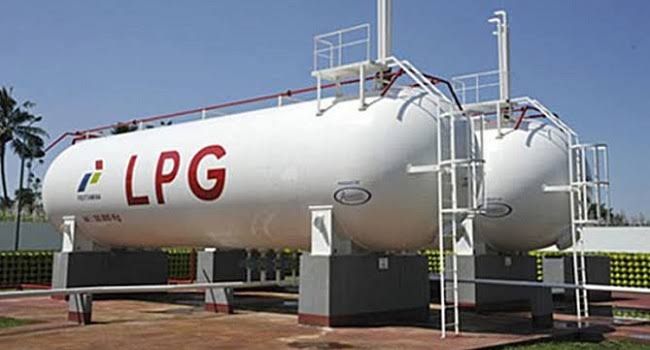
The Department of Petroleum Resources (DPR) says it has shut nine Liquefied Petroleum Gas (LPG) plants in Lagos state over illegal operations.
Olubunmi Ogundare, DPR’s assistant director of operations, Lagos zonal office, on Friday, said the move is part of the agency’s oversight duty of monitoring activities of companies operating within the industry across the value chain.
The agency said the affected cooking gas plants did not comply with the prerequisite safety standards.
Ogundare said the sealed gas plants are located at Idimu, Ikotun Egbe, Ipaja and Igando axis in Alimosho LGA of the state.
The DPR official said the LPG plants were shut for various reasons, including operating within densely populated areas and other unapproved locations for gas business.
She said three persons were arrested by officers of the Nigerian Security and Civil Defence Corps (NSCDC) which collaborated with the DPR in the exercise.
“Those identified illegal LPG facilities contravened the DPR guidelines for the establishment of LPG refilling plants and retailers outlets in Nigeria,” she said.
“You cannot operate LPG plant without applying for pertinent approval from DPR.
“For you to get this approval, you must go through three phases which take place in stages from setting up the LPG facility, construction and commencement of operations.
“The three approvals are site suitability, approval to construct and licence to operate. If you don’t have these pertinent approvals, you are not supposed to operate an LPG facility in Nigeria.”
Ogundare disclosed that a total of 59 illegal gas plants had been sealed by the DPR from January to June.


News
Korope Drivers Shut Down Lekki–Epe Expressway Over Lagos Ban (Video)

Korope Drivers Shut Down Lekki–Epe Expressway Over Lagos Ban (Video)
LAGOS, Nigeria — Tension erupted on Tuesday along the Lekki–Epe Expressway as commercial mini-bus operators, popularly called korope drivers, staged a protest against a state-imposed ban on their operations along the corridor. The demonstration, which occurred during peak hours around the Ajah axis, caused vehicular movement to nearly grind to a halt, leaving hundreds of commuters stranded and triggering heavy traffic gridlock across adjoining routes. Eyewitnesses reported that drivers parked their buses across the carriageway, chanting and demanding the immediate reversal of the restriction.
Security operatives were deployed to restore order, and traffic flow gradually resumed after several hours of disruption.
Some of the protesting drivers said the ban threatens their primary source of income, as the Lekki–Epe corridor has historically been one of the most profitable routes for informal transport operators. “We have families to feed. You cannot just wake up and push us off the road without providing an alternative,” one driver told reporters. The operators called on the government to reconsider the policy or integrate them into the new transport structure rather than exclude them entirely.
READ ALSO:
- Kano Closes Entertainment Centres Ahead of Ramadan
- Asari Dokubo Warns Igbo Groups Against Sparking Religious Conflict in Rivers
- Bauchi Reduces Working Hours for Civil Servants During Ramadan
The Lagos State Government, however, defended the restriction, describing the protest as unlawful and disruptive to public order. Authorities explained that the Lekki–Epe Expressway has been designated as a Mass Transit and Regulated Transport Corridor under the state’s Bus Reform Initiative, aimed at modernizing public transport, improving safety, and reducing traffic chaos caused by unregulated operations.
According to Sola Giwa, Special Adviser to the Governor on Transportation, consultations were held with transport stakeholders before enforcement, and the transition was not sudden. Small vehicles such as korope buses are now expected to operate on feeder and community routes under the state’s First and Last Mile transport strategy, while high- and medium-capacity buses serve the main corridor.
The ongoing transport reform seeks to replace informal minibuses on major highways with structured, regulated services featuring larger buses and digital ticketing systems. Government officials argue that this will enhance commuter safety, improve traffic flow, and boost economic productivity along one of Lagos’ fastest-growing corridors.
Critics, however, note that informal transport remains a backbone of daily commuting for thousands of residents. Abrupt enforcement without adequate absorption of displaced drivers could exacerbate economic hardship for affected operators.
Many commuters expressed frustration over the disruption caused by the protest but also sympathized with the drivers. “It’s difficult for us because we rely on these buses every day,” said a commuter stranded at Ajah. “The government and the drivers need to find a middle ground.”
As of press time, authorities had restored calm, but the incident underscores the growing tensions between informal transport operators and the Lagos State Government’s efforts to formalize the transport system.
Korope Drivers Shut Down Lekki–Epe Expressway Over Lagos Ban
AG Baby | South East | Fashola |Tacha | Mirable | Alex Otti | Falz | Ikorodu Celine Dion pic.twitter.com/XYoVqWkVJq
— Newstrends.Ng (@Newstrends_ng) February 18, 2026
Korope Drivers Shut Down Lekki–Epe Expressway Over Lagos Ban (Video)
News
Tinubu Urges Senate to Confirm Yusuf for NAHCON, Marafa for INEC

Tinubu Urges Senate to Confirm Yusuf for NAHCON, Marafa for INEC
President Bola Ahmed Tinubu has called on the Nigerian Senate to swiftly confirm the nominations of Ambassador Ismail Abba Yusuf as Chairman of the National Hajj Commission of Nigeria (NAHCON) and Rear Admiral Jemila Abubakar Marafa (retd.) as a National Commissioner of the Independent National Electoral Commission (INEC). The move underscores the administration’s focus on strengthening leadership in key federal institutions ahead of critical national events.
In a letter to Senate President Godswill Akpabio, Tinubu stressed the urgency of filling the leadership gap at NAHCON, following the resignation of the previous chairperson. Ambassador Yusuf, a seasoned diplomat and former Nigerian envoy to Türkiye, brings significant international experience and administrative expertise, making him well-positioned to lead the commission in managing future Hajj operations efficiently.
READ ALSO:
- Galatasaray Stun Juventus 5–2 in UEFA Champions League
- Vinicius Jr’s Wonder Goal Gives Real Madrid Victory Over Benfica
- Trump’s Executive Order Halts US Aid, 250,000 Lives Affected in Yobe
For INEC, the nomination of Rear Admiral Marafa (retd.) is aimed at reinforcing the commission’s leadership ahead of the 2027 general elections. Representing Adamawa State, Marafa’s confirmation would bolster electoral governance, ensuring transparency, credibility, and smooth conduct of national elections.
Both nominations were formally read during Senate plenary and referred to the relevant committees — the Committee on Foreign Affairs for NAHCON and the Committee on Electoral Matters for INEC — with directives for expedited review and reporting within one week.
The President emphasized that having qualified and experienced leadership in statutory bodies like NAHCON and INEC is essential for national stability, and Senate confirmation will enable the nominees to assume office with full legal authority and mandate.
Tinubu Urges Senate to Confirm Yusuf for NAHCON, Marafa for INEC
News
Falana, Jibrin, Bugaje Lead Opposition to US Military Presence in Nigeria
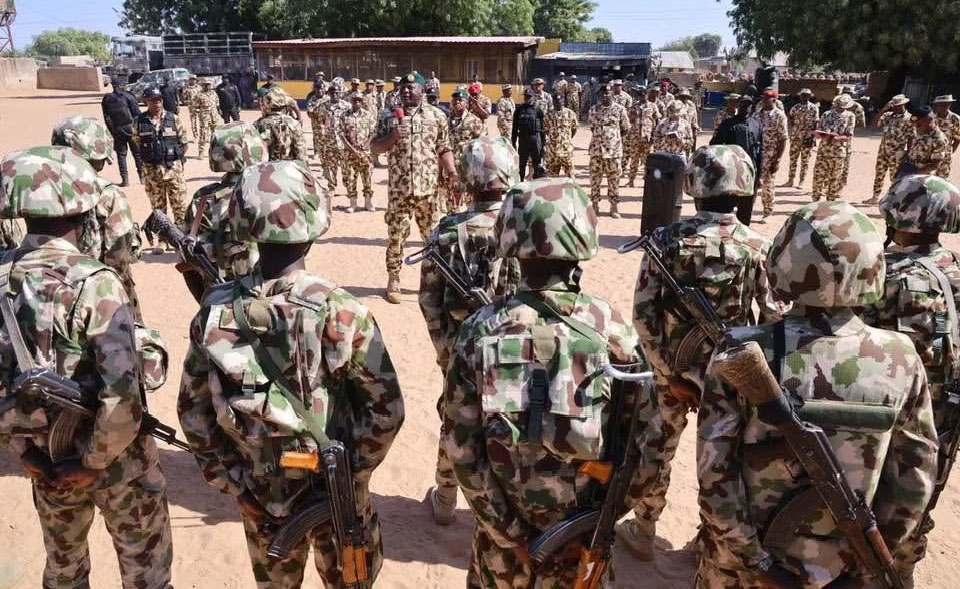
Falana, Jibrin, Bugaje Lead Opposition to US Military Presence in Nigeria
Some prominent Nigerians have condemned the reported US military presence in Nigeria, describing it as a violation of Nigeria’s sovereignty, a potential breach of the 1999 Constitution, and a dangerous precedent for foreign military interference in the country’s security affairs.
The criticism followed the arrival of United States military aircraft in Nigeria last week, shortly after American and Nigerian officials disclosed plans to deploy about 200 US soldiers in advisory and training roles. US officials said the aircraft movements would continue for several weeks as part of a temporary counterterrorism mission.
Nigeria’s Defence Headquarters (DHQ) has insisted that the US personnel are technical specialists, not combat troops, and that they will operate strictly under the authority and control of the Nigerian government, in coordination with the Armed Forces of Nigeria. The military stressed that the deployment does not amount to the establishment of a foreign base or independent US operations on Nigerian soil.
Despite these assurances, a coalition of lawyers, academics and civil society figures issued a joint statement titled “No to Foreign Forces in Our Land: Defend Our Sovereignty”, warning that the presence of foreign troops raises serious constitutional, legal and national security concerns.
The statement was signed by human rights lawyer Femi Falana (SAN), political scientist Jibrin Ibrahim, Dr Abubakar Siddique Mohammed, Dr Dauda Garuba, Prof Massaud Omar, Prof Mohammed Kuna, Engr YZ Ya’u, and political activist Usman Bugaje.
They recalled Nigeria’s long-standing resistance to foreign military domination, warning against what they described as a creeping neo-colonial security arrangement. According to the group, Nigeria’s independence was founded on firm opposition to external military control, a principle they said must not be compromised under any guise.
READ ALSO:
- Insurgents Acquire 35 Drones as ISWAP Shifts to Aerial Attacks
- Seven Killed in Horrific Crash at Ota Toll Gate
- Nigerian Equities Post World’s Second-Best Dollar Returns in 2026, Recover $21bn
The signatories referenced the Anglo-Nigerian Defence Pact of 1960, which was abrogated in 1962 following widespread public protests, arguing that political independence without military sovereignty is incomplete. They also cited Nigeria’s rejection of foreign pressure during the 1976 Organisation of African Unity (OAU) summit on Angola, recalling the historic declaration by Murtala Mohammed that Africa would no longer operate under the influence of extra-continental powers.
The group further highlighted past attempts to impose military cooperation agreements on Nigeria, including a proposed US–Nigeria defence pact in 2001 that was withdrawn after opposition from the Ministry of Defence, and the Bilateral Immunity Agreement (BIA) signed in 2003 and later nullified by the Senate in 2005 for violating constitutional provisions and the Rome Statute.
They cited Section 12(1) of the 1999 Constitution, which requires National Assembly approval before any international treaty can have the force of law in Nigeria, insisting that any foreign military deployment must follow due legislative process.
Rejecting claims that Nigeria lacks the capacity to defend itself, the group pointed to the strong peacekeeping record of the Nigerian Armed Forces under the United Nations, African Union, and ECOMOG missions in Liberia and Sierra Leone. They argued that Nigeria should prioritise modernising its military, strengthening intelligence coordination, improving troop welfare, investing in local defence production, and addressing the root causes of insecurity rather than outsourcing national defence.
In a separate interview, Prof Jibrin Ibrahim warned that Nigerians appear less vigilant today than in the 1960s, when public resistance forced the government to abandon foreign defence pacts. He questioned the effectiveness of US military interventions globally, arguing that such involvement often deepens insecurity rather than resolves it.
Observers say the controversy has reignited debate over how Nigeria should balance international security cooperation with the need to protect national sovereignty, constitutional order, and democratic accountability amid rising security challenges across the country.
Falana, Jibrin, Bugaje Lead Opposition to US Military Presence in Nigeria

-

 News3 days ago
Osogbo Sons and Daughters Mark 5th Anniversary with Awards, Political Undertones
-
 News24 hours ago
Saudi Arabia Confirms Sighting of Ramadan Crescent, Fasting Begins Wednesday
-

 metro2 days ago
US Freezes Assets of Eight Nigerians Over Boko Haram, ISIL, Cybercrime Links
-

 News20 hours ago
Ramadan Begins in Nigeria as Sultan Confirms Crescent Sighting
-

 metro21 hours ago
Lagos Woman Shares Ordeal After Alleged Rape, Sparks Nationwide Outcry
-
 Entertainment2 days ago
Mystery in Lekki: Police Probe Death of Two Nollywood Crew Found Lifeless in Parked Car
-
 metro2 days ago
Terror in Lagos Traffic: Cutlass Gang Unleashes Mayhem on Mile 12–Ketu Road
-
 Auto2 days ago
Appeal Court Ruling on VIO Limited to Abuja, Not Lagos — LASG