

metro
US Freezes Assets of Eight Nigerians Over Boko Haram, ISIL, Cybercrime Links
US Freezes Assets of Eight Nigerians Over Boko Haram, ISIL, Cybercrime Links
The United States government has imposed sweeping asset freezes and financial sanctions on eight Nigerians accused of having links to Boko Haram, the Islamic State of Iraq and the Levant (ISIL), and international cybercrime networks, as part of its expanded counter-terrorism and security measures.
The sanctions were contained in a 3,000-page document dated February 10, released by the Office of Foreign Assets Control (OFAC) under the United States Treasury Department. The publication, titled “Specially Designated Nationals and Blocked Persons List,” serves as an official notice of individuals and entities whose assets and financial interests have been blocked under US law.
According to the document, the action forms part of Washington’s broader efforts to disrupt terrorism financing, prevent extremist groups from accessing the global financial system, and combat cyber-enabled crime. OFAC stated that the list is designed to assist the public and financial institutions in complying with various US sanctions programmes.
Among those sanctioned is Salih Yusuf Adamu, also known as Salihu Yusuf, born August 23, 1990. He was identified as having ties to Boko Haram and was reported to hold a Nigerian passport. Yusuf was among six Nigerians convicted in 2022 in the United Arab Emirates for establishing a Boko Haram cell and attempting to transfer $782,000 from Dubai to Nigeria to fund insurgent activities.
READ ALSO:
- Terror in Lagos Traffic: Cutlass Gang Unleashes Mayhem on Mile 12–Ketu Road
- FG Drags El-Rufai to Court Over Alleged NSA Phone Interception
- Mystery in Lekki: Police Probe Death of Two Nollywood Crew Found Lifeless in Parked Car
Another individual listed is Babestan Oluwole Ademulero, born March 4, 1953, who was designated under terrorism-related sanctions. He appeared in the OFAC document under several aliases, including Wole A. Babestan and Olatunde Irewole Shofeso, reflecting the use of multiple identities linked to extremist networks.
The sanctions also include Abu Abdullah ibn Umar Al-Barnawi, also known as Ba Idrisa, reportedly born between 1989 and 1994 in Maiduguri, Borno State. He was flagged under terrorism-related provisions due to alleged involvement with extremist operations in Nigeria’s North-East.
Abu Musab Al-Barnawi, also referred to as Habib Yusuf, was listed as a senior Boko Haram figure, with his year of birth recorded between 1990 and 1995. He has long been associated with the group’s leadership and violent campaigns in the Lake Chad Basin.
Another name appearing twice in the publication is Khaled (or Khalid) Al-Barnawi, born in 1976 in Maiduguri. He was listed under multiple aliases, including Abu Hafsat and Mohammed Usman, and was linked to Boko Haram’s international support and logistics networks.
Ibrahim Ali Alhassan, born January 31, 1981, was also designated. He was reported to hold a Nigerian passport and reside in Abu Dhabi, United Arab Emirates, and was accused of providing support to Boko Haram through cross-border financial and operational channels.
Also sanctioned was Abu Bakr ibn Muhammad ibn Ali Al-Mainuki, also known as Abu-Bilal Al-Minuki, born in 1982 in Mainok, Borno State. He was identified as having ties to ISIL, marking the overlap between local insurgent groups and global jihadist movements.
In addition, Nnamdi Orson Benson, born March 21, 1987, was listed under CYBER2 sanctions for alleged involvement in international cybercrime and financial fraud, underscoring the US focus on digital threats alongside terrorism financing.
The sanctions mean that all property and interests belonging to the designated individuals within US jurisdiction are blocked, while US citizens and businesses are prohibited from engaging in any transactions with them. Foreign entities that knowingly assist the sanctioned persons risk facing secondary sanctions.
The latest designations come amid increased pressure from US lawmakers, who recently recommended visa bans and asset freezes against individuals and groups accused of religious freedom violations and the persecution of Christians in Nigeria. Those earlier recommendations included Rabiu Kwankwaso, the Miyetti Allah Cattle Breeders Association of Nigeria, and Miyetti Allah Kautal, although they were not part of the OFAC sanctions list.
The development also follows the decision by Donald Trump in October 2025 to re-designate Nigeria as a Country of Particular Concern over alleged violations of religious freedom. Nigeria was first placed on the list in 2020 but was later removed by Joe Biden after he assumed office.
Boko Haram was officially designated a foreign terrorist organisation by the United States in 2013. The group has been responsible for thousands of deaths and widespread displacement across Nigeria’s North-East and the Lake Chad Basin since 2009.
US authorities say the latest sanctions reaffirm Washington’s commitment to counter-terrorism, global security, and cybercrime prevention, while sending a strong signal to individuals and networks involved in extremist financing and digital fraud.
US Freezes Assets of Eight Nigerians Over Boko Haram, ISIL, Cybercrime Links








metro
MURIC Accuses OAU International School of Restricting Hijab-Wearing Students
MURIC Accuses OAU International School of Restricting Hijab-Wearing Students
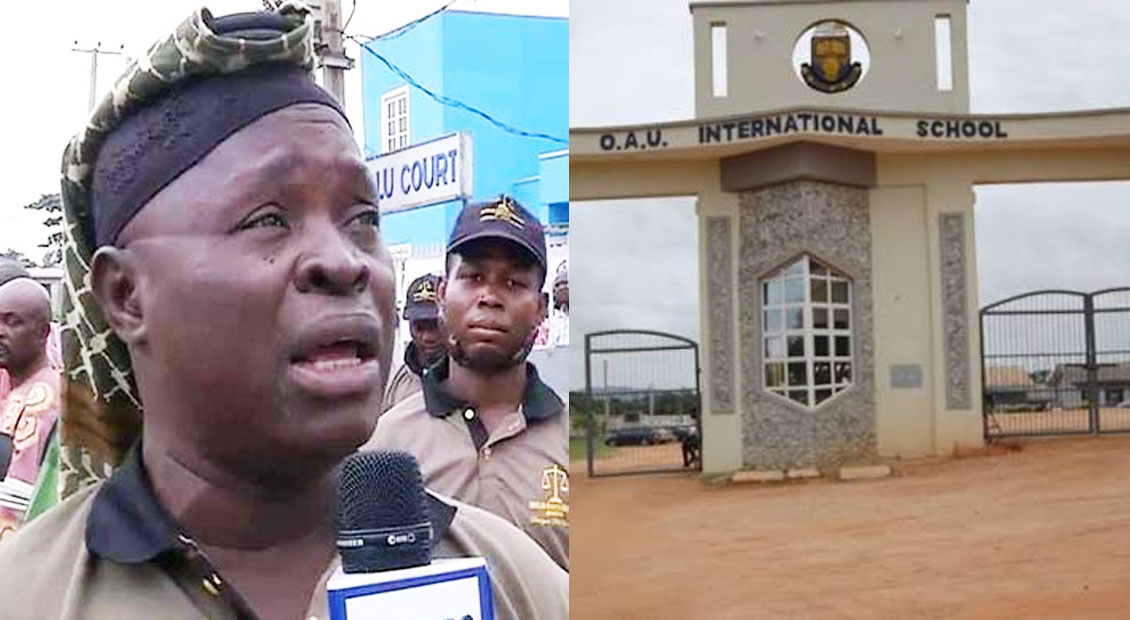
The Muslim Rights Concern (MURIC) has accused the management of the International School, Obafemi Awolowo University (OAU), Ile-Ife, Osun State, of restricting hijab-wearing Muslim students from accessing the school premises.
MURIC alleged that female Muslim students were locked out of the school for several days after authorities reportedly insisted that they remove their hijabs before being allowed into the compound.
The organisation condemned the alleged action and called for the immediate lifting of what it described as a restriction on the use of hijab by Muslim students.
In a statement issued on Monday, October 5, 2026, MURIC Executive Director, Professor Ishaq Akintola, said the affected students eventually returned to school without their hijabs after they were allegedly informed that the matter would not be considered until the next meeting of the university council in December.
Akintola described the development as discriminatory and argued that it raised concerns about religious freedom, girl-child education and the rights of Muslim students.
READ ALSO:
- Israeli Forces Reportedly Destroy School, Burn Homes in Southern Lebanon
- Nine Zamfara Lawmakers Dump APC for ADC Ahead of 2027
- Temi Nkem Wins N160m BBNaija Season 11 Grand Prize
He cited Section 38 of the Nigerian Constitution, which guarantees freedom of thought, conscience and religion, and argued that school regulations should not be applied in a manner that violates constitutionally protected religious rights.
“The argument that the use of hijab violates the school’s rules does not hold any water,” Akintola said, maintaining that Muslim students should be allowed to observe their faith while pursuing their education.
MURIC also questioned the reported circumstances surrounding the restriction and urged OAU and the International School authorities to clarify the policy governing religious attire at the institution.
The organisation further expressed concern about the effect of the dispute on the affected students, who it described as underage girls, and their parents.
According to MURIC, preventing students from attending school over their religious attire could undermine efforts to reduce the number of out-of-school children in Nigeria.
The group also rejected what it said could be the argument that the school’s internal rules supersede constitutional protections, insisting that institutional regulations must conform to the country’s laws.
MURIC called on the OAU authorities to address the dispute through dialogue and respect for religious diversity, warning that continued disagreement over the issue could create tension between the university community and residents of Ile-Ife.
The organisation alleged that the action could amount to discrimination against Muslim students, but those allegations have not been independently established.
MURIC therefore demanded that any restriction on hijab-wearing students at OAU International School be lifted immediately and that the affected students be allowed to attend classes without being required to abandon their religious attire.
The group said resolving the matter in a manner that protects the students’ rights would help preserve peaceful coexistence and OAU’s reputation as a major Nigerian educational institution.
MURIC Accuses OAU International School of Restricting Hijab-Wearing Students
metro
Ex-APC Women Leader Found Dead With Throat Slit in Bauchi
Ex-APC Women Leader Found Dead With Throat Slit in Bauchi
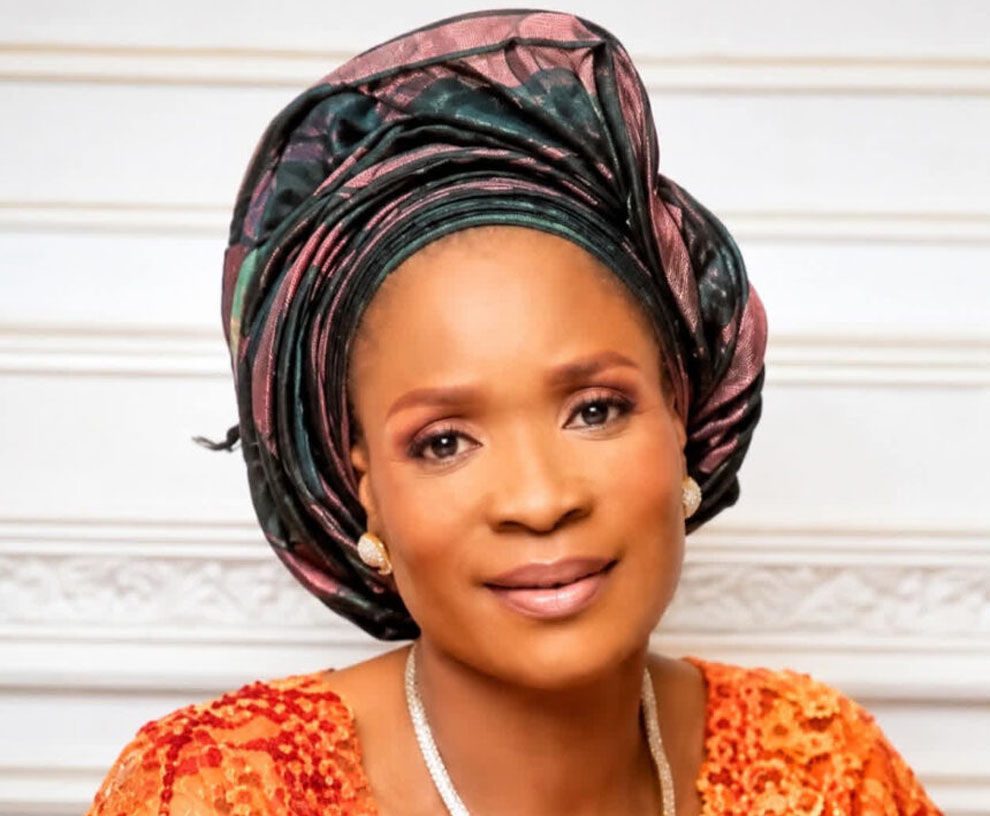
A former APC Women Leader in Bauchi South, Jemimah Dutse, has been found dead inside her residence in Bauchi State, with her throat allegedly slit by unidentified assailants.
Dutse was discovered in a pool of blood at her residence in Muazu New Layout, Yelwa, Bauchi, on Saturday, October 3, 2026.
The Bauchi State Police Command said the incident was reported at about 2:07pm by a 49-year-old man, following which detectives visited the residence and documented the scene.
Her body was subsequently evacuated to Abubakar Tafawa Balewa University Teaching Hospital (ATBUTH), Bauchi, for medical examination and autopsy.
The Commissioner of Police, Sani-Omolori Aliyu, directed that the case be transferred to the Homicide Section of the State Criminal Investigation Department (SCID) for a discreet and thorough investigation.
READ ALSO:
- Supreme Court Ruling: INEC Moves to Clarify Fate of 2027 Candidates
- Omokri Defends Tinubu Over Pension Record, Faults Linking President to 89-Year-Old’s Death
- Tantita Operations Push Oil Export Earnings to $9.39bn in Q2
The police said the investigation is focused on establishing the circumstances surrounding Dutse’s death and identifying the person or persons responsible.
The motive for the killing remains unknown, and authorities have not established any link between the death and Dutse’s previous political activities.
The command has appealed for calm and expressed condolences to Dutse’s family, friends and political associates, while assuring them that efforts are underway to unravel the circumstances surrounding her death.
The incident has also generated concern among residents and groups in Bauchi, with calls for a comprehensive investigation and improved security in the area.
The Take-It-Back Movement, Bauchi chapter, condemned the killing and called on security agencies to intensify efforts to identify and arrest those responsible.
The group also urged the authorities to conduct a high-powered investigation into the incident and strengthen security measures across Bauchi metropolis and surrounding communities.
Police said further developments would be communicated as the investigation progresses.
Ex-APC Women Leader Found Dead With Throat Slit in Bauchi
metro
Kidnappers torture abducted corps members, slash ransom to N100m
Kidnappers torture abducted corps members, slash ransom to N100m
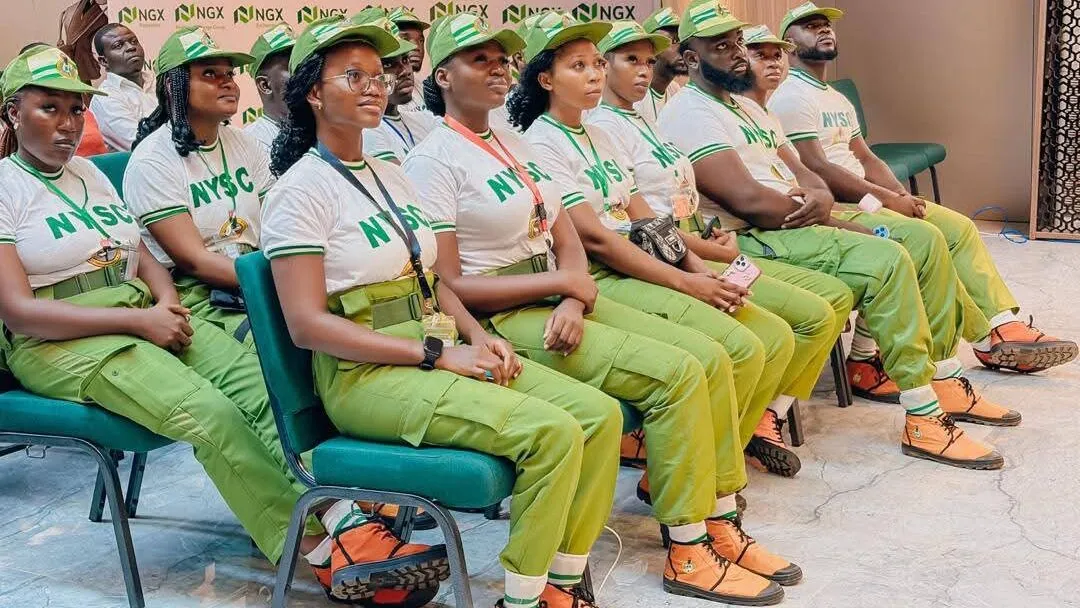
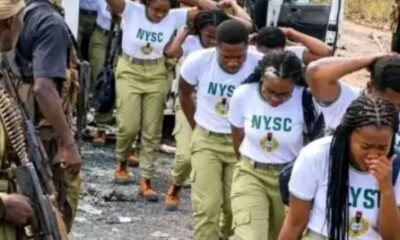
Relatives of 20 abducted corps members have raised fresh concerns over the safety of the victims, alleging that kidnappers have subjected them to physical torture while reducing their ransom demand to N100 million.
The prospective National Youth Service Corps (NYSC) members were reportedly travelling from Ibadan, Oyo State, to orientation camps in Abia and Akwa Ibom states when gunmen attacked two buses along the Owerri–Onitsha Road in Umunoha, Mbaitoli Local Government Area of Imo State, on October 1.
The abductors initially reportedly demanded N50 million from each victim, putting the total ransom at N1 billion.
However, relatives said the kidnappers have now reduced the demand to N5 million per victim, bringing the total to N100 million.
The families also alleged that the abducted corps members were being beaten in captivity, including female victims, raising fears over their physical condition as the rescue operation continues.
A relative of one of the victims, Alimot Akande, said the situation had become increasingly frightening, appealing to the authorities to intensify efforts to secure the victims’ safe release.
According to the relatives, the abductors have maintained contact with some families through the phones of the captives and have used the communication to demand ransom.
READ ALSO:
- Family seeks N10m to free kidnapped newlywed, other victims
- Trump launches ‘Super Intelligence Force’ to keep US ahead in AI race
- NDLEA intercepts N5bn worth of drugs at ports, arrests Milan-bound businessman
The families had earlier appealed to the Olubadan of Ibadanland, Oba Rashidi Ladoja, for intervention after the kidnappers reportedly demanded the initial N1 billion ransom.
Meanwhile, security agencies have intensified efforts to locate the kidnappers’ hideout and rescue the victims.
The Imo State Police Command said its operatives had traced the suspected kidnappers to a location in the bush. However, the operation has reportedly been complicated by intelligence that the area may have been planted with improvised explosive devices (IEDs).
The police said drone surveillance was used to identify the suspected location of the captives, with plans underway to deploy additional operational equipment to safely access the area.
The Inspector-General of Police, Olatunji Disu, has also deployed the Deputy Inspector-General of Police in charge of Operations, Shehu Umar Nadada, to Imo State to coordinate the rescue operation.
Nadada subsequently reviewed the security deployment and directed additional tactical resources towards efforts to rescue the abducted corps members.
Police authorities have assured the families that efforts are ongoing to locate the victims and bring them home safely.
There have also been varying reports over the exact number of people abducted and those already rescued. The police initially reported that some victims had been rescued after the attack, while relatives continued to maintain that 20 prospective corps members remained affected by the abduction.
The two buses involved in the incident have reportedly been recovered as security agencies continue operations around the area.
The Oyo State Government has also joined efforts to secure the release of the victims, maintaining contact with the Imo State Government and security agencies.
The incident has renewed concerns about the safety of prospective corps members travelling to NYSC orientation camps, particularly along major highways where kidnapping remains a persistent security challenge.
For the affected families, the immediate priority remains the safe return of their loved ones as security agencies work to overcome the reported explosives threat and reach the suspected kidnappers’ hideout.
Kidnappers torture abducted corps members, slash ransom to N100m
-

 metro2 days ago
NYSC Kidnap: Abductors Demand N950m for 19 Prospective Corps Members in Imo
-

 Politics2 days ago
2027: Oshiomhole Dares Opposition Over ₦500 Petrol Promise, Says APC Will Take Argument to Nigerians
-
 Entertainment3 days ago
Olu Jacobs Laid to Rest in Lagos as Dignitaries, Nollywood Stars Honour Screen Icon
-

 metro2 days ago
N500 Petrol, Wage Award: Public Sector Workers Begin Warning Strike
-
 metro2 days ago
Amaechi: Tinubu’s Policies Made My Mother’s Drugs Unaffordable
-
 metro1 day ago
‘I Thought I Was Dead’ — Hairstylist’s Daring Escape From Kidnappers After Benin-Ore Ambush
-

 Entertainment2 days ago
Less Than Four Months After Wedding, Jarvis Threatens Peller With Lawsuit Over Second-Wife Plan
-
 metro2 days ago
Tension as Kidnappers Threaten to Kill Abducted Oyo Corps Members