
News
Edo poll: Court gives fresh order on APC candidate Okpebholo
Edo poll: Court gives fresh order on APC candidate Okpebholo
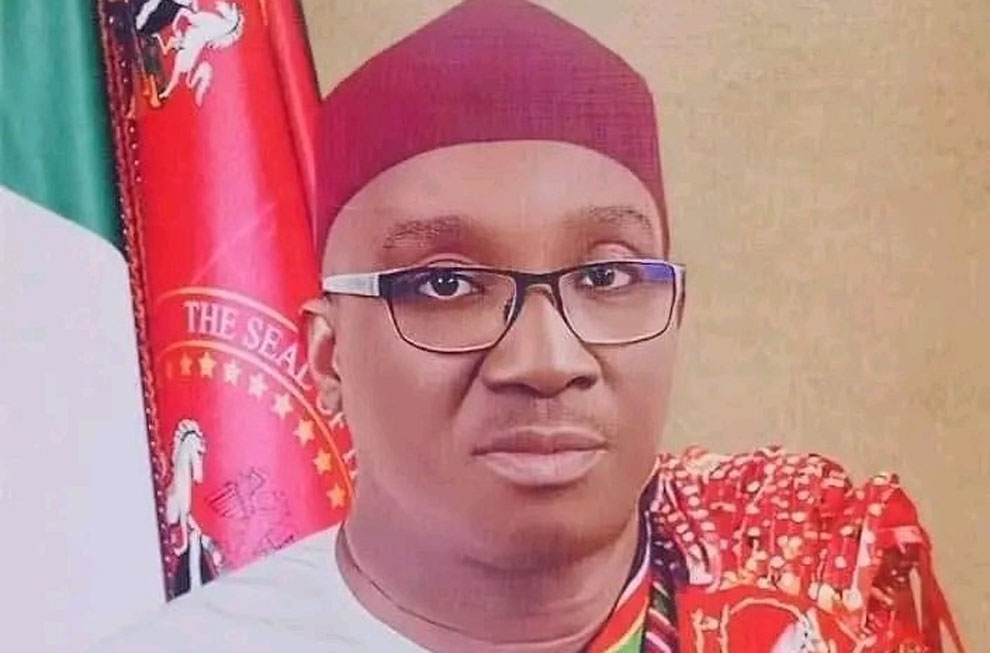
A Federal Capital Territory (FCT) High Court in Maitama has ordered a judicial review concerning the criminal summons issued against Senator Monday Okpebholo, the All Progressives Congress (APC) candidate in the upcoming Edo governorship election.
The court’s decision follows an application submitted by Okpebholo’s legal counsel, Adaze Emwanta.
The presiding judge, Justice O.C. Agbaza, delivered a ruling after hearing an ex-parte motion on Wednesday. He agreed to the reliefs sought by Okpebholo’s counsel, setting the next hearing for October 28.
The criminal summons was initially issued by Magistrate Abubakar Mukhtar of Wuse Zone 2, who had ordered Okpebholo to appear in court on September 20.
READ ALSO:
- JUST IN: Edo declares Friday work-free day for gov election
- Ganduje not plotting to dethrone any Kano Emir – Aide
- Yobe man murders business partner over N500,000 debt
The summons stemmed from allegations that the APC candidate provided false information regarding his date of birth on forms submitted to the Independent National Electoral Commission (INEC).
The case, which was filed by an Edo indigene, Honesty Aginbatse, accused Okpebholo of conflicting dates of birth in his nomination documents. In response, Okpebholo sought intervention from the FCT High Court to prevent the summons from proceeding. His legal team argued that the criminal charge was part of a plot to tarnish his image ahead of the election.
According to Okpebholo’s defense, the issue of his birthdate had already been addressed and resolved at the Supreme Court’s registry through a Deed of Regularisation, which was officially gazetted by the Federal Republic of Nigeria in August. The APC candidate also alleged that the summons was not served to him directly but circulated on social media to damage his reputation on the eve of the election.
Meanwhile, in a separate but related case, the Federal High Court in Abuja is set to rule on a motion filed by the APC seeking to amend its summons in a lawsuit involving INEC, Asue Ighodalo, and the People’s Democratic Party (PDP). Justice Peter Lifu has reserved his judgment on the case, with both the PDP and Ighodalo contesting the jurisdiction of the suit.
The legal battles surrounding Okpebholo continue as the Edo governorship election approaches, raising questions about their impact on the candidate’s campaign.
Edo poll: Court gives fresh order on APC candidate Okpebholo











News
Final Notice: FG Orders Civil Servants to Complete PASGA Verification by March 31

Final Notice: FG Orders Civil Servants to Complete PASGA Verification by March 31
The Federal Government of Nigeria has set Tuesday, March 31, 2026, as the final deadline for civil servants to complete the mandatory Personnel Audit and Skills Gap Analysis (PASGA) verification exercise. Workers who fail to comply risk salary suspension and other administrative sanctions, officials warned.
The directive, issued by the Head of the Civil Service of the Federation (OHCSF), Didi Walson-Jack, applies to all employees within the Federal Civil Service. The memo emphasised that the verification process is part of the government’s ongoing effort to eliminate ghost workers, enhance workforce accountability, and improve efficiency in public service operations.
The PASGA exercise consists of two components: Personnel Verification and Skill Assessment and Competency Analysis. Civil servants who have not completed either component are required to do so by March 31, 2026, to obtain their Certificates of Completion. These certificates must then be submitted to the Director of Human Resource Management in their respective Ministries, Departments, and Agencies (MDAs).
READ ALSO:
- Mozambique Deports 13 Nigerians Without Charges, 29 Still Detained
- Iranian Missiles, Drones Strike US Air Base in Saudi Arabia
- Millions to March Across US in Largest Anti-Trump Demonstrations
The OHCSF warned that any officer who fails to comply will be subject to “appropriate administrative sanctions in line with extant rules and regulations,” which may include suspension from the payroll until compliance. Permanent Secretaries and Heads of MDAs have been instructed to circulate the memo widely to ensure that all affected officers are informed.
The PASGA exercise, rolled out in 2025, is designed to assess staffing structures, identify skill gaps, and support the development of targeted training and capacity-building programmes aligned with national priorities. Its outcomes will also guide government decisions on recruitment, career advancement, and resource allocation within the Federal Civil Service.
Officials say the verification process is essential to address longstanding issues such as payroll irregularities and fraudulent entries, which have historically cost billions of naira annually. Completion of the exercise will protect civil servants’ rights to salary and benefits while strengthening the integrity of Nigeria’s public service system.
Civil servants have been urged to prioritise the exercise to avoid disruptions to their pay and career progression. Authorities stressed that while compliance with local laws is expected, all government procedures must follow due process and fairness to ensure that legitimate workers are not unfairly penalised.
Final Notice: FG Orders Civil Servants to Complete PASGA Verification by March 31
News
Kano Deputy Governor, Aminu Abdussalam Gwarzo, Resigns
Kano Deputy Governor, Aminu Abdussalam Gwarzo, Resigns
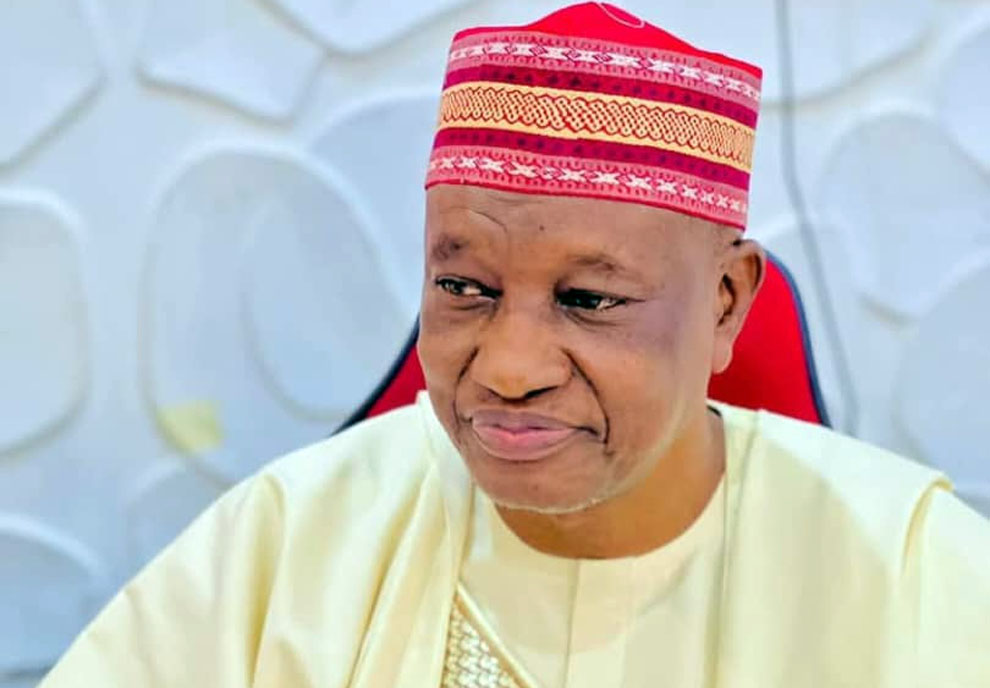
The Deputy Governor of Kano State, Aminu Abdussalam Gwarzo, has resigned from office, bringing a sudden twist to the state’s evolving political landscape.
His spokesperson, Ibrahim Shuaibu, confirmed the development on Friday, stating that the resignation had been formally communicated.
“Yes, it is true. The deputy governor has resigned from his position,” Shuaibu said, declining to provide further details surrounding the decision.
Although no official reason has been disclosed, the resignation comes amid escalating tensions between Gwarzo and the Kano State House of Assembly.
In recent days, the Assembly had levelled a series of allegations against the former deputy governor, including claims of misconduct and concerns related to the discharge of his official duties. Lawmakers were also reported to have initiated moves widely seen as a precursor to possible disciplinary action, raising fears of an impending political crisis within the state executive.
The development also follows recent political shifts in Kano, particularly the defection of Governor Abba Yusuf to the All Progressives Congress, a move that has triggered significant realignments within the state’s political structure.
Since the defection, the governor has undertaken sweeping changes aimed at repositioning the administration. These include the removal of the Head of Service, Abdullahi Musa, as well as the dismissal of the Commissioner for Investment, Commerce and Industry, Shehu Wada Sagagi, as part of broader efforts to enhance efficiency and discipline in governance.
Political observers interpret these actions as part of a strategic move by the administration to consolidate power within the new political alignment and streamline government operations in line with evolving priorities.
While details of the allegations against Gwarzo remain unclear, sources within the Assembly indicated that the matter had been under legislative scrutiny prior to his resignation.
Efforts to obtain further clarification from the Kano State Government were unsuccessful as of the time of filing this report.
Gwarzo’s exit is expected to trigger constitutional procedures for the appointment of a new deputy governor, subject to approval by the State House of Assembly.
Analysts believe the development could further reshape Kano’s political landscape, particularly as the state navigates ongoing alignments ahead of future electoral contests.
Kano Deputy Governor, Aminu Abdussalam Gwarzo, Resigns
News
ADC Primary: Atiku Will Defeat Obi, Amaechi — Umar Ardo

ADC Primary: Atiku Will Defeat Obi, Amaechi — Umar Ardo
Umar Ardo, Convener of the League of Northern Democrats, has declared that former Vice President Atiku Abubakar would emerge victorious in the presidential primary of the African Democratic Congress (ADC) if he decides to contest.
Ardo made the assertion on Friday while speaking during a programme on Focus Nigeria, aired on the African Independent Television (AIT), where he analysed possible scenarios ahead of the party’s primary election.
According to him, although discussions around a consensus candidate may arise within the party, such an arrangement would require key contenders, including Peter Obi and Rotimi Amaechi, to step down — a situation he described as unlikely.
He noted that consensus would only be feasible if major aspirants willingly relinquish their ambitions in favour of a single candidate, stressing that this could prove difficult given the political realities and support bases of those involved.
“If there is going to be consensus, it means that the contenders will have to step down. It would mean that Atiku, Peter Obi, Amaechi, and others would have to step down for somebody,” Ardo said.
He further observed that while Obi might be personally inclined to step down under certain circumstances, his loyal supporters, popularly known as the Obidient Movement, would strongly resist such a move.
Ardo also expressed the view that although Atiku’s supporters might accept a consensus arrangement, the former vice president himself is unlikely to withdraw from the race.
“Peter Obi has the disposition to step down, but his support base would oppose that. Without the Obidients, Obi is nothing. Atiku’s support base may allow him to step down, but he himself is not likely to do so,” he stated.
The northern political figure maintained that if all aspirants proceed to contest the primary election, Atiku stands a clear chance of clinching the party’s ticket, regardless of whether the process is conducted through direct primaries or by delegates.
“If all of them go into the primaries, then Atiku will win — be it by delegates or direct primaries. Atiku will 100 percent win the primaries, even if they are conducted multiple times,” Ardo added.
His remarks come amid ongoing political realignments and speculations over potential alliances and candidacies ahead of future elections, with key political actors weighing their options within and across party lines.
The African Democratic Congress has yet to officially outline its timetable for the primary election, as consultations among stakeholders continue.
ADC Primary: Atiku Will Defeat Obi, Amaechi — Umar Ardo

-

 metro3 days ago
“We Pay Men to Sleep With Us in Germany” — Nigerian Woman Laments Loneliness Abroad
-

 metro1 day ago
Tragedy in Aramoko: Trailer Rams Residential Building, Kills 300‑Level Student
-

 Entertainment3 days ago
Tragedy in Music Industry as ‘Show Your Style’ Singer Sabinus Dies
-

 News2 days ago
Final Notice: FG Orders Civil Servants to Complete PASGA Verification by March 31
-

 metro2 days ago
El-Rufai’s Mother, Hajiya Umma, Dies Amid Son’s Legal Battle
-

 Entertainment2 days ago
Nollywood Actress Declares Love for Ibrahim Chatta, Offers to Pay Her Own Dowry
-

 Business3 days ago
Relief in Sight as Dangote Refinery Lowers Petrol Price
-

 Entertainment3 days ago
Gospel Singer Onos Brisibi Dies at 55 After Prolonged Illness