

Health
FG begs doctors to stop warning strike

FG begs doctors to stop warning strike
The Federal Government has urged the members of the National Association of Resident Doctors, NARD, to halt their seven-day warning strike.
The government said efforts are ongoing to meet the demands of the striking doctors.
The Minister of State for Health, Dr Tunji Alausa, made this known on Thursday in Kaduna during a visit to the National Eye Centre.
Alausa disclosed that negotiations are underway to ensure the release and safe return of their kidnapped colleague, Dr Ganiyat Popoola.
“We are on top of the matter and have been on talking terms with the National Security Adviser, Nuhu Ribadu ,regarding the issue.
“I have spoken with the Commissioner of Police and everyone is working hard to see that she is released,” he said.
READ ALSO:
- Man jailed nine months for stealing two tubers of yam
- DPO gunned down at military checkpoint in Zamfara
- Akwa Ibom police commissioner dies after 6 months in office
The minister said that he had held a meeting on Monday with the leadership of NARD over the situation to convince them to call off the strike because it would worsen the situation.
Alausa added that the kidnappers kept changing their demands every moment but the security agencies were working hard to see that she was safely rescued.
Recall that the members of the association began a seven-day warning strike to push for the rescue of a Kaduna-based doctor, Dr Ganiyat Popoola.
Popoola, a staff of the centre, was kidnapped in December, 2023 and has now spent about nine months in the kidnappers’ den.
Meanwhile, the Chairman of the association, National Eye Centre, Dr Ibrahim Mohammed,said the strike was still on.
He said that the medical and dental consultants had joined them in the strike and it was a directive from the national body.
FG begs doctors to stop warning strike










Health
NAFDAC Seizes Fake Drinks Worth Over ₦2bn at Lagos Trade Fair Complex
NAFDAC Seizes Fake Drinks Worth Over ₦2bn at Lagos Trade Fair Complex
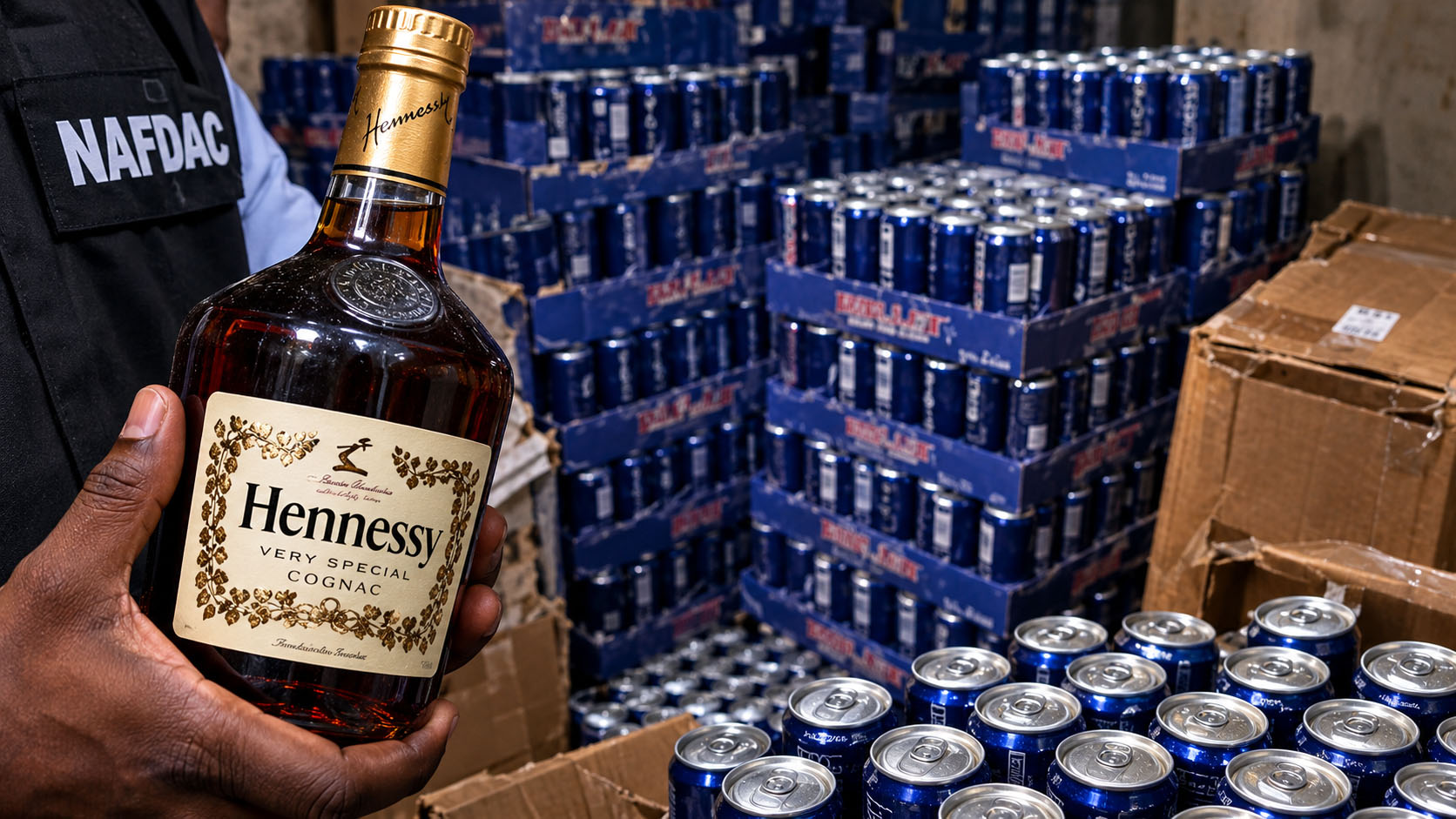
The National Agency for Food and Drug Administration and Control (NAFDAC) has uncovered a suspected large-scale counterfeit alcoholic beverage operation at the Lagos International Trade Fair Complex, seizing products reportedly valued at more than ₦2 billion.
The operation, conducted on Tuesday, October 13, 2026, followed intelligence reports about suspected illegal activities within the commercial complex.
The raid reportedly led to the discovery of more than 20 illegal stores allegedly used for the production and distribution of counterfeit alcoholic beverages and other prohibited activities.
According to reports on the operation, the facilities were concealed within makeshift stores originally designated as parking spaces within the complex.
During the exercise, NAFDAC officials reportedly discovered individuals allegedly involved in blending and counterfeiting popular alcoholic beverage brands, revalidating expired and unsafe drinks for resale, and stockpiling banned imported products.
Two suspects were reportedly apprehended during the operation, while the seized products were evacuated from the premises.
The discovery has raised concerns about the possible circulation of counterfeit, expired and unsafe alcoholic beverages in Nigerian markets, particularly products repackaged to appear genuine.
READ ALSO:
- Cosmetics Top Fake Products as NAFDAC Seals 179 Establishments, Arrests 52
- Nigeria Secures UN Human Rights Council Seat With 172 Votes
- Houthi Missile Targeting Riyadh Shot Down as Debris Injures Four, Damages 15 Homes
NAFDAC has repeatedly warned that the consumption of adulterated or unsafe beverages could expose consumers to serious health risks.
The agency urged members of the public to remain vigilant and report suspected cases of illegal manufacturing, relabelling, revalidation and sale of regulated products.
Consumers were also advised to exercise caution when purchasing alcoholic beverages, particularly products with suspicious packaging, questionable expiry dates or other signs of tampering.
NAFDAC provided its official complaints line, 0800-1-NAFDAC (0800-1-623322), for members of the public to report suspected violations.
The latest enforcement action forms part of the agency’s efforts to combat counterfeit and substandard products and protect public health.
Investigations are expected to establish the full extent of the alleged activities and identify other individuals who may be connected to the suspected distribution network.
NAFDAC Seizes Fake Drinks Worth Over ₦2bn at Lagos Trade Fair Complex
Health
Cosmetics Top Fake Products as NAFDAC Seals 179 Establishments, Arrests 52

Fake and substandard cosmetics accounted for the largest number of product seizure entries recorded by the National Agency for Food and Drug Administration and Control (NAFDAC) between January and August 2026, as the agency intensified its nationwide crackdown on counterfeit and unsafe products.
NAFDAC recorded 401 cosmetics seizure entries during the eight-month period, ahead of drinks, with 215 entries, and drugs, with 112, according to an enforcement report released on Wednesday, October 14.
The agency also reported 213 raids, 474 new cases, 295 concluded cases, 821 product seizure entries, 179 establishments closed or sealed, and 52 arrests during the period.
The figures were disclosed by NAFDAC Director-General, Professor Mojisola Adeyeye, in a statement detailing the activities of the agency’s Directorate of Investigation and Enforcement.
The enforcement operations covered a broad range of regulated products, including food, medicines, cosmetics, medical devices, packaged water, beverages and chemicals.
The agency said it also carried out 157 surveillance activities, imposed 218 administrative sanctions and conducted 22 product destruction exercises between January and August.
READ ALSO:
- Nigeria Secures UN Human Rights Council Seat With 172 Votes
- Houthi Missile Targeting Riyadh Shot Down as Debris Injures Four, Damages 15 Homes
- Outrage as Israeli Settlers Torch Mosque, Burn Vehicle in Occupied West Bank
The report further showed that cosmetics accounted for 64 of the 179 establishments closed or sealed, while drinks accounted for 67 of the 213 raids conducted during the period.
NAFDAC clarified that the seizure figures represented product seizure entries rather than the physical quantity or monetary value of goods confiscated. The numbers therefore indicate the frequency with which product categories appeared in enforcement records, not necessarily the total volume of items seized.
The prominence of cosmetics in the figures raises concerns about the circulation of counterfeit, unregistered and substandard beauty products in Nigeria. Unsafe cosmetics can expose consumers to harmful ingredients, contamination and misleading product claims, particularly when products are manufactured or sold outside regulatory controls.
Some skin-lightening and medicated cosmetic products have previously been seized by NAFDAC during enforcement operations. The agency has repeatedly warned consumers to exercise caution when buying products from unverified suppliers and to check registration details before use.
In February 2026, NAFDAC reported uncovering banned, counterfeit and unregistered cosmetic products valued at more than ₦3 billion in a warehouse at the APT Trade Fair Complex in Lagos. The products included prohibited whitening soaps and other cosmetic items.
The latest enforcement figures also come amid wider concerns over counterfeit medicines and adulterated food and beverages. NAFDAC has warned that falsified products may contain incorrect ingredients, harmful substances or ingredients that do not meet required quality and safety standards.
The agency’s enforcement directorate continued investigations, surveillance, raids and legal processes during the eight-month period. Of the 474 new cases recorded, 295 were concluded, while 52 arrests were made.
NAFDAC has maintained that sustained enforcement is necessary to disrupt the manufacture, importation and distribution of unsafe products and protect consumers from potential harm.
Consumers are advised to buy cosmetics and other regulated products from reputable outlets, inspect packaging and labelling, and verify product registration through NAFDAC’s official channels. Suspicious products or suspected counterfeiting activities can also be reported to the agency.
The figures underline the scale of enforcement activity required to tackle fake cosmetics and other unsafe products in Nigeria, while highlighting the need for continued surveillance, consumer awareness and accountability across the supply chain.
Cosmetics Top Fake Products as NAFDAC Seals 179 Establishments, Arrests 52
Health
NAFDAC Raises Alarm Over Toxic Pesticides in Beans, Seizes ₦800m Banned Chemicals
The National Agency for Food and Drug Administration and Control (NAFDAC) has raised the alarm over the detection of dangerous pesticide residues in some samples of beans sold in Nigeria, warning that the misuse of agricultural chemicals poses serious risks to public health.
The agency also disclosed that it seized banned agrochemicals worth more than ₦800 million in Ogun, Ondo, Osun and Oyo states in 2025, as part of efforts to prevent prohibited chemicals from entering the food supply chain.
NAFDAC Director-General, Professor Mojisola Adeyeye, disclosed the findings during a media briefing on pesticide safety in Lagos on Friday, October 9, 2026.
According to the agency, a recent market study detected residues of pyrethroids and dimethoate above permitted safety limits in some bean samples, raising concerns about the improper use of pesticides to preserve harvested agricultural produce.
Adeyeye explained that although pesticides play an important role in crop protection, their use must comply with approved regulations and safety instructions.
She warned that the misuse of chemicals, excessive application and failure to observe the prescribed waiting period between pesticide application and harvesting could expose consumers, farmers and the environment to harmful substances.
The NAFDAC chief stressed that a pesticide approved for use on crops in the field is not automatically suitable for preserving harvested food products.
She specifically cautioned against using dimethoate to preserve harvested beans against pests such as weevils, noting that the chemical was not approved for that purpose.
READ ALSO:
- 2027: Ekiti Driver Takes ₦3.5m Loan to Back Tinubu’s Re-election Bid
- 2023 Election: Tinubu’s Camp Dares Obi to Produce Evidence He Won Presidential Poll
- ‘Mad People’: Presidency Fires Back at Amaechi Over Tinubu Re-Election Remarks
While certain pyrethroids are permitted for post-harvest storage under approved conditions, she said users must follow the prescribed instructions and safety requirements.
Adeyeye identified common violations to include applying excessive quantities of pesticides, using products on crops for which they were not approved, harvesting before the recommended waiting period and improperly mixing chemicals.
She also warned against storing pesticides alongside food, animal feed or household items, reusing empty chemical containers for domestic purposes and disposing of pesticide waste carelessly.
NAFDAC Seizes Banned Chemicals Worth ₦800m
Providing details of the agency’s enforcement operations, Adeyeye said NAFDAC seized banned agrochemicals worth more than ₦800 million in Ogun, Ondo, Osun and Oyo states in 2025.
She added that enforcement operations in the North-West between September 2024 and July 2026 resulted in the seizure, interception or recovery of 2,974 cartons of pesticides containing paraquat, valued at approximately ₦148.7 million.
The agency also intercepted 120 cartons of pesticides containing chlorpyrifos, valued at more than ₦17 million, during the same period.
In a separate operation in Kebbi State, authorities intercepted 5,619 cartons containing 67,428 litres of paraquat, alongside 500 cartons of atrazine products.
The agency said the affected chemicals were among products prohibited under its regulatory measures, with the applicable phase-out periods for paraquat, chlorpyrifos and atrazine ending on January 1, 2026.
NAFDAC also disclosed that it sealed four unauthorised pesticide and agrochemical manufacturing facilities in Bichi, Kano State, in July 2026. Officials reportedly discovered unlabelled products, bulk chemicals and packaging materials associated with illegal production.
Adeyeye said suspects had been arrested in connection with enforcement operations, with one case undergoing prosecution.
She attributed the continued circulation of banned pesticides partly to illegal importation, unauthorised local production and distribution through unofficial supply channels.
The agency also announced restrictions on the 100-millilitre pack size of dichlorvos, prohibiting its importation, manufacture and sale in open markets and supermarkets because of concerns about its misuse on agricultural produce and other risks.
NAFDAC Warns Farmers, Dealers and Consumers
Adeyeye urged farmers to purchase pesticides from recognised agro-input dealers, use only approved products and follow label instructions, including recommended quantities and pre-harvest waiting periods.
Manufacturers, importers, distributors and retailers were also warned to comply with regulatory requirements, while businesses involved in illegal production and distribution could face enforcement action and prosecution.
The agency said it was strengthening surveillance, laboratory testing, inspections and collaboration with law enforcement authorities to identify and remove prohibited chemicals from circulation.
It has also trained more than 2,000 agro-input dealers on responsible pesticide handling and application, while expanding its enforcement zonal offices from three to six to improve regulatory coverage.
Deputy Director of Veterinary Medicine and Allied Products at NAFDAC, Dr Idayat Mudshiru, said continued engagement with farmers and other stakeholders was essential to reducing pesticide misuse.
She said the agency was working with industry stakeholders, including CropLife, to improve public awareness and promote safe handling and application of agricultural chemicals.
The agency emphasised that protecting Nigerians from harmful pesticide residues requires coordinated action across the agricultural value chain, from chemical manufacturers and importers to dealers and farmers.
The findings underscore the importance of food safety monitoring and proper pesticide management, particularly for staple foods such as beans that are widely consumed in Nigerian households.
NAFDAC Raises Alarm Over Toxic Pesticides in Beans, Seizes ₦800m Banned Chemicals
-

 metro16 hours ago
₦130m Toyota Tundra Wrecked: Lagos Dealer Questions Police Over Suspect’s Release
-

 metro2 days ago
Money Rituals: Four Arrested in Kwara Over Suspected Human Parts
-

 News3 days ago
2027 Elections: INEC Reveals Why Pantami, Adebutu, Others Were Excluded
-

 metro2 days ago
Osogbo Cultism Crackdown: Six Suspects Arrested as Police Recover Drugs, Charms
-

 Politics3 days ago
2027: Adeleke’s Camp Promises 1.5 Million Votes for Tinubu in Osun
-

 metro2 days ago
Borno Woman Jailed Two Years for Sexual Exploitation of 16-Year-Old Girl
-

 News16 hours ago
₦200m Fake Alcohol Packaging Uncovered as NAFDAC Raids Aba Market
-

 metro2 days ago
Outrage as Residents Scoop Groundnut Oil From Lagos Tanker Crash Scene