

Health
WHO dismisses report of link between smartphone use and brain cancer

WHO dismisses report of link between smartphone use and brain cancer
A recent World Health Organization (WHO) analysis has found no link between smartphone use and brain cancer. Concerns over radiation from mobile devices have persisted for decades, and in 2011, the WHO’s cancer division classified this radiation as “possibly carcinogenic to humans.”
However, a new study based on several research papers dating back to 1994 found no connection between cellphone usage and cancer, even among heavy users who make frequent calls. The study concluded that the incidence of brain cancers has not increased in correlation with increased mobile phone use.
The research team of eleven specialists from ten countries, including the Australian government’s radiation protection authority, reviewed 63 studies from 1994 to 2022. They examined possible links between exposure to radio waves from wireless technology — such as televisions, baby monitors, and cellphones — and various cancers, including brain and salivary gland tumours and leukaemia.
READ ALSO:
- Trucks stranded at depots as petrol scarcity worsens
- Mystery of Dangote Refinery in Nigerian oil politics – Farooq Kperogi
- Terrorists forcing us to work on their farms – Niger residents
The study found that despite the skyrocketing use of wireless technology, the occurrence of cancers has not increased to a corresponding degree. This finding holds true even for individuals who have been using mobile phones for over a decade or frequently engage in lengthy phone conversations.
Mark Elwood, a professor of cancer epidemiology at the University of Auckland in New Zealand and a co-author of the study, stated that none of the key research questions indicated elevated risks.
This review aligns with other similar studies. The WHO and other international health organizations have previously stated that there is insufficient evidence to suggest that mobile phone radiation poses a health risk. However, they have encouraged further research.
WHO dismisses report of link between smartphone use and brain cancer








Health
Fiji Declares National HIV Emergency as Diagnoses Surge Sixteenfold
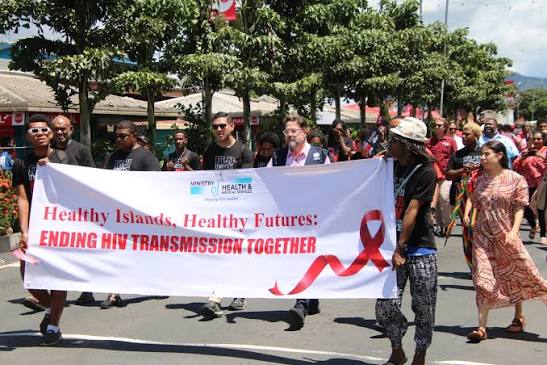
Fiji Declares National HIV Emergency as Diagnoses Surge Sixteenfold
Authorities launch a multi-agency public health campaign to expand free testing, treatment, and harm-reduction services
Fiji has announced a nationwide health response to address a significant rise in HIV cases and ensure that all residents can access essential medical care.
On Wednesday, Health Minister Dr. Atonio Lalabalavu shared the emergency declaration, explaining that national agencies are joining forces to provide rapid medical support, expand testing, and protect community well-being across the islands.
Official reports indicate that about one in every 60 adults in Fiji currently lives with HIV, following an increase in new infections over recent years. Health specialists explain that the virus spreads primarily through intimate sexual contact and shared needles among individuals using illicit substances.
Additionally, routine screenings revealed that two out of every 100 expecting mothers carry the virus, highlighting an urgent need for early maternal healthcare to protect newborns from infection.
To safeguard public health, authorities are delivering free daily treatments, distributing protective preventive medications, and setting up clean needle programs to stop infections before they start.
Furthermore, global partners, including Australia, New Zealand, India, and United Nations health bodies are providing financial resources and medical supplies to back the local effort.
By encouraging open community conversations and delivering accessible healthcare without judgment, health workers aim to ensure that everyone receives the care and dignity they deserve.
Fiji Declares National HIV Emergency as Diagnoses Surge Sixteenfold
Health
Adamawa Health Officials Report 20 Deaths from Suspected Diphtheria Cases
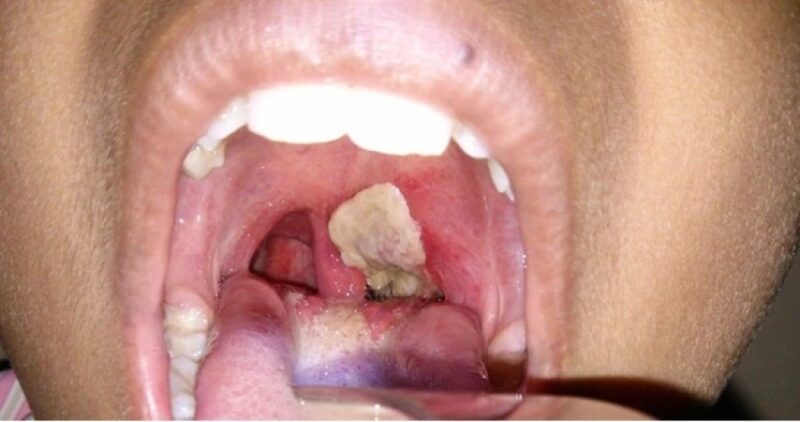
Adamawa Health Officials Report 20 Deaths from Suspected Diphtheria Cases
Parents and caregivers are advised to seek early medical help and update childhood vaccinations as response teams expand outreach.
Health authorities in Adamawa State are responding to a diphtheria outbreak that has caused 20 deaths across 13 local government areas. Speaking on Wednesday, State Epidemiologist Jones Steven Kadabiyu confirmed that health workers have recorded 126 suspected cases throughout the state, with six patients currently receiving medical care in local hospitals.
Diphtheria is a serious bacterial illness that spreads through airborne droplets from coughing or close personal contact. It mainly affects the throat and airway, causing sore throats, mild fevers, swollen neck glands, and difficulty swallowing or breathing.
READ ALSO:
- Kara Bridge Repairs, Multiple Crashes Trigger 14-Hour Gridlock on Lagos-Ibadan Expressway
- 2027: Court Gives Atiku Seven Days to Serve Tinubu Through APC in Eligibility Suit
- 2027: Northern Students Back Tinubu, Pledge Campus-to-Campus Mobilisation
Health officials emphasized that the biggest risk to patients has been waiting too long to visit a health center, as some families try informal remedies at home first before seeking professional medical attention.
The state government is working alongside health partners to track new cases, provide specialized antibiotics and treatments, and protect medical workers and family members.
Officials stressed that while diphtheria can affect people of any age, young children are the most vulnerable to serious complications. Parents and guardians are strongly encouraged to ensure their children are up to date on their routine vaccines and to visit the nearest clinic immediately if anyone develops throat swelling or breathing issues.
Adamawa Health Officials Report 20 Deaths from Suspected Diphtheria Cases
Community
Monarch Dies Shortly After Being Rescued From Kwara Kidnappers

The Onigbesi of Igbesi Land in Kwara State, Oba Moses Oyinloye Iwedunmoye I, has died days after he was rescued from kidnappers.
The monarch passed away in the early hours of Saturday at a hospital, according to his son, Prince Olasunkanmi, who said his father had been receiving treatment following a brief illness.
“Yes, the news is true. He died after a brief illness following his release. We took him to the hospital, hoping he would survive, but he died there very early this morning,” Olasunkanmi said.
Oba Iwedunmoye was abducted on August 22 when armed men invaded Igbesi community in Isin Local Government Area.
He regained his freedom five days later after security forces launched an operation around the Elerin/Ijomu-Oro area, where three kidnapped victims were found.
The rescue followed a report received at the Oro Police Station from a vigilante member, who alerted authorities after one of his colleagues was shot while operating in the bush.
A combined team of police officers, soldiers and vigilantes was subsequently deployed to the area.
Police said the suspected kidnappers engaged the team in a gun battle after spotting the advancing operatives. One alleged kidnapper was killed during the exchange, while others escaped into the surrounding area.
The security team continued the search and eventually located the three victims, who were evacuated for medical treatment.
News of the monarch’s death was announced by Bisi Fakayode, National President of Omo Ibile Igbomina, who mourned the traditional ruler and prayed for the repose of his soul.
The circumstances surrounding the monarch’s illness and death have not been publicly disclosed beyond his family’s account that he fell ill after his release.
-

 Sports3 days ago
‘I Was Never the Chosen One’ — Dembele Responds to Mbappe
-

 International2 days ago
Islamic Council Condemns Attempted Attack on Holy City of Mecca
-

 metro2 days ago
Lagos Power Outage: Ikeja Electric Blames TCN as Businesses, Homes Groan
-

 News2 days ago
Keep Politics Out of My Office — Ogbomoso Grand Chief Imam Warns Politicians, Bloggers
-

 Education3 days ago
JAMB Moves 2027 UTME Time — Here’s What Candidates Need To Know
-

 Politics2 days ago
2027: APC Governors Reject Wike’s Rainbow Coalition, Insist on Party Loyalty
-

 News3 days ago
I Wanted to Disgrace Tinubu — Omokri Reveals What He Discovered at Chicago Varsity
-

 metro2 days ago
A Son Wouldn’t Have Done Better — Dangote Speaks on Daughters, Succession