
News
FG Denies ₦10 Billion Ransom Payment, Affirms Pupils Freed Through Security Operations
FG Denies ₦10 Billion Ransom Payment, Affirms Pupils Freed Through Security Operations
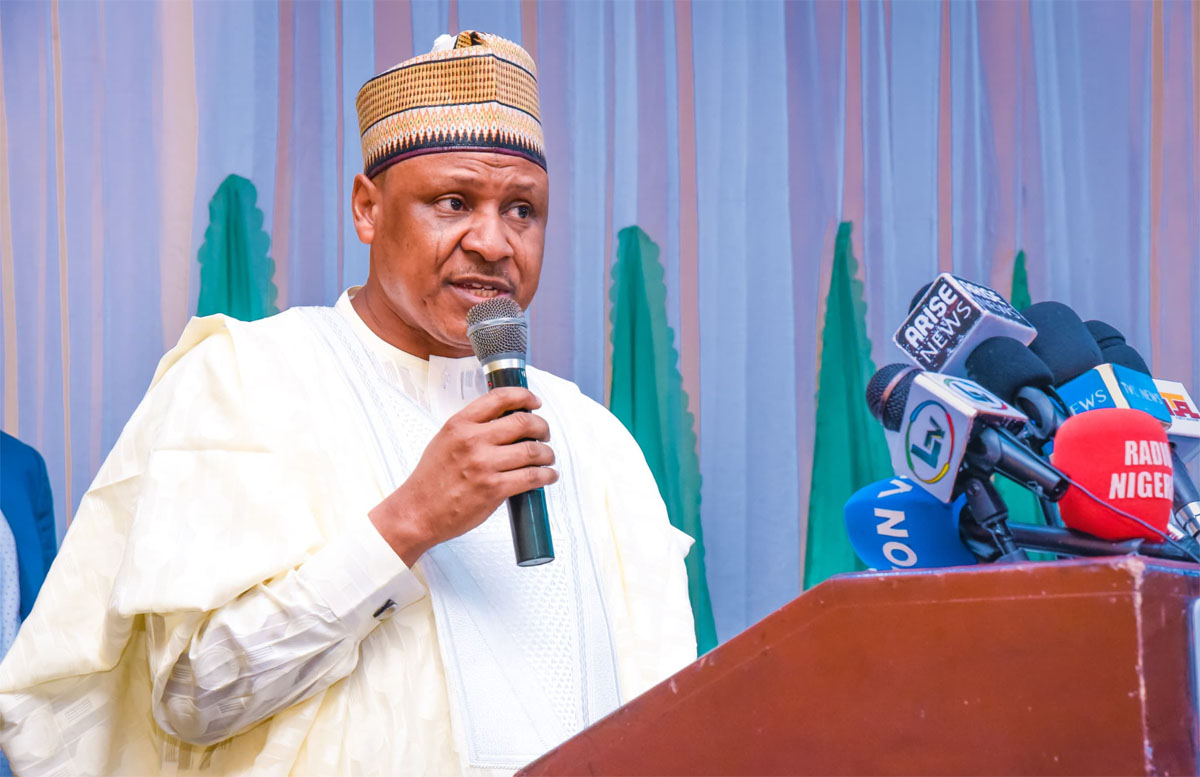
The Federal Government of Nigeria (FG) has firmly denied reports claiming it paid over ₦10 billion in ransom or released militant commanders to secure the freedom of pupils and staff abducted from St. Mary’s Boarding School, Papiri, Niger State. The government described such claims circulating in some international media outlets as false, baseless, and damaging to national security efforts.
The abduction, which occurred in December 2025, involved nearly 300 students and 12 staff members who were later released safely on December 22. In a statement on Tuesday, Minister of Information and National Orientation, Mohammed Idris, dismissed allegations that ransom was paid or that two senior Boko Haram commanders were freed to secure the release. He stressed that no ransom was paid and no detainees were released, attributing such reports to unnamed intelligence sources.
Idris warned that the claims undermine the professionalism and sacrifices of Nigeria’s security forces, including the Office of the National Security Adviser (ONSA), the Department of State Services (DSS), and the leadership of the National Assembly, all of which had publicly refuted the ransom narrative. He also dismissed stories alleging that ransom funds were delivered by helicopter to insurgents, describing them as fictitious and inconsistent with verified facts.
READ ALSO:
- Lookman Assist Powers Atletico to 7–4 Aggregate Win Over Brugge
- Nigeria Refutes Allegations of Christian Persecution, Reaffirms Religious Freedom
- Osogbo Youths Confer Award of Excellence on Federal Polytechnic Offa Rector, Dr. Kadiri Kamoru
The minister emphasised that the rescue operation was conducted through coordinated intelligence and operational efforts, without bending to criminal extortion. He urged the media to verify facts before publication to avoid emboldening criminals or undermining the morale of security personnel.
Meanwhile, the African Democratic Congress (ADC) has called on the Federal Government to issue a categorical statement clarifying the allegations. In a statement signed by National Publicity Secretary Bolaji Abdullahi, the party warned that any confirmed ransom payment would contradict the Terrorism (Prevention and Prohibition) Act, 2022, which criminalises payments and negotiations with terrorists. The ADC said inconsistency on the matter could erode public confidence and worsen insecurity in Nigeria.
The ADC also highlighted that shortly after the victims’ release, government officials, including the National Security Adviser, Nuhu Ribadu, had categorically stated that ransom payments fuel insecurity and should not occur under any circumstances. The party reiterated that Nigeria cannot claim to discourage ransom payments while rewarding terror networks or incentivising further abductions.
The Federal Government reiterated that the safe release of the pupils and staff was achieved entirely through professional security operations, reflecting the commitment of Nigerian authorities to tackling structured, profit-driven criminal enterprises without compromising national security or the rule of law.
Security agencies have continued to intensify operations against kidnappers and armed criminal networks across Nigeria, recovering ransom money from suspects and preventing further abductions in states including Akure, Ondo State, reinforcing the government’s position that law enforcement and intelligence-led operations remain central to addressing Nigeria’s kidnapping crisis.
FG Denies ₦10 Billion Ransom Payment, Affirms Pupils Freed Through Security Operations






News
World Bank Deletes Nigeria Development Update Report Days After Release
World Bank Deletes Nigeria Development Update Report Days After Release
The World Bank has removed its latest Nigeria Development Update (NDU) report from its official website, just three days after its publication, raising concerns over the reasons behind the sudden action.
The report, titled “Nigeria’s Tomorrow Must Start Today: The Case for Early Childhood Development,” was released on April 7, 2026, but the document link is no longer accessible, returning a “page not found” error when users attempt to download it.
Despite the removal, the accompanying press statement remains available, outlining key findings on Nigeria’s economic performance and policy outlook.
In the now-withdrawn report, the World Bank said Nigeria’s economy recorded 4 percent growth in 2025, with inflation dropping significantly to 15.1 percent in February 2026 from 26.3 percent recorded in the same period a year earlier. The improvement was attributed to tighter monetary policies and better food supply conditions.
The report also highlighted that Nigeria’s macroeconomic environment has strengthened following recent stabilisation reforms, noting improvements in key indicators and steady expansion across major sectors of the economy.
READ ALSO:
- US Revokes Green Cards of Iranian Family
- 16-Year-Old Alleges Repeated Rape by Pastor During ‘Deliverance’ in Anambra
- Zulum Donates N50m to Family of Slain Army Officer in Borno Attack
Early data for 2026, according to the report, suggested that growth momentum had been sustained, although global tensions posed a mild drag on economic activity.
A major focus of the publication was early childhood development, which the World Bank described as critical to Nigeria’s long-term growth. It stressed that stronger investment in human capital is essential for translating macroeconomic gains into job creation, poverty reduction, and improved living standards.
The report painted a worrying picture of child welfare in the country, revealing that more than 110 out of every 1,000 children die before the age of five, while many others fail to meet basic developmental milestones due to poor nutrition, limited access to healthcare, and inadequate early education.
It warned that without urgent intervention, Nigeria risks missing out on the demographic dividend expected from its young population.
In addition, the report reportedly addressed ongoing structural reforms, including exchange rate unification, fiscal adjustments, and subsidy removals, noting that while these measures have helped stabilise the economy, their full benefits will depend on sustained implementation and targeted social support for vulnerable households.
However, parts of the report—particularly policy recommendations around the downstream petroleum sector—have drawn attention. The World Bank was said to have advised that Nigeria may need to continue importing petrol (PMS) in the short term to ensure supply stability while transitioning to a fully liberalised and competitive market.
The recommendation comes amid ongoing reforms in Nigeria’s oil and gas sector and has been viewed by some analysts as sensitive, given the country’s push for domestic refining capacity.
In a subsequent clarification following reactions, the World Bank emphasised that its recommendations should be seen within the broader context of energy security, market stability, and global supply uncertainties, rather than as a fixed policy directive.
The NDU is a bi-annual flagship report that evaluates Nigeria’s economic and social developments and provides policy guidance for sustainable growth.
As of the time of filing this report, the World Bank has not issued an official explanation for the removal of the April 2026 edition, fuelling speculation that the document may be undergoing revisions or internal review.
Economists say the development highlights the sensitivity of reform-related recommendations in Nigeria’s current economic climate, particularly those touching on fuel policy and social welfare, as the country navigates a delicate recovery path.
World Bank Deletes Nigeria Development Update Report Days After Release
News
Tinubu Promises Stable Electricity as Bayelsa Unveils 60MW Power Project
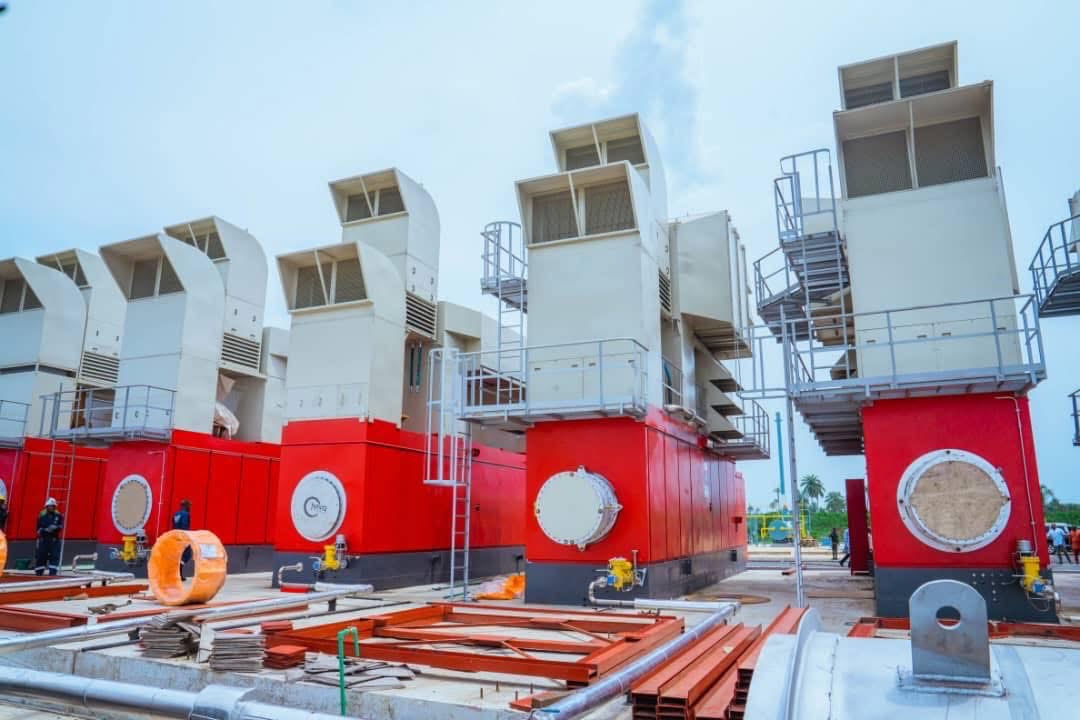
Tinubu Promises Stable Electricity as Bayelsa Unveils 60MW Power Project
President Bola Ahmed Tinubu has reaffirmed his administration’s commitment to delivering stable electricity capable of driving economic growth, industrialisation, and national development, saying ongoing reforms in the power sector will soon yield tangible results.
Tinubu made the remarks in Bayelsa State during the commissioning of major infrastructure projects executed by the state government, including a 60-megawatt Independent Power Project (IPP) located at Elebele in Ogbia Local Government Area.
He described the power project as a “significant step” toward strengthening energy security and subnational electricity generation, noting that no meaningful industrialisation or job creation can happen without reliable power supply.
“There can be no industrialisation, skill development and empowerment without power. I assure Nigerians that we will have electricity to power our growth,” the President said.
The IPP, powered by gas turbines, is expected to supply electricity to Yenagoa and surrounding communities, reducing dependence on the national grid and improving power reliability for households and businesses.
Alongside the power project, Tinubu also commissioned several key infrastructure projects, including the 27-kilometre dualised New Yenagoa City Road 1, the 630-metre Angiama–Oporoma Bridge, and the Sagbama/Ekeremor Road, all aimed at improving connectivity and boosting economic activity across Bayelsa State.
READ ALSO:
US Commences Visa Ban on Nigerians Linked to Alleged Religious Freedom Violations
Did Faleke Just Reveal Lagos’ Next Governor? Party Moves Begin
Jigawa Ward Head Denies Viral Wedding Cancellation Over Tinubu Support
He praised the state government led by Governor Douye Diri for what he described as “purposeful and progressive leadership,” adding that collaboration between federal and state governments remains essential for sustainable development.
“Development advances further and faster when the federal and state governments work in partnership toward a shared purpose,” Tinubu said.
The President also used the occasion to observe a minute’s silence in honour of soldiers killed in a recent terrorist attack on a military base in Borno State, reaffirming his administration’s commitment to defeating terrorism and banditry across the country.
“We will continue to equip and train our armed forces. We will defeat terrorism and banditry, regardless of their shenanigans,” he assured.
Tinubu further acknowledged the economic challenges facing Nigerians, including rising living costs linked to global energy disruptions, but insisted that government interventions are being implemented to ease hardship and support vulnerable citizens.
“We will continue to find ways to ameliorate the suffering of the vulnerable. This is a government that cares,” he said.
At the event, Tinubu also commended former President Goodluck Jonathan, describing him as “one of the most humble and reliable democrats on the continent,” while praising ongoing development efforts in Bayelsa State.
Governor Diri, in his remarks, appealed for federal refunds on projects executed on federal roads by the state government and highlighted ongoing infrastructure efforts under his “Assured Prosperity” agenda, including roads, bridges, civic buildings, and sports facilities.
He described the newly commissioned Yenagoa–Oporoma–Ukubie road as a transformative project that has ended years of isolation for several riverine communities in Southern Ijaw.
The Bayelsa IPP is expected to enhance power supply stability, attract investment, support SMEs, and stimulate economic diversification in the oil-rich state.
The commissioning ceremony was attended by several top political figures, including Senate President Godswill Akpabio, governors from multiple states, senior federal officials, and traditional leaders, reflecting the national significance of the projects.
Residents reportedly thronged the project sites in celebration, cheering and dancing as the President arrived at the Bayelsa International Airport aboard the presidential jet.
Tinubu concluded by expressing optimism about Nigeria’s future, saying: “Nigeria will be great, and we will succeed.”
Tinubu Promises Stable Electricity as Bayelsa Unveils 60MW Power Project
News
US Embassy Suspends Abuja Visa Appointments Over Security Concerns

US Embassy Suspends Abuja Visa Appointments Over Security Concerns
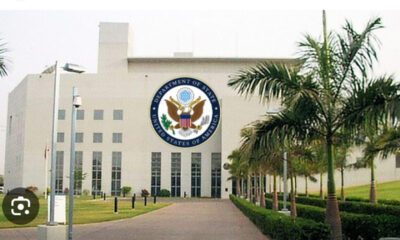
The United States Embassy in Nigeria has suspended visa appointments in Abuja following heightened security concerns, a move that has disrupted travel plans for hundreds of applicants in Abuja.
In an official notice released via its communication channels, the embassy confirmed that all visa interviews in Abuja have been cancelled until further notice, urging affected applicants to check their emails for updates on rescheduled appointments.
“U.S. Embassy Abuja is closed for visa appointments. Applicants should check their email for details on rescheduled appointments,” the statement read. It added that visa services in Lagos remain operational at the United States Consulate General Lagos, providing an alternative for applicants who can access the facility.
The embassy further clarified that American citizen services in Abuja will continue only in emergency situations and strictly by appointment, indicating a temporary scale-down of operations in the capital.
READ ALSO:
- ADC Crisis: Mark-Led Faction Sues INEC Over Party Leadership Removal
- Dangote Sugar Warns Staff Over Chewing Sugarcane, Threatens Arrest
- Jetour set to ignite Lagos with four-day automotive experience
The suspension follows a recent directive by the United States Department of State authorising the departure of non-essential staff and their families from Abuja, citing a deteriorating security situation in Nigeria.
An updated U.S. travel advisory has also placed Nigeria under a “Level 3: Reconsider Travel” status, warning of persistent threats including terrorism, kidnapping, crime, and civil unrest. Several states have been categorised under the stricter “Level 4: Do Not Travel” advisory due to high-risk security conditions.
States listed include Borno State, Yobe State, Taraba State, Niger State, Plateau State, and parts of Adamawa State, where threats linked to terrorism and kidnapping remain high. Other states such as Kaduna State, Katsina State, Zamfara State, and Sokoto State were also flagged over insecurity concerns.
The advisory has triggered reactions from the Federal Government of Nigeria, which described the assessment as “unbalanced” and not fully reflective of ongoing efforts to address insecurity nationwide. Authorities warned that such reports could negatively impact Nigeria’s global image and economic activities.
Despite the disruption in Abuja, visa processing and consular services continue in Lagos, offering a temporary alternative for applicants. However, the development is expected to cause delays in visa processing, particularly for students, business travellers, and individuals with urgent travel needs.
The US Embassy visa suspension in Abuja highlights the broader impact of security challenges on diplomatic operations and international travel, as uncertainty remains over when normal services will resume in the capital.
US Embassy Suspends Abuja Visa Appointments Over Security Concerns

-
 Africa3 days ago
ECOWAS Recruitment 2026: Over 30 Job Vacancies Open for Nigerians (How to Apply)
-
 metro12 hours ago
JUST IN: FG Publishes List of 48 Individuals, Groups Linked to Terrorism Financing in Nigeria
-

 Health3 days ago
Sleeping Positions: How They Affect Your Health and Which Ones to Avoid
-

 Politics3 days ago
Court Stops ADC Congress, Orders Status Quo in Leadership Row
-
 metro3 days ago
Boko Haram Attack in Borno: Brigadier-General, Soldiers Killed as ISWAP Overruns Military Base
-
 Politics23 hours ago
Did Faleke Just Reveal Lagos’ Next Governor? Party Moves Begin
-

 Education2 days ago
Germany Opens Fully Funded Scholarships for Nigerians, Africans
-

 metro14 hours ago
42-Year-Old Married Woman Declared Missing Found in Hotel with Man