
metro
FG distributes 2,000 CNG tricycles to youths
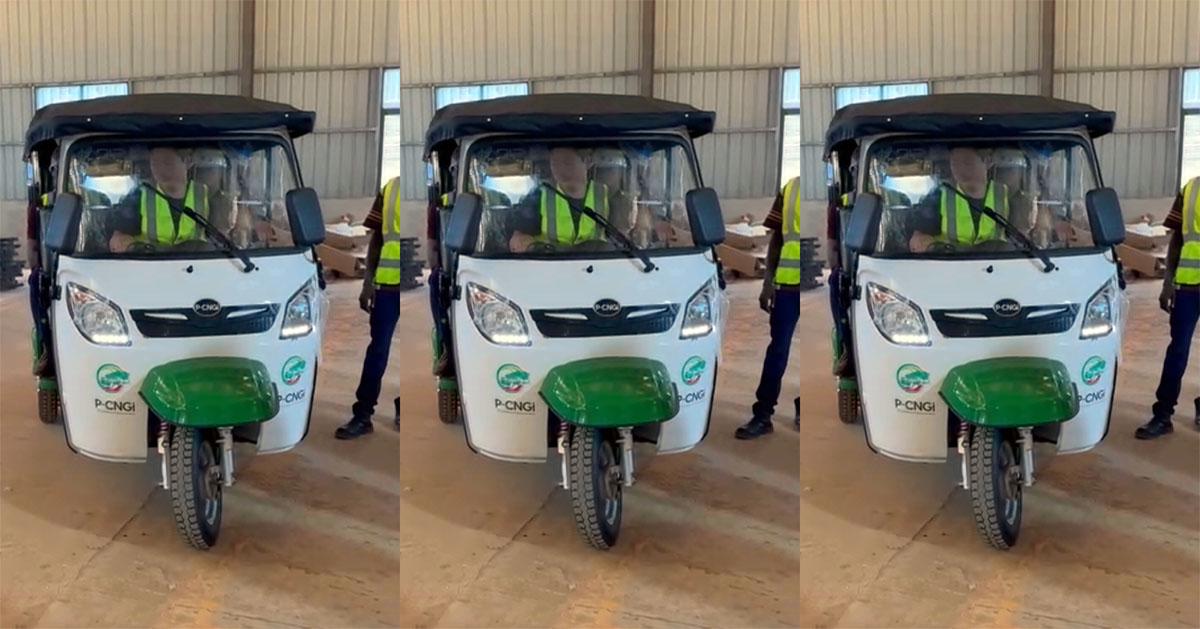
FG distributes 2,000 CNG tricycles to youths
The Federal Government has given 2,000 Compressed Natural Gas (CNG)-powered tricycles to youths as part of commitment by President Bola Tinubu to alleviate the daily struggles of young persons.
Minister of Youth Development, Dr. Jamila Ibrahim, said this in Abuja on Tuesday during the first phase distribution of the tricycles.
Ibrahim said the tricycles would go a long way in easing the transportation challenges faced by citizens across the country.
She added that “in this crucial time of economic reforms, this intervention will serve as a great relief to our people, demonstrating the administration’s dedication to improving the quality of life for young people.
“As we look forward to empowering young people, I must also highlight how the National Youth Investment Fund (NYIF) is geared to support youth entrepreneurs, especially those interested in sustainable mobility and transport businesses.”
According to her, the NYIF will provide the financial backbone for many young innovators to thrive, boosting not only youth employment but also our economy at large.
“We look forward to collaborating with the Presidential Compressed Natural Gas Initiative (PCNGi) to deliver on the target of two million tricycles and other forms of transportation using the CNG initiative.
“This will be a remarkable step toward achieving Nigeria’s gas transformation agenda.”
FG distributes 2,000 CNG tricycles to youths






metro
Lagos Youths Protest Power Outages as Nigeria’s Electricity Crisis Deepens
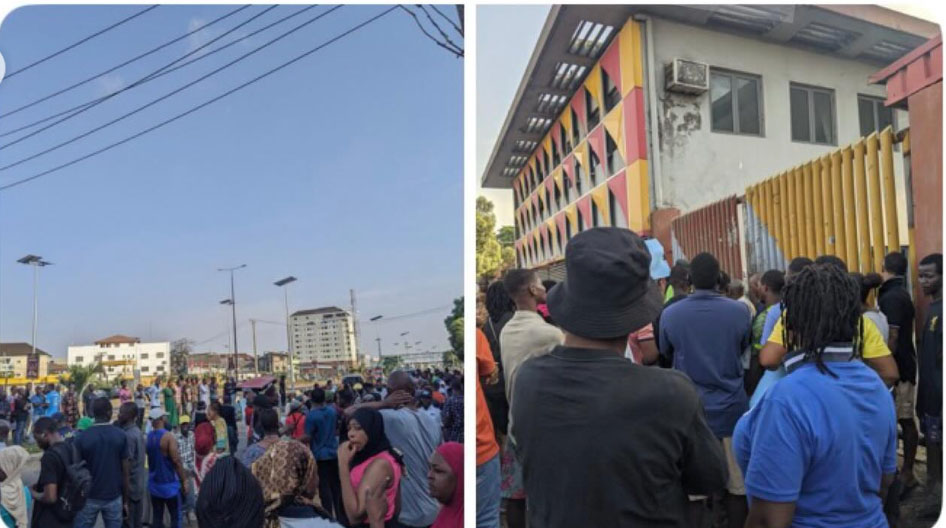
Lagos Youths Protest Power Outages as Nigeria’s Electricity Crisis Deepens
Youths in Lagos on Thursday, March 12, staged protests over persistent power outages, blaming the worsening electricity crisis in Nigeria on gas supply constraints affecting power generation.
The demonstrators, largely made up of young residents and small business owners, gathered in parts of the city early in the morning to express frustration over prolonged blackouts that they say are disrupting daily life and damaging economic activities.
Chanting slogans and carrying placards, the protesters accused the government of failing to address the country’s long-standing power supply challenges. Some of the placards read, “We Need Light,” “Power Our Homes,” and “Electricity Is Not a Luxury.”
Residents say the erratic electricity supply in Lagos has worsened in recent weeks, forcing households and businesses to rely heavily on fuel-powered generators, which has further increased the cost of living amid rising fuel prices.
READ ALSO:
- Fuel Costs Remain Elevated at ₦1,300 per Litre Despite Dangote Price Adjustment
- Iran Threatens Strikes on US, Israeli Banks, Tech Giants
- BREAKING: Tambuwal Quits PDP, Defects to ADC Amid Internal Party Crisis
Nigeria’s electricity sector has struggled for years with multiple challenges, including gas supply disruptions to power plants, aging infrastructure, weak transmission networks, and insufficient investment in the sector.
During the campaign leading to the 2023 presidential election, President Bola Ahmed Tinubu promised to tackle Nigeria’s chronic power shortages by boosting electricity generation and improving the distribution network. However, critics argue that progress has been slow, and the recent blackouts have renewed scrutiny of the administration’s energy policies.
Protesters said reliable electricity supply is essential for economic growth, small businesses, and everyday life. They urged the federal government and stakeholders in the power sector to urgently resolve the gas supply bottlenecks affecting electricity generation across the country.
Authorities have not yet issued an official statement on the protest. However, energy experts maintain that addressing gas supply constraints, improving infrastructure, and increasing investment will be critical to stabilising Nigeria’s electricity supply.
The protest reflects growing public frustration in Lagos and other parts of Nigeria, where millions of residents continue to grapple with unreliable electricity despite repeated government promises of reform in the power sector.
Lagos Youths Protest Power Outages as Nigeria’s Electricity Crisis Deepens
metro
Sowore Joins Aba Protest as Supporters Demand Release of Nnamdi Kanu
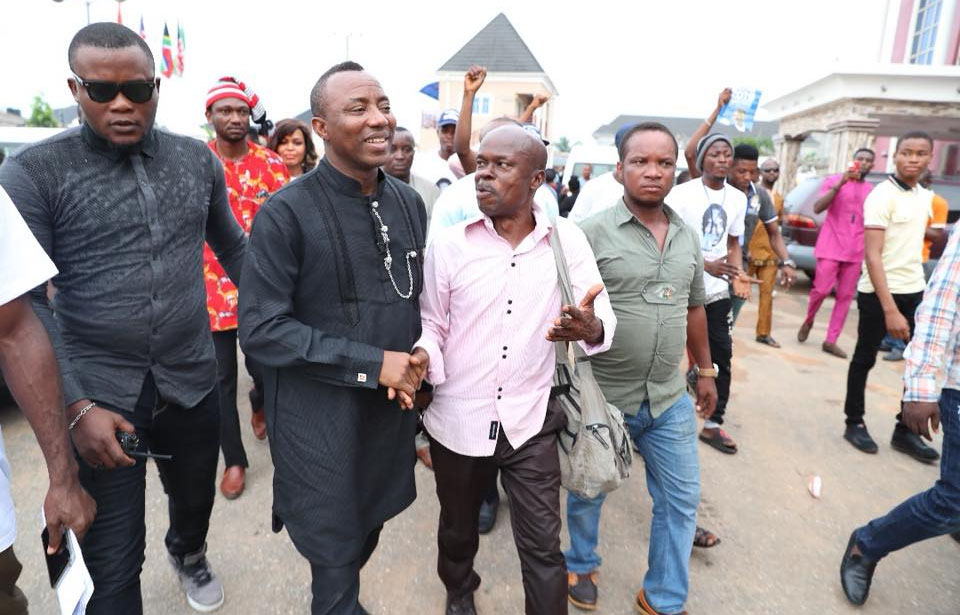
Sowore Joins Aba Protest as Supporters Demand Release of Nnamdi Kanu
Human rights activist and publisher of Sahara Reporters, Omoyele Sowore, on Thursday joined demonstrators in Aba, Abia State, as supporters intensified calls for the release of Nnamdi Kanu, the leader of the Indigenous People of Biafra (IPOB).
Sowore, a former presidential candidate of the African Action Congress (AAC), marched alongside hundreds of residents and activists through major streets of Aba, the commercial hub of Abia State, during a protest organised by pro-Biafra supporters and civil rights groups.
Videos circulating online showed the activist walking among the crowd while demonstrators chanted solidarity songs and demanded the immediate freedom of the IPOB leader.
The protesters repeatedly chanted slogans such as “Holy, Holy, Holy, Nnamdi Kanu is another saviour” and “Free Nnamdi Kanu,” while marching through several parts of the city.
Many participants carried large banners and placards displaying Kanu’s image alongside inscriptions including “Freedom for Nnamdi Kanu” and “Justice for Nnamdi Kanu.”
READ ALSO:
- Fuel Costs Remain Elevated at ₦1,300 per Litre Despite Dangote Price Adjustment
- Iran Threatens Strikes on US, Israeli Banks, Tech Giants
- BREAKING: Tambuwal Quits PDP, Defects to ADC Amid Internal Party Crisis
Organisers described the demonstration as part of a broader campaign by supporters seeking the freedom of the detained separatist leader. Activists said the protest formed part of a mass mobilisation tagged the “One Million March” aimed at drawing national attention to the continued detention of the IPOB leader.
During the protest, Sowore reportedly addressed supporters, insisting that Kanu should be released and allowed to reunite with his family and followers.
The IPOB leader, Nnamdi Kanu, was brought back to Nigeria in June 2021 after he was arrested in Kenya and transferred to Nigerian authorities.
After years of legal proceedings, he was convicted on November 20, 2025, by a Federal High Court in Abuja over terrorism-related charges, including treasonable felony and incitement through broadcast messages.
Delivering the judgment, Justice James Omotosho ordered that Kanu be transferred from Abuja to a correctional facility in Sokoto to serve multiple concurrent life sentences.
Despite the conviction, calls for Kanu’s release have continued from supporters, activists and several organisations who insist that the circumstances surrounding his arrest, trial and sentencing remain controversial.
Critics of the process argue that the case against the IPOB leader is politically motivated and have urged the Federal Government to consider a political solution to address the tensions linked to Biafra agitation in Nigeria’s South-East.
Supporters have also organised several demonstrations across parts of the country and in diaspora communities demanding what they describe as justice for the detained separatist leader.
The latest protest in Aba, Abia State, highlights the continued agitation by pro-Biafra supporters and activists pressing for Nnamdi Kanu’s freedom despite his conviction.
Sowore Joins Aba Protest as Supporters Demand Release of Nnamdi Kanu
metro
ADC Urges FG to Cap Petrol Prices as Global Oil Market Volatility Bites
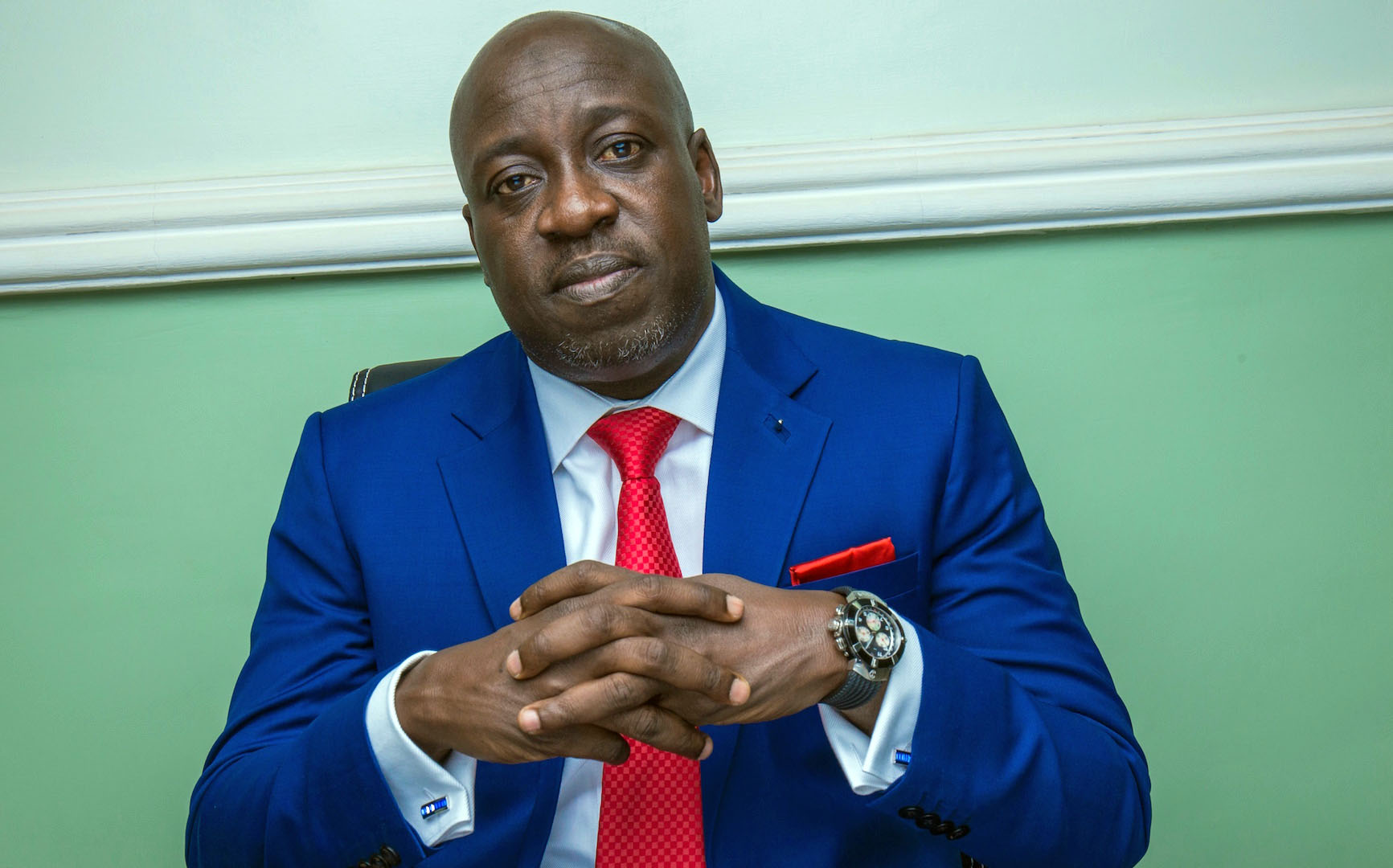
ADC Urges FG to Cap Petrol Prices as Global Oil Market Volatility Bites
The African Democratic Congress (ADC) has called on the Federal Government to introduce a temporary and time-bound cap on petrol prices to prevent further increases that could worsen the cost-of-living crisis in Nigeria.
In a statement issued on Wednesday, the party’s National Publicity Secretary, Bolaji Abdullahi, said the recent hikes in petrol prices in Nigeria reflect rising volatility in the global oil market, largely driven by escalating tensions in the Middle East.
“The African Democratic Congress calls on the Federal Government to immediately introduce a temporary and time-bound cap on petrol prices to prevent further increases that continue to push the cost of living beyond the reach of millions of Nigerians,” Abdullahi said.
He noted that the ongoing Middle East crisis has triggered instability in global energy markets, which is now affecting domestic fuel prices and worsening economic hardship for Nigerians.
According to the opposition party, external shocks should not be used to justify allowing fuel prices to rise unchecked, particularly in what it described as a fragile economy still grappling with the consequences of subsidy removal.
ADC said the current situation has deepened the economic pressure on households following the fuel subsidy removal announced by Bola Ahmed Tinubu during his inauguration on May 29, 2023.
Nigeria eventually exited under-recovery payments when the government fully deregulated the downstream petroleum sector in October 2024, allowing market forces to determine petrol pricing.
The party argued that the government must take urgent steps to protect citizens from further shocks, warning that rising fuel costs are already affecting transportation, food prices and the overall cost of doing business.
READ ALSO:
- Trump Claims US Has ‘Virtually Destroyed Iran’ After 11 Days of War
- Ikeja Electric Apologises to Customers Over Power Disruptions
- Iran’s Revolutionary Guard Fires at ‘Israeli-Owned’ Vessel, Strikes Thai Cargo Ship
The call comes as the Middle East conflict continues to create unprecedented volatility in global energy markets. International crude oil prices briefly crossed $100 per barrel on Monday, the highest level since July 2022, before easing to around $87 per barrel on Tuesday.
Iran has also warned that global oil prices could surge further, even threatening that crude prices may climb toward $200 per barrel if tensions escalate and shipping through the Strait of Hormuz — one of the world’s most critical oil transit routes — is disrupted.
The Strait of Hormuz is a strategic waterway through which roughly 20 percent of global oil shipments pass daily, linking the Persian Gulf to the Gulf of Oman and the Arabian Sea.
In Nigeria, the surge in crude oil prices has pushed up ex-gantry petrol prices and retail pump prices across filling stations nationwide.
Transport operators have already begun increasing fares on major routes in cities such as Lagos, Abuja and Kano, with commuters reporting that fares have doubled on some routes.
Meanwhile, the Dangote Petroleum Refinery on Tuesday announced a reduction in its ex-gantry petrol price to ₦1,075 per litre after implementing three previous increases amid global market pressures.
Despite the reduction at the refinery level, pump prices at retail filling stations remain elevated, reflecting the broader impact of global oil market fluctuations and distribution costs.
ADC warned that unless urgent intervention measures are introduced, rising petrol prices and transport costs could accelerate inflation and worsen the economic burden on millions of Nigerians already facing high food and energy costs.
The party urged the Federal Government to adopt immediate measures to stabilise the domestic fuel market while also pursuing long-term reforms to strengthen Nigeria’s energy security and refining capacity.
ADC Urges FG to Cap Petrol Prices as Global Oil Market Volatility Bites

-

 metro18 hours ago
Ikeja Electric Apologises to Customers Over Power Disruptions
-

 Business2 days ago
JUST IN: Dangote Refinery Cuts Petrol, Diesel Ex-Depot Prices Amid Market Relief
-

 metro3 days ago
Students Escape as Four-Storey School Building Collapses in Lagos
-
 News1 day ago
India, Other Countries Reject Tinubu’s Ambassadorial Nominees
-

 Politics3 days ago
BREAKING: Zamfara Governor Dauda Lawal Defects from PDP to APC
-
 News3 days ago
OYOSUBEB Chairman Adeniran Joins 2027 Oyo Governorship Race
-

 Business2 days ago
Middle East Crisis Pushes Petrol Price to N1,300 Per Litre in Nigeria
-

 International1 day ago
Iran Rejects Ceasefire as Explosions Rock Tehran