

Business
FG generates N200bn, $7m from 161 marginal oil fields licences

The Nigerian Upstream Petroleum Regulatory (NUPRC) says the 2020 marginal field bid round exercise generated about N200 billion with additional $7 million in revenue for the Federal Government
Chief Executive Officer, NUPRC, Gbenga Komolafe, stated this on Tuesday while issuing petroleum prospecting licences (PPL) to successful bidders in Abuja.
Marginal fields are smaller oil blocks developed by indigenous companies not exploited in the last ten years.
In May 2021, the Department of Petroleum Resources (DPR) — now NUPRC — completed the first successful bid programme after 18 years of bureaucratic bottlenecks.
Successful companies include Ardova Plc, Matrix Energy Ltd, Sun Trust Oil Company Limited, Deep Offshore Integrated Service Ltd, Island Energy Ltd, Sigmund Oil Field Ltd, among others.
Out of the 665 entities that expressed interest in the exercise, Komolafe said 161 PPLs were awarded to successful 2020 marginal fields companies while out of the 57 fields presented in the bid round, 41 were fully paid for.
He said 37 fields were also issued with the PPL, having satisfied all conditions for the award.
Komolafe said the marginal fields award initiative began in 1999 and was borne “out of the need to entrench the indigenisation policy of government in the upstream sector of the oil and gas industry and build local content capacity.”
He added that the scheme was also targeted at creating employment opportunities and encouraging increased capital inflow to the sector.
“Since its inception, a total of 30 fields have been awarded, with seventeen 17 currently producing. A breakdown of the allocation of the fields to indigenous operators is as follows: two fields awarded in 1999, 24 in 2003/2004, one each in 2006 and 2007, and two in 2010. 10 years later, in 2020, 57 fields were put up for bidding,” he said.
“It is significant to note that the passage of the Petroleum Industry Act has brought an end to the era of marginal field awards. Section 94(9) of the Act states that ‘no new marginal field shall be declared under this Act’.
“Accordingly, the minister shall now award PPL on undeveloped fields following an open, fair, transparent, competitive, and non-discriminatory bidding process in line with sections 73 and 74 of the Act.”
Komolafe also said revenue earnings in the country did not reflect the upsurge in international prices of crude oil owing to sabotage, theft, as well as other operational challenges.
He urged potential licensees to take advantage of the current market realities and promptly bring their fields to production.

Auto
Jetour Unleashes F700 Hybrid Pickup as Abuja Experience Begins Tuesday
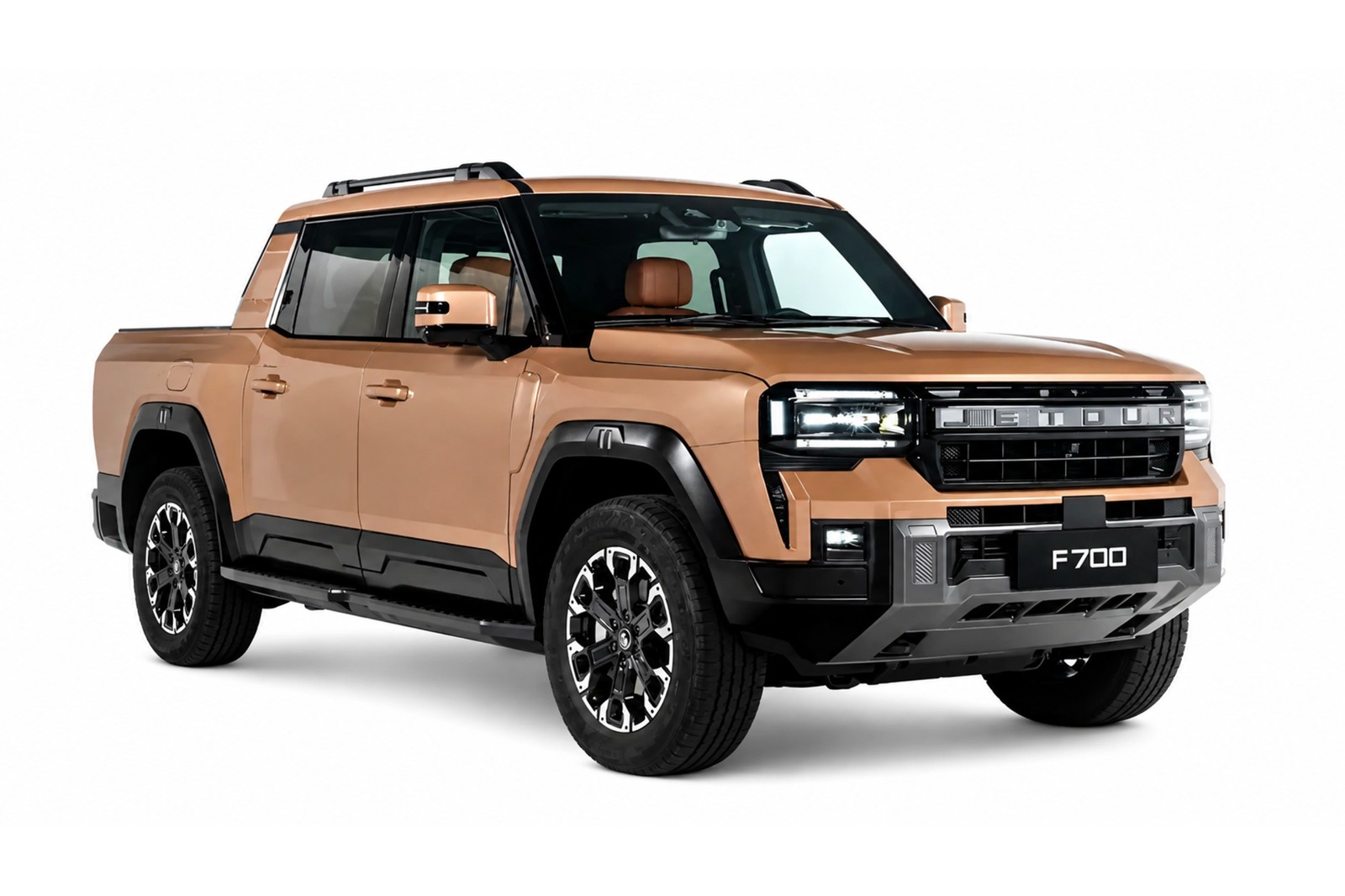
Jetour Unleashes F700 Hybrid Pickup as Abuja Experience Begins Tuesday
Jetour is taking its premium pickup game to Abuja as the automaker prepares to showcase the powerful F700 hybrid pickup at the Jetour Experience Abuja, bringing a blend of electrified performance, luxury and rugged off-road capability to the Federal Capital Territory.
The three-day event, scheduled for September 22 to 24 at Maha Event Centre, Area 8, Garki, comes on the heels of strong reception in Lagos and is expected to draw commercial fleet operators, corporate buyers and luxury pickup enthusiasts keen to experience Jetour’s latest hybrid workhorse.
Following high-impact reception in Lagos, the Abuja activation, which holds at Maha Event Centre, Area 8, Garki, answers massive demand from commercial fleet leaders, corporate buyers, and luxury truck enthusiasts eager for an electrified workhorse built without compromise.
Jetour’s rapid ascendancy as Nigeria’s Fastest Growing Auto Brand and Auto Brand of the Year is backed by nationwide after-sales infrastructure, certified technicians, and genuine parts availability through its authorized dealer network including Elizade Nigeria Limited, New Era AutoVehicle Services, Germaine Auto Centre, Kojo Motors, Mandilas Autos, R.T. Briscoe and
Tab Autos.
The Ultimate Hybrid Powerhouse
Engineered on the heavy-duty platform of Jetour’s G700 luxury SUV, the double-cab F700 redefines utility.
READ ALSO:
- Delta Police Intercept Sienna With Military Uniforms, Suspected Drugs
- Jehovah’s Witnesses Adjust Blood Transfusion Rules, Allow Personal Choice
- Ogun 2027: APC Highlights Adeola’s Projects, Challenges Adebutu
Stretching nearly 5.5 meters, it commands road presence via a high-tensile ladder-frame chassis and independent double-wishbone suspension engineered for punishing industrial demands and refined highway cruising alike.
Under the hood lies the revolutionary Kunpeng Super Hybrid CDM-O powertrain—pairing dual high-output electric drive motors with an onboard turbo petrol generator that seamlessly feeds the battery pack on the fly, eliminating range anxiety entirely.
According to Jetour, an advanced CATL 800V architecture surges the battery from 20% to 80% in just 10 minutes, achieving ultra-fast charging.
The vehicle delivers a monumental combined cruising range of up to 1,300 km on a single charge and tank, and achieves exceptional fuel economy, sipping as low as 1.39 L/100 km.
Conquering Terrain in First-Class Luxury
Engineered for unforgiving terrain, the F700 deploys Jetour’s intelligent XWD all-wheel-drive system governed by front, center, and rear mechanical differential locks.
With 9.5 inches of ground clearance and an imposing 900 mm water-wading capability, the F700 glides through deep water crossings, unpaved construction corridors, and rocky trails effortlessly.
Inside, the cabin abandons utilitarian compromises for bespoke executive refinement, featuring
35.4-inch Panoramic “Sky Screen” dominating the dash architecture.
Also, it features the 15.6-inch Central Command Touchscreen for seamless telematics and vehicle dynamics, Sculpted Luxury Finishes combining aviation-grade acoustic insulation, premium materials, and active driver-assist safety suites.
The three-day Jetour Experience Abuja will feature live technical walkarounds, rugged dynamic tests, and hands-on driving trials at the capital.
Jetour Unleashes F700 Hybrid Pickup as Abuja Experience Begins Tuesday
Auto
26th Abuja Motor Fair: NADDC, BKG Set November 10 Date for Auto Industry Show

26th Abuja Motor Fair: NADDC, BGK Set November 10 Date for Auto Industry Showcase
The National Automotive Design and Development Council and BKG Exhibitions Ltd have unveiled plans for the 26th Abuja International Motor Fair, scheduled to hold from November 10 to 13, 2026, at Eagle Square, Abuja.
The four-day event is expected to bring together major players across the automotive value chain, such as vehicle manufacturers and assemblers, component producers, financial institutions, technology firms, transport operators, logistics companies, development partners, investors and government agencies.
A three-day conference will also feature prominently at the fair, with the theme, “Driving Nigeria’s Automotive Transformation: Policy, Production, and Prosperity.”
A statement on Friday by BKG Exhibitions said the conference would examine key issues shaping the development of Nigeria’s automotive industry, with speakers drawn from various sectors of the industry and related fields.
Chairman of the Organising Committee and Managing Director of BKG Exhibitions, Mr Ifeanyi Agwu, said the conference would feature a keynote address by the Director-General of NADDC, Otunba Joseph Osanipin, alongside presentations and speeches by leading stakeholders in the automotive and transport sectors.
READ ALSO:
- BREAKING: Bloodbath at Pakistan Mosque as Suicide Blast Kills 21, Injures 103
- Xenophobia: FG Brings 33 More Nigerians Home From South Africa
- Falconets Thrash England 3-0, Face Colombia in U-20 World Cup Quarter-Finals
According to him, the fair will provide participants with opportunities to engage industry leaders, investors, government officials and business executives while exploring emerging vehicles, technologies, products and investment opportunities.
Other highlights of the event are the Nigeria Automotive Excellence Awards Night, Abuja Automotive Road Show, Ultimate Test-Drive experience, exotic automobile displays and the Automotive and Future Mobility Arena.
Visitors will also have access to professional advice, technical papers and a showcase of some of Abuja’s finest cuisine.
The Abuja International Motor Fair has, over the years, evolved into one of Nigeria’s major automotive exhibitions and platforms for industry and policy dialogue.
The organisers said this year’s edition would further strengthen the platform’s role in promoting investment, innovation, local production and sustainable growth across Nigeria’s automotive sector.
26th Abuja Motor Fair: NADDC, BGK Set November 10 Date for Auto Industry Showcase
Auto
Replace Fuel Subsidy With Vehicle Credit to Drive Mobility, Jobs,LCCI, Ilekuba tell FG
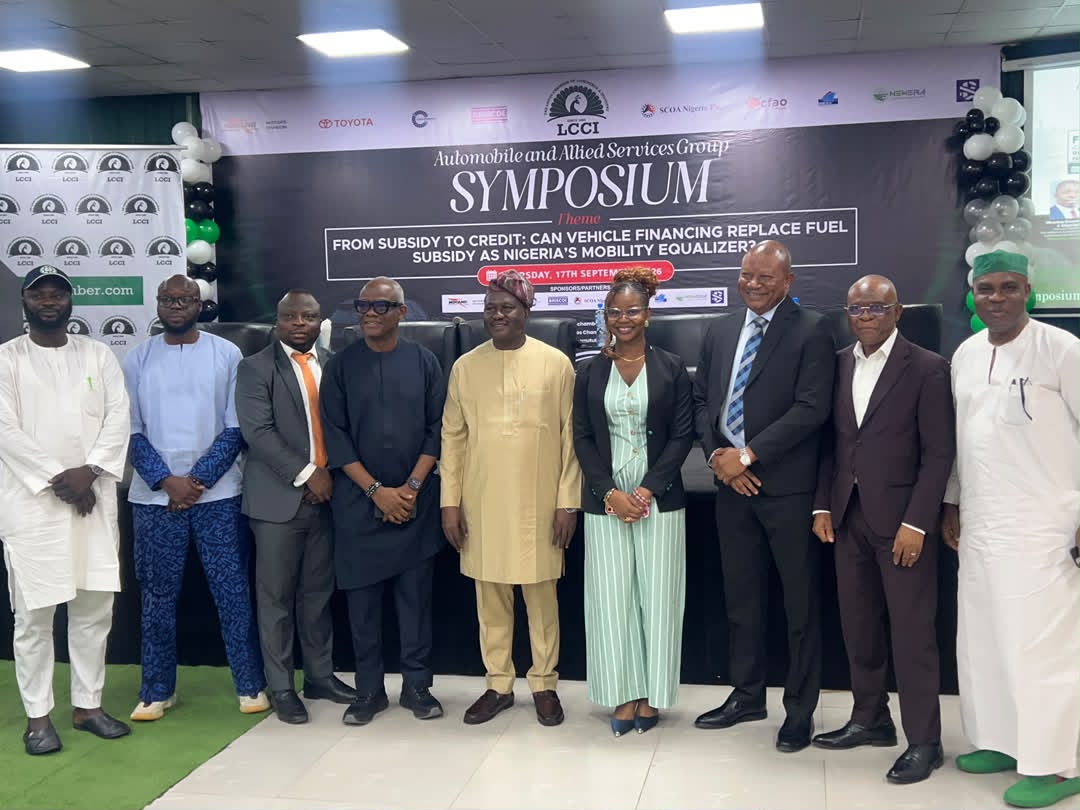
Replace Fuel Subsidy With Vehicle Credit to Drive Mobility, Jobs,LCCI, Ilekuba tell FG
Nigeria’s automotive stakeholders have called for an urgent shift from fuel subsidy to affordable vehicle financing, saying the new model could make vehicle ownership accessible to more Nigerians while driving local production, creating jobs and reducing dependence on imported automobiles.
The call was made on Thursday at the LCCI/National Automotive Design and Development Council Automobile Symposium, themed, “From Subsidy to Credit: Can Vehicle Financing Replace Fuel Subsidy as Nigeria’s Mobility Equalizer?”
Chairman of the LCCI Auto and Allied Sector Group, Dr Femi Eguaikhide, said affordable vehicle credit could restore access to mobility, improve productivity and create a stronger market for Nigeria’s automotive industry.
He said fuel subsidy had for decades effectively functioned as Nigeria’s mobility policy by helping to keep transportation relatively affordable for millions of Nigerians, including commercial drivers, teachers and small-business operators.
However, following its removal in May 2023, Eguaikhide said mobility costs had risen sharply, resulting in higher transport fares and increased prices of goods and services, with knock-on effects on productivity.
“Subsidy made fuel cheap, but cars remained expensive. So only the rich owned productive assets,” he said, arguing that vehicle credit could enable more Nigerians to acquire income-generating vehicles and repay loans from the proceeds.
Eguaikhide called for affordable, preferably single-digit interest rates and longer-tenor lease-to-own schemes for commercial operators using buses, tricycles and motorcycles.
“Can we create a ₦50,000/month plan for a keke driver?” he asked, urging financial institutions to develop financing products around borrowers’ earning capacity rather than conventional lending models.
He also advocated the use of vehicle telematics, tracking systems and cash-flow data to develop “mobility credit scores” that could help lenders assess the repayment capacity of commercial transport operators.
But Eguaikhide warned that vehicle financing must not become a fresh channel for importing used vehicles.
“If we use credit to import more Tokunbo, we’ve solved nothing,” he said, advocating financing for CNG conversions, locally assembled electric and hybrid vehicles, as well as mass-transit buses.
He summed up the proposed policy shift: “Subsidy gave us consumption. Credit can give us production.”
In a special address, Chairman and Chief Executive Officer of Cedric Masters Group, Chief (Sir) Anselm Ilekuba, also canvassed a fundamental shift towards vehicle financing, stressing that such a policy must simultaneously promote Nigeria’s automotive industrialisation.
Ilekuba, who was represented at the event by his Chief Finance Officer and Head of Accounts and Strategy, Christabel Mmesoma Ilekuba, decried the impact of high financing costs, short repayment periods and pressure on household incomes on vehicle ownership, despite strong demand for automobiles.
He urged the Federal Government to seriously consider the proposed National Automotive Bank being championed by NADDC, describing it as a specialised financing institution that could support consumers, vehicle assemblers and component manufacturers.
Ilekuba proposed longer-tenor financing for qualifying locally assembled vehicles, alongside industrial credit for manufacturers and funding for machinery, technology, certification and capacity expansion by component producers.
He also called for stronger localisation of automotive components, citing the proposed National Automotive Components Parts Gateway being developed by ALCMAN with Chinese partners.
According to him, the Automotive Bank and Components Gateway could create a cycle in which increased vehicle purchases stimulate local assembly, boost demand for locally produced components, expand factories and generate jobs, while reducing Nigeria’s exposure to foreign-exchange pressures.
Ilekuba said the success of vehicle financing should therefore not be measured merely by the number of loans disbursed, but also by growth in local vehicle assembly, component production, factory expansion, employment and foreign exchange conserved or earned.
“The old subsidy helped Nigerians consume mobility. The new approach should help Nigerians own mobility—and help Nigeria produce it,” he said.
-

 metro3 days ago
Niger Mosque Abductions: Terrorists Execute 30 of 500 Captive Muslim Worshippers
-
 Business3 days ago
Fuel Prices Climb to ₦1,500 per Litre Across Nigeria, Sparking Calls for Urgent Action
-
 News3 days ago
OAU Investigates Death of Final-Year Student as Police Begin Probe
-

 News2 days ago
ECOWAS Biometric Card Expands as Seven Countries Begin Rollout
-

 Business3 days ago
NCAA Moves Against Airlines Over Rising Flight Delays
-
 metro2 days ago
FG Suspends Niger NSCDC Commandant As 37 Suspected Illegal Miners Die In Custody
-

 Politics3 days ago
Aisha Buhari Visits Atiku Amid Opposition Coalition Activities
-
 Interview3 days ago
He Does Not Lose Elections”: Abdulmumin Jibrin Predicts 65% Landslide for Tinubu in 2027