

News
FG Launches FreeTV, Offers Nigerians Over 100 Free Digital TV Channels

FG Launches FreeTV, Offers Nigerians Over 100 Free Digital TV Channels
The Federal Government formally launched Nigeria’s long-awaited Digital Switch Over (DSO) programme on Wednesday, unveiling a new hybrid digital broadcasting platform called FreeTV that offers Nigerians access to over 100 television channels without monthly subscription fees. The launch, held in Abuja, marks Nigeria’s formal transition from analogue to digital terrestrial television broadcasting, a project that has faced years of delays despite repeated commitments by successive administrations. The initiative is expected to reach 40 million homes, unlock over N600 billion in economic opportunities, create thousands of jobs, and expand access to quality broadcasting services across the country.
The Federal Government unveiled FreeTV as a digital television platform accessible through compatible decoders, satellite and terrestrial signals, as well as a mobile application. Nigerians can watch a wide range of content, including news, sports, movies, music, educational programmes, children’s shows, and indigenous language channels including Yoruba, Hausa, and Igbo at no cost. Households do not need to purchase new television sets to enjoy the service. Existing TVs can access the platform with compatible DVB-T2 or DVB-S2 decoders, while many households already using free-to-air decoders may be able to connect immediately. The service will also be available through the FreeTV mobile application on smartphones, enabling users in both urban and rural communities to access digital television services without the need for a decoder or satellite dish.
Speaking at the launch event, the Minister of Communications, Innovation and Digital Economy, Bosun Tijani, described the rollout as a major milestone in Nigeria’s digital transformation agenda and said it would support the administration’s broader ambition of building a $1 trillion economy. Tijani stated: “Today, Nigeria joins the ranks of nations that have embraced modern digital broadcasting infrastructure to serve their people. While this may appear to be a broadcasting milestone, its true significance lies in what it means for ordinary Nigerians. It means better access to information, broader access to educational and cultural content, an improved quality of service and the ability to ensure that no Nigerian is left behind simply because of where they live.” He linked the project to the Federal Government’s wider digital infrastructure strategy, noting that the government is rolling out 90,000 kilometres of fibre-optic open-access infrastructure across the country and has secured approval for two additional satellites to enhance communications services. He stated that Nigeria is the only country in West Africa with a communications satellite, and the fibre network would cover all national borders, allowing neighbouring countries to benefit from broadcasting and digital services.
READ ALSO:
- Kebbi Police Arrest School Guard for Alleged Defilement of 10-Year-Old Girl
- Nigerian Migrant Arrested for Alleged Murder of Libyan Boss
- UK Social Media Ban Could Increase Online Risks for Teens — Telegram CEO
The Director-General of the National Broadcasting Commission (NBC) , Charles Ebuebu, described the launch as the unveiling of a new national communications architecture and a critical step in Nigeria’s digital transformation journey. “Today, we are not merely launching a digital broadcasting platform; we are launching a new national communications architecture. The big picture represents our collective ambition to democratise access to information, unlock new opportunities for Nigerian content creators, stimulate investment across the broadcasting value chain, empower local manufacturers, strengthen media plurality, expand consumer choice and improve spectrum efficiency,” he said. Ebuebu also disclosed that broadcasters joining the FreeTV platform would enjoy an 18-month free carriage window, nationwide visibility, and access to audience data through the proposed audience measurement system. He noted that Nigeria’s DSO strategy had evolved from the previous Digital Terrestrial Television (DTT)-only model into a hybrid system integrating Direct-to-Home satellite broadcasting (DTH), Digital Terrestrial Television, and Internet Protocol (IP)-based streaming, ensuring that Nigerians in all parts of the country, regardless of their location or infrastructure, can access the new platform.
As part of the initiative, regional production centres have been established in Lagos, Abuja, Port Harcourt, Enugu, Kano, and Benin to drive content development and support jobs across the media industry. The centres are expected to create opportunities for producers, editors, camera operators, sound engineers, technicians, and other media professionals. The platform is expected to stimulate growth within Nigeria’s creative and media sectors by creating new opportunities for content creators and broadcast professionals. The Nigeria’s digital migration journey had suffered multiple delays, but stakeholders expressed optimism that a clearer implementation framework was emerging.
READ ALSO:
- Kingibe Denies Endorsing Akpoti-Uduaghan Suspension
- Witness Reveals How Sirika Approved Nigeria Air Consultancy Deal for Associate
- Police Arrest Boko Haram, Lakurawa Terror Suspects, Rescue Kidnap Victim
The Minister of Information and National Orientation, Mohammed Idris, described the launch as the culmination of years of efforts by stakeholders and government agencies to actualise the digital broadcasting project. “Today is not merely a broadcasting milestone. It is a more connected, more competitive and more prosperous Nigeria. The Digital Switch Over project is therefore not simply a technological transition. It is an investment in Nigeria’s future. The goal is simple: to make quality broadcasting available to more Nigerians than ever before,” Idris stated. He noted that the project aligns with President Bola Tinubu’s Renewed Hope Agenda, which places emphasis on digital transformation, innovation, economic growth, and critical national infrastructure. He said a fully implemented digital broadcasting ecosystem would create jobs, stimulate local manufacturing, expand audience reach, strengthen content production, increase advertising opportunities and unlock new revenue streams for broadcasters and content creators.
The Managing Director and Chief Executive Officer of NigComSat Limited, Jane Egerton-Idehen, described the DSO programme as a strategic investment in Nigeria’s digital future. “Beyond the N600bn opportunity it brings, beyond delivering broadcast services to 40 million homes, beyond creating jobs for the advertising sector and the wider nation, it is one of the most important steps we can take toward creating a more informed, connected, inclusive and empowered society. As Nigeria’s premier satellite communications company, our mission is to ensure that geography does not determine opportunity,” she said. According to her, the transition would deliver better picture quality, clearer sound, greater content diversity and improved viewing experiences while creating fresh opportunities for broadcasters, content creators, technology providers and investors. She added that the initiative would help bridge connectivity gaps, particularly in underserved and remote communities, ensuring that all Nigerians, regardless of where they live, can benefit from the digital revolution.
Deputy Speaker of the House of Representatives, Benjamin Kalu, delivered the keynote address and likened the digital switchover to transformative developments such as railways, electricity and the internet. He argued that digital infrastructure is now as essential to national competitiveness and economic advancement as roads, ports and power facilities. “What we are witnessing today may appear as a technical milestone, but history consistently shows that the most consequential transformations often begin precisely this way. The digital divide is therefore no longer a technical divide but a development divide,” Kalu said, emphasizing the transformative potential of the DSO project for Nigeria’s digital economy and its ability to drive inclusive growth across all sectors.
Despite the latest milestone, authorities say the country’s final analogue television switch-off remains scheduled for December 31, 2028. The government has encouraged Nigerians to check whether their decoders are compatible with the new platform and take advantage of the service as the country moves closer to a fully digital broadcasting ecosystem. The Federal Government reaffirmed its commitment to working closely with industry stakeholders to ensure the successful delivery of the DSO programme and the realisation of its full economic and social benefits for Nigerians.
FG Launches FreeTV, Offers Nigerians Over 100 Free Digital TV Channels

International
18 Suspects Taken to US Over 2021 Killing of Haitian President Moise
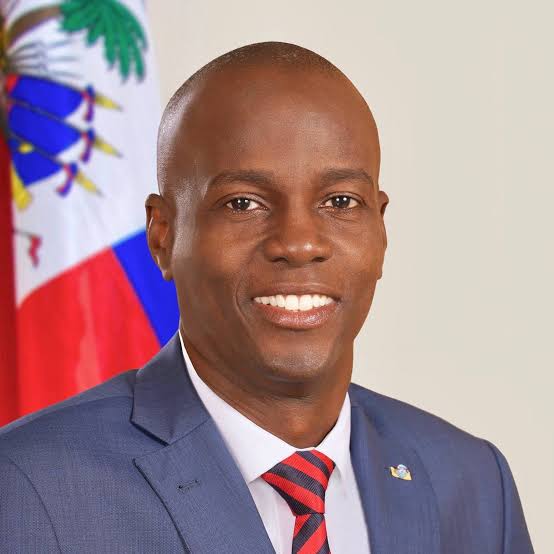
18 Suspects Taken to US Over 2021 Killing of Haitian President Moise
Eighteen suspects accused of involvement in the 2021 assassination of former Haitian President Jovenel Moise have been transferred from Haiti to the United States to face trial.
US officials said the suspects were transported to Florida on Sunday, as American authorities continue their prosecution of people allegedly connected to the plot.
Federal prosecutor Jason Reding Quinones said the suspects were flown from Haiti on a military aircraft to face proceedings in the Southern District of Florida.
He said US authorities had so far indicted 30 people in connection with the assassination and warned that the prosecutions were not over.
Among those transferred was Joseph Felix Badio, a former anti-corruption official with Haiti’s Ministry of Justice who has been identified as a major suspect in the investigation.
Haitian government and police sources said the other suspects included Colombian nationals who were allegedly part of the group involved in the operation.
Colombian Nationals Among Suspects
Colombia’s Foreign Ministry confirmed that 17 of its citizens had been transferred from Haiti to the United States.
The ministry said the Colombian government was monitoring the development but had not participated in the decision or process that led to the transfer.
Moise was killed at his private residence in Port-au-Prince on July 7, 2021. Investigators said a group of about 20 Colombian military-trained mercenaries had been hired in connection with the operation.
The president’s security detail came under scrutiny after failing to prevent the attack.
In May, four men were convicted in a Miami federal court over charges connected to the plot, including conspiracy to kill or kidnap Moise and providing material support for the operation. They could face life imprisonment.
US prosecutors said the men were linked to CTU Security, a Florida-based private security company, and had allegedly been attracted by the prospect of lucrative contracts after Moise was removed from power.
The assassination plunged Haiti further into political and security turmoil. The country has since struggled with gang violence and remains without a president, while preparations continue for elections scheduled for December, subject to security conditions.
18 Suspects Taken to US Over 2021 Killing of Haitian President Moise
News
Tinubu’s UNGA Absence Fuels Questions Over Planned Trump Meeting

Tinubu’s UNGA Absence Fuels Questions Over Planned Trump Meeting
An American lobbying firm linked to former Vice President Atiku Abubakar has claimed that a proposed meeting between President Bola Tinubu and US President Donald Trump on the sidelines of the United Nations General Assembly will no longer take place.
The claim by Von Batten Montague York-LC came shortly after the Nigerian Presidency confirmed that Tinubu would not physically attend the 81st UN General Assembly in New York.
Instead, Vice President Kashim Shettima has been directed to lead Nigeria’s delegation to the gathering.
In a post on X, the US-based firm said the proposed Tinubu-Trump meeting had been cancelled. It also claimed that any possible US endorsement of Tinubu ahead of Nigeria’s 2027 presidential election was no longer on the table.
The firm alleged that securing a meeting with Trump and obtaining his endorsement was a major objective of Tinubu’s planned UNGA trip. It further claimed that about $9 million in Nigerian public funds had been spent on efforts to facilitate the proposed engagement.
Those allegations have not been independently established.
READ ALSO:
- Messi Fires Stunning 75th Career Free-Kick to Reach 930 Goals in Inter Miami Draw
- Lagos Residents Raise Alarm Over Fufu Processing, Preservation Methods
- APC Wins Four of Five By-Elections as APM Takes Bauchi Seat
Tinubu to Miss UNGA
The development follows the Presidency’s confirmation that Tinubu will not attend the annual gathering in person.
The President had previously been listed as a speaker for the high-level General Debate, but the government subsequently announced that Shettima would represent him.
The change ends weeks of uncertainty over whether Tinubu would travel to New York. Nigeria’s UN ambassador had earlier indicated that arrangements had been made for the President to attend the 81st session.
Meanwhile, reports of a possible Tinubu-Trump meeting had attracted attention because of the two countries’ diplomatic and economic engagements.
The latest statement by the lobbying firm is therefore another development in the ongoing debate over whether such a meeting would take place. However, the firm’s claims about the proposed meeting, the alleged $9 million expenditure and Tinubu’s supposed objective remain allegations rather than independently verified facts.
Tinubu’s UNGA Absence Fuels Questions Over Planned Trump Meeting
News
EFCC Recovers N140m for B4 Sail as Alleged Loan Debt Hits N2.25bn
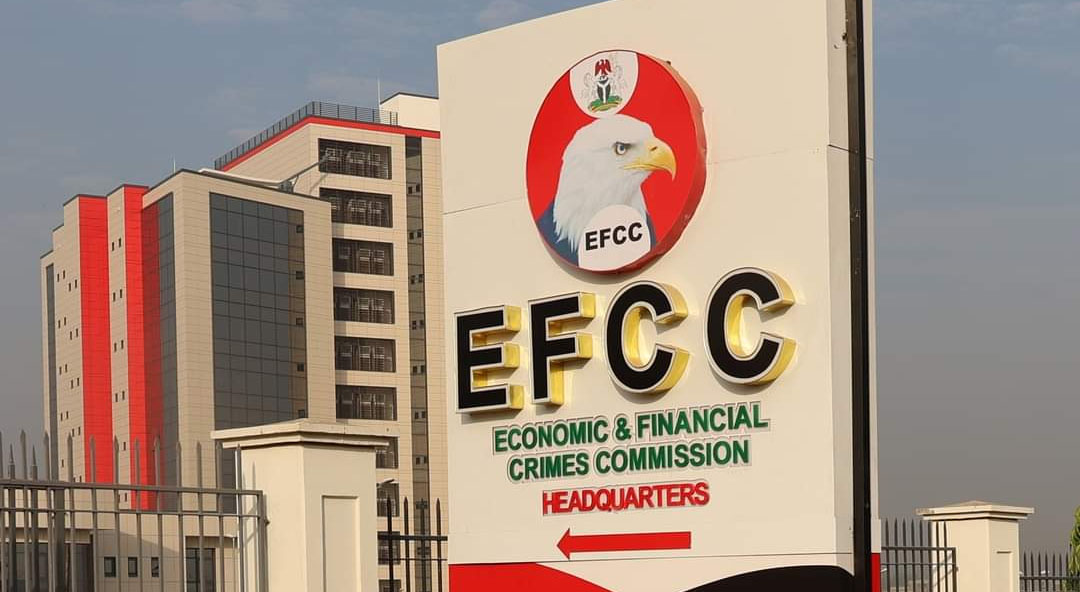
EFCC Recovers N140m for B4 Sail as Alleged Loan Debt Hits N2.25bn
The Economic and Financial Crimes Commission (EFCC) has returned N140 million recovered during an investigation into an alleged loan fraud to B4 Sail Limited, an investment and money-lending company in Lagos.
The funds were handed over in bank drafts on Thursday, September 17, at the EFCC’s Lagos Zonal Directorate 2 office in Ikoyi.
The Acting Zonal Director, Bawa Usman Kaltungo, presented the recovered money to representatives of B4 Sail.
How the Investigation Began
The recovery followed a petition filed by B4 Sail on April 20, 2026, concerning Jacob Oyebola Esan and companies linked to him.
According to the petition, Esan approached the company in August 2025 on behalf of Geo Fields Plc to secure a N500 million loan to support the business.
The facility reportedly carried a monthly interest rate of 15 per cent and was expected to be repaid within one month.
The EFCC said its investigation later established that Esan had obtained other loan facilities from B4 Sail, taking his total exposure to N1.065 billion.
As security for the loans, shares belonging to Esan were pledged through Calyx Securities Limited, which acted as the clearing house for the stocks. The arrangement reportedly gave B4 Sail a lien over the shares and first claim to proceeds from their sale.
However, the commission said the shares were eventually sold without B4 Sail’s knowledge.
This allegedly contributed to Esan’s failure to repay the facilities. With accrued interest, the outstanding amount subsequently rose to N2.2505 billion.
The EFCC said the N140 million recovery was being returned to the company as part of its responsibility to ensure recovered funds reach legitimate owners and victims after due process.
EFCC Recovers N140m for B4 Sail as Alleged Loan Debt Hits N2.25bn
-
 metro3 days ago
FG Suspends Niger NSCDC Commandant As 37 Suspected Illegal Miners Die In Custody
-

 Politics3 days ago
Toyin Abraham Rejects Lagos APC Campaign Council Inclusion
-

 Politics3 days ago
2027: Sowore Says He’d Rather Die Than Travel Abroad For Medical Treatment
-

 Politics2 days ago
Yayi Ancestry Row: Stepmother Sets Record Straight as Legal Battle Looms
-
 Politics3 days ago
2027: Tinubu May Mediate Wike-APC Governors Rift In France
-
 metro2 days ago
Niger Miners’ Deaths: Families Demand Compensation, Justice for Victims
-
 Sports3 days ago
Falconets Thrash England 3-0, Face Colombia in U-20 World Cup Quarter-Finals
-

 International2 days ago
BREAKING: Bloodbath at Pakistan Mosque as Suicide Blast Kills 21, Injures 103