

Education
FG releases N2.3bn to clear salary, promotion arrears of varsity lecturers
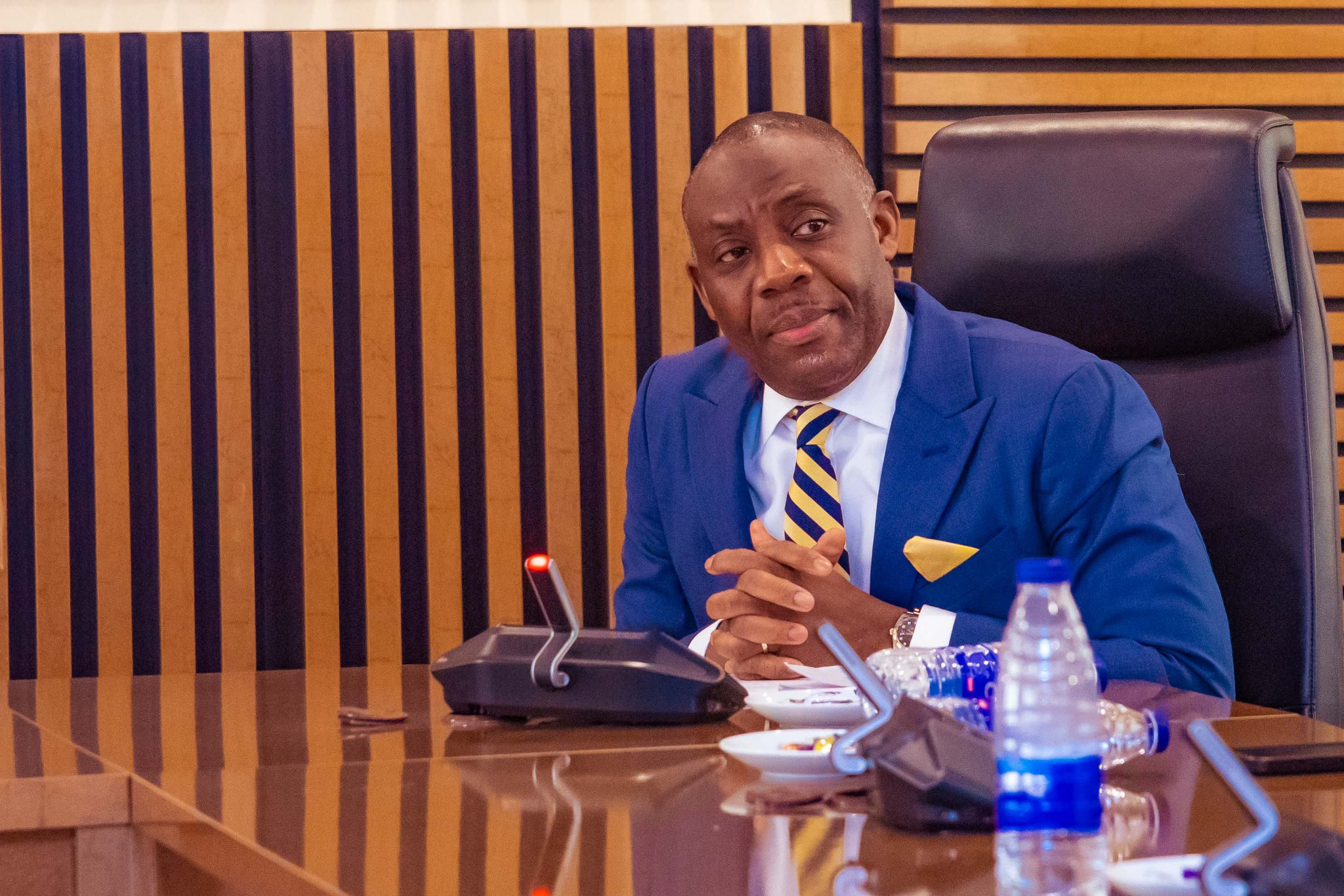
FG releases N2.3bn to clear salary, promotion arrears of varsity lecturers
The Federal Government has announced the release of ₦2.3 billion to settle outstanding salary and promotion arrears owed to university lecturers across the country.
The payment, disclosed on Wednesday, is part of efforts to fulfil financial obligations to the academic workforce and stabilise Nigeria’s tertiary education system.
Minister of Education, Dr. Tunji Alausa, said the disbursement represents Batch 8 salary and promotion arrears and was processed through the Office of the Accountant-General of the Federation. He added that benefiting institutions should begin receiving payment alerts.
“A total of ₦2.311 billion has been released to universities. This reflects President Bola Ahmed Tinubu’s commitment to clearing inherited backlogs and improving staff welfare,” Alausa said in a statement issued by the Director of Press, Federal Ministry of Education, Folasade Boriowo.
He further disclosed that the government is finalising the release of third-party deductions and pension remittances, and has approved the full mainstreaming of Earned Academic Allowance into university salaries from 2026.
Funds have also been released under the Needs Assessment of Nigerian Universities, with budgetary provisions made to sustain the initiative.
Alausa assured that all engagements with unions are being conducted in good faith, adding that the Yayale Ahmed Negotiating Committee continues to serve as a bridge between the government and tertiary institution unions.
“Our priority is to ensure that all matters are addressed responsibly and in the best interest of our education system,” he said.
READ ALSO:
- Man City beat Swansea to reach Carabao Cup quarters
- South West leaders endorse Tinubu’s re-election bid, laud economic reforms
- Erisco Foods trial: Police withdraw “evidence” against Chioma Okoli
However, several lecturers who spoke to Daily Trust expressed disappointment, saying October 2025 salaries remain unpaid despite the announcement.
A lecturer from Nnamdi Azikiwe University, Awka, said, “I can speak with all authority that the October salaries have not been paid, so we are surprised at the announcement.”
Another lecturer from the Federal University of Technology, Minna, said the delay in salary payments is becoming a trend.
“We have not received a dime, not even our salaries,” a union leader from a northern federal university told Daily Trust under anonymity.
ASUU has been in a prolonged standoff with the Federal Government over withheld salaries, promotion arrears, and the implementation of the renegotiated 2009 ASUU-FGN Agreement.
The union recently suspended a two-week warning strike following interventions by the Nigeria Labour Congress and the National Assembly.
ASUU’s demands include payment of three-and-a-half months’ withheld salaries, revitalisation of public universities, sustainable funding, and the release of cooperative deductions.
The renegotiation of the 2009 agreement, last reviewed by the Yayale Ahmed Committee in December 2024, is yet to be implemented.
FG releases N2.3bn to clear salary, promotion arrears of varsity lecturers









Education
NOUN appoints Ramatu Ibrahim acting Bursar after Marafa’s death

NOUN appoints Ramatu Ibrahim acting Bursar after Marafa’s death
The National Open University of Nigeria (NOUN) has appointed Mrs. Ramatu O. Ibrahim as Acting Bursar following the sudden death of the university’s substantive Bursar, Mallam Nasiru G. Marafa.
The appointment took effect on Tuesday, September 8, 2026, and will remain in force until further notice.
NOUN Registrar and Secretary to Council, Mr. Oladipo Ajayi, announced the appointment in a statement issued on Tuesday.
The appointment was approved by Vice-Chancellor Professor Uduma Oji Uduma, with the concurrence of the Pro-Chancellor and Chairman of the Governing Council, Malam Isa Yuguda.
According to the university, the decision was taken to ensure continuity, stability and effective leadership in NOUN’s financial administration following Marafa’s death.
The university management described the late Bursar as a dedicated and dependable officer who served the institution with commitment, professionalism and integrity.
NOUN said Marafa’s contributions to the university’s financial administration and institutional development would be remembered with gratitude and appreciation.
Marafa’s death was announced by the university after he was reportedly shot while returning from Gusau, Zamfara State, on Sunday, September 6.
READ ALSO:
- Bandits abduct Kaduna lawmaker’s brother, kill three KADVS operatives
- Oyoland Grand Chief Imam Celebrates Amubieya’s Decades of Islamic Scholarship
- FG opens six-month teacher certification for BSc, HND, ND holders – How to Apply
He was appointed Bursar of NOUN in September 2022 and had served the institution in various capacities before his appointment to the position.
The university described his death as a significant loss to the NOUN community, while the Vice-Chancellor commended his commitment to professional standards, accountability and institutional responsibilities.
Following his death, Ibrahim, who previously served as Deputy Bursar, Treasury, has been assigned to oversee the university’s financial affairs in an acting capacity.
NOUN described Ibrahim as an experienced university administrator with extensive knowledge of the institution’s financial operations and administrative processes.
She has worked in several major operational units of the Bursary Department, gaining experience in accounting, financial management, treasury operations and related administrative functions.
In her immediate past role as Deputy Bursar, Treasury, Ibrahim provided professional leadership and oversight of the university’s treasury operations.
The Registrar said her broad experience across the Bursary Department, combined with her understanding of NOUN’s financial systems and institutional processes, places her in a strong position to provide effective leadership.
He added that her appointment was expected to sustain the delivery of efficient, transparent and accountable financial services across the university.
The university management expressed confidence in Ibrahim’s ability to discharge the responsibilities of Acting Bursar with professionalism, diligence, integrity and a strong sense of institutional responsibility.
The appointment is expected to provide administrative stability and ensure that the university’s financial operations continue without disruption during the transition.
NOUN management also called for the cooperation and support of members of the university community as Ibrahim assumes her new responsibilities.
The Vice-Chancellor, on behalf of the university management, congratulated the new Acting Bursar and wished her a successful tenure.
NOUN appoints Ramatu Ibrahim acting Bursar after Marafa’s death
Education
FG opens six-month teacher certification for BSc, HND, ND holders – How to Apply

FG opens six-month teacher certification for BSc, HND, ND holders – How to Apply
The Federal Government has opened applications for a six-month professionalisation programme designed to help Nigerians who are currently teaching without formal professional teaching qualifications obtain recognised education credentials and become eligible for Teachers Registration Council of Nigeria (TRCN) registration.
The programme, known as the Accelerated Teacher Professionalisation Pathway (ATPP), is being implemented by the Federal Ministry of Education in collaboration with the National Teachers’ Institute (NTI) and the Teachers Registration Council of Nigeria (TRCN).
The initiative is targeted at non-professional teachers who already possess academic qualifications but lack formal pedagogical training and professional certification.
Applications for Cohort 1 of the 2026–2027 ATPP programme are currently open and are scheduled to close on September 18, 2026.
The programme offers two major qualification pathways: the Postgraduate Diploma in Education (PGDE) for eligible holders of non-education bachelor’s degrees or HNDs, and the Professional Diploma in Education (PDE) for eligible holders of ND or OND qualifications.
Who can apply for the ATPP?
The programme is designed primarily for serving teachers who are already working but do not have professional teaching qualifications.
Eligible applicants may be teaching in public and non-state schools, as well as in early childhood care, development and education, primary and secondary schools, technical and vocational education and training, non-formal education and alternative learning settings.
Community instructors and volunteer educators are also among those covered by the programme.
However, applicants seeking admission through the qualification pathways are required to have at least 24 months of classroom teaching experience.
This requirement means the programme is primarily intended to professionalise people who are already actively engaged in teaching rather than graduates seeking to enter the teaching profession for the first time.
READ ALSO:
- How I Sold My Twins for N300,000, Stole 13 Other Children — Suspect
- No More Embassy Visits: Step-by-Step Guide to Nigeria’s Contactless Passport Renewal
- Lagos police arrest four suspected robbers, recover 25 phones in Mushin
BSc and HND holders
Nigerians who hold a non-education bachelor’s degree or HND and are currently teaching can apply for the Postgraduate Diploma in Education (PGDE) pathway.
The PGDE runs for six months, comprising four months of hybrid coursework and two months of supervised teaching practice.
The programme carries 40 credit units and is designed to provide participants with the pedagogical knowledge and practical skills required for professional teaching.
Applicants are required to provide a valid National Identification Number (NIN), their bachelor’s degree or HND certificate and evidence that they are currently teaching.
Acceptable evidence of teaching may include an employment or appointment letter, an attestation from a headteacher, principal or relevant school authority, or appropriate pay records.
ND and OND holders
Holders of a National Diploma (ND) or Ordinary National Diploma (OND) in a non-education field who are currently teaching can apply through the Professional Diploma in Education (PDE) pathway.
The PDE also runs for six months, consisting of four months of coursework and two months of supervised teaching practice.
The programme carries 37 credit units and is designed to equip participants with professional teaching knowledge, classroom skills and the competencies required to meet established teaching standards.
Applicants must provide a valid NIN, their ND or OND certificate and evidence of teaching experience.
What will ATPP participants study?
The ATPP says its PGDE and PDE programmes are aligned with the TRCN Professional Standards for Teachers.
The curriculum covers areas including professional knowledge, professional practice, professional values and ethics, professional engagement and continuing professional development.
Participants will also study foundations of education, educational psychology, curriculum and pedagogy, inclusive education and safeguarding, assessment and quality assurance, digital and blended learning, and subject methodology and specialisation.
The programme combines academic learning with supervised teaching practice to give participants both theoretical knowledge and practical classroom experience.
How to apply for FG’s six-month teacher certification programme
Eligible applicants can apply through the official ATPP application portal.
Applicants are required to create an account, provide their personal information, email address and telephone number, select the appropriate qualification pathway and submit the required documents.
READ ALSO:
- Benue Govt Blasts Obi Over ‘Unapproved’ Visit: ‘He Is Looking For Our Trouble’
- Yamal Fires Back at Mbappé: “I’m Not Going to Beg” for Ballon d’Or
- Osun Police Arrest Woman After Vigilante Member Dies During Sexual Encounter in Ile-Ife
Applicants applying on behalf of another person are advised to use the applicant’s own email address because the email may be required for password recovery and other application-related communication.
Prospective applicants should carefully check the eligibility requirements and ensure that the information and documents submitted are accurate before completing the application.
The deadline for ATPP Cohort 1 applications is September 18, 2026.
What happens after the six-month programme?
Completing the ATPP does not automatically mean that a participant immediately becomes a fully registered or licensed teacher.
Candidates are required to complete the prescribed credit units, successfully undertake their supervised teaching practice, demonstrate professional conduct and satisfy the assessment requirements of their institution.
They must also sit for and pass the TRCN Professional Qualifying Examination (PQE).
Candidates who successfully meet the relevant requirements and pass the qualifying examination can then become eligible for TRCN registration in the appropriate category.
Where will the programme be offered?
The ATPP is being delivered through accredited institutions and study centres across Nigeria.
Institutions listed under the programme include the National Teachers’ Institute, Nnamdi Azikiwe University, University of Lagos, University of Port Harcourt, University of Ilorin, Ahmadu Bello University, University of Maiduguri, National Open University of Nigeria, MIVA Open University, Meadow Hall College of Education and Babcock University.
The use of multiple institutions and study centres is intended to make the programme accessible to serving teachers in different parts of the country.
How much does the ATPP cost?
The programme website lists the ATPP fee at ₦200,000 per teacher.
Applicants are advised to follow only the official application and payment procedures provided through the ATPP platform and to avoid making payments to individuals or unofficial platforms claiming to represent the programme.
The Accelerated Teacher Professionalisation Pathway is part of the Federal Government’s broader effort to strengthen teacher professionalisation and improve standards in Nigeria’s education sector.
For eligible BSc, HND, ND and OND holders who are already teaching, the six-month programme provides a structured route to obtain professional education qualifications and progress towards TRCN registration.
With the September 18, 2026 deadline approaching, eligible applicants are encouraged to complete the application process early and ensure that all required information and documents are properly submitted.
FG opens six-month teacher certification for BSc, HND, ND holders – How to Apply
Education
FG Opens N2.5bn Grant Window For 50 Student Innovators Under “Next Moonshot Initiative”

-

 Auto2 days ago
Kaduna to Lead Govt Patronage of Local Vehicles as Sani Unveils Peugeot 5008
-

 metro1 day ago
El-Rufai Demands ₦10bn from Defence Minister Over Southern Kaduna Killings Allegation
-

 metro2 days ago
Oyoland Grand Chief Imam Celebrates Dr Sharafudeen Raji for Service to Islam
-

 metro1 day ago
Catholic priest leaves priesthood, weds Kenyan woman after 12 years in Kenya
-

 Politics1 day ago
Why Did Peter Obi Attend Seyi Makinde’s Campaign Launch? Here’s What He Said
-

 News1 day ago
Lagos Moves to Slash Agency Fees, Curb Rent Hikes With New Tenancy Bill
-

 metro2 days ago
Socialite Igho ‘Tiny’ Ubiribo Dies After Penis Enlargement Surgery
-

 metro1 day ago
No US Case Against Tinubu, Family Enjoy Unimpeded Transit for UNGA — Ambassador Ibrahim